Across the two Basel cantons, 11'539 people name Albanian as a main language. That makes Basel-Stadt the ninth most Albanian-speaking canton in Switzerland — mid-table, not a stronghold. But two things about Basel are unusual. Proportionally, the city of Basel has almost three times as many residents on a Kosovan, North Macedonian or Albanian passport as the city of Zurich. And the official count has been falling for nine years while the community itself has grown by nearly a third. Here are the figures, the places, the history and the reason the statistics point the wrong way.
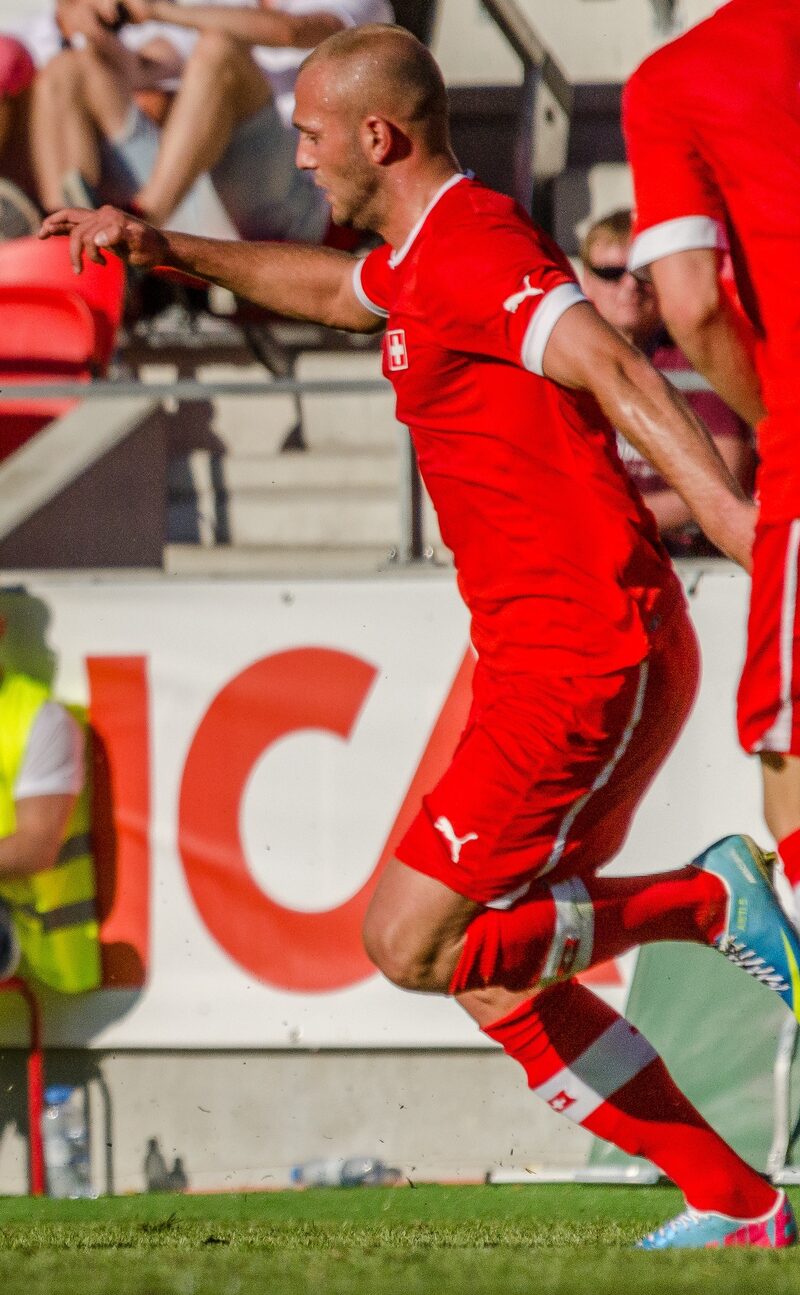
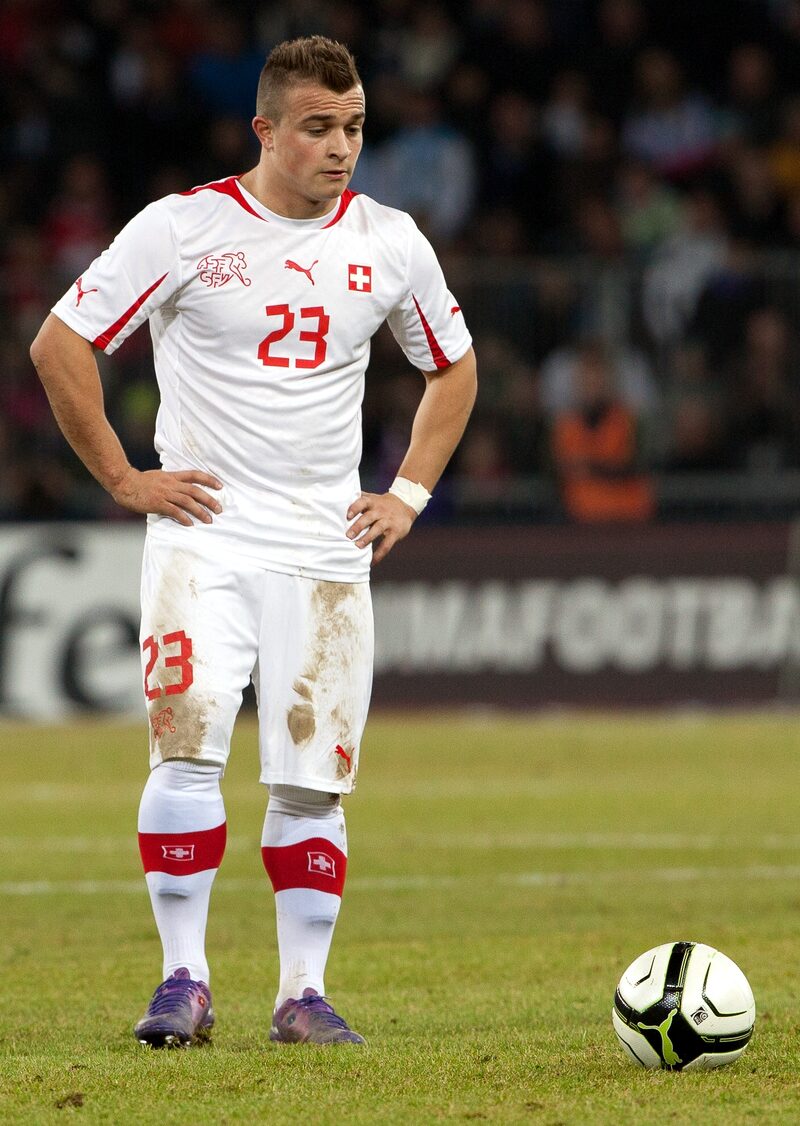
In the summer of 1990, Ragip Xhaka got on a bus in Kosovo with his wife and rode it to Switzerland. He was twenty-seven, and he had spent about three and a half years in Yugoslav detention after being arrested as a student in Pristina in 1986; the accounts of the sentence itself differ, and his own is that it ended in an acquittal. In Basel he found work at a landscape-gardening firm and stayed with the same company for seventeen years; his wife cleaned, then took a job at a tube factory. Two sons were born in the city, and they were noticed kicking a ball around the Voltapark below the flat.
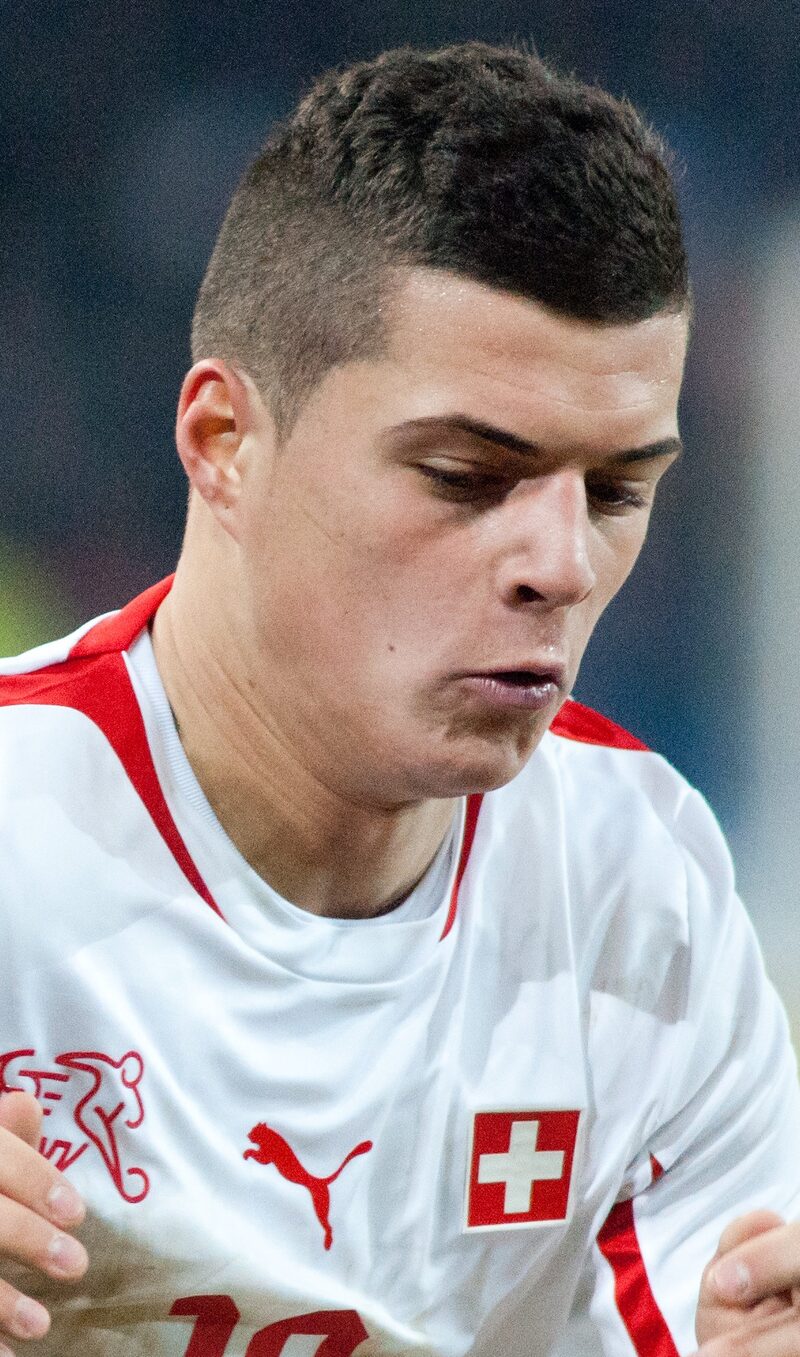
Eighteen years after that bus arrived, the same city was fielding both his sons. Today the surname of the family in the flat by the Voltapark is more common in canton Basel-Stadt than most old Basel surnames. The numbers below trace the same arc.
How many Albanians live in Basel?
It depends which Basel you mean, and in Basel that question is harder than it is anywhere else in Switzerland, because the city and its canton are almost the same thing while the community is not.
In canton Basel-Stadt, 5'231 people aged 15 and over gave Albanian as a main language in the Federal Statistical Office's 2024 structural survey — 3.10 percent of that age group. In canton Basel-Landschaft, the half-moon of suburbs and villages that wraps around the city, the figure is 6'308, or 2.49 percent. Together: 11'539 people.
Counted by passport instead, at the end of 2025 the two cantons held 10'257 nationals of Kosovo, North Macedonia and Albania — 4'183 in Basel-Stadt and 6'074 in Basel-Landschaft. Of those, 3'288 were born in Switzerland.
Neither number is the community. The language survey asks a sample of adults and misses every child; the passport count misses everyone who has become Swiss, and in Basel that is a very large number of people. So every hard figure on this page is a floor, not a measure.
Basel is mid-table, and that is the honest headline
It is tempting to write that Basel is a great Albanian city. The federal data does not support it. Ranked by the share of residents naming Albanian as a main language, Basel-Stadt comes ninth of the twenty-six cantons and Basel-Landschaft eleventh. Aargau leads at 4.85 percent, followed by Glarus, St. Gallen, Thurgau, Solothurn, Schaffhausen, Lucerne and Zurich. Canton Zurich alone has 48'457 Albanian speakers — more than four times both Basels combined.
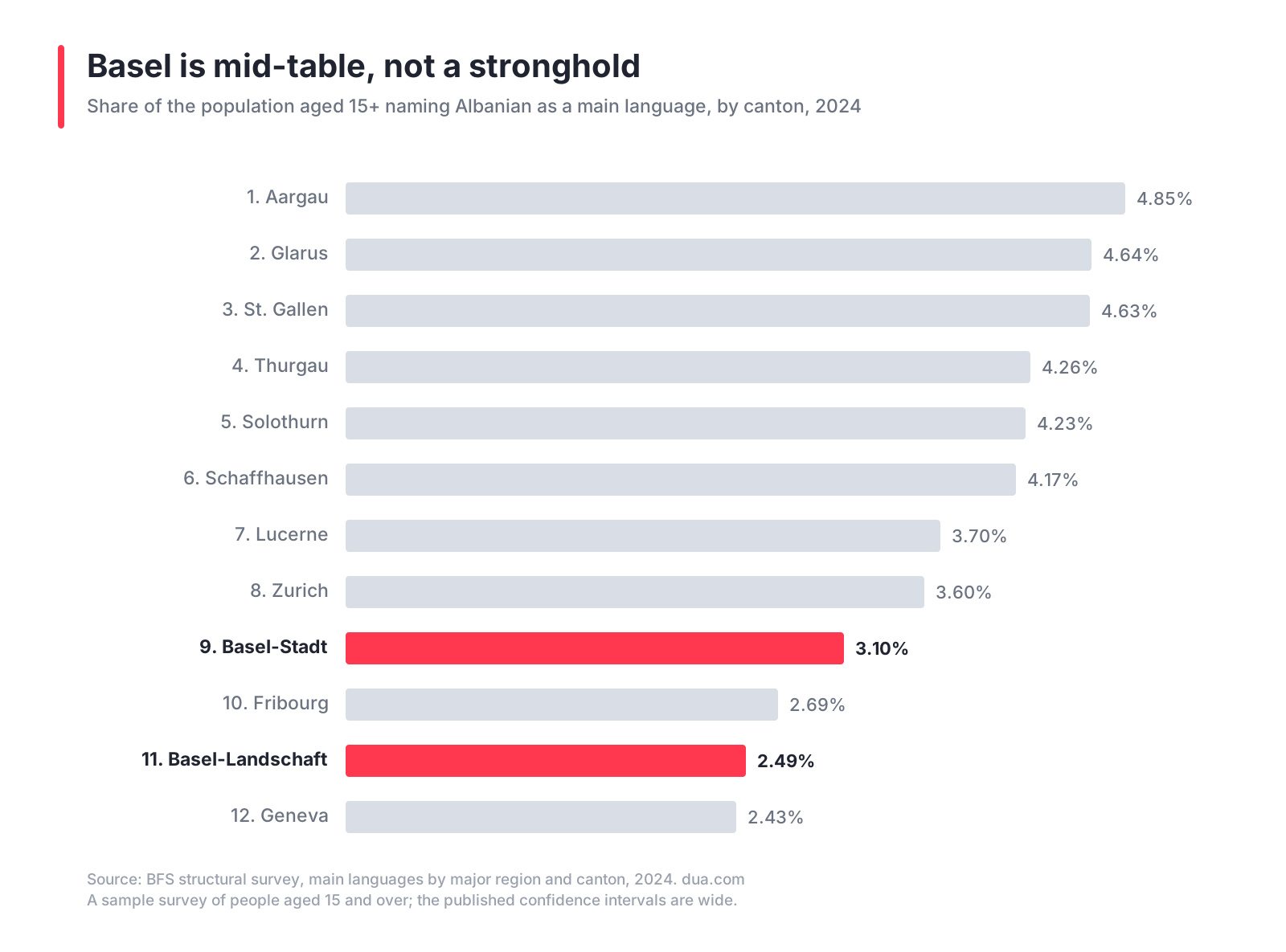
The survey is a sample, and a small one at this level: the published confidence interval for Basel-Stadt is plus or minus 18.1 percent. That is wide enough that the year-to-year movement in the Basel series — 4'221 in 2020, 5'733 in 2019, 5'231 in 2024 — is mostly sampling noise rather than real change. Averaged across 2020 to 2024, Basel-Stadt sits at about 4'563 and Basel-Landschaft at about 5'905. Anyone quoting a single year of this series to two significant figures is over-reading it.
Why there is no exact Albanian figure
Switzerland does not record ethnicity. It records passports, and it asks a rotating sample of adults which languages they speak. Three different instruments therefore produce three different Basels, and each of them misses a different group of people.
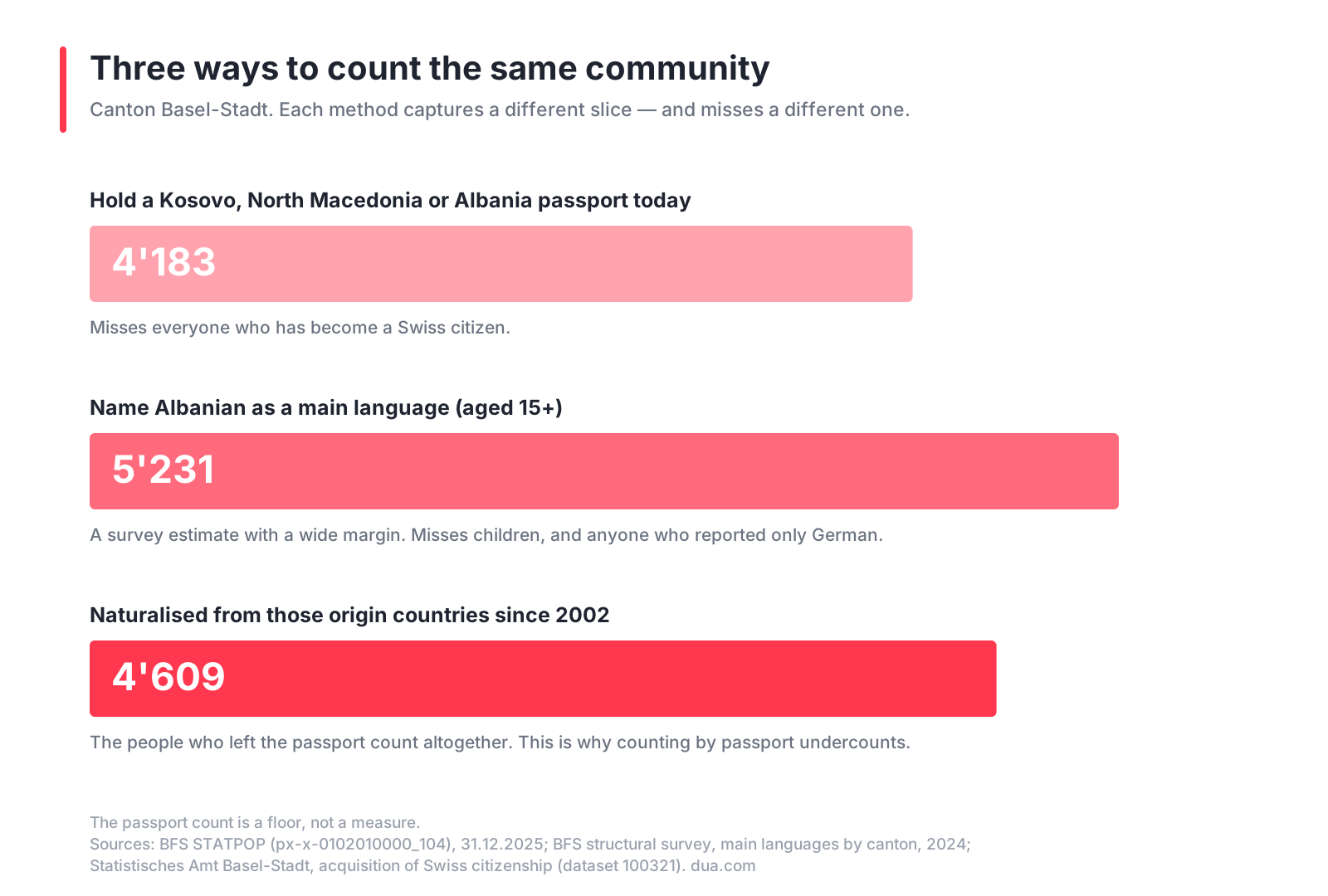
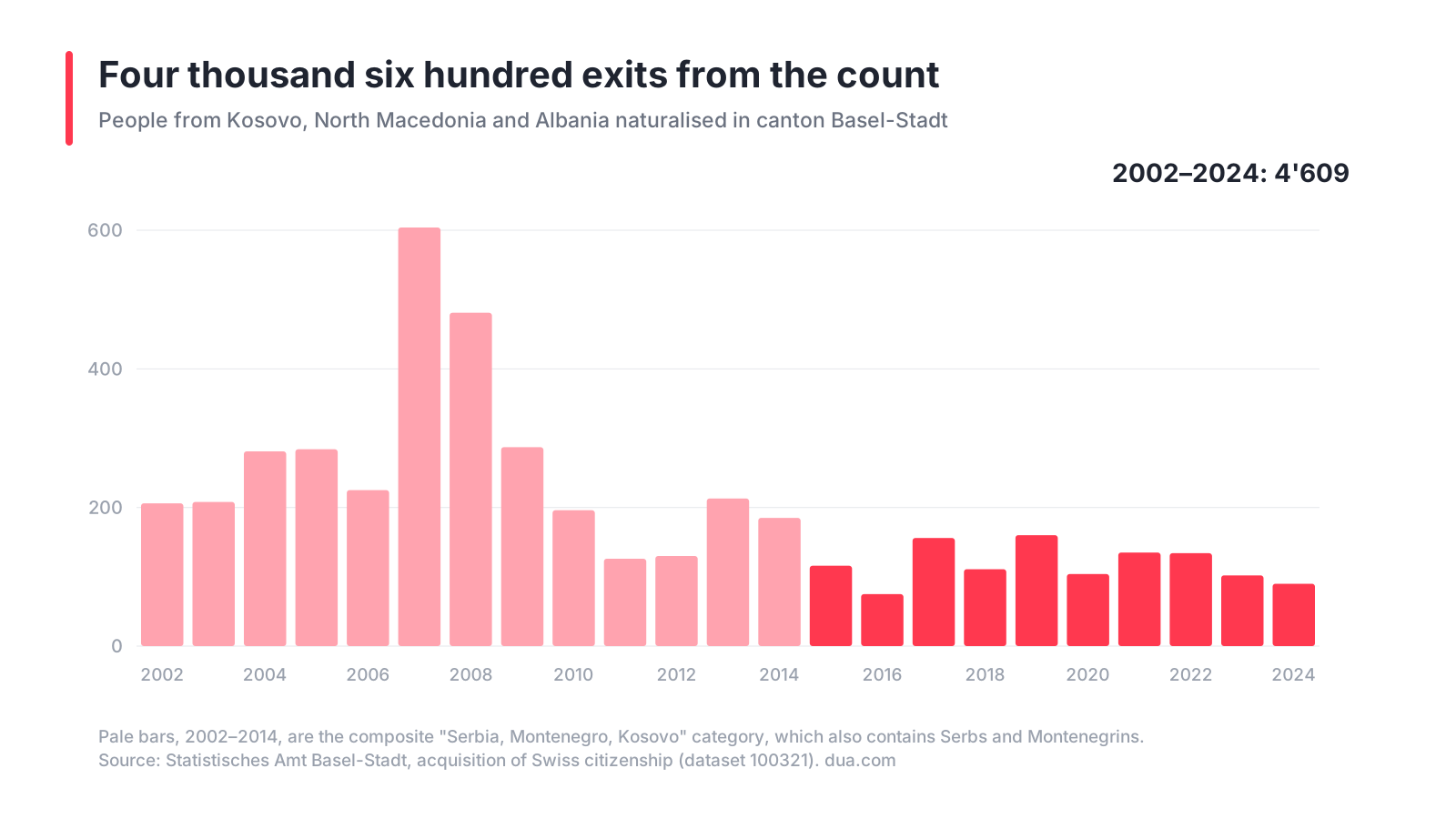
The third bar is the one that matters. Between 2002 and 2024, 4'609 people from Kosovo, North Macedonia and Albania acquired Swiss citizenship in canton Basel-Stadt alone. Every one of them disappeared from the first bar on the day they were naturalised, without moving house. The canton's own register is the reason we know the passport count is wrong, and by roughly how much.
One caveat belongs here rather than in a footnote. For the years 2002 to 2014 the cantonal register reports a composite category, «Serbien, Montenegro, Kosovo», which also contains Serbs and Montenegrins; Kosovo appears as a separate former nationality only from 2015. Of the 4'609, some 2'574 sit inside that composite. The right way to state it is that 4'609 people from the Albanian-speaking origin countries and their neighbours naturalised in Basel-Stadt over twenty-three years — a very large number by any reading, and not one that can be split cleanly.
Where in the Basel region do Albanians live?
Not, for the most part, in the smart parts of the city. The densest Albanian settlement in the Basel region is a chain of working towns strung along the Rhine and up the Ergolz valley into canton Basel-Landschaft — and one of them is far ahead of everywhere else.
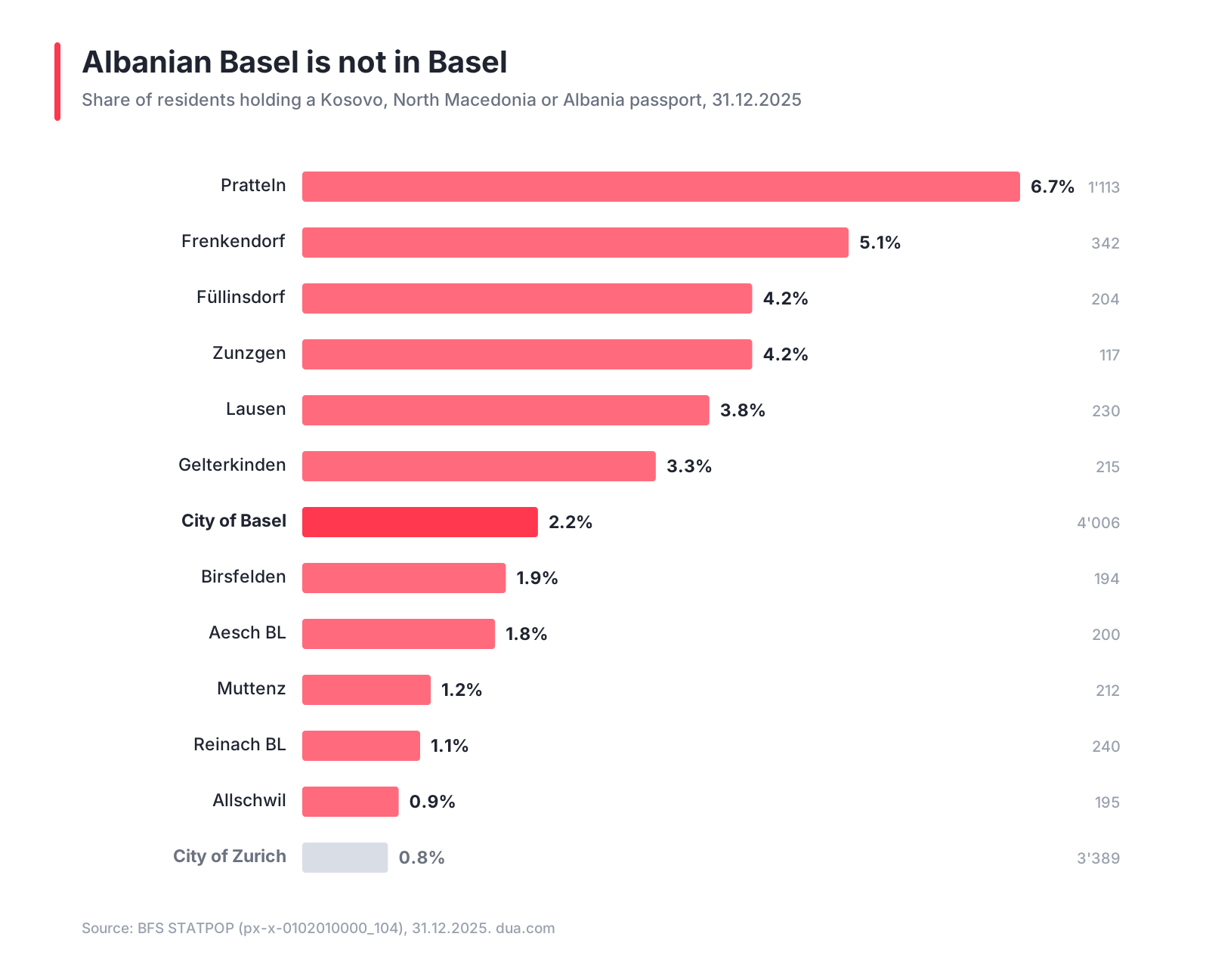
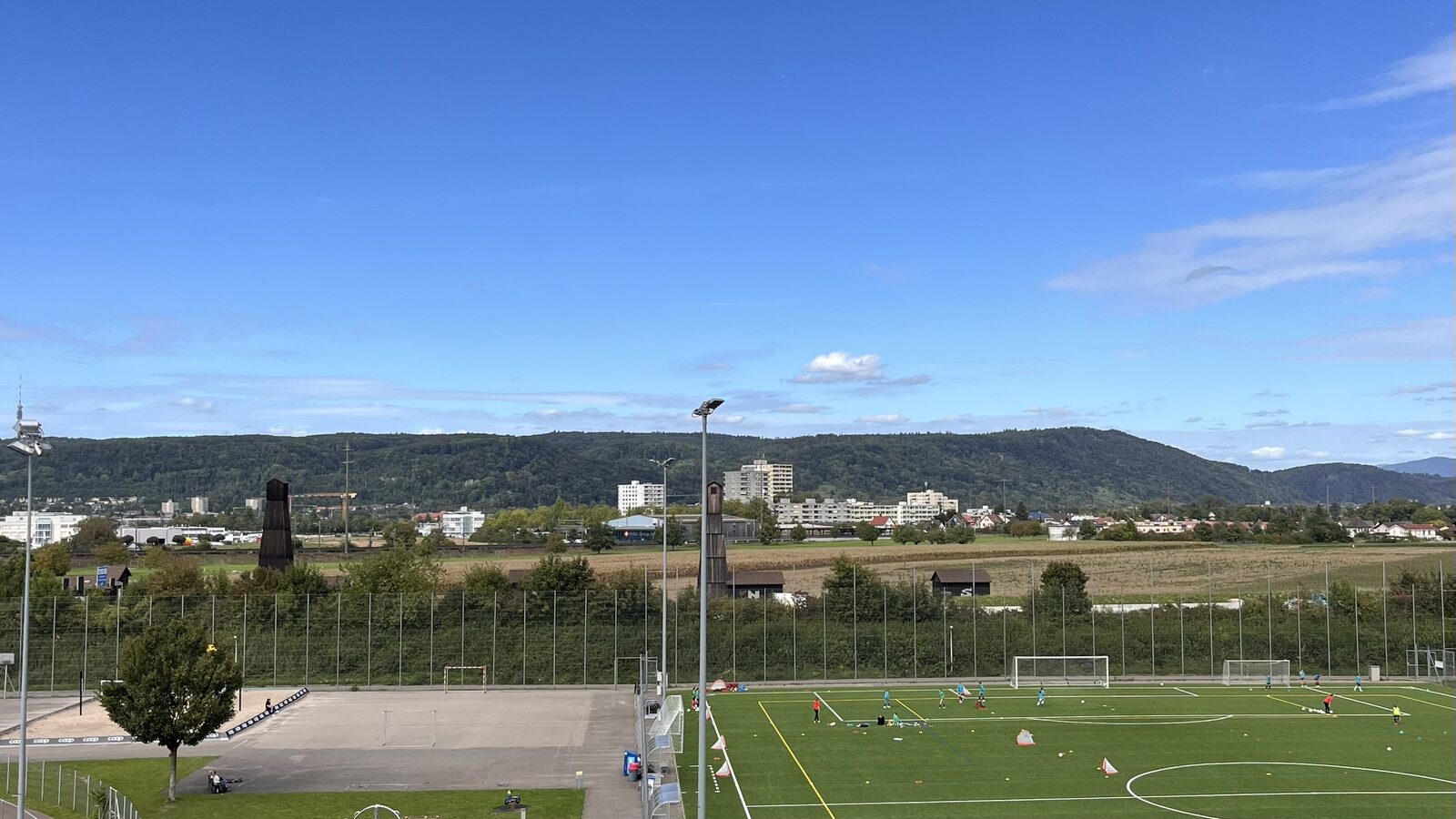
Pratteln leads the region by a distance: 1'113 of its 16'595 residents hold a Kosovan, North Macedonian or Albanian passport, 6.7 percent — and that is before counting anyone who has naturalised. Frenkendorf follows at 5.1 percent, then Fuellinsdorf and Zunzgen at 4.2, Lausen at 3.8 and Gelterkinden at 3.3. These are not suburbs in the commuter-belt sense. They are the industrial spine of Basel-Landschaft.
The city that is more Albanian than Zurich
And yet the most surprising figure in the federal data is about the city itself. In the city of Basel, 4'006 of 180'097 residents hold one of those three passports: 2.2 percent. In the city of Zurich, the equivalent figure is 3'389 of 440'935 — 0.8 percent.
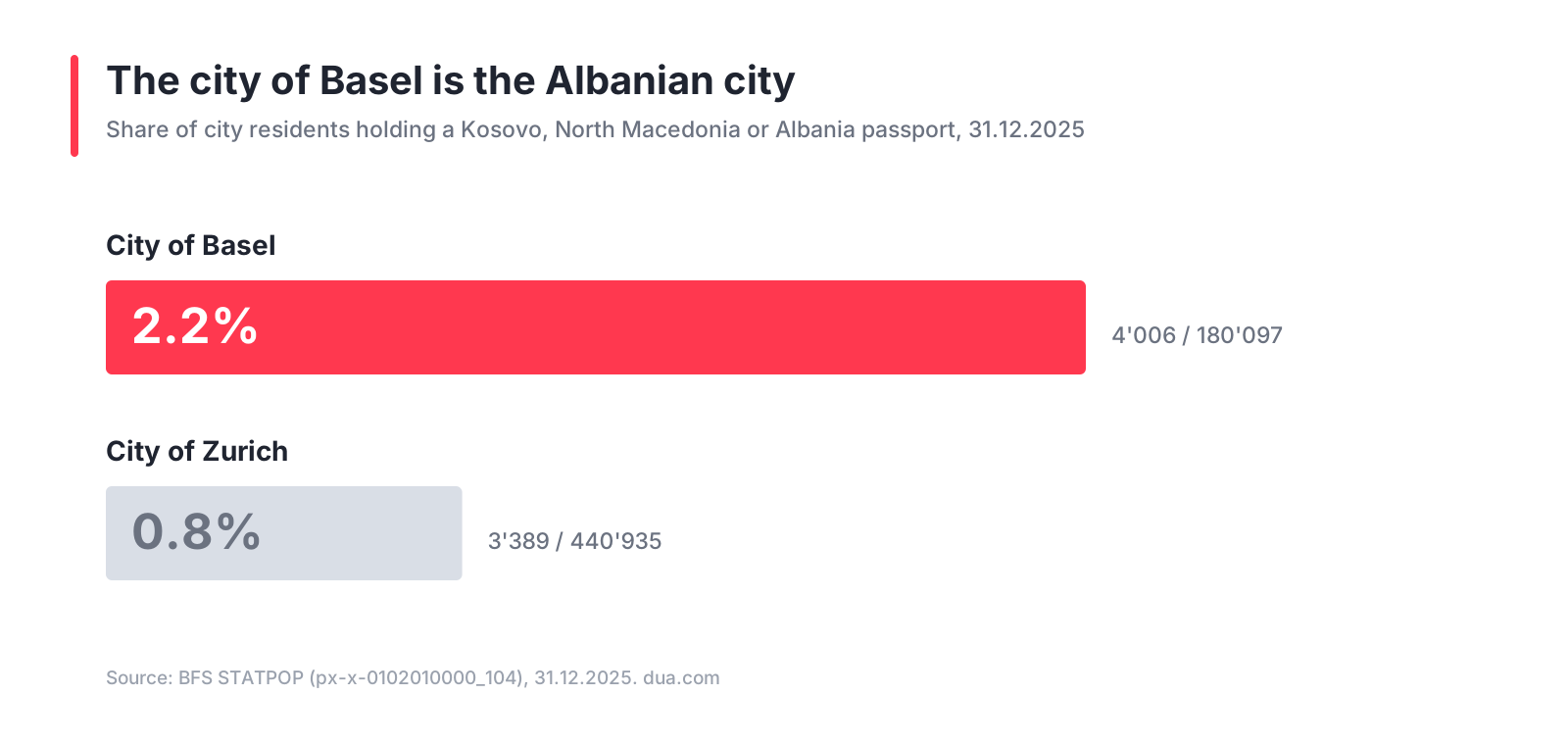
Proportionally, the city of Basel is close to three times as Albanian as the city of Zurich. This is the mirror image of the pattern on the other side of Switzerland. Zurich's Albanian community was pushed out of the city long ago and now lives in the Limmattal and the Glattal; Basel's has stayed put, in a city small enough to walk across and cheap enough, in the Kleinbasel quarters, to stay in. Both statements are true at once: the Basel region's densest Albanian town is outside the city, and the Basel region's city holds on to its Albanian population better than any other big Swiss city does.
Two Albanian neighbourhoods, and everybody names only one
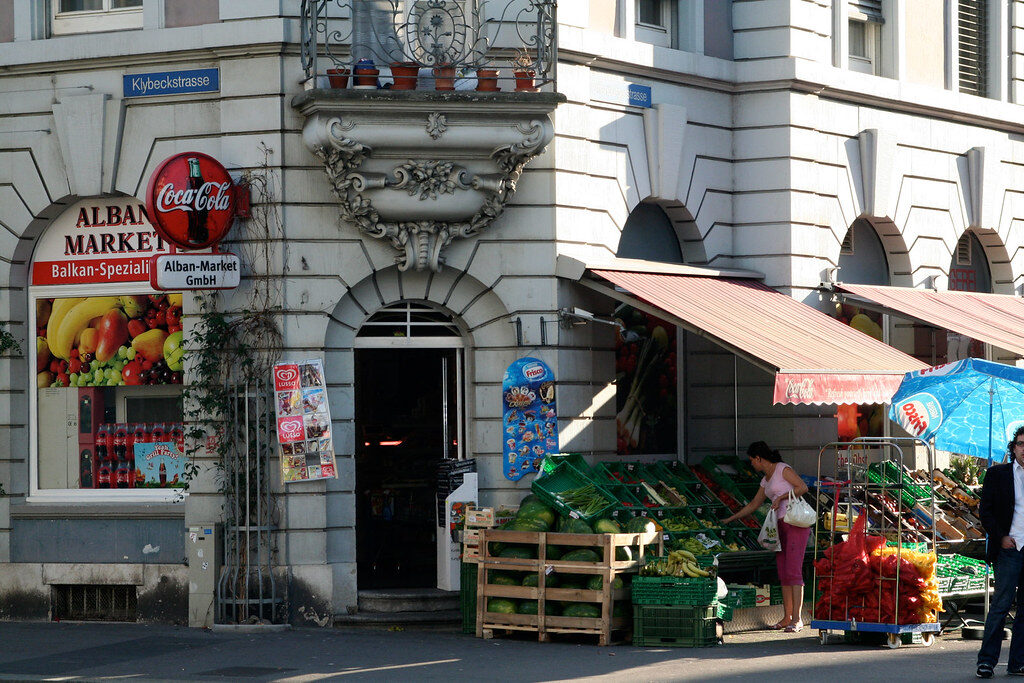
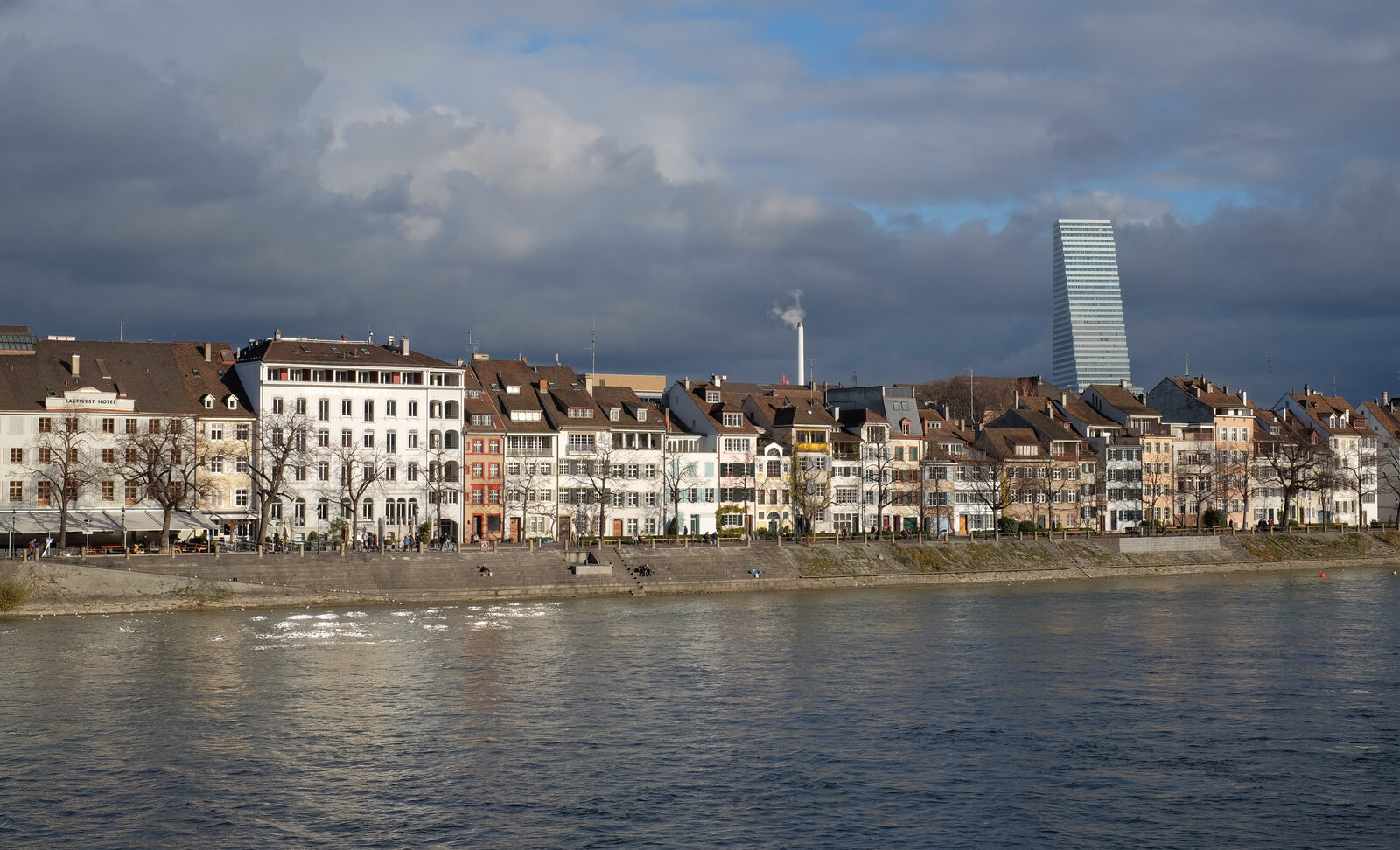
Ask in Basel where the Albanians live and you will be told Kleinbasel — the working side of the river, on the right bank. The cantonal register, which publishes residents by nationality and city quarter every year since 1979, says that is half right. (Its cantonal total, 4'198, sits a little above the federal one used elsewhere on this page; the two registers count slightly different populations, and neither figure should be read against the other.)
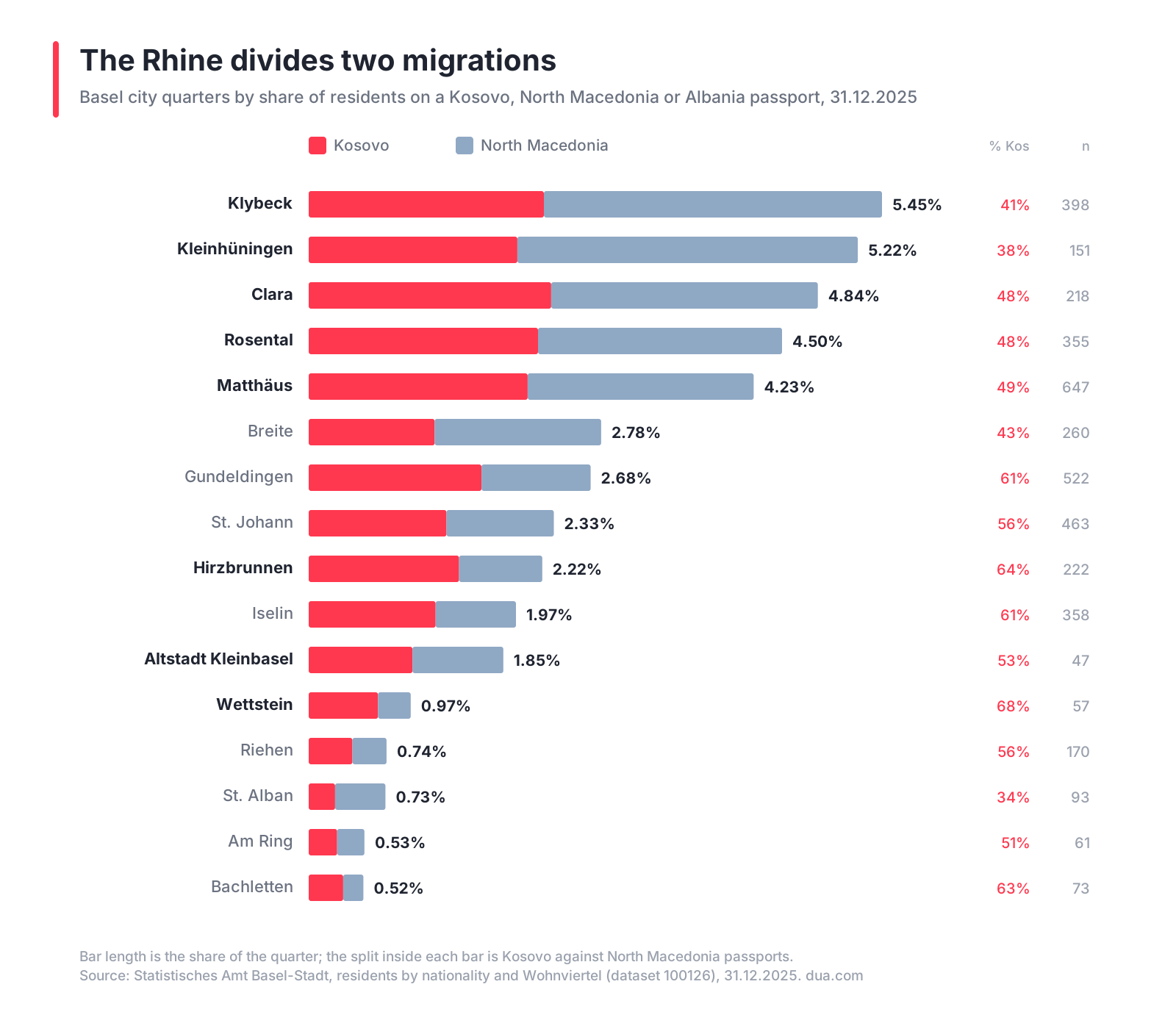
By share, the top five quarters are all in Kleinbasel: Klybeck at 5.45 percent, Kleinhueningen 5.22, Clara 4.84, Rosental 4.50, Matthaeus 4.23. Against 0.27 percent on the Bruderholz, the wealthy hill in the south, that is a twentyfold gradient across one small city — and the median income runs precisely the other way, CHF 37'996 in Klybeck against CHF 66'882 on the Bruderholz.
But by headcount the ranking changes and the received wisdom breaks. Matthaeus leads with 647 people, and the next two are Gundeldingen (522) and St. Johann (463) — both on the Grossbasel side of the Rhine. Kleinhueningen, the quarter reportage always reaches for first, holds 151. There are two centres of gravity in Albanian Basel, not one, and the second is the dense grid of streets behind the station.
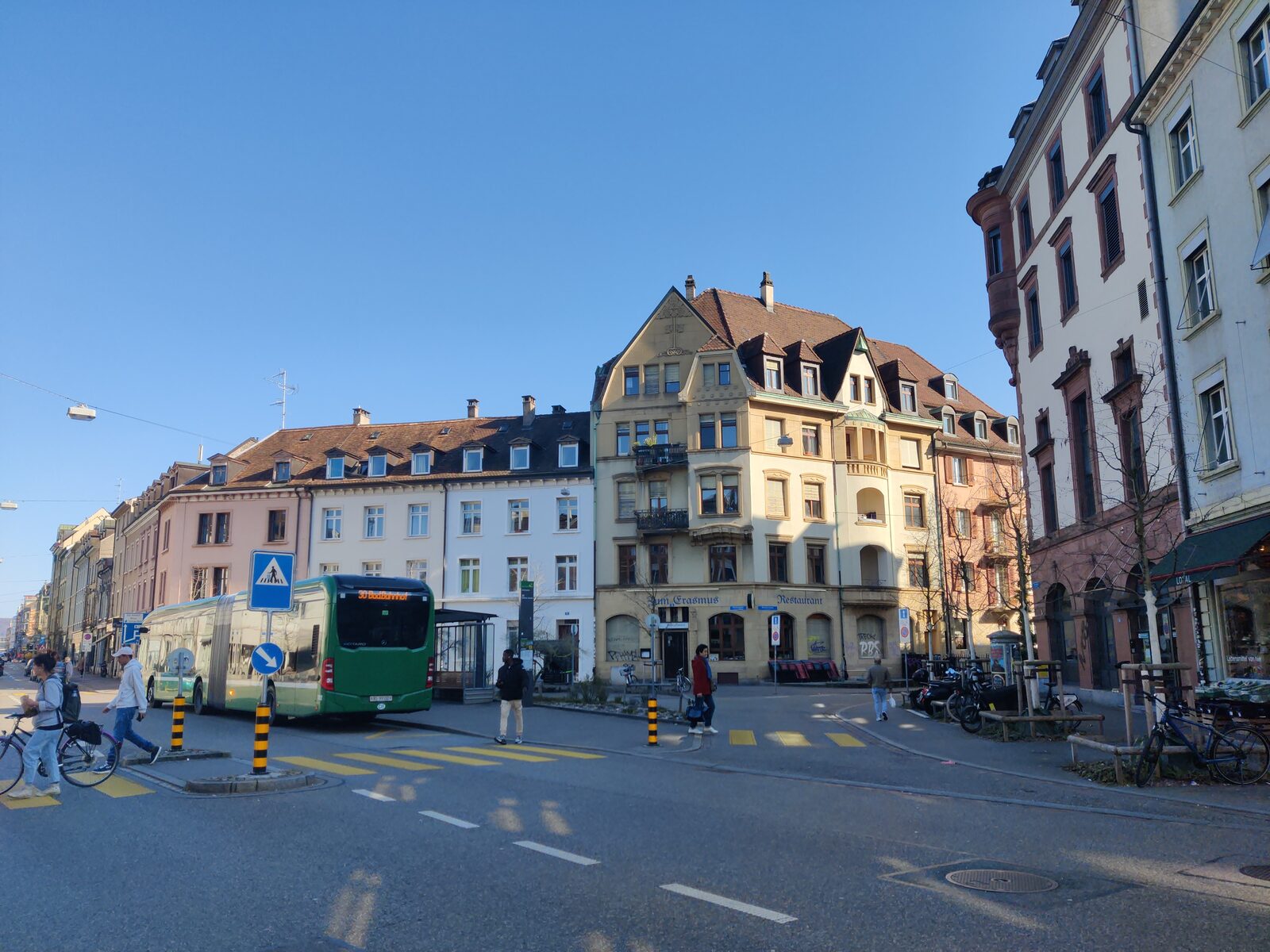
It is a neighbourhood that quietly organises itself. The Albanian advice centre ABSM is at Gempenstrasse 27. The school with the most Albanian mother-tongue lessons in the canton, the Margarethen primary school, is at Gempenstrasse 48. Same street.
The river between two migrations
Look at which passports sit in which quarter and the Rhine turns into a line on a map of the Balkans.
The five densest Kleinbasel quarters are majority North Macedonian: only 41 percent of Klybeck's Albanian-passport residents hold Kosovo papers, 38 percent in Kleinhueningen, 48 in Clara and Rosental, 49 in Matthaeus. Cross the water and it inverts — Gundeldingen is 61 percent Kosovar, St. Johann 56, Hirzbrunnen 64, Wettstein 68.
Where that pattern comes from is harder to prove than it looks, and the honest answer needs a caveat about the statistics themselves. Basel's register shows a separate North Macedonia code from 1993, reaching 1'644 people by 1995 — but it has no separate Kosovo code at all until 2008. Before that, Kosovars were counted inside «Ex-Jugoslawien». So the register cannot be used, on its own, to show that Macedonians arrived first: it shows when Swiss statisticians decided to count them separately.
What does survive the caveat is institutional. Basel's oldest Albanian-language mosque association, Besimtari, was founded in 1994 by Macedonian Muslims — four years before the Kosovo war — and its membership is still predominantly of Macedonian origin; Kulturverein Paqja split off from it in 2003 only because the premises had grown too small. And the Macedonian passport population of the canton has barely moved in thirty years, while the Kosovar one is still growing. A settled Macedonian labour community was in place on the right bank before the Kosovar arrival became visible in any Swiss statistic. That is as far as the evidence goes, and this page will not go further.
Why the families left the city: rooms, not rents
The obvious explanation for the move out to Pratteln and Frenkendorf is that the city got expensive. The obvious explanation is wrong, and the canton's own housing data says so.
Vacancy rates in the two cantons are effectively identical — 0.9 percent in Basel-Stadt, 0.8 in Basel-Landschaft. What differs is not availability but size. More than 85 percent of the housing stock in Matthaeus has three rooms or fewer, and the canton's own quarter portrait records that family flats are «strongly under-represented». Nationally, people holding North Macedonian passports live in 25.1 square metres each, against 50.3 for Swiss citizens — the tightest of any nationality in the country.
A young couple can live in Klybeck. A family with three children cannot. That is the whole mechanism, and it points down the Rhine.
Pratteln
Pratteln is the most foreign municipality in canton Basel-Landschaft: 43.2 percent of its residents hold a foreign passport, against a cantonal average of 26.4. That is a higher share than every Basel city quarter except the five in Kleinbasel. Functionally, Pratteln is a Kleinbasel quarter that happens to sit ten kilometres up the river — and a tram has run between the two since October 1922.
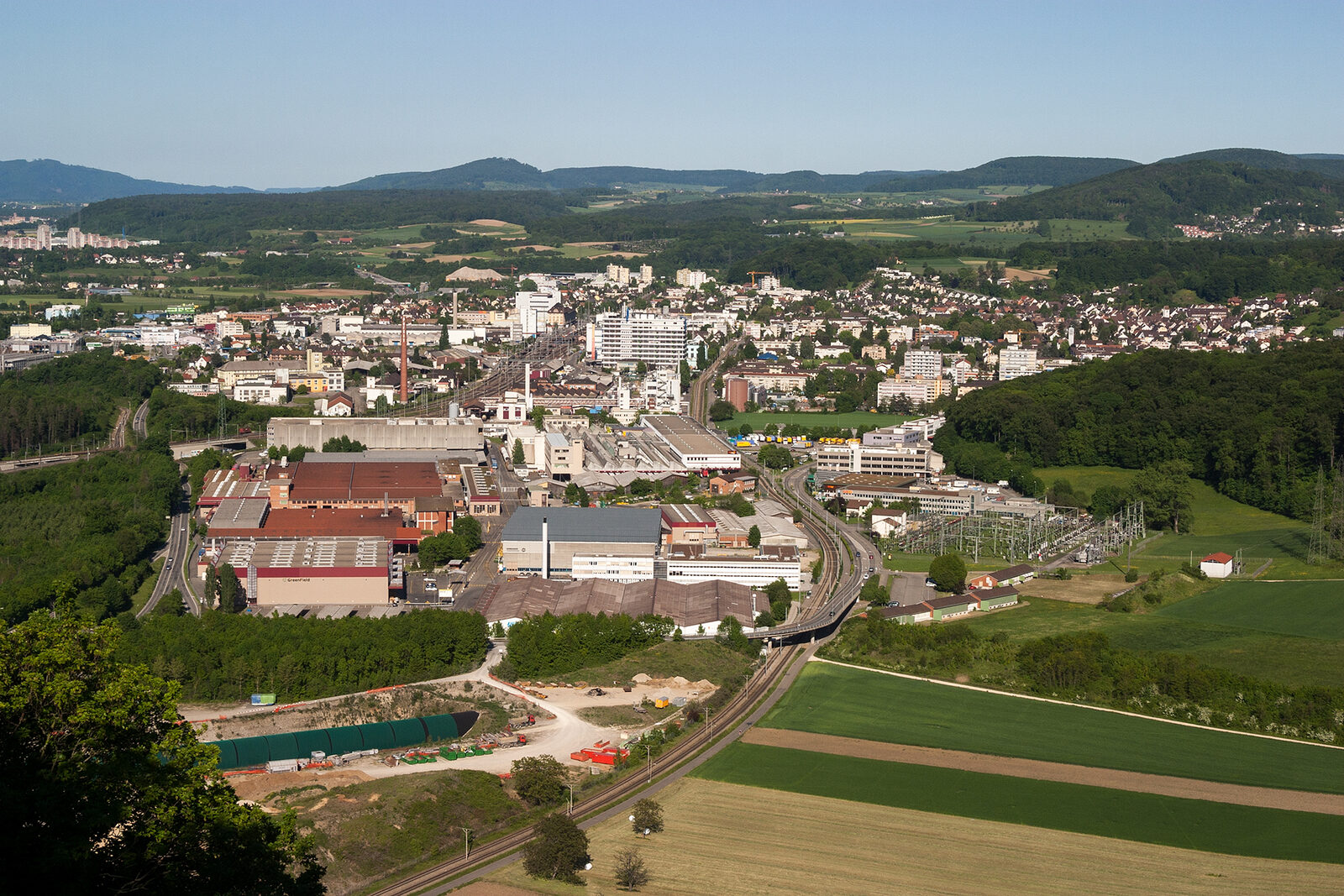
Why there, in one number: Pratteln offers 916 jobs per 1'000 residents. Its over-represented sectors are construction, trade and warehousing — precisely the trades that the community entered. Hirmet Ziberi, whose own father arrived from North Macedonia in the 1990s, describes the shift away from them as the story of his generation: no longer only «als Maler, Gipser und Gerüstbauer».
The housing that made it possible has a longer history than the migration. Salt was found under Pratteln in 1836; the salt brought the chemical industry; the industry brought foreign workers, and in 1964 it built the Längi estate at the north-eastern edge of the village to house them. The blocks are still there, and they are still the most international address in the canton. The writer Shqipe Sylejmani grew up in them.
The count that stopped counting
Here is the fact that undoes most reporting on this subject. In canton Basel-Stadt, the number of residents holding a Kosovan, North Macedonian or Albanian passport peaked in 2016, at 4'632, and has fallen every year since — down 9.7 percent to 4'183 by the end of 2025.
Read naively, that says the Albanian community of Basel is shrinking. It is not. It is becoming Swiss.
The canton publishes a second dataset that sees through naturalisation entirely: the surname of every resident, every year since 2011. Names do not change when passports do. Counting the bearers of ninety-six distinctly Albanian surnames in Basel-Stadt gives a line that runs in the opposite direction to the passport line, and never once turns down.
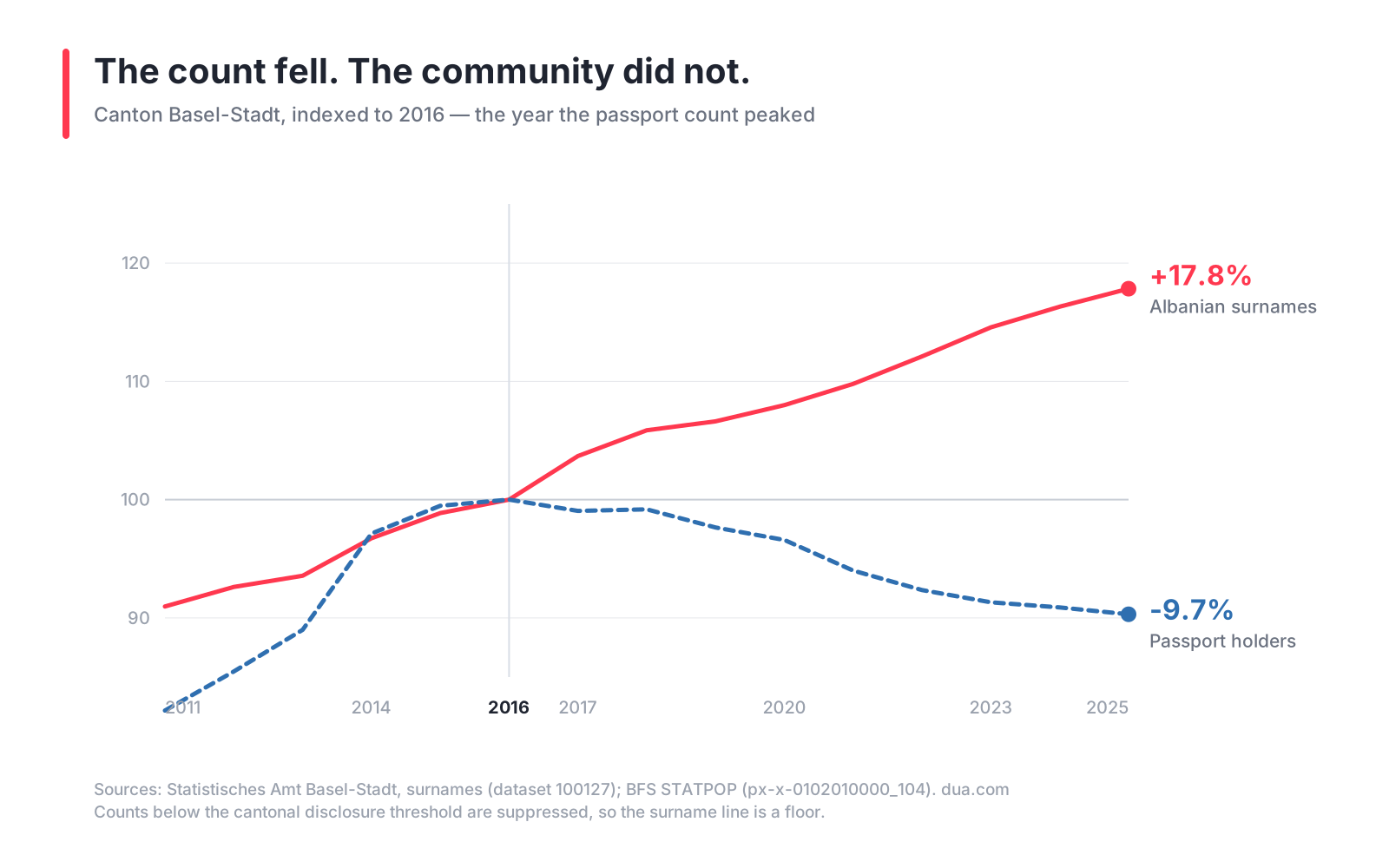
From 2011 to 2025 the surname count rose from 1'923 to 2'491, an increase of 29.5 percent. Measured from the 2016 passport peak, the two lines part company completely: passports down 9.7 percent, surnames up 17.8 percent, over exactly the same nine years. The gap between them is the 4'609 naturalisations.
Two honest qualifications. Basel-Stadt suppresses any surname count below a disclosure threshold — 40'819 of the 53'242 surname rows in 2025 are blank for that reason — so the real total is higher than 2'491. And a handful of the ninety-six names on the list (Osmani, Shabani, Demiri, Ademi, Ismaili) are also carried by Turkish, Bosniak and non-Albanian North Macedonian families. The list is an indicator of scale and direction, not an ethnic census. The direction is not in doubt.
Gashi, thirty-fourth
The same dataset produces the single most concrete measure of how established this community now is. Ranked against every surname in canton Basel-Stadt in 2025, Gashi is the thirty-fourth most common name in the canton, with 206 bearers. Krasniqi is fifty-second with 158, Berisha eighty-third with 132.
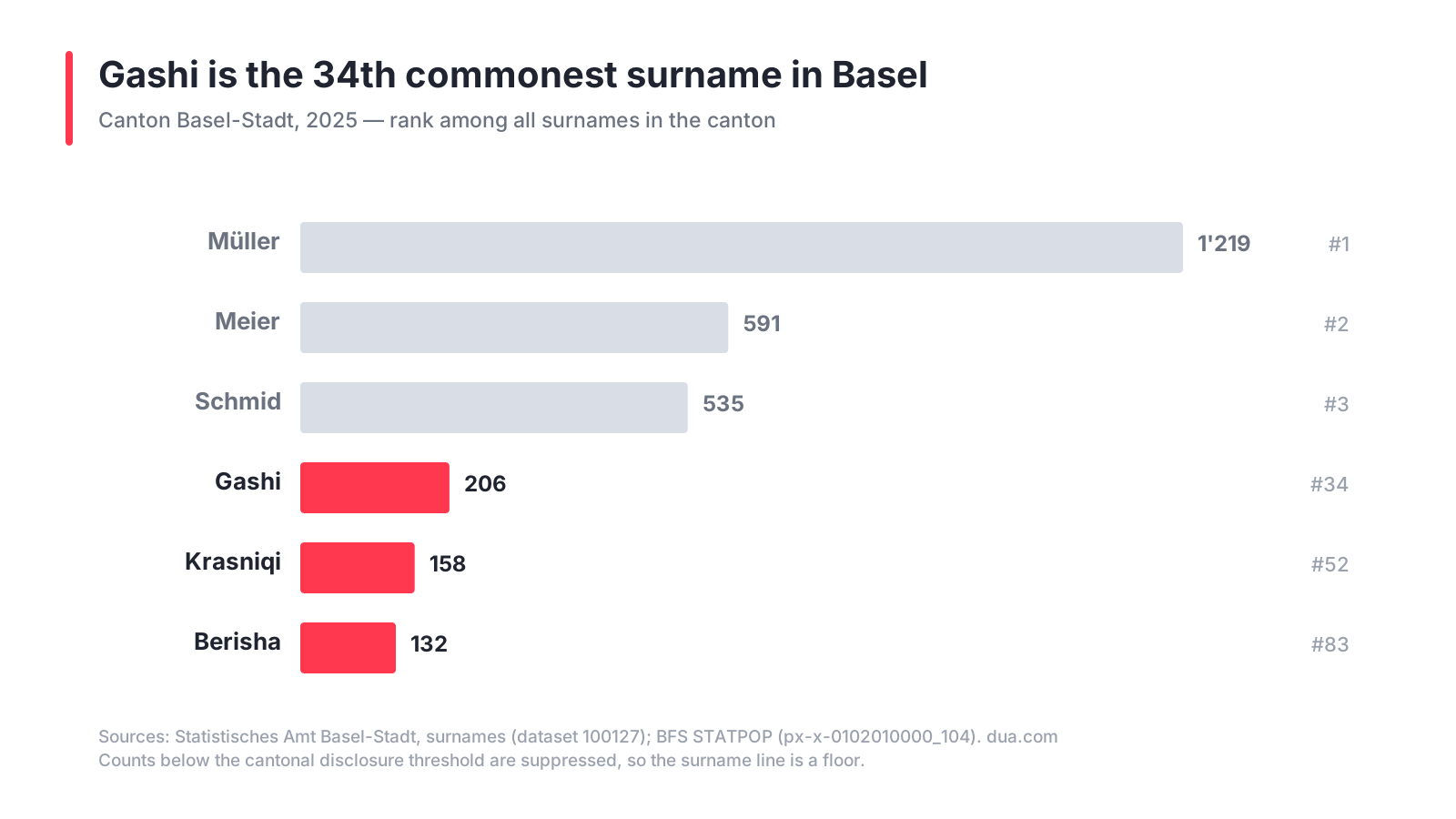
For scale, the top of that same table is Müller with 1'219, Meier with 591 and Schmid with 535. A Kosovar name from a village near Podujevë is now more common in Basel than most of the old Basel names, and the trend has been in one direction for fifteen years.
Across the border in canton Basel-Landschaft, where the statistical office publishes surnames by municipality, the pattern is sharper still. In Pratteln, Osmani is the sixth most common surname in the entire municipality; Bajrami is eleventh and Krasniqi nineteenth. In the village of Zunzgen, Osmani is fourth and Asani fifth. In Lausen, Shabani is fourth. In Birsfelden, Bajrami is seventh.
Kosovo or North Macedonia?
Look at which passports those are, and the Basel region splits cleanly in two.
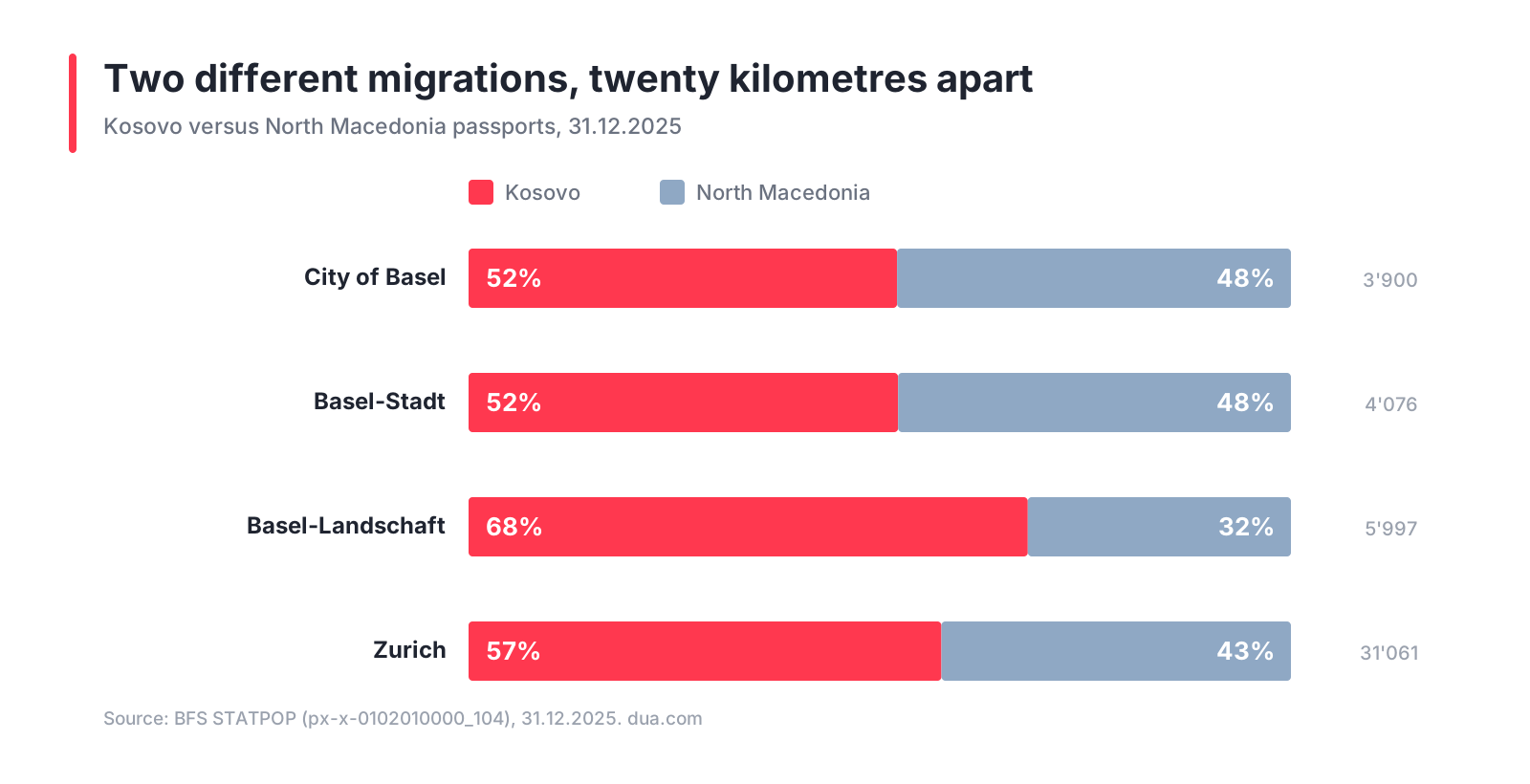
In the city of Basel the split between Kosovan and North Macedonian nationals is almost even: 2'032 to 1'868, or 52 to 48. Nowhere else in urban Switzerland is it that balanced — canton Zurich runs 57 to 43, and canton Basel-Landschaft, twenty kilometres away, runs 68 to 32. The city is the most North-Macedonian-Albanian big city in the country; the countryside around it is Kosovar.
How did Albanians come to Basel?
Through industry, not asylum — and later than most people assume.
The factories, and the workers who filled them (1960s to 1980s)
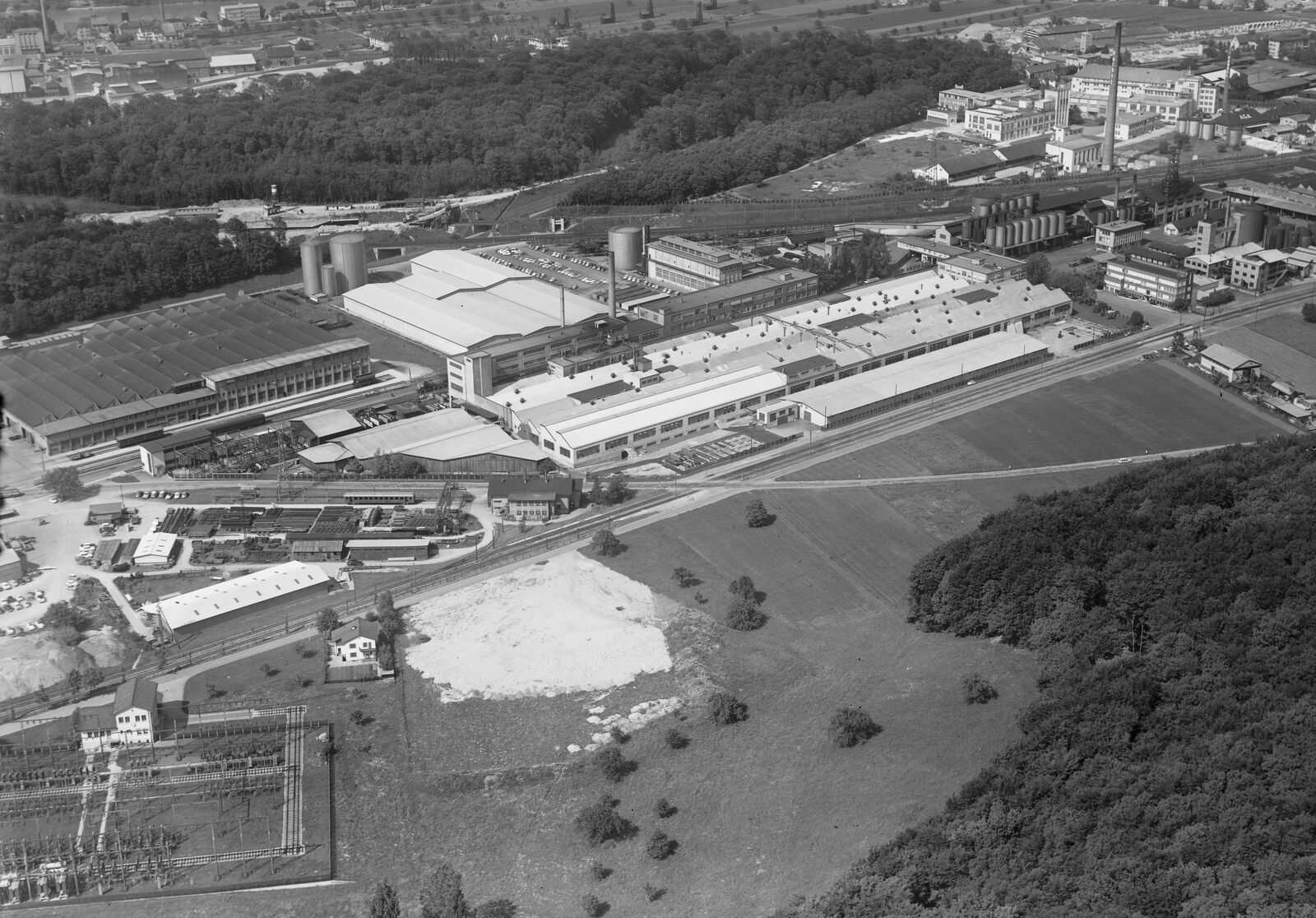
Basel's pull was chemical and industrial: the works at Schweizerhalle, Buss in Pratteln from the 1890s, Firestone, Henkel, Schindler, the Coop distribution cluster. The first wave of that labour was Italian, overwhelmingly so; Italians were still 41 percent of all foreign nationals in canton Basel-Stadt as late as 1979, when the register first breaks them out.
There was never a Swiss–Yugoslav recruitment treaty. Germany signed one in 1968 and Austria in 1966; Switzerland signed only a social-insurance agreement, in 1962, and then left recruitment to branch associations. The Swiss Farmers' Association began collective recruitment in spring 1964, hoteliers and hospitals followed, and from around 1970 construction took the largest contingents. Employers frequently recruited informally, bypassing Belgrade's placement fees, so the same men came back season after season and passed jobs to relatives. That informality is the engine of the chain migration that produced Pratteln.
Basel is also the Swiss city where the Saisonnier story is thinnest. Its factories had Alsace and Baden on the doorstep and drew heavily on cross-border commuters, so the seasonal-worker system mattered less here than in Zurich or the Alpine construction cantons. Basel's employers reached across the national border before they reached across the Balkans.
And Swiss records made no ethnic distinction. Unskilled labour came from central Serbia, Kosovo and Macedonia alike, and every one of those workers was recorded as Jugoslawe. That is why no count of Albanian-speakers in Basel exists before the 1990s.
1970: the city that nearly voted yes
In June 1970 Switzerland voted on the Schwarzenbach initiative, which would have expelled a large share of the foreign population. It was rejected nationally with 45.99 percent in favour. Canton Basel-Stadt voted 46.72 percent yes — above the national figure, and close enough that the industrial city on the Rhine came nearer to voting for mass expulsion than Switzerland as a whole did. Basel-Landschaft rejected it more clearly.
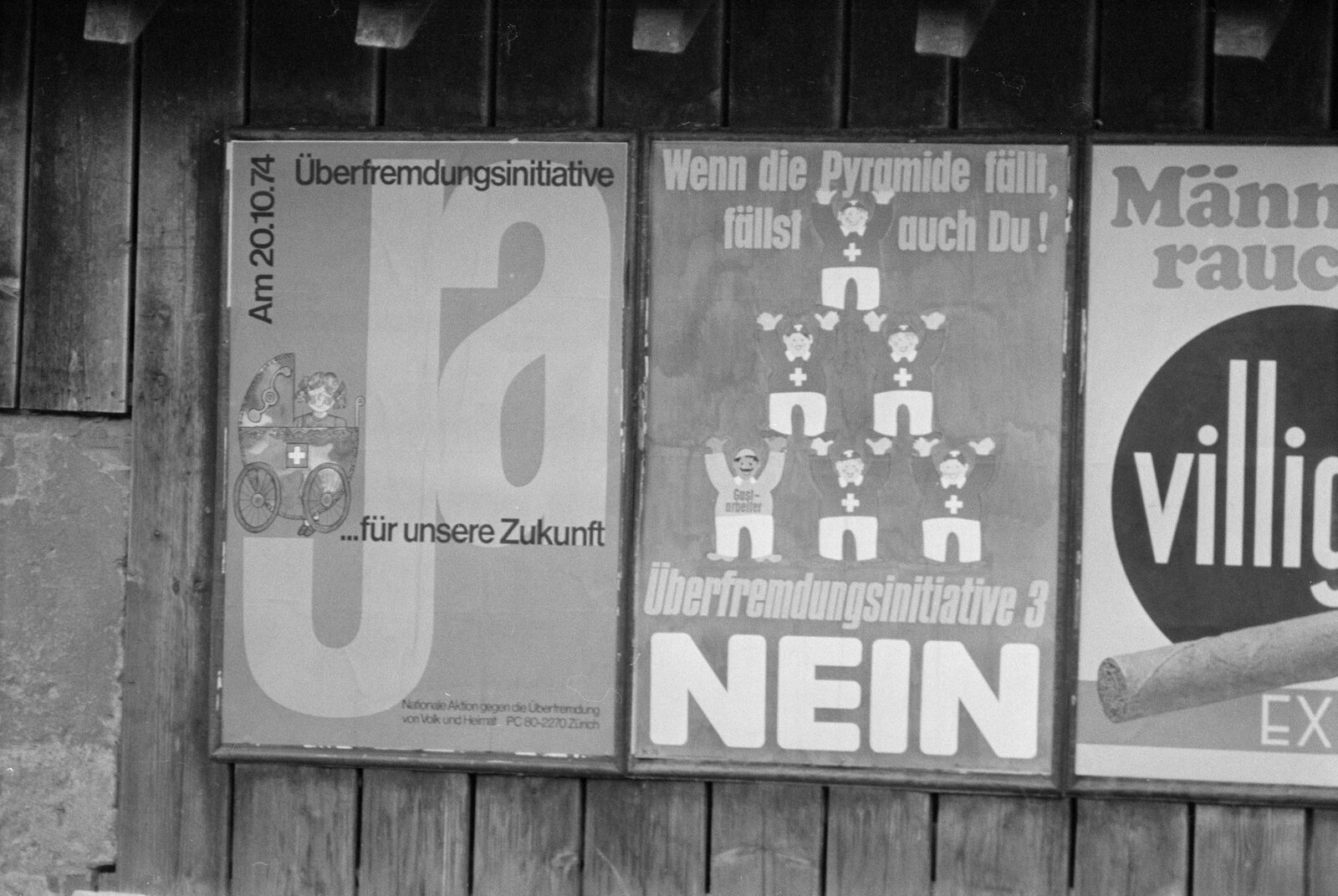
Commune-level results from 1970 are not published anywhere — the Federal Statistical Office holds municipal referendum figures only from 1981 — so how each of the Rhine-plain villages voted cannot be established, and this page will not guess. What can be said is that the men who filled the sheds along the river were working in a canton where nearly half the electorate had just voted to send people like them home.