Statistics Canada counted 41,625 people who reported Albanian ethnic or cultural origin in 2021. After separating Kosovar responses, overlap and census coverage, dua.com's best rounded working estimate is about 46,000 people, with a defensible 44,000–50,000 scenario range.
That answer is a community question, not a passport count. Naturalized citizens and Canadian-born descendants already sit inside the origin row when they report Albanian; Albania-born, Kosovo-born and Albanian mother-tongue rows answer different questions. dua.com is part of this diaspora—a bridge for people whose families, language and daily lives stretch between Toronto, Montréal, Vancouver–Surrey, Calgary and the Balkans—but the community comes first here.
Last evidence review: 28 August 2026.
For more on this topic, read Albanians in Paris: The Community Behind the Count and Albanians in America: A Community Estimated at 750,000 to 1 Million.
How many Albanians live in Canada?
The census defines origin through ancestors and allows more than one response. Albanian and Kosovar are separate published categories. The 41,625 Albanian row includes 32,780 single-origin and 8,845 multiple-origin responses; it already reaches first, second and third generations. Birthplace, citizenship and language therefore cannot be stacked on top as extra people.
Swipe horizontally to explore the chart.
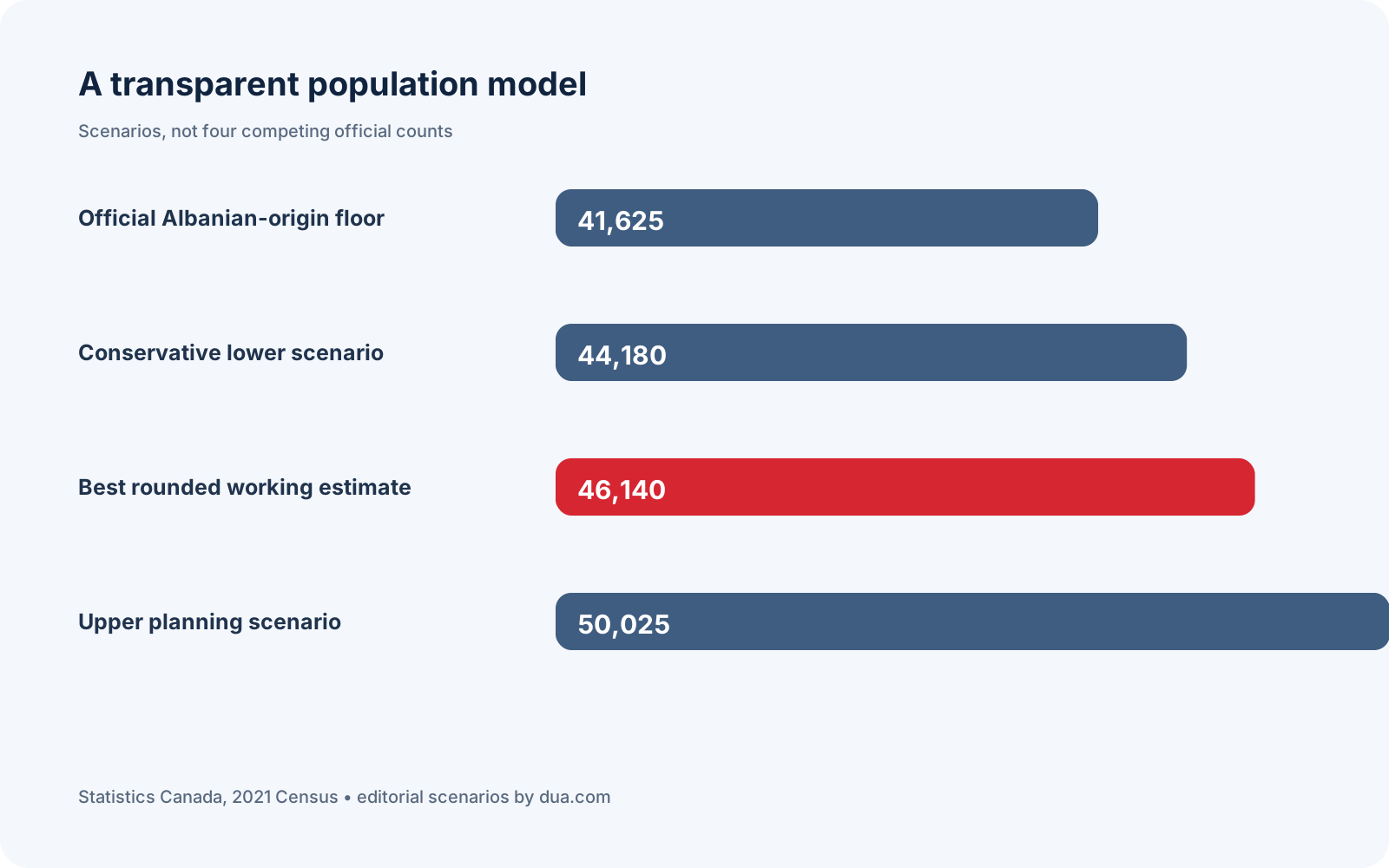
The official floor is the broadest reproducible row that explicitly names Albanian origin. A conservative community lens then adds only 2,555 people who selected Kosovar as their sole origin: by definition they are outside the Albanian row. The 1,175 multiple-response Kosovar row may overlap Albanian, so the central scenario deducts half as overlap.
The central 46,140 adds 590 non-overlapping multiple Kosovar responses and a 1,370 sensitivity equal to Canada's 3.1% census net-undercoverage rate. The upper 50,025 adds a clearly labelled reporting-boundary sensitivity equal to 30% of the explicitly counted second- and third-generation Albanian-origin population; scholarship supports the direction, not that rate.
A mechanical 20% uplift would be 49,950. That is near the upper planning scenario, not the evidence-led centre. The published answer is therefore about 46,000—not 50,000 disguised as an official count, and not the unsupported 100,000-plus figure repeated on some community sites.
The safest way to use these numbers is to keep every measure in its lane. Ethnic or cultural origin records the ancestry people chose to report and permits several answers; birthplace records where a person was born; mother tongue records the first language learned and still understood; immigration and citizenship describe legal and settlement histories. None is a complete membership register. The national undercoverage adjustment in the central scenario is also a sensitivity, not an Albanian-specific correction. That is why this page publishes the official result, the arithmetic and the uncertainty together instead of presenting one editorial estimate as census fact.
Where the community lives
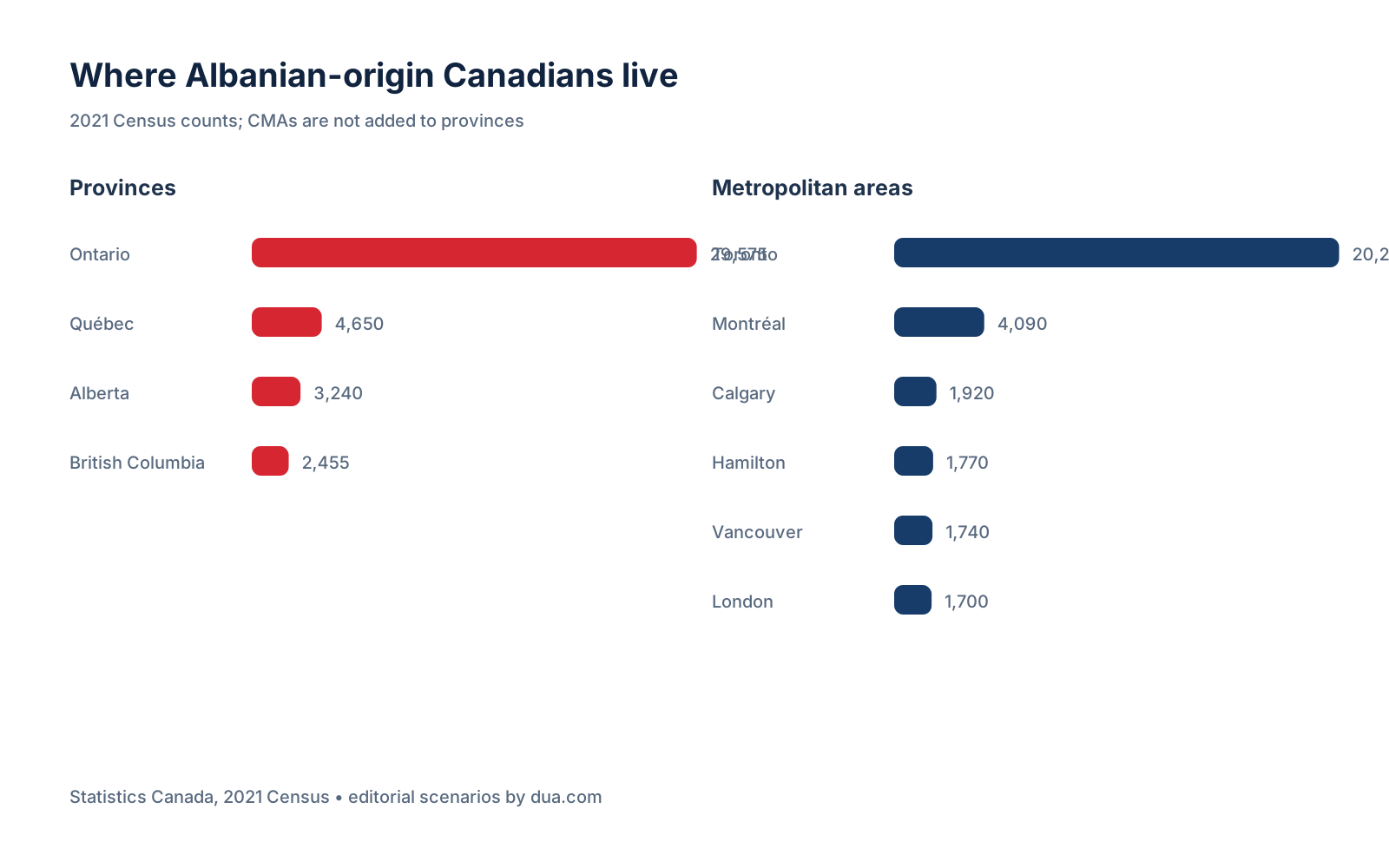
Ontario holds 29,575 people reporting Albanian origin—71% of the national row. The Toronto CMA alone has 20,205. Québec has 4,650, British Columbia 2,455 and Alberta 3,240. Census metropolitan areas are nested inside provinces and city counts are nested inside CMAs, so these layers are never added together.
Settlement follows metropolitan opportunity more than a single enclave. In the GTA, families are spread across Toronto, Mississauga and surrounding municipalities, so work, school, faith and events often require travel across the region. Montréal–Laval operates through a different French-English institutional environment. Vancouver and Surrey share a census metropolitan area but not identical daily networks, while Calgary and Edmonton anchor Alberta. The city profiles below therefore describe connected hubs, not sealed communities, and the table uses one geographic level at a time so readers can compare places without double counting them.
Swipe horizontally to explore the chart.
Ontario · Toronto
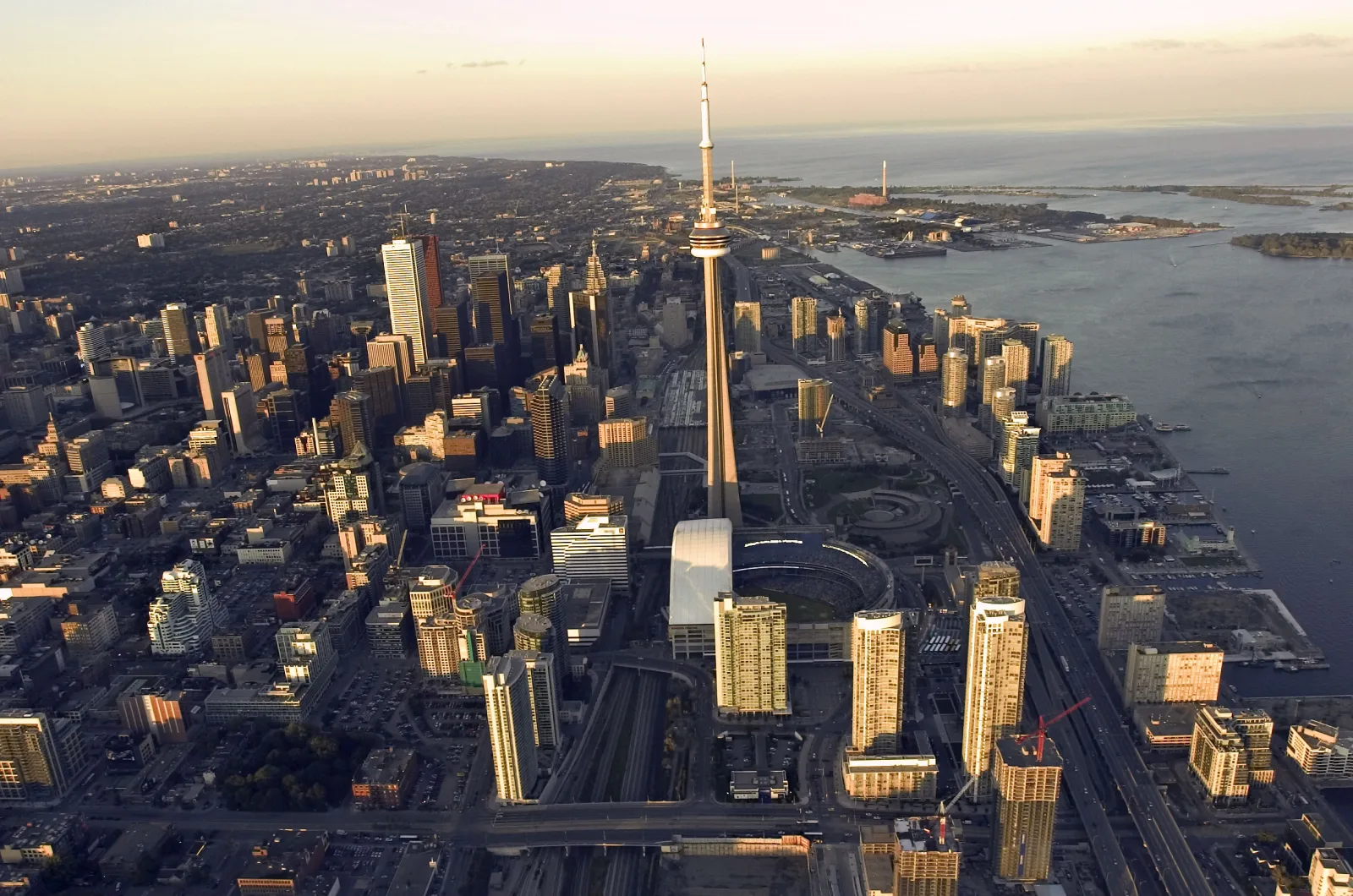
Toronto is the national centre of gravity, but the GTA is not one neighbourhood. Mississauga alone records 3,830 Albanian-origin residents, while Hamilton, London, Windsor, Ottawa–Gatineau and Kitchener–Waterloo form substantial Ontario nodes. ACCA, the Albanian Muslim Society, Catholic and Orthodox initiatives, media, businesses and November heritage events give that dispersed geography shared infrastructure.
Québec · Montréal–Laval
The Montréal CMA records 4,090 Albanian-origin residents—88% of Québec's total—and Laval records 785. The community works in French, English and Albanian: cultural associations, the Nënë Tereza and Dardania school networks, books, Flag Day and family events make Montréal–Laval a genuinely francophone Albanian pole rather than a translated footnote to Toronto.
British Columbia · Vancouver–Surrey
British Columbia records 2,455, including 1,740 in the Vancouver CMA and 435 in Surrey city. EaglesLand traces organized BC life from an early 1950s association through its 2006 nonprofit and documents Albanian classes at Fraser Heights School. Vancouver and Surrey belong to one metropolitan system, but their local institutions and settlement services remain distinct.
Alberta · Calgary–Edmonton
Calgary (1,920), Hamilton (1,770), Vancouver (1,740), London (1,700), Windsor (1,485), Ottawa–Gatineau (1,325), Kitchener–Waterloo (1,135) and Edmonton (1,060) show why a national bridge matters. Use association sites as starting points, then confirm dates, venues and services directly.
Statistics Canada · Census 2021 · table 98-10-0356-01.
A century of migration and Operation Parasol
The first movement was small: histories place a few Korçë-linked Orthodox migrants and workers in Canada in the early 1900s, while older censuses often hid Albanians inside 'Balkan' or residual categories. Postwar refugees from communist Albania and Yugoslavia created durable business and faith institutions. After 1990, skilled-worker, study, refugee and family channels accelerated the community's growth.
- 1900s · Korçë → Canada
- 1945–1990 · Albania · Yugoslavia · Canada
- 1991–2000 · Albania 4,130 · Kosovo 3,465
- 1999 · Operation Parasol · 5,051 + 2,239
- 2001 · Toronto City Hall
- 2016 · Ontario · Albanian Heritage Month
- 2024 · Halifax · Toronto · 25 years of Parasol
Swipe horizontally to explore the chart.

In 1999 Operation Parasol brought 5,051 Kosovar refugees from Macedonia, while an accelerated family-reunification response brought another 2,239 from Albania. Bases in Ontario and Nova Scotia, the Red Cross, settlement agencies and volunteers built temporary reception systems; roughly one-third later returned and most stayed. That 7,290 is a historic arrival programme, not today's population total.
Canadian Albanian history is best read as several overlapping migrations. Early workers and Orthodox families established small footholds; postwar arrivals included people displaced by communist rule and by Yugoslavia's political order; the opening of Albania after 1990 brought students, professionals and family migrants; the Kosovo war created a distinct humanitarian chapter. Operation Parasol was unusually visible because reception happened through military bases, public agencies, the Red Cross and local volunteers. Later family formation, naturalization and Canadian-born children turned those arrivals into a multigenerational community whose story can no longer be reduced to one refugee operation.
Albania 4,130
Kosovo 3,465
Albania 8,000
Kosovo 3,165
Albania 5,500
Kosovo 1,670
Language, citizenship and generations
The census reports 30,015 people with Albanian mother tongue: 26,460 first generation, 3,545 second generation and only 10 third generation or more. Language can remain strong within newcomer families yet shift quickly across generations. It is evidence of continuity, never an ancestry ceiling.
Among people reporting Albanian origin, 28,670 are first generation, 11,585 second generation and 1,370 third generation or more. The separate birthplace lens counts 19,685 Albania-born residents (17,825 immigrants and 1,735 non-permanent residents) and 8,800 Kosovo-born residents (8,445 immigrants and 295 non-permanent residents). Their immigrant arrival cohorts were 4,130 and 3,465 in 1991–2000, 8,000 and 3,165 in 2001–2010, and 5,500 and 1,670 in 2011–2021. Among the two birthplace groups, 14,265 and 6,985 were Canadian citizens. Naturalization is part of settlement; it does not erase origin.
Language continuity is produced at home and in community spaces, not guaranteed by ancestry. Weekend classes, children's performances, faith gatherings, books, music and visits to the Balkans can extend Albanian into a second generation, while school and work make English or French dominant in daily life. Dialect, country of family origin and mixed households also shape what is spoken. The very small third-generation mother-tongue count should therefore be read as evidence of language shift under the census definition, not as evidence that later generations have stopped identifying with Albanian family history.
Associations, faith, schools and practical resources
Community infrastructure is practical as well as symbolic: associations welcome newcomers, schools help children hear and read Albanian, faith institutions gather families, business networks turn introductions into work, and cultural calendars keep November, Kosovo Independence Day, March celebrations, books, food and dance visible. The table lists verified starting points, not a claim that every listing is active every week.
For a newcomer or a family reconnecting with community life, the most useful route is local and specific: start with an association's official site, confirm whether its school or event calendar is current, and contact the organizer before travelling. Provincial settlement agencies remain the authoritative place for immigration, housing, health and employment services; community groups add language, cultural context and trusted introductions but do not replace professional advice. The directory prioritizes organizations with a verifiable first-party presence and names the city or region they serve, rather than copying long, stale lists from social media.
Albanian Canadian Community Association
Albanian Muslim Society
Association Culturelle Albanaise
EaglesLand Cultural Society
Albanian Canadian Association
Agjencia Kombëtare e Diasporës
Culture, events and public life
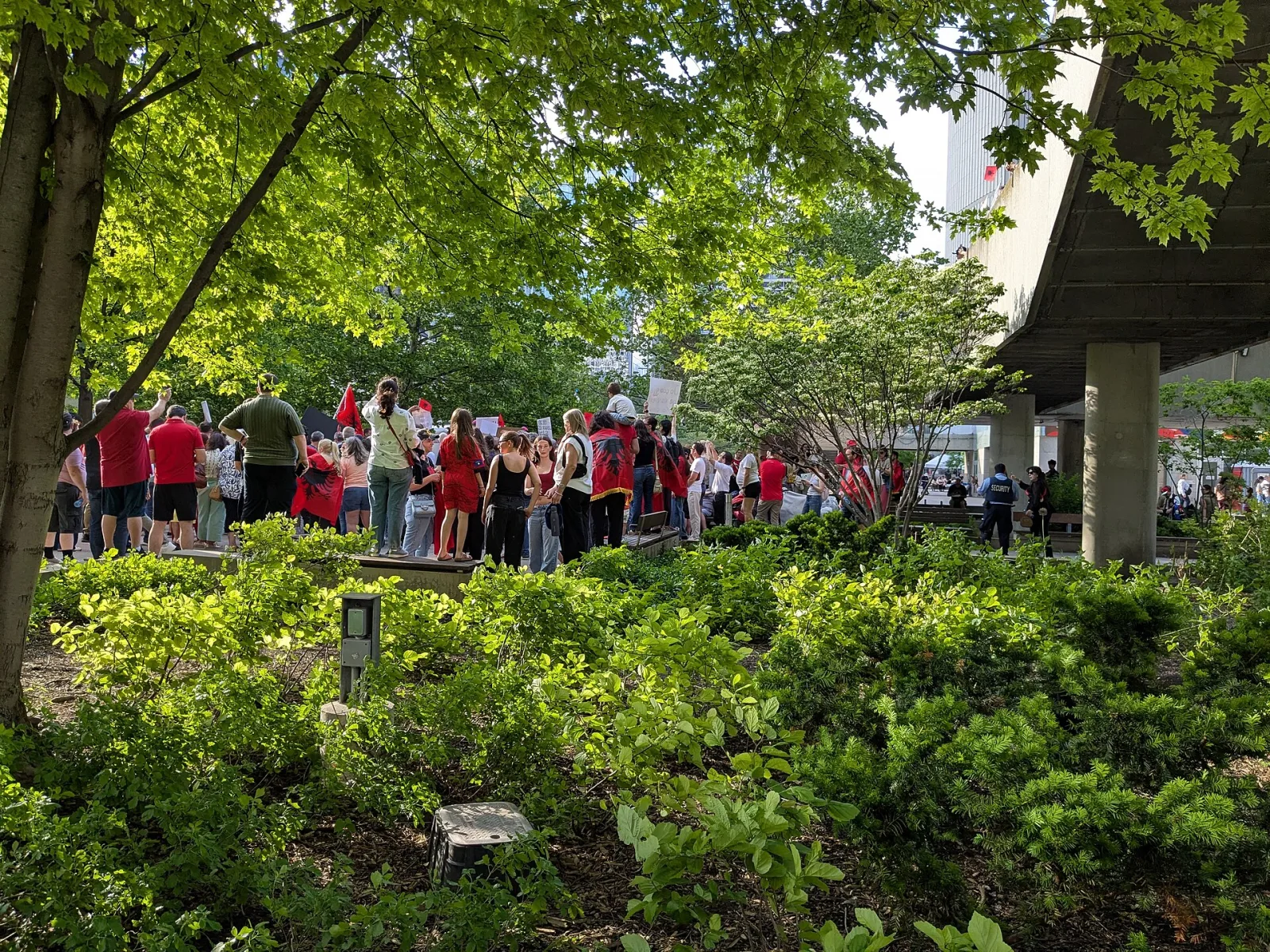
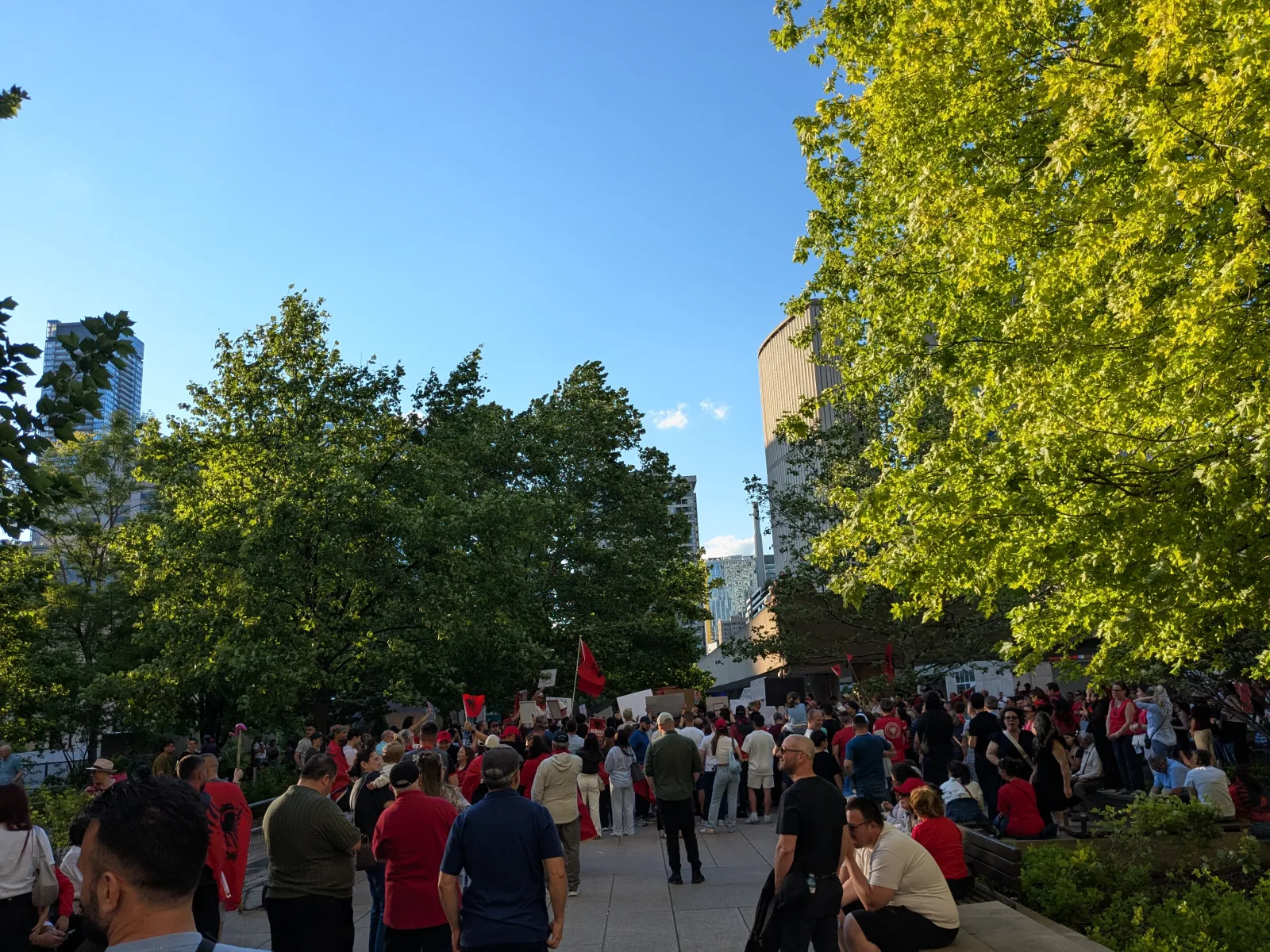
Ontario has marked November as Albanian Heritage Month since 2016, and ACCA dates Toronto's City Hall flag-raising tradition to 2001. Montréal, Calgary and BC associations publish their own calendars. Events are where language becomes practice—through children's recitations, food, music, dance and public remembrance—but readers should always confirm an event with its organizer.
Albanian Heritage Month
Ontario · Toronto City Hall · 2016
Kosovo
Canada · Toronto · Montréal · Calgary
Shkolla shqipe
Albanian mother tongue · Toronto · Montréal · Calgary · Vancouver–Surrey
How community life happens now
ACCA · Albanian Muslim Society
Founded in 1990, ACCA publishes concerts, Flag Day gatherings and cultural programming. In March 2026, the Albanian Muslim Society reported 512 guests at its Bajram dinner while organizing a new mosque and Albanian cultural centre.
Association Culturelle Albanaise
A March 2026 gathering brought the Albanian and Kosovo associations together around schoolchildren’s recitations, the Albos dance group and a shared traditional table. The Albanian Book Festival also connected writers from Montréal, Toronto, Ottawa and Vancouver.
EaglesLand
EaglesLand organizes annual gatherings and Albanian-language classes across the Vancouver–Surrey network. Its community timeline reaches from early organizing in the 1950s to Kosovar refugee settlement in 1999 and the society established in 2006.
Foleja e Shqiponjave
ACAC supports Foleja e Shqiponjave, a Saturday language and culture school recognized after ten years, alongside sports days, business profiles and celebrations for Flag Day and Kosovo Independence.
What settlement feels like
These accounts also warn against a single success narrative. Settlement differs by arrival period, immigration class, age, gender, education, family support and the recognition of overseas credentials. Someone arriving through a skilled programme in Toronto may face different barriers from a refugee family received in 1999 or a student building a life in Montréal. Oral history adds what population tables cannot: the emotional labour of translation, childcare, remittances, caring across borders and rebuilding professional confidence. It is evidence about experience, not a claim that every Albanian Canadian shares the same path.
Albanian Canadians in public life
Public contribution is broader than a celebrity list. The examples below are included only where both the Canadian connection and Albanian/Kosovar family story are directly sourced—from hockey and football to community advocacy and local business history.

Canada, Albania and Kosovo
Canada and Albania established diplomatic relations in 1987. Canada recognized Kosovo on 18 March 2008 and continued security and development cooperation; Kosovo maintains an embassy in Ottawa and a consulate general in Toronto. Operation Parasol's 25th-anniversary commemorations in Halifax and Toronto brought refugees, responders and officials back into the same story.
Why dua.com matters to a scattered diaspora
Distance is the defining fact of this diaspora. Half the official origin population lives in the Toronto CMA, but thousands more are spread across two languages, multiple provinces and family networks that lead to Albania, Kosovo, North Macedonia, Montenegro and Serbia. A community platform matters when it makes that distance navigable.
dua.com is different because Albanian identity is not a filter bolted onto a generic network. Language, cultural context and verified people are central; cross-border discovery and Fly/location capability let someone look beyond the block or province they happen to occupy. That can support friendship, love, professional introductions and community participation—and turn a scattered census row into active connection.
The useful distinction is intent. A general platform can show who happens to be nearby; dua.com begins with Albanian cultural belonging and then lets people widen or move their search. Verified profiles, language-aware discovery and Fly/location can help someone in a smaller Canadian hub find people in Toronto, Montréal, Europe or the Balkans without pretending distance has disappeared. The product is a bridge for real introductions—what follows still depends on consent, trust and the communities people build offline.
Frequently asked questions
How many Albanians live in Canada?
Statistics Canada counted 41,625 people reporting Albanian origin in 2021. This article uses about 46,000 as a rounded editorial working estimate, within a 44,000–50,000 scenario range.
Why is the estimate higher than 41,625?
The lower scenario adds 2,555 single-response Kosovar-origin people outside the Albanian row. The central scenario adds a partial multiple-response allowance and a national coverage sensitivity after deducting overlap.
Does Canada have 100,000 Albanians?
No reproducible census, registry or scholarly model found for this review supports 100,000. Global Affairs Canada mentions that some websites publish it but does not endorse or source it.
Where do most Albanian Canadians live?
Ontario has 29,575, and the Toronto CMA has 20,205. Montréal, Calgary, Hamilton, Vancouver, London, Windsor, Ottawa–Gatineau and Kitchener–Waterloo are other material hubs.
How many live in Vancouver and Surrey?
The Vancouver CMA counted 1,740 Albanian-origin residents; Surrey city, inside that CMA, counted 435. Do not add Surrey to the CMA total.
What was Operation Parasol?
Canada's 1999 humanitarian response brought 5,051 Kosovar refugees from Macedonia and another 2,239 through accelerated family reunification from Albania. Most stayed, while roughly one-third returned.
How many people speak Albanian as a mother tongue?
The 2021 Census counted 30,015. Mother tongue measures language learned first in childhood and still understood, not everyone of Albanian origin.
Is dua.com data used to estimate the population?
No. No approved Canada-scoped snapshot was available, and product activity is not demographic evidence.
One community, more than one census row
The official answer is 41,625; the best community working estimate is about 46,000; and the honest range is 44,000–50,000. More important, the record shows a multi-generation Canadian community with a Toronto centre, a francophone Montréal pole, a Vancouver–Surrey network and active nodes across the country—held together by institutions, families, language and intentional connection.