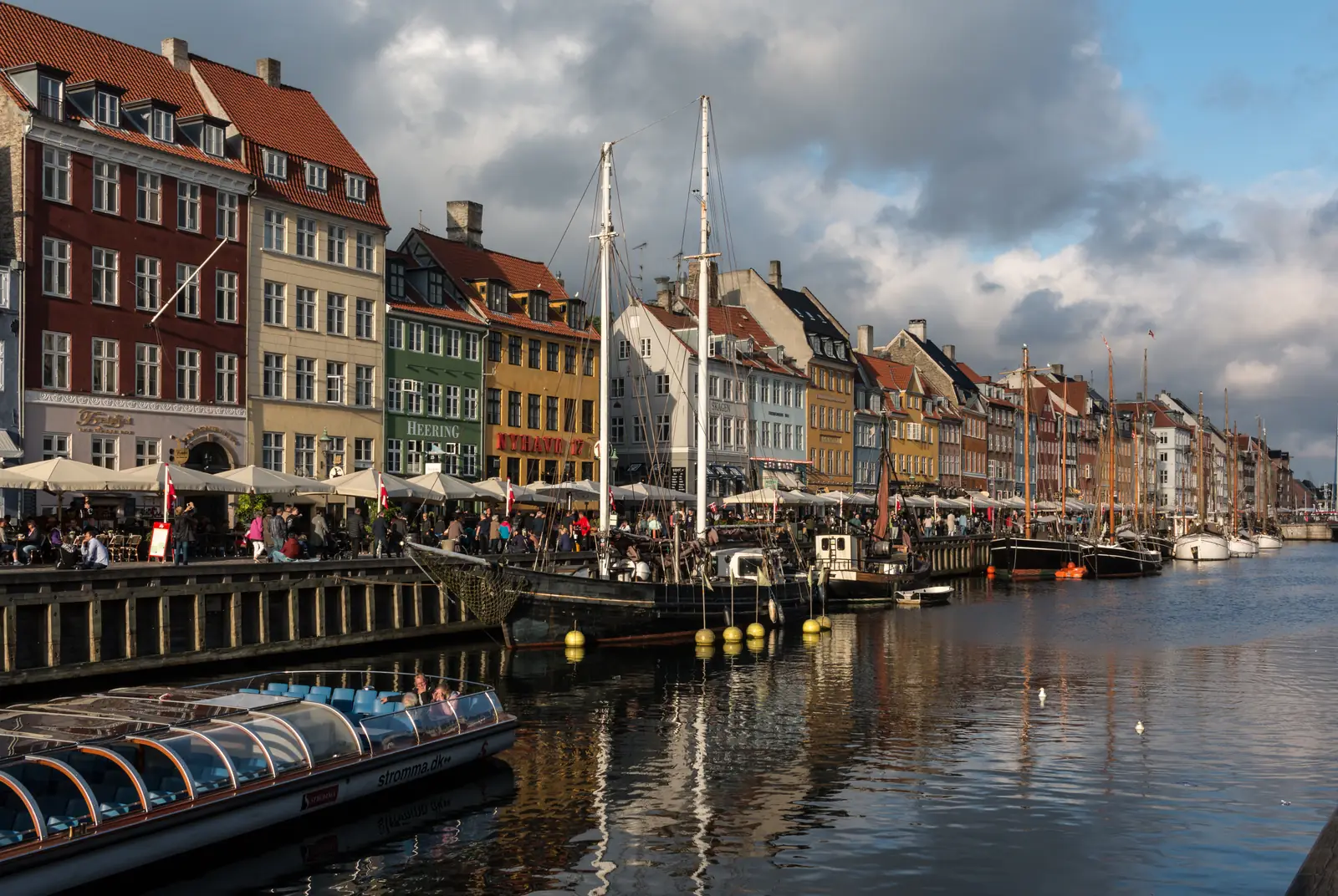
Albanian Copenhagen comes into focus after the ordinary school day ends, in a former cinema in Husum, and around a festival stage in Fælledparken. Its roots reach back to workers from Yugoslav Macedonia; its present includes Danish-born footballers, parents keeping a language in use and young organisers inviting the rest of the city in. Official figures reveal pieces of that story. They cannot give the community a single, reliable headcount.
At sixteen, Rexhep Rexhepi moved from the world he knew around Tetovo to Denmark. At seventeen, he was studying hospitality and beginning his working life in Copenhagen's restaurant scene. In a July 2026 interview with Bordo, he described seven and a half years across Noma, Barr and Hart Bakery. By then he was preparing the second Besa Festival: an invitation to experience Albanian culture in a Copenhagen park. His story is a useful place to begin because it moves in both directions. He learned a profession here; now he helps create a place where other people can encounter the culture he brought with him. Read the original interview.
How many Albanians live in Copenhagen?
The most precise answer starts with a boundary and a definition. On 1 July 2026, Statistics Denmark recorded 342 residents of Albania origin and 320 of Kosovo origin in Copenhagen municipality. The same table recorded 2,529 residents of North Macedonia origin. These are country-of-origin categories in FOLK1C, covering residents of all ages; they are not counts of Albanian speakers, ethnic Albanians or foreign passport holders.
The 662 people in the Albania and Kosovo categories are therefore a useful register subtotal, not the size of Albanian Copenhagen. Neither country is ethnically uniform. Conversely, an Albanian family from Tetovo may appear under North Macedonia, and an older migration history may appear under a former Yugoslav category. Copenhagen still has 2,458 residents recorded with Yugoslavia as their country of origin. There is no defensible way to assign all of them, or an arbitrary share of them, to this community.
The comparison with the wider Capital Region, Region Hovedstaden, is revealing. It contains 6,545 of Denmark's 7,418 North Macedonia-origin residents: about 88%. Its share of Denmark's Kosovo-origin population is around 20%. These are two very different settlement patterns. They help explain why Copenhagen's institutional history reaches towards western North Macedonia, even though many accounts of Albanian migration begin with Kosovo. They do not establish the ethnicity of any individual in the table.
| Area | Albania | Kosovo | North Macedonia |
|---|---|---|---|
| Copenhagen municipality | 342 | 320 | 2,529 |
| Capital Region | 861 | 1,007 | 6,545 |
| Denmark | 1,836 | 5,092 | 7,418 |
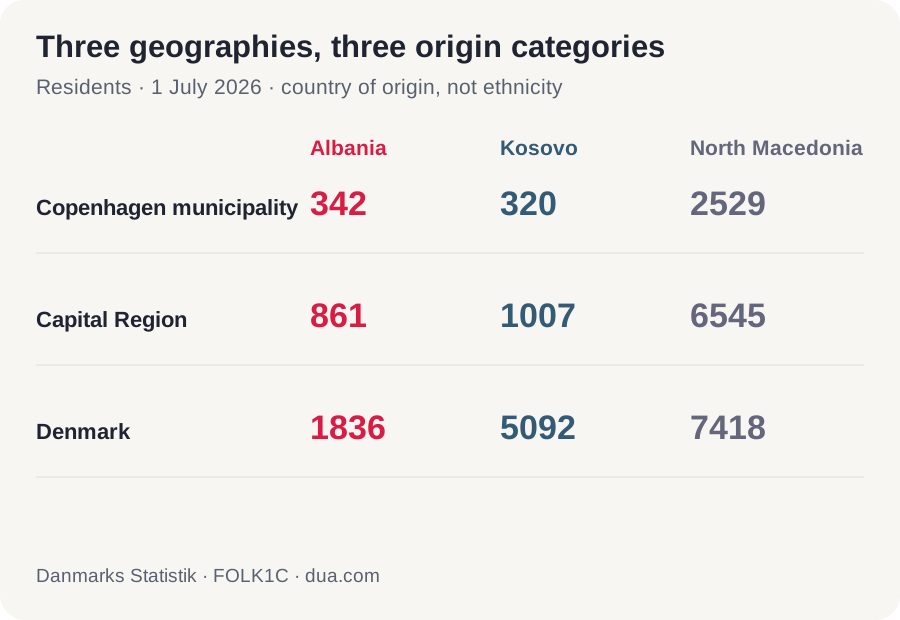
The Capital Region includes Bornholm and extends well beyond the continuously built-up city. It is an administrative comparison, not a synonym for metropolitan Copenhagen. The municipality is the smallest geography used for the headline figures here; nearby Frederiksberg is a separate municipality even though a walk through the city scarcely announces the boundary.
A Danish passport does not erase a family history
Country of origin and citizenship answer different questions. Citizenship describes a person's legal relationship with a state. Statistics Denmark derives origin from information about the person and their parents, including birthplace and citizenship. An immigrant can become Danish and remain in a foreign-origin category. It would be wrong to explain every small origin count as the result of naturalisation.
There is nevertheless a generational limit. Under the official definition, a person with at least one parent who is both Denmark-born and a Danish citizen is classified as Danish origin. The register is designed to describe migration background; it is not a permanent record of every ancestral connection. Families can continue speaking Albanian, celebrating together and identifying with Albanian culture after that statistical boundary has been crossed.
That is why this guide uses institutional histories, local reporting and people's own accounts alongside the data. We have not produced an ethnic population estimate for Copenhagen. A membership figure, an audience at a festival and a country-of-origin count describe different groups, with different boundaries and different possibilities of overlap.
The community's everyday map
The clearest local map is made of places people use. The 2026/27 municipal Albanian teaching programme names Tagensbo and Utterslev schools in Bispebjerg, Nørrebro Park Skole, and Korsager and Tingbjerg schools in the Vanløse–Brønshøj–Husum district. Theklavej, home to Den Centrale Albanske Moske, sits in Copenhagen NV. Another long-established Albanian congregation is on Frederikssundsvej in Brønshøj.
Together these addresses describe a network through the north and northwest of the city. They are evidence of services and institutions, not an ethnic ranking of neighbourhoods. A class can draw pupils from beyond its host school's immediate streets; a congregation can bring families in from several municipalities. No neighbourhood-level Albanian population total is inferred from these addresses.
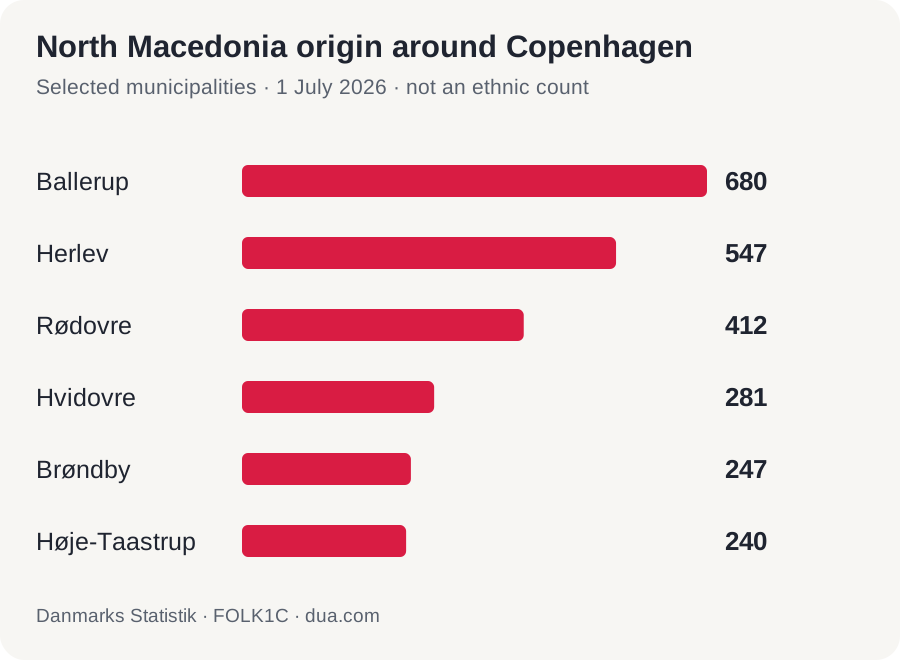
Outside the municipal boundary, Ballerup, Herlev and Rødovre belong in the wider story. FOLK1C records 680, 547 and 412 North Macedonia-origin residents respectively. Those figures make it easier to understand why community life crosses municipal lines, but again include people of different ethnic backgrounds. The school resource list published by Albania's Centre for Diaspora Publications also includes Ballerup. A family looking for a nearby class should check both the correct municipality and the current teaching year.
For practical journeys, use the institution's exact address in Rejseplanen. 'Copenhagen' on an event poster may mean the municipality, a suburb or simply the familiar name of the capital. The distinction matters when arranging an afternoon class, planning a visit with children or finding the right local authority.
From the factory journey to a lasting home
Den Centrale Albanske Moske preserves a first-party account of the workers behind its association. Its history describes young Albanian men leaving Yugoslav Macedonia between 1970 and 1990, with Copenhagen as the destination on their train tickets. Factory work was the attraction. The original intention, it says, was to earn money and return to improve life with their families; many instead built their lives in and around Copenhagen.
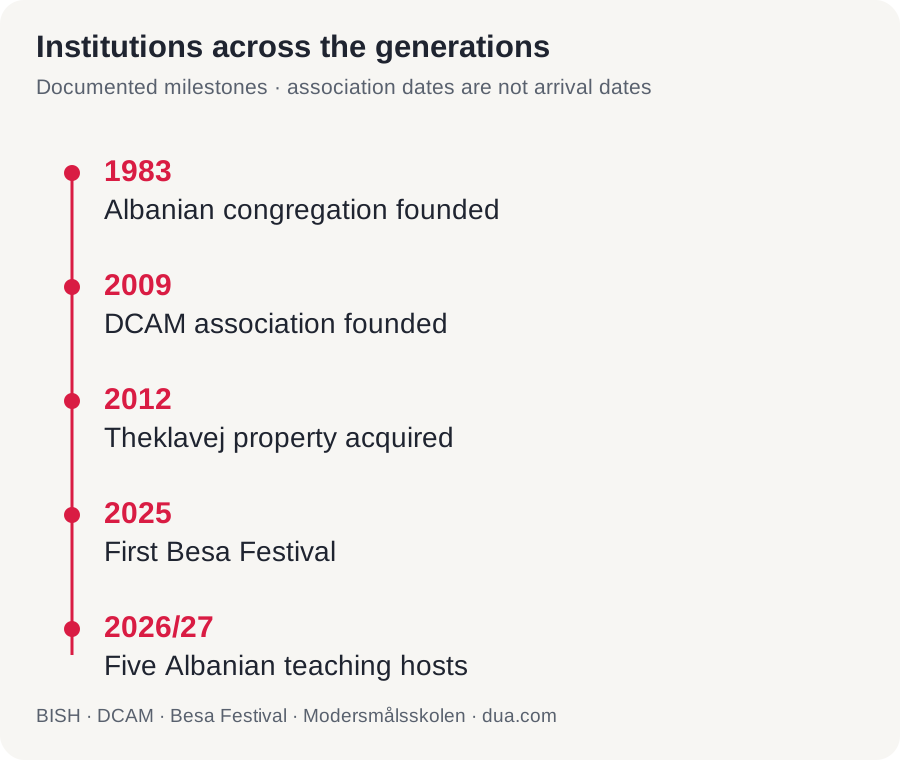
The dates need careful reading. That broad community recollection is not proof that the same labour-entry rules applied throughout those twenty years. Nor does an association's foundation date mark the arrival of the first Albanian family. The institution now called DCAM was founded as Dansk Albansk Kulturhus on 25 February 2009, acquired and paid off its Theklavej property in 2012 and adopted its present name in 2018.
There was already another institutional strand: Det Albanske Trossamfund i Danmark dates its foundation to 1983. This makes the history richer than a single founding moment. Copenhagen's Albanian residents organised in different settings, and the later creation of one association does not mean that earlier generations had no shared meeting place.
The Kosovo war and displacement of the 1990s form another part of Denmark's Albanian history. They should not be made to stand for every Copenhagen family. The capital's older North Macedonian connections and Denmark's more dispersed Kosovo-origin population remain visible side by side. Our Denmark guide follows the national asylum and migration history in more detail; here the local institutions keep the focus on the city.
Keeping Albanian in the weekly timetable
A language survives through repeated use, not only through an annual celebration. Copenhagen's Modersmålsskolen publishes Albanian groups for the 2026/27 school year. Its current list names five host schools across three district groupings. Children attend one language group for two and a half hours per week; the school says a child cannot enrol in several groups in the same school year.
For the 2026/27 school year, Albanian lessons run on weekday afternoons. The municipal list gives each host school’s days and times. Contact Modersmålsskolen to find the right group and arrange registration; each child attends one weekly group of two and a half hours. Modersmålsskolen · 2026/27
Albania's Centre for Diaspora Publications maintains a separate Denmark list, including teaching contacts and Ballerup. It is useful for finding the wider network and Albanian educational resources, but some listed venues differ from the present municipal timetable. For Copenhagen classes, the current organiser's information takes priority over a directory entry. We do not turn the number of host schools into a pupil count.
Language also works in the other direction. In the short film below, Copenhagen's language centre playfully reverses the familiar Danish pronunciation challenge with an Albanian one. It is a small example of reciprocity: a learner's first language becomes something other people have to listen to and try. The centre's own publication supplies the local connection; it is not presented as a filmed Albanian school lesson.
A former cinema becomes a community address
At Frederikssundsvej 304B in Husum, a building with an earlier life as Kondigrafen and later fitness premises became the home of Det Albanske Trossamfund. Local newspaper 2700-Netavisen reported the change of ownership and the congregation's plans for an activity centre. It is a recognisably Copenhagen form of institution-building: an existing neighbourhood building acquires another use as the people around it change.
The congregation's own site gives 1983 as its foundation year and describes a community supported by voluntary contributions. DCAM, at Theklavej 26, also describes member-funded activity, including religious observance, lectures, family outings and football. Its historical membership statement is around 1,800 people in 2018, including adults and children. That is the association's dated account, not a current city population estimate.
These institutions matter to many Muslim Albanian families. They do not speak for all Albanians. Cultural participation, family background and religious observance do not line up in a single way, and this guide does not assign a religious identity to the population in the statistical tables. For a visit or event, check the organisation's current announcements and contact information directly.
Besa Festival: the city is invited in
The first Besa Festival was advertised for 17 August 2025 in Fælledparken. Its second edition took place on 9 August 2026, at Blegdamsfælleden, with an afternoon and evening programme. At this review the organiser explicitly says the festival has been held. The programme is an account of a completed edition, not a promise of another event or a current ticket offer.
Its mix of performers gives the celebration a distinctive reach. The published 2026 programme paired Pierpaolo Petta and an ensemble performing Arbëresh songs with Jehona e Malësisë, whose folk songs and dances brought another Albanian tradition to the park. Vëllezërit Selmani performed Danish songs; Fjolla Jahiu's slot combined light jazz with Albanian urban song. Florim Shemshiu was listed for a participatory acoustic closing.
Those choices open several doors into the same afternoon. A visitor can recognise a Danish song before encountering an Albanian dance; an Albanian family can hear a musical tradition preserved in Italy as well as one from the Balkans. The festival's programme supplies the evidence for that meeting of traditions. It does not tell us where every audience member lives, or justify calling all the visiting performers Copenhagen residents.
The photographs below come through the ensemble's original Instagram post, also shared on Besa Festival's profile. The performers retain their own presentation and credit. For more photographs and films from the first edition, the organiser maintains a festival memories gallery. Its images are linked at their source because no general republication licence was found.
Work, food and the people behind a festival
Rexhepi's route from hospitality training to a public cultural event is one example of professional experience taking on a community role. It does not establish what most Albanian Copenhageners do for a living. There is no ethnic business register behind this page, and a restaurant's name or menu is not enough to identify its owner's background.
For an earlier glimpse, TV Klan Macedonia's Bizneset Shqiptare ne Kopenhagen documents Albanian businesses in the capital. We retain it as an archival report, with the broadcaster's own player. It shows that the story of enterprise here predates the new festival; it should not be used as a current list of restaurants, owners or opening hours.
Besa's 2026 retrospective also names Dhimiter Zaka and La Mia Scampa as a sponsor and beverage partner connecting producers in Albania and Kosovo with Denmark. This is the organiser's description of a collaboration, not an independent commercial recommendation. The original photo post makes visible some of the work behind the stage: importing, supplying, coordinating and making an event possible.
The wider point is modest but important. A community becomes part of a city through ordinary professional relationships as well as public cultural occasions. A supplier, a teacher and a festival organiser can each make a connection that a national-origin chart will never describe. Their stories deserve to be named accurately rather than absorbed into a claim that an entire community is successful in the same way.
Bashkim Kadrii and a Copenhagen football education
Bashkim Kadrii's Copenhagen connection is documented by the clubs themselves. Minnesota United's 2017 signing announcement describes him as a Danish national of Albanian descent and traces his development through B.93 in Copenhagen. F.C. København's own archive records his arrival from Odense BK in 2014. The combination matters: both the Albanian background and the local sporting history are sourced, rather than guessed from a name.
He belongs to a different part of the story from the first generation's work journeys. A young player can grow through a Danish club, represent Denmark and still belong in an account of Albanian heritage. Sporting nationality is a competition category; it does not settle every question of family identity. The photograph here shows Kadrii during his F.C. København period, at an away fixture in Kyiv, not at a Copenhagen community event.
Community football is not confined to professional players. Rexhepi's 2026 interview described plans involving Liria and F.C. Copenhagen Old Boys. That remains an attributed pre-event plan rather than an independently verified match result. DBU's Liria FK listing is the more useful starting point for checking the club's competition information. Choose the correct team and season before relying on a fixture or looking for participation details.

Finding a way into Albanian Copenhagen
There is no single front door. Families may enter through a language class; others through a congregation, a football club or an open cultural event. Dansk-Albansk Forening offers another kind of connection, with a Danish-language news archive of meetings and activities. It is useful for people interested in the relationship between the two countries, including those who do not themselves have Albanian roots.
For a newcomer, recurring activities often offer a clearer next step than a long list of names. Check when the organiser last updated its information, whether the activity is for children or adults, and whether attendance requires membership or registration. A dated festival programme can be a good introduction to the people involved without being a current invitation to turn up.
Consular questions require a separate route. Albania, Kosovo and North Macedonia are distinct states, and shared language does not make their consular services interchangeable. Use the Danish Foreign Ministry's diplomatic directory to locate the relevant mission and confirm procedures with that mission. An association or social-media group may help someone find information, but it is not a substitute for the responsible authority.
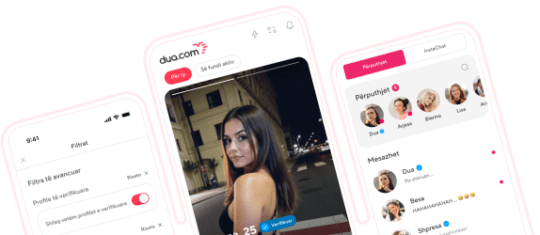
Personal connections can also begin online. dua.com offers another way to meet people with Albanian roots, including across municipal and national boundaries. Copenhagen’s shared spaces begin with people making room for one another: learning a language, gathering around music or inviting a neighbour in.
Useful local starting points
Checked in September 2026. Follow the organiser for current registration, event dates and access information.
- Albanian classes: Modersmålsskolen, Copenhagen
- Teaching resources and the wider Denmark school network
- DCAM: Theklavej 26, Copenhagen NV
- Det Albanske Trossamfund: Frederikssundsvej 304B, Brønshøj
- Besa Festival: programme, memories and future announcements
- Dansk-Albansk Forening: meetings and news
- Liria FK: teams and fixtures through DBU
- Danish Foreign Ministry: diplomatic and consular contacts
Albanians in Denmark · Albanians around the world · Albanians in Zurich
Questions about Albanians in Copenhagen
How many Albanians live in Copenhagen?
No verified ethnic total is available. FOLK1C recorded 342 residents of Albania origin, 320 of Kosovo origin and 2,529 of North Macedonia origin in Copenhagen municipality on 1 July 2026. These country-of-origin categories include different ethnic backgrounds and miss other ways of belonging to the Albanian community. They should not be added together as an Albanian headcount.
Does Copenhagen mean the whole metropolitan area?
Not in the population table. Copenhagen municipality, nearby municipalities and the Capital Region are identified separately. Region Hovedstaden includes Bornholm and a much wider territory than the city. A regional figure is therefore not a metropolitan Copenhagen estimate, and Frederiksberg is a separate municipality.
Where can children learn Albanian?
The municipal 2026/27 list names Tagensbo, Utterslev, Nørrebro Park, Korsager and Tingbjerg schools as hosts. Contact Modersmålsskolen for the appropriate group and registration. The programme specifies one weekly language group of two and a half hours. The separate diaspora publications directory also lists teaching contacts outside the municipality.
When is Besa Festival?
The documented editions were 17 August 2025 and 9 August 2026 in Fælledparken. The organiser marks the 2026 event as completed. Check its official website for any future announcement; this guide does not advertise a new date or sell tickets to an event that has already taken place.
Are all North Macedonia-origin residents Albanian?
No. North Macedonia is multiethnic, and Denmark's country-of-origin statistics do not record the Albanian share. Copenhagen has a documented Albanian migration history from Yugoslav Macedonia, but that history cannot be converted into an ethnic percentage for the register.
Which Albanian organisations have a local address?
DCAM is at Theklavej 26 in Copenhagen NV; Det Albanske Trossamfund lists Frederikssundsvej 304B in Brønshøj. Both maintain their own information about activities. Language classes, Dansk-Albansk Forening, Besa Festival and football offer other points of contact. No single organisation represents every Albanian resident.
Are the photos and videos from Copenhagen's community?
The festival photographs are original publisher embeds; the business report and language exchange come from TV Klan Macedonia and Københavns Sprogcenter. The Kadrii portrait illustrates a person with documented Copenhagen roots and was photographed at an away fixture. Captions distinguish those settings. Third-party media may require consent or opening the publisher's page.
How can I meet other Albanians here?
Start with an activity that fits your interests: a public cultural event, an association, a relevant sports team or a family language programme. Check participation requirements with the organiser. dua.com is an additional way to make personal connections with people of Albanian background in the area and beyond.