There is no exact official count of Albanians living in France. Official statistics capture around 31,000 people born in Albania, but the real Albanian community is considerably larger because it also includes people from Kosovo, North Macedonia and other Albanian-speaking regions, as well as French-born generations.
Last evidence review: 12 August 2026. Official observations, models, editorial ranges, historical flows and first-party platform data are labelled separately.
For more on this topic, read Albanians in Switzerland and Albanians in Germany.
How many Albanians live in France?
The strongest direct national measures come from the Eurostat 2021 Census Hub. France reported 31,074 residents born in Albania and 28,551 Albanian citizens. Albania’s statistical institute republishes the same figures in its Diaspora in Figures; France’s foreign ministry describes an Albanian community of about 33,000 in 2021. All three references describe the Albania corridor, not every ethnic Albanian in France.
A wider but still incomplete view comes from Eurostat’s valid-residence-permit stock: 24,811 Albania, 28,023 Kosovo and 4,415 North Macedonia citizens held valid French permits at the end of 2025. Permit rows are administrative records, mostly for non-EU adults. They exclude naturalised French citizens and many minors, can outlast a person’s departure and cannot be added mechanically to census stocks.
For a reproducible visible layer, this page starts with the 31,074 Albania-born residents, applies Kosovo’s official 90.79% Albanian share to the 28,023 Kosovo permit row, and applies North Macedonia’s 66.36% Albanian share among registered nonresidents to the 8,235 North Macedonia-born census row. The result is 61,982. The coefficients come from the Kosovo 2024 census and North Macedonia 2021 census; neither measures the diaspora in France, so the result is a model, not an ethnic count.
The 150,000–200,000 range is a descendant-inclusive editorial estimate. It reflects the measured post-2014 expansion—Eurostat records 49,288 first permits for Albania, Kosovo and North Macedonia citizens from 2014 through 2025—plus French-born descendants, naturalised residents and Albanian-origin people hidden inside Kosovo, Serbia, Montenegro and older Yugoslav categories. The permit total is a cumulative flow, not 49,288 additional current residents: people depart, naturalise or already appear in other rows. The endpoints are editorial judgement, not measured bounds or a confidence interval, and should always be published beside the visible 61,982 model and these limitations.
Swipe horizontally to explore the full chart.
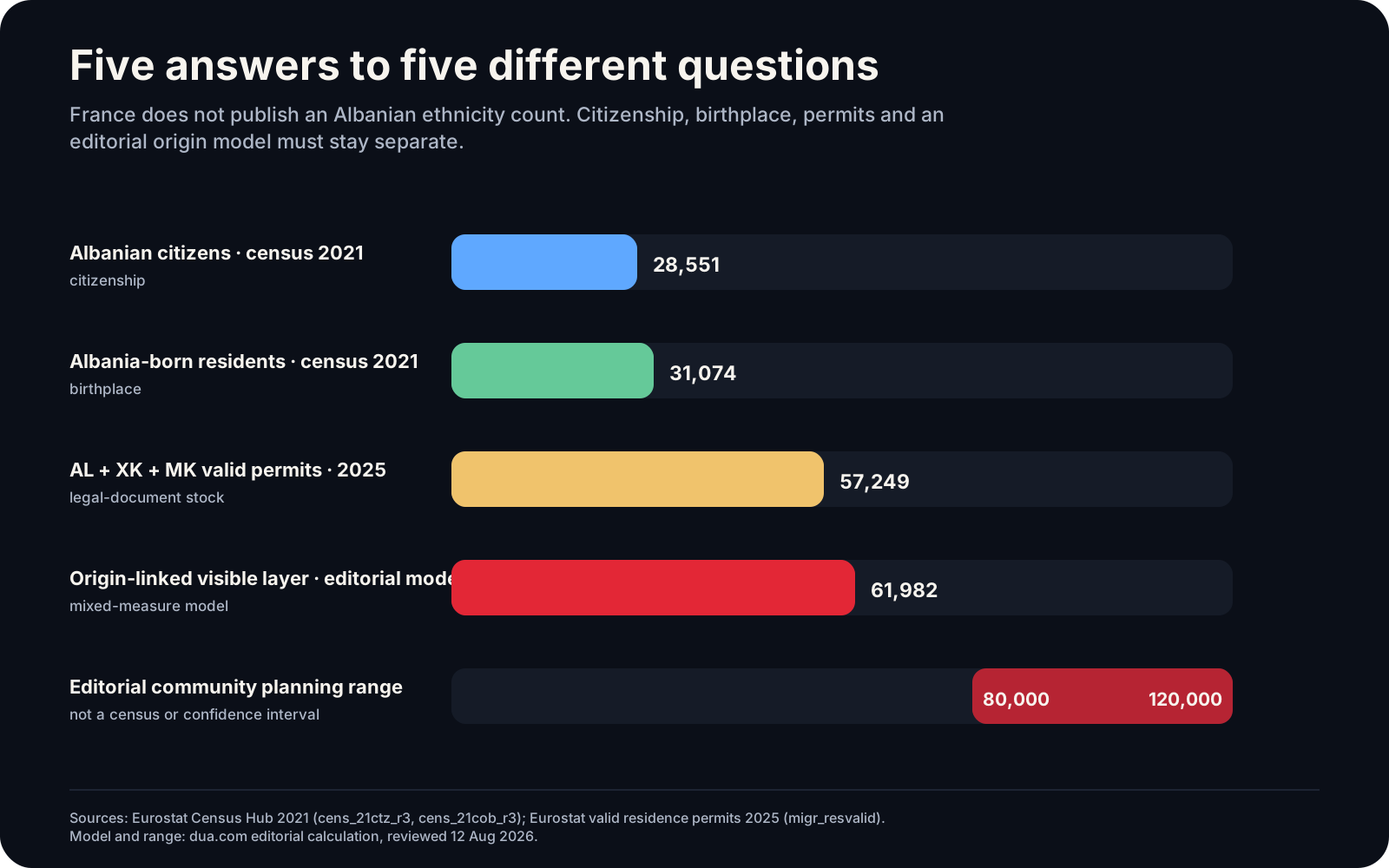
| Evidence lane | Published or derived value | What it shows | What it does not show |
|---|---|---|---|
| Official observation | 28,551 | Albanian citizens in France, 2021 census | Current passport row; excludes naturalised French citizens and other Albanian-origin nationalities. |
| Official observation | 31,074 | Residents born in Albania, 2021 census | Includes every ethnicity born in Albania; excludes descendants born in France. |
| Official observation | 57,249 | Valid 2025 permits for Albania, Kosovo and North Macedonia citizenship rows | Mostly non-EU adults; multi-ethnic rows; not exact physical presence. |
| Mixed-measure model | 61,982 | 31,074 Albania-born + 90.79% of Kosovo permits + 66.36% of North Macedonia-born | Mixed years and measures; transferred identity shares; not an official count. |
| Editorial planning range | 150,000–200,000 | Wide descendant-aware working range | Not a survey estimate, maximum, floor or confidence interval. |
Citizenship, birthplace, origin and language are not the same
French public statistics can research origin through objective variables such as birthplace and prior nationality, as INSEE explains; sensitive ethnic or racial data receive strict legal protection, and CNIL sets conditions for research use. The practical result is not “no data”, but no official Albanian-ethnicity register that follows ancestry across generations.
Citizenship counts current legal nationality. Birthplace stays fixed but says nothing certain about ethnicity. A Kosovo-origin family may be Albanian, Serb, Bosniak, Turkish, Roma or another identity; North Macedonia is also multi-ethnic. Language can overlap with identity, but France’s census does not publish an Albanian-language population row. Origin or ancestry can include parents and grandparents who disappear from foreign-citizenship statistics after naturalisation.
The visible model therefore uses named origin-country shares only where a source and arithmetic are exposed. It does not treat the entire Serbia row as Albanian and excludes Montenegro where a France-specific allocation cannot be defended. That restraint makes the result incomplete by design, but reproducible.
Where Albanian communities are visible
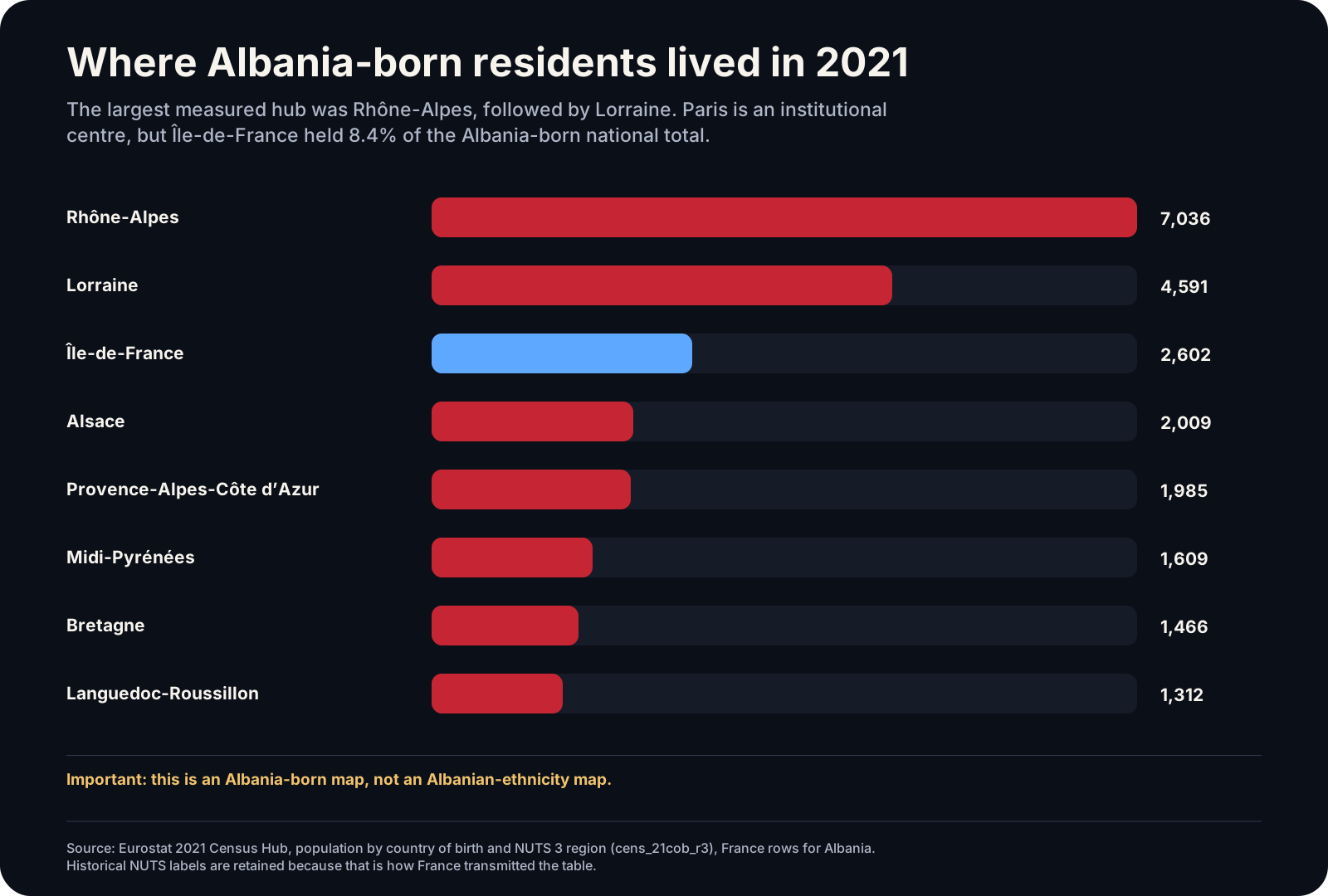
The 2021 census map for Albania-born residents does not support a simple “mostly Paris” story. The leading historical NUTS-2 regions were Rhône-Alpes (7,036), Lorraine (4,591), Île-de-France (2,602), Alsace (2,009), Provence-Alpes-Côte d’Azur (1,985), Midi-Pyrénées (1,609), Bretagne (1,466) and Languedoc-Roussillon (1,312). Île-de-France contained only 8.4% of the national Albania-born row.
Lyon and the Rhône corridor form the largest register-visible Albania-born hub. Lorraine and Alsace reveal an eastern network extending through Moselle, Strasbourg and the Rhine borderlands. Marseille and the Mediterranean region, Toulouse, Rennes and Montpellier are smaller but visible nodes. These are residence patterns for people born in Albania, not a complete map of Kosovo-origin families or French-born descendants.
Paris remains disproportionately important as the diplomatic, university, media and association centre: both embassies, Kosovo’s cultural centre, INALCO and several national networks are based there. dua.com’s 1,389 members listing Paris are a separate platform indicator; they do not overturn the official birthplace distribution or prove where the whole community is largest.
Swipe horizontally to explore the full chart.
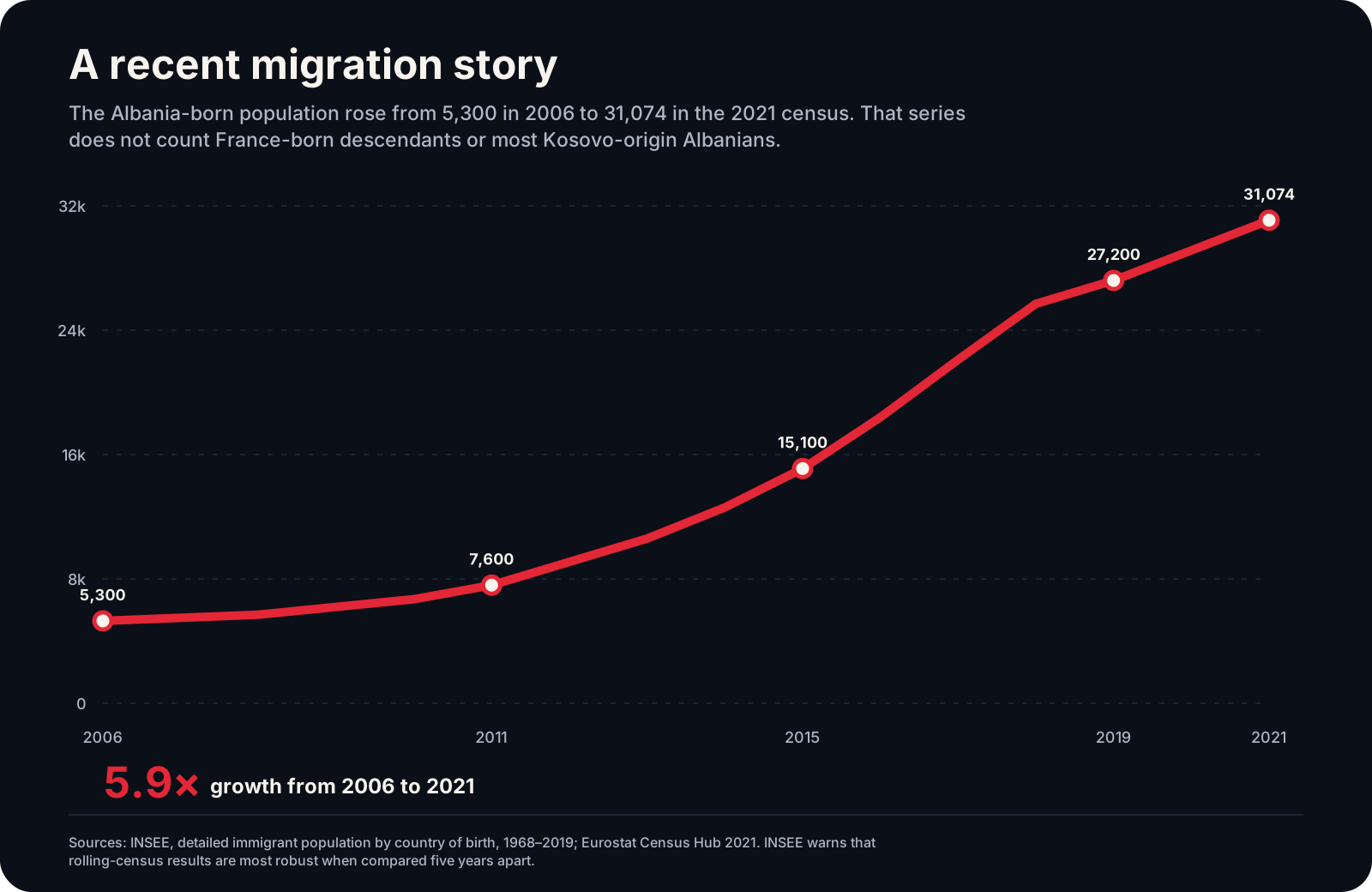
Migration history
- Before the 1990s — students, intellectuals, political exiles and Yugoslav labour migration
- 1990s — post-communist migration from Albania
- 1998–1999 — Kosovo war and humanitarian displacement
- 2000s–2010s — family migration, asylum and new settlement
- Today — students, professionals, families and second-generation French Albanians
Swipe horizontally to explore the full chart.
Residence permits, naturalisation and the generations statistics miss
Valid permits show the non-EU administrative population better than a one-day flow measure, but the French interior ministry’s method note warns that the stock is not an exact count of people physically present and largely concerns adults. Citizenship acquisitions show another reason passport stocks understate origin: Eurostat records 6,460 former Albania, 3,742 former Kosovo and 1,320 former North Macedonia citizens acquiring French citizenship across the available 2004–2024 series.
Those 11,522 acquisitions are historical flows, not residents to add to 2025 permits. People may have died, left France or already be counted by birthplace; children can acquire citizenship through different routes. In 2024 alone the three rows totalled 927. Serbia and Montenegro are excluded from this subtotal because their ethnic composition cannot be allocated honestly from the French table.
Naturalisation is an individual legal process; current eligibility and documents belong on the official Service-Public route. For population analysis, the key point is narrower: a French citizen with Albanian roots can remain part of the community while disappearing from the Albanian-citizenship row.
Albanian, French and generational language change
Albanian in France includes Gheg and Tosk varieties, regional vocabulary and the standard written language. French commonly becomes dominant at school, work and in mixed households. The census rows used here do not measure language use, fluency or whether children can read and write Albanian, so no number on this page should be presented as an Albanian-speaker total.
Paris has a durable academic route: INALCO’s Albanian programme combines language with literature, history and civilisation. Community classes and cultural centres provide a different route for children and families. Their enrolment is evidence of infrastructure, not a census of the next generation.
Generational language change is neither simple loss nor automatic continuity. Some French-born descendants understand Albanian but answer in French; others regain literacy through weekend classes, university study, music, visits and digital communities. Albanian and French identities can be additive rather than competing.
Culture, family networks and public life
Community life is distributed across families, associations, schools, artists, faith communities, businesses and informal friendship networks. Flag Day on 28 November, Kosovo’s Independence Day, concerts, dance, film, literature and food create recurring public moments, but participation differs by region, generation and family history.
Religious identity is diverse and cannot be inferred from an Albanian name or origin country. Muslim, Catholic, Orthodox, Bektashi, secular and mixed families all form part of the broader Albanian-speaking world. This page avoids presenting one faith, political tradition or national corridor as representative of everyone.
Cultural continuity in France is often practical: grandparents speaking Albanian with children, parents organising lessons, students building professional networks and artists translating experiences across two publics. Institutions matter, but much of the community remains informal and cannot be counted from association membership.
Community events, calendars, photos and videos
There is no reliable permanent calendar for every Albanian event in France. Organisers, venues and ticket links change, so this page uses named first-party listings and keeps past examples clearly dated. The Centre Culturel des Albanais 28-11 advertised a free Paris evening of art, memory, literature and film on 29 May 2026; its own site says a language and culture school is opening in 2026. That is a verified recent example, not an upcoming listing.
The Centre Culturel du Kosovo à Paris event page documents concerts, exhibitions, screenings and literary meetings, including the Night of Literature on 24 May 2025, Kosovo at JazzyColors on 1 December 2023 and Kosovo Melodies en Seine in July 2023. FICEP is another useful calendar for shared foreign-cultural events in Paris. Check the organiser again before travelling.
Flag Day on 28 November and Kosovo Independence Day on 17 February are recurring community dates, but a date on the calendar is not proof that a public event has been announced in a particular city. The images and videos below document specific gatherings and performances in France; they are not staged stock photographs and are not used as population evidence.
Real performances photographed in France
.jpg)
.jpg)
Community footage from Paris
Community institutions and organisations
France has no single umbrella organisation or public membership register for all Albanians. The verified nodes below cover diplomacy, culture, professional exchange, students and France–Kosovo relations. Inclusion confirms a documented role, not endorsement or representation of the whole community.
The Albanian National Diaspora Agency directory lists additional organisations, but names, officers and activity can change. Readers should confirm current contacts and event details directly. Paris carries the densest institutional network, while ALEA in Lyon demonstrates that community infrastructure follows the regional population map too.
| Institution or network | Documented role |
|---|---|
| Embassy of Albania in Paris | Official Albanian consular and diplomatic services, 57 avenue Marceau, Paris. |
| Embassy of Kosovo in Paris / Consulate in Strasbourg | Official Kosovo diplomatic and consular information. |
| Kosovo Cultural Center in Paris | Public cultural centre whose current director and mission were confirmed by Kosovo’s prime minister’s office in May 2026. |
| Centre Culturel des Albanais 28-11 | Paris-based cultural programmes, events and Albanian-language learning. |
| France Kosovo Association | France–Kosovo cultural and civic exchange. |
| Réseau des Professionnels Albanais en France | Professional networking and knowledge exchange. |
| Association Lyonnaise des Étudiants Albanais | Student and cultural network in the Lyon region. |
Notable Albanian-linked figures in France
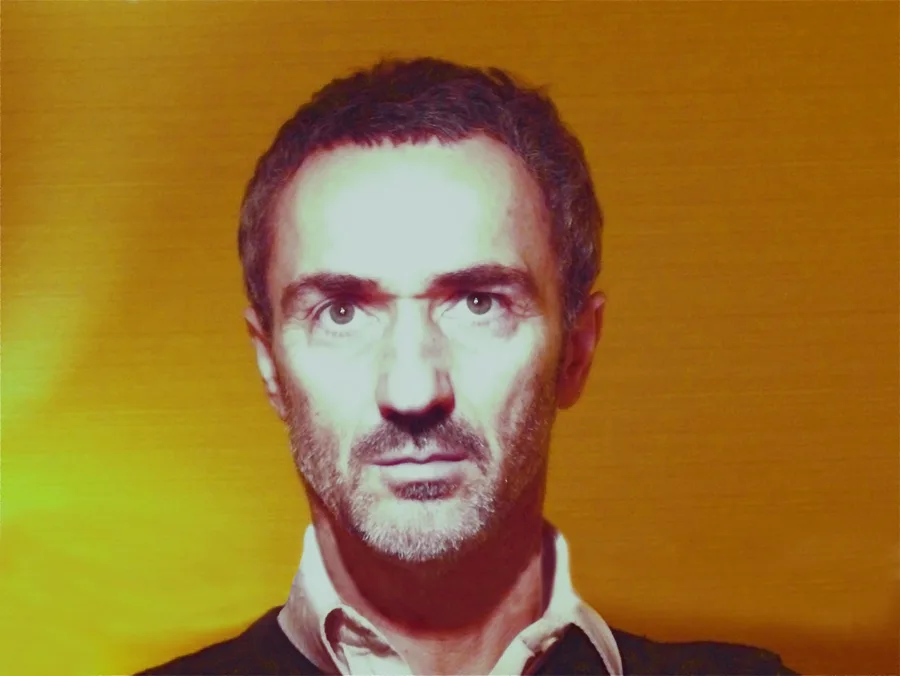
A useful list should show different relationships with France rather than turn fame into a population claim. The figures below include an exile who made France home, a French-born child of Albanian emigrants, a binational contemporary artist and a musician whose training and career bridge Albania and France.
They do not represent every profession, migration corridor, generation or political view. Their biographies are linked to first-party institutional sources so that the France connection can be checked.
| Person | Connection with France |
|---|---|
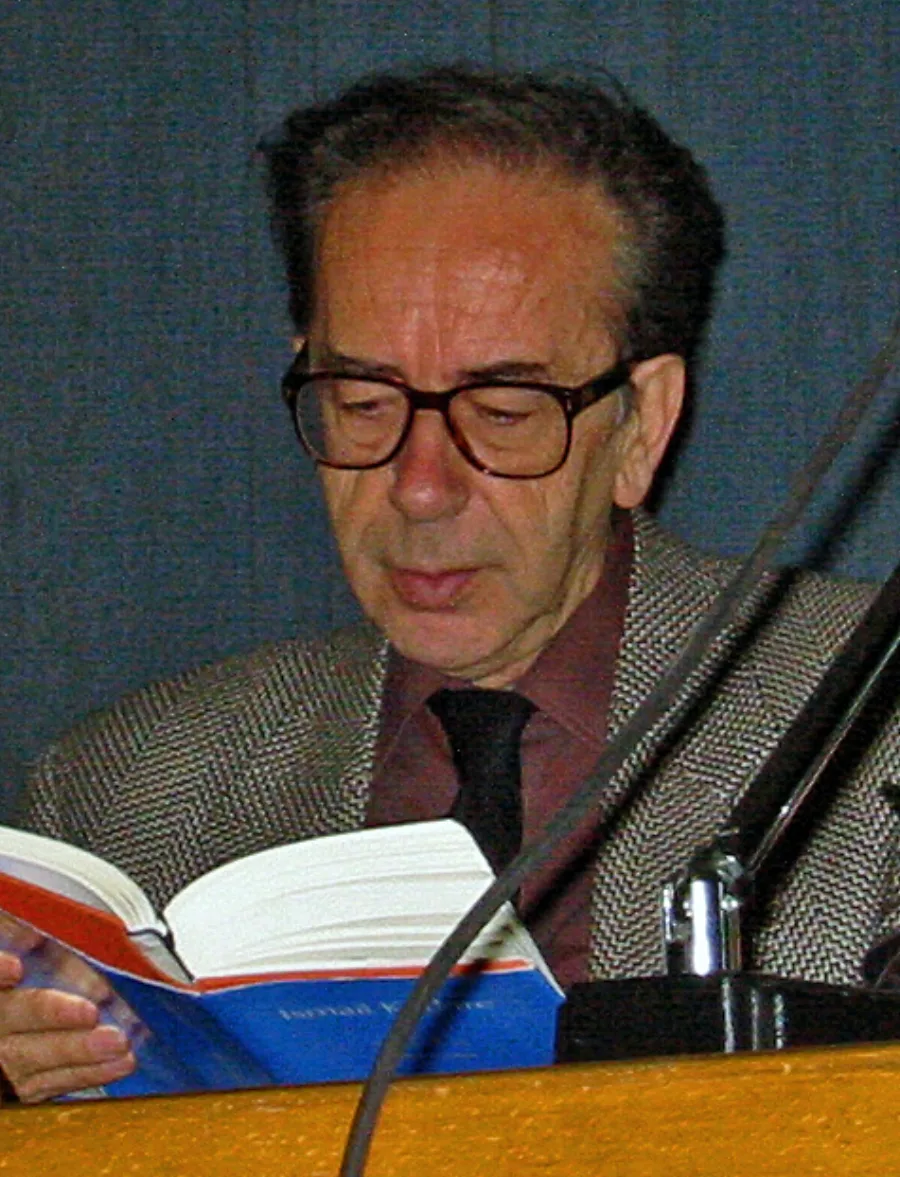
| Ismail Kadare | Albanian writer who sought asylum and lived in France from 1990; elected a foreign associate of the Académie des sciences morales et politiques. |
| Angelin Preljocaj | Choreographer born in the Paris region to Albanian emigrant parents; founder of Ballet Preljocaj. |
| Anri Sala | Albanian-French contemporary artist represented in the Centre Pompidou collection and France’s artist at the 2013 Venice Biennale. |
| Tedi Papavrami | Albanian-born violinist who came to France on a scholarship in 1982 and built a French and international career. |
Practical resources for residents and newcomers
For passports, civil-status documents, visas and consular matters, begin with the relevant embassy—not a social-media repost. Kosovo also lists a consular presence in Strasbourg. Addresses, appointment systems and fees can change, so verify the official page before travelling.
Newcomers should separate immigration status, housing, health insurance, tax, education and citizenship into different official processes. Community organisations can offer orientation and human connection, but they cannot replace French administrative advice or legal counsel.
For language and culture, INALCO and the community centres are starting points. For association discovery outside Paris, use the diaspora directory and confirm local activity. Emergency and legal questions should always go to the appropriate French authority or a qualified professional.
| Resource | Best use |
|---|---|
| Albanian Embassy | Passports, civil status, powers of attorney and Albanian consular guidance. |
| Kosovo Embassy and consulate | Kosovo documents, consular appointments and official notices. |
| Service-Public naturalisation | Authoritative French eligibility, procedure and document checklist. |
| INALCO Albanian studies | University-level Albanian language, history, literature and civilisation. |
| Centre Culturel des Albanais 28-11 | Community events and family language/culture activities in Paris. |
| National Diaspora Agency directory | Starting point for locating organisations; verify current activity directly. |
Connecting through dua.com
Community in France is not only about where Albanians live, which organisations they join, or how many people official statistics count. It is also about the everyday connections people build — friendships, relationships, shared language, culture and a sense of belonging.
For Albanians living across France, dua.com is one of the ways those connections can continue online, especially when the community is spread across different cities and regions.
dua.com member data can offer a small window into where and how that community connects on the platform. These figures describe dua.com users and activity only; they should not be read as estimates of the Albanian population in France.
Swipe horizontally to explore the full chart.
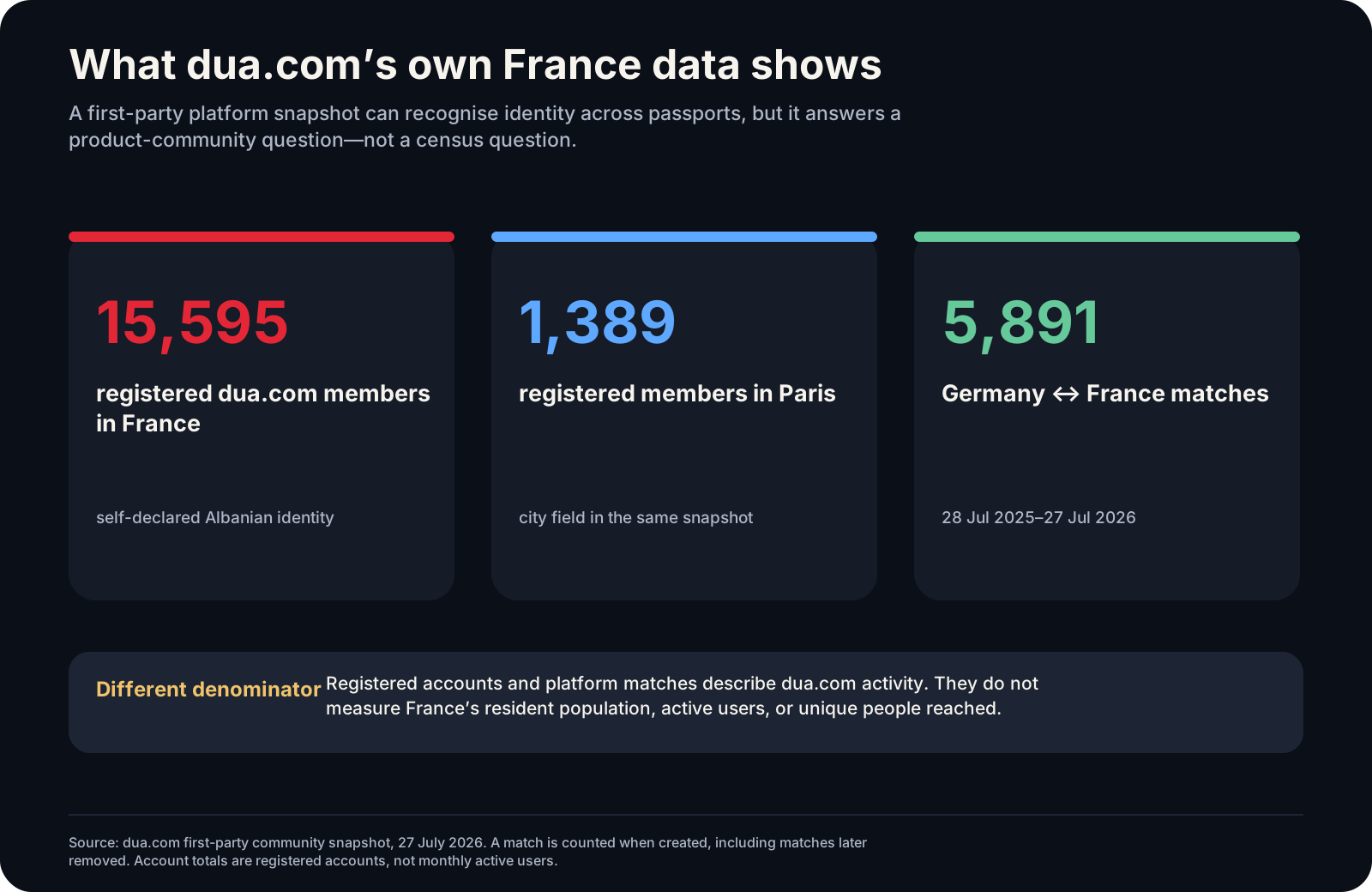
Albanians in France are looking for each other. Whether they’re in Paris or elsewhere in the country, thousands have joined dua.com to meet people who share their language, culture and roots. And those connections don’t stop at the French border — matches between France and Germany show how Albanians across Europe continue to find and connect with one another.
Evidence ledger, corrections and media rights
Every headline number is assigned to one lane: official census observation, administrative permit stock, transparent mixed-measure model, editorial planning range, historical flow or first-party platform metric. Different years and definitions are never silently summed. The editorial range is intentionally rounded and should not be cited as an official estimate.
The 61,982 model is reproducible but sensitive: it combines 2021 birthplace rows with 2025 permits and transfers origin-country Albanian shares to emigrants in France. It includes non-Albanian people in the Albania-born row, may misstate diaspora identity shares and misses descendants, naturalised Kosovo residents, Serbia/Montenegro-origin Albanians and post-snapshot change. It is a visibility model, not a floor proven person by person.
Corrections should preserve the source date, geography and definition. If a newer French table reports Kosovo separately or supplies ancestry/language evidence, the visible layer should be rebuilt rather than patched. Community organisations and media licences were reviewed on 12 August 2026; changing addresses, programmes and rights should be rechecked before reuse.
| Evidence ledger | Source and date | Editorial treatment |
|---|---|---|
| Citizenship and birthplace | Eurostat Census Hub, reference year 2021 | Quoted directly and kept separate. |
| Historical Albania-born series | INSEE, 2006–2019 | Five-year comparisons preferred because rolling census estimates are most robust at that spacing. |
| Valid permits | Eurostat / French administration, end-2025 | Administrative stock; not added to the census. |
| Citizenship acquisitions | Eurostat, available 2004–2024 | Flows demonstrate naturalisation; not accumulated into a resident stock. |
| Kosovo and North Macedonia coefficients | National censuses, 2024 and 2021 | Sensitivity inputs transferred to France and explicitly labelled as model assumptions. |
| Community institutions | Official and organisation sites, checked 12 August 2026 | Presence verified; activity, address and representativeness can change. |
| dua.com community | Privacy-safe repository extract, 27 July 2026 | First-party platform metric kept outside the population model. |
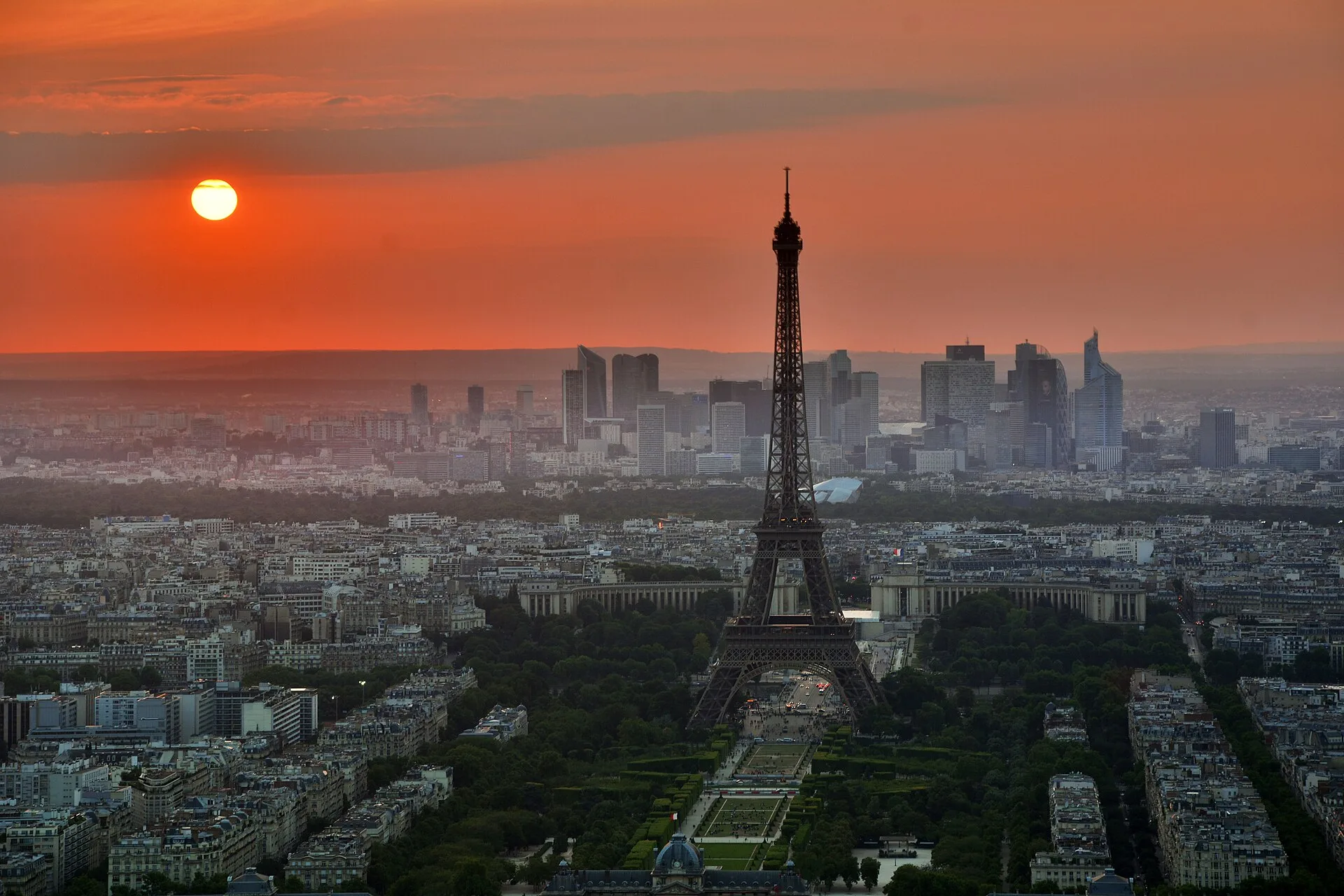
Media and licence ledger: Skyline of Paris with the Eiffel Tower, DiscoA340 / Wikimedia Commons, CC BY-SA 4.0; Ismail Kadare, Lars Haefner / Wikimedia Commons, CC BY-SA 3.0; Angelin Preljocaj, self-credited upload / Wikimedia Commons, CC BY-SA 4.0; Dervish and Aziz Dervishi performing, and Sallah Shabani with Adnan Aliu playing kavall, photographed at Festival Les Orientales in France by Jean-Pierre Dalbéra / Wikimedia Commons, CC BY 2.0. Image files were cropped or converted to WebP by dua.com; the data charts are original dua.com editorial graphics. The Paris street-party and Euro 2016 supporter videos remain hosted by Dritare TV and Afrim Morina respectively and are embedded from YouTube rather than republished.
Frequently asked questions
How many Albanians live in France?
There is no official ethnic count. France recorded 31,074 Albania-born residents and 28,551 Albanian citizens in the 2021 census. This page exposes a 61,982 mixed-measure visible model and uses 150,000–200,000 only as a wide editorial planning range.
Is 150,000–200,000 an official estimate?
No. It is not a census result, survey estimate, confidence interval or official maximum. It is a rounded working range that acknowledges descendants and naturalised or statistically hidden origin groups.
Does France count ethnicity?
France can study origin through variables such as birthplace and prior nationality under strict safeguards, but it has no official Albanian-ethnicity register that follows ancestry across generations.
Why is Kosovo missing from the 2021 France census table?
France reported no separate Kosovo row in the harmonised Eurostat birthplace and citizenship tables. This page does not relabel the whole Serbia row; it uses the separately reported 2025 Kosovo permit stock with an explicit caveat.
Where do most Albania-born residents live?
The largest 2021 historical regions were Rhône-Alpes and Lorraine, followed by Île-de-France, Alsace and Provence-Alpes-Côte d’Azur. This is not a full Albanian-ancestry map.
Is Paris the largest Albanian community?
Paris is the principal institutional hub, but the official Albania-born table places Rhône-Alpes and Lorraine above Île-de-France. Kosovo-origin and descendant distributions are not fully observed.
How many Albanian speakers live in France?
No official Albanian-language population row is available in the evidence used here. Citizenship, birthplace and language must not be treated as synonyms.
Where can children or adults learn Albanian?
INALCO offers university study in Paris, while the Centre Culturel des Albanais 28-11 and community networks provide cultural and family-oriented routes. Confirm current timetables directly.
What do the dua.com numbers mean?
They show platform accounts and activity: 15,595 registered France members, 1,389 listing Paris and 5,891 Germany–France matches in the stated snapshots. They do not estimate France’s resident population.
Where should I check consular information?
Use the official Embassy of Albania or Embassy of Kosovo pages. Kosovo also lists a consular office in Strasbourg. Verify addresses and appointments before travelling.