Frankfurt am Main recorded 4,421 residents with Albanian or Kosovan citizenship at the end of 2025. The Albanian community extends beyond those two passport categories and beyond the city boundary: to classrooms in Offenbach, families in Eschborn, and people who now hold German citizenship. This guide follows that community through the registers, its history, schools, culture and everyday connections. At dua.com, connecting Albanians across those distances is part of our own diaspora story.
In the spring of 2010, a construction entrepreneur named Ruzhdi Statovci held a ladder while two Kosovo diplomats attached a consular plaque to a building in Frankfurt. In Myftar Halili’s contemporary report for Bota Sot, Statovci had already spent about forty years in the city. The men putting up the sign were consul Astrit Zemaj and his deputy Ardian Spahiu. A worker who had arrived long before Kosovo had its own diplomatic representation was helping install it.
It is a small scene, and a useful place to begin. Albanian Frankfurt did not appear when a country acquired a new line in a statistics table. People were already working, raising children and making the city home. Today their institutions are easier to find; their full number is still harder to count.
Voices from Frankfurt and Rhine–Main
A teacher keeping Albanian stories alive in Offenbach and a former international building his coaching career in Frankfurt: these two interviews bring local experience into the picture. Both videos are in Albanian.
Shaip Ademaj: keeping stories alive
In this short television interview, the Bashkimi Kombëtar organiser describes evenings of Albanian proverbs, anecdotes, song and folklore in Offenbach. It is a personal account of the neighbouring city's cultural life.
Klan Kosova · 16 July 2022 · 1:36 · Watch on YouTube · Read the broadcaster's report
Ervin Skela: a life connected to Eintracht
FSHF TV travelled to Frankfurt to meet Skela for its series Shqiptarët në Europë. He talks about coaching at Eintracht's academy, difficult seasons and the ties to Albania that continue alongside his life in Germany.
FSHF TV · 19 March 2026 · 21:10 · Watch on YouTube · Read FSHF's report
For photographs of people meeting in Frankfurt, explore HorizontAL's official event galleries: its association opening on 19 September 2025 and the literature and music evening with Lindita Arapi on 27 March 2026.
How many Albanians live in Frankfurt?
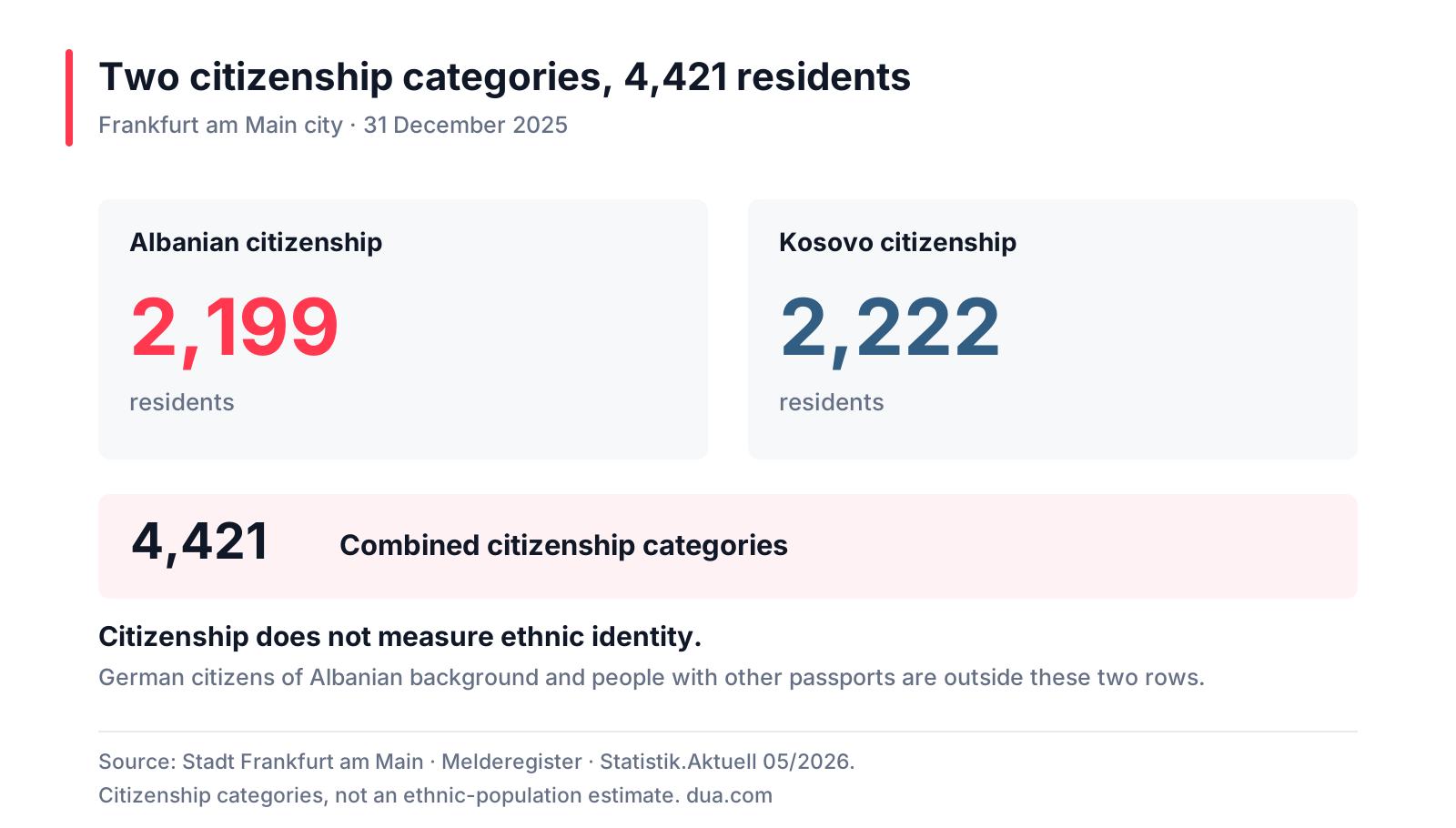
The clearest directly verified city figure is 4,421 people in the Albanian and Kosovan foreign-citizenship categories on 31 December 2025. Frankfurt’s municipal register lists 2,199 Albanian citizens and 2,222 Kosovan citizens. These are residents of Frankfurt am Main itself. They are not figures for Hessen, the administrative region of Darmstadt, or the Rhine-Main metropolitan area.
| Municipal register category | Residents | Reference date |
|---|---|---|
| Albanian citizenship | 2,199 | 31 December 2025 |
| Kosovan citizenship | 2,222 | 31 December 2025 |
| Combined two-country total | 4,421 | Same register and date |
Source: Frankfurt Bürgeramt, Statistik und Wahlen, foreign population at the end of 2025, published 16 April 2026. Citizenship categories describe legal nationality, not ethnic identity.
Why the passport total is not the community total
A German citizen with Albanian parents is not part of the city’s foreign-population count. Neither is a child counted as German from birth. People with Albanian family roots can also hold North Macedonian, Serbian, Montenegrin or other citizenships. Conversely, the Kosovo and North Macedonia categories contain people who are not Albanian. Both omissions and over-inclusion matter.
This is why the two-country total should be called a measured citizenship base, rather than an exact ethnic count or a mathematically guaranteed ethnic lower bound. It describes a substantial part of the community’s background, while leaving individual identity unresolved. An Albanian-language school roll would answer a different question again: who attends a particular programme, not how many Albanians live nearby.
Frankfurt-born footballer Besar Halimi makes the distinction tangible. In a 2017 interview with his club Brøndby, he described feeling both German and Kosovo Albanian, and taking pride in representing Germany at youth level and Kosovo as a senior international. One biography can belong to both countries. A statistical category has much less room.
Two registers, two slightly different answers
The Hessian statistics office’s separate Central Register of Foreigners (AZR) report gives 2,255 Albanian and 2,250 Kosovan citizens in Frankfurt at the same date: 4,505, compared with 4,421 in the municipal register. The two sources use different administrative systems; the AZR values are rounded to the nearest five.
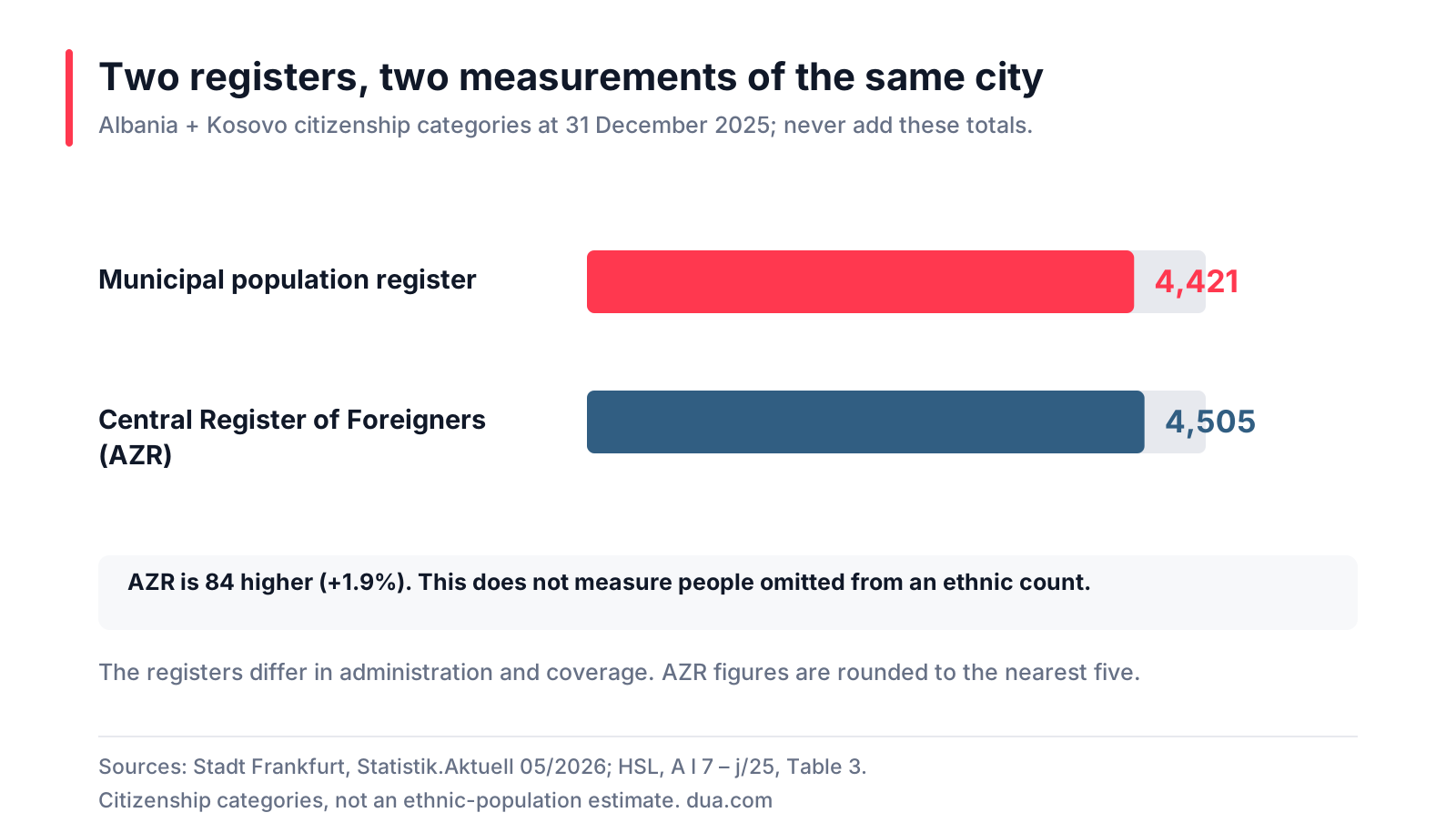
They measure overlapping populations. Their difference of 84 is not a newly discovered group of Albanians, and their totals must never be added. The AZR also records 1,845 North Macedonian citizens in Frankfurt. That is a useful additional nationality row, but it does not identify which individuals are Albanian.
Would adding 20 percent give a better answer?
Adding 20 percent to 4,421 produces 5,305.2, or roughly 5,300. The arithmetic is easy; the justification is missing. There is no Frankfurt-specific measurement showing that the people omitted from these two citizenship rows, after removing overlaps and allowing for non-Albanian identities, amount to exactly one fifth of the base.
| Evidence layer | What it contributes | Treatment here |
|---|---|---|
| Albania and Kosovo citizenship | 4,421 municipal residents | Reported directly, with definition and date |
| German citizens and descendants | People missing from foreign-citizenship rows | No invented local allowance |
| North Macedonia and other citizenships | Some Albanian biographies, alongside other identities | No entire nationality relabelled Albanian |
| Past naturalisations | Evidence of changing citizenship | Not added as if every recipient still lives here |
| School, association or app membership | Participation in specific networks | Not added to population; members can overlap |
| Offenbach, Eschborn and other towns | A wider regional community | Kept outside the Frankfurt city total |
A lower, central and upper scenario for the whole ethnic community would need locally supported assumptions for those missing groups. The available evidence does not establish them. We therefore leave those scenario totals unquantified and reject an automatic uplift. The working answer is about 4,400 residents in the two citizenship categories, within a broader Albanian community whose full size is not established. That is more useful than a precise-looking number built from guesses.
Two migration histories in the same city
Frankfurt’s Albanian and Kosovan citizenship series have both grown, but at different speeds. In 2016 the city counted 596 Albanian and 1,487 Kosovan citizens. By 2025 those figures were 2,199 and 2,222: the two rows had become almost equal.
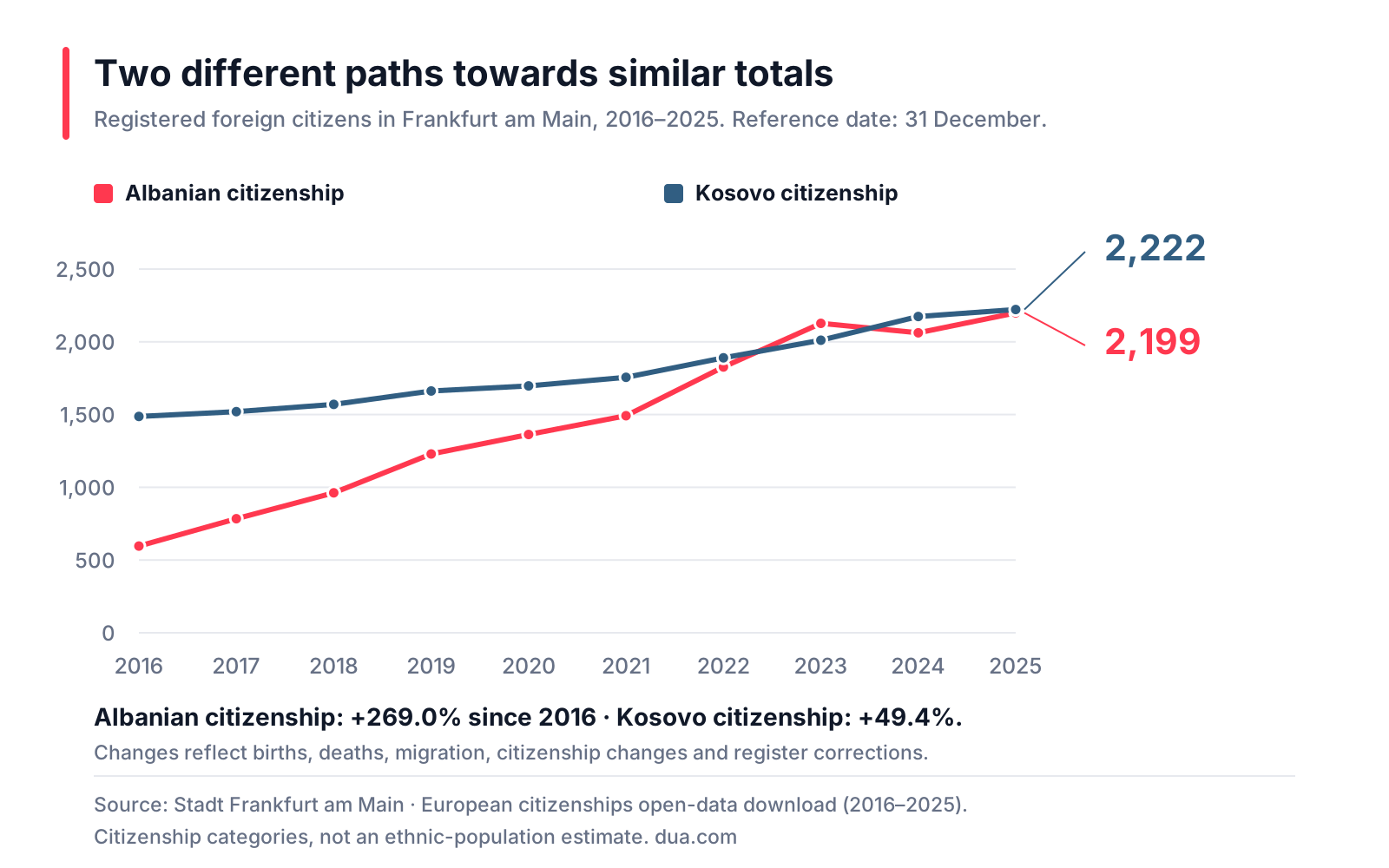
Over those nine years, the Albanian citizenship row increased by 1,603 people, roughly 269 percent. The Kosovan row increased by 735, roughly 49 percent. Together they rose from 2,083 to 4,421. Albania accounted for about 29 percent of that two-country total in 2016, and almost half in 2025.
These changes should not be read as immigration alone. Population registers change through arrivals, departures, births, deaths and changes of nationality. Nor does the starting date mean Albanian Frankfurt began in 2016. It is the beginning of the consistent ten-year municipal series used here, not the beginning of the community.
The distinction matters when older residents and newer arrivals describe different Frankfurts. A family with roots in Kosovo may have several German-born generations; a person who arrived recently from Albania may still be finding a school, professional network or circle of friends. The register can show different trajectories without telling us every reason behind them. Source: Frankfurt open data, European citizenships, 2016–2025.
Children and an uneven age profile
The same 2025 city table counts 389 children under 18 in the Albanian citizenship row and 306 in the Kosovan row: 695 altogether. That is 17.7 percent and 13.8 percent respectively. Those children are already inside the headline counts; they must not be added again.
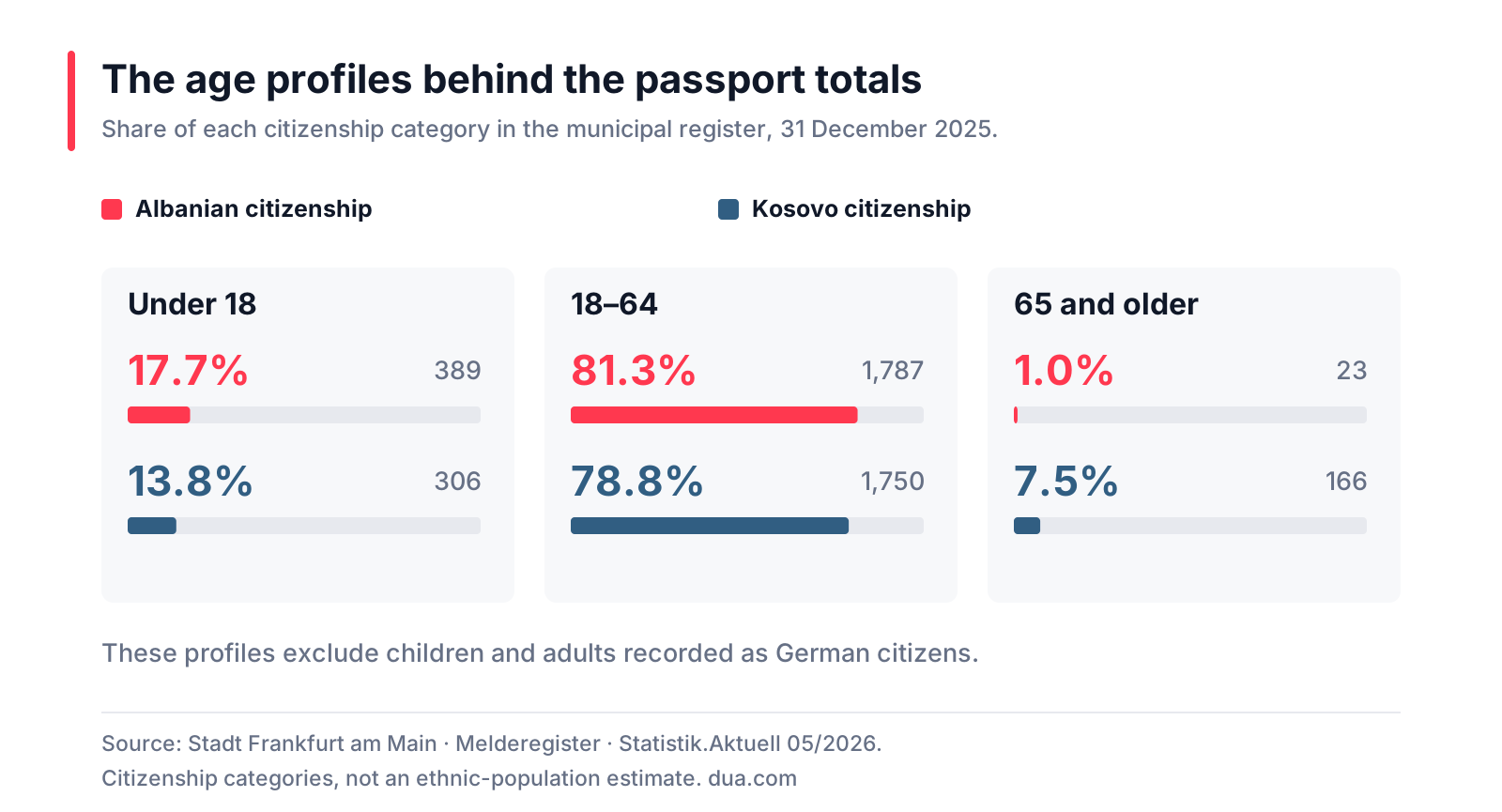
At the other end of the age profile, the two rows differ more sharply. The Albanian category has 23 people aged 65 or above, compared with 166 in the Kosovan category. The figures describe the remaining foreign-citizen populations, not every older Albanian-speaking resident. Naturalisation changes who remains visible.
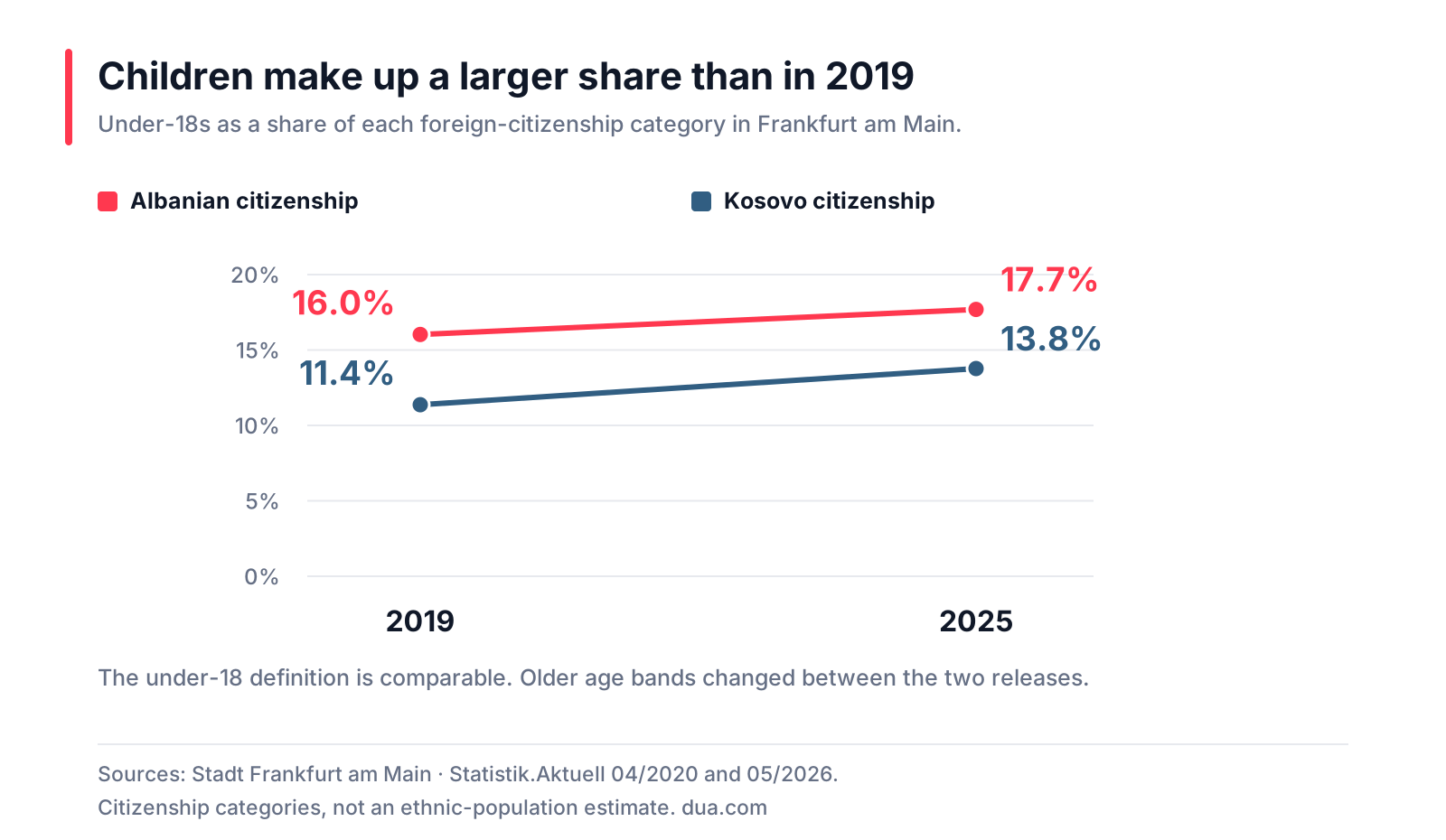
The under-18 shares were lower in the city’s 2019 table: 16.0 percent for Albania and 11.4 percent for Kosovo. That comparison helps explain why classrooms deserve a prominent place in a community guide. It does not measure the whole second generation, because children counted as German are absent.
Frankfurt, Offenbach and the wider Rhine-Main community
The most useful map of Albanian Frankfurt is a map of connections. The city has consular services, Albanian-language classrooms, cultural events and football institutions. Neighbouring municipalities have their own residents and meeting places. Crossing between them does not make them one statistical city.
Offenbach is a separate city. Its Albanian classes belong in a practical guide to the Frankfurt region, but its residents cannot be added to Frankfurt’s 4,421. Eschborn, to the west, likewise sits outside Frankfurt’s boundary. A family can use a Frankfurt consulate and an Eschborn church while living in neither city.
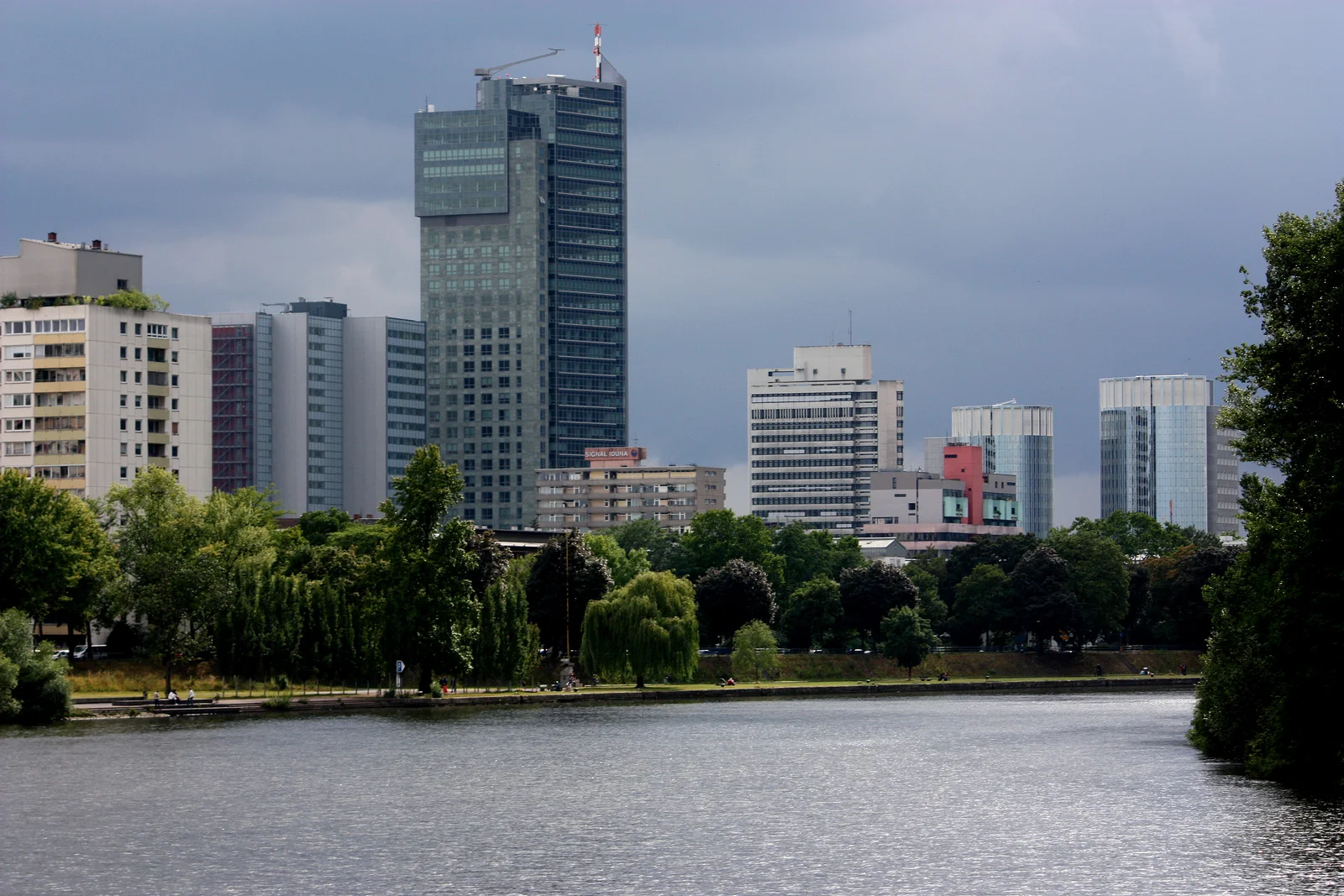
Within Frankfurt, the current school list points to Sossenheim and Hausen in the west. The Islamic cultural centre on Lahnstraße is in Gallus, while the cultural events discussed below include Goethe University’s Westend campus. These locations tell readers where to participate. They do not establish that one neighbourhood has the most Albanian residents.
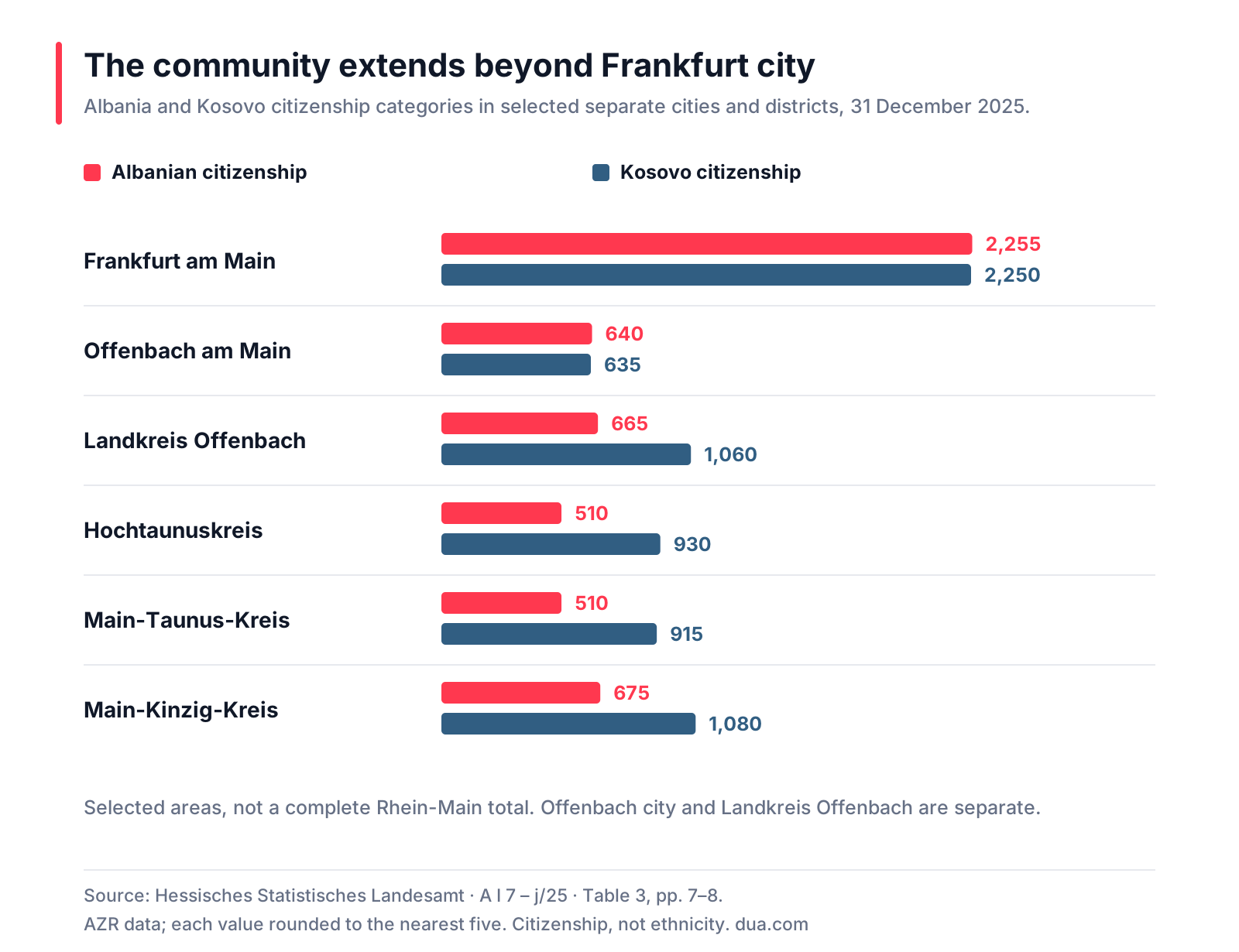
For a consistent regional comparison, the Hessian AZR report gives 640 Albanian and 635 Kosovan citizens in Offenbach city; 665 and 1,060 in Landkreis Offenbach; and 510 and 915 in Main-Taunus-Kreis. The chart also shows Hochtaunuskreis and Main-Kinzig-Kreis, using the same two citizenship categories. These are selected surrounding territories, not an exhaustive definition or a total for Rhine-Main.
No verified ethnic neighbourhood ranking is available for this guide. Describing Gallus, Hausen or the Bahnhofsviertel as “the Albanian quarter” would confuse the location of an institution, a familiar meeting place or a reputation with a residential count. The directory below follows services rather than making that leap.
From migrant workers to a consular plaque
Frankfurt’s Albanian history crosses several state histories. Workers from Kosovo and the Albanian-speaking parts of Yugoslavia were recorded under Yugoslav citizenship; later arrivals came through family migration, displacement, study and work. The country names in today’s tables cannot simply be projected backwards.
1968 and the years before a separate Kosovo category
West Germany’s recruitment agreement with Yugoslavia in 1968 forms part of the national background. The Federal Agency for Civic Education’s migration history places that agreement within the wider recruitment era, followed by the 1973 recruitment stop. Those dates explain routes into Germany; they do not by themselves count Albanian workers in Frankfurt.
Statovci’s long residence, recalled at the 2010 consulate opening, gives the national chronology a local face. It also warns against a common shortcut: treating the Kosovo war as the arrival of every Kosovo Albanian family. Some people had already spent decades here by then. Other families came later, under very different circumstances.
April 1999: the airport and the Atterberry barracks
The city archive records two precise moments. On 8 April 1999, the first Kosovo refugees evacuated through the humanitarian programme arrived at Rhein-Main airport. On 26 April, Frankfurt accommodated 51 people at the former Atterberry barracks. These are entries in Frankfurt’s own 1999 city chronicle.
The figures describe an arrival and a particular accommodation group. They are not the total number of Kosovo refugees in Frankfurt, and certainly not a count of the city’s Albanian population today. Their value is historical: they place the international emergency at two identifiable Frankfurt locations, an airport and a former barracks.
2010: an institution catches up with the people
Germany’s official notice records that Kosovo consul Astrit Zemaj received his exequatur on 28 January 2010, authorising him to exercise his consular functions. The plaque installation described in the May report followed. By then the story had moved from people navigating foreign administrations to a community with its own diplomatic representation nearby.
The ladder scene is memorable because it connects those stages without pretending that every family followed the same path. The worker and the diplomat belonged to different generations of the same relationship with Frankfurt. The schools, professional networks and cultural associations operating today add further chapters.
Where can children learn Albanian?
Frankfurt has two officially listed locations for Albanian heritage-language teaching in the 2026/27 school year: Henri-Dunant-Schule and Kerschensteinerschule. Across the city boundary, Offenbach has two more. The timetable makes a useful distinction visible. The community's children do not need a separate Albanian school system to learn to read and write their family language; lessons take place in German school buildings, after the ordinary school day.
Those rooms were not always easy to find. In a history published by Shkolla Shqipe ABC Hessen, teacher Shaip Ademaj recalls a proposal to restart Albanian classes in Offenbach in 2019. He offered a year of teaching without pay. The pandemic delayed the project; lessons finally began at Albert-Schweitzer-Schule on 26 March 2021. Parents, a local association and Kosovo's Frankfurt consulate had all been involved.
“I promised to teach without pay for one year. I kept that promise.”
Shaip Ademaj, Albanian-language teacher, in his June 2024 account for ABC Hessen; translated from Albanian
Ademaj also recorded a Frankfurt attempt that had stalled over classroom capacity. That was the position in his June 2024 account. The state's current list now includes the two Frankfurt locations below. An older community website can preserve the history of a struggle while giving the wrong impression of what is available today. Here, the most useful evidence is a new timetable.
| City | School | Listed lesson times, 2026/27 |
|---|---|---|
| Frankfurt | Henri-Dunant-Schule, Schaumburger Straße 62 | Wednesday, 17:00–19:00 |
| Frankfurt | Kerschensteinerschule, Hausen, Am Spritzenhaus 2 | Friday, 16:00–17:30 and 17:30–19:00 |
| Offenbach | Albert-Schweitzer-Schule, Waldstraße 113 | Wednesday, 17:30–19:00 |
| Offenbach | Mathildenschule, Mathildenstraße 30 | Wednesday, 15:30–17:00 |
| Hanau | Otto-Hahn-Schule, Kastanienallee 69 | Tuesday, 15:30–17:00 |
Source: Hessian school authorities, Albanian teaching locations and times, 2026/27, dated 1 August 2026. Selected Frankfurt and nearby locations; the full list covers Hessen. Families should check the linked timetable before attending.
The 2026/27 parent letter sets out the practical details: classes are for pupils in years one to ten who already have some Albanian. The registration deadline is 18 September 2026. Parents give the signed original to their child's class teacher and send a copy to the school hosting the Albanian lesson. Registration lasts one school year and makes attendance binding. Parents can request a participation entry on the school report; the course does not award numerical school grades.
The official Albanian HSU page identifies the course as the responsibility of the country of origin, represented by its consular institutions. It gives the coordination contact [email protected] and the school authority's enquiry address [email protected]. This division matters: a host school's name on the timetable does not mean it manages every part of enrolment.
Faith across the city boundary
Albanian religious life around Frankfurt includes an Islamic cultural centre in Gallus and Catholic services in neighbouring Eschborn. Neither tells the whole community's story. A register of congregations can establish where worship takes place; it cannot establish how religious all Albanian families are, or the proportion belonging to a particular faith.
The city's own directory lists Islamisches Kulturzentrum Frankfurt e.V. at Lahnstraße 15. The Union of Islamic-Albanian Centres in Germany also includes it in its member-centre directory. That affiliation documents an Albanian institutional connection. It does not establish that every member of the congregation is Albanian. The centre belongs in a practical account of the community with its own name and address intact.
For Albanian-speaking Catholics, the geography is different. The Diocese of Limburg's August 2025 directory lists services at Christ König, Hauptstraße 52, Eschborn, coordinated by the Albanian Catholic mission in Stuttgart. Its entry specifies five Saturday services annually, on enquiry. It does not describe a weekly Albanian parish schedule in Frankfurt. Families need the mission's current arrangements, not an assumed Sunday opening time.
These addresses explain another limit of the municipal map. A Frankfurt resident can belong to a congregation outside Frankfurt, just as an Offenbach pupil can be part of a network organised through a Frankfurt consulate. Community geography follows the institutions people use. Drawing a line around the city does not draw a line around their lives.
Literature, music and new associations
Frankfurt's Albanian cultural life can be found in university rooms, association events and the wider Rhine–Main literary network. A recent addition is HorizontAL e.V., founded in Frankfurt in 2025. Its stated remit reaches across Rhine–Main and brings culture together with education and professional exchange. That regional definition is deliberate: Frankfurt provides a meeting place for people whose daily lives extend beyond it.
At its opening on 19 September 2025, the association counted about sixty participants. The programme combined a discussion with Kosovo's Frankfurt consul, music and informal conversation. The number is the organiser's attendance report, not a measure of the city's Albanian population. Its value lies in showing what the association actually does: creates occasions for people to meet.
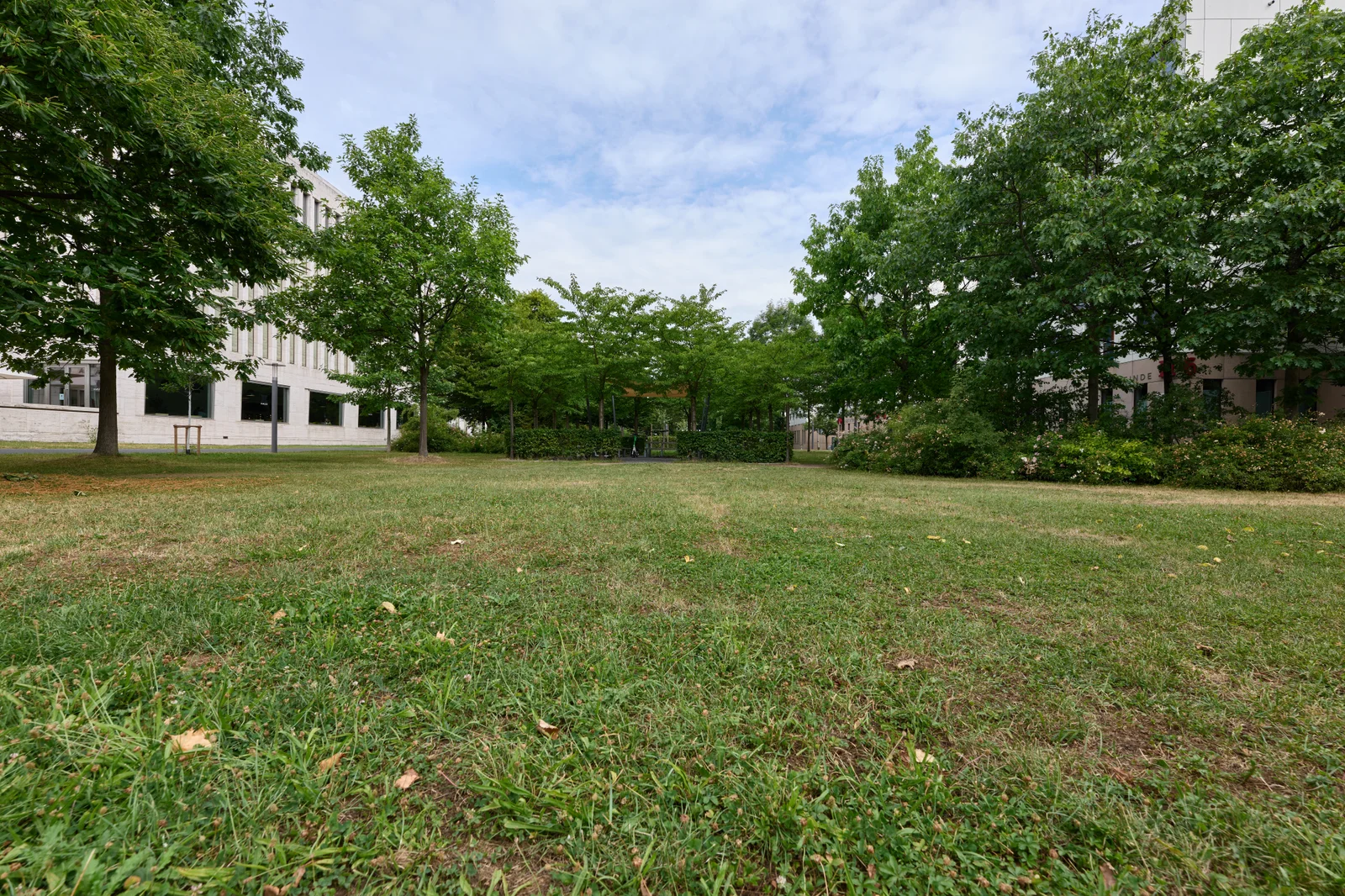
A 27 March 2026 evening at Campus Westend brought author Lindita Arapi into conversation with readers. In its published account, HorizontAL recorded 48 participants, moderator Adelheid Feilke, mezzo-soprano Etleva Shemai and composer and pianist Adelina Ushaku-Hashani. Literature and music shared the programme, with time for the audience to speak with the author. Here Albanian cultural life occupied a university room and depended on a small group bringing an evening together.
The programme also reaches back to Kosovo. A May 2026 announcement introduced the Gjilan arts club Varg e Vi, with stand-up comedy, painting and photography. The invitation described Frankfurt as a stop after projects in Vienna and Stockholm. Here the connection is a travelling artistic network: work made in one place finds an audience in another. The announcement establishes the planned programme, rather than a verified attendance figure.
There is an older literary layer nearby. Albinfo's report of 23 March 2019 describes a gathering at Bashkimi Kombëtar in Offenbach, bringing together Albanian writers from Germany, Austria, Switzerland and France, alongside visitors from their countries of origin. It is a historical event, not a current opening-hours listing. Read alongside the Westend evening, it shows a cultural circuit with several venues and generations, rather than one permanent centre.
Frankfurt's book-fair programme creates another connection. In October 2025, Goethe University announced a discussion of Lea Ypi's Aufrecht at Campus Westend, with the Albanian honorary consul and lawyer Jonela Hoxhaj and political philosopher Rainer Forst. The university, the honorary consulate and Suhrkamp collaborated on the event. Ypi was a visiting author, not a Frankfurt resident; the local story is the institution that brought her work into conversation here. Goethe University's programme records the occasion.
Work, study and professional connections
Frankfurt's Albanian professional networks include computing, translation, teaching and social entrepreneurship. Named biographies make these careers visible, while placing a limit on what can be concluded from them. The examples below describe individual working lives; they do not establish the occupational balance of the whole Albanian community.
HorizontAL's published board biographies offer a small cross-section of its own organisers. Chair Fatbardh Veseli studied in Prishtina and Norway before completing a computer-science doctorate at Goethe University; the association lists his work in cybersecurity. Besnik Haziri, a sworn Albanian interpreter and translator, has run a Frankfurt translation and recruitment office since 2017 and holds a Goethe master's degree in peace and conflict studies.
The same team includes social entrepreneur Agnesa Colica, who studied political science at Goethe, teacher Blerta Neziri, trained at TU Darmstadt, and computing lecturer Visar Januzaj, based at Hochschule RheinMain in Rüsselsheim. These careers put universities, classrooms and professional services on the local Albanian map. Their connection through an association is also practical: people working at different institutions can contribute their knowledge to the same community projects.
The consulate is another working connection between the region and Kosovo. Hessen's current consular directory places the Kosovo Consulate General at Falkensteiner Straße 77, with responsibility for Hessen, Rhineland-Palatinate and Saarland. Frankfurt therefore serves families over a much wider area than its own population table suggests. An administrative address, a translation office and an association are different kinds of institution, but each makes it easier to maintain practical ties across borders.
Three football careers, three ways of belonging
Some people were born in Frankfurt. Others became part of the city through their work. That distinction makes a better local portrait than a list of famous Albanians with no particular connection to the Main.
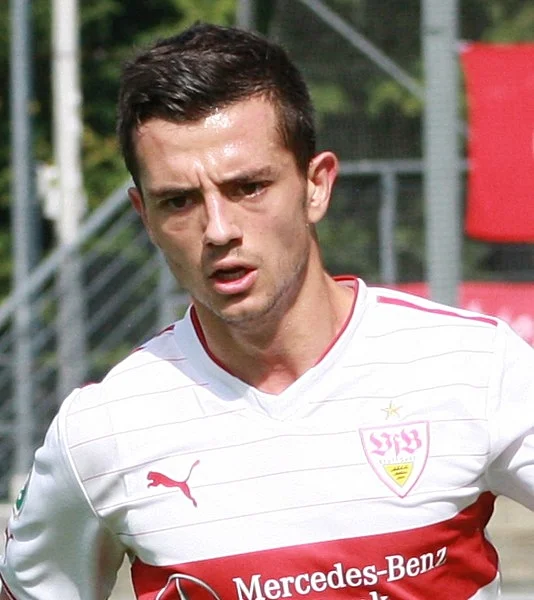
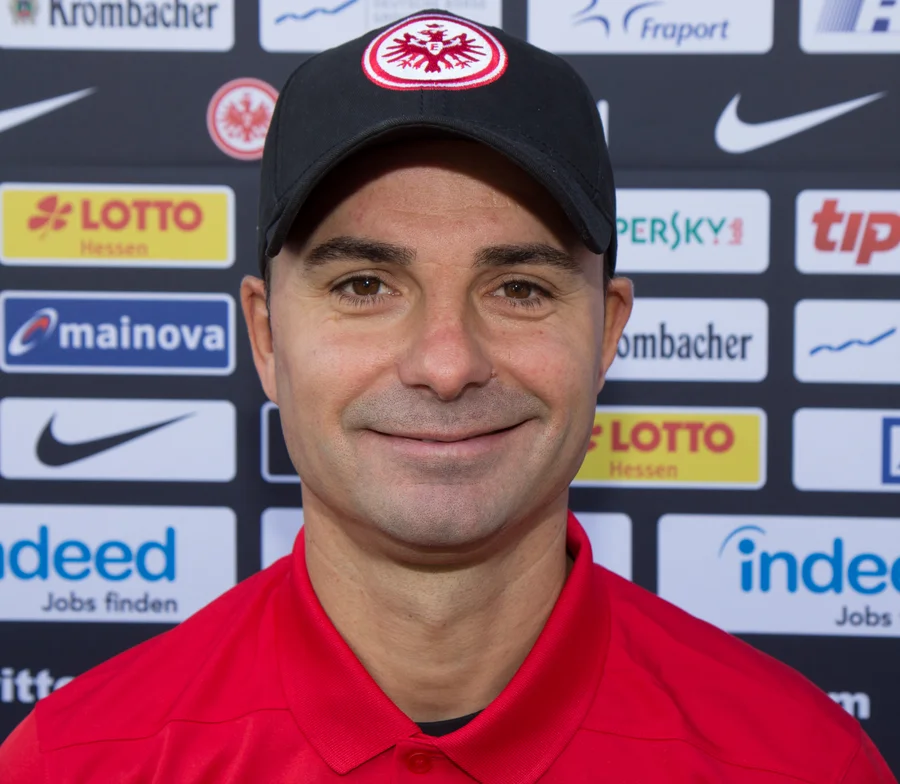
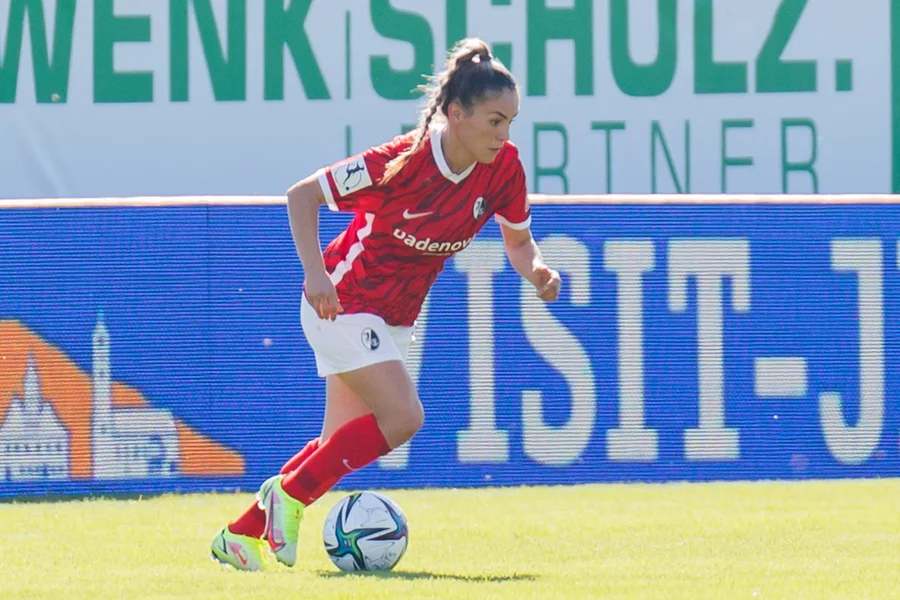
Photographs resized and converted to WebP; displayed crops. These are editorial portraits, not endorsements of dua.com.
Besar Halimi: Frankfurt-born, German and Kosovo Albanian
Besar Halimi was born in Frankfurt and began his youth career at Eintracht. His Brøndby interview describes the importance of his parents and brothers, and the difficulty of moving away from them. He had represented Germany’s youth teams before playing for Kosovo. His account of belonging to both places fits a city where the country on a passport tells only part of a family’s story.
Ervin Skela: part of Eintracht’s own history
Ervin Skela came to Eintracht from Waldhof Mannheim in 2001 and played for the club until 2004. The club’s museum profile records his role in the 2003 promotion and his later return to youth coaching. His connection to the city continued after his playing spell.
In a club podcast interview, Skela recalled crying when Frankfurt secured promotion with its extraordinary 6–3 win over Reutlingen. The memory is both Albanian and entirely Eintracht: a player representing Albania abroad, remembered here for a moment shared with a stadium full of Frankfurt supporters.
Erëleta Memeti: a newer Frankfurt chapter
Erëleta Memeti joined Eintracht’s women from Hoffenheim in summer 2025. Born in Schwäbisch Hall, she played for German youth national teams before choosing Kosovo in 2019. Eintracht’s signing announcement describes her as Kosovo’s captain and its 2023 player of the year. Her Frankfurt link is professional, not a Frankfurt birthplace.
Her career also widens the familiar picture. Albanian sporting visibility in Frankfurt belongs to women as well as men, to newer arrivals as well as people who grew up here. These three careers are examples of local ties; none is a substitute for the less public work of teachers, organisers and parents.
Meeting Albanians in Frankfurt, online and in person
A language class, a literary evening and a football match offer different ways into community life. The best starting point depends on what you need: a place for your child to read Albanian, a professional contact, friends who understand your background, or a serious relationship.
For a newcomer, the directory gives concrete organisations to approach. For someone who grew up here, the problem may be different: family roots feel close, but the people you would like to meet are spread across Frankfurt, Offenbach, the rest of Germany and the countries your family calls home.
That distance is where dua.com matters. Shared Albanian language and cultural context can make an introduction feel more natural. People can discover others nearby, while Fly and location discovery help them explore connections in another city before travelling. Profile verification supports trust; it should still be paired with thoughtful conversation and the app’s safety guidance.
There is room for different relationships to identity: fluent Albanian speakers, people who understand more than they speak, families rooted in Kosovo or Albania, and people with several countries in their story. A shared starting point does not mean everyone has the same life. It can simply make that first conversation easier.
We do not publish an invented Frankfurt membership figure or use app registrations as a population estimate. The value of dua is in making connections possible across a dispersed community. Discover Albanians near you on dua.com, then give the connection a place in everyday life.
For the wider story, read Albanians in Germany. Compare the city guides to Berlin, Munich and Zurich, each with its own geography, institutions and ways of counting.
Directory: Albanian Frankfurt and Rhine–Main
These public information pages were checked on 10 September 2026. The locations distinguish Frankfurt from its neighbours; course places, appointments and event dates should be confirmed through the linked organisation.
Community and culture
- HorizontAL e.V. — Frankfurt association and Rhine–Main cultural events.
- Shkolla Shqipe ABC Hessen — Albanian language and culture association.
- Dardania Frankfurt — profile in Germin's Albanian organisation directory.
Schools and practical services
- Albanian heritage-language classes — official Hessen sites, forms and contacts.
- Kosovo Consulate General, Frankfurt — current state directory entry.
- Frankfurt Immigration Office — municipal applications and appointments.
Faith
- Islamisches Kulturzentrum Frankfurt — Lahnstraße 15, Gallus.
- Albanian Catholic community in Eschborn — Diocese of Limburg directory.
Frequently asked questions about Albanians in Frankfurt
How many Albanians live in Frankfurt?
Frankfurt’s municipal register counted 2,199 Albanian and 2,222 Kosovan citizens on 31 December 2025, or 4,421 in those two categories. This is not an ethnic population count. German citizens with Albanian family backgrounds and Albanians holding other citizenships are not captured by those two rows. A reliable total for the full community has not been established.
Does that figure include Offenbach and Eschborn?
No. The 4,421 figure covers the municipality of Frankfurt am Main. Offenbach am Main is a separate city, Landkreis Offenbach is a separate district, and Eschborn is in Main-Taunus-Kreis. Their schools and institutions are relevant to community life across Rhine-Main, but their residents are outside the Frankfurt city total.
Is there an Albanian neighbourhood in Frankfurt?
This guide does not establish an ethnic neighbourhood ranking. Verified institutions are spread across the city and its surroundings: Albanian classes in Frankfurt’s west, cultural programmes at Campus Westend, an Islamic cultural centre in Gallus and additional services in neighbouring towns. A service location is not proof that most Albanian residents live nearby.
Where can children learn Albanian in Frankfurt?
Hessen’s official list for 2026/27 names Henri-Dunant-Schule in Sossenheim and Kerschensteinerschule in Hausen, with additional classes in Offenbach and other nearby municipalities. Check the current state-school-authority list and contact the coordinating organisation before attending. Venue and timetable listings do not guarantee a free place.
When did Albanians come to Frankfurt?
There was no single arrival. The history includes labour migration from Yugoslavia, family migration, arrivals from Albania, people displaced from Kosovo, students and more recent workers. Frankfurt’s city archive records Kosovo evacuees arriving at Rhein-Main airport on 8 April 1999. Some Albanian-speaking residents had already lived in Frankfurt for decades.
Which Albanian cultural association is active locally?
HorizontAL is a Frankfurt-based association serving the Rhine-Main region. It was founded in 2025 and documents literary and cultural events, including a March 2026 evening with Lindita Arapi at Goethe University. Check its current programme for participation details; past events show what the organisation does, not a recurring schedule.
Which Albanian footballers are connected to Frankfurt?
Besar Halimi was born in Frankfurt and played in Eintracht’s youth system. Ervin Skela played for Eintracht from 2001 to 2004 and later returned to youth coaching. Kosovo international Erëleta Memeti joined Eintracht’s women in 2025; she was born in Schwäbisch Hall, so her connection is through the club.
How can I meet Albanians in Frankfurt?
Local cultural events, language-school parent networks and associations are practical starting points. For dating, dua.com helps Albanians discover people nearby and across the diaspora, with shared cultural context and location discovery through Fly. Choose the setting that fits your intention, and check organisers’ current details before going to an event.