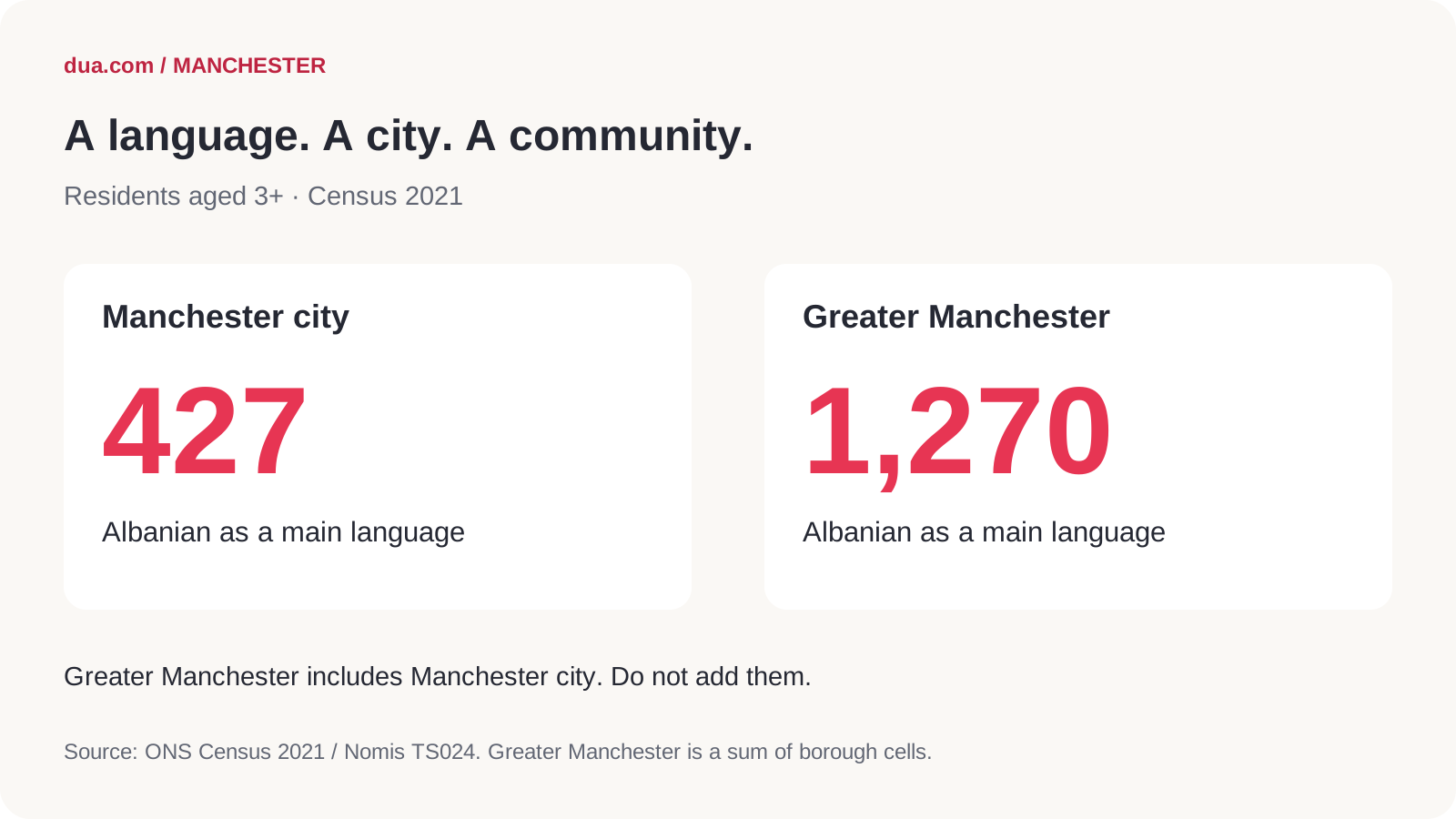
Manchester’s Albanian story runs between a classroom, an airport and an archive. The 2021 census counted 427 people in the city who named Albanian as their main language; across Greater Manchester, the borough figures total 1,270. Neither figure captures everyone with Albanian roots. To understand the community, follow the people who found refuge here, the parents building a school, and the connections that keep reaching back to Kosovo and Albania.
When her son told her he felt alone, Erisa Isufaj recognised something a language lesson alone could not solve. He needed other children who shared his background. In an interview published by Dritare TV in January 2025, she explained why she had helped create Manchester’s 28 Nëntori school. Its name also honoured the school she had attended in Berat. A memory from her own childhood had become an institution for somebody else’s. Watch the original interview.
The school’s photographs bring that ambition into view. In June 2026, children gathered with their certificates at the end of another school year. The organisers reported around 260 children and adults at the celebration. That is an event attendance estimate, not a pupil roll. What matters here is the gathering itself: a place where Albanian is something children can share with friends, beyond a conversation at home.
For more on this topic, read Albanians in the UK and Albanians worldwide.
How many Albanians live in Manchester?
There is no single verified count of Manchester residents with Albanian ancestry. The most useful official figures describe different things. In the city of Manchester, Census 2021 recorded 620 residents born in Albania and 178 born in Kosovo. Separately, 427 residents aged three and over named Albanian as their main language.
Across the ten boroughs of Greater Manchester, the published local-authority cells add up to 1,881 Albania-born residents, 535 Kosovo-born residents and 1,270 people with Albanian as their main language. These are figures for 21 March 2021, not estimates of the population in 2026. The date matters in a community that continues to change.
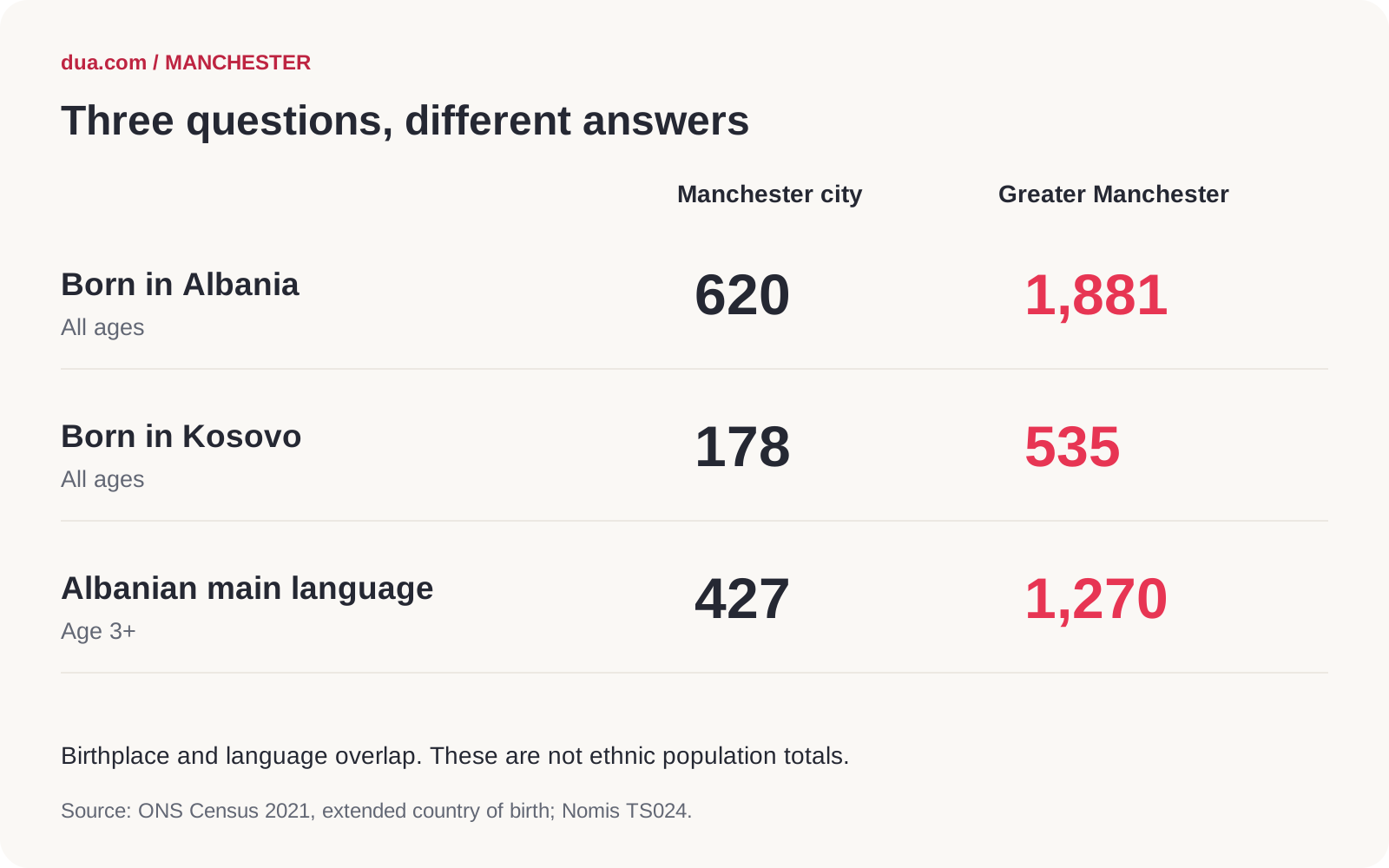
| Census measure | Manchester city | Greater Manchester* |
|---|---|---|
| Born in Albania, all ages | 620 | 1,881 |
| Born in Kosovo, all ages | 178 | 535 |
| Albanian main language, age 3+ | 427 | 1,270 |
*Greater Manchester is the sum of ten borough cells, including Manchester. ONS / Nomis, TS024 and ONS extended country-of-birth classification. Small counts are subject to census disclosure-control adjustments. The birthplace extract is the same local-authority dataset used in our UK guide; the language cells were checked again for this article.
Three questions, three different answers
Birthplace survives a change of passport: someone born in Albania who becomes British stays in the Albania-born column. But their Manchester-born child does not enter it. A Kosovo birthplace neither proves nor rules out Albanian ethnicity. It also cannot identify Albanians born in North Macedonia, Serbia, Greece or elsewhere.
Main language is different again. It asks about a person’s first or preferred language, not every language they can speak. A fluent English-speaking teenager with Albanian parents may give English. Children younger than three are excluded. Citizenship, ethnicity, ancestry and language therefore cannot be substituted for one another.
The two birthplace groups are distinct and sum to 798 in Manchester city and 2,416 across Greater Manchester. Those totals describe two birthplaces. They are not a complete ethnic population. Adding the language column would count many of the same people again. Nor can a national diaspora estimate be divided up to manufacture a local total.
A community across ten boroughs
Manchester is both a city and the everyday name for a much larger urban area. The distinction changes the story: 843 of Greater Manchester’s 1,270 Albanian main-language residents lived outside Manchester city in 2021. That is about two thirds. Salford alone recorded 222, followed by Bolton with 125.
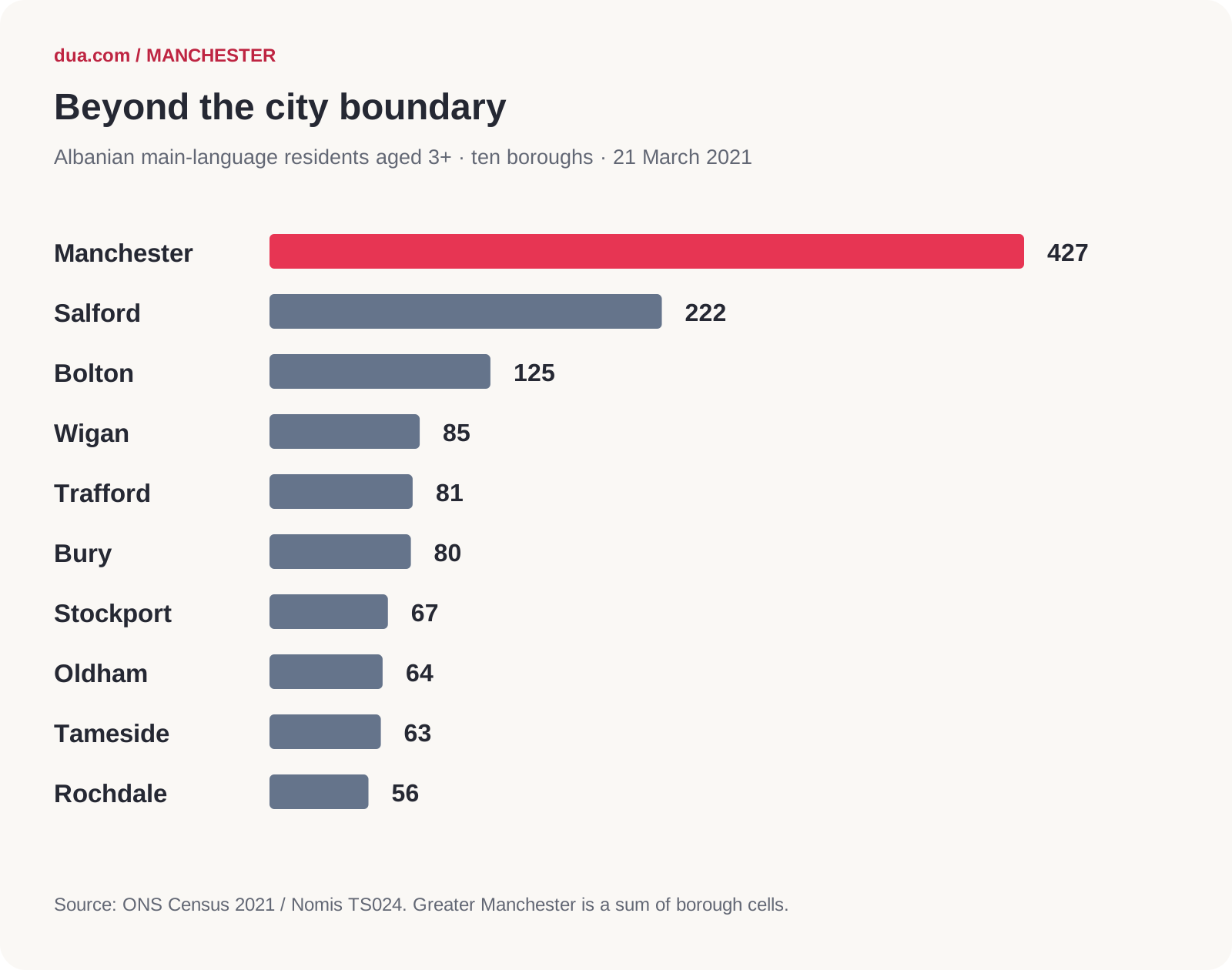
These counts locate residents; they do not establish an Albanian neighbourhood or tell us why anyone chose a home. A city-centre business address, a school venue and a family’s address can lie in three different boroughs. School locations are evidence of services, not a substitute for a residential map.
Some useful place names cross that boundary. Wythenshawe and Crumpsall, where the school advertises classes, are in Manchester city. Urmston and Timperley, which appear in the history of Manchester Aid to Kosovo and the oral histories, are in Trafford. Whitefield, the registered contact location of The Albania UK Charity, is in Bury. All belong in a Greater Manchester guide; they should not all be described as city districts.
1999: an airport becomes a place of refuge
The Kosovo war is central to the documented history of this community. It is not the origin story of every Albanian in Manchester. Later arrivals from Albania, people who moved within Britain and British-born children have their own histories. But 1999 created relationships that remain visible in the city’s institutions.
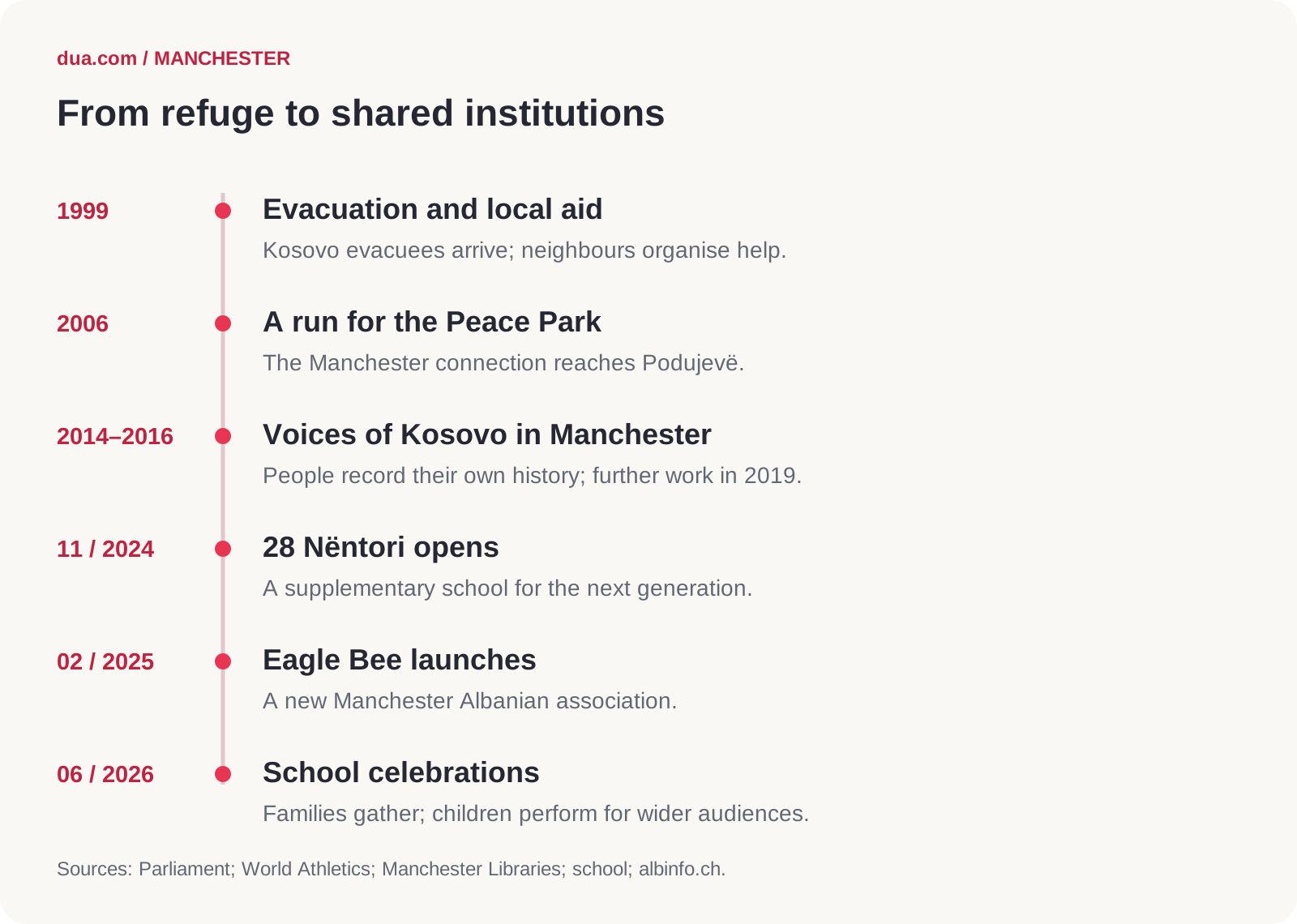
A parliamentary answer gives the arrival story a precise scale. On the first five days of June 1999, Manchester Airport received flights carrying 82, 142, 138, 160 and 163 evacuees from Kosovo: 685 people in those five entries. This is a small window within the evacuation programme, not the full Manchester airlift. An arrival airport is not a final address. The same answer explains that people could move on to relatives and friends elsewhere in Britain. Read the contemporary parliamentary record.
The local response also began outside the city boundary. In her account to Oral History Kosovo, MaK’s Pam Dawes traced the charity’s beginnings to the Britannia pub in Urmston, where people watching the news decided to help. Neighbours who could not stop the war could collect supplies and organise a convoy. The relationship continued after the first emergency had passed. Read Pam Dawes’s account.
The people who kept their own record
Voices of Kosovo in Manchester gives the community something a population table cannot: room to speak at length. Manchester Aid to Kosovo developed the project in 2014–2016, with further work in 2019. Manchester Libraries describes 29 recorded interviews, including 13 Kosovars in Manchester, four returnees in Kosovo and people involved in the humanitarian response. Explore the library catalogue.
The original recordings and transcripts can be explored through VoKiM. Manchester Central Library also holds the physical collection; check access arrangements before visiting and the archive’s terms before reusing material.
From the Great Manchester Run to a park in Kosovo
One documented story reverses the usual direction of an aid narrative. Saranda and Jehona Bogujevci, survivors of the attack on their family in Podujevë, were medically evacuated to Manchester in 1999. After years of treatment, they took part in the Great Manchester Run in 2006, alongside surgeon David Vassallo. World Athletics reported their next ambition: a run in their hometown to support the Manchester Peace Park. Read the 2006 athletics report.
The park is in Podujevë, Kosovo, not Manchester. Its name records a relationship between the places. People who had needed help became organisers of something others could use. Running together made recovery public without reducing it to an account of injury. The story belongs here because Manchester was part of their lives, and because the connection continued after the flight, the hospital and the immediate emergency.
The wider work remains visible in cultural partnerships. Heartstone’s 2026 account of its KFOR and Kosovo +25 project at Manchester’s Holden Gallery credits MaK’s archive and involvement. Photography and testimony carry the history into another generation of audiences. This is a documented exhibition project, not a promise of a currently open show; consult the organiser for viewing dates. See the organiser’s account.
A Saturday school on both sides of the city
28 Nëntori opened in November 2024, according to its own website. Its programme combines reading, writing and speaking with music, traditions and dance. The institution connects Erisa Isufaj’s personal reason for starting it with a practical weekly routine: children meeting other children, and parents making that meeting possible.
Why Erisa Isufaj helped build a school
Dritare TV’s interview with the Manchester school founder, linked from its report of 2 January 2025. Original Albanian audio; the opening paragraphs above summarise the school story.
| Branch · Saturdays | Published venue |
|---|---|
| Wythenshawe 11:00–13:00 | Dixons Brooklands Academy, Moor Road, M23 9BP |
| Crumpsall 16:00–18:00 | Abraham Moss Community School, Crescent Road, M8 5UF |
Each advertised session sets aside 90 minutes for language and 30 for culture and dance. The school also offers online lessons. These details were checked on 11 September 2026; confirm term dates, age groups, places and fees directly. The government’s diaspora-school directory still lists a different Wythenshawe venue, so the school’s own current information is the better starting point. Contact Learn Albanian Manchester · Compare the diaspora directory.
When Albanian becomes part of the city’s stage
The school’s June 2026 photographs tell two different stories. One is the gathering of families at the end of term. The other is participation in a wider Supplementary Schools Achievement Event, tagged at the Martin Harris Centre. In its 13 June post, the school describes songs, recitations and traditional dance, and nominations for teachers Merita Ismaili and Drilona Manxhari. These were nominations; the post does not establish that they won the awards.
That is a different kind of visibility from being counted in a migration statistic. The children appear as performers alongside other supplementary-school communities. Albanian belongs on a Manchester stage because the children learning it belong in Manchester. A heritage language can be shared outwards as well as passed downwards.
The school talks about its year
KTV / KOHA’s JetaSOT interview about the Manchester school’s end-of-year celebration, shared by the school in June 2026. Original Albanian audio. It covers school achievements and the work behind the celebration.
Eagle Bee and the work of staying connected
In February 2025, an independence celebration became the launch of a new association. Albinfo reported the inauguration of Eagle Bee during Manchester’s celebration of Kosovo’s seventeenth anniversary, identifying Hamit Bujupi and Besarta Shurreci as the initiators. Trafford’s then mayor Amy Whyte and representatives of Kosovo’s UK mission attended. Read the contemporary report.
Eagle Bee’s own website sets out a broad remit: Albanian culture and language, youth activities, professional networking, support for families and information for new arrivals. It also lists celebrations of Kosovo’s and Albania’s independence. These are the organisation’s published services and aims, not a verified weekly timetable. Its direct contact is [email protected]. Explore Eagle Bee.
The name brings two places into the same phrase: the Albanian eagle and the Manchester bee. The practical work behind an association is less symbolic. Someone has to book a room, answer an email, find volunteers and make a newcomer feel able to attend. The school and the association are separate initiatives; their presence gives residents more than one way into community life.
Everyday life, work and more than one home
The VoKiM recordings give working life a face. Rina Ahmetaj was introduced as the owner of Manchester’s Amphora Cafe when she was interviewed; Bledar Bujupi as a film editor. Their accounts place work alongside family, displacement and the slow process of making a home. The archive preserves those lives at the time of recording.
For people building a life here now, Eagle Bee lists employment and housing information for newcomers alongside professional meetings and support for families. Its local contact offers a practical starting point: someone to ask before a housing question or an unfamiliar process becomes an isolating problem.
For people arriving now, the Greater Manchester Combined Authority describes a Refugee Welcome Programme involving local partners, English learning, employment skills and help accessing services. Eligibility and provision depend on the programme and location; it is not an Albanian-only service. Check the programme’s current information.
Useful Manchester community links
- Learn Albanian Manchester / 28 Nëntori — current branch information and enrolment enquiries.
- Eagle Bee — Manchester Albanian cultural and community activities.
- Voices of Kosovo in Manchester — original oral histories and educational material.
- Manchester Libraries: VoKiM collection — catalogue and archive access.
- The Albania UK Charity, 1196710 — registered in Whitefield, Bury; its stated purpose is relief of financial hardship in the UK or Albania. A registered contact address is not a drop-in centre.
- Refugee Welcome Programme — local routes to integration support.
Checked 11 September 2026. Use organisers’ current announcements for venues and bookings. Past independence celebrations and school events are evidence of community life, not tickets for a future date.
Finding each other in Manchester
The Manchester Albanian community is not contained by the census city boundary, and it is not held together by a single institution. Its connections run through a Saturday classroom, an oral-history recording, a celebration and a park in Kosovo. Each makes a different kind of belonging possible.
For adults looking for a relationship, dua.com offers another way to meet Albanians, alongside the friendships and introductions that grow through everyday life. Read our UK community guide for the national picture and explore the worldwide Albanian community hub for connections beyond Britain.
Erisa Isufaj’s starting point was small enough to fit inside a family conversation: a child wanting company. The school’s photographs show what happened when that concern became shared work. Manchester’s story continues there, in children who can grow up with a city around them and a language they can call their own.
Questions about Albanians in Manchester
How many Albanians live in Manchester?
No verified figure counts everyone with Albanian ancestry. Census 2021 recorded 620 Albania-born and 178 Kosovo-born residents in Manchester city; separately, 427 residents aged three and over named Albanian as their main language. The measures overlap and should not all be added.
Is Greater Manchester the same as Manchester city?
No. Greater Manchester comprises ten boroughs, including Manchester. Their 2021 Albanian main-language counts total 1,270, including the city’s 427. Salford, Trafford and Bury are separate boroughs.
Where can children learn Albanian?
28 Nëntori advertises Saturday classes in Wythenshawe and Crumpsall and online lessons. Check Learn Albanian Manchester for current venues, term dates, ages, fees and availability.
Where can I find community events?
Check Eagle Bee and Learn Albanian Manchester’s own announcements. This guide documents previous celebrations; it does not assume their dates or venues will repeat.
Where can I hear the community’s history?
Voices of Kosovo in Manchester publishes oral histories through VoKiM. Manchester Central Library also holds the collection. Access and reproduction conditions apply; check with the archive before visiting or reusing material.
How can adults meet Albanians in Manchester?
Community associations and public cultural events offer ways to build connections. Adults seeking a relationship can also use dua.com. School events remain family and education spaces.