Albanians have been building a life in Munich for generations. Some families trace their story here back to the Gastarbeiter era, when Albanians from Kosovo and other parts of former Yugoslavia came to West Germany for work. Others arrived during the political upheavals of the 1990s, through family reunification, or more recently for university and professional opportunities.
Today, Albanian life in Munich takes many forms. You’ll find it in Albanian-language classrooms, cultural associations and football clubs, at universities and community events, and in families that have called Bavaria home for decades.
So, how many Albanians actually live in Munich?
For more on this topic, read Albanians in Germany: A Million-Strong Community and Albanians in Berlin: Numbers, History and Community.
There’s no perfect number. German statistics record citizenship rather than ethnicity, which means naturalised Germans of Albanian origin and many second- or third-generation Albanians aren’t visible in the most obvious figures.
What the available data does show is a substantial community — particularly one with roots in Kosovo — that has grown from a story of migration into a permanent part of Munich.
And behind those numbers are very different stories of what it means to be Albanian in the city today.
Last evidence review: 11 August 2026. Official counts, modelled values, historical estimates and community information are labelled separately throughout.
How many Albanians live in Munich?
There’s no official count of everyone with Albanian roots in Munich.
That’s because German population statistics primarily tell us about citizenship, not ethnicity or family background. An Albanian who has become a German citizen, for example, may no longer appear in the Albanian citizenship figures. The same is true for many children and grandchildren born in Germany.
What do the official numbers tell us?
At the end of 2025, Munich’s population register recorded:
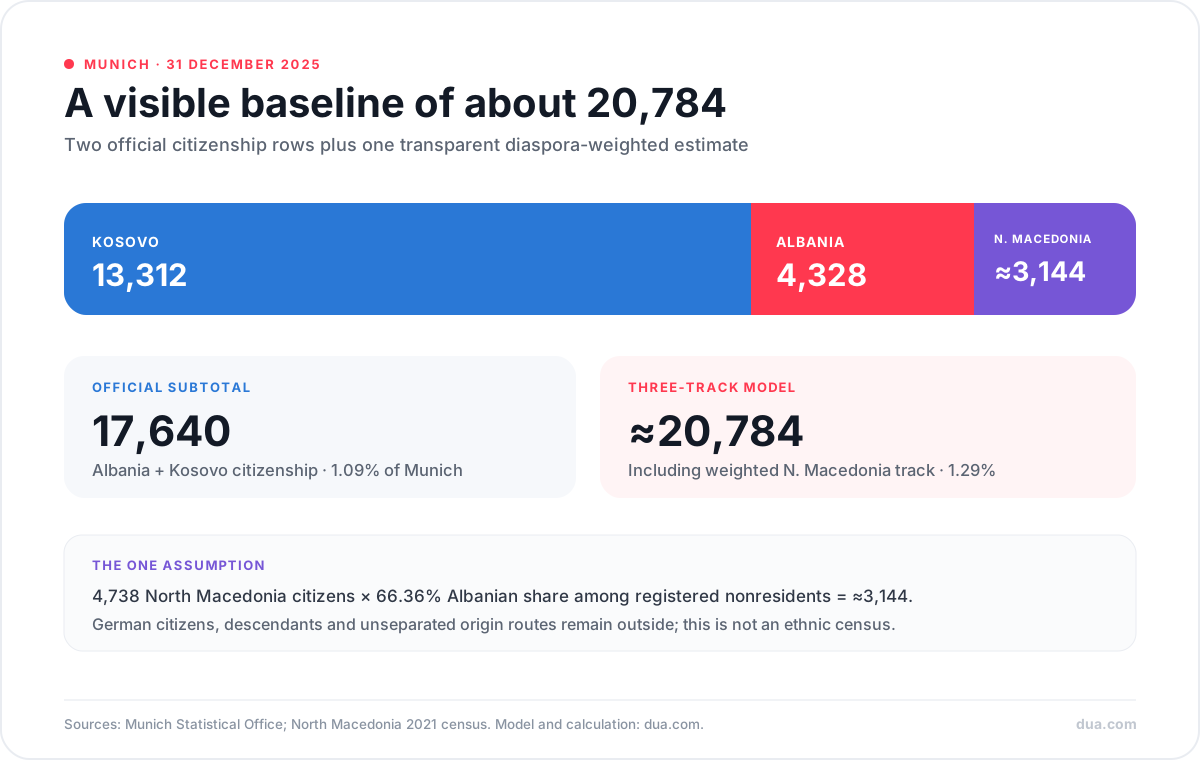
- 🇽🇰 13,312 residents with Kosovo citizenship
- 🇦🇱 4,328 residents with Albanian citizenship
- 🇲🇰 4,738 residents with North Macedonian citizenship
The first two figures are straightforward. The third needs more care: not everyone from North Macedonia is Albanian, so the full 4,738 cannot simply be added to the Albanian community total.
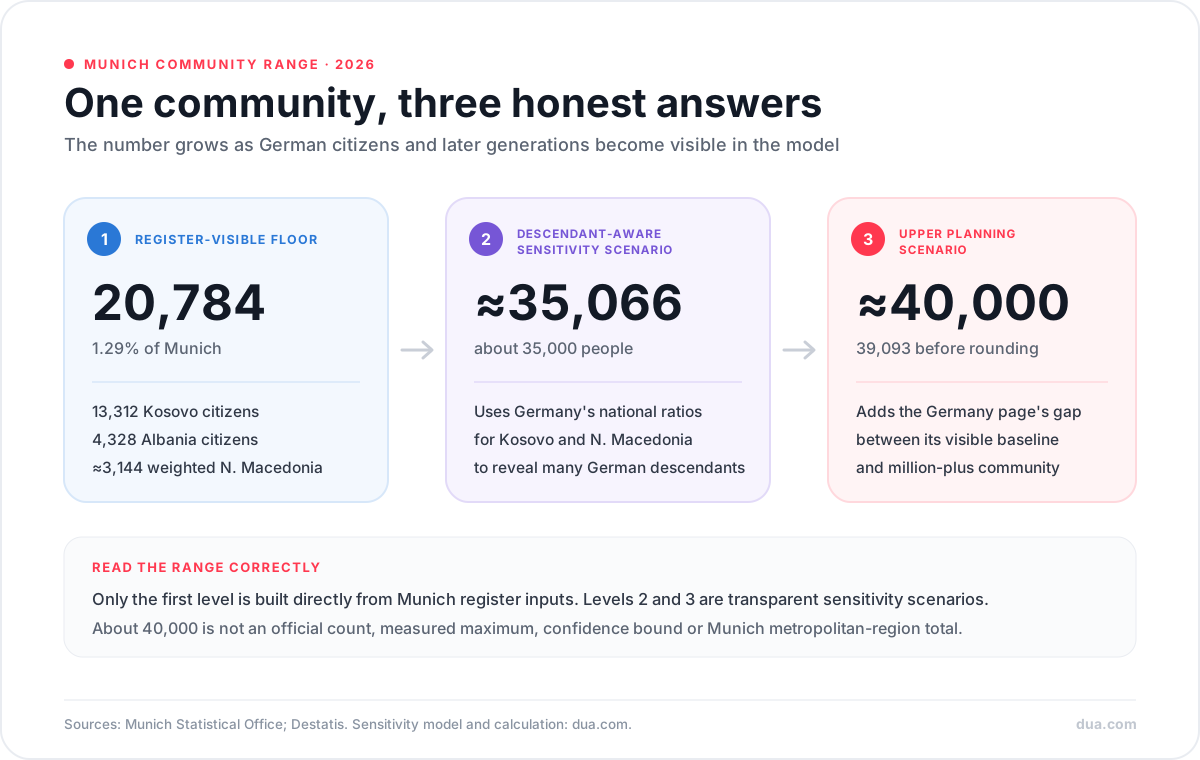
Using a transparent estimate for the Albanian share of Munich’s North Macedonian population, we arrive at a register-visible baseline of around 20,800 Albanian-linked residents.
But the real community is bigger
That 20,800 figure still leaves people out. It doesn’t fully capture:
- Naturalised German citizens with Albanian roots
- Second- and third-generation Albanians born in Germany
- People from mixed Albanian-German families
- Others whose Albanian background simply isn’t visible through citizenship data
When those groups are considered, a broader estimate puts Munich’s Albanian-origin community at around 35,000 people.
That figure should be treated as an estimate, not an official population count.
The simple version
Around 20,800 people can be identified through the register-based model. The wider community may be closer to 35,000.
The exact number is difficult to pin down — but the size and presence of Munich’s Albanian community isn’t.
Swipe horizontally to explore the full chart.
| Register track | Official Munich row | Treatment | Page value |
|---|---|---|---|
| Kosovo citizenship | 13,312 | Complete community-linked origin row | 13,312 |
| Albania citizenship | 4,328 | Complete community-linked origin row | 4,328 |
| North Macedonia citizenship | 4,738 | 4,738 × 66.36% diaspora coefficient | ≈ 3,144 |
| Three-track baseline | — | 13,312 + 4,328 + 3,144 | ≈ 20,784 |
| Layer | Munich starting value | National calibration | Scenario value |
|---|---|---|---|
| Kosovo-linked | 13,312 citizens | 615,000 migration background ÷ 317,879 citizens | ≈25,755 |
| Albania-linked | 4,328 citizens | No uplift; retains the Germany page’s conservative treatment | 4,328 |
| North Macedonia Albanian-linked | ≈3,144 after the 66.36% coefficient | 237,000 migration background ÷ 149,532 citizens | ≈4,983 |
| Descendant-aware scenario | — | 25,755 + 4,328 + 4,983 | ≈35,066 |
Swipe horizontally to explore the full estimate.
Munich, Berlin and Hamburg: three different register profiles
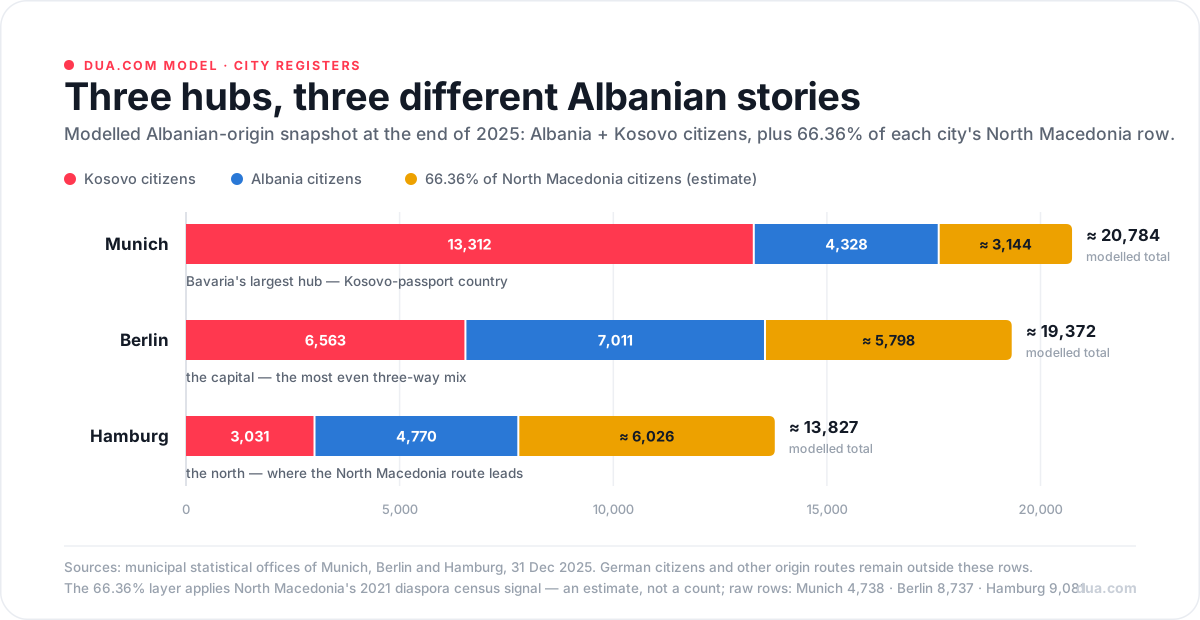
Munich is not simply a smaller version of Berlin or Hamburg. Applying the same three-track method to each city produces visibly different profiles. Munich has the largest Kosovo-citizenship row of the three, Berlin has the most balanced Albania, Kosovo and modelled North Macedonia layers, and Hamburg changes most when the North Macedonia row is treated carefully.
Swipe horizontally to explore the full comparison.
| City | Kosovo row | Albania row | Modelled North Macedonia layer | Three-track baseline |
|---|---|---|---|---|
| Munich | 13,312 | 4,328 | ≈3,144 of 4,738 | ≈20,784 |
| Berlin | 6,563 | 7,011 | ≈5,798 of 8,737 | ≈19,372 |
| Hamburg | 3,031 | 4,770 | ≈6,026 of 9,081 | ≈13,827 |
The Munich and Berlin baselines are similar in size, but their composition is not. Kosovo citizens account for almost two thirds of Munich’s model, while Berlin’s Albania row is slightly larger than its Kosovo row. Hamburg’s North Macedonia row is its largest relevant citizenship category; counting that entire row as Albanian would still be misleading, so the same explicit coefficient is applied there.
This is a three-city comparison, not a national league table. The city statistics use citizenship and exclude Albanian-origin German citizens from the detailed rows. Register dates, residence definitions and administrative boundaries must also match before totals are compared. The Albanians in Germany guide explains the national evidence ledger, while the Berlin guide examines the capital’s migration history. For contrast with an ethnicity-based statistical system, see Albanians in Switzerland.
Official count, model or estimate? How to read the numbers
Four different kinds of number appear in discussions about Albanian Munich. Mixing them creates false certainty. This page keeps them in separate lanes.
| Evidence type | Example | What it can support | What it cannot support |
|---|---|---|---|
| Official register count | 13,312 Kosovo citizens | Exact citizenship row at a stated date and boundary | Ethnic identity or German-citizen descendants |
| Modelled value | ≈3,144 from North Macedonia | Transparent estimate using a named coefficient | A Munich-specific ethnic measurement |
| Nationally calibrated scenario | ≈35,066 including many descendants | Shows what Munich might look like if national origin-to-passport ratios applied locally | A surveyed Munich population or confidence interval |
| Upper planning scenario | ≈39,093, rounded to 40,000 | Provides a transparent working reference for editorial and community planning | An official maximum or metropolitan-region count |
| Historical community estimate | 16,000–18,000 in 2004/05 | How a community organisation described the earlier Albanian-speaking population | A current or directly comparable total |
| First-party platform data | dua.com activity | How a defined member cohort uses the platform | Munich’s whole Albanian population |
A City of Munich conference document from 2004, published in 2005, attributed an estimate of 16,000–18,000 Albanian-speaking migrants to the VMK Albanian Families project. It included people from Kosovo, Albania, Macedonia, Montenegro, South Serbia and Greece, and described three broad arrival groups: workers from the late 1960s to mid-1980s, asylum seekers from the mid-1980s to late 1990s, and children arriving through family reunification.
The report, Erfolg in Schule und Beruf, remains listed in the city’s migration-diversity publication catalogue, which provides a contact for older publications. The estimate is valuable historical testimony, but its language, boundary and method differ from the 2025 register model, so the two should never be drawn as a time series.
How the Albanian community in Munich grew
Munich’s Albanian community wasn’t built in one migration wave.
People arrived at different times, from different places and for very different reasons. For some families, the story goes back more than half a century.
From workers to families — and eventually, home
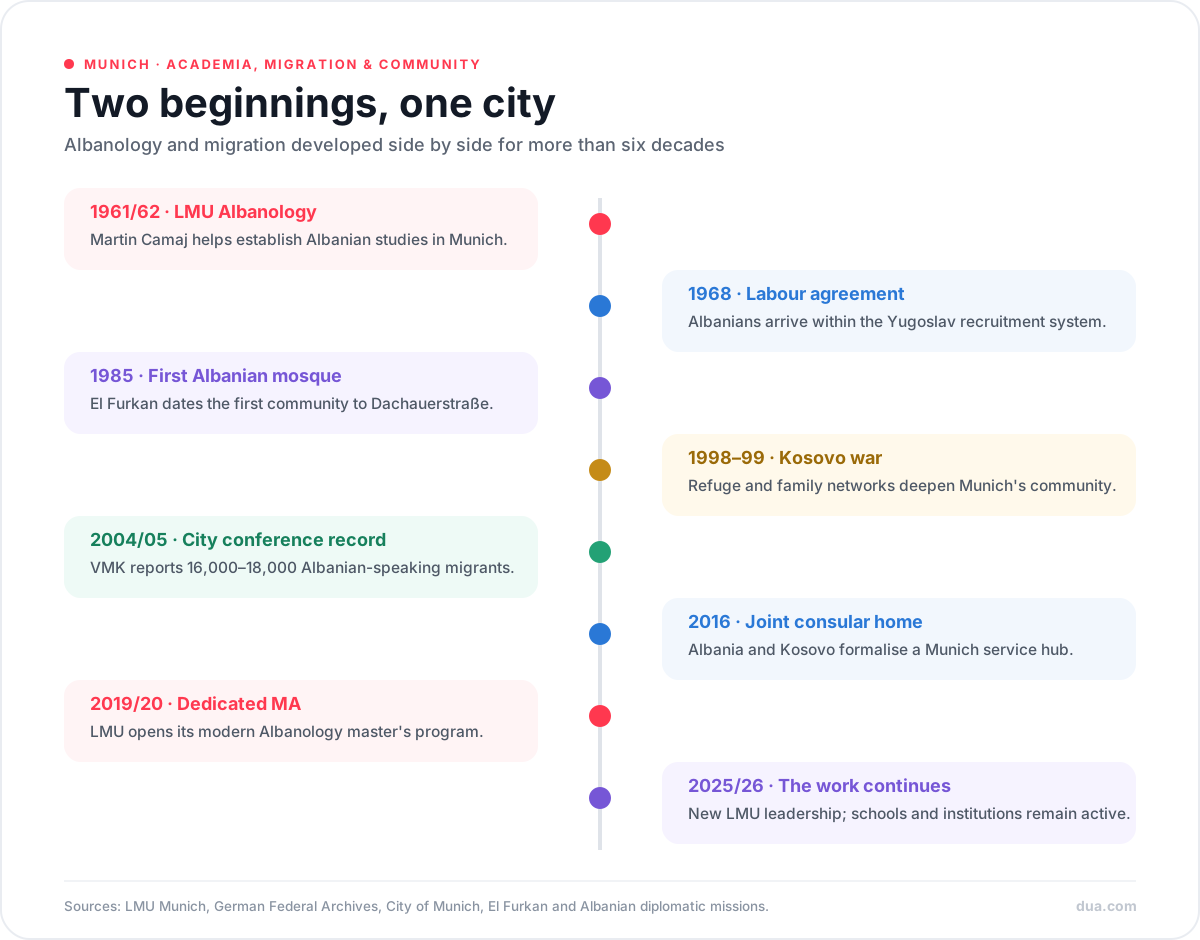
- 1960s–70s — The first workers arrive
West Germany’s recruitment agreement with Yugoslavia brought Gastarbeiter to cities like Munich. Among them were Albanians from Kosovo, North Macedonia and other parts of former Yugoslavia. Officially they were recorded as Yugoslav citizens, so their Albanian identity was largely invisible in the statistics. - 1980s–90s — The community starts to grow
Political instability in Yugoslavia, economic pressures and family reunification brought more Albanians to Germany. What had begun largely as labour migration increasingly became family migration. - Late 1990s — The Kosovo War changes everything
Conflict and displacement brought another wave of Kosovo Albanians to Germany. Some later returned, while others stayed and continued building their lives here. - 2000s — A new generation grows up in Munich
Children went through German schools, families became more established and Albanian cultural, educational and community organisations developed alongside them. - Today — Munich attracts a different kind of arrival too
Students, skilled professionals and young people looking for new opportunities now join a community that already has several generations of history in the city.
Swipe horizontally to explore the full timeline.
When migration becomes belonging
For many families, Munich wasn’t necessarily supposed to become home.
People came for work, safety or opportunity. Then children started school. Families reunited. Friendships and businesses grew. German became part of everyday life, while Albanian remained around the family table.
Trips to Kosovo, Albania or North Macedonia became summer journeys to see relatives rather than preparations for a permanent return.
That’s why there isn’t one Albanian experience of Munich today. Someone who arrived for university last year may be sitting next to someone whose grandparents came as Gastarbeiter. Different journeys brought them here. Munich is where those stories now meet.
Why Munich is an Albanology centre
Few European cities can place a living diaspora community beside more than six decades of university-level Albanian studies. LMU’s institute history dates the introduction of Albanology to the winter semester of 1961/62 and identifies Albanian scholar and writer Martin Camaj as the formative figure who built the subject in Munich.
Martin Camaj and a language given an academic home
Camaj connected linguistics with literature and made Albanian a field that could be studied, taught and researched in its own right. His Munich work belongs to the history of the language, not only to the biography of one writer. It also created a bridge between an academic Albania that was difficult to access during the communist period and students in Western Europe.
The Albanien-Institut added a second scholarly institution. LMU’s history of historian Peter Bartl traces the institute’s establishment in 1962 by Georg Stadtmüller and Bartl’s role in developing and leading it from 1975 to 2005. Its library and research activity remain part of Munich’s historical-philological infrastructure.
A rare degree path that remains active
LMU introduced a dedicated Albanology master’s program in 2019/20. The university says students can study Albanian to advanced C1/C2 level while combining language, literature, history and culture. That makes Munich useful not only to heritage speakers but also to translators, linguists, historians and anyone working across the German-speaking and Albanian-speaking worlds.
The current institute page lists Enkeleida Kapia as professor from summer semester 2025 and Leonard Dauti as lecturer from winter semester 2025/26. The names change; the unusual fact remains: Albanian has had an institutional home in Munich since before the city’s modern diaspora reached its present scale.
Albanian schools in Munich and the next generation
Heritage classes give children a structured place to read and write the language they may already hear at home. They also teach history, geography, literature and cultural vocabulary that everyday family conversation does not always provide. For parents, the school network is both educational infrastructure and a way to meet other families.
The Albanian government’s Publishing Center for the Diaspora directory lists four teaching locations inside Munich:
- Hugo-Wolf-Straße 70, 80937 München
- Grafinger Straße 71, 81671 München
- Leipziger Straße 7, 80992 München-Moosach
- Weißenseestraße 45, 81539 München
The same directory includes locations in the wider metropolitan area, including Garching, Fürstenfeldbruck and Germering. The Albanian Consulate General has documented activities with the League of Albanian Teachers and Parents in Bavaria, while Munich’s 2026 International Mother Language Day included LAPSH representation through MORGEN e.V.
The network is larger than the four city addresses suggest. In 2026, the Albanian Consulate General announced the opening of the 33rd Albanian-language class in Bavaria, established through LAPSH with support from the Albanian and Kosovo consulates. This is a regional class count, not 33 Munich schools, but it shows the scale of parent-led language infrastructure surrounding the city.
Locations, contacts and timetables can change. Families should use the official directory as a starting point and confirm the current class, age group and registration process before travelling.
The community behind the population numbers
Albanian Munich is not organised around one headquarters. It works as an ecosystem: parents maintain language classes, academics build professional networks, cultural associations teach dance and stage performances, football clubs create a weekly social rhythm, consulates convene national-day gatherings, and student groups connect a newer university generation. The organisations overlap, but none speaks for every Albanian in the city.
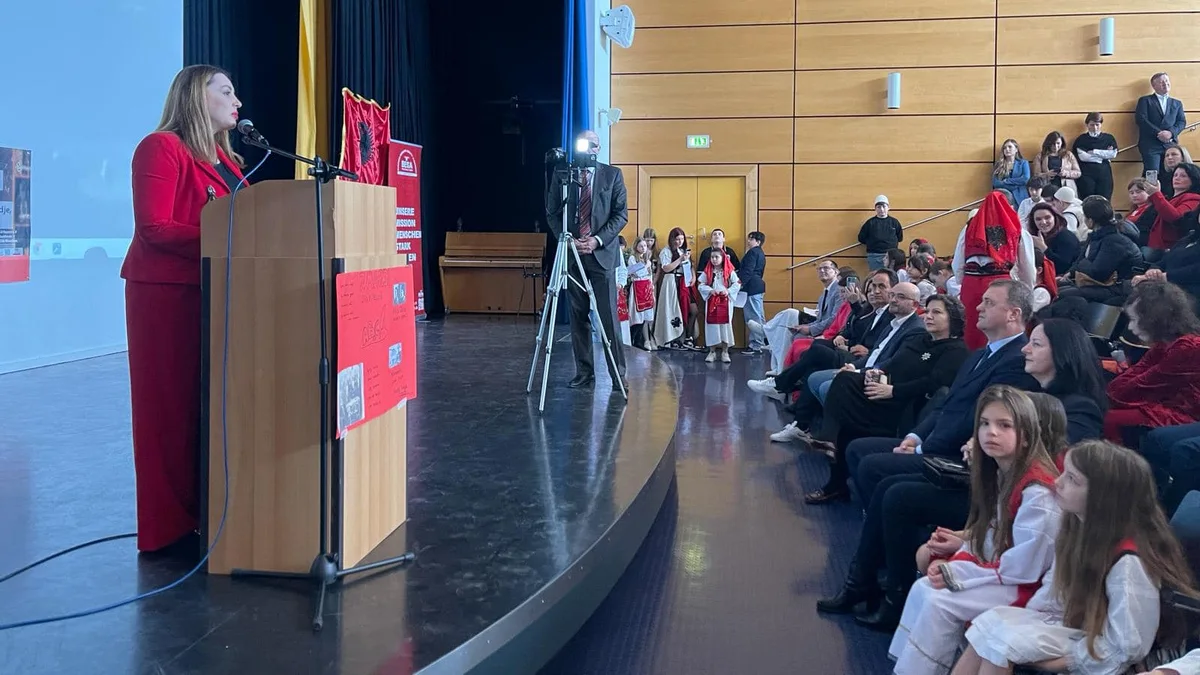
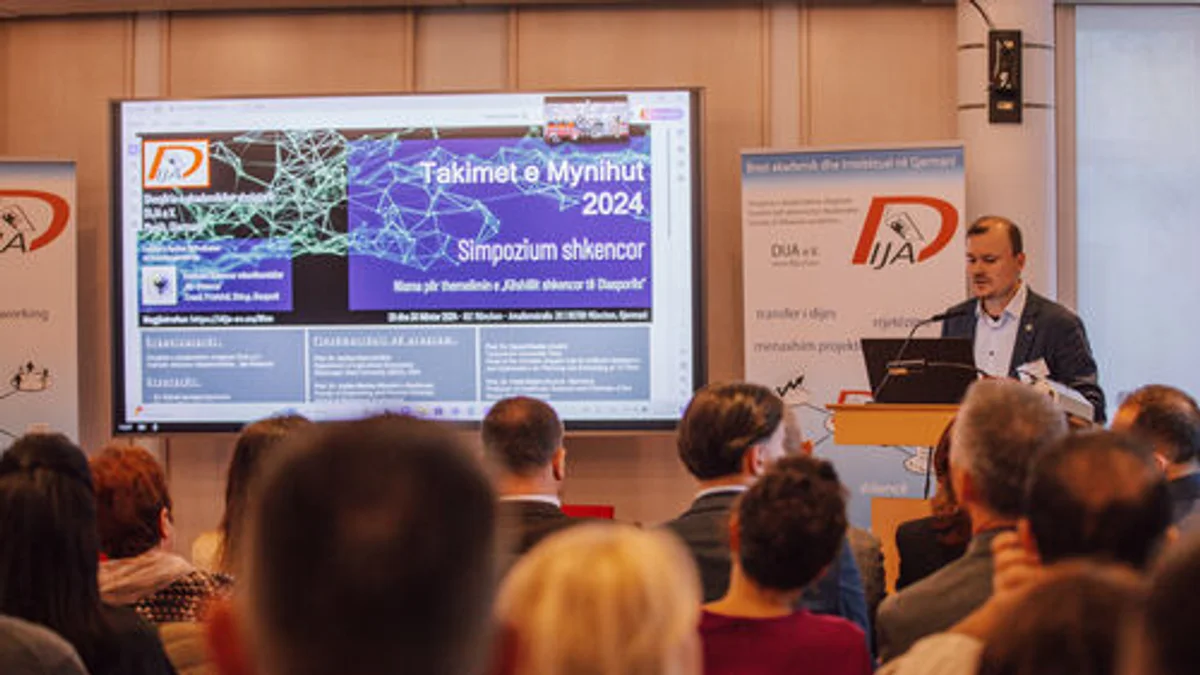
The network becomes easier to understand when it is seen in action. The first photograph shows pupils, parents, teachers and diplomatic representatives at a LAPSH Bavaria Teachers’ Day gathering. The second shows Takimet e Mynihut, where Albanian academics and professionals meet for research exchange, workshops and networking.
Watch Albanian Munich in motion
These public recordings show two different sides of the same community: cultural association Iliria performing for the wider city, and DIJA connecting Albanian scholarship across borders. They are archival examples, not a current event calendar.
Schools and parents are the intergenerational backbone
The most durable community work is often the least spectacular. Heritage teachers give German-born children the reading and writing skills that family conversation alone may not provide. Parents arrange rooms, registration and travel across a city where families are geographically dispersed. The annual 7 March Teachers’ Day celebration documented by the consulate brings pupils, songs, dances and recitations together with teachers, LAPSH organisers and both Albanian diplomatic missions.
This is where descendants become visible even when the statistics lose them. Munich’s own migration-background definition can follow parental characteristics for minors through register links, but the city explains that this information may no longer be recoverable once a child turns 18. A German adult with Albanian grandparents—and sometimes even a German adult whose Albanian link sits only in parental records—can disappear statistically while remaining active in a school, association, football club or family network.
Associations cover culture, scholarship, sport and student life
| Organisation | Documented role | What it adds to community life |
|---|---|---|
| DIJA e.V. | Munich-based Society of Albanian Academics | Knowledge transfer, research, culture and the recurring Takimet e Mynihut meetings |
| Kulturverein Iliria e.V. | Albanian cultural association | Dance and public cultural representation, including Munich’s Fest der Kulturen |
| Gjergj Kastrioti Skenderbeu e.V. | Listed by Munich’s Self-Help Centre | Culture, cooperation, school support and mother-tongue education |
| Albanian Student Society at TUM | Officially listed TUM student club | Events, workshops, networking and the community-run ALBuddy route for newcomers |
| FC Kosova München | Football club founded in 1991 | Regular league matches, youth and adult sporting networks, and links to regional charity tournaments |
| SHOTA Albanian Dance School | Community dance initiative reported with about 30 members in 2026 | Intergenerational dance, national-day performances and representation at international festivals |
What local organisers say still needs work
Community life is active, but it is not automatically coordinated. In the 2020 virtual forum Diaspora Flet n’Mynih, 22 participants from Munich and surrounding cities joined representatives connected with BESA Foundation, DIJA and Germin. The discussion identified a practical need to map and profile diaspora professionals so institutions in Kosovo and Albania could reach relevant expertise directly.
That observation still helps explain the local structure. Munich has strong specialised nodes—teachers, academics, students, athletes, cultural organisers, consulates and faith communities—but no public membership register or umbrella body that can count the whole population. The absence of one central organisation is not evidence of a weak community; it is the reason the page must assemble the network from many verified sources.
Albanian community events in Munich
There is no single permanent Albanian events calendar for Munich. The most reliable pattern is a set of recurring community anchors, supplemented by one-off lectures, exhibitions, student programs, football fixtures and civic festivals. The examples below show what the community actually organises; past dates are evidence of activity, not promises that the same event will recur on the same date.
| Event or occasion | Documented example | Where to check next |
|---|---|---|
| Teachers’ Day / Dita e Mësuesit | LAPSH Bavaria pupils presented songs, dances and recitations for 7 March with both consulates represented | Albanian Consulate General and LAPSH school contacts |
| Flag Day and national holidays | The Albanian and Kosovo consulates documented a joint celebration with dozens of compatriots, students, teachers and diaspora representatives | Newsrooms and social channels of both consulates |
| Takimet e Mynihut | DIJA archives meetings in 2015, 2016, 2017, 2022, 2023 and 2024 and announced a 2026 edition | DIJA’s current program page |
| Albanian cultural heritage evenings | DIJA’s free 29 November 2025 program combined a lecture, panel and exhibition on dress, jewellery, instruments and photography | MORGEN events and DIJA |
| Fest der Kulturen | Munich’s July 2025 festival program included the Albanian dance group of Kulturverein Iliria e.V. | Migrationsbeirat München |
| Student events and ALBuddy | TUM describes the Albanian Student Society as offering events, workshops and networking open to people exploring Albanian culture | TUM Student Club Gallery and the society’s current channels |
| Football matchdays | FC Kosova München’s official association profile lists first- and second-team fixtures; the club was founded in 1991 | FUSSBALL.DE’s live club schedule |
| Regional charity football | The Sali Çekaj association’s July 2026 tournament near Munich drew 23 teams, including FC Kosova München, and funded projects in Albania and Kosovo | Organiser and municipal reports |
Religious calendars add further gathering points: Albanian Catholic masses are scheduled through the Munich worship community, while Muslim centres publish their own programs. Families should confirm dates directly because school terms, worship plans, venues and association programs change. For a first search, check DIJA, Iliria, LAPSH, TUM, FC Kosova München, MORGEN and the two consulates rather than relying on a static commercial event list.
Where the Albanian community is visible in Munich
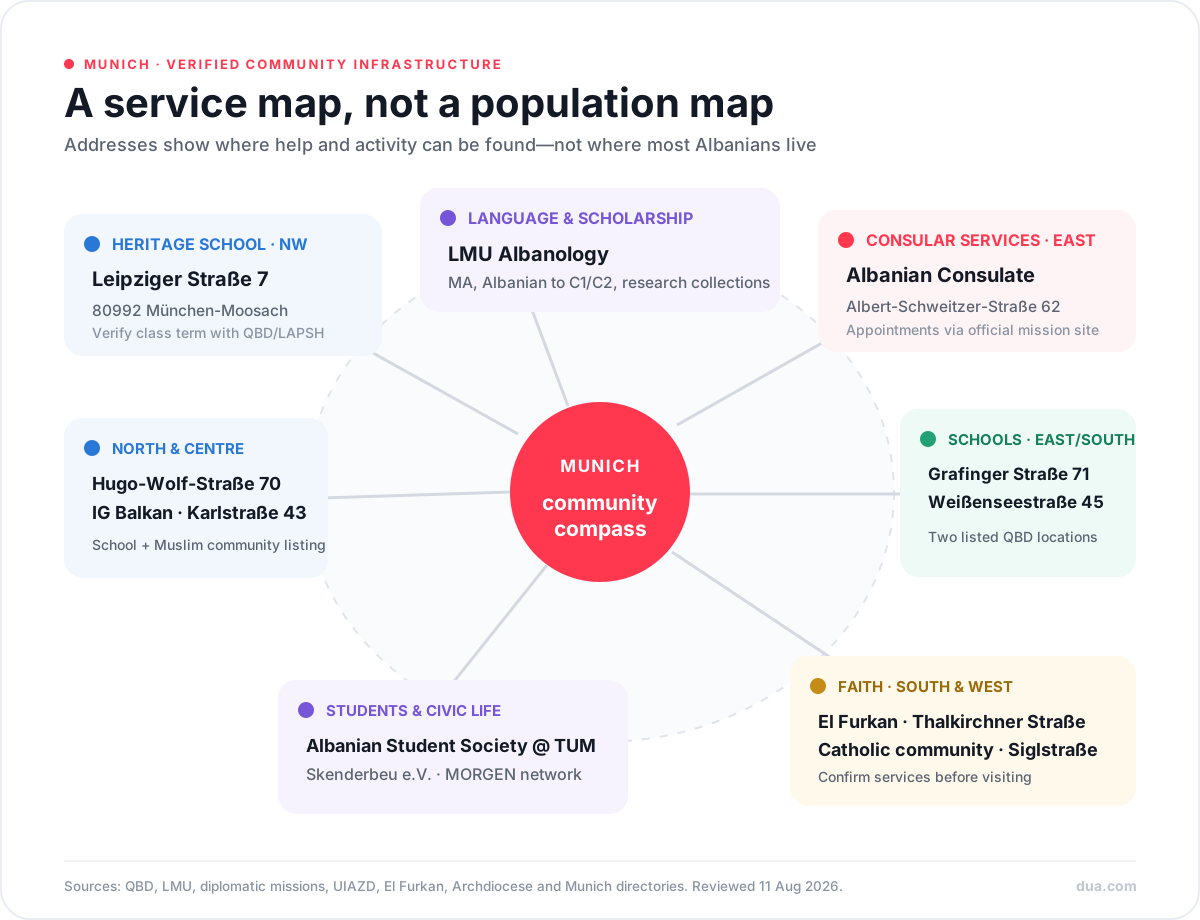
Munich does not publish a reliable Albanian-ethnicity count by district. It would therefore be misleading to label Moosach, Westend, Ramersdorf or any other area as the city’s Albanian neighbourhood from the available evidence. A school, mosque or consulate proves that an institution operates there; it does not prove where most members live.
This is a service map, not a population map. It shows where a family can find classes, where a student can study the language, where consular services operate and where public community organisations have a documented address.
Swipe horizontally to explore the full map.
Need consular services?
Start with the Albanian Consulate General at Albert-Schweitzer-Straße 62, 81735 München. Use the official appointment route before travelling.
Looking for Albanian classes?
Check the official diaspora-school directory and contact the listed teacher or organiser for the current term.
Want university-level study?
Explore LMU Albanology programs and the university’s guidance on studying Albanian.
New student in Munich?
The community-run Albanian Student Society @ TUM connects students from TUM, LMU and Hochschule München. Verify current activity directly.
Consulates, schools and civic organisations
A southern German consular hub
The Albanian Consulate General’s official page lists Albert-Schweitzer-Straße 62, 81735 München. In 2016, Albania announced a joint Albanian–Kosovo consular home in Munich serving southern German states. A later official report describes both consulates celebrating national holidays with diaspora families, students and LAPSH teachers.
Consular arrangements, jurisdictions and appointment systems can change. Use the 2016 story as a historical milestone, but use each government’s current official site for passports, civil-status documents, legalisation and appointment rules.
A cultural association with an educational role
Munich’s official self-help directory lists the Kultureller und Humanitärer deutsch-albanischer Verein e.V. Gjergj Kastrioti Skenderbeu. The Selbsthilfezentrum München describes its work as preserving culture, cooperating with Albanian organisations, supporting Albanian schools and helping maintain mother-tongue teaching.
This kind of organisation matters because community life does not sit inside one building. Schools need teachers and parents; events need volunteers; new families need introductions. A civic association can connect these parts even when it does not publish a weekly public calendar.
Faith communities without a single religious label
Albanian identity in Munich is not a religion. The community includes Muslim, Catholic, Orthodox, Bektashi, secular and mixed families. Religious institutions are important public anchors, but none can be used as a proxy for the beliefs or size of the whole population.
Muslim community infrastructure
The Union of Islamic Albanian Centres in Germany lists the Islamische Gemeinschaft “Balkan” at Karlstraße 43. The Islamic Albanian Centre El Furkan’s own history traces Munich’s first Albanian mosque community to 1985 on Dachauerstraße, followed by a move to Landsbergerstraße and the opening of El Furkan at Thalkirchner Straße 35 in 2000.
El Furkan describes religious, cultural and organisational functions, reflecting how a migrant mosque can also become a language, family and mutual-support space. Its own current site and the UIAZD directory show different El Furkan addresses, so the organisation should be contacted directly before visiting.
Albanian Catholic pastoral care
The Archdiocese of Munich and Freising’s mother-tongue pastoral directory lists the Albanian Catholic Community Munich “Heilige Mutter Teresa.” Its administrative base is in Stuttgart, while the Munich worship location is the Church of the Holy Twelve Apostles at Siglstraße 12, 80686 München. The current directory asks worshippers to contact the priest for the service plan.
Munich also named Mutter-Teresa-Straße in Trudering-Riem in 2005. It is a civic landmark, not a measure of religious participation, but it places an Albanian-born global figure into the city’s official geography.
How Albanians in Munich connect today
There is no single entrance to Albanian Munich. Families often begin with a school or faith community. Students find one another through universities. Cultural events cluster around Kosovo Independence Day, Albanian Flag Day, language celebrations and consular programs. Football, cafés, weddings and family networks matter too, but this page does not turn anecdotes into unsupported neighbourhood claims.
A practical route depends on what you need:
- For documents: use the current Albanian or Kosovo government consular site.
- For children’s language learning: start with the QBD school directory and confirm the term locally.
- For academic Albanian: contact LMU Albanology.
- For civic and cultural activity: check the Skenderbeu association, MORGEN network and consular announcements.
- For student life: verify the current Albanian Student Society @ TUM program.
- For dating and wider diaspora connections: use a platform that lets you state Albanian identity across passport categories and choose your own location and intentions.
dua.com can recognise self-declared Albanian identity across Kosovo, Albania, North Macedonia, Serbia, Montenegro, Greece and German citizenship in a way municipal passport tables cannot. That is useful for connection, but it is not population research. This page publishes no Munich member or chat total until a privacy-safe extract can state the city boundary, time window, denominator and activity definition.
Practical Albanian Munich directory
Details below were reviewed on 11 August 2026. Contact the organisation before travelling, especially for classes, worship and appointment-only services.
| Need | Organisation | Verified starting point |
|---|---|---|
| Albanian consular services | Consulate General of Albania in Munich | Official mission page |
| Heritage-language classes | Albanian schools in Germany / LAPSH Bavaria network | Official QBD directory |
| University study | LMU Albanology | Study Albanian at LMU |
| Cultural and family network | Gjergj Kastrioti Skenderbeu e.V. | Munich self-help directory |
| Muslim community | IG Balkan / El Furkan | UIAZD directory and El Furkan |
| Catholic pastoral care | Albanian Catholic Community “Heilige Mutter Teresa” | Archdiocese directory |
| Student connections | Albanian Student Society @ TUM | Community-run link hub |
The evidence ledger: what can be cited and what remains unknown
| Claim | Status | Publication rule |
|---|---|---|
| Munich had 1,612,429 main-residence residents at the end of 2025. | Official | Cite the corrected year-end table and date. |
| 13,312 Kosovo citizens and 4,328 Albania citizens lived in Munich. | Official | Call them citizenship rows, not ethnic totals. |
| The North Macedonia row contained 4,738 residents. | Official | Never label the complete row Albanian. |
| The three-track baseline is approximately 20,784. | Modelled | Show the 66.36% coefficient, formula and limitations beside the result. |
| A national-ratio sensitivity model reaches approximately 35,066. | Calibrated scenario | Publish only with the Kosovo and North Macedonia national ratios and the assumption that Munich resembles Germany. |
| Approximately 40,000 is a reasonable upper planning scenario for Munich city. | Rounded editorial scenario | Never call it an official count, measured maximum or metropolitan total. |
| A 2004/05 city document reported 16,000–18,000 Albanian-speaking migrants. | Historical attributed estimate | Name the year, organisation and different definition; do not use as a current count. |
| A 2015 report described about 18,000 Kosovars in and around Munich. | Historical community-linked estimate | Preserve the metropolitan boundary and Kosovo-only definition. |
| DIJA, Iliria, LAPSH, FC Kosova München and the TUM student society form part of the current network. | Verified community infrastructure | Link to the organisation or authoritative directory; do not imply universal representation. |
| Moosach, Westend or another district is the main Albanian neighbourhood. | Not established | Do not publish without district-level demographic evidence. |
| Munich has Germany’s largest Albanian city community. | Not established | A three-city comparison is not a national ranking. |
| dua.com has a stated daily Munich chat total. | Not verified | Omit until a dated, city-scoped and documented internal extract exists. |
The purpose of the ledger is precision, not caution for its own sake. Munich clearly has a large, multigenerational Albanian community. The honest story is stronger when every number shows its boundary and when the unknown part remains visible instead of being converted into a false exact total.
What Albanian Munich looks like now
Albanians in Munich are visible in at least three different ways: in a 20,784-person register floor, in a descendant-aware community that may reasonably approach 35,000–40,000 people, and in institutions built over generations. Schools, DIJA, Iliria, FC Kosova München, TUM students, consulates and faith communities make that population tangible, while LMU has treated Albanian language and culture as a serious academic field since 1961/62.
The best starting point depends on the reader. Use the city table for population research, the official school and institutional directories for practical needs, LMU for language and scholarship, and current community channels for events and connection. For anyone looking beyond one institution or passport category, dua.com offers a way to meet Albanians in Munich and across the wider German-speaking diaspora without pretending platform membership is a census.
Frequently asked questions
How many Albanians live in Munich?
Munich has a register-visible floor of approximately 20,784 Albanian-linked residents. A sensitivity model calibrated to Germany’s national migration-background ratios reaches about 35,066, and a rounded upper community scenario is roughly 40,000. Only the citizenship inputs are direct Munich counts; the larger figures include assumptions about naturalised Germans and descendants.
How many Albanians live in Munich including descendants?
No Munich table gives an exact descendant total. Applying Germany’s national Kosovo and North Macedonia migration-background-to-citizenship ratios produces about 35,000 for Munich. Applying the Germany page’s further hidden-origin and later-generation uplift gives about 39,000, rounded to a 40,000 upper scenario. This is a sensitivity calculation, not a census result.
Is 20,784 an official population figure?
No. Munich officially records 13,312 Kosovo citizens, 4,328 Albania citizens and 4,738 North Macedonia citizens. The 20,784 result applies a stated 66.36% Albanian diaspora coefficient to the North Macedonia row. The calculation is reproducible, but it is not an ethnic census.
Why are Kosovo and North Macedonia included?
Most Kosovo Albanians are Albanian-speaking and part of the wider Albanian community, while western North Macedonia has a substantial Albanian population. Munich records citizenship rather than ethnicity, so the page labels Kosovo as a complete community-linked row and estimates only the Albanian-linked share of North Macedonia.
Why does the model miss German citizens of Albanian origin?
Munich reports a person’s first citizenship and sorts German before non-German citizenship. A naturalised dual citizen can therefore disappear from the Albania or Kosovo row even while retaining that passport. German-born descendants may never enter a foreign-citizenship row, and parental migration links may no longer be recoverable in the city data after age 18.
When did Albanians begin settling in Munich?
The modern community grew after West Germany’s 1968 labour-recruitment agreement with Yugoslavia, when Albanians from Kosovo and western North Macedonia arrived recorded as Yugoslav workers. Later waves came through family reunification, asylum, the Kosovo war, university study and newer skilled migration.
Where do most Albanians live in Munich?
Public Munich data does not provide a reliable Albanian-ethnicity breakdown by district, so no neighbourhood can be ranked honestly. Schools and institutions operate in several parts of the city, including Moosach, Obergiesing, the east and northern Munich, but their addresses do not prove residential concentration.
Where can children learn Albanian in Munich?
The Albanian government’s diaspora-school directory lists four Munich locations: Hugo-Wolf-Straße, Grafinger Straße, Leipziger Straße in Moosach and Weißenseestraße. Nearby classes are also listed in places such as Garching, Fürstenfeldbruck and Germering. Families should confirm the current timetable before attending.
Can you study Albanian at LMU Munich?
Yes. LMU offers Albanology and says Albanian can be studied to advanced C1/C2 level. A dedicated master’s program began in 2019/20, combining language with literature, history and culture. Munich’s academic Albanology tradition itself dates to the winter semester of 1961/62.
Which Albanian consular services are in Munich?
The Consulate General of Albania is at Albert-Schweitzer-Straße 62, 81735 München. Albania announced a joint Albanian–Kosovo consular home in 2016, but service jurisdictions and appointment systems can change. Check the current official Albanian and Kosovo government pages before travelling.
Are there Albanian Muslim and Catholic communities in Munich?
Yes. Public directories list Albanian Muslim centres including IG Balkan and El Furkan, while the Archdiocese lists the Albanian Catholic Community “Heilige Mutter Teresa” with a Munich worship location. These institutions are important anchors but do not represent the beliefs of every Albanian resident.
How can Albanian students meet people in Munich?
Students can begin with LMU Albanology, the community-run Albanian Student Society @ TUM, heritage-language events and consular cultural programs. Because activity changes by semester, verify current events directly. Wider community and dating connections are also available through dua.com.
Which Albanian community events take place in Munich?
Documented anchors include LAPSH Teachers’ Day, Flag Day celebrations at the consulates, DIJA’s Takimet e Mynihut, Albanian cultural-heritage evenings, Iliria performances at Fest der Kulturen, TUM student events and FC Kosova München matchdays. Dates and venues change, so check the organisers’ current pages.
Which organisations are part of Albanian community life?
The public network includes DIJA e.V., Kulturverein Iliria, Gjergj Kastrioti Skenderbeu e.V., LAPSH Bavaria, the Albanian Student Society at TUM, FC Kosova München, Albanian Muslim centres, the Albanian Catholic community and both consulates. No single organisation represents or counts every Albanian in Munich.
How can I meet Albanian singles in Munich?
Community events, student groups, language networks and family introductions are common routes. dua.com lets people state Albanian identity across different citizenships and choose their location and relationship intention. The page does not publish a Munich member total until a dated, privacy-safe city extract is available.