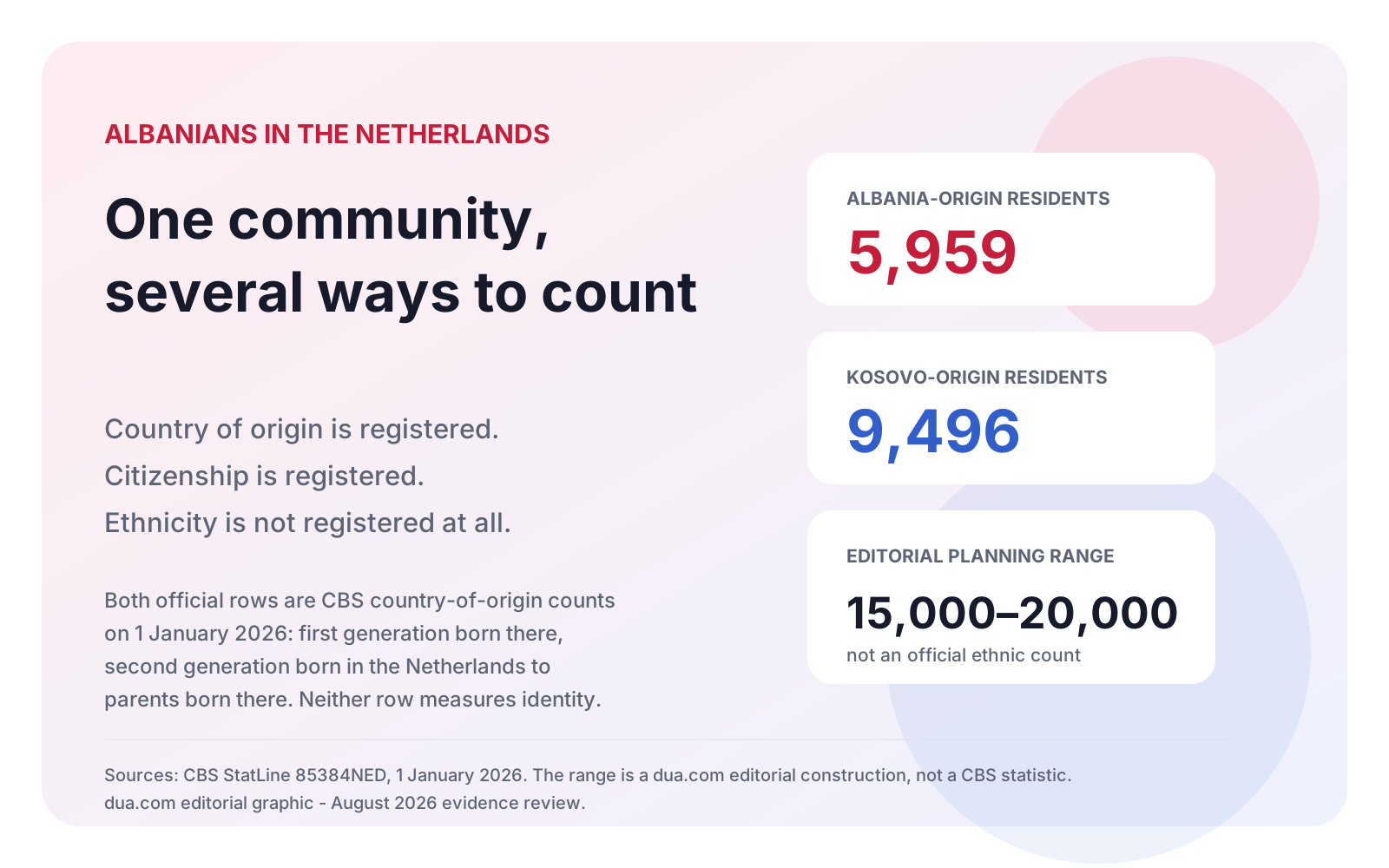
On 1 January 2026, Statistics Netherlands (CBS) counted 5,959 residents with country of origin Albania and 9,496 with country of origin Kosovo. Those are two precise birth-country rows, not an ethnic count. The Netherlands registers no ethnicity at all. After auditing the administrative and historical record, dua.com uses roughly 15,000–20,000 as a planning range for the wider Albanian-speaking community; the range is editorial, not official.
That distinction shapes this entire guide. A naturalised Dutch citizen of Albanian origin stays inside the origin row but disappears from the citizenship row. A grandchild of Kosovo-born grandparents, born to Netherlands-born parents, counts simply as Dutch. An Albanian speaker born in North Macedonia, Serbia or Montenegro appears under another country's row entirely. The responsible answer is therefore a ledger, not one magic number.
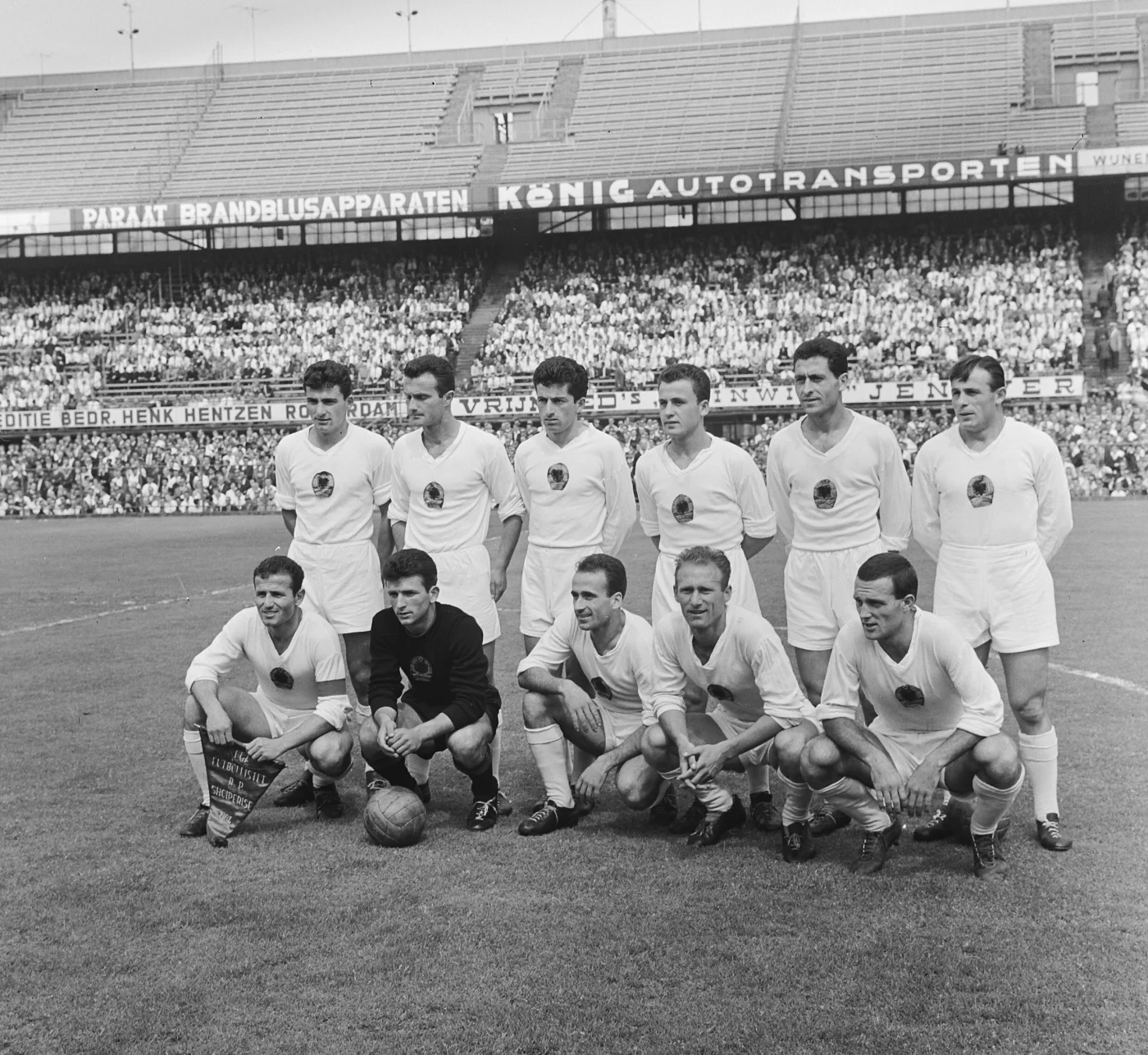
This page follows the story from the Dutch officers who organised Albania's gendarmerie in 1913 and Albania's national XI lining up in Rotterdam in 1964, through the 1990s asylum waves, the 1999 Kosovo evacuation and the tent camp at Ermelo, to the fast-growing Albania-born generation of the 2020s. It explains the statistics honestly — including what the Netherlands does not publish — maps institutions and events, introduces verified people, and separates dua.com's first-party context from demographic evidence.
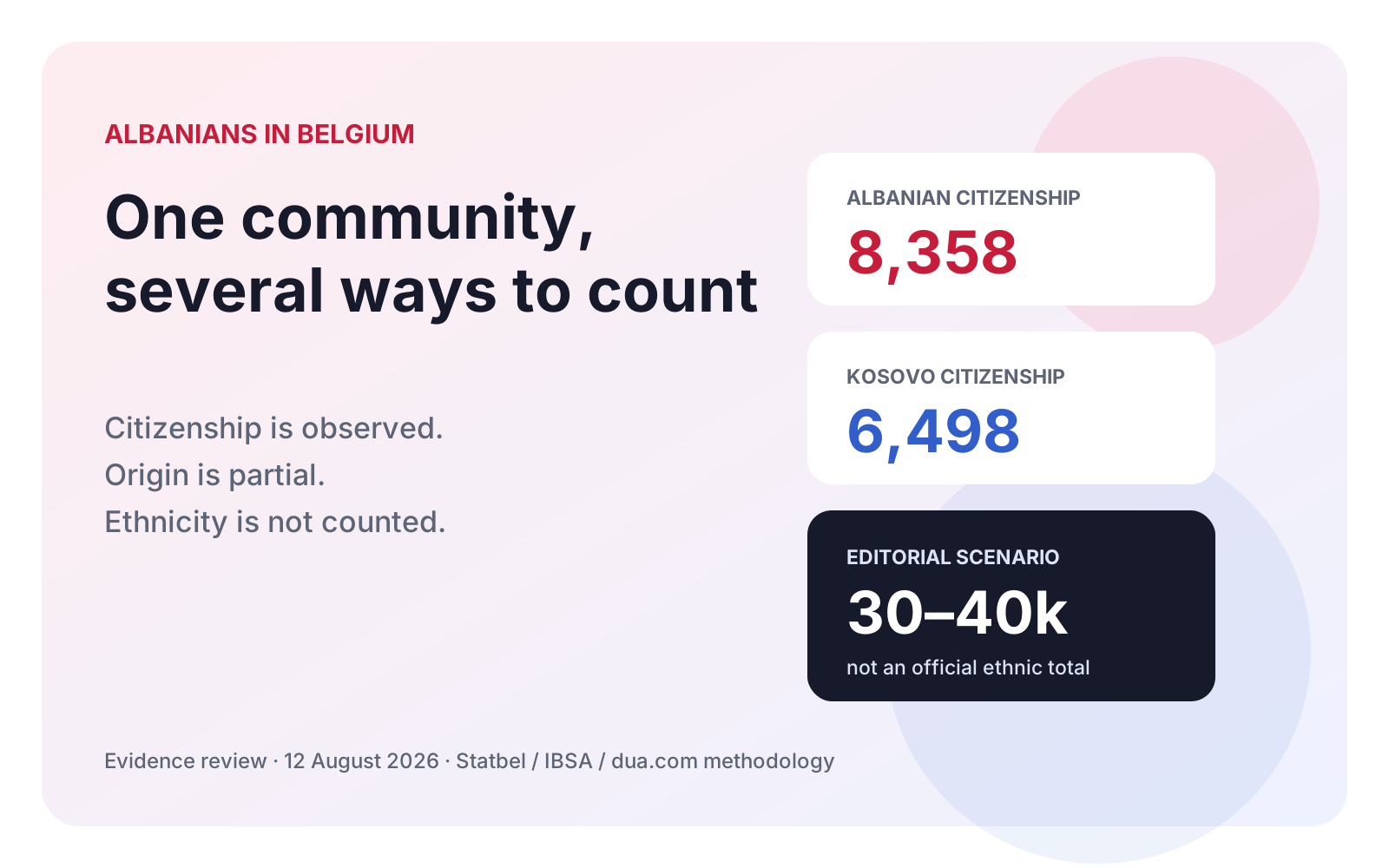
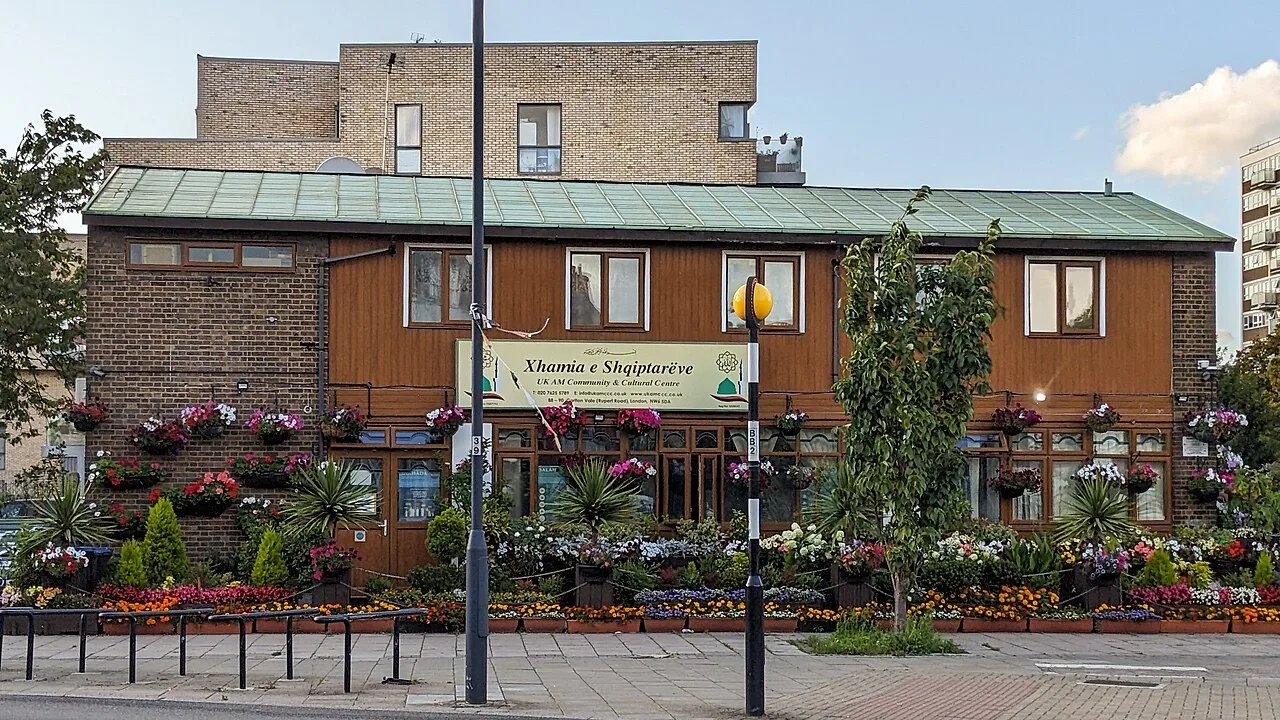
For more on this topic, read Albanians in Belgium: Population, History and Community and Albanians in London: A Community of About 80,000.
Last evidence review: 26 August 2026. Official statistics, editorial modelling, historical records, community information and first-party dua.com framing are labelled separately throughout.
How many Albanians live in the Netherlands?
A reasonable estimate is around 15,000–20,000 people with Albanian roots or connections living in the Netherlands today.
There is no exact official number, because the Netherlands does not register ethnicity or the language people speak at home. What it does record is country of origin.
On 1 January 2026, Statistics Netherlands (CBS) counted:
- 5,959 people of Albania origin
- 9,496 people of Kosovo origin
Together, that is 15,455 people.
Swipe horizontally to explore the full chart.
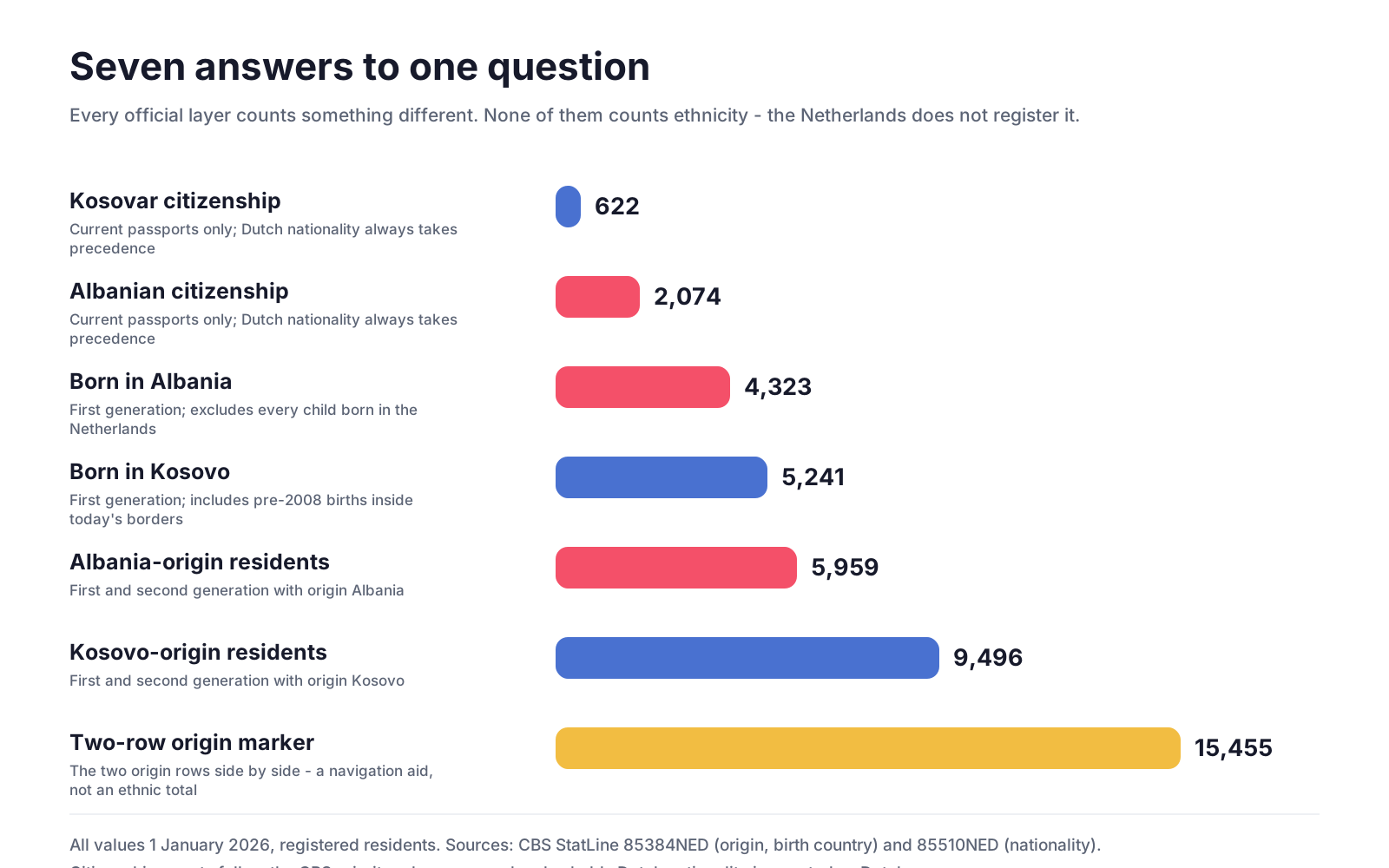
But 15,455 is not the number of ethnic Albanians in the Netherlands. It is simply the combined total of those two official CBS categories.
The real community is a little harder to fit into a spreadsheet. Albanians with roots in North Macedonia, Montenegro and Serbia appear under those countries instead. And some Dutch-born grandchildren of earlier Albanian and Kosovar migrants are no longer visible in these origin statistics at all.
At the same time, not everyone in the Kosovo-origin group is Albanian.
That is why we use 15,000–20,000 as a practical range for the wider Albanian community in the Netherlands. It is not an official CBS estimate — it is our editorial range based on the best available data and on what that data cannot see.
So if you are looking for one number, think roughly 15,000–20,000. If you are looking for the official starting point, it is 15,455.
| Measure | Value | What it does—and does not—count |
|---|---|---|
| Country of origin Albania | 5,959 | First generation (born in Albania) plus second generation (born in NL to a parent born there). Not ethnicity; excludes the third generation. |
| Country of origin Kosovo | 9,496 | Same definition for Kosovo. Includes all ethnicities of Kosovo origin; excludes Albanian speakers born elsewhere. |
| Two-row origin marker | 15,455 | The two rows side by side — a navigation aid, never an ethnic or community total. |
| Born in Albania | 4,323 | Birthplace only; identical to the Albania row's first generation. |
| Born in Kosovo | 5,241 | Birthplace within Kosovo's current borders, including pre-2008 births once coded under Yugoslavia or Serbia. |
| Albanian nationality | 2,074 | Current citizenship only. CBS counts every dual Dutch national as Dutch, so this is far below the passport-holder total. |
| Kosovar nationality | 622 | Same rule. Only about 6.5% of the Kosovo-origin row holds Kosovar nationality in this count — most are Dutch citizens. |
Why the citizenship rows are so small
CBS applies a strict priority rule: anyone who holds Dutch nationality — alone or alongside another passport — is counted as Dutch. A family that naturalised in 2005 has been invisible in the Albanian-citizenship row for two decades while remaining fully visible in the origin rows. The Albanian-nationality series still tells a story: it grew from 571 in 2014 to 2,104 in 2025, then recorded its first decline to 2,074 in 2026 — a pattern consistent with rising naturalisation. The Netherlands granted its nationality to 142 former Albanian citizens in 2025 alone (95 in 2022, 148 in 2023, 151 in 2024), and to 58 former Kosovar citizens.
What the origin rows measure
Since 2022, CBS classifies people by herkomstland (country of origin): your own birth country if you were born abroad, otherwise your parents' birth country, with the mother's taking precedence. It replaced the older “migration background” framework and it is the best available lens — but it is a birth-country category, not an identity. It cannot see the third generation, and it cannot see Albanian speakers whose birthplace falls in North Macedonia, Serbia or Montenegro. For scale: the two origin rows together are about 0.09% of the 18,130,208 people registered in the Netherlands on 1 January 2026.
Why the planning range is 15,000–20,000
The range is an editorial triangulation, not a census result, probability interval or claim that every person inside it identifies the same way. It describes a broad community network: people with roots in Albania and Kosovo, Albanian speakers from North Macedonia, Serbia and Montenegro, and Netherlands-born generations who keep an Albanian family or cultural connection.
1. The official anchor is 15,455
The two origin rows are unusually solid evidence by international standards — unrounded register counts, re-verified for this page directly against the CBS open-data API. Their sum, 15,455 on 1 January 2026, anchors any honest community estimate, because every person in it has a first- or second-generation link to Albania or Kosovo.
2. The unmeasured layers point modestly upward
Three real groups sit outside the floor. The North Macedonia origin row held 8,432 residents and the Serbia row 20,517 on the same date; both contain Albanian-speaking communities whose share the Netherlands does not measure, and this page refuses to assign either row wholesale. The third generation — grandchildren of the 1990s arrivals, now being born — counts simply as Dutch. Together these layers plausibly carry the wider community into the 16,000–20,000 band, which is why the range's upper half exists.
3. The honest counter-argument points downward
A strict reading could argue for 13,000–14,000: the Kosovo origin row includes Kosovo Serbs, Bosniaks, Roma and others who do not identify as Albanian, and no official source measures that share either. The page keeps 15,000 as the round lower bound because this downward ethnicity correction and the unmeasured upward layers pull in opposite directions.
4. What the evidence rules out
A “60,000 ethnic Albanians in the Netherlands” claim circulates on Wikipedia, attributed to a Kosovo diaspora ministry. No such ministry document could be located, the attribution has no traceable source, and Kosovo's own 2014 migration report does not even list the Netherlands among its top-10 destination countries — a cut-off implying, by our derivation, fewer than roughly 6,800 census-measured Kosovan emigrants in the country as of 2011. Separately, Dutch police were reported in November 2017 to estimate around 20,000 Albanian citizens staying in the country for shorter or longer periods against roughly 800 registered — a web-traffic-based enforcement estimate of transient presence, made inside a crime story. It measures neither ethnicity nor the settled community, and this page uses it only as a labelled press episode.
Taken together, the evidence supports a present-day 15,000–20,000 planning range — the same range dua.com's worldwide Albanians hub has published for the Netherlands. Any figure of 25,000 or more would rest on the untraceable ministry claim and is avoided.
Where do Albanians live in the Netherlands?
There is not one Dutch city you can point to and say: this is where the Albanians are. And that is partly what makes the Netherlands interesting.
The picture here is spread out. Albanian life is visible in Amsterdam, Rotterdam and The Hague, but also further east and south, through families, football, businesses and people whose stories connect places like Enschede, Heerlen, Sittard and Huizen.
The Hague is the institutional centre, home to both the Albanian and Kosovar embassies. Amsterdam and Rotterdam have visible Albanian businesses and community life. Beyond the Randstad, Dutch-Albanian stories stretch into Twente and Limburg too.
That does not mean these are the cities with the most Albanians. We simply do not know.
CBS does not currently publish Albania- and Kosovo-origin populations by municipality in the public regional tables, so there is no reliable ranking of “the most Albanian cities in the Netherlands.” Treat precise city totals carefully unless they come with a verifiable source.
What the evidence does suggest is something more useful: this is a network spread across the Netherlands, rather than a community centred on one neighbourhood or city.
For a relatively small community, that changes how people stay connected. Your family might be in Rotterdam, your Albanian friends in Amsterdam, an event in The Hague — and someone you have not met yet somewhere completely different.
The Dutch-Albanian map is lots of smaller dots connected to each other.
Migration waves: from a gendarmerie mission to the Kosovo years
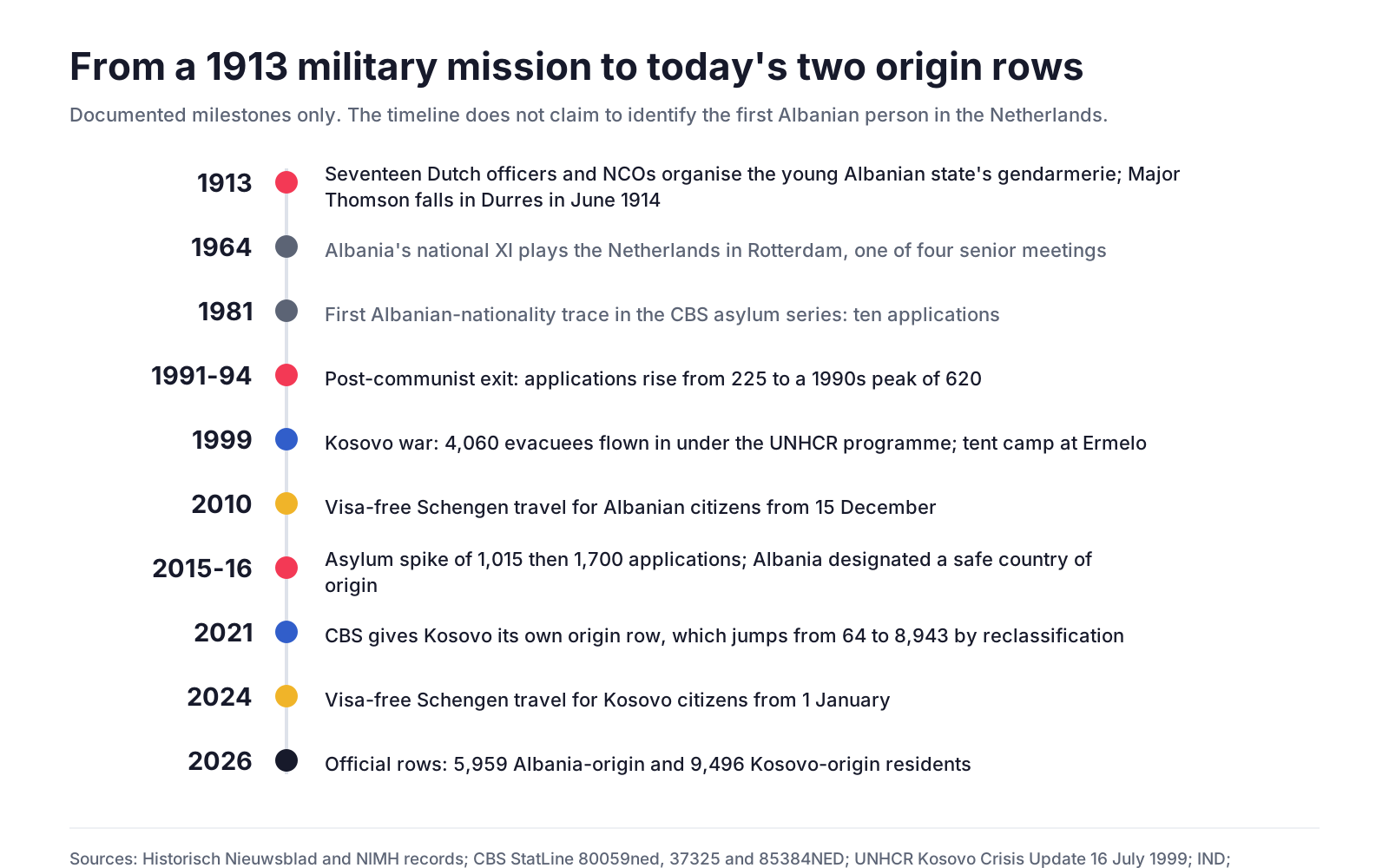
The Dutch-Albanian story begins in the other direction. In October 1913, the Netherlands sent a military mission — seventeen officers and NCOs under Colonel Willem de Veer and Major Lodewijk Thomson — to organise the gendarmerie of the newly independent Albanian state. Thomson was killed in Durrës on 15 June 1914 and remains a shared point of memory between the two countries. No mass migration followed; communist Albania banned emigration outright, and the earliest trace of Albanian nationals in the CBS asylum series is ten applications in 1981.
Swipe horizontally to explore the full timeline.
The 1990s: two states collapse, two flows begin
Albania's post-communist opening shows up immediately in Dutch statistics: 225 asylum applications by Albanian nationals in 1991, rising to a decade peak of 620 in 1994, with an echo around the 1997 pyramid-scheme collapse. The far larger flow was recorded under another label. Applications by nationals of (former) Yugoslavia — the row containing Kosovo Albanians — reached 8,330 in 1998 and 5,080 in 1999. The immigration service told parliament plainly that it recorded no ethnicity, which is why the Kosovar arrivals of those years are statistically invisible as Kosovars until decades later.
1999: the evacuation and the tent camp at Ermelo
When war emptied Kosovo in spring 1999, the Netherlands joined the UNHCR humanitarian evacuation programme. UNHCR's tables record 4,060 evacuees flown from North Macedonia to the Netherlands out of 91,057 programme-wide; the Dutch government's own count was 4,091. The state had initially pledged to take 2,000; a large share of those who came were housed in a tent camp at Ermelo. Voluntary return began within months of Serbian withdrawal — by mid-2001 the government reported that roughly 1,000 of the original 4,000 evacuees were still in the country. Research later summarised that from 1999 around ten thousand Kosovars received a temporary residence status in the Netherlands, and most of those statuses were withdrawn by the end of 2000. Programme movements, applications and statuses are not today's population — but the families who stayed became the core of the settled community, and their children are among the 4,255 Netherlands-born people in today's Kosovo origin row. A CBS estimate from 2008 already put roughly 8,500 Kosovars in the country — consistent with the explicit register row that appeared thirteen years later.
The Hague, and a defining moment for Kosovo
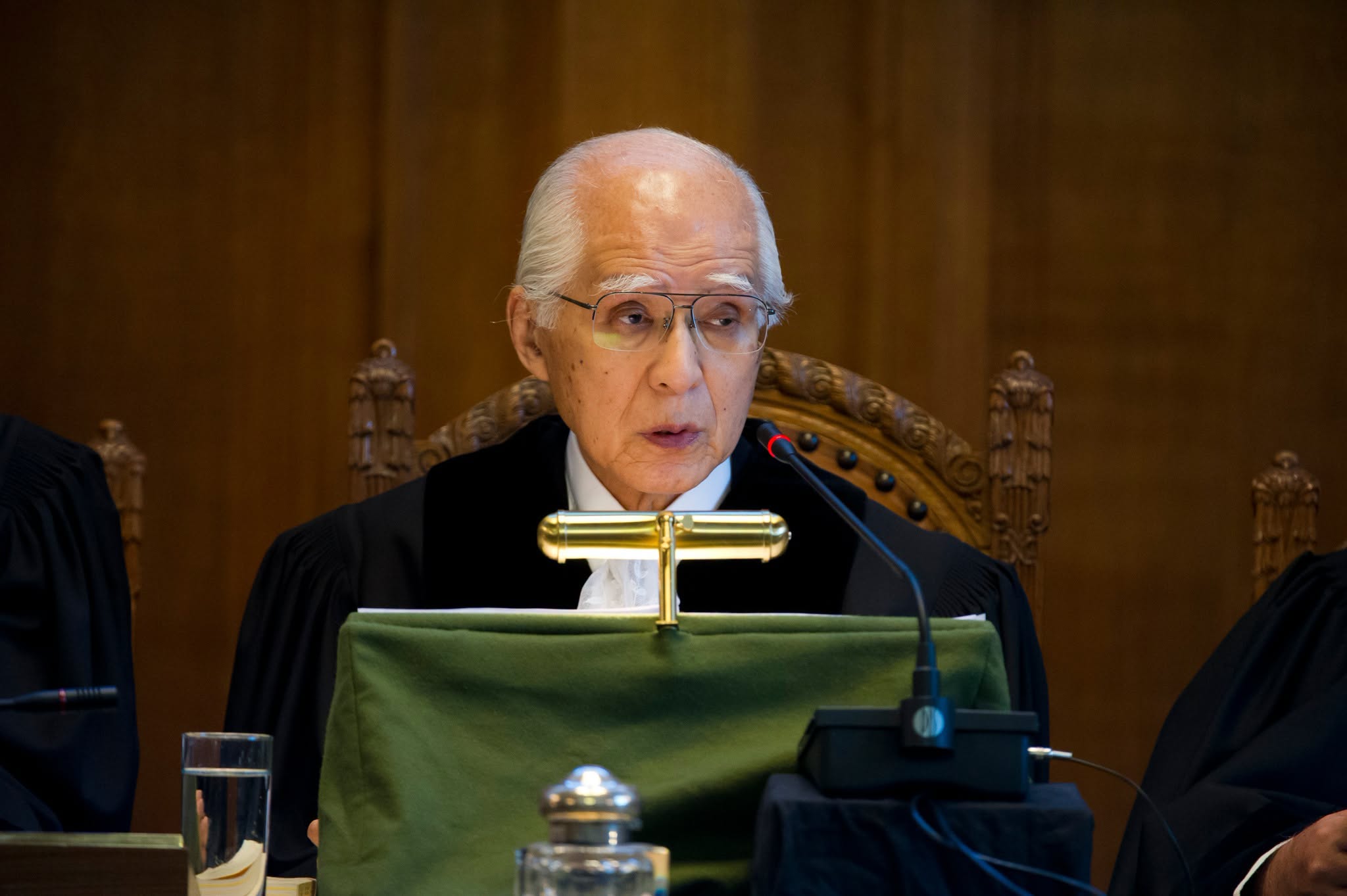
The Netherlands appears in Kosovo's modern story in a place far removed from migration statistics: the Peace Palace in The Hague.
On 22 July 2010, the International Court of Justice delivered its advisory opinion on Kosovo's 2008 declaration of independence. Asked whether the declaration was in accordance with international law, the Court concluded that it did not violate international law.
The opinion did not itself recognise Kosovo as a state or require other countries to recognise it. But politically and diplomatically, it became one of the most important international legal moments in Kosovo's post-independence history.
And it happened here, in the Netherlands. Read the ICJ case record and advisory opinion.
2010–2016: visa freedom and the safe-country turn
Albanian citizens with biometric passports gained visa-free Schengen travel on 15 December 2010. Five years later, asylum applications spiked — 1,015 in 2015 and 1,700 in 2016, against 90 in 2014 — and Dutch policy answered quickly: Albania (and Kosovo) went onto the Netherlands' first list of safe countries of origin by regulation of 10 November 2015, upheld by the Council of State on 14 September 2016. First-instance decisions on Albanian applications in those two years were almost universally negative — all 315 in 2015, and 795 of 800 in 2016. Since 2021 Albanian applications have run at or below sixty per year.
2018–2026: a quieter, steadier channel
Swipe horizontally to explore the full chart.
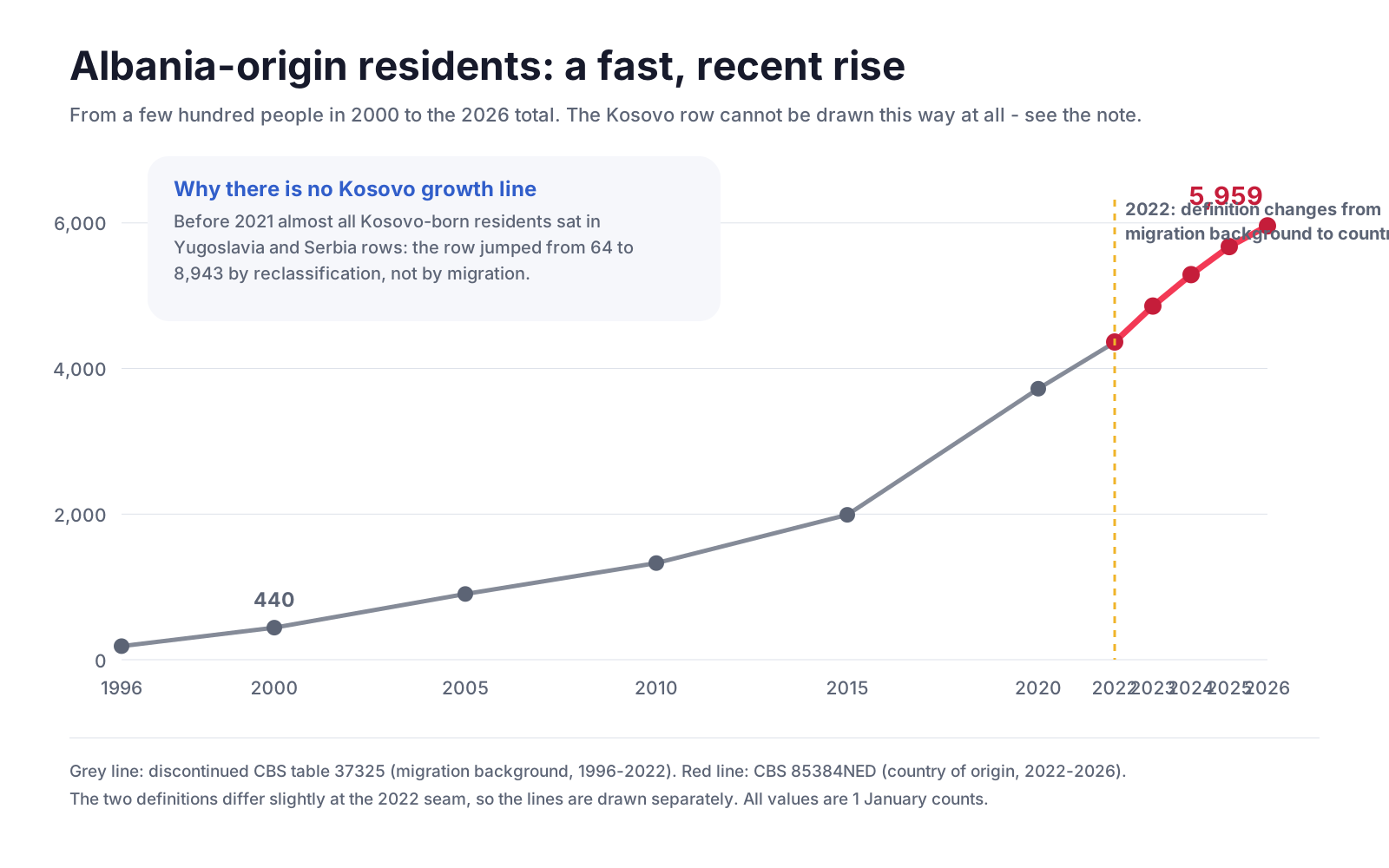
The recent growth of the Albania row is not an asylum story. Registered immigration of Albania-origin persons ran at 614 (2022), 582 (2023), 493 (2024) and 438 (2025) against emigration of 225–290 — work, family and study in ordinary migration channels. The Albania row grew by 36.5% across those four years, while the Kosovo row stayed nearly flat, growing mainly through births. Kosovo passport holders gained visa-free Schengen travel on 1 January 2024 — too recent to move the register series, but a real change in how families visit and stay connected.
Languages, generations and belonging
The Netherlands has no official Albanian-speaker total, and never will under current law: Dutch statistics register neither ethnicity nor home language. The community's linguistic reality must be read from its structure instead.
Swipe horizontally to explore the full chart.
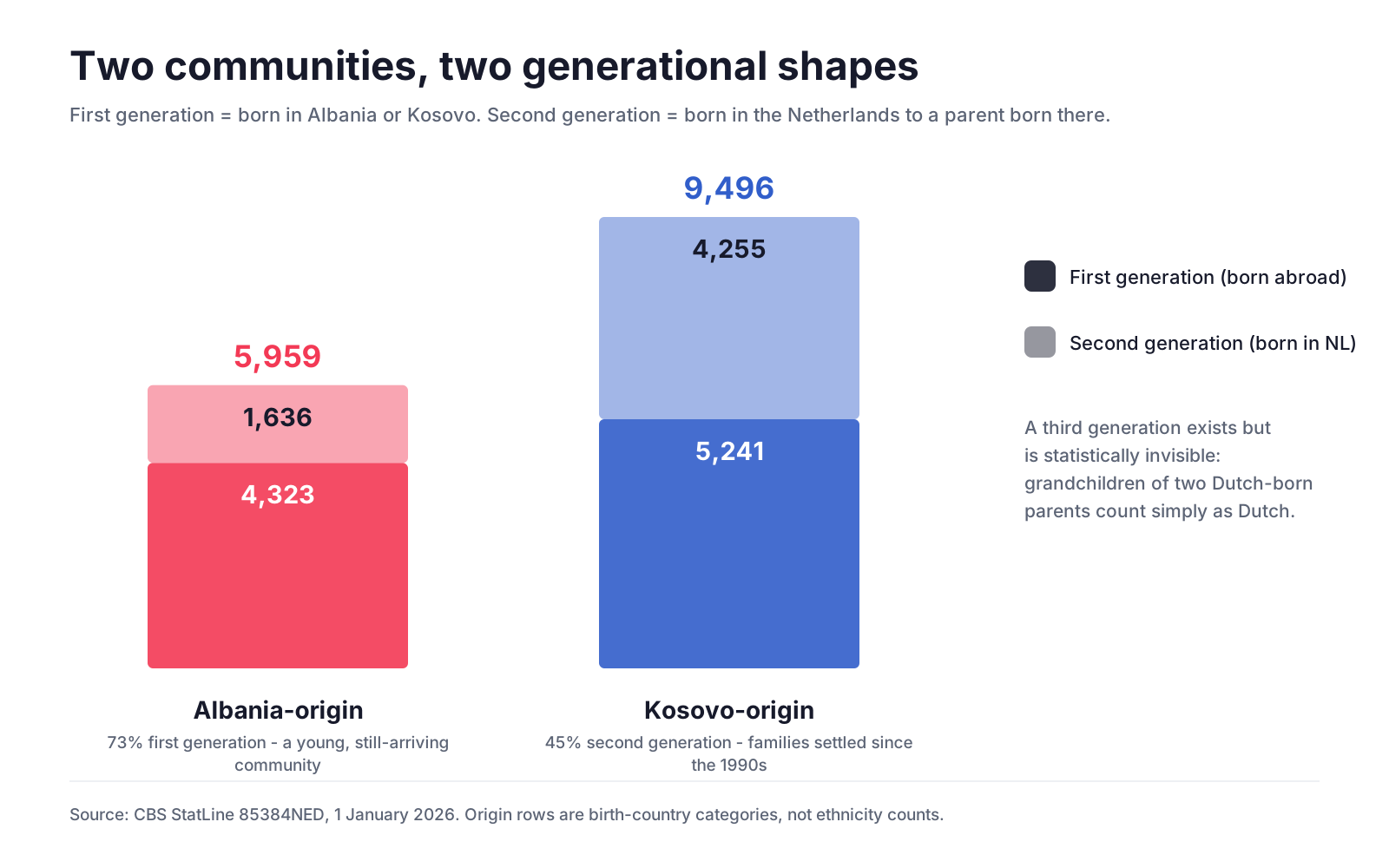
The two rows carry different sounds. The Albania-linked community is young in migration terms — 73% born in Albania, many arrived within the last decade — so standard Albanian and Tosk-influenced speech dominate at home while Dutch is learned at work and school. The Kosovo-linked community is a generation deeper: 45% were born in the Netherlands, many to parents who arrived around 1999, so Gheg varieties live alongside fluent Dutch, and a child may understand a grandmother's dialect, answer in Dutch, and meet standard Albanian only in family visits or online.
Organised Albanian-language teaching is thinner than in Switzerland or Germany: this page could not document a standing Albanian supplementary school in the Netherlands, and says so openly rather than inventing one. What is documented is transmission by event and by family — the two embassies ran a joint Albanian-language children's day in November 2024 where diaspora children drew Albanian symbols, read fairy tales and played traditional games.
What does Albanian community life look like in the Netherlands?
Albanian life in the Netherlands does not revolve around one neighbourhood, a community centre everyone knows or one organisation holding the whole diaspora together. Community here happens in smaller circles.
Sometimes it is official: the Albanian and Kosovo embassies in The Hague organise cultural activities and appear together at events such as the Embassy Festival.
Sometimes it is much more familiar: families getting together, weddings that pull relatives in from different cities and countries, Albanian food in Amsterdam or Rotterdam, football, music, or children hearing and speaking Albanian with grandparents even when Dutch is the language they use everywhere else.
And then there are the days when those smaller circles become much more visible. Around 28 November, Albanian flags come out for Independence and Flag Day. In 2024, the Albanian and Kosovo embassies brought diaspora children together for Fëmijët e Diasporës flasin shqip — an afternoon of Albanian stories, drawings, traditional games and language.
At The Hague's Embassy Festival, Albania and Kosovo have appeared side by side, with food, wine, art and traditional dance. The published 2026 programme included the Kosovo-Albanian dance ensemble Dardanët and a shared stand where visitors could try on a plis.
These events do not tell us how many Albanians live in the Netherlands. They show what happens when the community gets together.
A community without one headquarters
Compared with Germany, Switzerland or Austria, the documented Albanian community infrastructure in the Netherlands is relatively light. There are fewer large, permanent institutions, and no single place functions as the centre of Dutch-Albanian life.
That does not mean the community is not organised. The embassies are important anchors in The Hague, while registered diaspora organisations, cultural initiatives, businesses and informal family networks operate elsewhere in the country. Some last for decades; others form around a particular event, generation or need.
That looser structure makes sense for a community this size and this spread out. You might live in Utrecht, have cousins in Rotterdam, go to an event in The Hague, meet friends in Amsterdam and spend summer back in Prishtina, Tirana or your family's hometown.
For many Dutch Albanians, community is not necessarily somewhere you go. It is a network you carry with you.
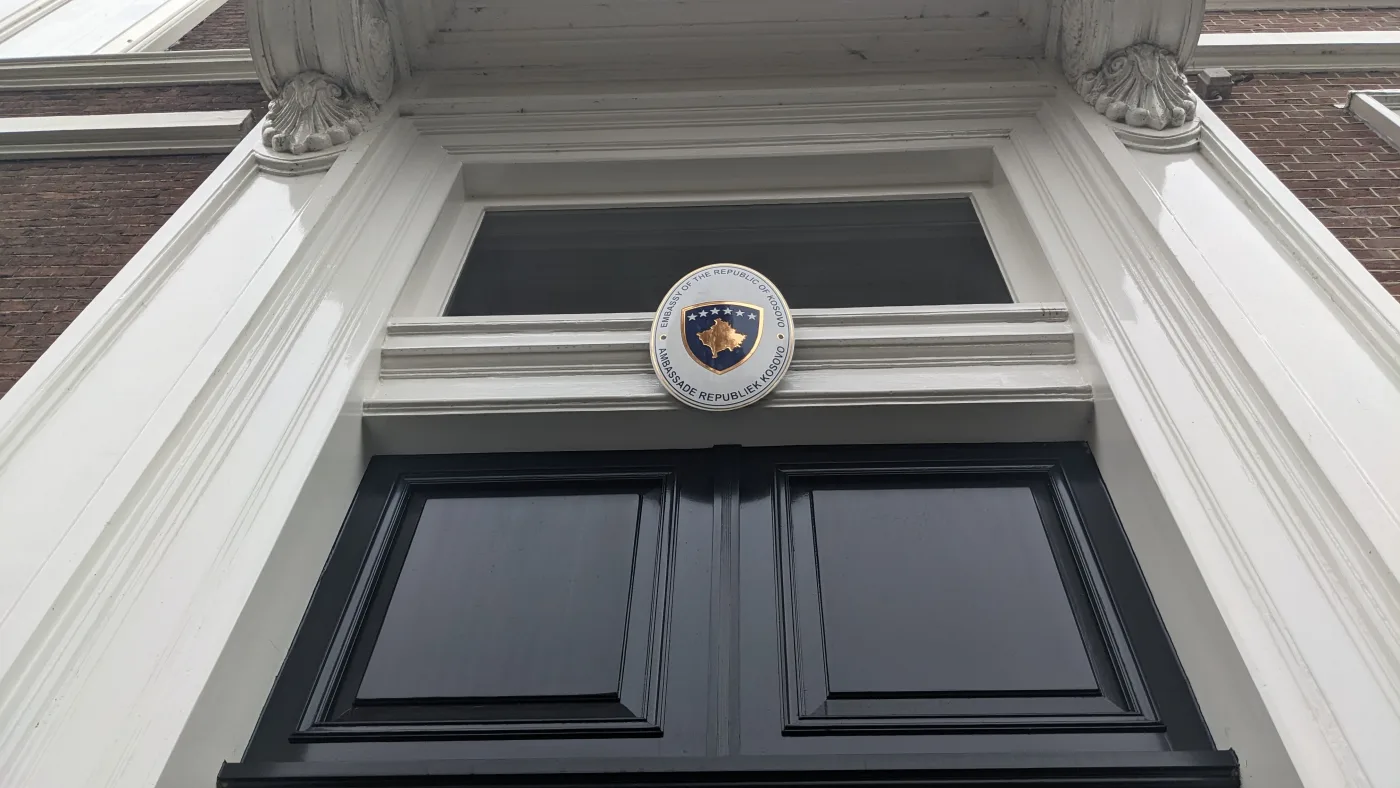
The Embassy of Albania and the Embassy of Kosovo, both in The Hague, are the formal anchors — two states serving one overlapping cultural public, often jointly: they shared a stand at The Hague's Embassy Festival and co-organised the 2024 children's language day. Albania's National Diaspora Agency lists exactly four organisations for the Netherlands — among them a Kosovar association in Dordrecht, a Netherlands–Albania society in Groningen and a network of Albanian academics with university contacts in Utrecht and Groningen — a registry this page cites as evidence of structure while noting that current activity levels are not published.
| Organisation | Role | Link |
|---|---|---|
| Embassy of Albania | Consular and diplomatic services; Hoge Nieuwstraat 22, The Hague | Official site |
| Embassy of Kosovo | Consular and diplomatic services incl. digital counter for passports and ID; Koninginnegracht 44, The Hague | Official site |
| National Diaspora Agency directory | Albania's official register of diaspora organisations, four Netherlands entries | AKD directory |
| Embassy Festival, The Hague | Annual international festival where Albania and Kosovo present jointly | Festival site |
| Rufus Amsterdam | Italian-Albanian family restaurant, Roelof Hartstraat 26, Amsterdam | Official site |
| Alb Tradita Rotterdam | Albanian restaurant listed at Slaghekstraat 125A with dishes from Albania and Kosovo; confirm opening before visiting | Listing |
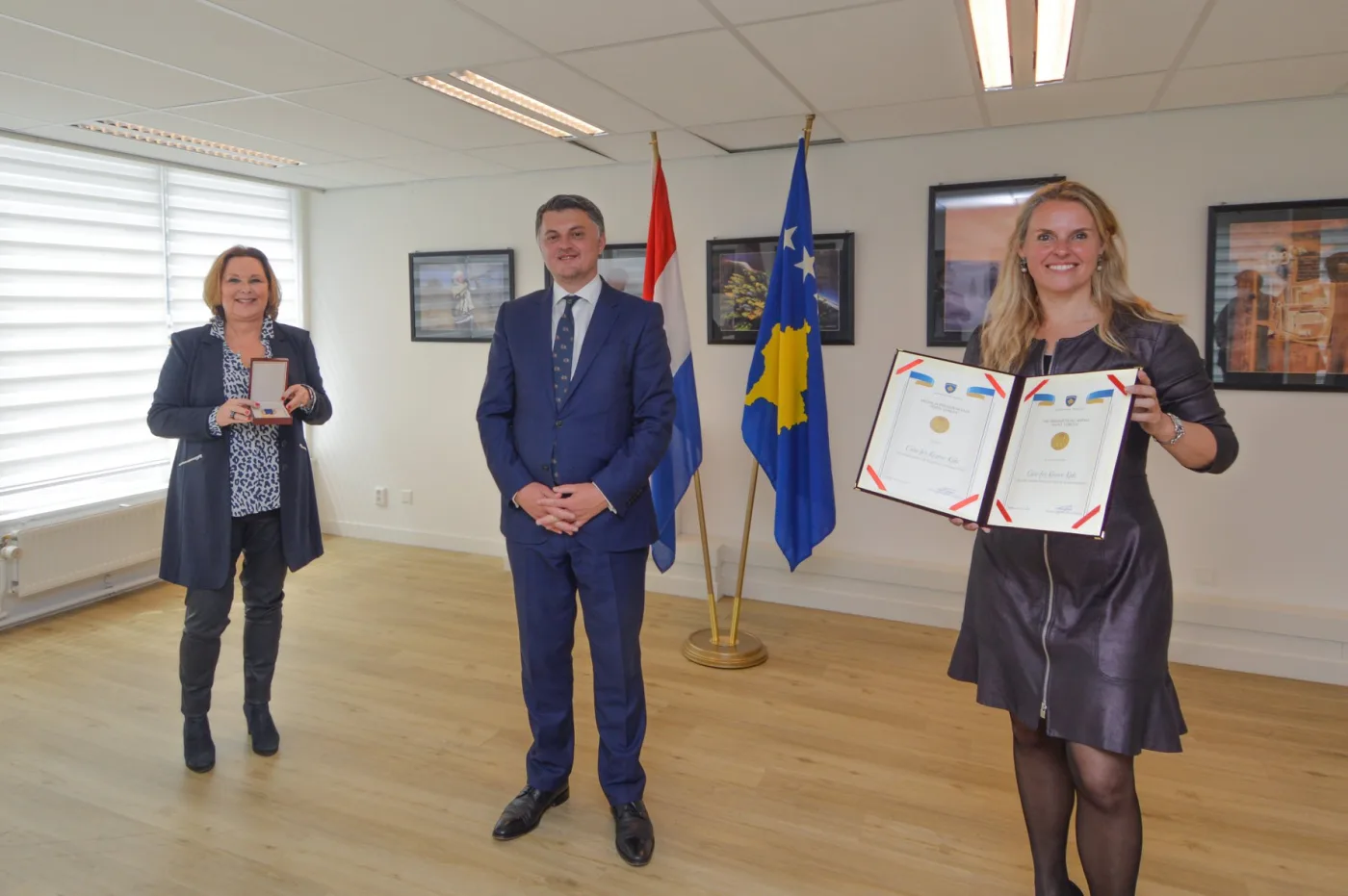
Honesty requires naming the gaps too. This page could not document a dedicated Albanian mosque or Albanian Islamic cultural centre in the Netherlands, an Albanian Catholic or Orthodox mission, a standing supplementary school, or a university student association — structures that do exist in Germany, Switzerland and Austria. Dutch-run charities for Albania (Albanië Comité in Huizen, active for nearly 35 years; Hoop voor Albanië in Maassluis, active since 1991; Albania Support in Gouda) are a real bridge between the countries, but they are Dutch solidarity organisations, not diaspora institutions, and the page labels them accordingly.
Community events in the Netherlands: published programmes, recurring dates and past editions
The listings below were checked on 26 August 2026. A scheduled date links to the organiser's own page. Annual windows and past editions are labelled separately, because a previous celebration is evidence of community life—not confirmation that the same programme will return.
| Status | Date | Event | Place and verification |
|---|---|---|---|
| Published programme (past date) | 5 September 2026 | Embassy Festival — the published programme includes the Kosovo-Albanian dance ensemble Dardanët and a Kosovo/Albania stand where visitors try on the traditional plis | Lange Voorhout, The Hague, 12:00–20:00, free entrance · Festival programme |
| Annual window—not yet confirmed for 2026 | Around 28 November | Albanian Flag Day and Independence celebrations | Check the Embassy newsroom; in the 2024 festive window the two embassies held a children's Albanian-language day on 23 November. |
Confirm time, venue, admission and language with the organiser before travelling. No Albanian-artist concert or Albania/Kosovo football fixture in the Netherlands was announced for late 2026 as of our review date.
Recent verified editions
- 3–4 June 2025, Amsterdam: Dua Lipa — the British star of Kosovo-Albanian parentage — played two sold-out Radical Optimism shows at Ziggo Dome; Dutch press reported her covering André Hazes at the sold-out arena. NL Times report.
- 23 November 2024: the Albanian and Kosovo embassies co-hosted Fëmijët e Diasporës flasin shqip — diaspora children drew Albanian symbols, read fairy tales and played traditional games. Embassy report and photographs.
- 7 September 2024, The Hague: Albania and Kosovo shared one stand at the Embassy Festival, presenting Albanian wineries, artwork by Brilantina Lekaj and the Dardanët dance ensemble. Embassy report and photographs.
Voices from the community on video
These programmes are embedded from official rights-holder channels in privacy-enhanced mode. They document real Dutch-Albanian stories, not a current event schedule.
Culture, memory and public space
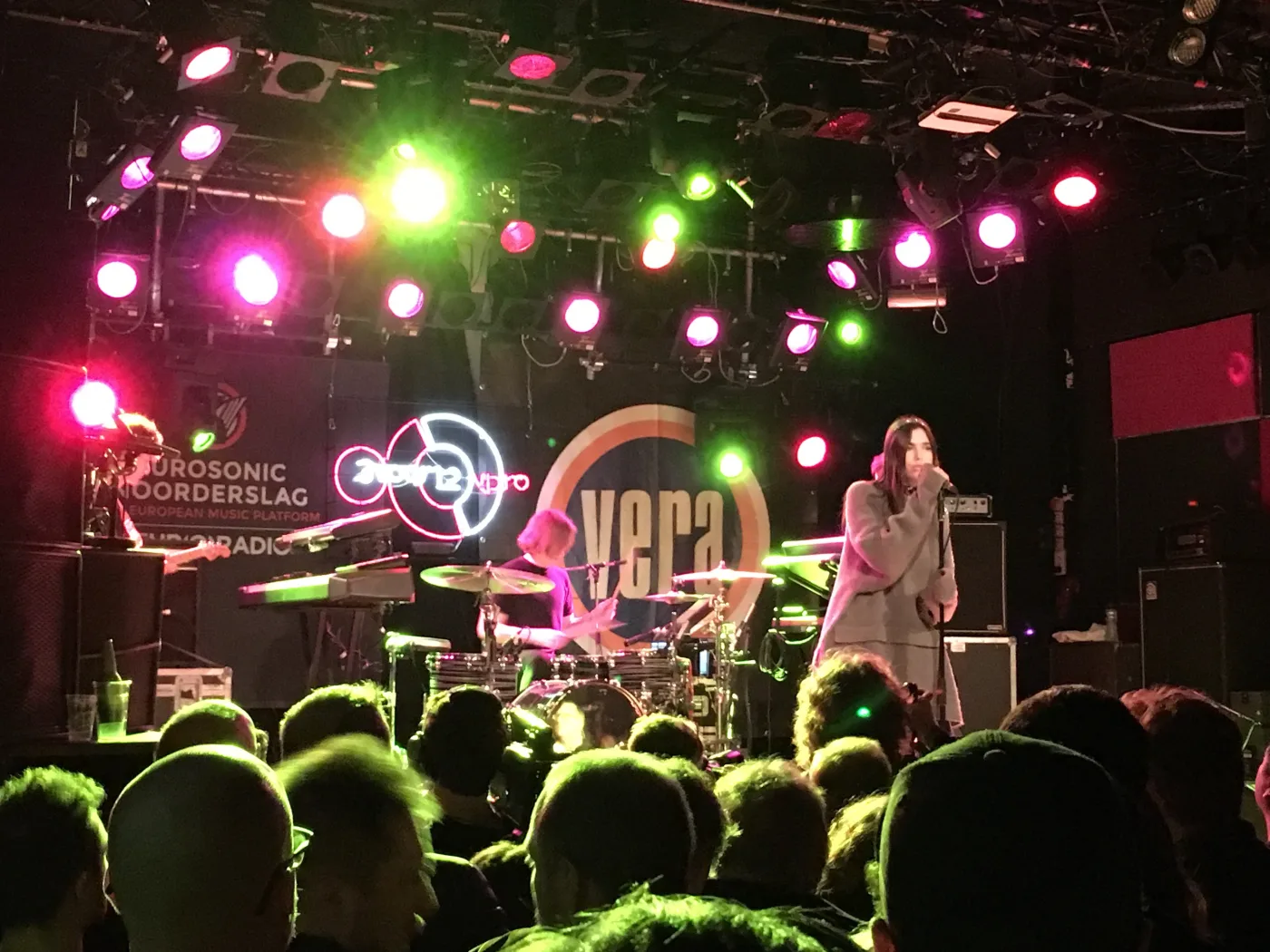
Dutch-Albanian culture became visible early where the Netherlands looks most often: the football pitch and the concert stage. In January 2016, a then-unknown Dua Lipa played the small Groningen club Vera at the Eurosonic festival; nine years later she sold out Ziggo Dome twice and covered André Hazes for an Amsterdam crowd. Between those two nights lies a story every diaspora family recognises — the child of Kosovar parents carrying the culture onto the biggest stages of a country that once received its refugees.
Football carries the memory in both directions: from Albania's XI photographed in Rotterdam in 1964 — four senior meetings, all Dutch wins — to the stream of players with Albanian roots who made the Eredivisie their stage, and the Vitesse documentary that told a Kosovo war story to a Dutch audience in Dutch. Around the calendar sit Flag Day in late November, Kosovo's independence anniversary in February, embassy festival stands with wineries and folk dance, weddings that fill halls with guests from three countries, and food — an Italian-Albanian family restaurant in Amsterdam, a Rotterdam kitchen serving dishes from Albania and Kosovo. There is no single religious or political profile: Muslim, Catholic, Orthodox, secular and mixed families share the same overlapping networks.
People in the Dutch-Albanian story
Milot Rashica
Born in Vushtrri to ethnic Albanian parents, he fled the Kosovo war as a toddler and became a Vitesse star (2015–2018), starting as the club won its first-ever KNVB Cup in 2017 before moving to Werder Bremen. A Kosovo international since 2016.
Emir Bajrami
Born in Pristina and raised in Sweden, the winger joined FC Twente in 2010, won the Johan Cruijff Shield on debut and played the 2011 KNVB Cup final. A Sweden international who says he is and will always be Kosovo Albanian — three identities, one biography.
Destan Bajselmani
Born in Enschede to Kosovo Albanian parents from Suva Reka and Skenderaj, he came through Twente's and PEC Zwolle's academies, debuted in the Eredivisie in 2019 and chose to play for Kosovo in 2021 — the second generation in one career.
Shkodran Metaj
Born near Pejë and raised in the Netherlands, he debuted for FC Groningen against Ajax in 2007 and wore orange for the Netherlands at U16, U17 and U21 level — the reverse route through the same statistics.
Gzim Selmani
Born in Amsterdam and raised in Huizen, with Kosovo Albanian roots in Mitrovica, he fought MMA out of a Dutch gym and then, as Rezar of WWE's Authors of Pain, won the NXT and Raw Tag Team Championships.
Kosso
Albert Dervishaj, born in Heerlen to Albanian parents from Deçan, debuted on 101Barz in 2013 and built one of Dutch rap's notable careers — collaborations with Boef, Josylvio and Ali B, and a Sony Music deal since 2021.
The wider verified roster makes the page's statistical point better than any table: Arbër Zeneli and Ibrahim Drešević came to Heerenveen through Sweden — Drešević's family is from Tuzi in Montenegro; Lindon Selahi reached Twente via Belgium with roots in Kumanovo, North Macedonia, and chose Albania's national team; Donis Avdijaj and Arianit Ferati arrived from Germany with Kosovar parents; Bersant Celina, a wartime refugee raised in Norway, spent a season at Twente; Diant Ramaj kept goal for Ajax (2023–2025); Labinot Harbuzi, a Feyenoord youth talent of Kosovar family, died in 2018 aged 32; singer Alban Ramosaj was born in Ede before his family returned to Tirana and he won Kënga Magjike 2021. Passports span six countries; the thread through all of them is Albanian.
This is an illustrative list, not a ranking. Living people are described only as narrowly as the cited sources support, and no one's ethnicity is inferred from a surname.
Practical resources and services
For documents and consular questions, start with the relevant embassy in The Hague: Albania (Hoge Nieuwstraat 22) and Kosovo (Koninginnegracht 44) operate separate services, and Kosovo's mission runs a digital counter for passports, ID cards and civil-status documents. Check appointment systems and opening hours on the official site rather than an old directory, and note that ambassadors and details rotate.
For settlement support, the Dutch civic-integration system (inburgering) runs through your municipality: newcomers are assigned a learning route and Dutch-language requirements under the 2021 Inburgeringswet. Your gemeente is the first stop for the current rules.
For language and community life, follow the embassy newsrooms — both publish diaspora activities — and the organisations in Albania's National Diaspora Agency directory. Ask directly about children's activities; the 2024 embassies' language day shows demand exists even without a standing school.
For events, use the checked calendar above, then confirm details with the organiser. For new listings after 26 August 2026, check the Embassy Festival programme and both embassies' newsrooms, especially around 28 November.
Albanian connections don’t stop at one Dutch city
The Albanian community in the Netherlands isn’t concentrated in one place. Neither is your search.
You might be in Amsterdam while the person you’d actually want to meet is in Rotterdam, The Hague, Utrecht — or somewhere you weren’t looking yet.
dua.com is built for exactly this kind of map: meeting Albanians nearby and across borders for friendship, cultural connection and serious relationships. Explore the worldwide Albanians hub, or compare the evidence systems behind Albanians in Belgium, Albanians in Germany and Albanians in Sweden — the Swedish route shaped several careers in this page's people section.
Evidence ledger: what each number can support
| Tier | Evidence | Safe wording | Do not claim |
|---|---|---|---|
| A: official stock | CBS origin, birth-country and nationality rows; Eurostat citizenship | Residents in a specified register category on a stated date | Ethnicity, language or total ancestry |
| A: official flow | CBS asylum applications, migration flows, nationality acquisitions; UNHCR evacuation counts | Events in a period under a defined process | Unique people still resident today |
| B: institutional record | Kamerstukken, Staatscourant, court rulings, IND history, embassies, AKD directory, WODC research | Documented policy, institution, event or milestone | An audited national community count |
| C: historical/community estimate | CBS 2008 “8,500 Kosovars” model estimate; 2017 police presence figure; INSTAT diaspora tables | Contemporary estimate under its original label and date | Official or methodologically equivalent time series |
| C: editorial model | 15,000–20,000 triangulated planning range | Transparent range under stated definitions and limits | Official Albanian population, confidence interval or measured maximum |
| D: first-party product data | None approved for the Netherlands | Nothing — and the page says so | Member totals or usage claims |
Reproduction notes
Every CBS value on this page was fetched from the CBS open-data API and independently re-fetched in an adversarial second pass. Origin and birth-country rows come from table 85384NED (Albania code H008534, Kosovo H008653; born-abroad A051736, born-in-NL A051735), corroborated by table 85371NED; nationality from 85510NED (codes NAT9279, NAT9367); nationality acquisitions from 85630NED (total-acquisition code T001662); asylum applications from 80059ned and decisions from 85400NED (both rounded to multiples of five by CBS); migration flows from 85484NED. The historical 1996–2022 series uses the discontinued table 37325 under the older “migration background” definition, which differs slightly at the 2022 seam (4,359 vs 4,364) and is never spliced silently.
The Kosovo row carries a critical seam of its own: until statistical year 2020 it held only people born after the 2008 secession (64 people on 1 January 2020); from 2021, CBS assigns origin Kosovo to anyone whose birthplace lies within Kosovo's current borders, lifting the row from 64 to 8,943 people at once. That jump is reclassification, not migration, and no honest Kosovo growth series can cross it.
Update policy
Origin, nationality and acquisition rows should be refreshed after each CBS 1 January release. The 15,000–20,000 range should be revisited if CBS publishes municipal or more detailed origin data, or if a representative ancestry or language study appears. Embassies, associations and events need link checks at each editorial review; ambassador names rotate.
A community larger than one register row
The official rows are clear: 5,959 residents of Albanian origin and 9,496 of Kosovo origin on 1 January 2026. What they mean is narrower than they sound — and larger. Naturalisation empties the citizenship rows while the community stays; the third generation vanishes into “Dutch”; Albanian speakers from three other countries sit in rows this page refuses to raid for a bigger headline.
The story the evidence does support is specific: a small community with an old handshake behind it — Dutch officers in Durrës in 1913, an Albanian XI in Rotterdam in 1964 — rebuilt twice in living memory, once by the families who stayed after the Ermelo tents came down and once by the young arrivals of the last decade. A transparent 15,000–20,000 planning range can orient readers; the ledger behind it matters more than the headline.
Frequently asked questions about Albanians in the Netherlands
How many Albanians live in the Netherlands?
Officially, the Netherlands counted 5,959 residents with country of origin Albania and 9,496 with country of origin Kosovo on 1 January 2026 — 15,455 across the two rows. Neither row is an ethnic total. dua.com uses roughly 15,000–20,000 as an editorial planning range for the wider Albanian-speaking community.
Are Kosovo Albanians included in the Albanian figure?
No. CBS publishes Albania and Kosovo as separate origin rows, and this page displays both without calling their sum an ethnic count: not everyone of Kosovo origin identifies as Albanian, and many Albanian speakers hold other origins entirely.
Is 15,000–20,000 an official Dutch estimate?
No. It is dua.com's editorial planning range, anchored on the official 15,455 two-row marker and allowing for unmeasured Albanian-speaking shares of the North Macedonia and Serbia rows plus the statistically invisible third generation. The Netherlands publishes no ethnic totals of any kind.
Why does CBS show only 2,074 Albanian citizens?
Because CBS counts every person who holds Dutch nationality as Dutch, even alongside another passport. Naturalised families leave the citizenship row without leaving the country. The origin rows — 5,959 and 9,496 — are the better measure of the community's size.
Is the 60,000 figure on Wikipedia real?
No source for it could be located. It is attributed to a Kosovo diaspora ministry, but no such document exists publicly, and Kosovo's own 2014 migration statistics do not list the Netherlands among top destinations. Every official row weighs against it.
Where do most Albanians live in the Netherlands?
No official municipal breakdown exists — CBS regional tables cover only the largest origin groups. The documented record points to a dispersed presence: institutions in The Hague, businesses in Amsterdam and Rotterdam, and verified biographies in Twente, Limburg and the Amsterdam area.
When did Albanians first come to the Netherlands?
Mass migration is recent. The earliest statistical trace is ten asylum applications by Albanian nationals in 1981; real movement began from 1991. The countries' documented connection is older — Dutch officers organised Albania's gendarmerie in 1913–14, and Albania's national team played in Rotterdam in 1964.
What happened during the Kosovo war?
The Netherlands received 4,060 evacuees under the UNHCR humanitarian evacuation programme in 1999 (the Dutch government's own count was 4,091), many housed in a tent camp at Ermelo. Research records roughly ten thousand temporary statuses for Kosovars from 1999; many returned, and the families who stayed anchor today's community.
How many people speak Albanian in the Netherlands?
No official total exists, because Dutch statistics register neither ethnicity nor home language. The generational structure implies most first-generation residents speak Albanian and transmission varies in the second generation — but any specific number would be invented, so this page gives none.
Is the community growing?
Yes, on the Albanian side: the Albania origin row grew +36.5% from 2022 to 2026 through steady work, family and study migration. The Kosovo row is nearly flat and grows mainly through Netherlands-born children — 45% of it is already second generation.
Who are well-known Dutch-Albanians?
Verified examples include Vitesse's Kosovo international Milot Rashica, Enschede-born Kosovo international Destan Bajselmani, Amsterdam-born WWE champion Gzim Selmani (Rezar), Heerlen-born rapper Kosso, and Ede-born singer Alban Ramosaj — plus a long roster of Eredivisie players with Albanian roots via Sweden, Germany, Belgium and Norway.
How can I meet Albanians in the Netherlands?
Through the embassies' public events and the Embassy Festival in The Hague, documented Albanian-run restaurants in Amsterdam and Rotterdam — and through dua.com, which adds a digital route to the Albanian community at home and across the diaspora for friendship and serious relationships.