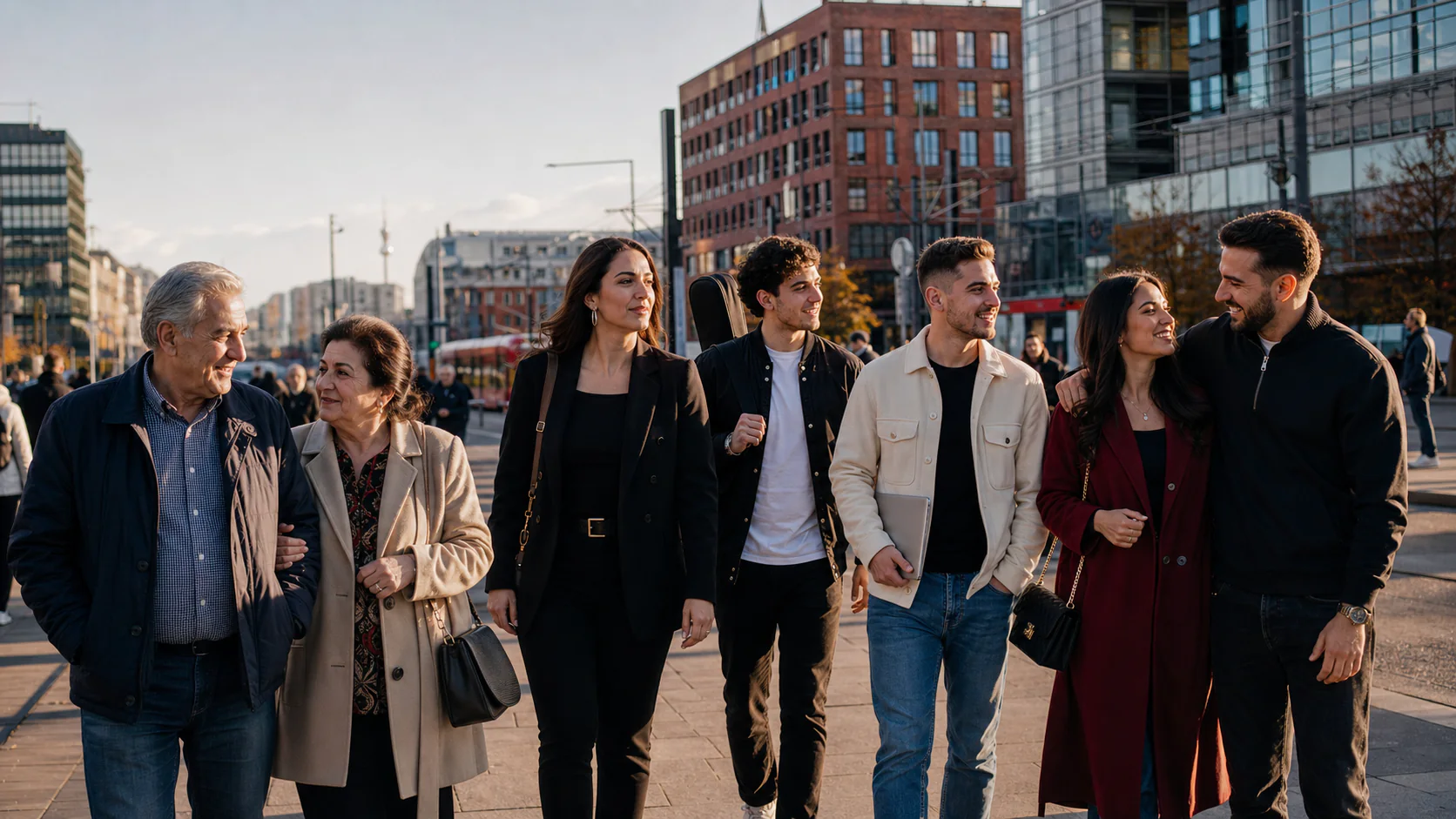
Albanian life in Norway connects two kinds of home: the place where families have built their daily lives, and the places their parents or grandparents came from.
You see that in Oslo and Drammen, where Albanian has become part of everyday city life. In families where the kids answer their parents in Norwegian but switch straight back to Albanian when gjyshja calls. In summer flights filling up for Kosovo and Albania, weddings that bring relatives together from three countries, football nights where Norway and Kosovo can make loyalties complicated, and young people who were born here but still know exactly what someone means when they say they're going “home” for the summer.
For a growing generation, Norway isn't the country their family moved to. It's simply home. Their Albanian identity has grown up alongside it — through language, family, music, food, friendships and the communities their parents built.
For more on this topic, read Albanians in Sweden: The Community Sweden Never Counted and Albanians in Germany: A Million-Strong Community.
And those connections increasingly happen online too. On dua.com, Albanians in Norway can find one another across cities and across the wider diaspora — another layer of a community that has always had to stay connected across distance.
To understand how that community became part of Norway, though, you have to go back several decades.
Population inputs checked 12 September 2026 against Statistics Norway’s figures for 1 January 2026.
So how many Albanians live in Norway?
On 1 January 2026, Statistics Norway counted 22,951 residents with Kosovo or Albania background among immigrants and people born in Norway to two foreign-born parents. Another 2,505 Norwegian-born residents had one foreign-born parent with Kosovo or Albania background. These are separate categories: together they contain 25,456 people.
Albanian families also have roots in North Macedonia, Serbia and Montenegro. Their stories belong here too, although country background alone cannot tell us which residents identify as Albanian.
Using the five country groups and explicit assumptions about their ethnic composition gives a scenario of approximately 26,700–30,600 people. This is an estimate, not an official ethnic count or a statistical confidence interval. The assumptions and arithmetic are set out below.
- Official core · two immigration categories
- 22,951
- Official Kosovo/Albania background · three categories
- 25,456
- Modelled ethnic-Albanian scenario
- 26,700–30,600
Norwegian-born to immigrant parents means two foreign-born parents and four foreign-born grandparents. The parents need not come from the same country: if their birthplaces differ, SSB uses the mother’s country. Norwegian-born people with one foreign-born parent form a separate category. Each person appears once in the tables below.
The register that gave the Kosovars their country back
Every country in this series files its Albanians under the state that stamped their first passport, and most never correct it. Sweden still counts 58,757 living residents as born in Yugoslavia; its Kosovo war refugees are statistically invisible. Norway took the opposite decision. In the 2007 statistics it split the old "Serbia and Montenegro" code in two, and in the 2008 statistics — the first after Kosovo's declaration of independence — it separated Kosovo from Serbia and reassigned every person in the register retroactively, whether they had arrived in 1971 or 2005.
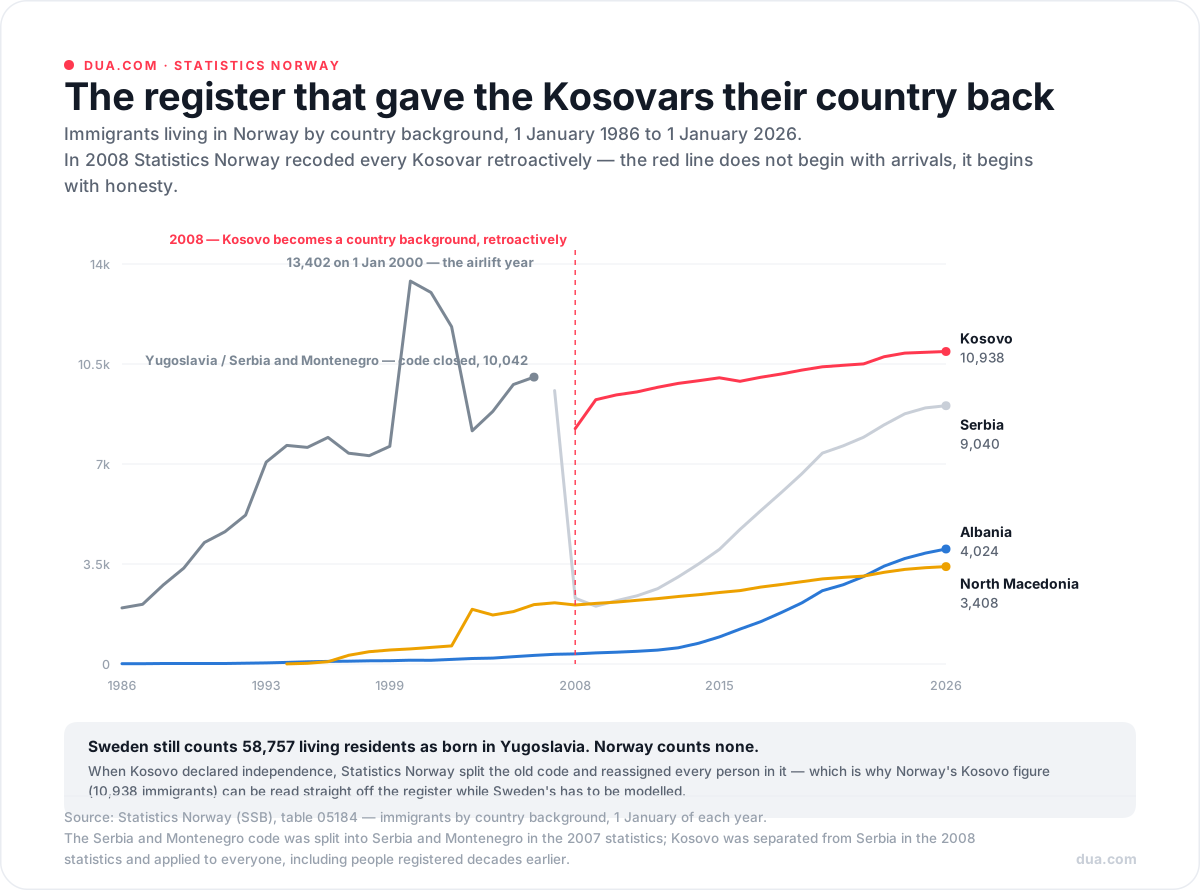
The result is the cleanest statistical portrait any Albanian community in Europe has. The Kosovo category opened at 8,238 immigrants in 2008 — thousands of them people who had been in Norway for a decade or more — and has grown only gently since, to 10,938. The old joint code tells the history the new one inherited: 1,145 Yugoslav-background immigrants in 1970, 4,252 by 1990, 7,619 by 1999 — and then 13,402 on 1 January 2000, the register's photograph of the airlift year, before returns pulled the line back down.
The recode matters beyond tidiness. It is why this page's headline number needs so much less modelling than Sweden's, why the municipal map below can be drawn at all, and why the second generation can be tracked town by town. When this series says Norway is the community that was actually counted, that is a statement about a specific administrative decision taken in Oslo in 2008 — and it is the quiet hero of everything that follows.
Before Albanians came to Norway, a Norwegian went to Kosovo
Long before Norway became home to thousands of Albanians, Berit Backer was already building a connection between the two places.
The Norwegian social anthropologist travelled to Kosovo in the 1970s and spent time in Isniq, near Deçan in western Kosovo. She learned Albanian and, during fieldwork in 1975, studied village life from unusually close range — how families lived together, how households were organised, and how traditions were changing from one generation to the next.
That work eventually became Behind Stone Walls: Changes in Family Organization among Kosovo Albanians. But Backer's relationship with Kosovo went beyond research. She became an important Norwegian voice speaking about Kosovo and the rights of Albanians at a time when few outside the region were doing so. Decades later, Kosovo would officially recognise that contribution.
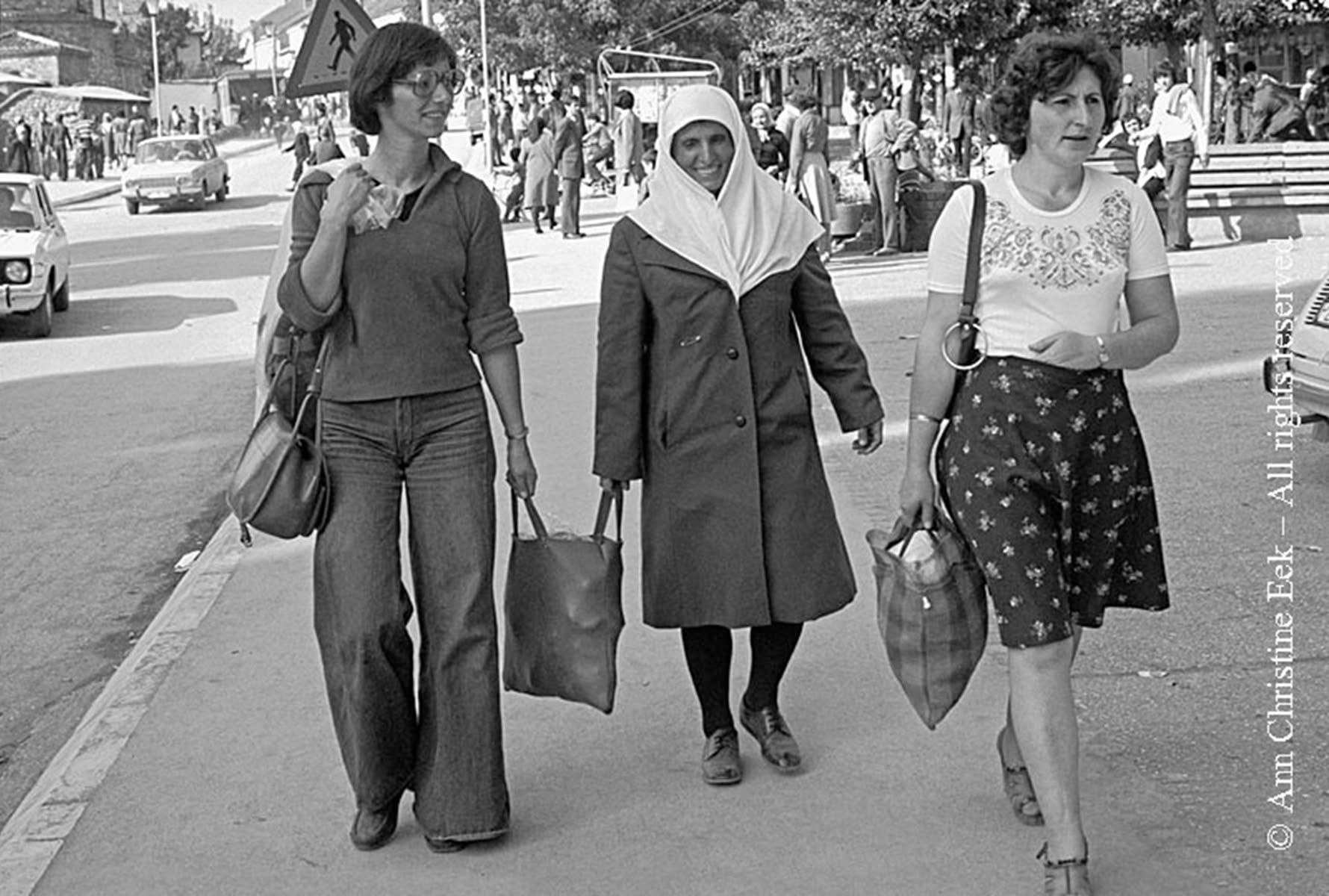
There is something especially powerful about this photograph today. It shows an ordinary afternoon in Kosovo — three women walking through Prizren — more than two decades before war would send thousands of Kosovo Albanians in the opposite direction, from Kosovo to Norway.
Fifty years later, Kosovo is still reading her work
Backer's research did not disappear into an academic archive.
In 2025, exactly 50 years after her fieldwork, her work was published in full in Albanian. The new edition restored two chapters that had been left out of the English editions and included selected photographs by Ann Christine Eek, bringing the world Backer documented in 1975 back to Albanian readers half a century later.
Five arrivals: the factory, the church, the airlift, the return, the work permit
Five distinct migrations built Albanian Norway, and they barely overlap. One came for work and was cut short by law; one came for shelter and ended up in church basements; one came by government aircraft and mostly flew home again; one came quietly, through marriage and family reunification, and stayed; and the newest one came from Albania itself, for jobs, long after the wars were over.
1965–1975: the factory decade
Norway's Yugoslav labour migration was real but small. Workers arrived from the mid-1960s — Statistics Norway's own group profile names the rubber factory at Askim as a typical workplace — and by the end of the decade Yugoslavia was Norway's largest South European sending country. But the whole community numbered only 1,735 Yugoslav nationals in 1976: the second-largest non-Western group in Norway at the time, ahead of Turks (1,392), far behind Pakistanis (5,267). Then the door closed. The innvandringsstoppen — Norway's immigration stop, enacted by regulation on 10 January 1975 and in force from 1 February 1975 — ended new labour recruitment, leaving family reunification and asylum as the main ways in. How many of those early workers were Albanian, the register of the time never asked; what it shows is that the labour wave was a fraction of what Sweden or Germany recruited, which is why Albanian Norway, unlike Albanian Sweden, is not a story that begins on a factory floor.
1989–1998: the church decade
The real beginning is asylum. As Yugoslavia disintegrated, applications surged — in 1993 alone about 13,000 asylum seekers arrived in Norway, roughly 11,000 of them from the former Yugoslavia — and in October 1993 Norway imposed a visa requirement on its citizens, one of the last countries in Europe to do so. Inside that wave, Kosovo Albanians wrote one of the most dramatic chapters in modern Norwegian refugee history. A group refused asylum in Sweden crossed the border and applied in Norway; they fell outside the collective protection Norway had given Bosnians; and when rejections came, they took refuge in churches. Beginning at Elverhøy church in Tromsø in February 1993, the movement grew until roughly 700 Kosovo Albanians were living in church asylum in around 140 Norwegian churches and prayer houses, with congregations organising food, bedding and rosters around them. The standoff ended in a deal — individual re-assessment in exchange for returning to reception centres — and many of the families received residence on humanitarian grounds. Some of their children appear later on this page wearing national-team shirts.
The flow never stopped for the rest of the decade: 1,666 asylum seekers from FR Yugoslavia in 1998, 1,152 in 1999 — "practically all of them Kosovo Albanians", in the words of Norway's immigration directorate. When NATO's air campaign began on 24 March 1999, about 1,700 Yugoslav citizens were already sitting in Norwegian reception centres.
1999: Norway opened an emergency route from Kosovo
During the Kosovo war, Norway evacuated 6,099 people on 45 flights, part of an emergency programme that brought thousands of Kosovo refugees to safety. Their protection was intended to be temporary, and after the war thousands returned quickly.
But the story did not simply end with the flights home. Some who returned to Kosovo later came back to Norway, while others remained and built their lives here. By the end of this movement, several thousand of the people protected during the crisis had become part of Norway's longer-term Kosovo-Albanian community.
That makes 1999 unusual in Norway's Albanian migration history: it was simultaneously an evacuation, a return programme and, for part of the group, the beginning of permanent settlement.
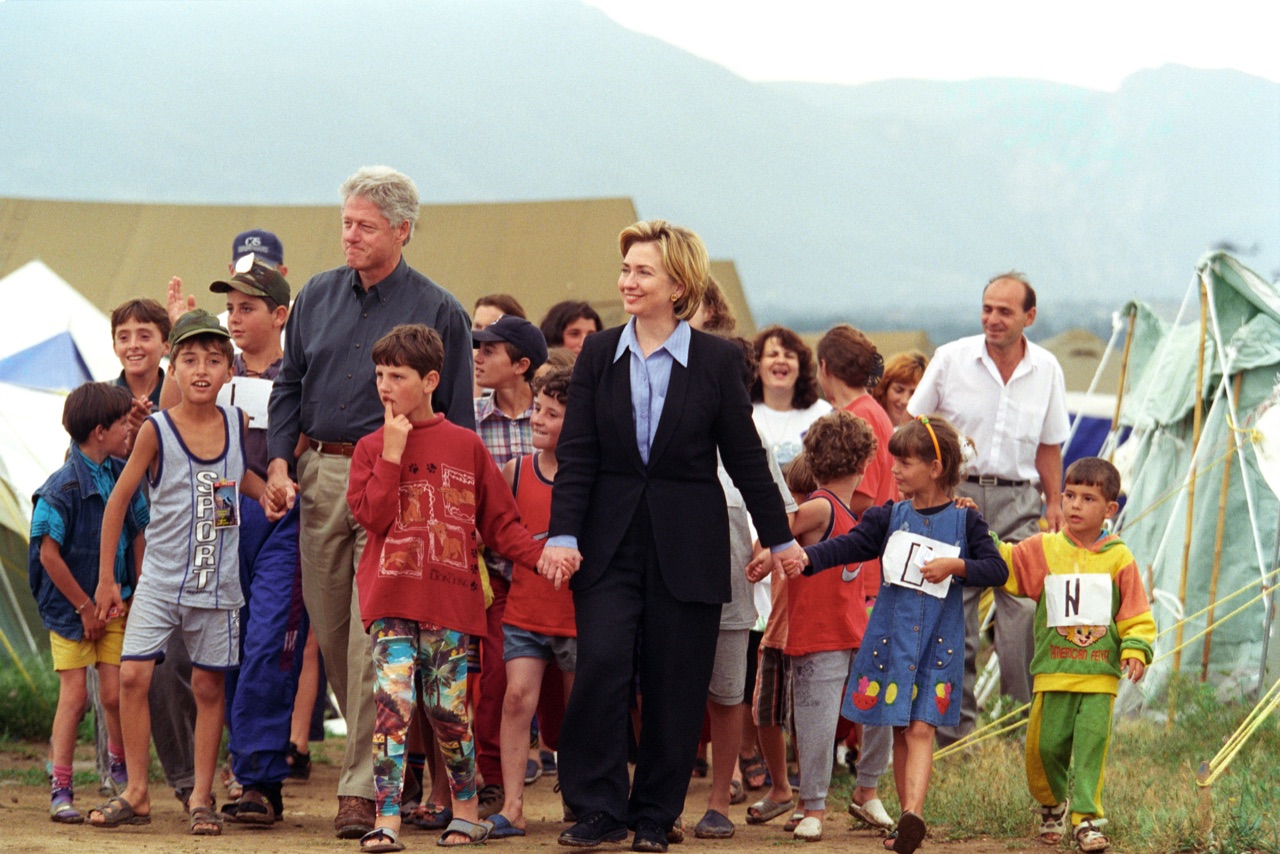
Everyone evacuated received temporary collective protection on one-year permits — only the second time Norway had ever used the mechanism, after the Bosnians — and it was extended to Kosovars whose asylum cases were pending or refused. In total 7,957 people held it: the precise figure behind the "about 8,000" in the literature.
1999–2001: the return
Then the war ended faster than anyone had planned for, and Norway ran the operation in reverse. The protection basis was revoked on 6 August 1999, less than two months after the peace; the first return flight had already left on 16 July. By New Year, 3,630 people had returned to Kosovo — and 423 of them had come back to Norway. The endgame was carrot and stick: a return grant of 15,000 kroner per person, conditional on leaving within a month of a rejected asylum claim, about 1,500 more supported returns in 2000 against roughly 1,200 re-arrivals, and mass rejections — 1,116 of the first 1,208 decided cases. Around 4,500 of the roughly 8,000 were still in Norway at the end of 2000, and families with children had their deadlines extended to March 2001 at the request of the UN administration in Kosovo. Rounded honestly: about half went home, and several thousand stayed to become the core of today's community.
Norway's other war was military and diplomatic, and it ran far longer than the airlift. Norwegian special forces entered Kosovo with KFOR in 1999, followed that autumn by the Telemark Battalion — more than 900 soldiers, at peak around 1,400 Norwegian personnel — and in 2001 a Norwegian, Lieutenant General Thorstein Skiaker, commanded the entire KFOR force. Some 6,200 Norwegians served in Kosovo before the contribution ended in 2020. Norway recognised the Republic of Kosovo by Royal Decree on 28 March 2008, communicated the same day in a letter from Foreign Minister Jonas Gahr Støre — the same year the statisticians did their own act of recognition in the register. Twenty-three years after the airlift, in March 2022, Prime Minister Albin Kurti stood in Oslo beside Prime Minister Støre and called Norway "a friend and partner" that was among the first to recognise his country.
2004–2026: the family years, and the work permit
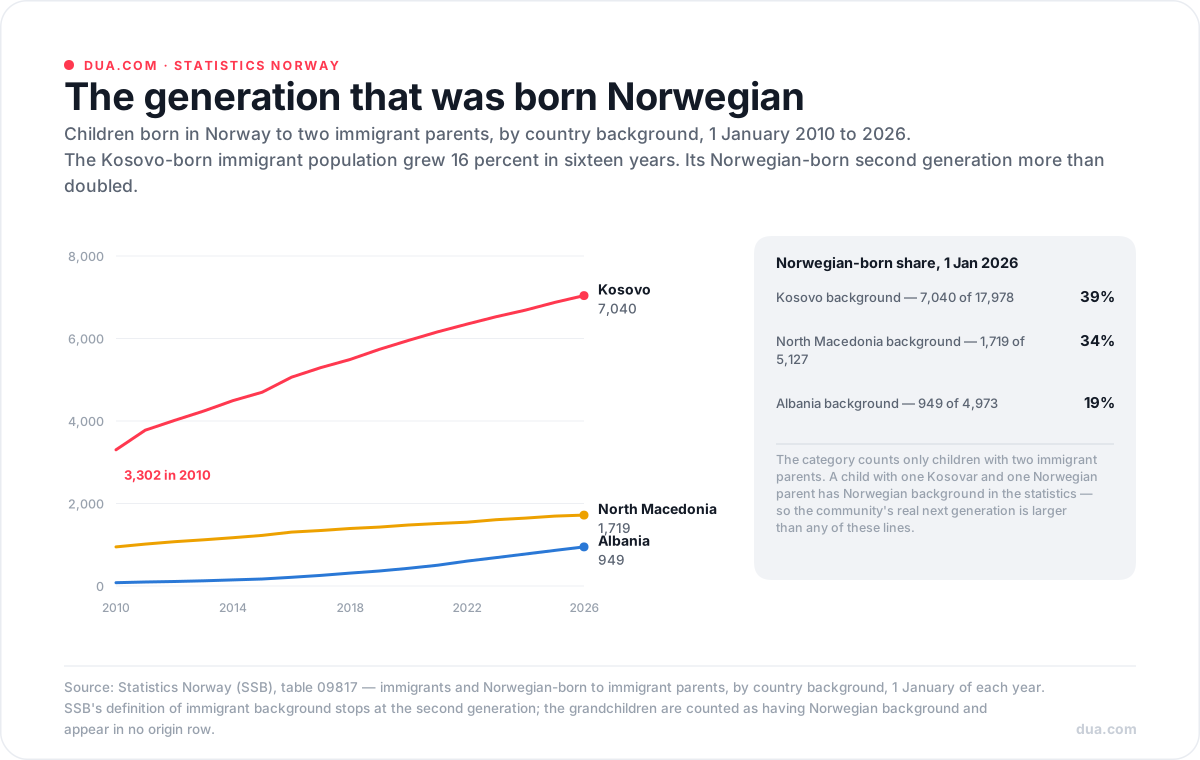
What followed the war is the quietest chapter: registered immigration from Serbia and Montenegro settled at roughly 500 people a year through the 2000s, women more often than men, family reunification more often than anything else — the pattern by which a refugee cohort becomes a settled community. The Kosovo-background population has since grown mostly from inside Norway: the immigrant stock rose just 16 percent between 2010 and 2026 while the Norwegian-born generation more than doubled.
The newest migration is different in kind. Norway's Albania-born population quadrupled in eleven years — 948 in 2015 to 4,024 in 2026 — a work-led, Oslo-centred migration with no refugee chapter at all, echoing the same post-2015 surge Sweden recorded. It even has its own airline route: a Torp–Tirana service opened in 2024 and carried 27,820 passengers in its first year. Albanian Norway is no longer only a Kosovo-war story, and every year it becomes a little less of one.
The community bends around the Oslofjord
Norway’s Albanian community has a clear centre of gravity around the Oslofjord. Oslo and Drammen are among its strongest hubs, with communities stretching south through Østfold and Vestfold.
But Albanian Norway doesn’t stop there. Families and smaller communities have also made their homes in Rogaland, Agder, Vestland and Trøndelag, from Stavanger and Bergen to Trondheim and places much farther from the main population centres.
And in Norway, distance matters. You can live in the same country, speak the same language, share the same culture — and still be hundreds of kilometres apart.
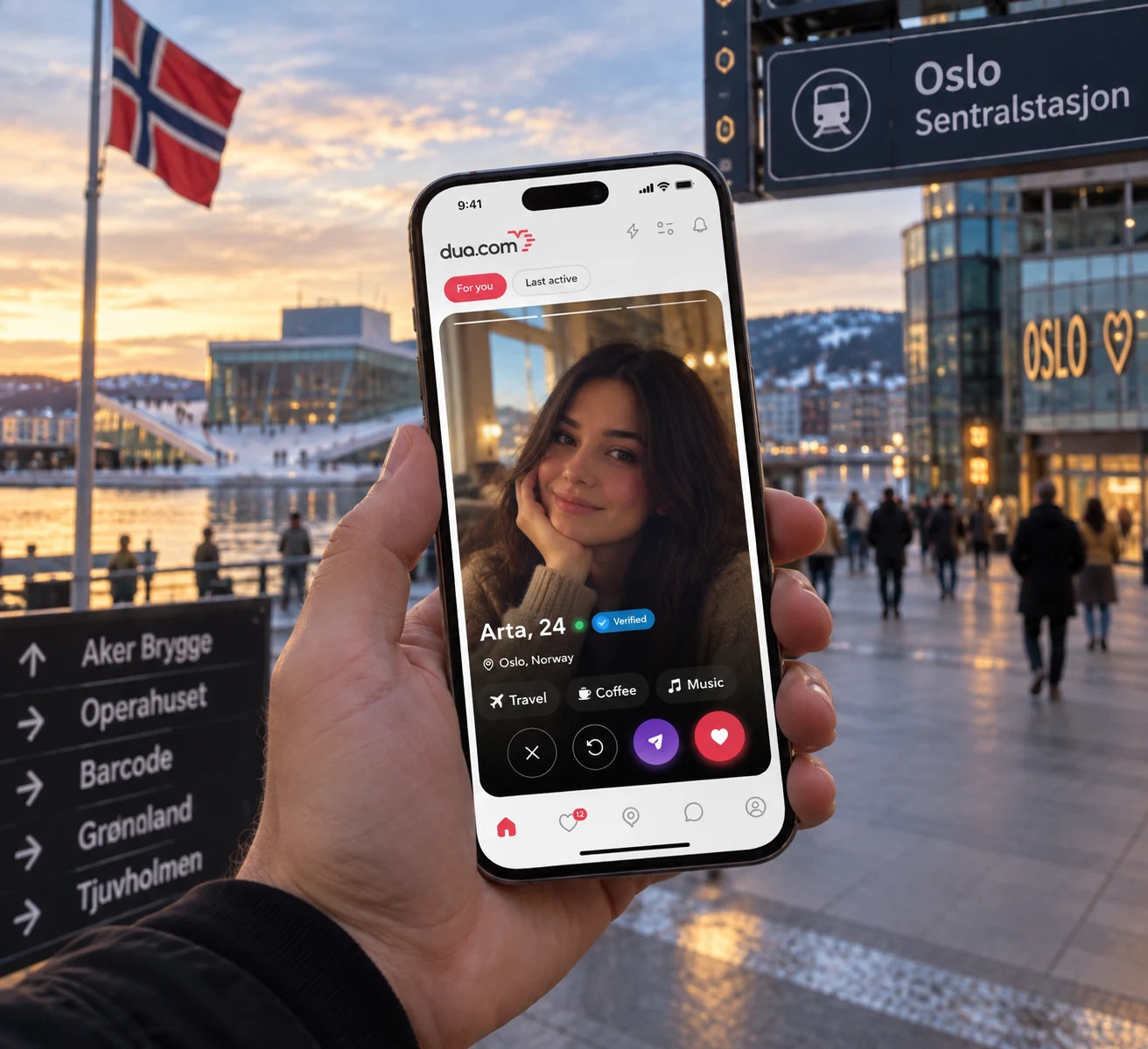
That is also where dua.com’s Fly feature becomes useful. Fly lets you change your location and see people somewhere else before you are actually there.
You might be in Bergen and curious who is in Oslo, heading to a wedding in Drammen, moving to Stavanger, or spending the summer in Kosovo. Instead of your location deciding who you can discover, you decide where you want to look.
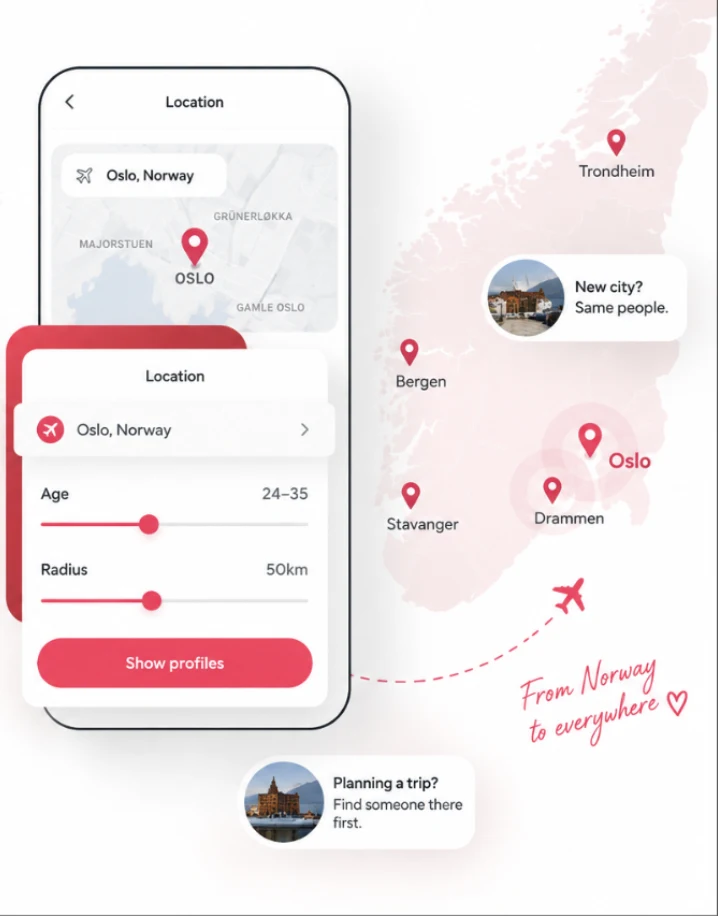
For a community spread across Norway — and connected to family and friends across Europe and the Balkans — that makes the map feel a little smaller.
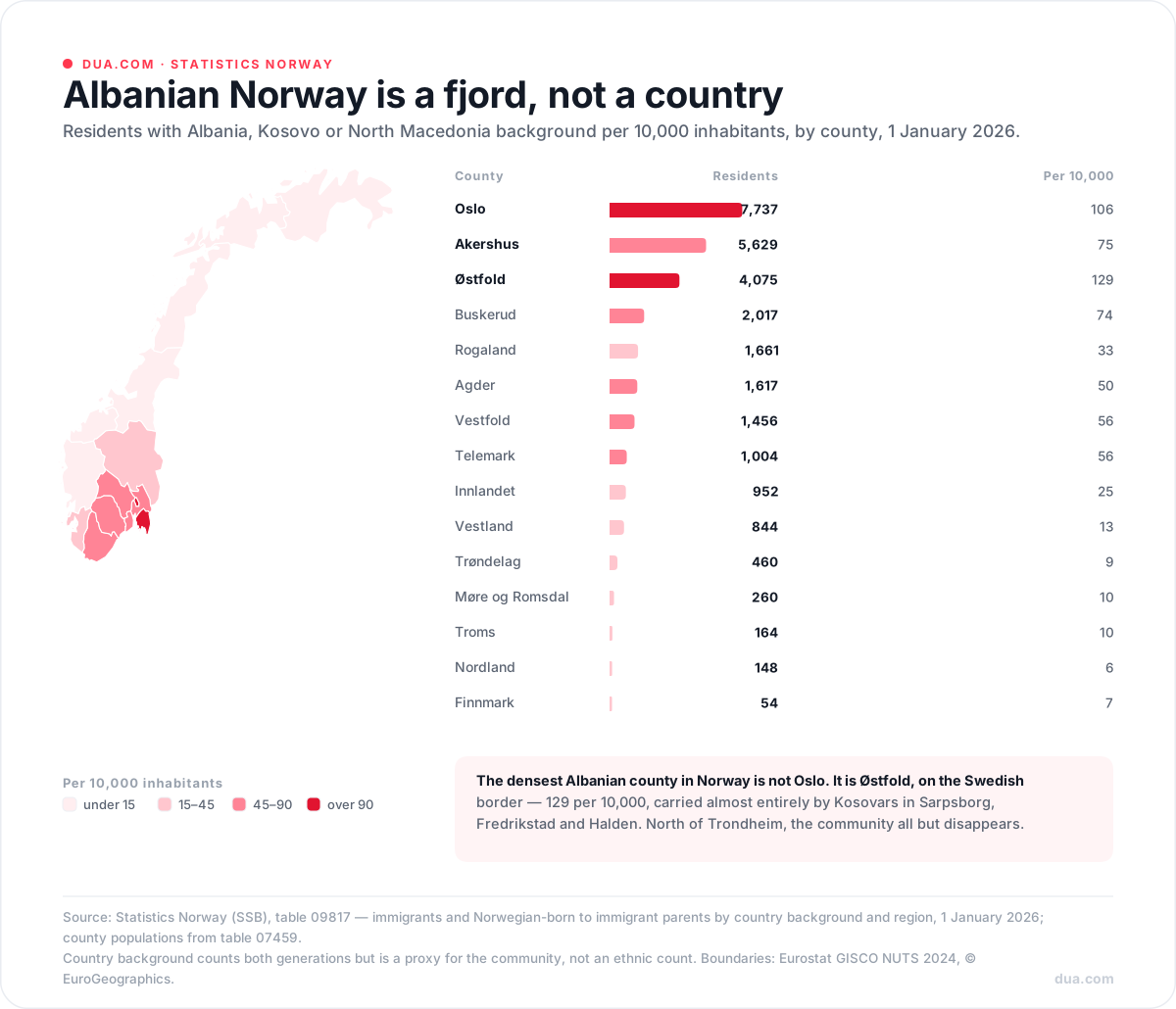
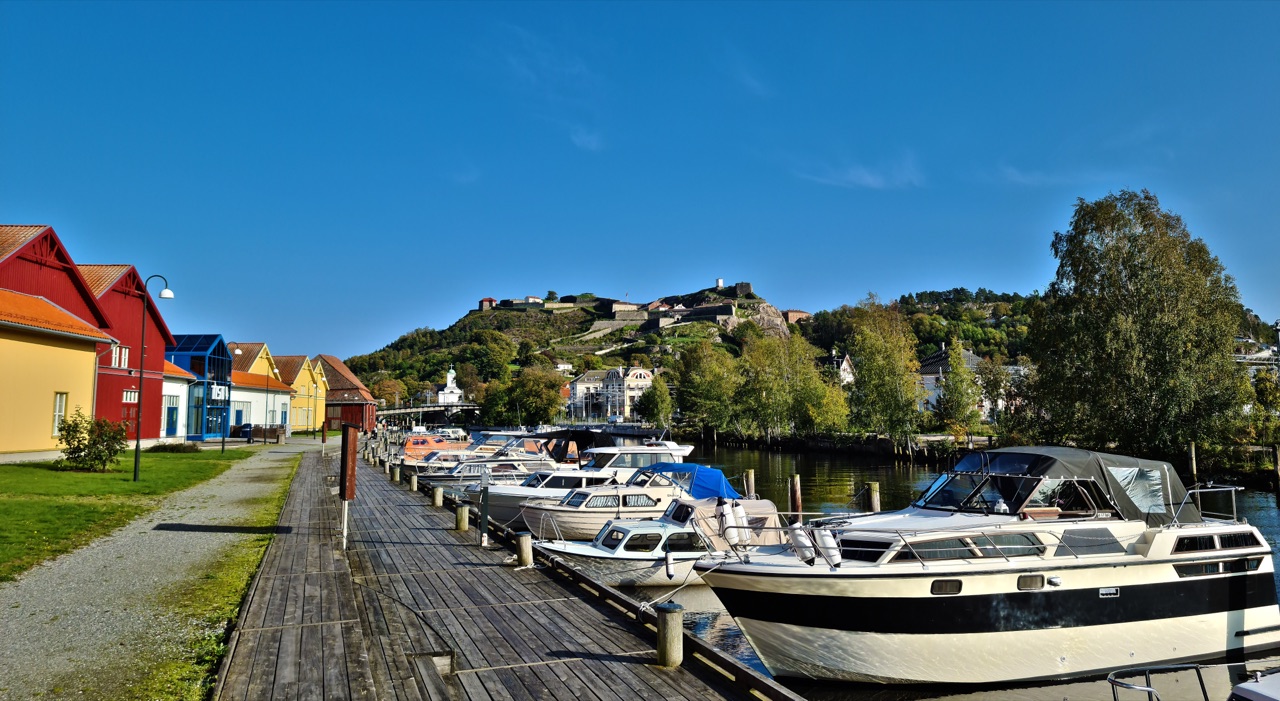
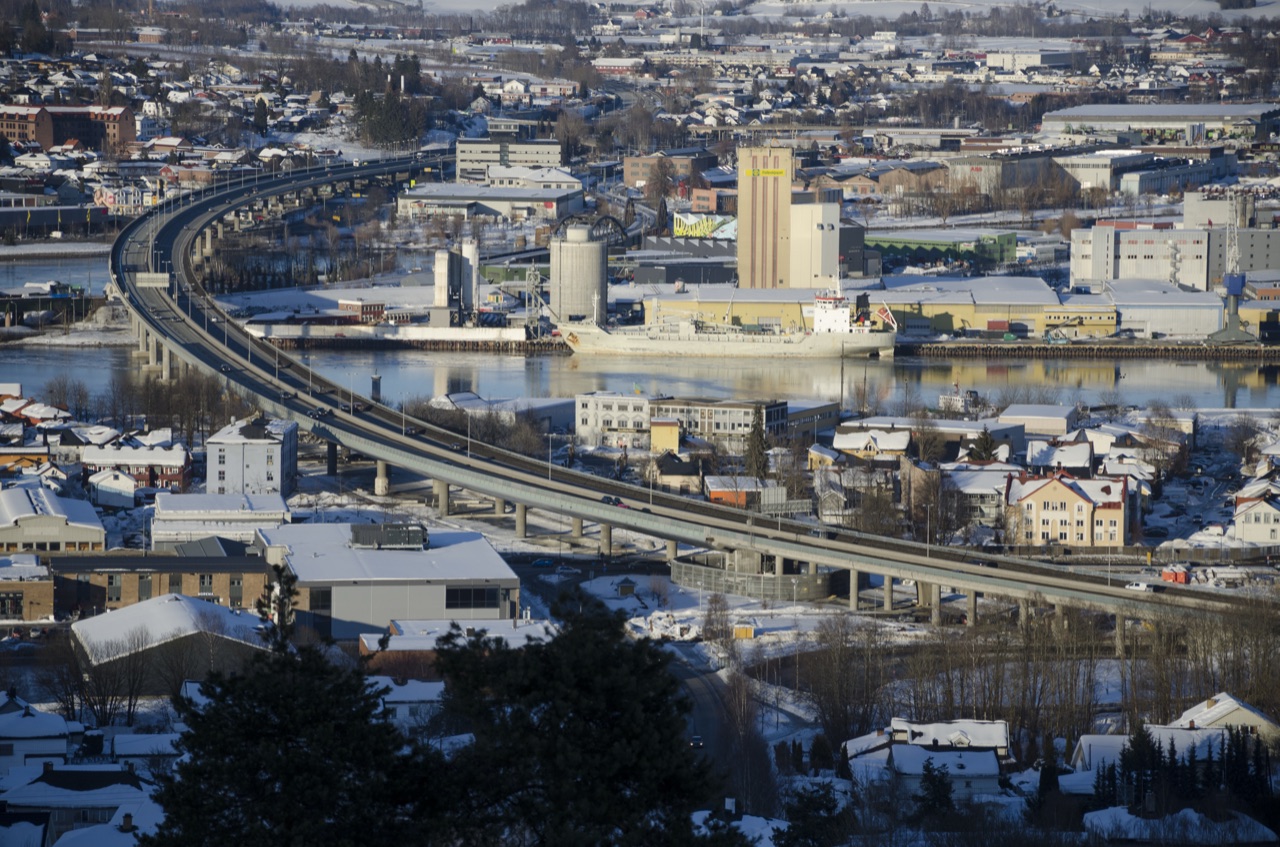
The headline surprise is that the densest Albanian county in Norway is not Oslo. It is Østfold, on the Swedish border — 129 residents per 10,000 against Oslo's 106 — and it is carried almost entirely by Kosovars in three old industrial towns: Sarpsborg (1,007 with Kosovo background), Fredrikstad (919) and Halden (628). Halden, a border town of 32,000 under a seventeenth-century fortress, is two percent Kosovar — the highest share of any Norwegian municipality — and fields a football club called Fredrikshald Prishtina. Why there? The reception centres of the 1990s scattered asylum seekers across small-town eastern Norway, and unlike the evacuees of 1999, the families of the church-asylum decade stayed where they had been placed.
Oslo is the one place where all three migrations meet. Its 7,737 split into 3,256 with Kosovo background, 2,361 with North Macedonia background — the labour-migration inheritance, which in Norway settled in the capital rather than in provincial factory towns — and 2,120 with Albania background, most of whom arrived in the last decade. Ring the capital and the Kosovar towns follow: Drammen (1,105 with Kosovo background), the largest Kosovar community outside Oslo and the town where a two-year-old from Prizren named Bersant Celina arrived in the late 1990s; Lillestrøm (943 all three), Nordre Follo (840), Lørenskog (826). Further out: Kristiansand (890 Kosovo-background), Skien (559), Sandefjord (457), Sandnes (436), Stavanger (405).
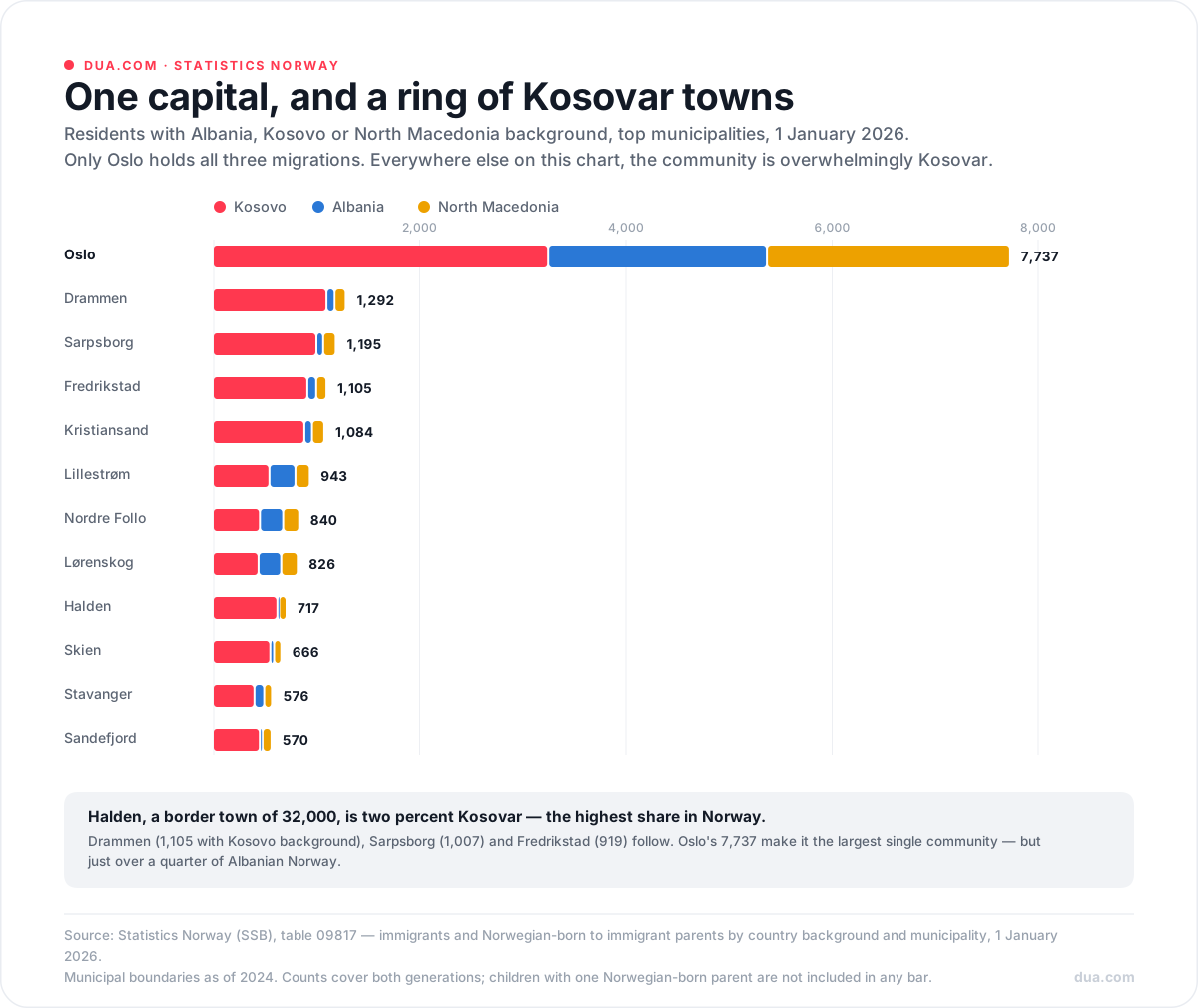
One caution travels with every one of these numbers, and it is the same one the population section flagged: the North Macedonia figures are not an Albanian count. Norway's Macedonian migration was Albanian and ethnic-Macedonian both, and no Norwegian source resolves the split. The Kosovo figures are close to an Albanian count; the Macedonian ones are labelled wherever it matters.
The passport wave of 2020
For most of this community's history, becoming Norwegian meant ceasing, on paper, to be anything else. Norway required applicants to renounce their previous citizenship — one of the last countries in Western Europe to do so — and the community naturalised anyway: 10,402 Yugoslav citizens took Norwegian citizenship between 1977 and 2005, a third of them in the peak years 1999–2001, when the war made the choice urgent. That early, thorough naturalisation is why today's citizen counts are so much smaller than the background counts: most of Albanian Norway has been Norwegian, in law, for twenty years.
Since 1 January 2020, Norway has allowed dual citizenship. Becoming Norwegian no longer requires renouncing an existing citizenship under Norwegian law. For families with roots in Kosovo, Albania or another country, retaining that citizenship also depends on the other country’s rules.
Norway has tightened since — an eight-year residence track for most applicants and a strengthened language requirement have been phased in through the 2020s — but the structural door that mattered to this community, holding both passports at once, remains open. In this series only Sweden ran the experiment in the other order: dual citizenship legal since 2001, and a sharp restriction arriving in 2026.
A generation born in Norway
For many Albanians growing up in Norway, there is no story about arriving. They were born here.
Norway is home. It is where they went to school, made their first friends, started working and built their lives. But home can also mean grandparents in Kosovo, cousins in Albania or North Macedonia, and a summer calendar that somehow fills up with family visits and weddings before June has even started.
That mix becomes normal when you grow up with it.
You speak Norwegian all day and Albanian when you get home. Or your parents speak Albanian and you answer in Norwegian. You know the food without knowing what half of it is called in Norwegian. You grow up with Norwegian friends, Albanian family traditions and relatives scattered across Europe.
And then summer comes.
For many families, going to Kosovo or Albania is simply part of the year. You see cousins you haven't seen since last summer, grandparents ask why you don't visit more often, and suddenly people you normally know through a screen are sitting around the same table.
It also means growing up with two places that can both feel like home.
The generation that came to Norway remembers leaving somewhere behind. Their children often experience it differently. Kosovo or Albania might not be where they grew up, but it is still part of their family, their language and the way they understand themselves.
Albanian, just in a different way
You can probably hear that change most clearly in the language.
Some Norwegian-born Albanians speak Albanian fluently. Some understand everything but feel more comfortable answering in Norwegian. Others mix both languages without even noticing. None of those experiences makes someone more or less Albanian — it simply shows how identity changes when a community puts down roots somewhere new.
The same thing happens with friendships, music, football, weddings and dating. You can grow up completely at home in Norway and still appreciate meeting someone who already understands why your family works the way it does, why summers back home matter so much, or why “Where are you from?” sometimes needs more than one answer.
That connection happens online now too. dua.com is one of the places where this Norwegian-Albanian generation can find other Albanians, whether they live ten minutes away in Oslo or Drammen, somewhere else in Norway, or across the wider diaspora. Not because everyone is looking for exactly the same kind of relationship, but because sometimes it is simply nice to meet someone who already understands the context.
The first generation built the community in Norway. The generation born here is deciding what comes next.
And maybe that is the best way to understand Albanian Norway today: Norway is home, without the other home having to disappear.
Language, faith and a radio hour on Fridays
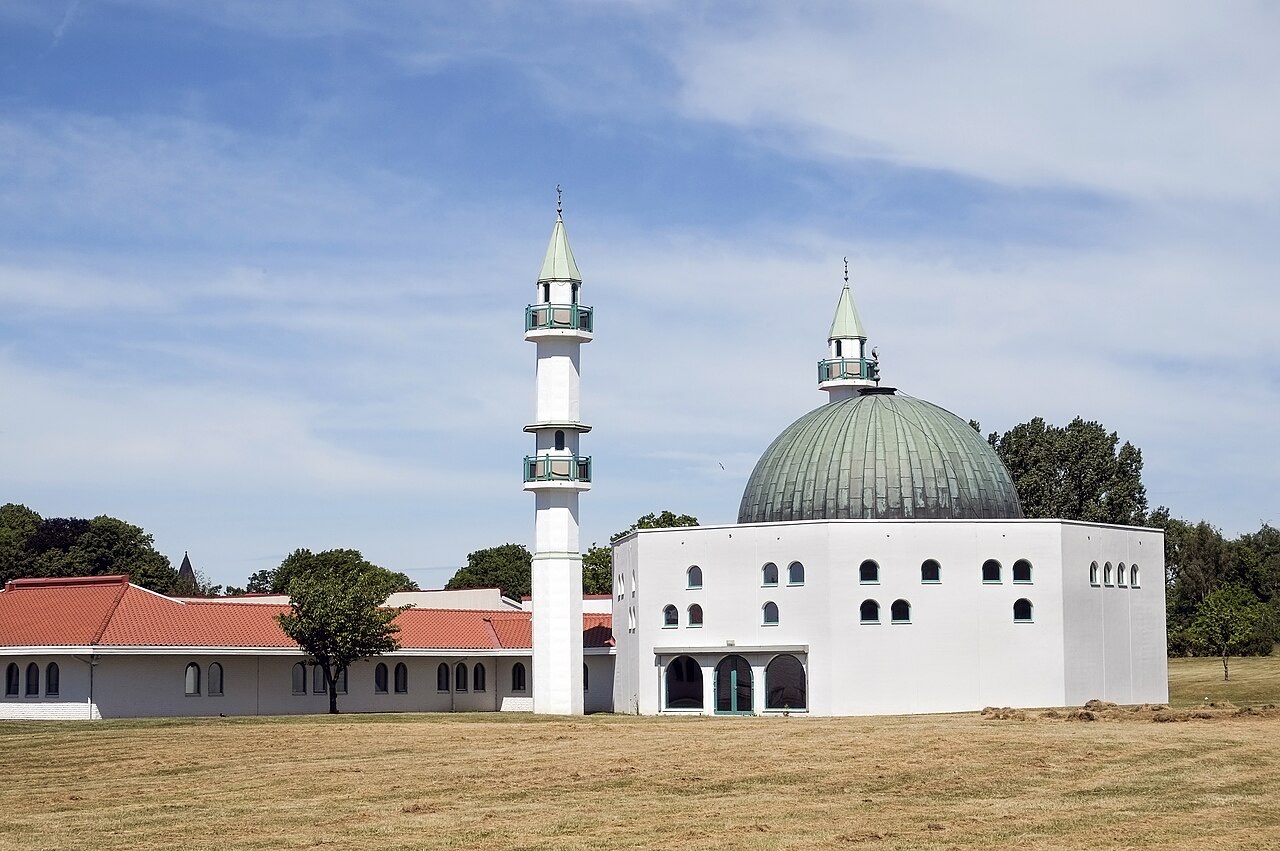
The community's institutions are older than most of the community. The Albanian Islamic Cultural Centre in Norway (Qendra Islamike Kulturore Shqiptare) was founded in Oslo in 1986 — by four young Albanian Muslim emigrants, at a time when the whole Yugoslav-background population of Norway was barely two thousand people — and grew with each wave that followed. In June 2009 it bought a 1,200-square-metre former factory in central Oslo and made it a mosque; today it reports about 5,300 members, including some two hundred children of Albanian-Norwegian mixed marriages, and runs the "Urtësia" weekend school, women's and youth sections, marriage counselling and its own football, swimming and ski activities. Around it, Norway's public register records Albanian congregations founded in Drammen (2004), Sarpsborg (2005), Oslo again (2009), Kristiansand (2011) and Arendal (2019) — a map of the same towns the census draws.
The language went to school long before the mosque had a building of its own — and that school is still running. Albanian supplementary teaching in Oslo began in summer 1993, in the middle of the church-asylum crisis, and was formalised on 14 January 1995 as the "Naim Frashëri" Albanian school, teaching language, literature and history at weekends — about 80 pupils at the start, around 130 a generation later, taught largely by volunteers. A second weekend school, "Mor Teresa", operates in Ski, south of Oslo, alongside the community's folk-dance groups.
And every Friday evening, Oslo has an Albanian radio hour — and has had one, in some form, since before the fall of the Berlin Wall. Albanian broadcasting in Norway began in 1987 on the community station Radio Paf, was renamed with the station in 1989, and took the name Radio Rilindja in 1992, broadcasting live on InterFM 107.7 MHz. It reported through the church-asylum years and the 1999 war, moved into its own studio in 2018, runs on a five-person volunteer staff, and in 2016 collected a diaspora award from Kosovo's government. The Friday broadcast carries a familiar language across a community spread over long distances.
The organisations, the clubs and the embassies
Norway's public register — Brønnøysundregistrene, in its way as thorough as the population statisticians — documents an associational life far denser than the community's size would predict: the cultural association Ilirida in Oslo; the Albanian Youth and Student Association, founded 2004; Mor Teresa in Ski, Fehmi Agani in Arendal, Dardania in Borgenhaugen outside Sarpsborg; Albanian women's associations in Telemark; an Albanian writers' association; and a professional layer that says something about the second generation — an interdisciplinary professionals' network (2015), a Norwegian-Albanian business network (2016) and a Norwegian-Albanian Doctors' Association (2022).
Football has its own register entry. Fredrikshald Prishtina Fotballklubb — Halden's old town name joined to Kosovo's capital — was founded on 15 June 2013 and plays in the Norwegian federation's league system, with a futsal sibling from 2015; the Oslo Islamic centre runs its own community club. The names on this page's people section mostly came up the other way, through ordinary Norwegian clubs: Egersunds IK, Strømsgodset, Odd, Vålerenga.
The diplomatic map is lopsided in a way readers ask about often enough that it belongs here. Kosovo has an embassy in Oslo — opened in December 2019, when its first ambassador presented credentials to King Harald V, and today at Colbjørnsens gate 4. Albania has no resident embassy in Norway; its embassy in Stockholm covers the country. And the third flag came down most recently: Norway closed its own embassy in Pristina in 2023, twenty-four years after the Telemark Battalion arrived — a decision announced as a budget measure and mourned in both capitals.
The people: from Egersund to the Premier League
Football brings a family question into public view: which country do you represent? Players raised in Norway have chosen Norway, Kosovo and Albania; the Berisha brothers show how two answers can emerge from the same childhood.
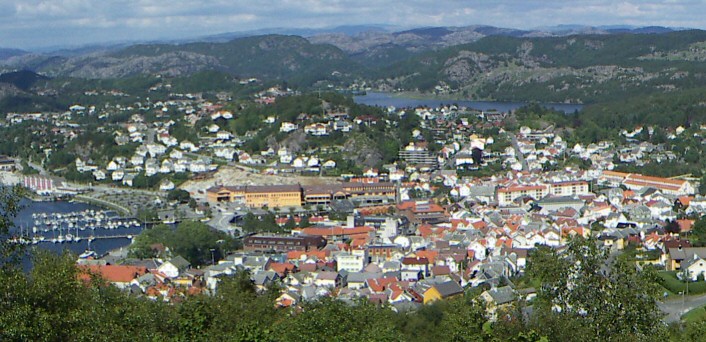
Start in Egersund, a fishing town of eleven thousand on the North Sea coast with no Albanian community to speak of — except the family Berisha, from Podujevë, whose two sons both reached international football and chose different anthems.
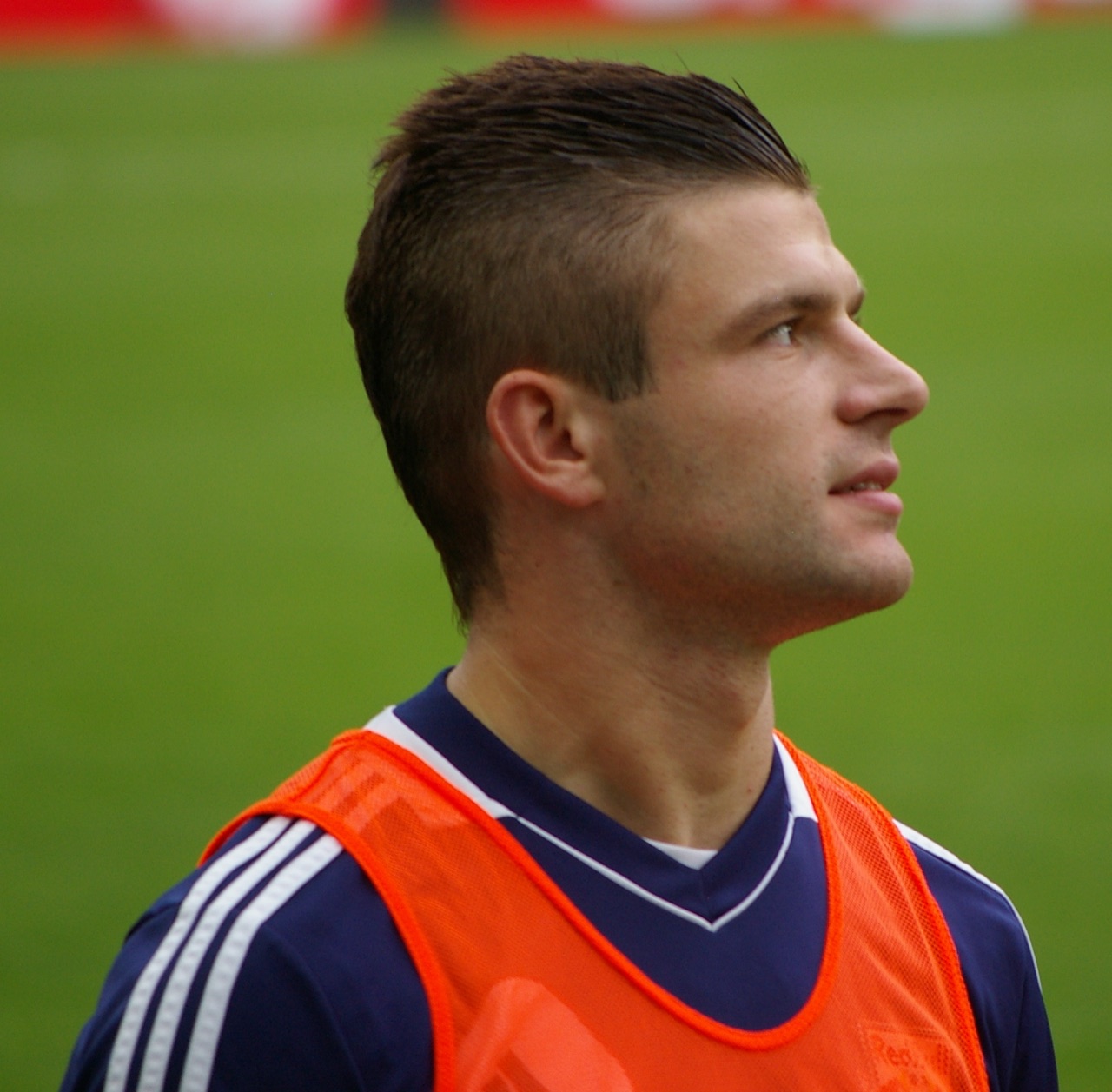
Valon Berisha
Born in Malmö in 1993 to Albanian parents from Podujevë, raised in Egersund, senior debut for Egersunds IK at fifteen. Viking, then Red Bull Salzburg — five Austrian titles and four cups — then Lazio, Reims and FC Zürich. 20 caps for Norway and a bronze at the 2013 Under-21 European Championship; then, in 2016, the switch — and on his Kosovo debut on 5 September 2016, away to Finland, he scored Kosovo's first goal in a World Cup qualifier, from the penalty spot. More than 50 caps since.
Photo: Werner100359 / Wikimedia Commons · CC BY-SA 3.0
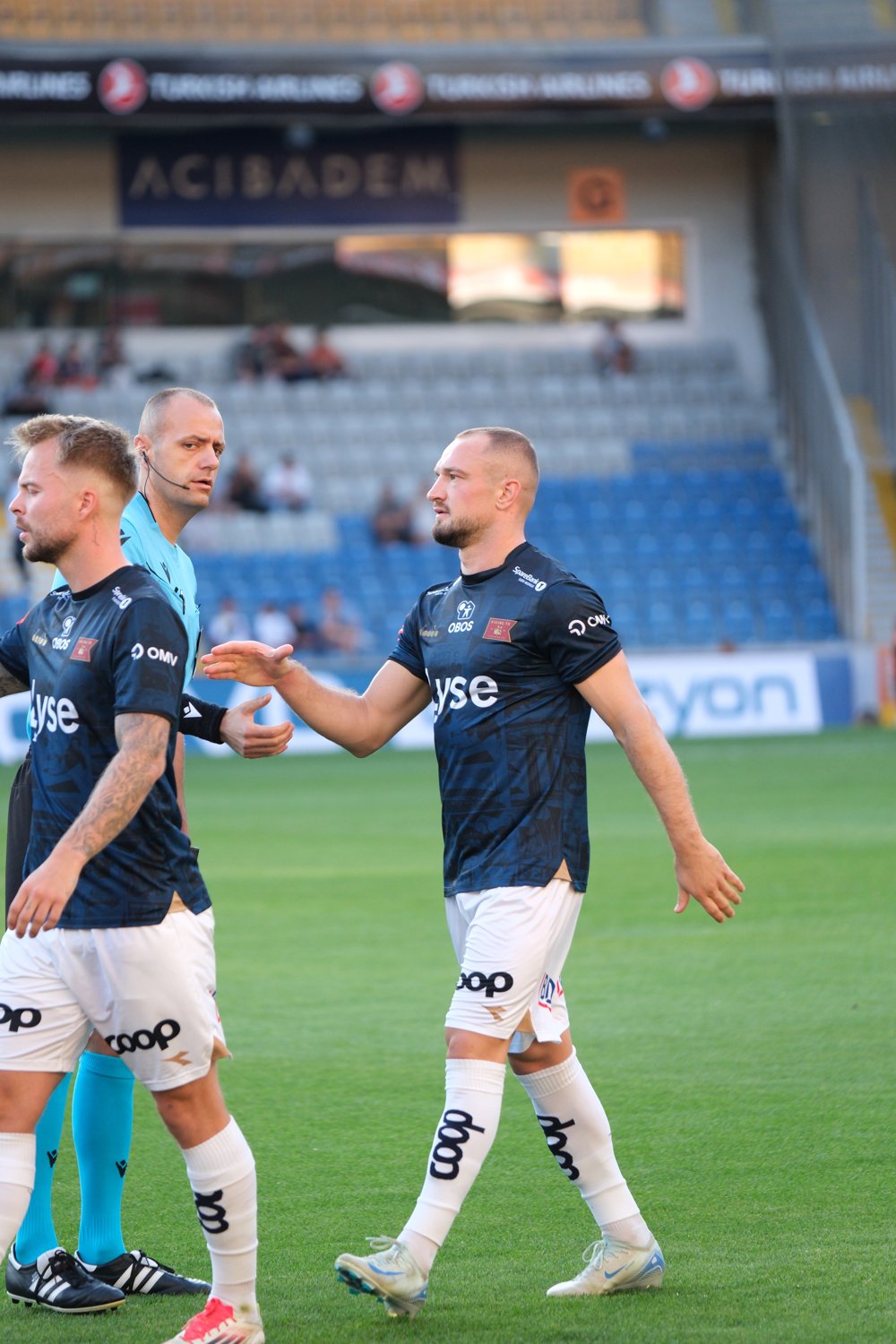
Veton Berisha
Born in Egersund in 1994 — the younger brother, and the one who stayed. When Kosovo joined FIFA in 2016 it asked for him too; he chose Norway, debuted against Portugal that May, and scored against Belgium ten days later. Ten caps for Norway; German and Austrian years at Greuther Fürth and Rapid Wien; a 46-goal spell at Viking; a Norwegian Cup with Molde in 2023 — and in 2025, back at Viking, an Eliteserien title. Two brothers, one town, two anthems: Albanian Norway in a single family.
Photo: Zafer / Wikimedia Commons · CC BY 4.0
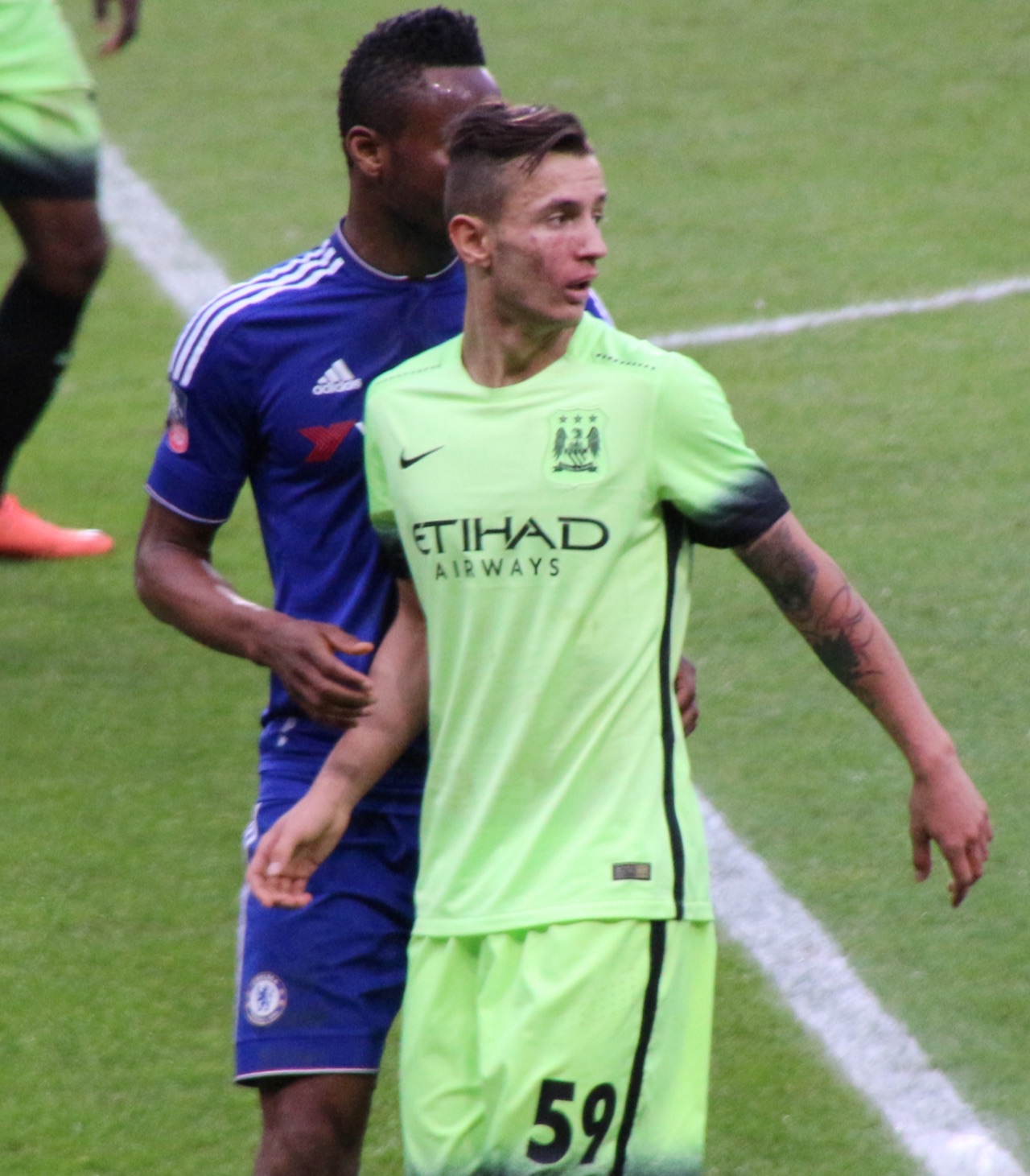
Bersant Celina
Born in Prizren in 1996, brought to Drammen as a two-year-old refugee, raised through Strømsgodset — the register's second-largest Kosovar town producing its most famous son. Manchester City signed him at fifteen; on 6 February 2016 he became the first Kosovar to play in the Premier League. He had already made his choice: a Norway youth international from U15 to U21, he debuted for Kosovo in its first FIFA-recognised era in September 2014, at seventeen, and has nearly 40 caps. Swansea, Dijon, Ipswich and Stockholm followed the flag.
Photo: @cfcunofficial (Chelsea Debs) / Wikimedia Commons · CC BY-SA 2.0
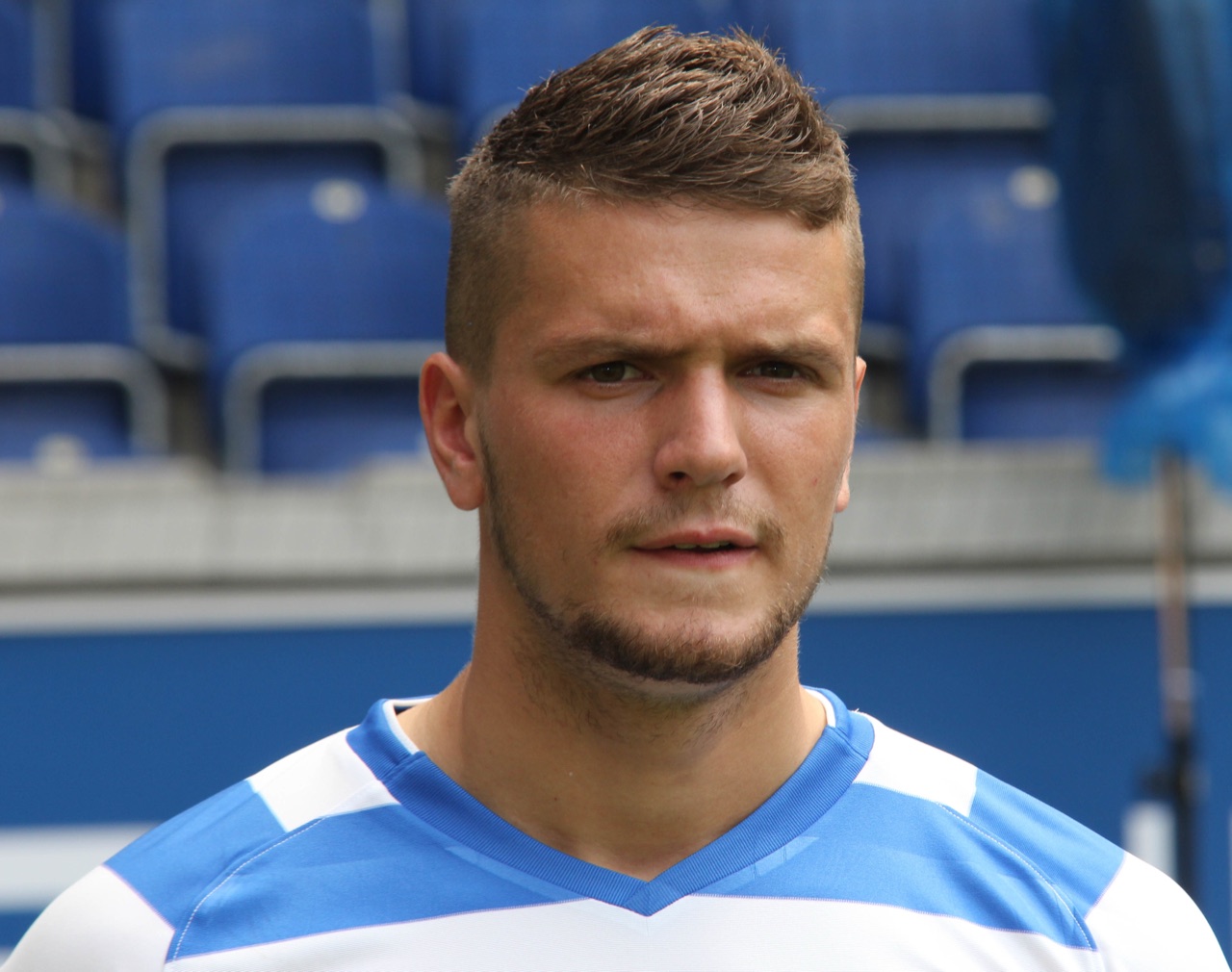
Flamur Kastrati
A Kosovo Albanian raised in Groruddalen, Oslo's immigrant east. Norway youth international from U18 to U21 between 2009 and 2013 — including the squad that took Norway to bronze at the 2013 U21 European Championship — with a club career through Germany and the Eliteserien. Then, on 5 March 2014, he played in Kosovo's first FIFA-recognised international, the 0–0 with Haiti in Mitrovica: an Oslo kid on the pitch for the first ninety minutes his parents' country ever officially played.
Photo: Thomas Rodenbücher / Wikimedia Commons · CC BY 2.0
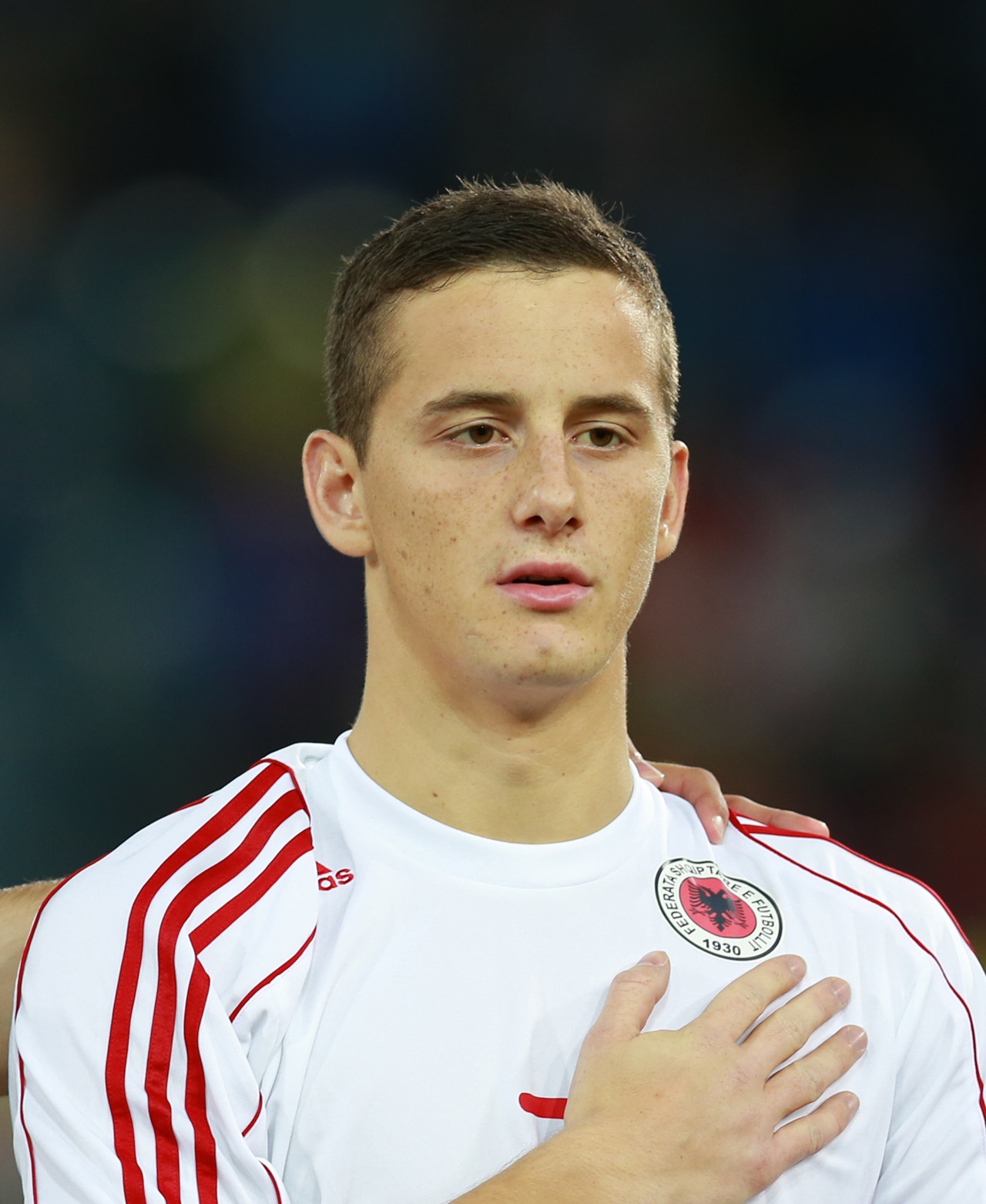
Herolind Shala
Born in Porsgrunn in 1992 to Kosovo Albanian parents from Drenas, and the owner of one of European football's rarest CVs: youth international for Norway, six senior caps for Albania, then 27 for Kosovo once it entered FIFA — all three of this page's flags in one career, from a Telemark industrial town with 51 registered Albania-background residents.
Photo: kulac / Wikimedia Commons · CC BY-SA 3.0
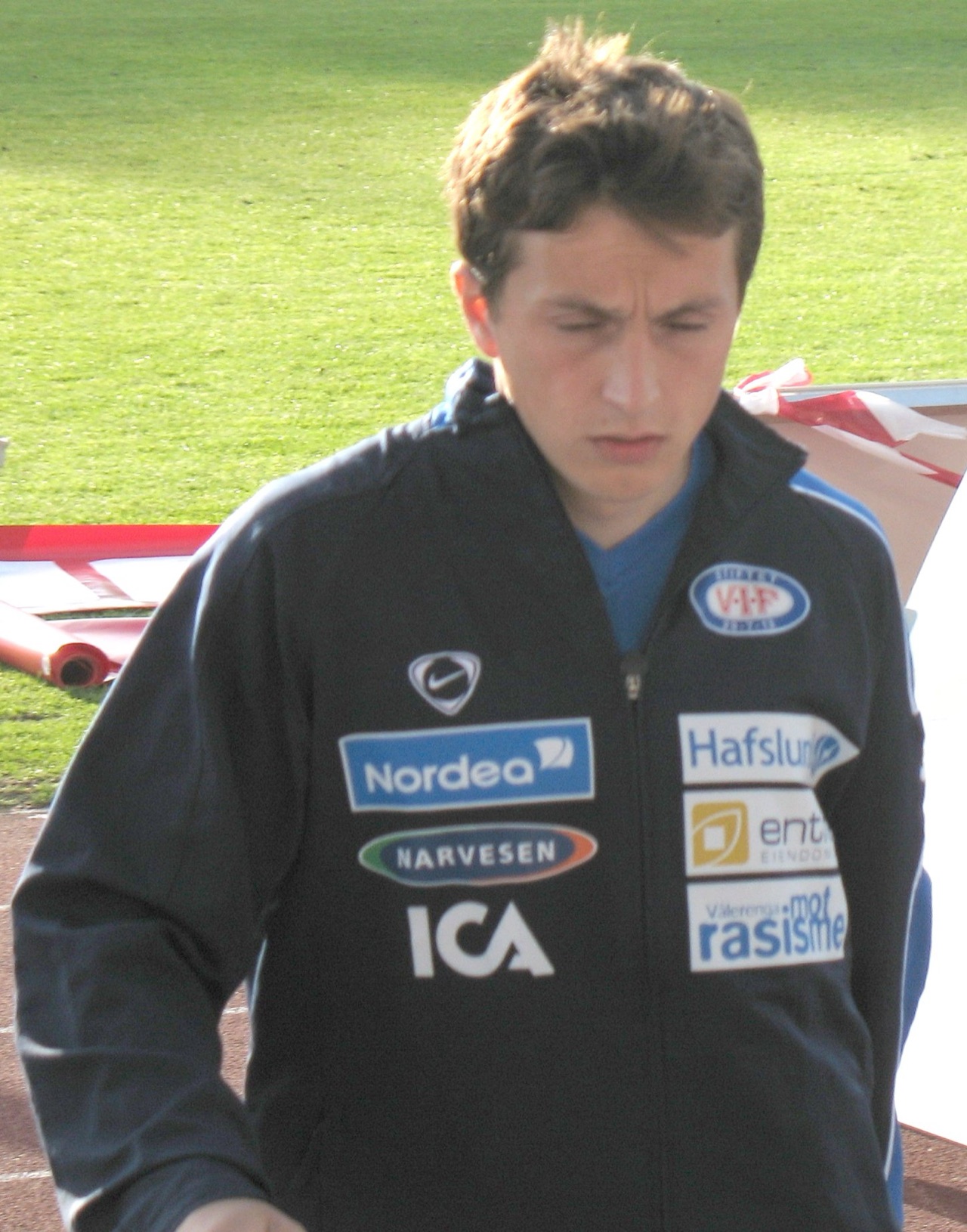
Ardian Gashi
Born in Gjakova in 1981, brought to Norway as an eight-year-old refugee, settled in tiny Kyrksæterøra in Trøndelag — the dispersal policy in one biography. Molde, Vålerenga, Brann, Fredrikstad and Odd; 14 senior caps for Norway. Then, at 33, he stood in the line-up for Kosovo's first international against Haiti in 2014 — a man who had already represented one homeland, granted two caps by the other. The 1990s asylum decade, measured in one career.
Photo: Kjetil r / Wikimedia Commons · CC BY-SA 3.0
The roll runs on. Elbasan Rashani, raised in Kragerø and Bø, came through Odd as a Norway youth international and switched to Kosovo, playing in France and Norway; Fitim Azemi, an Oslo-born striker of Kosovar descent, led the line for Bodø/Glimt and Vålerenga. And the pattern the Berisha and Zeneli families share is now a Scandinavian institution: on the day Kosovo entered FIFA in 2016, no country outside the Balkans had more to offer its new team than Norway and Sweden — the two registers where the refugee children of 1993 and 1999 had grown up into professionals.
How do Albanians in Norway connect today?
Norway is the geography problem of this series in its purest form. The community is a quarter the size of Sweden's, spread along a thousand-kilometre coastline, and outside the Oslofjord arc it thins to double digits per municipality: 344 people with the three backgrounds in Larvik, 260 in all of Møre og Romsdal, 54 in Finnmark. In most of Norway, an Albanian in their twenties does not have a local community to meet — they have a country-wide one, or none.
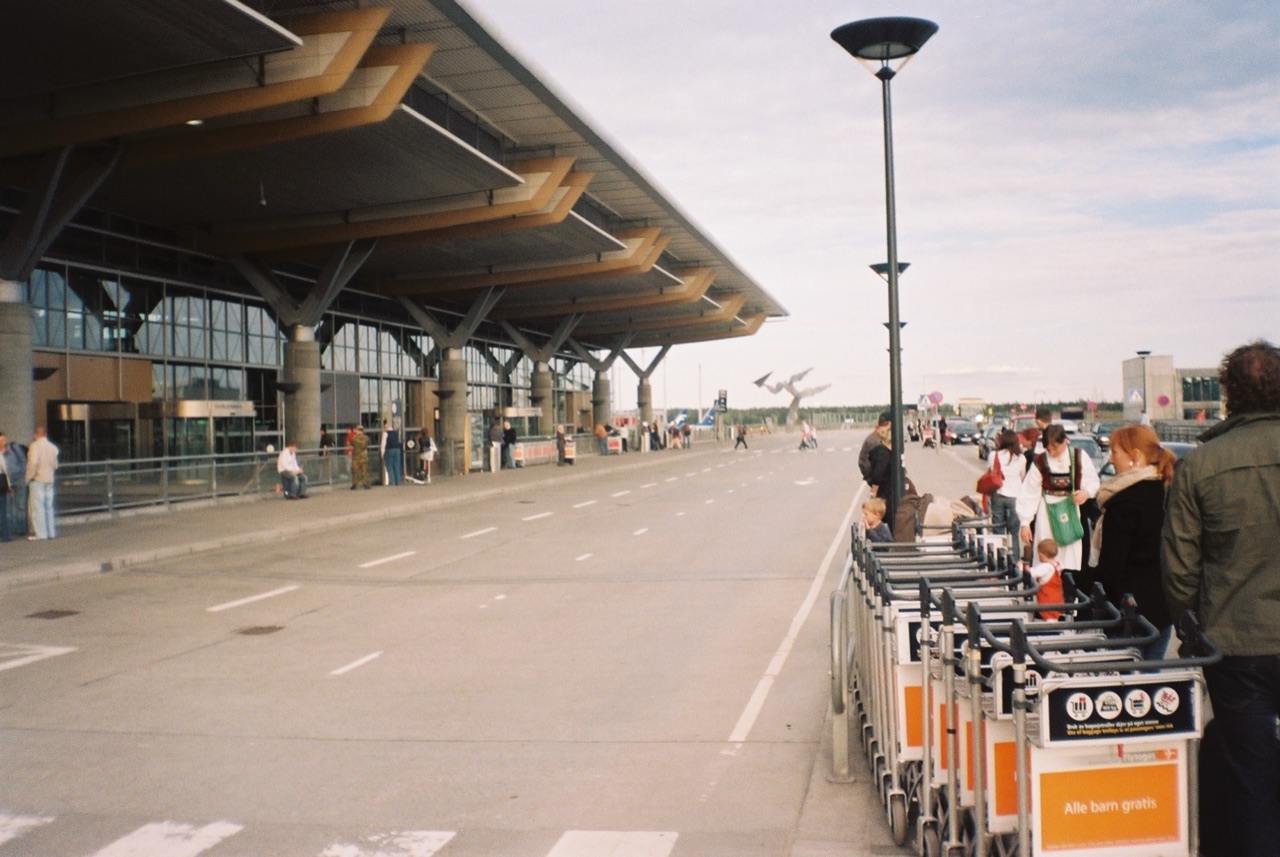
For thirty years the answers were the association, the mosque, the school, the wedding circuit and the summer drive south. They still work — the register full of associations above is proof — but each has the same catchment problem: the association in Arendal draws on a county with 1,617 people across all ages, and the Friday radio hour reaches the whole country precisely because no town could sustain it alone. Even the flight home was, until recently, a connection story: for years Eurostat's airport-pair statistics recorded no scheduled route at all between Norway and Pristina, and the community flew via Copenhagen, Vienna or Istanbul, or used the Torp routes to Skopje and, from 2024, Tirana. As of summer 2026, Norwegian flies Oslo–Pristina twice a week — an air bridge the size of the community: real, and thin.
dua.com does one narrow thing about all of this, and it is the thing Norwegian geography breaks: it makes the pool national — and cross-border — instead of local. A twenty-six-year-old with roots in Drenas living in Sandefjord is drawing on the same set of people as one in Oslo, in Malmö, or in Pristina, and nobody in it needs the word kosovoalban explained. Choosing well is as hard as it has ever been. Having someone to choose from no longer depends on which reception centre your parents were assigned to in 1994. Albanian women and men across Norway are on the platform today.
Love, family and the next generation
The Norwegian-born generation is growing up: 7,040 people born in Norway to immigrant parents have Kosovo background, compared with 3,302 in 2010. Some are children; others are already shaping adult lives between languages, places and family networks. The figures describe a generation. Its relationships are the stories behind it.
Practical directory for Albanians in Norway
Primary and community-run resources. Always verify current requirements on the linked site — Norwegian residence and citizenship rules have been tightening through the 2020s.
| Need | Where to start | Why this source |
|---|---|---|
| Kosovan consular services | Ministry of Foreign Affairs and Diaspora, Republic of Kosovo | The ministry behind the embassy at Colbjørnsens gate 4 in Oslo, open since December 2019 |
| Albanian consular services | Embassy of Albania in Stockholm | Albania has no resident embassy in Norway; Stockholm covers the country |
| Residence permits and citizenship | UDI — the Norwegian Directorate of Immigration | The official authority; dual citizenship has been permitted since 1 January 2020 |
| Population registration | Skatteetaten — folkeregisteret | Registration is the gateway to a national ID number and everything that follows |
| Community organisations | Albania's National Diaspora Agency registry | The official register of diaspora organisations, alongside Norway's own Brønnøysund register |
| Albanian classes for children | Shkolla shqipe "Naim Frashëri", Oslo | Weekend Albanian school, teaching since 1993; a second school operates in Ski |
| Albanian-language radio | Radio Rilindja, on InterFM 107.7 MHz Oslo | Live every Friday evening — Albanian radio in Norway since 1987 |
| Albanian schooling abroad | QBD — Albania's Diaspora Publications Centre | Free Albanian-language textbooks and the official directory of supplementary courses abroad |
| Flights home | Oslo Gardermoen and Sandefjord Torp | Oslo–Pristina twice weekly as of summer 2026; Torp serves Tirana and Skopje |
How the estimate is built
The model starts with three separate SSB categories in each country-background group. It then applies a range of assumed Albanian ethnic shares to their combined count. A mixed-country family already assigned to a background group is not added again.
The official register inputs
| Country background | Immigrants | Born in Norway · two foreign-born parents | Born in Norway · one foreign-born parent | Total |
|---|---|---|---|---|
| Kosovo | 10,938 | 7,040 | 2,112 | 20,090 |
| Albania | 4,024 | 949 | 393 | 5,366 |
| North Macedonia | 3,408 | 1,719 | 913 | 6,040 |
| Serbia | 9,040 | 2,433 | 1,106 | 12,579 |
| Montenegro | 579 | 238 | 113 | 930 |
Norwegian-born to immigrant parents means two foreign-born parents and four foreign-born grandparents. The parents need not come from the same country: if their birthplaces differ, SSB uses the mother’s country. Norwegian-born people with one foreign-born parent form a separate category. Each person appears once in the tables below.
Statistics Norway (SSB) · 1.1.2026
The assumptions, in full view
The shares are assumptions, not Norwegian ethnicity statistics. They allow for different migration histories: a high Albanian share in the Kosovo and Albania groups; a much wider range for North Macedonia; smaller Albanian minorities within Serbia and Montenegro. The same assumed range is applied to the three categories in each group. Mixed-parent families may differ from other families, so that choice adds uncertainty.
| Country background | Total | Assumed Albanian share | Modelled range |
|---|---|---|---|
| Kosovo | 20,090 | 92–97% | 18,483–19,487 |
| Albania | 5,366 | 95–98% | 5,098–5,259 |
| North Macedonia | 6,040 | 45–75% | 2,718–4,530 |
| Serbia | 12,579 | 2.6–7.8% | 327–981 |
| Montenegro | 930 | 12–37% | 112–344 |
The stated assumptions give 26,737–30,601 people, rounded to whole people; to the nearest hundred, approximately 26,700–30,600. Different ethnic-share assumptions would produce a different result.
Country background is not a complete ancestry record. Norwegian-born people whose parents were also born in Norway, and people outside these five background groups, are not added to this model. SSB publishes some grandparent-background information, but it does not identify everyone of Albanian ancestry. People who have emigrated are already outside the resident register. No estimate is added for unregistered residents.
Only the three categories in the input table are modelled. Foreign-born residents with one or two Norwegian-born parents are also outside this scenario.
Frequently asked questions about Albanians in Norway
How many Albanians live in Norway?
SSB records 25,456 residents with Kosovo or Albania background across three separate categories: immigrants, Norwegian-born people with two foreign-born parents, and Norwegian-born people with one foreign-born parent. This is not an ethnic count. Including assumed Albanian shares of the North Macedonia, Serbia and Montenegro groups produces a modelled scenario of about 26,700–30,600. The page shows every input and assumption.
Why are Norway's figures so much better than Sweden's?
Because Norway corrected its register and Sweden never did. When Kosovo declared independence in 2008, Statistics Norway split the old Yugoslav successor code and reassigned every person retroactively — the Kosovo category opened at 8,238 people in a single year. Statistics Sweden freezes birthplace at the state that existed at first registration, so 58,757 Swedish residents are still recorded as born in Yugoslavia and Sweden's Albanian population has to be modelled. It is why Norway's Kosovo-background count (17,978) is actually larger than Sweden's Kosovo-born-plus-children count (15,607), despite Sweden's community being three times the size.
When did Albanians first come to Norway?
In small numbers with the Yugoslav labour migration of the mid-1960s — Statistics Norway names the Askim rubber factory as a typical workplace — but the whole Yugoslav community numbered only 1,735 people when Norway's 1975 immigration stop ended labour recruitment. The community as it exists today was built later: by the asylum seekers of 1989–1998, the 6,099 evacuees of 1999, two decades of family reunification, and a work-led migration from Albania itself that has quadrupled since 2015. The first Albanian institutions predate the big waves: the Albanian Islamic Cultural Centre was founded in Oslo in 1986, and Albanian-language radio began in 1987.
What did Norway do during the Kosovo war?
It ran one of Europe's fastest evacuations. On Easter Sunday, 4 April 1999, the government decided to take up to 6,000 refugees from the camps in North Macedonia; the first flight landed at Gardermoen on 6 April, and 6,099 people arrived aboard 45 aircraft at five airports by year-end, with 7,957 in total holding temporary collective protection. Norway also sent soldiers: special forces in 1999, then the Telemark Battalion, with some 6,200 Norwegians serving in KFOR by 2020, and a Norwegian general — Thorstein Skiaker — commanding the whole force in 2001. Most of the evacuees returned home within two years, helped by a 15,000-kroner return grant; several thousand stayed and became the core of today's community.
Where do most Albanians in Norway live?
Around the Oslofjord. Oslo holds 7,737 people with background from Albania, Kosovo or North Macedonia, Akershus 5,629 and Østfold 4,075 — and Østfold, on the Swedish border, is the densest county in the country at 129 per 10,000, carried by the Kosovar communities of Sarpsborg, Fredrikstad and Halden. Drammen (1,105 with Kosovo background) is the largest Kosovar town outside Oslo, with Kristiansand, Skien, Sandefjord, Stavanger and Sandnes following. North of Trondheim the community almost disappears.
Is there an Albanian mosque or an Albanian school in Oslo?
Both, and both are decades old. The Albanian Islamic Cultural Centre, founded in 1986, has run its own mosque in a converted central-Oslo factory building since 2009 and reports about 5,300 members, with sister congregations registered in Drammen, Sarpsborg, Kristiansand and Arendal. The "Naim Frashëri" Albanian weekend school has taught language, literature and history since 1993 — formally founded in January 1995 — and a second weekend school operates in Ski. Radio Rilindja broadcasts in Albanian every Friday evening on 107.7 FM in Oslo.
Is there an Albanian embassy in Norway?
Kosovo has one; Albania does not. Kosovo opened its embassy in Oslo in December 2019, at Colbjørnsens gate 4. Albania covers Norway from its embassy in Stockholm, so consular matters for Albanian citizens run through Sweden. In the other direction, Norway closed its own embassy in Pristina in 2023 and now covers Kosovo without a resident mission — a decision taken as a budget measure after 24 years of continuous Norwegian presence.
Can Albanians work in Norway?
With a residence permit, yes — and thousands do; it is the engine of the newest migration. Citizens of Albania and Kosovo can visit the Schengen area, which includes Norway, visa-free for up to 90 days, but visiting does not confer the right to work: that requires a UDI residence permit, most commonly as a skilled worker with a concrete job offer, or through family immigration. Norway is not an EU member but applies the EEA's rules, which do not cover Albanian or Kosovar citizens. The register shows the route works: Norway's Albania-born population has quadrupled since 2015, overwhelmingly through work and family permits.
Which footballers in Norway have Albanian roots?
The Berisha brothers of Egersund lead the list: Valon, who won 20 caps for Norway and then scored Kosovo's first World Cup-qualifying goal in 2016, and Veton, who was asked by Kosovo and chose Norway, winning the 2025 Eliteserien title with Viking. Around them: Bersant Celina of Drammen, the first Kosovar in the Premier League; Ardian Gashi, 14 senior caps for Norway before joining Kosovo's first-ever international in 2014; Flamur Kastrati of Groruddalen, who played in that same historic Haiti match; Herolind Shala of Porsgrunn, who represented Norway, Albania and Kosovo across his career; and Elbasan Rashani and Fitim Azemi in the Eliteserien.
Is there a direct flight from Norway to Kosovo or Albania?
Yes, finally. As of summer 2026, Norwegian flies Oslo–Pristina twice a week — a route that did not exist for most of the community's history: Eurostat's airport-pair statistics record no scheduled Norway–Pristina service at any point through 2024, and the community connected via Copenhagen, Vienna, Zurich or Istanbul. Sandefjord Torp has carried the Balkan traffic for years: a Skopje route since 2016 (about 30,000 passengers a year) and a Tirana route since 2024, which carried 27,820 passengers in its first year.
How does Norway compare with Sweden and Denmark?
Norway sits in the middle of the Nordic ladder — but with the cleanest data. Counting both generations from Albania, Kosovo and North Macedonia, Sweden holds 42,335 people, Norway 28,078 and Denmark 14,053. Sweden's true community is far larger than its count (its Kosovo war refugees are hidden in an undivided "Yugoslavia" category of 58,757 people), which is why its page models more than 60,000 Albanians. Norway's number needs no such rescue: its register was corrected in 2008, and the 22,951 people with Kosovo or Albania background can be read straight off it.
How do Albanians in Norway meet other Albanians?
Traditionally through the Oslo institutions — the Islamic Cultural Centre, the Naim Frashëri weekend school, the associations from Arendal to Sarpsborg, the Friday radio hour — plus the wedding circuit and the summer drive to Kosovo and Albania. The obstacle is scale and distance: outside the Oslofjord arc, most municipalities hold a few dozen Albanians across all ages, and until 2026 there was not even a direct flight to Pristina. That is the gap dua.com exists to close: it makes the pool national and cross-border instead of local, connecting Albanians in Norway with the whole Scandinavian and Balkan community — as it did for Ardita and Durimi, the documented couple just across the Swedish border on this page.