Rome registered 7,972 Albanian citizens at the end of 2025. Almost a quarter lived in Municipio VI, far from the city’s best-known Albanian landmarks. Across metropolitan Rome, more than half of Albanian citizens lived outside the capital itself. Here are the figures, the neighbourhoods, the history and the institutions through which the community keeps its connections alive.
In a room adapted as a classroom in the sacristy of San Giovanni della Malva, children had prepared an Albanian welcome poster. They signed it, introduced themselves, then performed songs and poems they had learned in their lessons. This was a visit to Rome’s Besa school reported in April 2019: teachers Eliza Çoba and Irma Vata, parents, children and Albania’s ambassador gathered around the work of passing a language on. The setting was modest. The ambition reached into the next generation. Read the contemporary report.
That small classroom is a useful place to begin understanding Albanians in Rome. The city’s Albanian story includes a national hero on horseback and a palace near Trevi. It also includes parents making room for another language in their children’s lives, authors choosing the language in which to write, and associations turning shared origins into something people can join.
Keeping Albanian traditions together
Children and adults gather to celebrate in this short film published by the Prane Teje channel as “Shkolla Prane Teje Rome-Itali”. The school is a separate initiative from Besa; Ora News reported its opening in March 2023.
Prane Teje · Published 8 January 2024 · 0:18 · Watch on YouTube · Read the school-opening report
How many Albanians live in Rome?
Roma Capitale’s population register counted 7,972 residents with Albanian citizenship on 31 December 2025. They made up 0.28 percent of the city’s 2.80 million registered residents and 2.0 percent of its foreign citizens. That is a precise answer to a limited question: how many people registered in the municipality hold Albanian citizenship.
It leaves out Italian citizens with Albanian roots and Albanians whose citizenship is Kosovan, North Macedonian or another nationality. Conversely, a passport does not establish someone’s ethnic identity. The community cannot be reduced to a nationality field, and no verified local count of everyone of Albanian origin is available.
Citizenship and birthplace tell different stories
ISTAT provides a second view. On 1 January 2025, its census-based population counted 7,464 Albanian citizens in Rome municipality, alongside 9,251 residents born in Albania. Across metropolitan Rome, the corresponding counts were 16,086 and 19,311. Birthplace retains people born in Albania after they become Italian; it leaves out their children born in Italy, as well as Albanian families originating elsewhere.
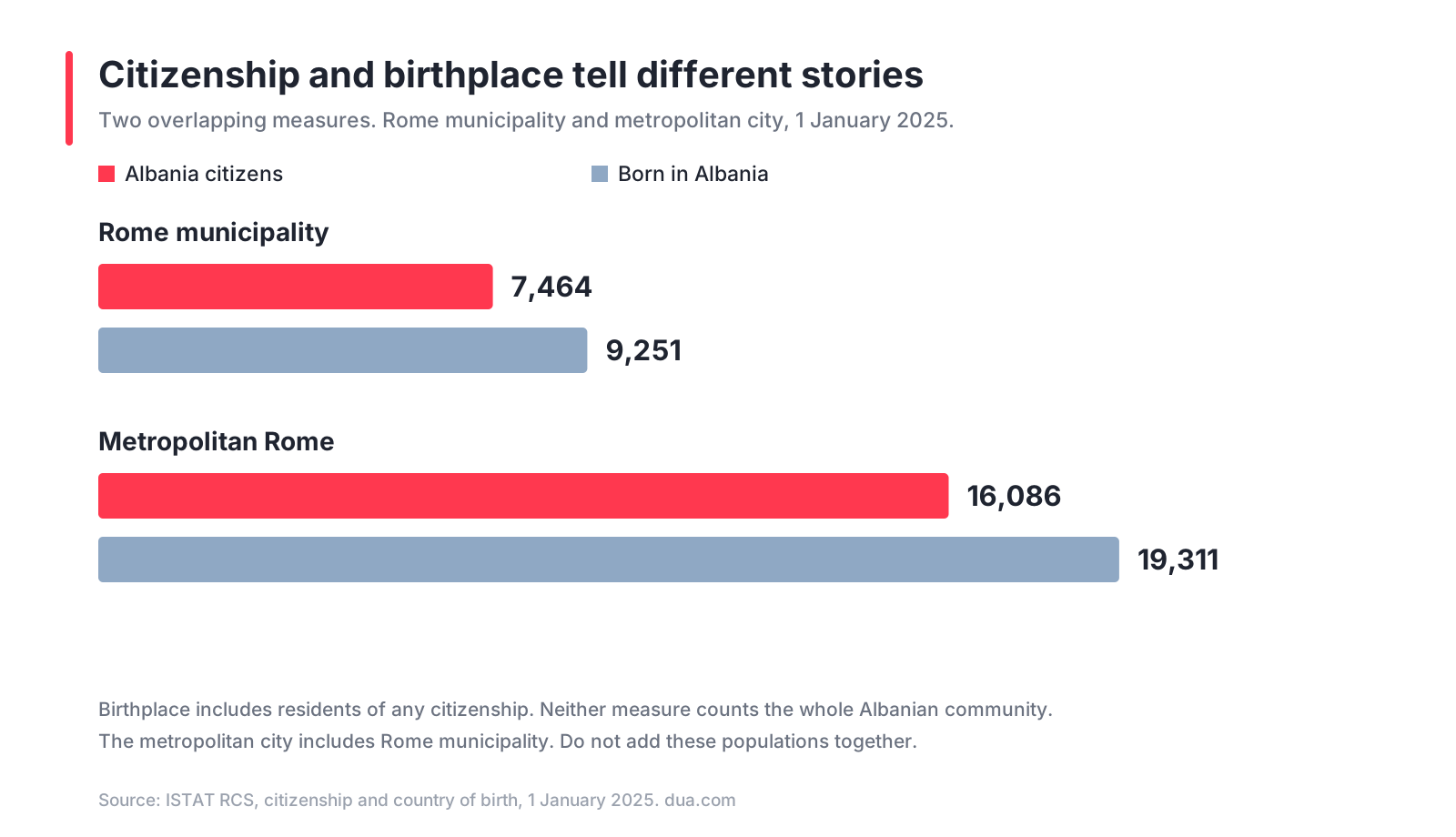
The two measures overlap. Adding them would count many people twice. Their difference is not a naturalisation total either: an Albanian citizen born in Italy belongs to the citizenship group but not the Albania-born group. The published tables do not supply the local cross-tabulation needed to untangle every category.
| Area | Albanian citizenship | Born in Albania |
|---|---|---|
| Rome municipality | 7,464 | 9,251 |
| Metropolitan Rome, including the municipality | 16,086 | 19,311 |
| Lazio, including metropolitan Rome | 23,668 | 28,461 |
Source: ISTAT, population by citizenship or country of birth, 1 January 2025. The geographic areas are nested, and the columns overlap. Neither should be added to produce a community total.
Why two official sources disagree
The city register and ISTAT use different population systems. For the equivalent date of 31 December 2024 and 1 January 2025, the register gives 7,834 Albanian citizens and ISTAT gives 7,464. Both are official figures, but they are not interchangeable. This article uses the city register for Rome’s districts and recent change, and ISTAT for comparisons with surrounding municipalities.
In particular, the difference between ISTAT’s 7,464 and the following year-end register’s 7,972 is not a valid measure of annual growth. It mixes systems as well as dates. The comparable register increase during 2025 was 138 people, or 1.8 percent.
Where in Rome do Albanians live?
Rome’s strongest concentration of registered Albanian citizens is in Municipio VI, on the eastern side of the city. Its 1,967 Albanian citizens account for 24.7 percent of the municipality-wide total. Municipio V follows with 719, then IV with 619 and VII with 601. Every one of Rome’s fifteen municipi has Albanian citizens.
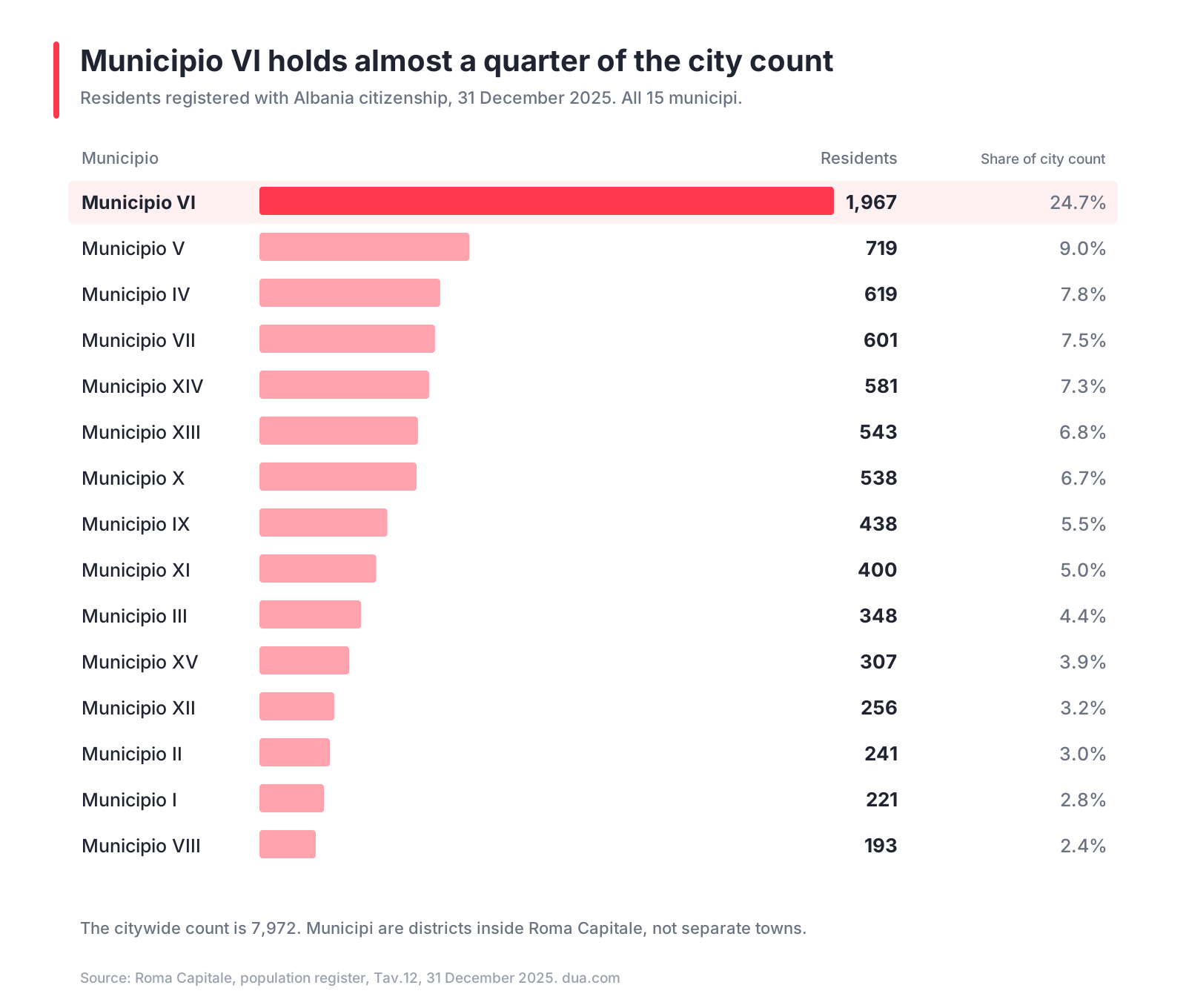
These are counts, not the percentage of each district that is Albanian. In Municipio VI, Albanian citizens are 0.81 percent of all registered residents. That is nearly three times the citywide share, yet still a small minority of a large and varied district. “Almost a quarter” means a quarter of Rome’s Albanian citizens live there; it does not mean a quarter of its neighbours are Albanian.
Torre Angela and Borghesiana
The city’s smaller statistical areas sharpen the picture. Torre Angela records 953 Albanian citizens and Borghesiana 597. Together, these two urban zones hold 1,550, or 19.4 percent of the city total. Both fall within Municipio VI. Casal Bertone follows with 207, Fogaccia with 195 and Centocelle with 180.
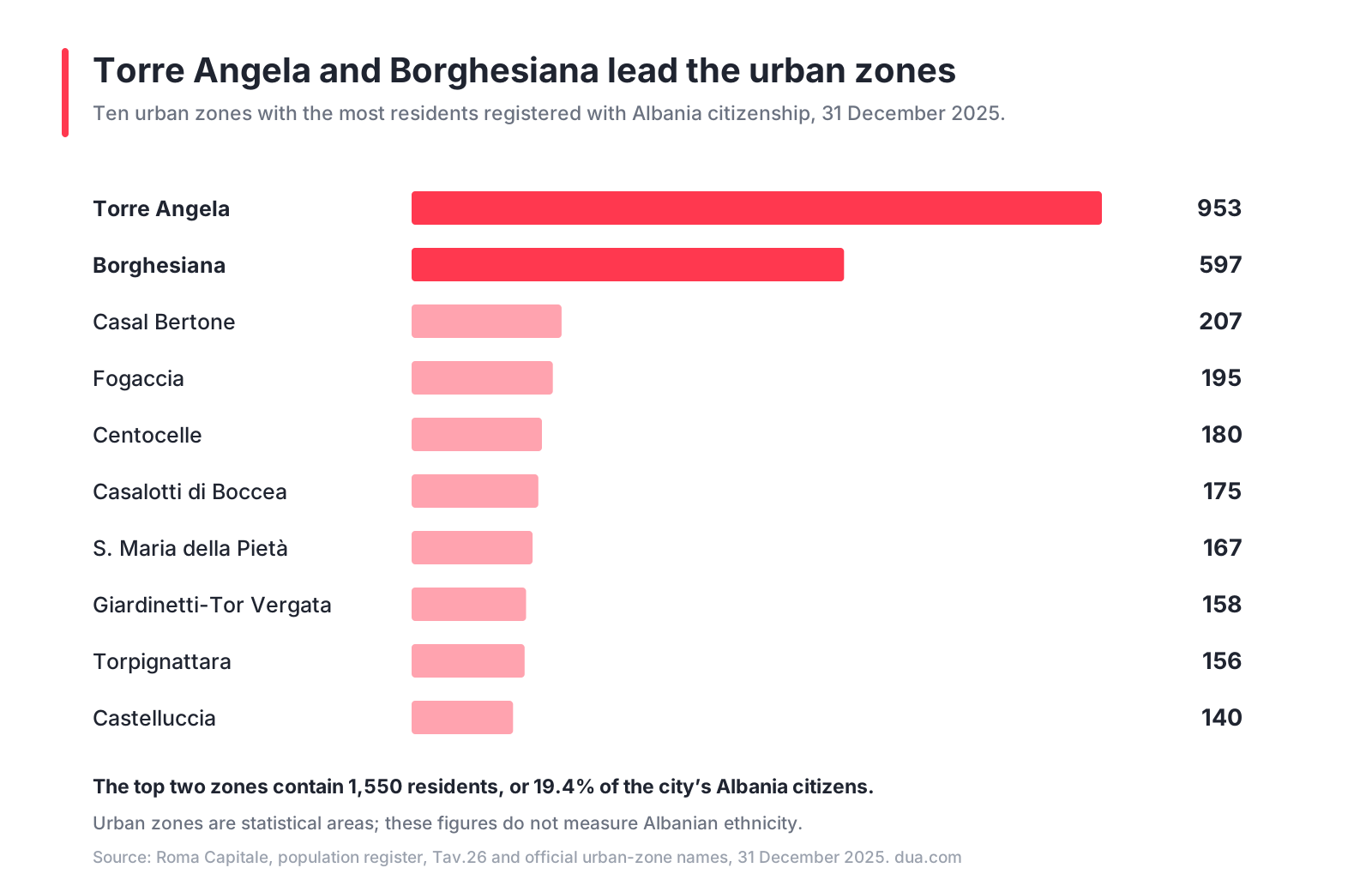
These names refer to official zone urbanistiche, which can cover more ground than the neighbourhood a resident has in mind. They identify a broad residential pattern, not particular buildings or a self-contained Albanian enclave. The register establishes where people live; it does not by itself explain their choices of housing or work.
The contrast with the historic centre is striking. The same table records 61 Albanian citizens in Esquilino and 22 in Trastevere. Trastevere can host an important Albanian church without being the main Albanian residential area. The geography of institutions and the geography of homes are different.
Sources: Roma Capitale, foreign residents by municipio and by urban zone, 31 December 2025. Citizenship is the recorded measure throughout.
Beyond the city boundary
More than half of metropolitan Rome’s Albanian citizens live outside Roma Capitale itself. Using the same ISTAT dataset and date throughout, 8,622 of 16,086 lived in surrounding municipalities on 1 January 2025: 53.6 percent. Restricting the story to the capital would leave out most of this population.
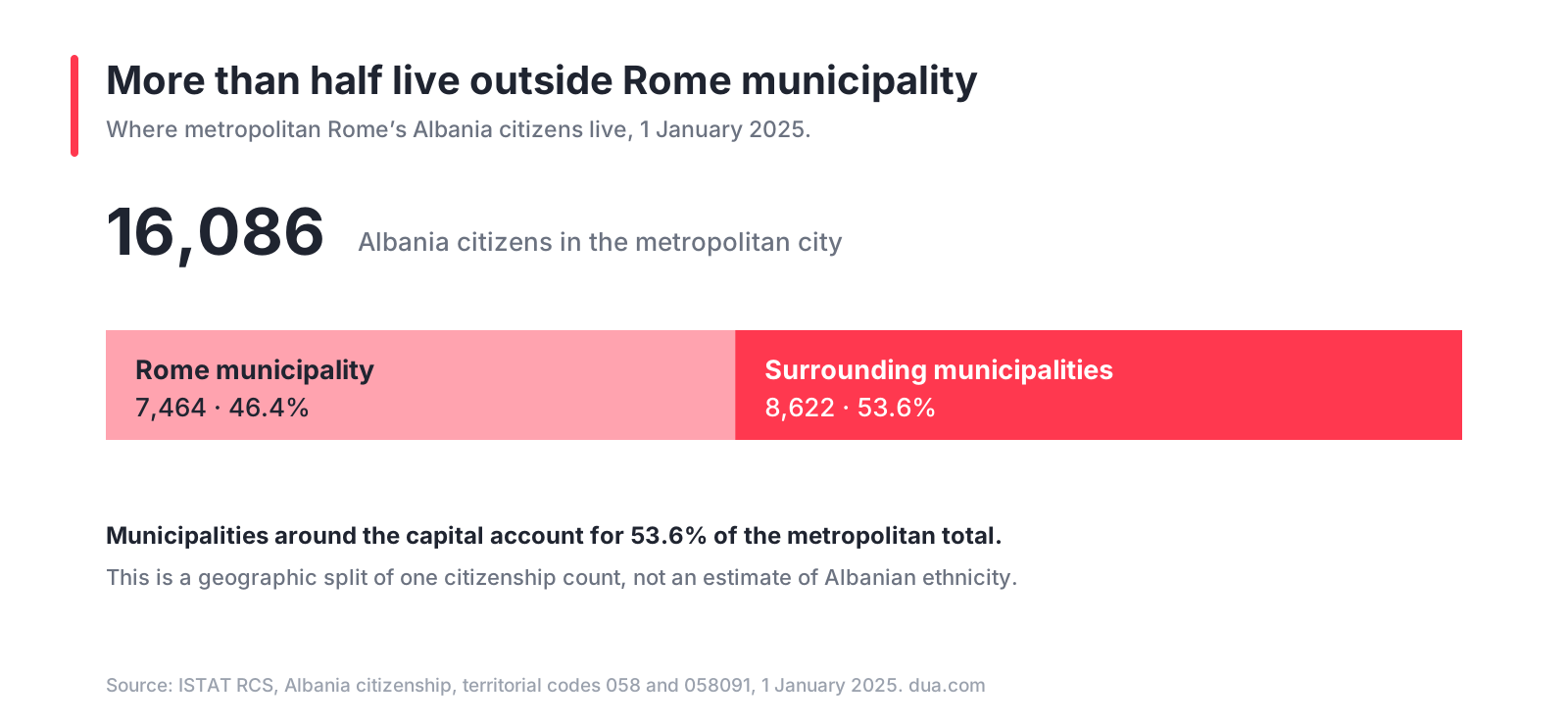
Outside Rome, the largest counts are in Mentana, with 606, Fonte Nuova with 564, Marino with 528, Monterotondo with 399 and Fiano Romano with 358. These are separate municipalities, not Roman districts. A family describing itself as living “in Rome” can be part of this wider network while having a different municipal address.
| Municipality | Albanian citizens | Share of all residents |
|---|---|---|
| Mentana | 606 | 2.69% |
| Fonte Nuova | 564 | 1.73% |
| Marino | 528 | 1.14% |
| Monterotondo | 399 | 0.97% |
| Fiano Romano | 358 | 2.15% |
| Rome municipality | 7,464 | 0.27% |
Source: ISTAT, 1 January 2025. The five surrounding municipalities shown have the largest Albanian-citizenship counts outside Roma Capitale; this is not a ranking of all municipalities by percentage.
Mentana illustrates the difference between size and concentration. Its population is far smaller than Rome’s, yet its share of Albanian citizens is about ten times as high. Neither the capital’s population alone nor its most recognisable Albanian landmarks can describe the whole metropolitan community.
Albanian history in Rome’s streets
A name just beyond the Trevi Fountain
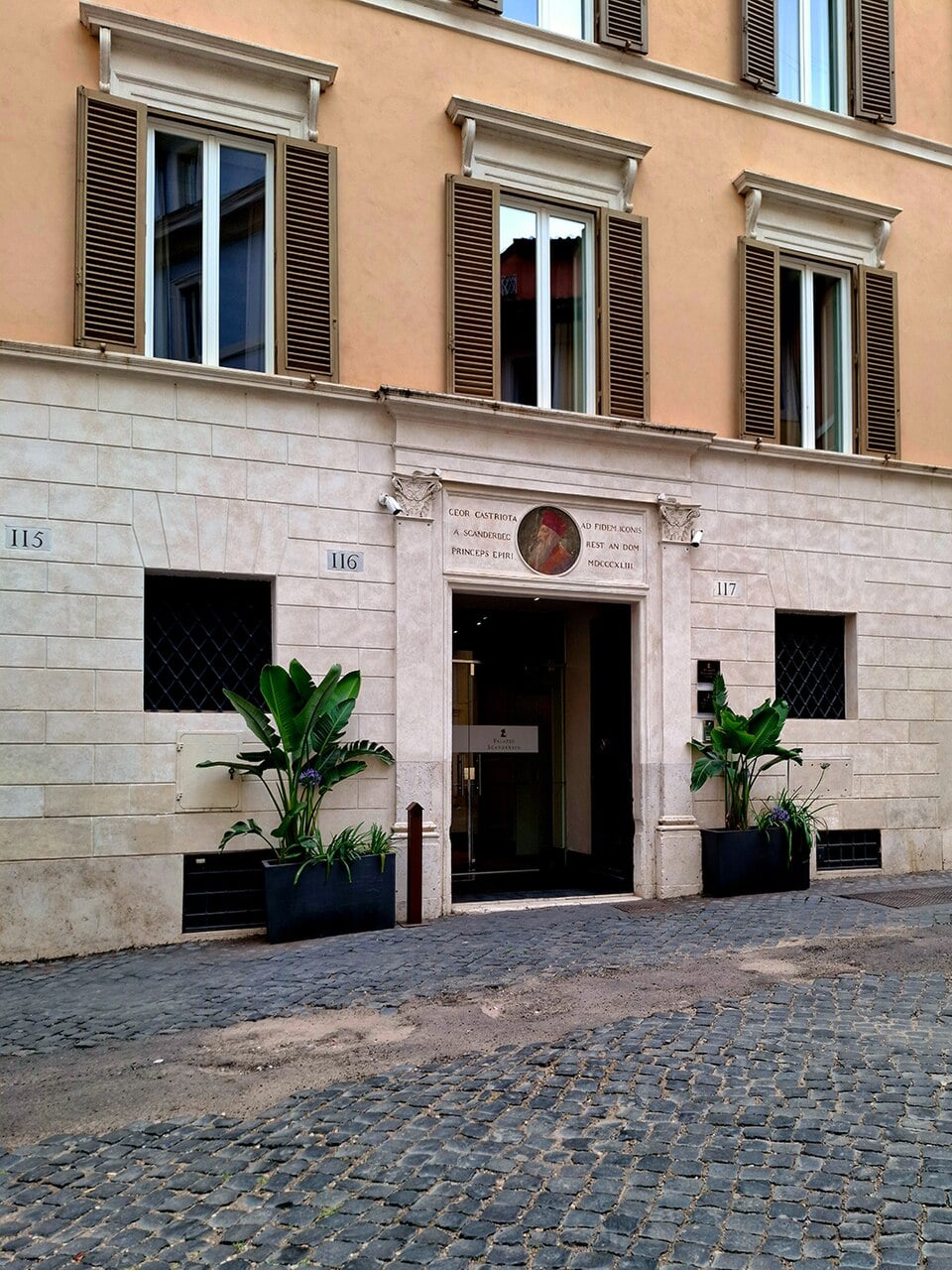
Palazzo Scanderbeg stands at Piazza Scanderbeg 117, in the historic centre. Its own history dates the building to the fifteenth century and identifies 1466 as the year it became Skanderbeg’s residence. The inscription above the entrance records a restoration in 1843. It is now accommodation, so the useful encounter for a visitor is with the square, the building’s exterior and the name preserved above its door. Palazzo Scanderbeg’s history.
The visit belonged to a desperate diplomatic moment. Historian Luan Malltezi’s study in Studia Albanica, drawing on contemporary correspondence, places Skanderbeg’s arrival in Rome on 12 December 1466. He sought help while Ottoman forces threatened his territory. The paper follows his stay in Rome and Naples into early 1467. This gives the Roman address a particular meaning: it recalls an appeal for support across the Adriatic, centuries before the modern migration. Historical study and documentary references.
Piazza Albania, with its history intact
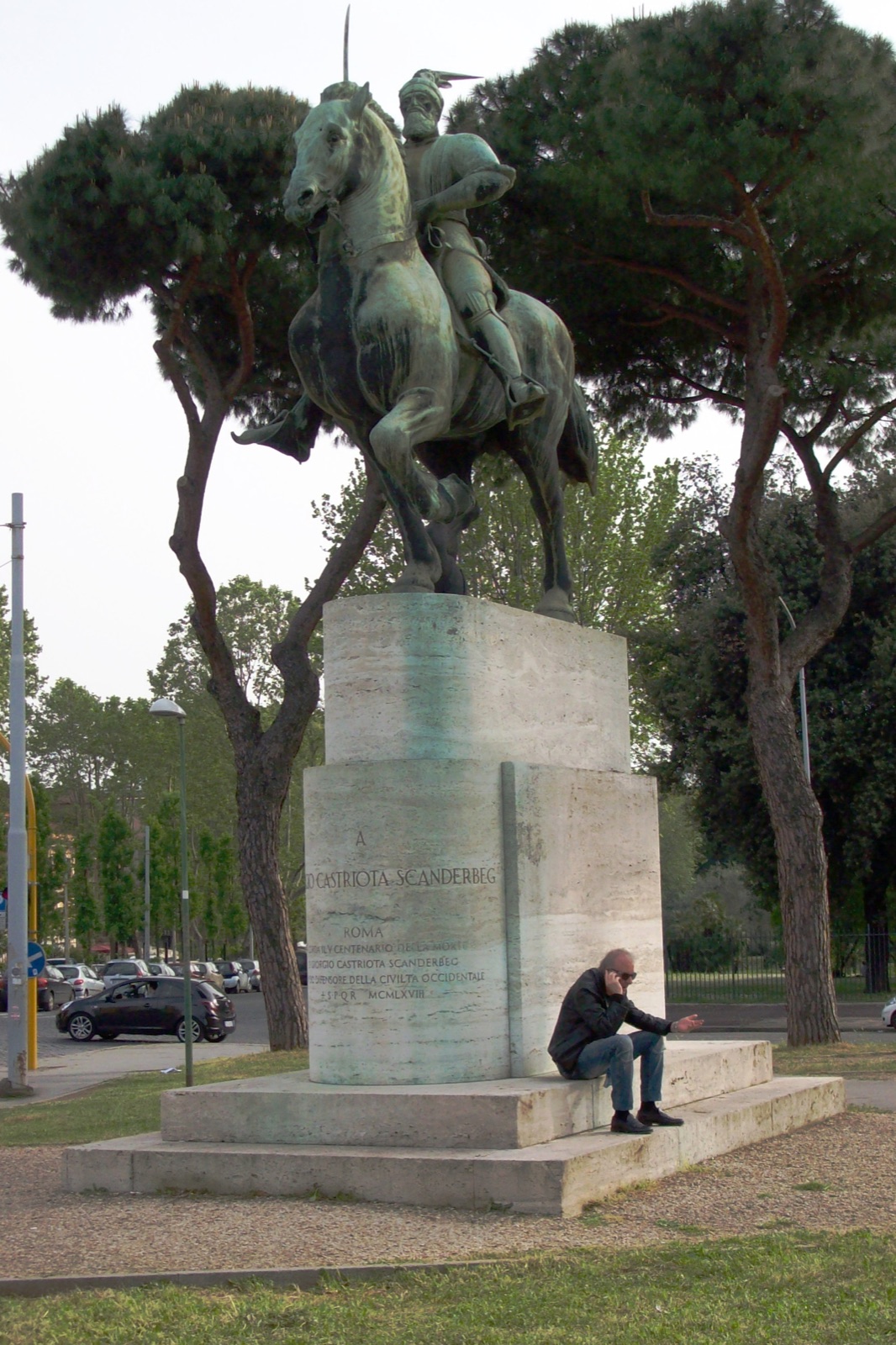
The equestrian monument in Piazza Albania offers a different chapter. Rome’s official tourism service records its inauguration by Benito Mussolini on 27 October 1940. The square had been renamed following Italy’s annexation of Albania in 1939. In 1968, the city added an inscription marking the five-hundredth anniversary of Skanderbeg’s death. The bronze rider is therefore both a recognisable Albanian symbol and a monument with a Fascist colonial origin. Understanding that origin makes the place more legible. Roma Capitale’s account.
These places should be read alongside people’s later histories. At the Albanian embassy on 29 April 2024, Arbëresh author Mario Calivà presented a book about the Albanian arrivals in Italy in the early 1990s. The event brought an author from Italy’s historic Albanian minority into conversation with the migration remembered by more recent arrivals. Lorik Cana was among those present. Rome provides a setting in which these different Albanian experiences meet. Embassy report on the book presentation.
A community across generations
Rome’s Albanian-citizenship population includes children as well as working-age adults and older residents. At the end of 2025, the register counted 1,638 people under eighteen, or 20.5 percent of its 7,972 Albanian citizens. This is one reason language classes and children’s books matter to the city’s community institutions.
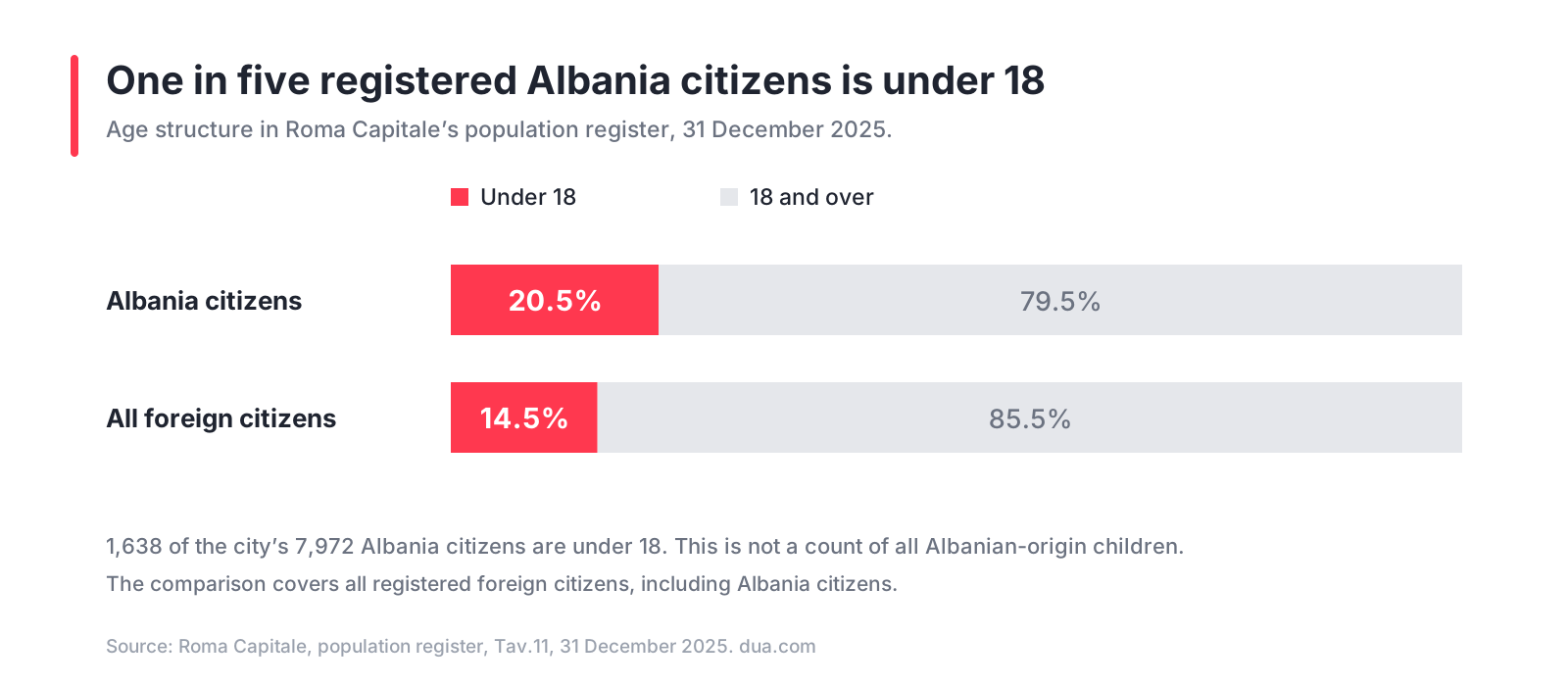
For comparison, under-18s account for 14.5 percent of all registered foreign citizens in Rome. That wider group includes Albanian citizens; the chart compares age shares, not separate populations.
The register also records 4,056 men and 3,916 women, a nearly even split. Neither the age figures nor the sex totals include Albanian-origin Italian citizens as a separate group. A child born in Rome can appear in the Albanian-citizenship count; birthplace and citizenship answer different questions from the first day of life.
Recent growth, without a migration shortcut
The same municipal register counted 7,345 Albanian citizens at the end of 2020, 7,875 in 2023, 7,834 in 2024 and 7,972 in 2025. Across the five-year span, that is an increase of 627, or 8.5 percent. The small fall in 2024 also shows why a single year should not stand in for a generation’s history.
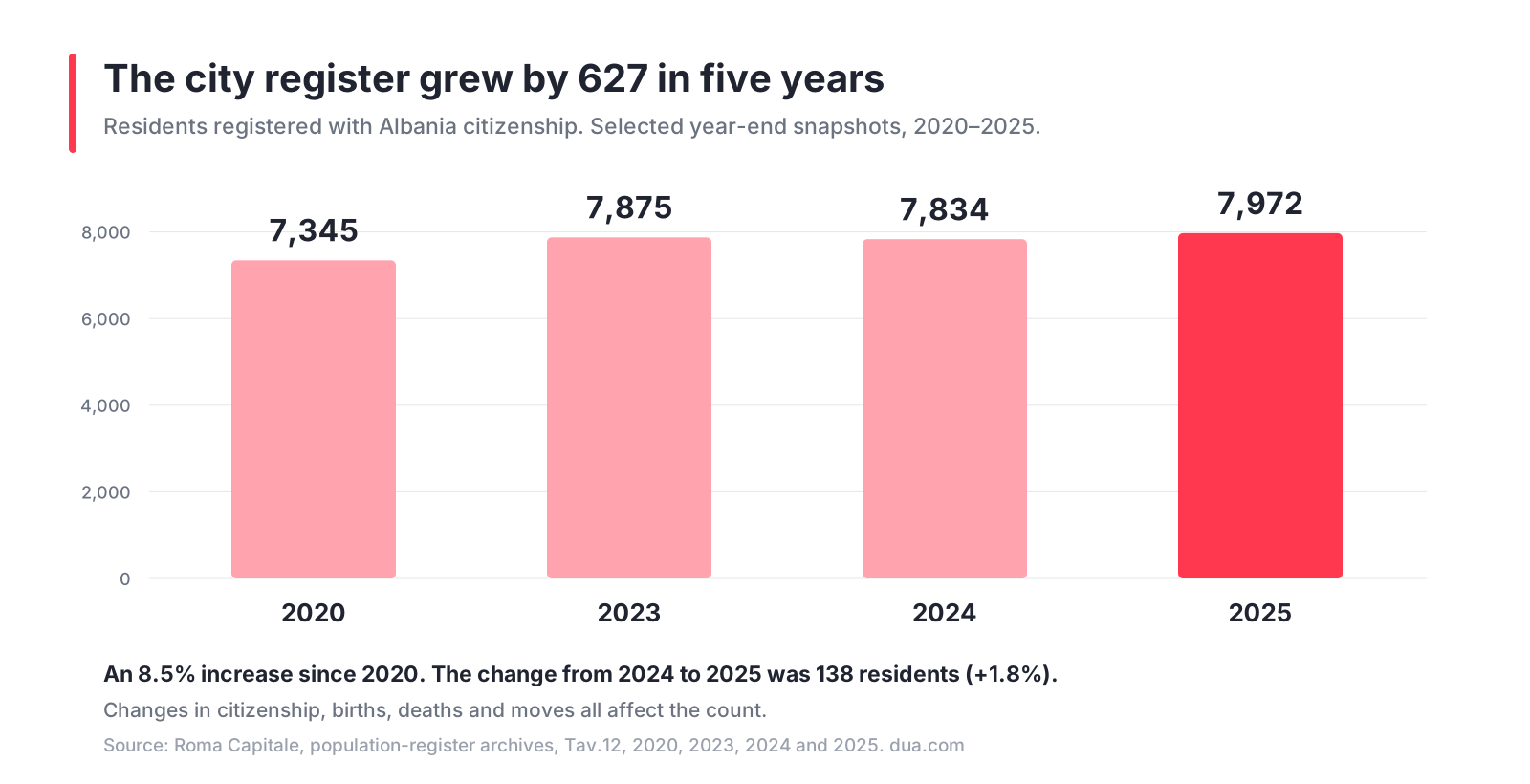
These are snapshots of residents holding a particular citizenship. Arrivals, departures, births, deaths and citizenship changes can all affect the total. The figures cannot isolate how many people newly arrived from Albania, or whether the wider population of Albanian origin grew at the same rate. Nor should district trends be inferred from them: Rome changed some municipio boundaries in 2021 and 2023.
Sources: Roma Capitale’s population register and historical archives, selected year ends 2020–2025. The chart uses only the municipal register and shows selected year-end snapshots.
Keeping Albanian in the family
Besa: a school built through association
Besa’s entry in the Summit Nazionale delle Diaspore mapping dates the association’s foundation to 2002 and its Albanian school in Rome to 2018. The same entry records work on intercultural activity, migration and education. Language teaching sits within that wider effort: an association can give families an organised place to return to, with other children and adults who share the task of keeping Albanian in use. Besa’s association profile.
The current practical reference is Albania’s Centre for Diaspora Publications. Its Italy directory lists Shkolla shqipe “Besa” at Via Quattro Novembre 157, 00187 Roma, with the email [email protected]. Families should contact the school for the current teaching location, age groups and timetable. The Trastevere classroom belongs to the documented early story; an old report should not be treated as a present-day registration notice. Official school directory.
Eliza Çoba, one of the teachers in the opening story, later described what teaching through Besa had meant to her. In a 2023 interview, she recalled working with children born and raised in Italy:
“It was work that enriched me, and I think I gave these children a lot too.”
Eliza Çoba, interviewed by Anna Lattanzi for Albania Letteraria, 24 July 2023; translated from Italian.
For a more recent conversation about the community, listen to Radio Radicale’s interview with Besa president Edmond Godo, broadcast on 2 April 2026.
Books to borrow, a language to study
Rome’s public libraries offer another route into the language. The Biblioteche di Roma Intercultura service explicitly includes Albanian among its collections for adults and children. It also provides dictionaries, grammars and language-learning materials, and organises free Italian courses for migrants. A parent can ask the service which branch holds suitable Albanian books; an adult learning Italian can use the same network for a different need. Biblioteche di Roma Intercultura.
At university level, Sapienza’s course catalogue includes Albanian language, intercultural studies, literature and culture. Its Lingua Albanese I course, coordinated by Brunilda Dashi, lists no prerequisites and aims at A2 through grammar, reading and conversation. These are university courses, with university enrolment and study requirements; they complement the family-school story without serving the same purpose. Sapienza’s Albanian I course.
Faith, association and belonging
San Giovanni della Malva remains a concrete point of reference. The Diocese of Rome lists the Catholic community of Albanian migrants at the church in Trastevere, on Piazza di San Giovanni della Malva. It provides an institutional address for the Catholic part of the community, while the wider Albanian population should never be reduced to one congregation. Diocese of Rome community directory.
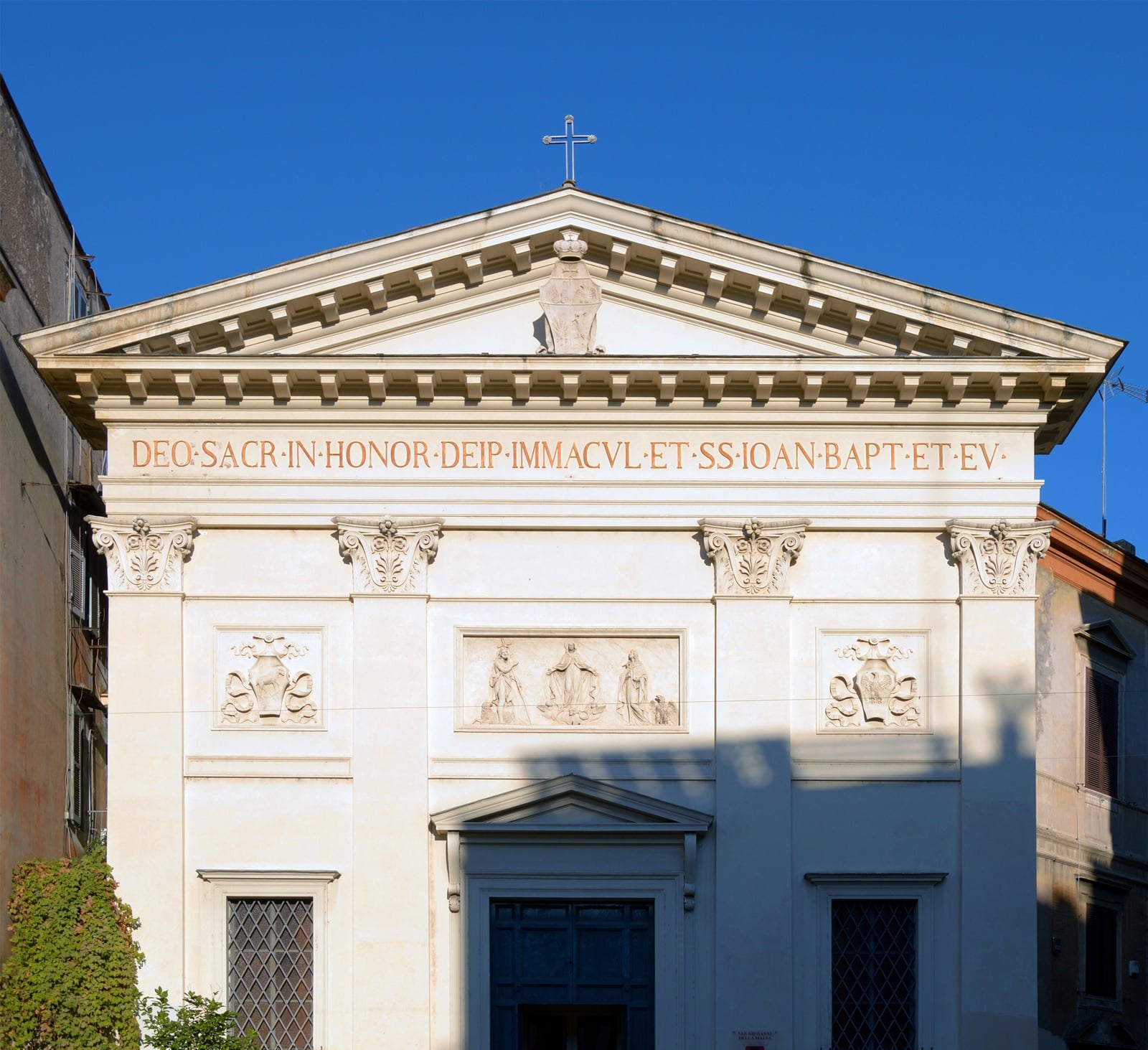
The overlap between faith and language has a documented practical history. Fondazione Migrantes’ report on 2018 describes a funded project through which families and children at San Giovanni della Malva could study Albanian language and culture. It also records Albanians travelling from different Italian regions to the feast of Our Lady of Good Counsel at Genazzano. The first example belongs to Rome itself; the second reaches beyond the city into the surrounding Lazio region. Fondazione Migrantes report, printed page 31.
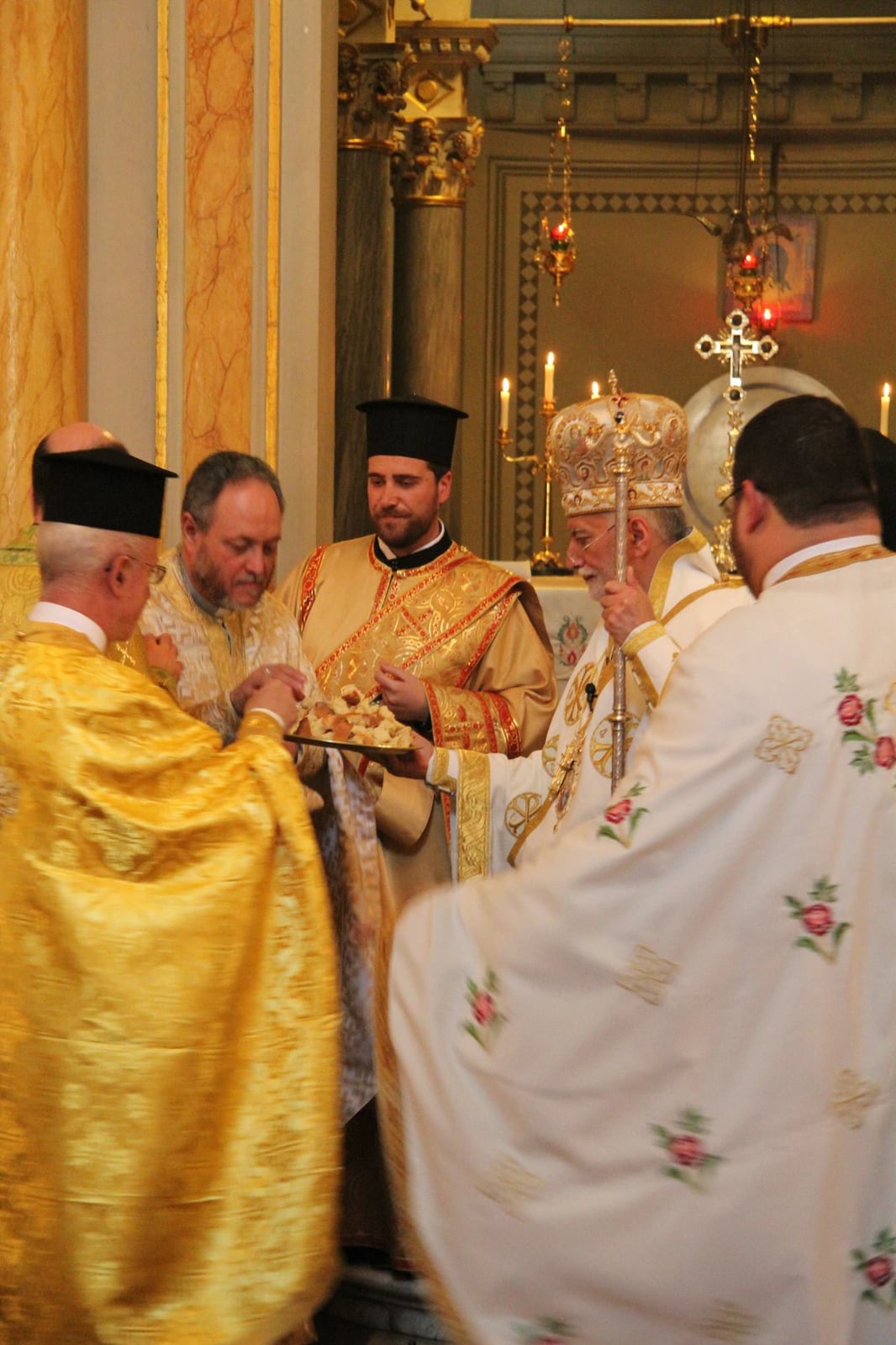
At Sant’Atanasio, an Italo-Albanian Greek-Catholic liturgy brings a different religious tradition into view. The photograph below belongs to that setting, separate from the Albanian migrant community’s church at San Giovanni della Malva.
There is also a secular institutional presence. The Unione Democratica Arbëreshe places its registered seat in Rome and sets out a mission to protect the linguistic and cultural rights of Italy’s Arbëresh minority. Its statute connects that work with civic participation and attention to younger generations. “Arbëresh” and “recent immigrant from Albania” describe different histories; keeping both visible makes the city’s Albanian connections more understandable. UDA’s stated mission.
Albanian lives in Rome’s cultural life
Anilda Ibrahimi: the freedom to choose a voice
Born in Vlorë, novelist Anilda Ibrahimi moved to Rome in 1997. Her Italian-language books draw on Albanian and Balkan settings, including Rosso come una sposa and Il tuo nome è una promessa. In a 2018 interview with Osservatorio Balcani Caucaso Transeuropa, she resisted being treated simply as a voice of the diaspora. That distinction deserves respect: a writer’s origins help explain a journey without determining everything her work is allowed to mean. Read Ibrahimi’s interview.
“No, I do not feel, or believe, that I am a voice of the diaspora.”
Anilda Ibrahimi, interviewed by Nicola Pedrazzi for OBCT, 31 May 2018; translated from Italian.
Kledi Kadiu: from performance to teaching
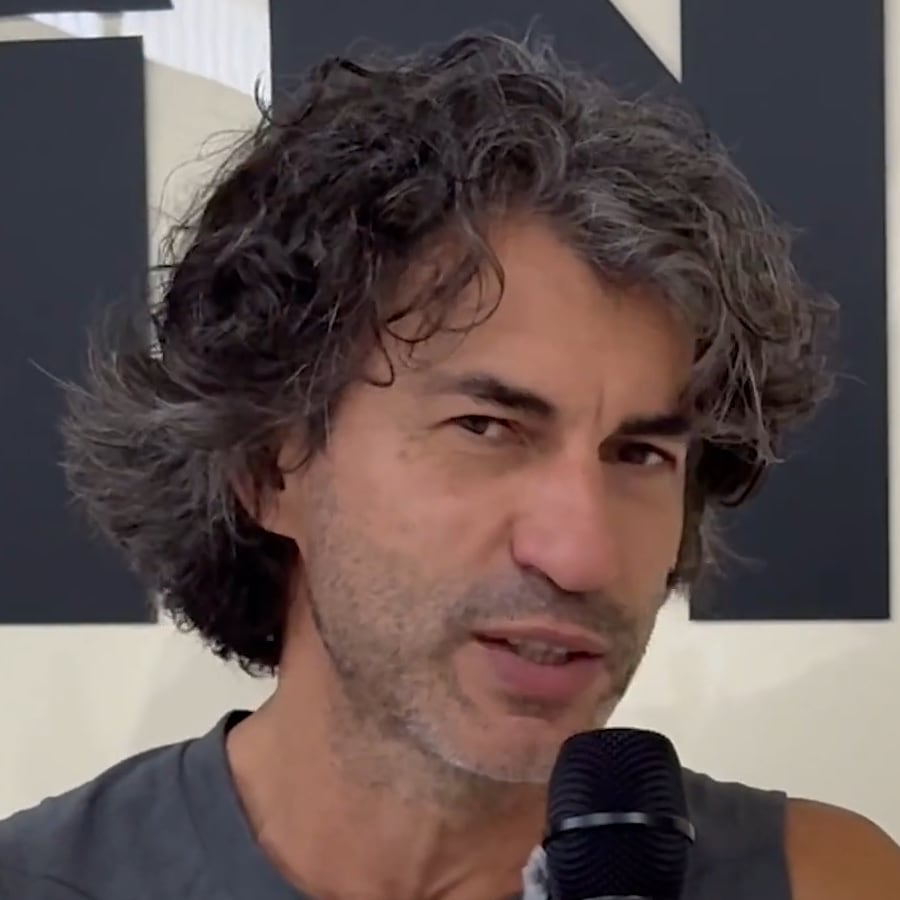
Kledi Kadiu’s connection with Rome includes an institution he created. His management biography records the foundation of the Kledi Dance School in the city in 2004. The Tirana-born dancer became familiar through Italian television, but a school gives that public career another dimension: teaching and the development of younger dancers. His work also included productions with Balletto di Roma, documented in his interviews about performing Contemporary Tango. Official management biography · 2014 performance interview.
Lorik Cana: an Albanian chapter in Lazio’s history
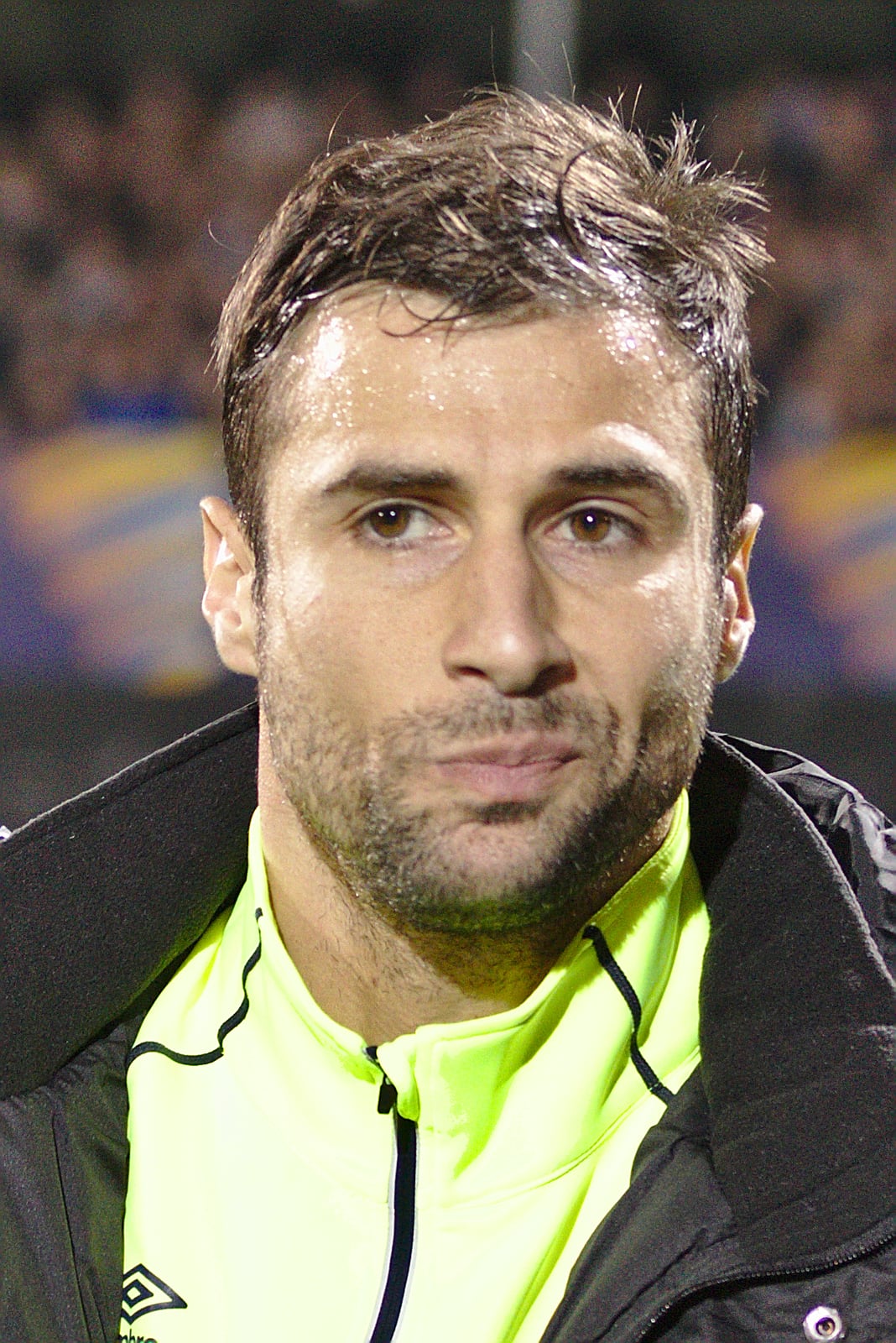
Lorik Cana’s Rome link is written into Lazio’s record. The club’s own retrospective lists 111 appearances, four goals and the 2013 Coppa Italia among his achievements after arriving in 2011. That is a specific contribution to a Roman institution, recognisable to football supporters through matches and a trophy. It does not require the suggestion that all Albanians in Rome follow the same club. Lazio’s career retrospective.
The arts also connect Rome and Albania through working institutions. Sapienza’s joint archaeological mission with Tirana’s Institute of Archaeology conducted its fifth campaign at Çuka e Ajtoit from 8 June to 4 July 2025, bringing together Italian and Albanian researchers and students. The fieldwork took place in Albania; the collaboration is part of Rome’s academic relationship with the country. Sapienza’s 2025 fieldwork report.
Where the community meets the city
Some gatherings bring different generations into the same room. The Albanian embassy’s report on its 2024 national-holiday reception records compatriots and Arbëresh representatives alongside Italian and Albanian institutions. Musicians from the two countries performed the national anthems together. This was a particular diplomatic event, rather than an open weekly meeting, but it shows one way the capital’s older and newer Albanian connections become visible together. Embassy report, published 6 December 2024.
Albania at the Festa dei Popoli
Community celebrations give language and traditions a public setting. Baobab Roma’s archive video records the Albanian contribution to Rome’s Festa dei Popoli on 19 May 2013.
Baobab Roma · Uploaded 21 May 2013 · 8:18 · Watch on YouTube
For a public cultural outing, the ninth Euro Balkan Film Festival is scheduled at Casa del Cinema from 31 October to 7 November 2026. The venue announces screenings, meetings and talks, with free admission subject to available seats. Its scope is Balkan and European cinema, wider than Albania alone. Consult the programme for the films and conversations that interest you. Casa del Cinema’s 2026 announcement.
Professional networks add another layer. Albania’s National Diaspora Agency lists Avvocati Albanesi in Italia with a Rome address, alongside Besa and the cultural association Occhio Blu – Anna Cenerini Bova. A directory entry is a starting point for contact, not a count of businesses or a guarantee of a particular service. It does, however, show why the community is better understood through several institutions than through a single gathering place. National Diaspora Agency organisation directory.
Keeping connections across a large city
The Roman pattern is one of several centres: homes in eastern urban zones, families in surrounding towns, a church in Trastevere, a language school, public libraries and cultural institutions. None of them can represent everybody. Together they make a community visible in ways a citizenship total cannot.
Meeting someone with a shared language or background can still mean crossing a considerable distance. Family introductions, school networks, associations and cultural events offer different ways to build those connections. dua.com adds an online way for Albanians to meet, including people whose daily routines would otherwise never cross. Its place in this story is practical: a shared background does not always come with a shared neighbourhood.
For the wider setting, explore Albanians in Italy, compare the northern city in Albanians in Milan, or browse the Albanian community hub.
The children singing in the Trastevere classroom were doing something the population register cannot record. They were making Albanian part of their lives in Rome. That is the thread connecting the city’s scattered homes and institutions: a place in the Italian capital, and a language and history carried forward within it.
Useful starting points in Rome
Contact details and listings were checked on 10 September 2026. Confirm appointments, teaching venues and event arrangements with the organisation before travelling.
Albanian school: Besa
The official diaspora school directory lists Via Quattro Novembre 157 and [email protected]. Ask about registration, ages and the current term.
Albanian books and Italian courses
Biblioteche di Roma Intercultura can help locate language resources. Contact [email protected] for its activities.
Albanian Catholic community
San Giovanni della Malva in Trastevere, Piazza di San Giovanni della Malva. Use the diocesan listing for the community’s institutional reference.
Albanian embassy
Embassy of the Republic of Albania, Via Asmara 5, 00199 Roma. Email [email protected]; telephone +39 06 86224110. Its site links consular services and publishes official announcements.
Arbëresh cultural participation
Unione Democratica Arbëreshe publishes its mission, news and contact routes for work concerning Italy’s historic Albanian linguistic minority.
Cinema and public events
Casa del Cinema, Largo Marcello Mastroianni 1, is the venue reference for the 2026 Euro Balkan Film Festival. The festival contact is [email protected].
Frequently asked questions about Albanians in Rome
How many Albanians live in Rome?
Roma Capitale’s register counted 7,972 Albanian citizens on 31 December 2025. That is a citizenship count for the municipality, not a total of everyone with Albanian roots. ISTAT counted 16,086 Albanian citizens across metropolitan Rome on 1 January 2025, using a different statistical system and reference date.
Which part of Rome has the most Albanian citizens?
Municipio VI led the municipal register with 1,967 Albanian citizens at the end of 2025, or 24.7 percent of the city’s total. Within it, the urban zones of Torre Angela and Borghesiana recorded 953 and 597. These are statistical areas, not exclusively Albanian neighbourhoods.
Are metropolitan Rome and Rome city the same?
No. Metropolitan Rome includes Roma Capitale and surrounding municipalities. ISTAT counted 7,464 Albanian citizens in the capital and 8,622 in the surrounding municipalities on 1 January 2025. Mentana, Fonte Nuova and Marino had the largest counts outside the capital.
Where can I meet Albanians in Rome?
Besa’s school and association, community activities around San Giovanni della Malva, library programmes and public cultural events provide different starting points. Check current activities with the organiser. For personal connections across the city and its surrounding towns, dua.com also offers an online way to meet Albanians.
Can children learn Albanian in Rome?
Yes. Albania’s official diaspora school directory lists Besa in Rome. Contact the school directly to confirm ages, registration and where the current lessons take place.
Where is Rome’s Albanian Catholic church?
The Diocese of Rome lists the Catholic community of Albanian migrants at San Giovanni della Malva in Trastevere. Check current arrangements before attending.
Why is there a Skanderbeg statue in Rome?
It stands in Piazza Albania and was inaugurated in 1940 after Italy’s annexation of Albania. A later inscription, added in 1968, marked five hundred years since Skanderbeg’s death. Rome’s official history explains both stages.
Where can I borrow Albanian books?
Biblioteche di Roma’s Intercultura service includes Albanian books for adults and children. Ask which library holds the title or age group you need.