The best current estimate is that about 14,000 people of Albanian origin live across Stockholm County. A sensible range is 13,000–16,000. Roughly 5,000 of them live inside Stockholm municipality; the rest are spread across Botkyrka, Järfälla, Huddinge, Haninge, Södertälje and the county's other municipalities.
That is an estimate, not a census result. Sweden records birthplace and parents' birthplaces, but not ethnicity. The register can count people born in Albania, Kosovo, North Macedonia or Yugoslavia; it cannot say which residents inside the last two groups identify as Albanian. This page therefore gives the useful answer first, then shows exactly how the range was built.
Numbers are only the beginning. Albanian Stockholm is visible at youth training at Vårbergs IP, in Teuta's cultural work, in mother-tongue classrooms, at the two embassies, on national days, and in the lives of Stockholm figures such as Arba Kokalari and Besard Šabović.
For more on this topic, read Albanians in Sweden: A Community More Than 60,000 Strong and Albanians in Germany: A Million-Strong Community.
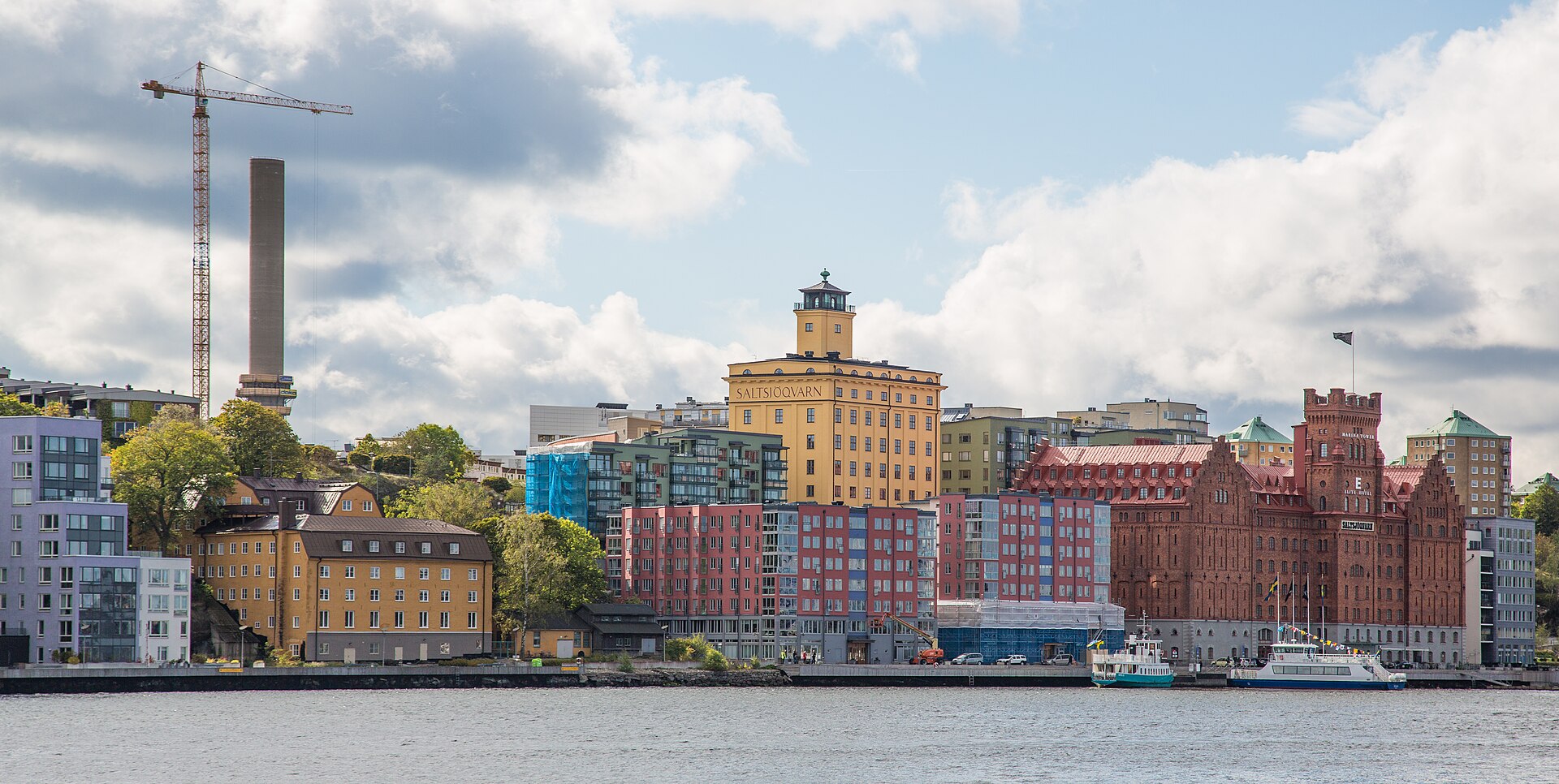
Featured photograph: Kvarnholmen seen from Djurgården, Stockholm. Photo by Tony Webster, licensed CC BY 2.0; resized by dua.com.
So, how many Albanians live in Stockholm?
Our best answer is about 14,000 across Stockholm County and about 5,000 inside Stockholm municipality. The county figure is the better answer to “Greater Stockholm” because the lived community crosses city borders every day: someone can live in Huddinge, train at Vårbergs IP and work in Solna while simply saying they live in Stockholm.
The estimate starts with Statistics Sweden's 2025 birthplace counts. It treats Albania-born residents as Albanian-origin, Kosovo-born residents as overwhelmingly Albanian-origin, and applies North Macedonia's official 24.3% Albanian ethnic share to that birthplace group. For the old Yugoslavia category it uses a deliberately conservative 20–30% Albanian-origin range, informed by the Swedish government's record that about 30,000 people from Yugoslavia—most of them Kosovo Albanians—were allowed to remain during the 1990s.
Finally, the calculation adds a Sweden-born generation using SCB's 2025 national ratios of Sweden-born people with a parent or parents from each origin country. That produces a county estimate of roughly 7,800–8,600 foreign-born people of Albanian origin plus 5,300–6,500 Sweden-born descendants.
See the complete estimate calculation and its limits
| Layer | Stockholm municipality | Stockholm County |
|---|---|---|
| Estimated foreign-born Albanian-origin population | 2,700–3,000 | 7,800–8,600 |
| Estimated Sweden-born descendants | 1,900–2,350 | 5,300–6,500 |
| Rounded working estimate | 4,500–5,500 | 13,000–16,000 |
Important limits: the North Macedonia share may differ among people who migrated to Sweden; the Yugoslavia share is a range, not an observed Stockholm variable; national descendant ratios may not exactly match Stockholm; and children whose parents come from two different Albanian-origin countries may overlap in country-by-parent tables. The estimate is intentionally rounded to absorb that uncertainty.
Primary sources: SCB regional birthplace table, SCB country-of-origin/parent table, North Macedonia 2021 census and the Swedish Parliament record on Kosovo Albanian arrivals.
Where does the Albanian community live?
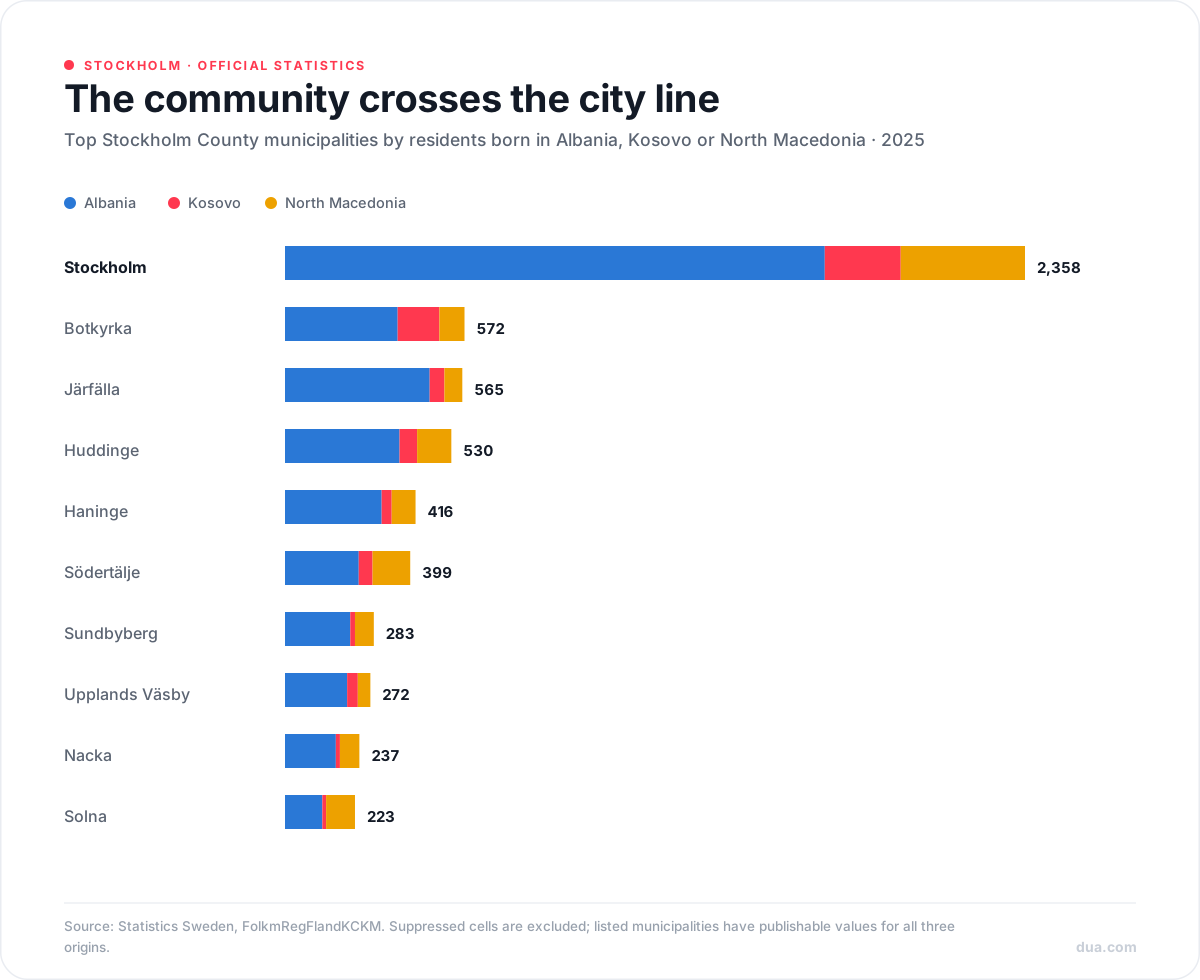
There is no single “Albanian neighbourhood.” Stockholm municipality is the largest official cluster, but most of the county's visible Albania-, Kosovo- and North Macedonia-born population lives outside the city boundary.
That distribution matters socially as well as statistically. Albanian Stockholm is one metropolitan community, but it does not occupy one neighbourhood: maintaining connections often means crossing municipal boundaries.
Swipe horizontally to explore the full chart.
Vårberg & Sätra
Dardania Stockholm FF trains at Vårbergs IP. FC Iliria was founded as an Albanian gathering point and played at Sätra BP. Football has made this the clearest public community corridor.
Botkyrka, Huddinge & Haninge
These municipalities hold three of the five largest visible clusters outside Stockholm city and connect naturally to the clubs and schools of south Stockholm.
Järfälla
Järfälla's modern three-country proxy is almost as large as Botkyrka's. It is an important counterweight to the usual assumption that all Albanian community life sits south of the centre.
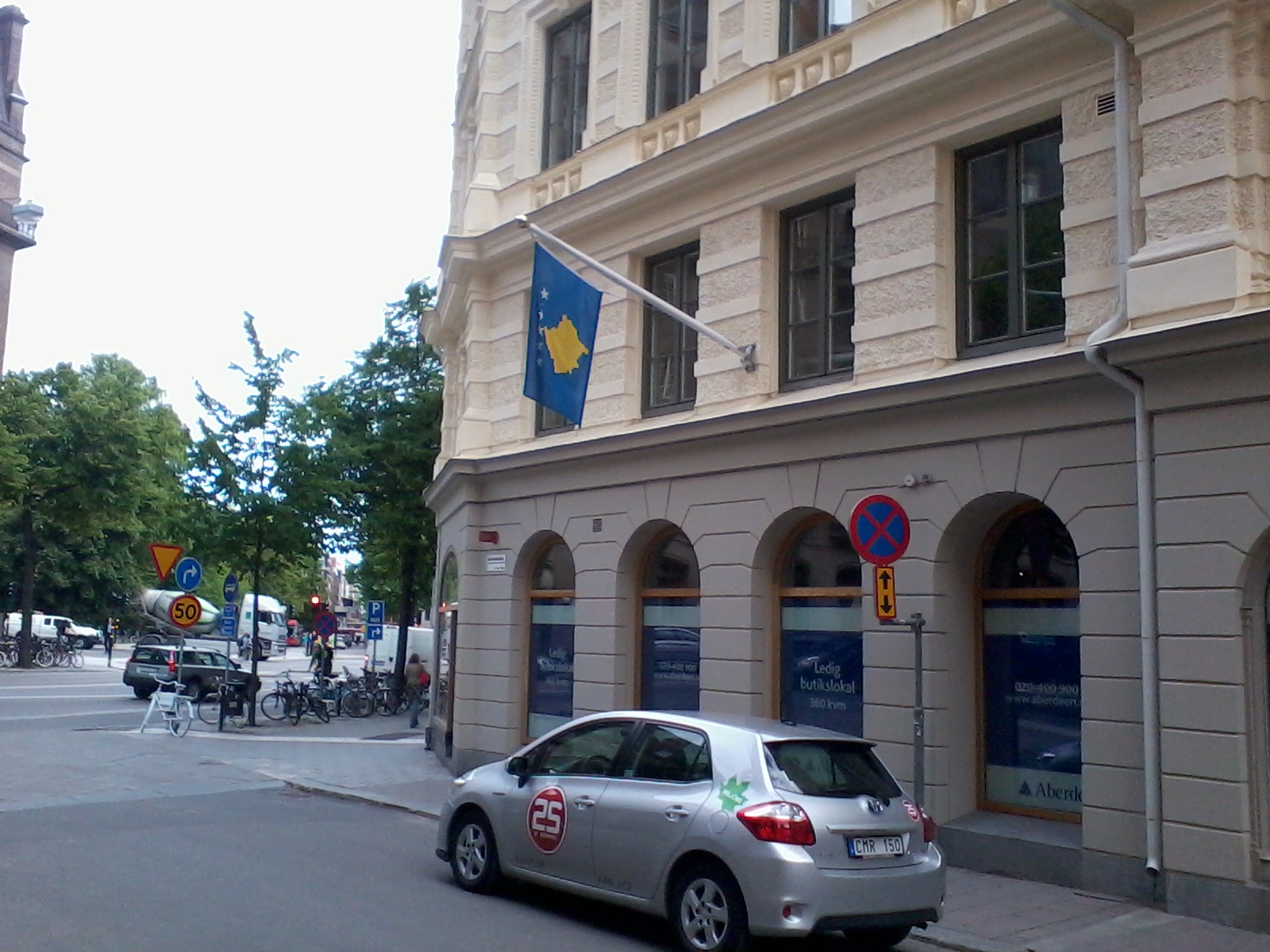
Two embassies
Kosovo's embassy is on Birger Jarlsgatan; Albania's is on Lidingö. Consular visits, teacher meetings and national-day activity pull the regional community back toward the centre.
Stockholm's published district tables do not separate Albania, Kosovo and North Macedonia at neighbourhood level. Kista, Rinkeby and other Järva districts certainly include Albanian families, but no honest public source can give an Albanian total for them.
Clubs, associations and places that make the community real
The most useful way to understand Albanian Stockholm is not as a demographic block but as a set of doors a person can actually walk through.
These are the physical doors into Albanian Stockholm. They give children a team, families a language classroom and the wider community places to gather. But they do not represent the whole social network—particularly for people whose Albanian circle extends beyond one club, municipality or even country.
Dardania Stockholm FF
The clearest public-facing hub we found. Its official site lists men's A and B teams, boys' teams from P13 to P18, a women's A team and veterans. The club also runs open football for children aged 8–14.
Albanska föreningen Teuta
A Stockholm member of Albanska Riksförbundet Iliria. Albania's embassy documented Teuta's board planning joint culture-promotion projects in May 2024.
FC Iliria
Founded by Stockholmers of Albanian origin in 2014. Stockholm's football association recorded more than 300 spectators per game in its first Division 7 season and nearly 400 at the decisive promotion match.
Albanian mother-tongue classes
Families apply through the child's school. The Albanian embassy documented Stockholm-region teachers receiving Level I and II diaspora textbooks for the 2025/26 school year.
Where and when Albanian Stockholm gathers
17 February
Kosovo Independence Day
The national day anchors embassy and community activity. Exact public celebrations vary each year.
Spring–autumn
Football season
Dardania's fixtures and open training create the most regular public rhythm in Albanian Stockholm.
9 May
Europe Day
At Kungsträdgården in 2026, Albania had a national tent and live performances by Këngë Labë në Stockholm and Albanian Folkgroup Tradita.
August–September
School-year start
Mother-tongue groups restart and teachers collect diaspora textbooks. Ask the child's school for current provision.
28 November
Albanian Flag Day
Albanian Independence Day is a natural focus for embassy, association and family celebrations.
Year-round
Embassy & association events
Follow the Albanian and Kosovo embassies, Teuta and Dardania for announcements that do not reach mainstream listings.
Watch a community voice
RTSH's Albanian-language interview about the challenges and successes of organising Albanian life in Sweden adds something the population tables cannot: a voice from inside the community.
People who put Albanian Stockholm on the map
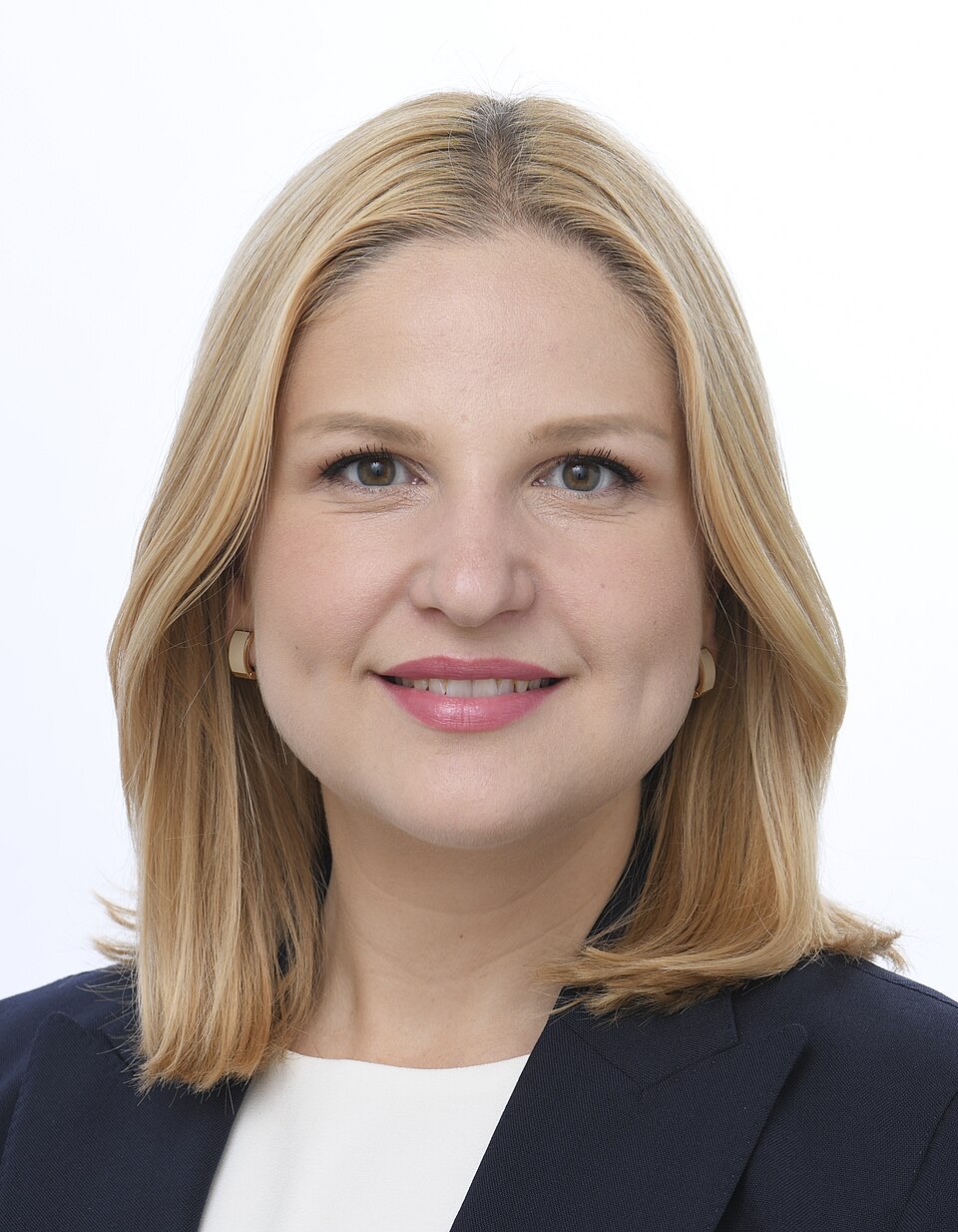
Arba Kokalari
Born in Tirana in 1986 and raised in Stockholm, Kokalari studied at Stockholm University, worked in Stockholm municipal politics and was elected to the European Parliament for Sweden in 2019 and 2024.
Her life reflects the city's newer Albanian layer: Albania-born, Stockholm-educated and active in Swedish and European public life.
Photo: © European Union 2024 – Source: EP, via Wikimedia Commons.
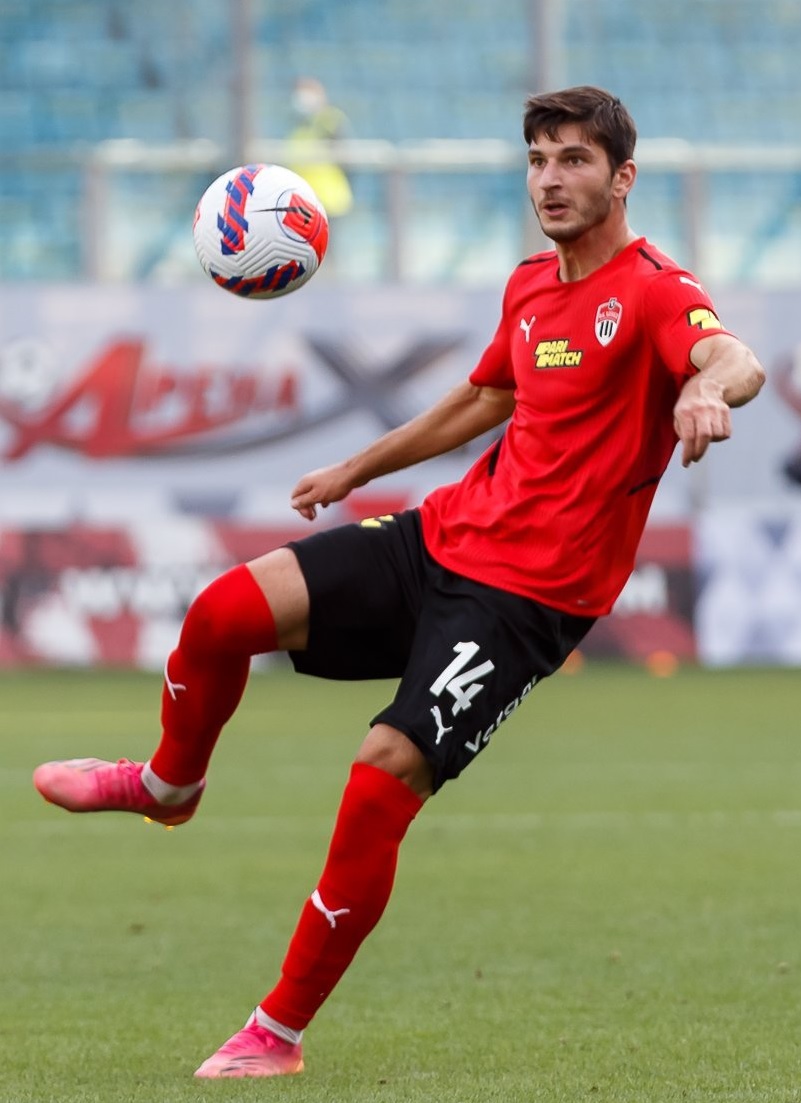
Besard Šabović
Born and raised in Stockholm in 1998, Šabović began at Brommapojkarna and became a Djurgården first-team midfielder. He scored on his first senior start and completed 107 competitive appearances for the club.
His Albanian family roots reach Plav in Montenegro and Medveđa in Serbia—a reminder that Albanian Stockholm cannot be counted from one passport or one birthplace.
Photo: Anna Nessi / Soccer.ru, CC BY-SA 3.0.
How today's Albanian Stockholm took shape
- 1966 — a labour agreement signed in Stockholm Sweden and Yugoslavia formalised worker recruitment, but many early Albanian-speaking workers settled around factories in western and southern Sweden rather than the capital.
- 1985–1991 — refugee dispersal Sweden's “Whole of Sweden” policy placed refugees around the country, helping explain why the 1990s Kosovo Albanian generation is not concentrated only in Stockholm.
- 1990s — the Kosovo generation About 30,000 people from Yugoslavia, most of them Kosovo Albanians, were allowed to remain in Sweden. Many still appear under “Yugoslavia” in today's birthplace table.
- 2015–2025 — the Albania-born surge The Albania-born population rose from 324 to 1,720 inside Stockholm municipality and from 759 to 5,060 across the county.
- 2026 — a more connected capital Arlanda gained direct Tirana service, Dardania expanded its public activity, and the city's newer Albanian layer became harder to miss.
Swipe horizontally to explore the full chart.
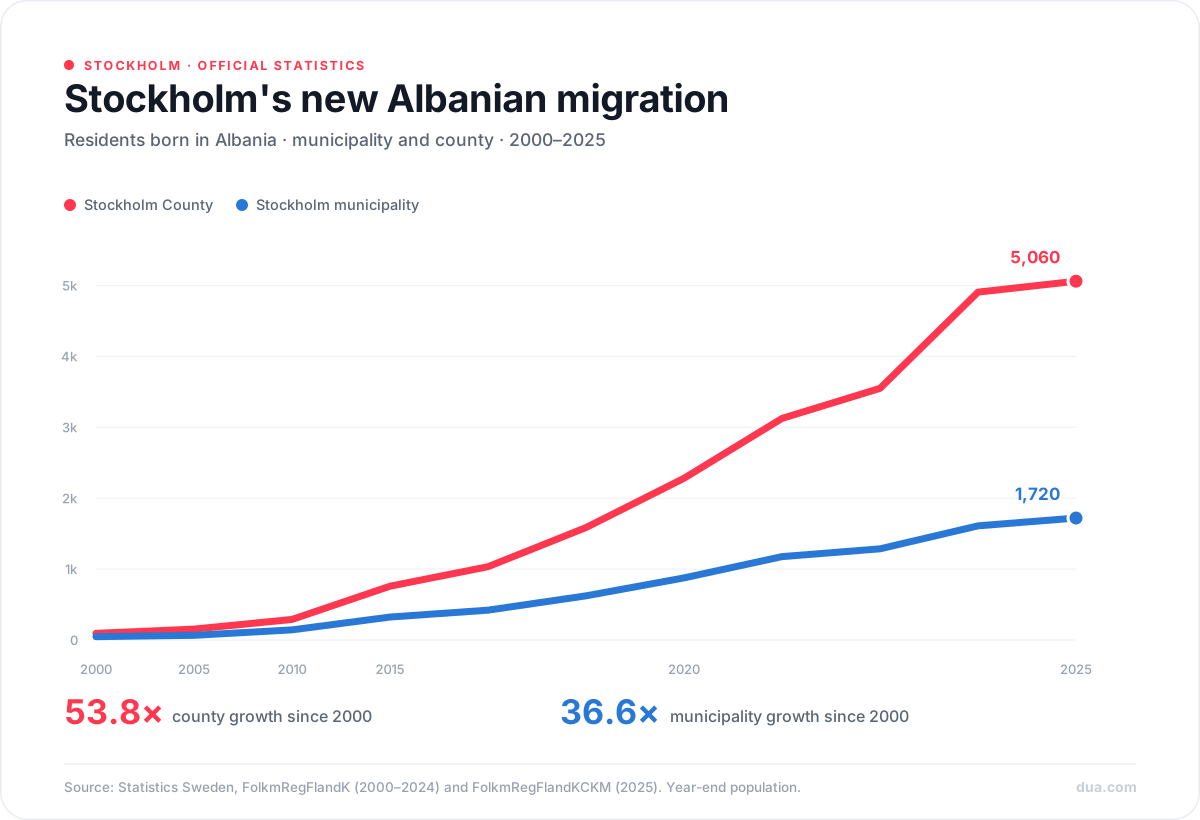
The result is an Albanian Stockholm that is both more established and more connected than before: older Kosovo-era families, Sweden-born generations and newer arrivals from Albania now share the same metropolitan community, while maintaining ties across Sweden and back to the Balkans.
How Stockholm's Albanian community uses dua.com
dua.com has 887 registered members in Stockholm. Members recorded an average of 101 likes per day, and 90% of matches continued into a conversation in the 2026 internal review.
| Metric | Stockholm |
|---|---|
| Registered members | 887 |
| Average likes per day | 101 |
| Matches continuing into conversation | 90% |
| Looking for a serious relationship | 66% |
| Want children | 70% |
| Matches with members in AL, KS and MK* | 180 |
| Peak app-opening hour | 23:00–23:59 |
| Top Fly destinations | Malmö, Prishtina, Halmstad |
The geography is as interesting as the activity. Stockholm members are not looking only within the capital: Malmö and Halmstad appear alongside Prishtina among their most-selected destinations. That reflects the community described throughout this page—rooted in Stockholm, connected across Sweden, and still linked to the Balkans.
dua.com does not replace the football club, language classroom, association or family network. It extends that network beyond the places people already know.
Method note: these are first-party dua.com platform figures, not population statistics. Relationship and family-plan shares use members who answered the relevant question, and the values are not extrapolated to the wider Albanian population. *AL = Albania, KS = Kosovo, MK = North Macedonia.
How to find the community
Play or watch football
Dardania Stockholm FF publishes current teams, training, fixtures, membership and contacts.
Find cultural activity
Follow Albania's embassy, Kosovo's embassy and Teuta for announcements.
Arrange Albanian classes
Ask your child's school about current mother-tongue eligibility and provision; groups are organised by the municipality.
Meet people beyond one club
dua.com had 887 Stockholm-based members in its 2026 review. Explore the community →
Frequently asked questions
How many Albanians live in Stockholm?
About 14,000 across Stockholm County, with a reasonable estimate range of 13,000–16,000. Roughly 5,000 live inside Stockholm municipality. Sweden does not record ethnicity, so these are transparent estimates based on birthplace, parent-origin ratios and conservative assumptions—not official ethnic counts.
Where do most Albanians live in Greater Stockholm?
Stockholm municipality is the largest official cluster. Outside it, the largest visible Albania/Kosovo/North Macedonia birthplace totals are in Botkyrka, Järfälla, Huddinge, Haninge and Södertälje. There is no official neighbourhood-level Albanian count for Kista, Rinkeby or other districts.
What Albanian clubs and associations are active in Stockholm?
Dardania Stockholm FF is the clearest active public hub in 2026, with men's, women's, youth and veteran teams. Teuta is the named cultural association in Stockholm, while FC Iliria is an important documented part of the city's Albanian football history.
Which Albanian events happen in Stockholm?
The public calendar is strongest around Kosovo Independence Day on 17 February, Europe Day in May, the spring–autumn football season, the school-year start and Albanian Flag Day on 28 November. Embassy and club pages carry the latest specific dates.
Which well-known Albanians are connected to Stockholm?
Arba Kokalari was born in Tirana, raised and educated in Stockholm and represents Sweden in the European Parliament. Footballer Besard Šabović was born and raised in Stockholm, came through Brommapojkarna and made 107 competitive appearances for Djurgården.
How do Albanians in Stockholm meet one another?
Through football, language classes, family networks, Teuta, embassy events, national-day gatherings and online. dua.com has 887 registered Stockholm members, and 90% of matches in the 2026 review continued into conversation. Because the community is spread across 26 municipalities, county-wide and digital connections matter as much as any one neighbourhood.