The canton of Zurich has the largest Albanian-speaking population in Switzerland: 48'457 people name Albanian as a main language, more than in any other canton. But the Albanian Zurich is not the city centre. In Dietikon, 7.3 percent of residents hold a Kosovan, North Macedonian or Albanian passport — nine times the share in the city of Zurich. Here are the figures by district and municipality, the history, and the community today.
How many Albanians live in Zurich?
It depends which Zurich you mean, and the gap between the answers is the most misunderstood thing about this community.
In the canton of Zurich, 48'457 people aged 15 and over gave Albanian as a main language in the Federal Statistical Office's 2024 structural survey — 3.6 percent of that age group, and the largest Albanian-speaking population of any Swiss canton. Counted by passport instead, the same canton held 32'196 nationals of Kosovo, North Macedonia and Albania at the end of 2024, just under two percent of its 1.62 million residents.
For more on this topic, read Albanian Inventors You Should Know About and Visa 2024 – Where do the Kosovars want to go after liberalization?.
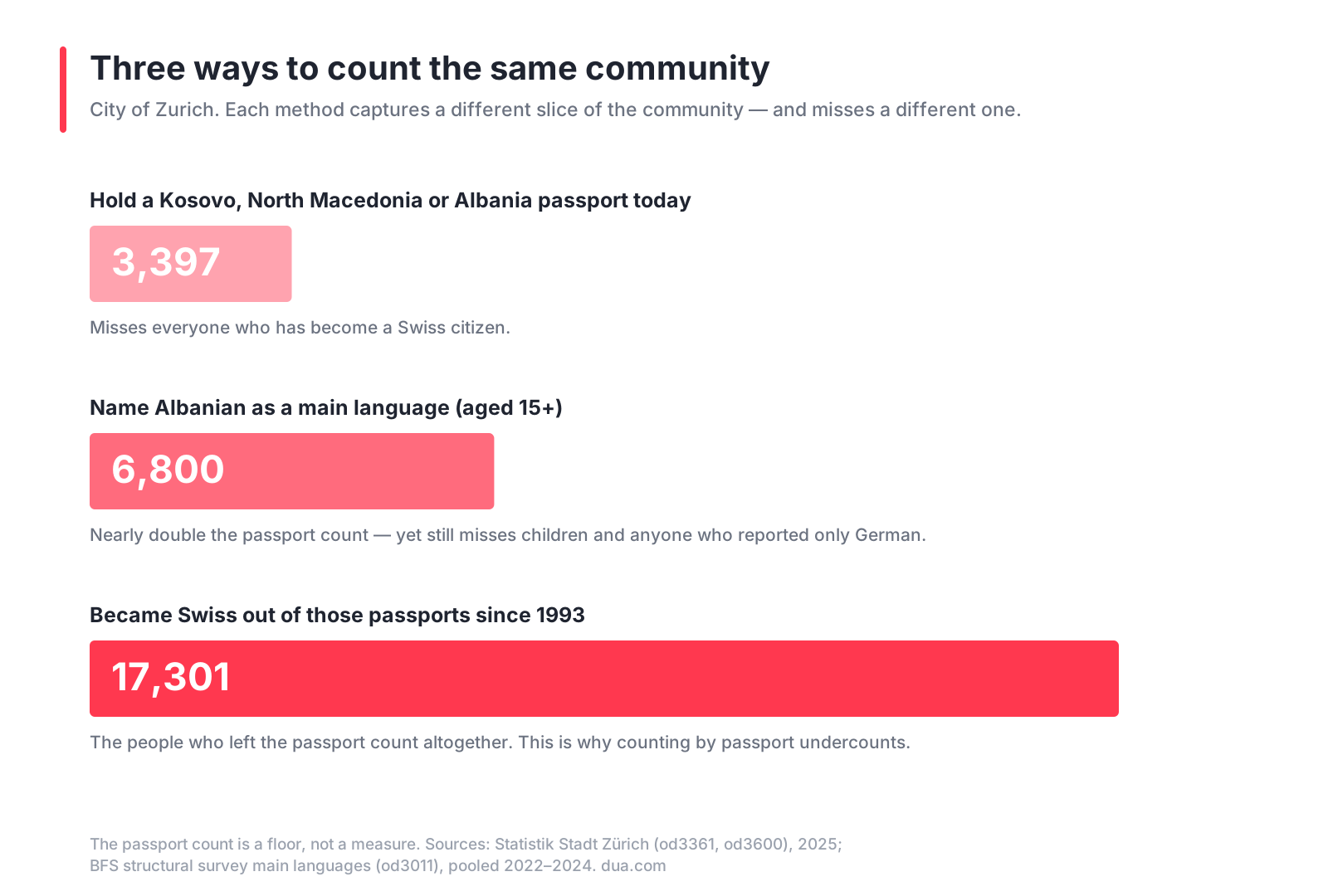
In the city of Zurich the numbers are far smaller, and this is where most people go wrong. At the start of 2025 the city's own population register counted 1'991 Kosovan, 1'236 North Macedonian and 170 Albanian nationals — 3'397 people in a city of 452'421, or 0.75 percent. Yet 6'800 city residents aged 15 and over name Albanian as a main language. The language count is double the passport count in the same city.
| Passport holders (Kosovo, N. Macedonia, Albania) | Name Albanian as a main language (15+) | |
|---|---|---|
| Canton of Zurich | 32'196 (2.0%) | 48'457 (3.6%) |
| City of Zurich | 3'397 (0.75%) | 6'800 (1.9%) |
Sources: BFS STATPOP (31.12.2024); BFS Structural Survey, table T 01.08.01.02 (2024); Statistik Stadt Zürich. Language figures come from a sample survey of people aged 15 and over living in private households, who may name more than main language; children are not counted at all.
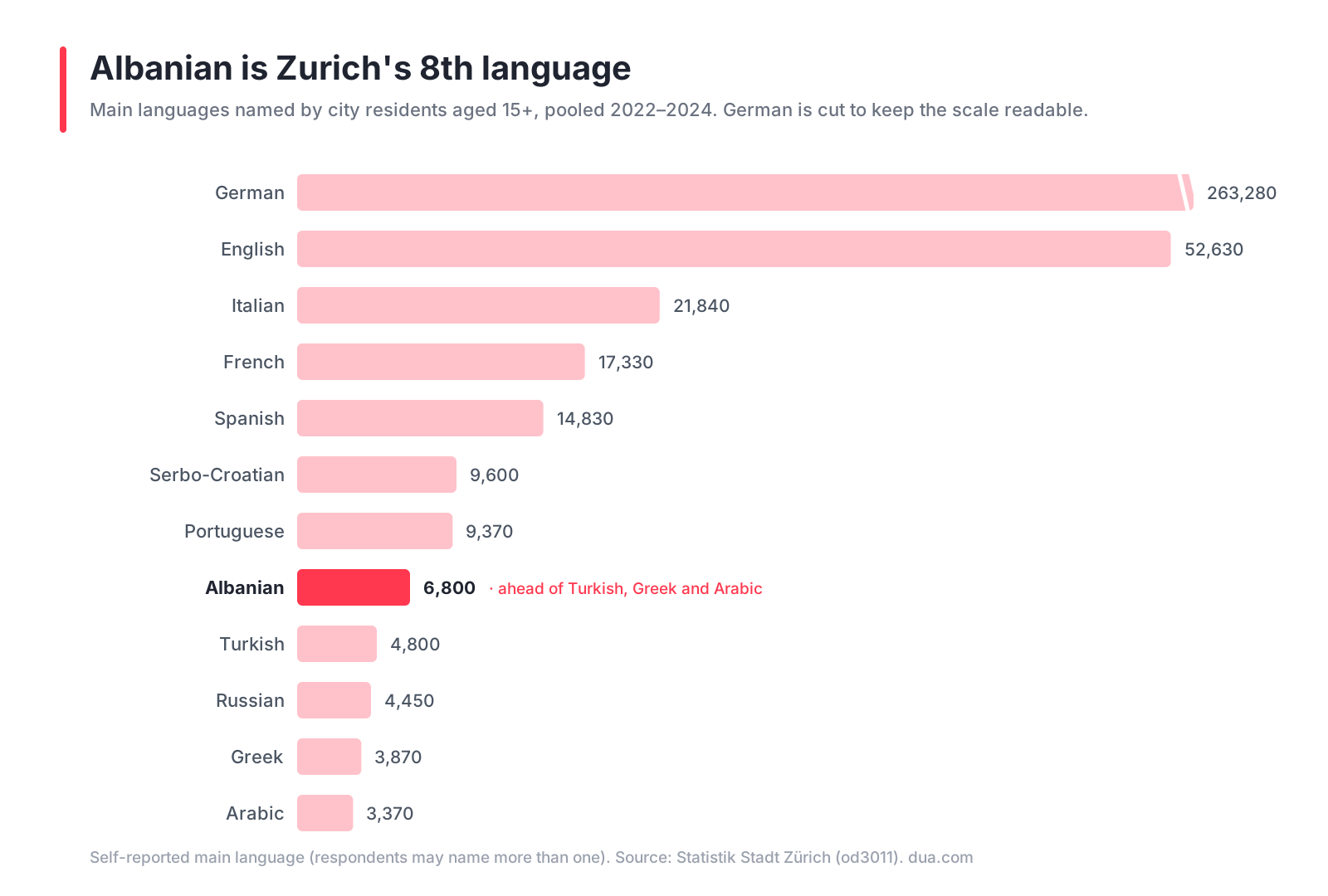
That makes Albanian the eighth most common main language in the city of Zurich — ahead of Turkish, Russian, Greek and Arabic, behind German, English, Italian, French, Spanish, Serbo-Croatian and Portuguese.
Why there is no exact Albanian figure
Switzerland records nationality, not ethnicity, and for Albanians in Zurich that gap has become enormous. Anyone who takes Swiss citizenship disappears from the foreign-national statistics while their Albanian roots stay exactly where they were.
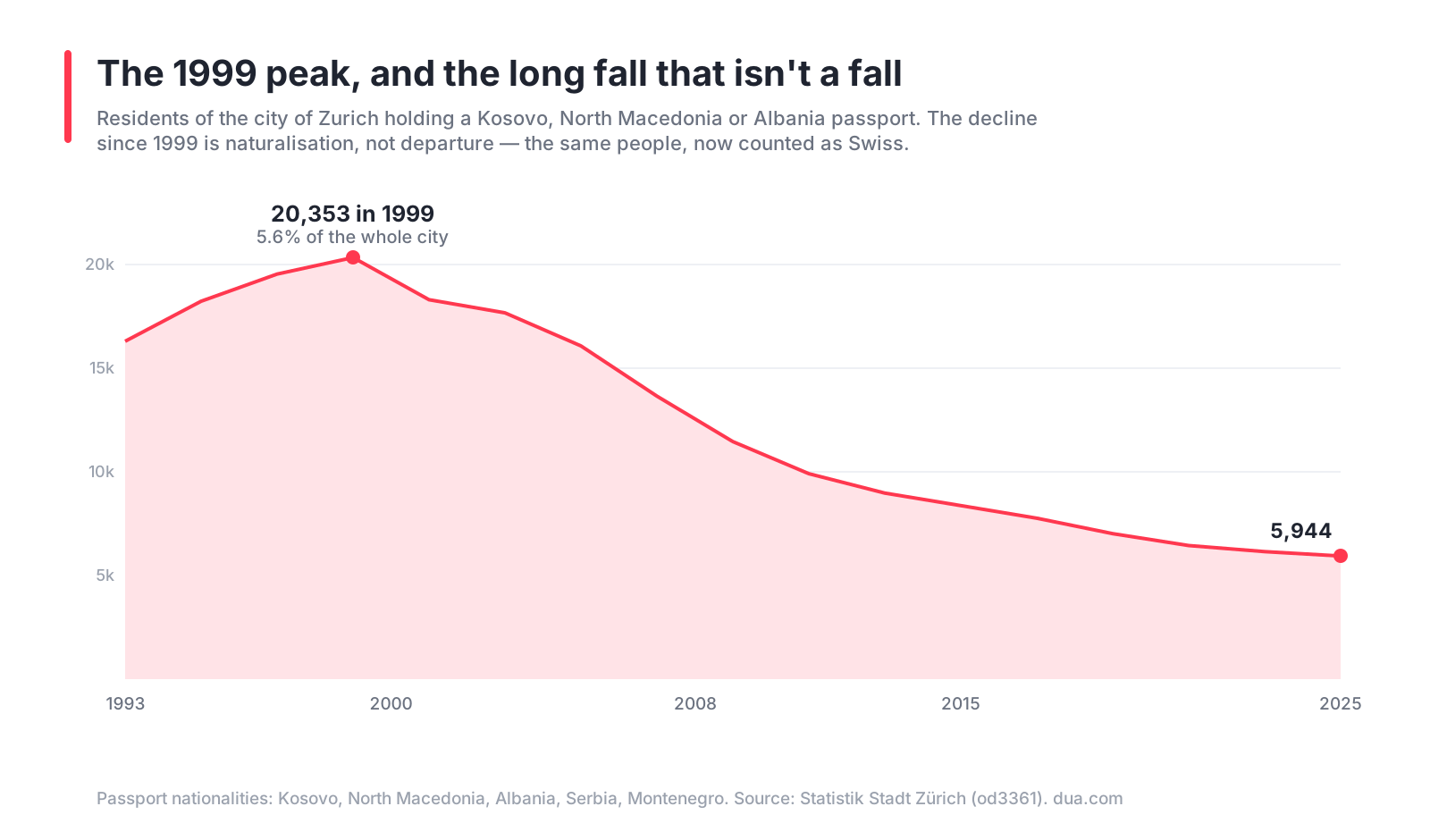
The city's own naturalisation register shows the scale of it. Between 1993 and 2025, 17'301 residents of the city of Zurich became Swiss out of the passports of Kosovo, Serbia and Montenegro, North Macedonia and Albania — 17.6 percent of all 98'444 naturalisations in the city over those 33 years. In 2006 alone, 1'907 of the city's 5'154 new Swiss citizens came from those countries: 37 percent in a single year. Since 2000, the city has naturalised more Kosovan, North Macedonian and Albanian nationals than the number who still hold those passports today.
Two smaller effects push the same way. Ethnic Albanians from the Presheva Valley travel on Serbian passports; Zurich has 2'441 Serbian and 106 Montenegrin nationals, and some part of them is Albanian. And of 4'535 babies born in the city in 2025, just 24 held of the three passports — because the children of naturalised parents are born Swiss.
So every passport number on this page is a floor, not a measure. The naive reading of the falling figures — that Zurich's Albanian community is shrinking — is wrong. It is becoming Swiss.
Where in Zurich do Albanians live?
Ranked by share of population, the Albanian centre of gravity in the canton sits in a belt of towns west and north of the city: the Limmattal and the Furttal/Glattal, where post-war industry, logistics and affordable flats drew the first generation and their families stayed. The canton's own statistical office found the same pattern in prose: Albanian is spoken by around four percent of the canton's population but five to seven percent in the Limmattal, Furttal and Glattal, and below average in the city of Zurich, on the Pfannenstiel and the Zimmerberg.
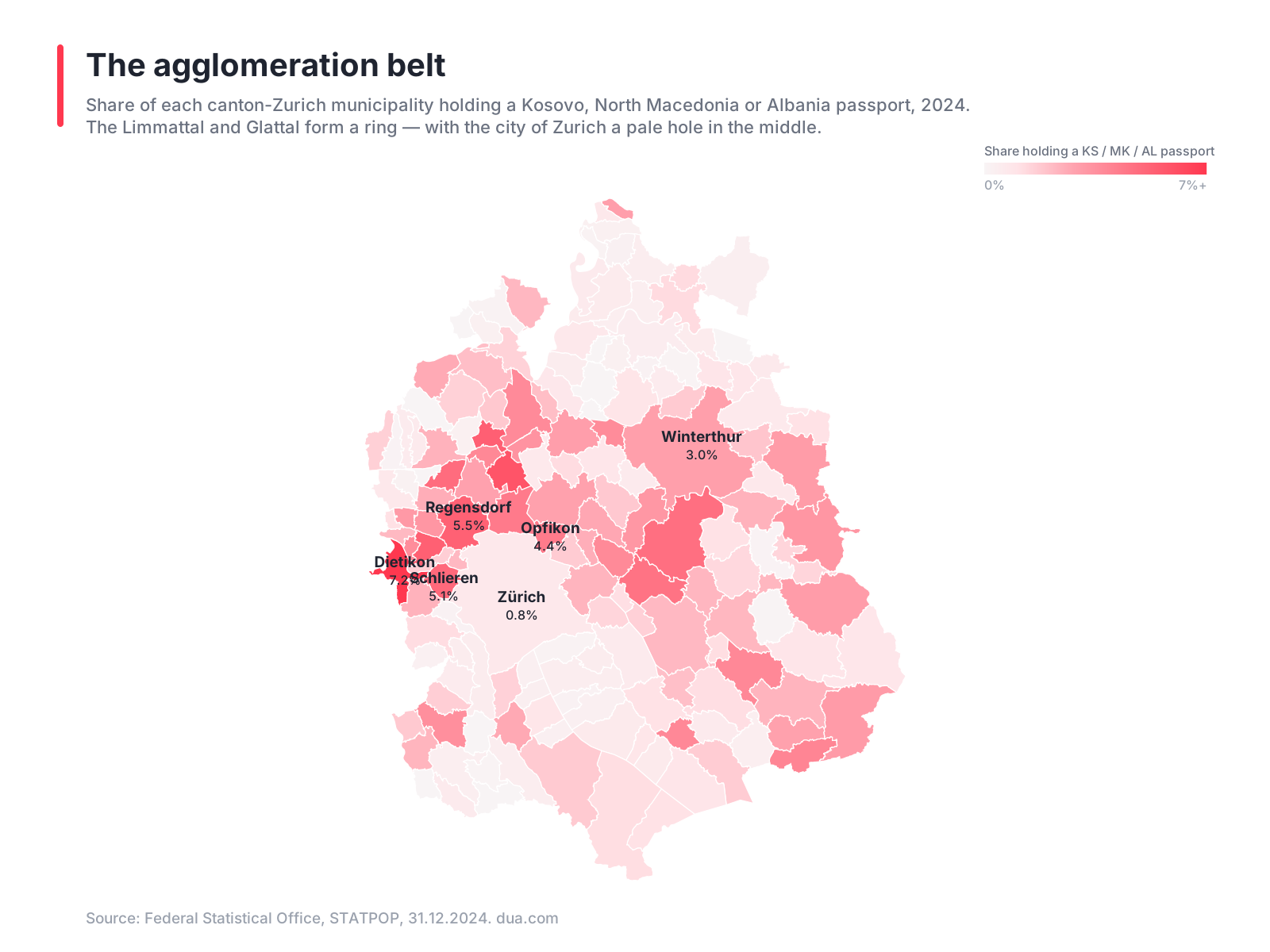
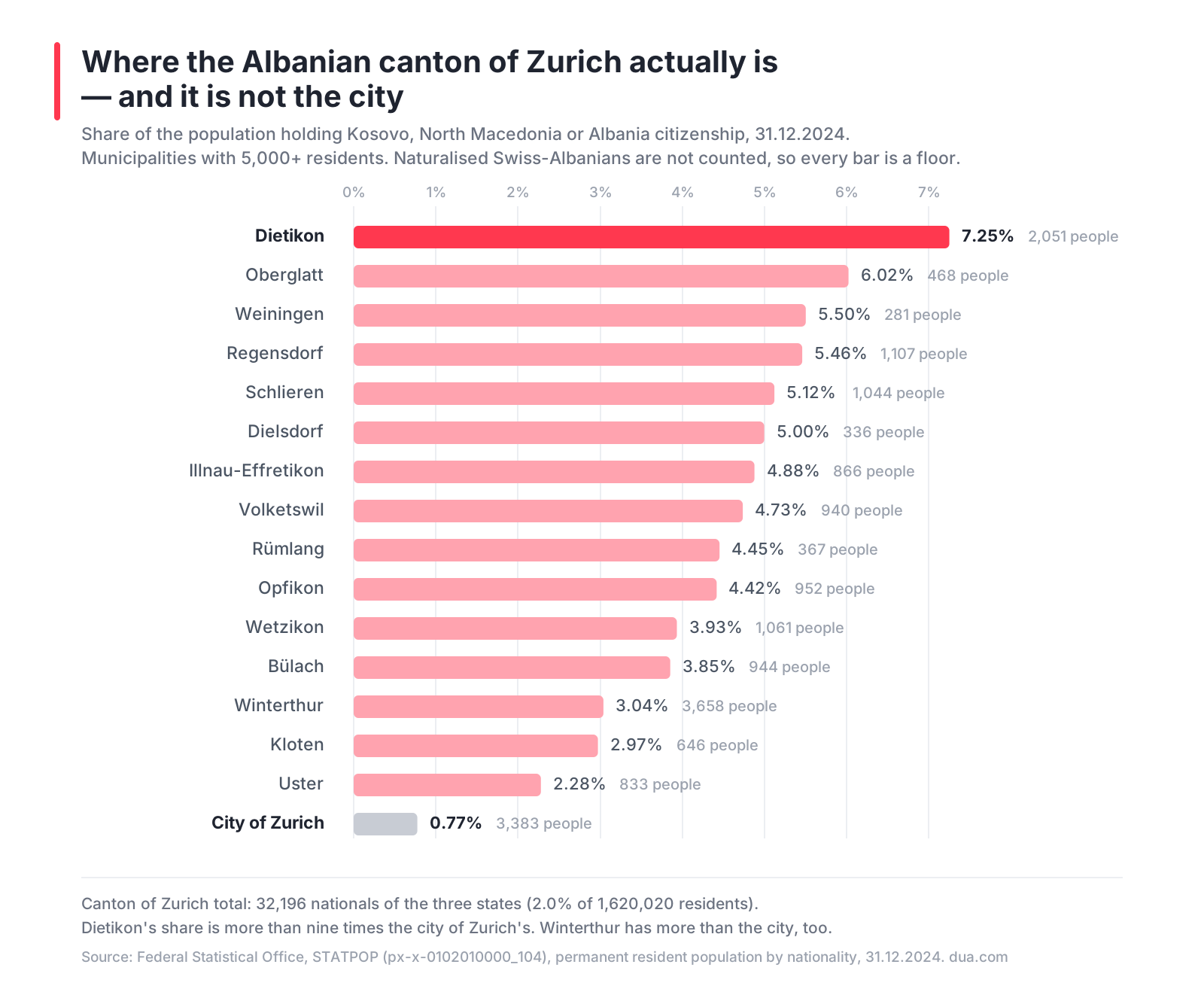
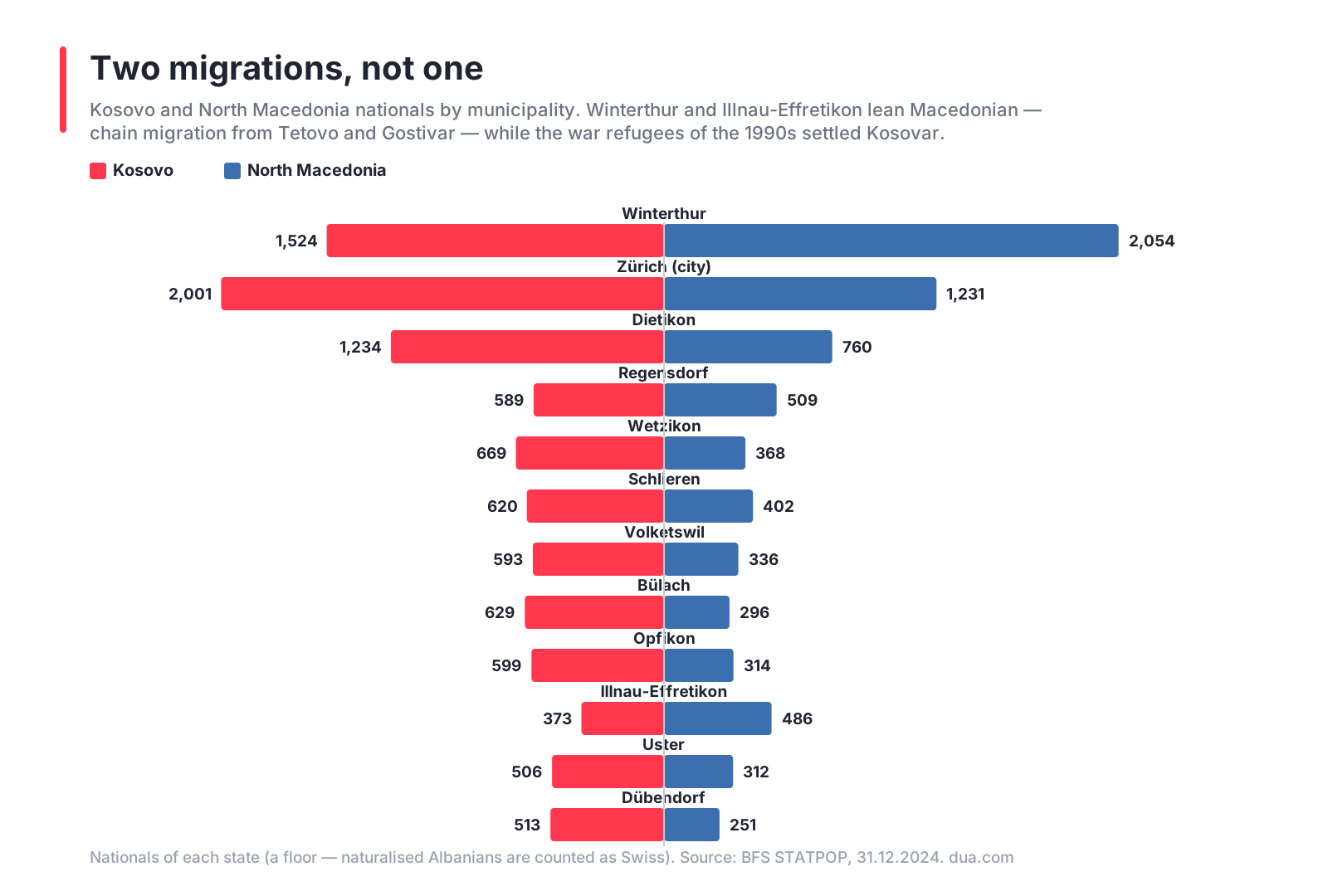
Dietikon leads the canton: 2'051 of its 28'295 residents, 7.25 percent. Then Oberglatt (6.0%), Weiningen (5.5%), Regensdorf (5.5%), Schlieren (5.1%) and Dielsdorf (5.0%). The city of Zurich, at 0.77 percent, sits near the bottom of the canton's larger municipalities — and Winterthur, with 3'658 people, has more of these passport holders than the city of Zurich does, on a quarter of the population. Winterthur also inverts the national pattern: it has more North Macedonian than Kosovan nationals, a legacy of chain migration from Tetovo and Gostivar that began in the 1960s.
| Municipality | Nationals of Kosovo, N. Macedonia, Albania | Share of population |
|---|---|---|
| Dietikon | 2'051 | 7.25% |
| Oberglatt | 468 | 6.02% |
| Weiningen | 281 | 5.50% |
| Regensdorf | 1'107 | 5.46% |
| Schlieren | 1'044 | 5.12% |
| Dielsdorf | 336 | 5.00% |
| Illnau-Effretikon | 866 | 4.88% |
| Volketswil | 940 | 4.73% |
| Opfikon | 952 | 4.42% |
| Winterthur | 3'658 | 3.04% |
| City of Zurich | 3'383 | 0.77% |
Municipalities with at least 5'000 residents. Source: BFS STATPOP, 31.12.2024.
Inside the city: Schwamendingen, Seebach, Altstetten
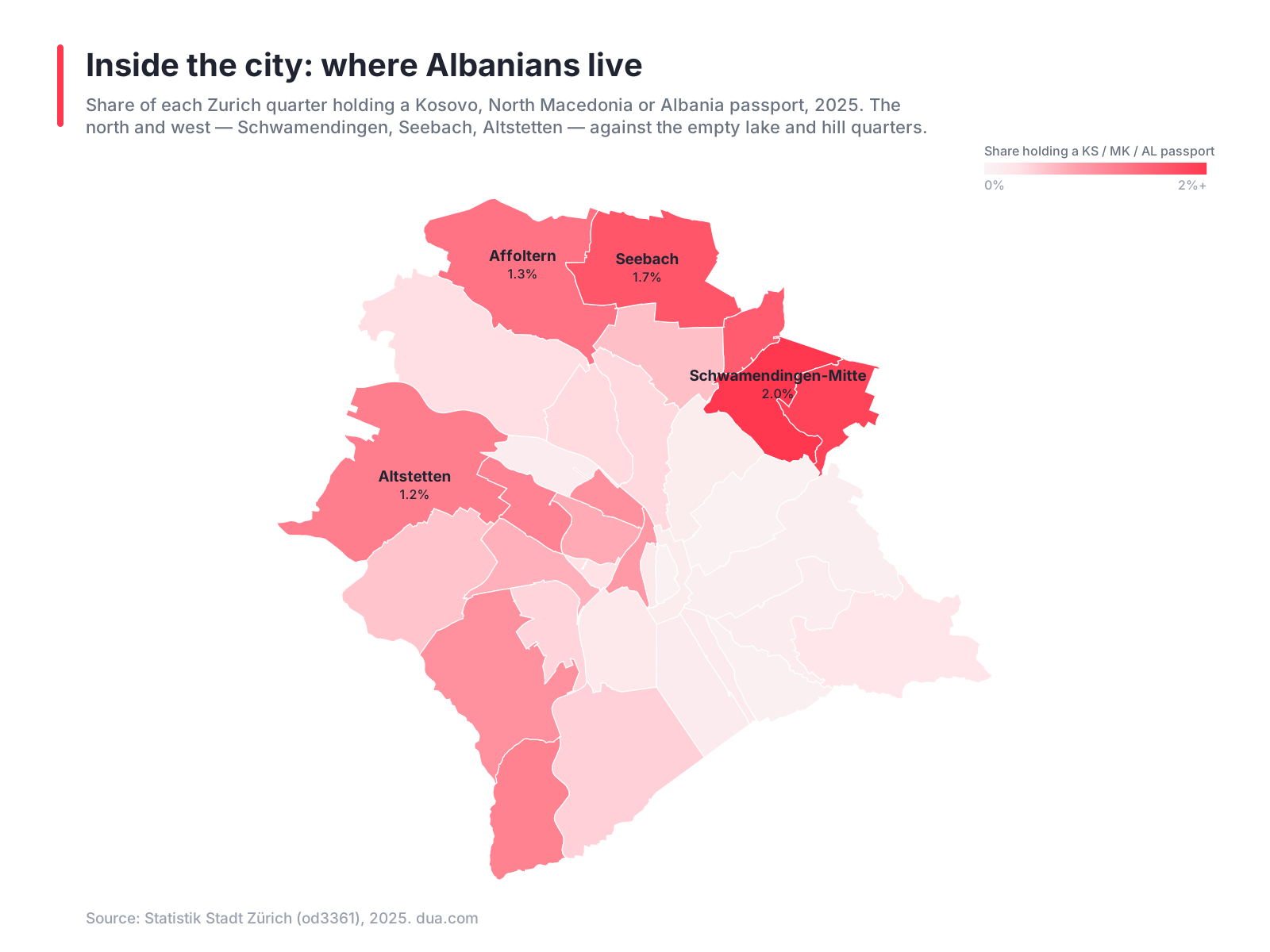
The same logic repeats inside the city boundary. Albanians in Zurich live where working families have always lived — in the north and the west, in the cooperative estates built in the 1950s and 1960s.
Kreis 12 (Schwamendingen) has the highest share of any city district at 1.83 percent, and the Schwamendingen-Mitte quarter reaches 2.0 percent, the highest of any quarter in Zurich. Kreis 11 — Seebach, Affoltern, Oerlikon — holds the largest number, 987 people, or 29 percent of the city's total, with Seebach the biggest single quarter at 484. Kreis 9 (Altstetten, Albisrieden) follows with 573. The contrast with the lake and hill quarters is stark: Fluntern has five, Weinegg four, Rathaus and Lindenhof two each, Hochschulen. Between Schwamendingen-Mitte and the quietest quarters of Kreis 8 lies a fourteen-fold gradient, across eleven kilometres.
The retreat from the Langstrasse
It was not always so. In 2000, Kreis 4 and Kreis 5 — the Langstrasse quarter and Industriequartier — together held 784 of these passport holders, 24 percent of the city's total. By 2025 they hold 354, ten percent. Kreis 4 alone fell from 559 to 250. Over the same 25 years Kreis 11 climbed from 518 to 987 and Kreis 12 from 341 to 602.
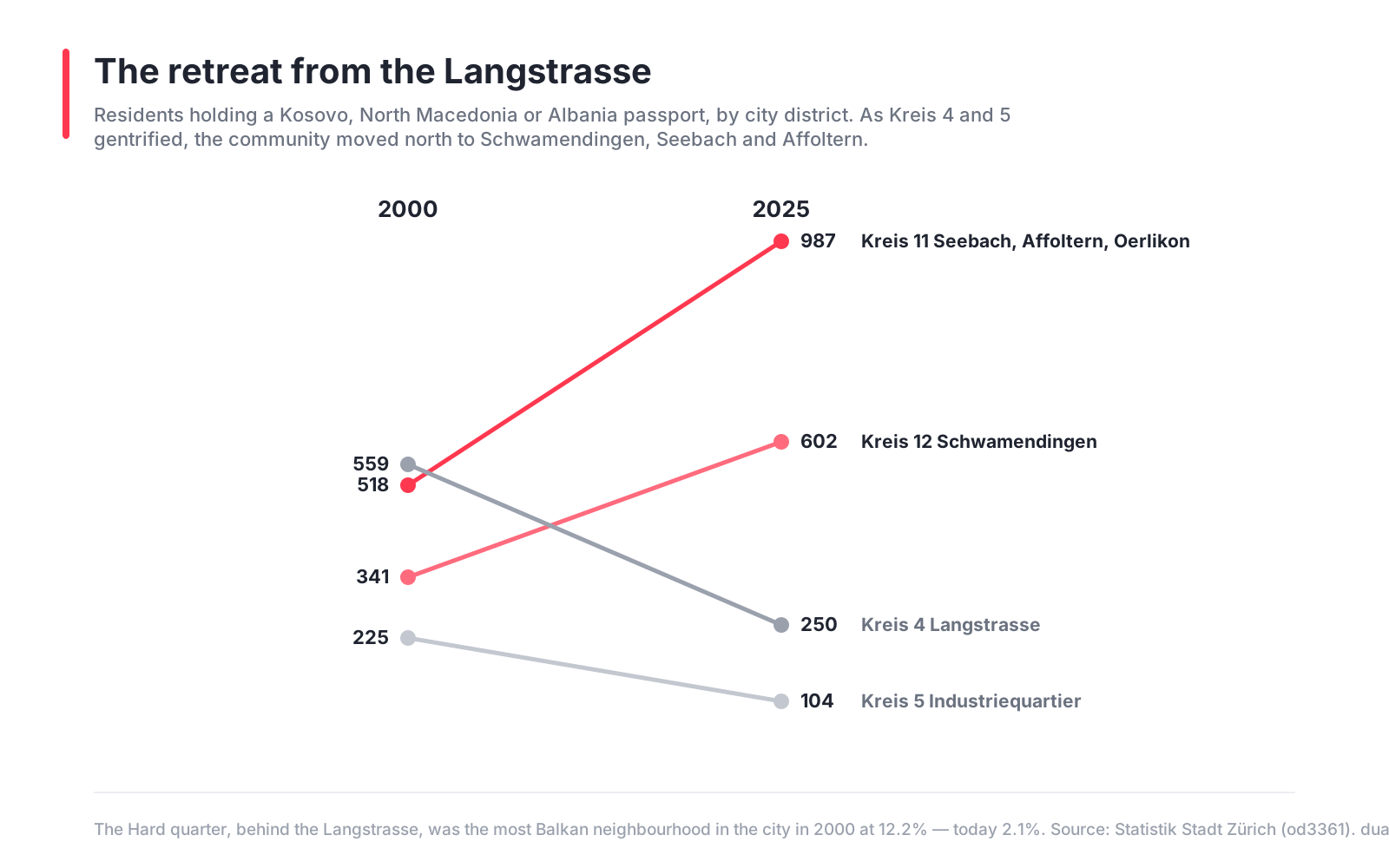
The Hard quarter, immediately behind the Langstrasse, was the most Balkan neighbourhood in the whole city in 2000: 12.2 percent of its residents held a passport of Kosovo, Serbia, Montenegro, North Macedonia or Albania. Today the figure is 2.1 percent. This is not a story about people leaving Zurich. It is gentrification: the Langstrasse became expensive, and the community moved north and out into the agglomeration.

How did Albanians come to Zurich?
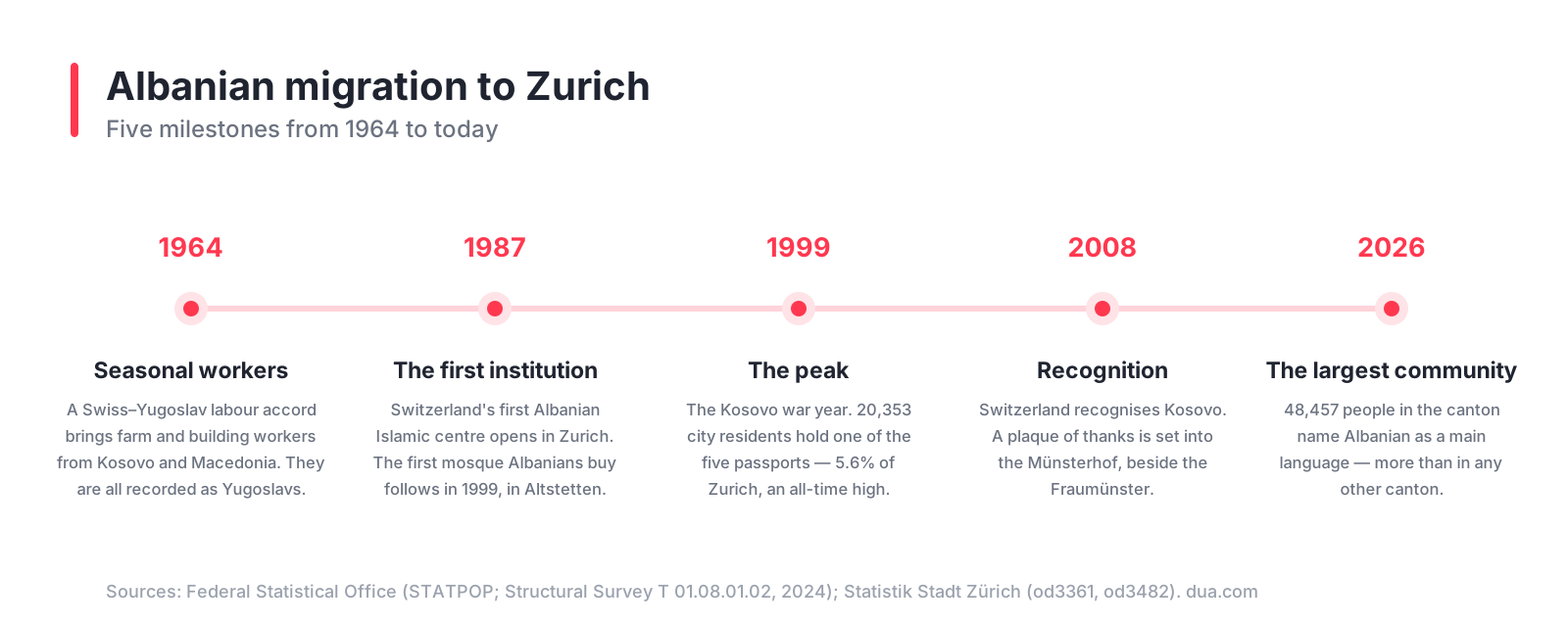
Zurich's own statistics tell the story of a community that was, for forty years, statistically invisible. The city's historical population series records exactly one person with Albanian citizenship living in Zurich in 1950, and still seven in 1990. Every Albanian who actually arrived — from Kosovo, Macedonia and the Presheva Valley — was booked as a Yugoslav. Kosovo did not exist as a Swiss statistical category until 2008.
Seasonal workers (1964 to the 1980s)
A collective labour agreement in 1964 brought several hundred agricultural workers a year from Kosovo, Macedonia and Serbia — predominantly ethnic Albanians. In 1963, barely a thousand Yugoslavs lived in the whole of Switzerland. The mid-1960s work in Zurich was agriculture and horticulture; from around 1970 a second wave went into construction. The permits were nine-month Saisonnier permits, renewed each year, with no right to bring a family.
Family reunification and the first institutions
From the late 1980s, men who had worked enough consecutive seasons converted to B permits — and with them came the right to family reunification. Seasonal labour became the immigration of families, and the community started building. Switzerland's first Albanian club, Klub Përparimi, was founded in Zurich, on Albulastrasse in Altstetten; in 1981 the Kosovo student uprising forced it to split from the Yugoslav association. Switzerland's first Albanian Islamic centre opened in Zurich in 1987. In 1991 and 1992 the "three-circle model" closed off new labour migration from the Balkans altogether, leaving family reunification and asylum as the remaining doors.
The Kosovo war and the 1999 peak
The war brought the numbers to their high point. In 1999, 20'353 residents of the city of Zurich held passports of the five Albanian-settlement states — 5.6 percent of the entire city, an all-time record. Altstetten had the largest absolute number. By 2025 the same group has fallen to 5'944, or 1.3 percent, and almost all of that decline is naturalisation rather than departure.
The hostile years
The reception was not warm, and Zurich has the documents to prove it. On 7 June 1998 the city voted down a modest annual grant of CHF 50'000 for a Caritas contact network for Kosovo-Albanian families in the north of the city. It was rejected by 55 percent, after a poster campaign that read "Kosovo-Albaner NEIN" in enormous type, with the words "contact network for" in small print above. A Kosovo Albanian filed an anti-racism complaint; the ten defendants were acquitted in December 2001, and the cantonal high court confirmed the acquittal in December 2002 on the grounds that referendum campaigns are allowed to be somewhat blunt.
The federal government's own 2010 diaspora study recorded the labels Kosovars carried in that period without euphemism. The residue is measurable today: a field experiment covering the Zurich housing market found applicants with Kosovan names invited to viewings about three percentage points less often than Swiss-named applicants, and a Swiss passport gave no protection at all. In hiring, correspondence tests found Kosovar-named Swiss citizens needed roughly 1.4 times as many applications to get an interview.
Recognition and after (since 2008)
Switzerland recognised Kosovo on 27 February 2008. That same year, a plaque was set into the ground of the Münsterhof, beside the Fraumünster in Zurich's oldest square, thanking Switzerland for taking in Kosovars during and after the crisis of 1998/99. 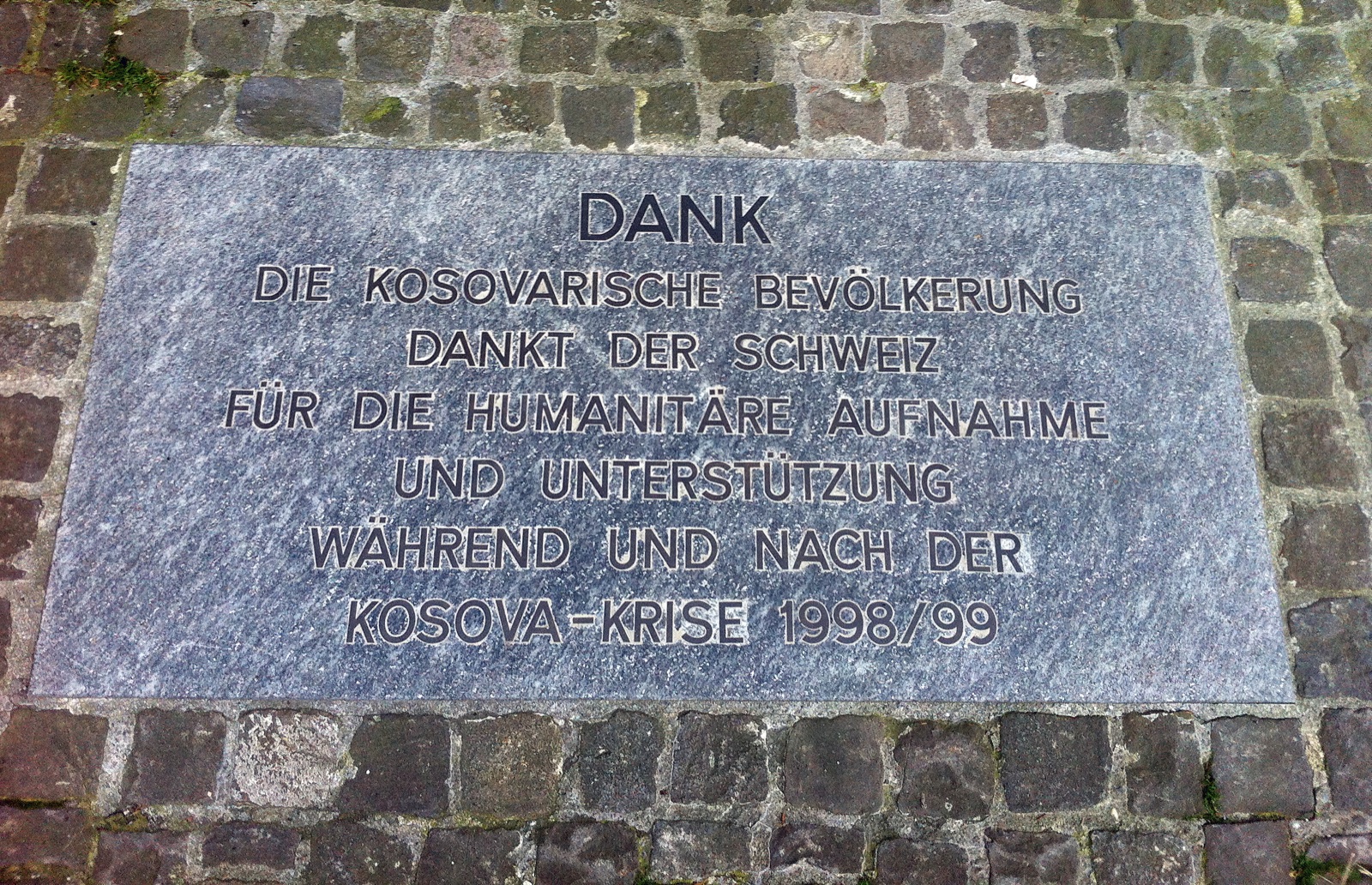
What language do Albanians in Zurich speak?
Mostly Gheg, the northern dialect group spoken in Kosovo and North Macedonia, rather than the southern Tosk variety on which standard Albanian is based. Within the city, Albanian is the eighth most common main language, and the age profile is young: the all-ages count runs well above the adults-only figure, meaning a large share of Zurich's Albanian speakers are children.
Whether they stay speakers is another question. Linguists studying the Swiss-Albanian community describe a shift over three to four generations — the first generation speaks Albanian better than German, the second switches to Swiss German among themselves, and by the third the language is often rudimentary.
Working against that, the canton of Zurich runs an unusually large heritage-language programme. In the 2025/26 school year, 52 of the canton's 1'008 recognised heritage-language courses are Albanian — 29 run by the Albanian teachers' and parents' association and 23 by the Albanian embassy. Albanian is the language in the canton with two separately recognised providers, and the marks count on the official state report card. The association's school, Shkolla Shqipe "Naim Frashëri", was founded in 1992 and celebrated its thirtieth anniversary in a Bülach hall that could not hold everyone who came.
Even so, the reach is modest against the size of the community, the classes are voluntary and outside school hours, and the number of pupils completing the full cycle each year is measured in dozens.
Religion: mosques, and the that came first
Albanians in Zurich are predominantly Sunni Muslim, with Catholic and Orthodox minorities and a strongly pragmatic relationship to religious practice — national identity, bound to language, has historically outranked confession.
Zurich is where Albanian religious life in Switzerland began. The country's first Albanian Islamic centre opened here in 1987, and the first mosque Albanians ever bought in Switzerland was Rautistrasse 58 in Altstetten, acquired in 1999 and expanded again from 2024. The umbrella body for Albanian mosques in Switzerland has its seat in Zurich, and both its assembly president and his deputy are Zurich people.
The association of Islamic organisations in the canton lists 55 mosques and Islamic organisations, of which around a dozen carry explicitly Albanian names — but two of those are inside the city itself. Winterthur alone has three, including the first free-standing purpose-built mosque in the canton, opened in Töss in 2024, whose members cut the cost from CHF 9.5 million to about 4 million by doing much of the building work themselves. The canton's first minaret, three metres tall on a converted factory hall in Winterthur-Grüze, was also Albanian, inaugurated in 2005 without a single legal objection. Even the names map the migration: mosque in Effretikon is named after a village in North Macedonia.
One gap is worth naming honestly: canton Zurich, the largest Albanian centre in the country, has no Albanian Catholic mission seat of its own — the nearest is in Sirnach, in canton Thurgau — and no Albanian Orthodox parish among the canton's orthodox churches.
Work, business and money
The official labour statistics describe a community still concentrated in the sectors it entered in the 1960s. Across Switzerland, Kosovan nationals have the highest share of employment in industry and construction of any of the 25 largest foreign nationalities, and North Macedonians are just behind them. Both groups show high rates of unskilled auxiliary work and a very sharp gender split in working hours, with the large majority of women working part-time and almost all men full-time.
Those figures measure passports, which is exactly the problem. The naturalised founders — the generation now running companies — are counted as Swiss. That is why the community's own estimate, widely quoted, of over 6'000 firms in German-speaking Switzerland in the hands of entrepreneurs of Albanian descent cannot be reconciled with official self-employment rates. It should be read as what it is: an estimate by the business association Swissalbs, not a register count. No canton-Zurich breakdown exists, because the commercial register records neither ethnicity nor language.
Swissalbs itself is a Zurich organisation, based in the city and chaired by Përparim Avdili. Its annual entrepreneur award, worth CHF 15'000, has been handed out in Zurich every year since 2021, latterly at the Kongresshaus in front of around 500 guests; in 2024 it went for the first time to a woman, the founder of a home-care company in Kloten.
Some clusters are visible on the street. The tightest is travel: two Albanian travel agencies sit twenty metres apart on Löwenstrasse, minutes from Zurich main station, with a third inside the airport terminal at Kloten. Chair Airlines, based at Zurich Airport, is majority-owned by an Albanian-Swiss businesswoman from that same Löwenstrasse operation, and around 45 percent of its passengers fly the Pristina and Skopje routes. Zurich is the second-busiest destination from Pristina airport, and Switzerland as a whole accounts for roughly a third of Kosovo's air traffic.
Money runs the other way too. Remittances from Switzerland to Kosovo were worth around 250 million euros in 2025, roughly a sixth of Kosovo's total — a share that is slowly falling as the diaspora naturalises. It has a striking precedent: until the late 1990s, virtually every employed Kosovar in Switzerland paid three percent of their monthly salary into the fund that financed Kosovo's parallel schools and clinics.
The Alba Festival and Albanian Zurich
The Alba Festival is a Zurich story, and the largest Albanian music festival anywhere outside the Albanian-speaking lands. It began on the Hardturm site in June 2019 with Rita Ora headlining and more than 20'000 visitors over two days. Since 2024 it has been held on the Kasernenareal in the city centre, drawing around 25'000 people; the fifth edition ran in June 2026.
Its most consequential edition is the that never happened. Less than 48 hours before the 2021 festival was due to open, the canton revoked the permit, citing low vaccination rates in the Albanian community — even though a Covid certificate was required at the gate. The Federal Commission against Racism judged the decision discriminatory in a letter that became public in June 2022, and in July 2024 the Zurich administrative court went further: it found that the festival had been treated differently from comparable events because of the national origin of its expected audience, that this amounted to direct discrimination, and that the evidence offered to justify it was too thin. The canton was ordered to pay the organisers CHF 4'000 in compensation. Two years later, a cross-party delegation of the Zurich city parliament attended the festival together.
Football is the other pillar. The Letzigrund hosted the first official match ever played between Albania and Kosovo, in May 2018, and a sold-out Switzerland–Kosovo game in March 2022 on the night Granit Xhaka won his hundredth cap. FC Kosova Zürich, founded in 1994 out of earlier teams called Rilindja, Albanian Boys and Përparimi, plays in Affoltern, fields eight teams with around 180 players, and became the first migrant club in Swiss football to reach the 1. Liga.
Beyond that: an Albanian film festival has run at Zurich's Kino Riffraff since 2023, the city's own Filmpodium devoted a full retrospective to Albanian cinema in spring 2026, and folklore associations in Uster and Winterthur — the Uster founded in 1993, with eight dance groups all named after birds — rehearse every week.
Famous Albanians from Zurich
Zurich's best-known Albanian names are not the usually listed. Granit Xhaka, Xherdan Shaqiri and Ardon Jashari belong to Basel and Zug. Zurich's own are these.
Blerim Džemaili — born in Tetovo in 1986, in Zurich from the age of four. His entire youth career is a map of the city: FC Oerlikon, FC Unterstrass, YF Juventus, then the FC Zürich academy. He captained FCZ at nineteen, won two Swiss championships, played nearly 280 games in Serie A, took 69 caps for Switzerland, came home to FCZ in 2020 and retired in 2023 as a club legend.
Nedim Bajrami — born in Zurich in 1999, raised in Regensdorf, schooled in the Grasshopper academy. On 15 June 2024 in Dortmund he scored against Italy after 23 seconds: the fastest goal in the history of the European Championship. He plays for Albania.
Admir Mehmedi — born in Gostivar, raised in Winterthur, came through FC Zürich and won 76 caps for Switzerland.
Islam Alijaj — born near Gjakova in 1986, brought to Switzerland as a baby by parents who had come as seasonal workers. He has cerebral palsy, entered Zurich's city parliament in 2022, and in October 2023 took 95'054 votes to become the first Swiss-Albanian member of the National Council and the first member of the National Council with cerebral palsy.
Përparim Avdili — son of seasonal workers from what is now North Macedonia, raised in Altstetten. He became the first Zurich city councillor of Albanian origin in 2018, president of the city's FDP, and in March 2026 the first candidate of Albanian origin to stand for the presidency of the city of Zurich. He did not win, but the framing of his campaign — from seasonal-worker's child to mayoral candidate in generation — is the community's arc in a sentence. Since March 2026, four of the 125 seats in Zurich's city parliament are held by politicians of Albanian origin, two from the FDP and two from the SP.
EAZ (Arber Rama, born in Wetzikon in 1993) and Xen (Shkelzen Kastrati, born in Zurich in 1990, based in Dietikon) are both chart-topping Swiss rappers from the canton. And Azem Maksutaj, who fled Deçan at fifteen and landed in Winterthur in 1990, became the youngest Thai-boxing world champion ever in 1994 and went on to win fourteen world titles; he still runs his gym in the city.
The Albanian community in Zurich today
The clearest picture of where this community has arrived comes from the city's marriage register. Among marriages in Zurich involving at least Kosovan, Albanian or North Macedonian national, the share where both partners held such a passport fell from 64 percent in the 1990s to 11 percent in the 2020s, while the share marrying a Swiss passport holder rose from 24 to 60 percent. That measures the legal boundary rather than the ethnic — a great many of those Swiss spouses are themselves naturalised Albanians — but the direction is unmistakable. So is a detail that overturns an old assumption: over the last decade, Albanian men marrying Swiss women and Albanian women marrying Swiss men occurred in almost exactly equal numbers.
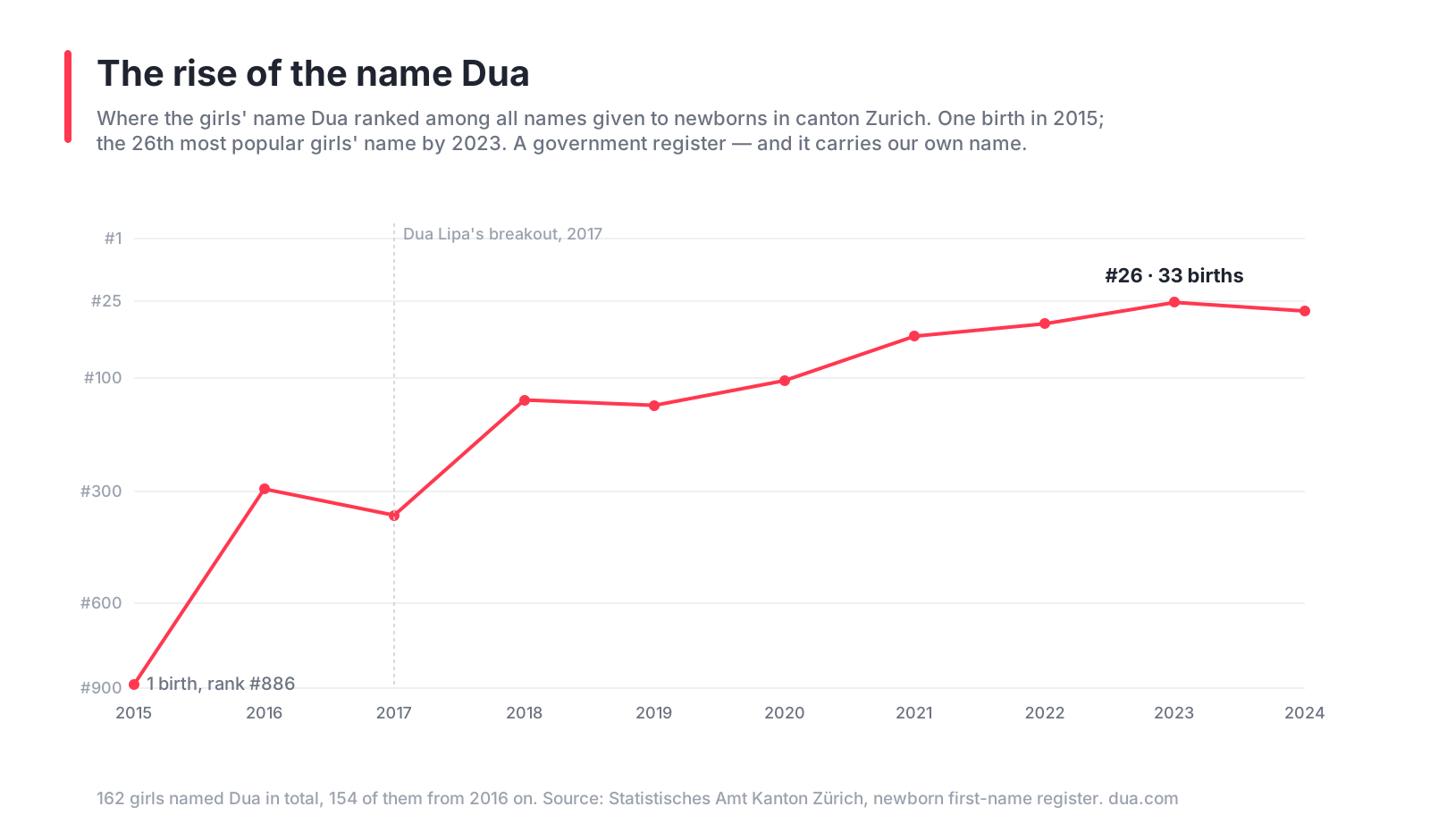
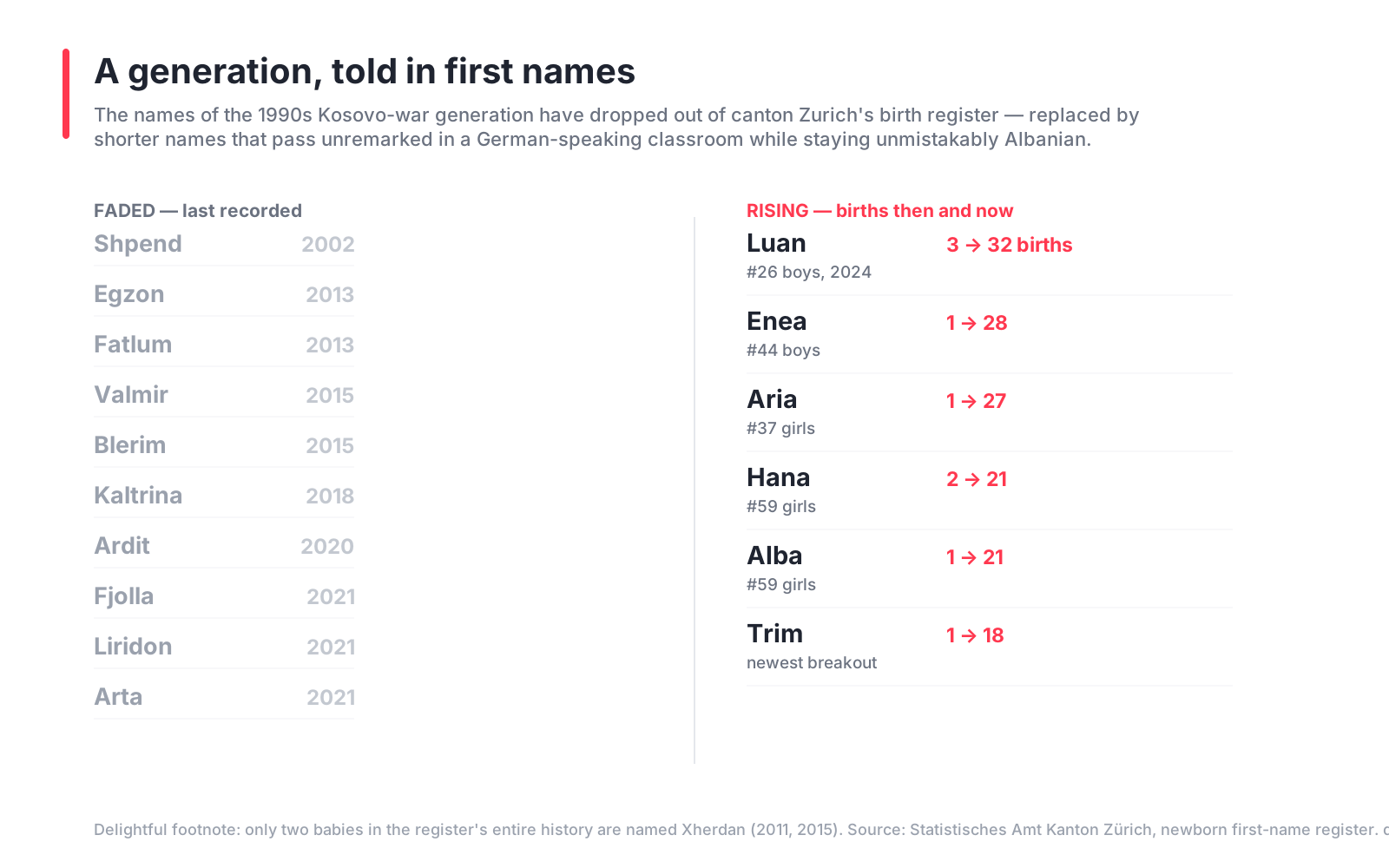
There is a smaller sign hiding in the canton's birth register. In 2015, exactly girl born in canton Zurich was named Dua. By 2023 it was the 26th most popular girls' name in the canton. Meanwhile the names of the war generation have gone quiet — Shpend was last recorded in 2002, Blerim in 2015, Ardit in 2020 — and in their place come short names that pass unremarked in a German-speaking classroom while staying unmistakably Albanian: Luan, Trim, Aria, Alba, Enea, Hana.
The community is also, increasingly, meeting — and here Zurich has a particular claim. dua.com is a Zurich company, headquartered in Leutschenbach in the north of the city, a few tram stops from Seebach and Schwamendingen. It is the largest dating and community app for Albanians worldwide, with over a million registered users across 178 countries, and it was built for exactly the problem this page describes: a community spread thinly across an agglomeration, whose members are statistically invisible, increasingly Swiss-passported, and no longer likely to meet the way their parents did — at a wedding back home, or through an intermediary.
For a wider view of the community these families belong to, read Albanians in Switzerland, and for the traditions that still shape how people meet, Albanian weddings and Albanian dating rules.
Sixty years after the first farm workers arrived on nine-month permits, the Albanian story of Zurich is no longer a migration story. It is the story of a community that built the country's first Albanian club, its first Albanian mosque and its biggest Albanian festival — and that has largely stopped appearing in the statistics for foreigners, because it became Swiss.
Directory: the Albanian community in Zurich
A working directory of Albanian institutions, businesses and cultural organisations in and around Zurich — every link verified as live in July 2026. If you run a Zurich-Albanian organisation that belongs here, get in touch through dua.com.
Community & faith
- albinfo.ch
- Consulate General of Kosovo in Zurich
- FC Kosova Zürich
- Islamic Albanian Community, Rautistrasse 58
- Xhamia Shqiptare Winti (Winterthur)
- Shkolla Shqipe "Naim Frashëri" (canton Zurich)
- Shoqata "Bashkimi" Uster
- SH.K.A "Dardania" Winterthur
Business
- Swissalbs (business association)
- Air Prishtina
- Kosova Reisen
- Chair Airlines
- Numarics
- Bota Systems (ETH spin-off)
- Spitex Dona (Kloten)
- JetSet Restaurant & Events (Kloten)
- Burek Bakery
Culture & events
Frequently asked questions about Albanians in Zurich
How many Albanians live in Zurich?
In the canton of Zurich, 48'457 people aged 15 and over name Albanian as a main language — 3.6 percent, and more than in any other Swiss canton. By passport, the canton held 32'196 nationals of Kosovo, North Macedonia and Albania at the end of 2024. In the city of Zurich itself the figures are 6'800 Albanian speakers aged 15 and over and 3'397 passport holders. Because naturalised Swiss-Albanians vanish from the passport statistics, the real community is larger than any single number here.
Which municipality in canton Zurich has the most Albanians?
By share of population, Dietikon: 7.25 percent of its residents hold a Kosovan, North Macedonian or Albanian passport, the highest in the canton. Oberglatt, Weiningen, Regensdorf and Schlieren all exceed five percent. By absolute numbers, Winterthur leads with 3'658 people — more than the city of Zurich, which has 3'383.
Which district of the city of Zurich is the most Albanian?
Kreis 12, Schwamendingen, has the highest share at 1.83 percent, and the Schwamendingen-Mitte quarter reaches 2.0 percent — the highest of any quarter in the city. Kreis 11, covering Seebach, Affoltern and Oerlikon, has the largest number in absolute terms with 987 people, almost a third of the city's total.
Is Albanian a widely spoken language in Zurich?
Yes. Albanian is the eighth most common main language in the city of Zurich, named by 6'800 residents aged 15 and over. It comes ahead of Turkish, Russian, Greek and Arabic, and behind German, English, Italian, French, Spanish, Serbo-Croatian and Portuguese. In the canton as a whole it is spoken by around four percent of the population, rising to five to seven percent in the Limmattal, Furttal and Glattal.
When did Albanians first come to Zurich?
From 1964, when a labour agreement began bringing farm and construction workers from Kosovo and Macedonia on nine-month seasonal permits. They were recorded as Yugoslavs: the city's statistics list just Albanian citizen in 1950 and seven in 1990. Families followed from the late 1980s, and the Kosovo war brought the numbers to their peak in 1999, when 20'353 city residents held passports of the five Albanian-settlement states.
What is the Alba Festival?
The largest Albanian music festival outside the Albanian-speaking lands, held in Zurich since 2019 and on the Kasernenareal in the city centre since 2024, with around 25'000 visitors. Its 2021 edition was cancelled when the canton withdrew the permit less than 48 hours before opening. The Federal Commission against Racism called that decision discriminatory, and in July 2024 the Zurich administrative court ruled it direct discrimination based on the national origin of the expected audience, ordering the canton to pay the organisers CHF 4'000.
Which famous people from Zurich have Albanian roots?
Footballers Blerim Džemaili, who grew up in Zurich and became an FC Zürich legend, and Nedim Bajrami, born in Zurich and raised in Regensdorf, who scored the fastest goal in European Championship history in 2024. In politics, Islam Alijaj, the first Swiss-Albanian in the National Council, and Përparim Avdili, the first candidate of Albanian origin for the presidency of the city of Zurich. In music, the rappers EAZ and Xen. Granit Xhaka and Xherdan Shaqiri, often assumed to be from Zurich, are from Basel.
Where can you meet Albanians in Zurich?
Through associations, mosques and community events such as the Alba Festival, at FC Kosova Zürich in Affoltern, and in the Albanian cafés and businesses of Altstetten, Oerlikon, Schwamendingen and the Limmattal towns., the largest option is dua.com — the dating and community app for Albanians worldwide, which is itself headquartered in Zurich.