Albanian Brussels has a monument beside Parc Josaphat, a cultural address on Grand Place and a radio voice that crosses municipal boundaries. Its people include refugees’ children, newcomers, teachers, artists and business owners. The region counted 2,886 Albanian citizens and 984 Kosovo citizens in January 2026. But a passport count cannot tell the whole story of a community that has also become Belgian.
Before he assembled a book of Albanian tales, Brussels writer Safet Kryemadhi was reading the old journal Albania. In a CBAI interview, he explained how its legends, riddles and proverbs suggested a collection for new readers. The journal had itself been published in Belgium by Faik Konitza at the end of the nineteenth century. An Albanian text written abroad had become material for another generation writing abroad. Brussels was part of both journeys.
This is one way a community takes root: a language becomes a book, a family’s working life becomes theatre, a cultural room becomes somewhere to bring colleagues. Those acts leave traces that a population register cannot capture. To understand Albanian Brussels, we need to read the register carefully, then step outside it.
For more on this topic, read Albanians in Belgium and Albanians in Zurich.
How many Albanians live in Brussels?
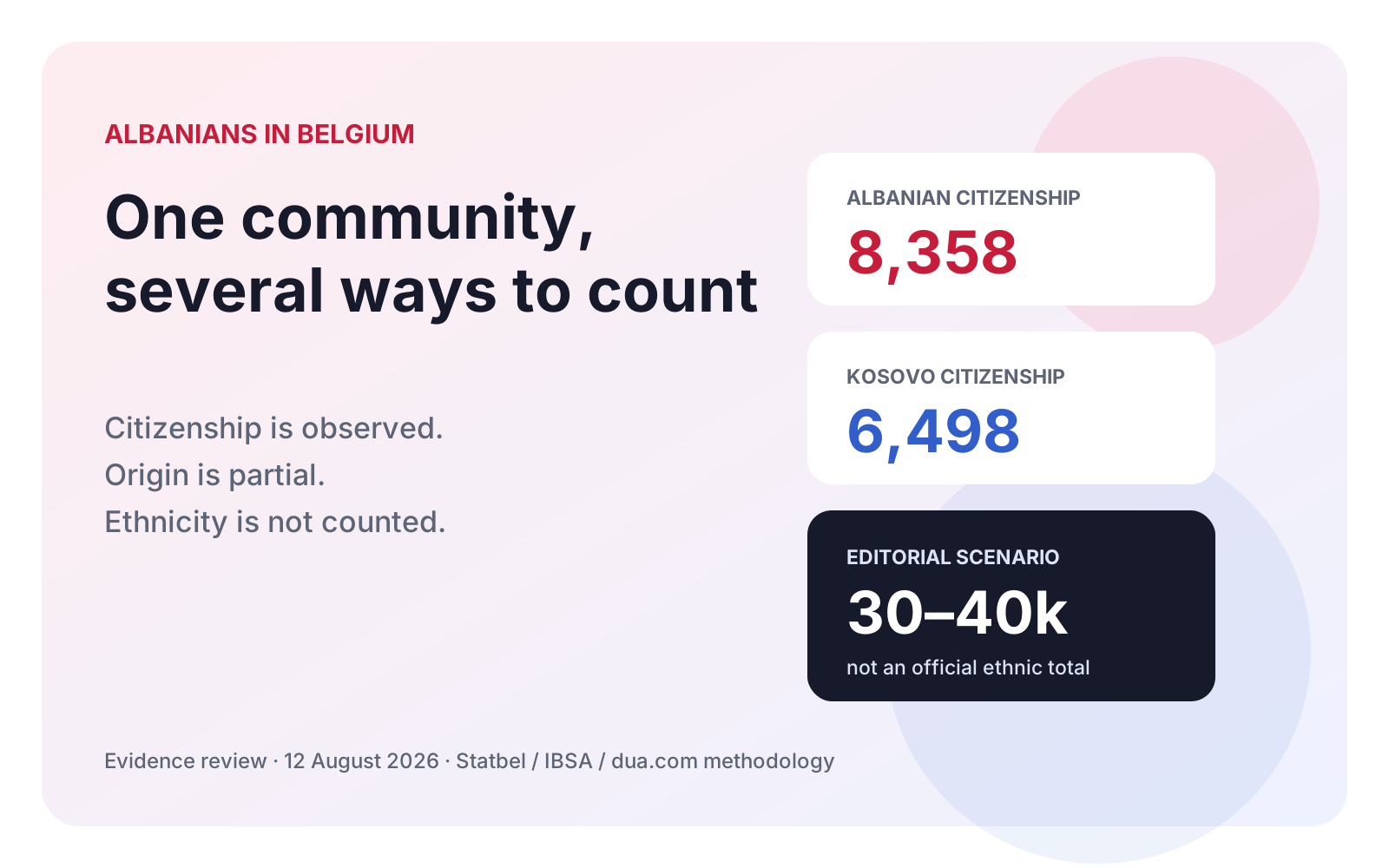
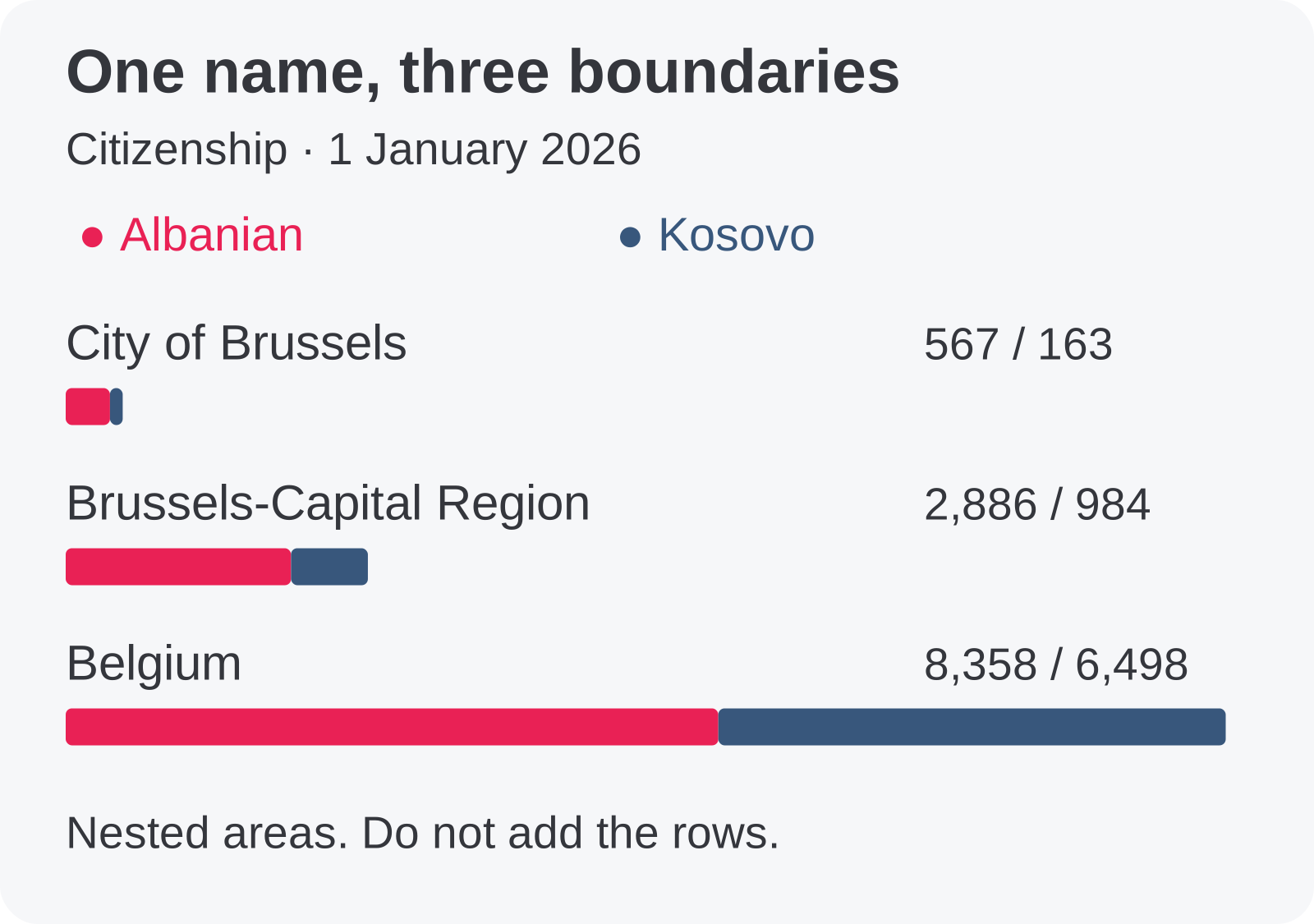
The Brussels-Capital Region registered 2,886 Albanian citizens and 984 Kosovo citizens on 1 January 2026. These are legal-population counts from Statbel, independently reproduced here from its municipality file. The sum, 3,870, combines two citizenship categories. It is not a count of Albanian ethnicity, ancestry or language.
“Brussels” needs a boundary. The region contains 19 municipalities. The City of Brussels is just one of them; Schaerbeek, Evere, Anderlecht and Molenbeek-Saint-Jean are others. The City of Brussels alone registered 567 Albanian and 163 Kosovo citizens. Belgium as a whole registered 8,358 and 6,498 respectively. A regional number should never be presented as a city-municipality number, or a Belgian total as a Brussels total.
The source counts residents under Belgium’s legal-population definition. It excludes people on the waiting register for asylum applicants. Belgians who also hold another nationality are counted as Belgian. Kosovo citizenship is not synonymous with Albanian ethnicity; nor does Albanian identity require an Albanian passport. People with roots in North Macedonia, Serbia or Montenegro may belong to the Albanian-speaking community too.
What changes when you look beyond current citizenship?
IBSA’s latest workbook supplies a second, different measure: 5,457 Brussels-Capital residents had Albanian as their nationality at birth, or first registered nationality, on the same date. In the City of Brussels, that figure was 1,029. Unlike the current foreign-nationality category, this measure can retain someone after they become Belgian.
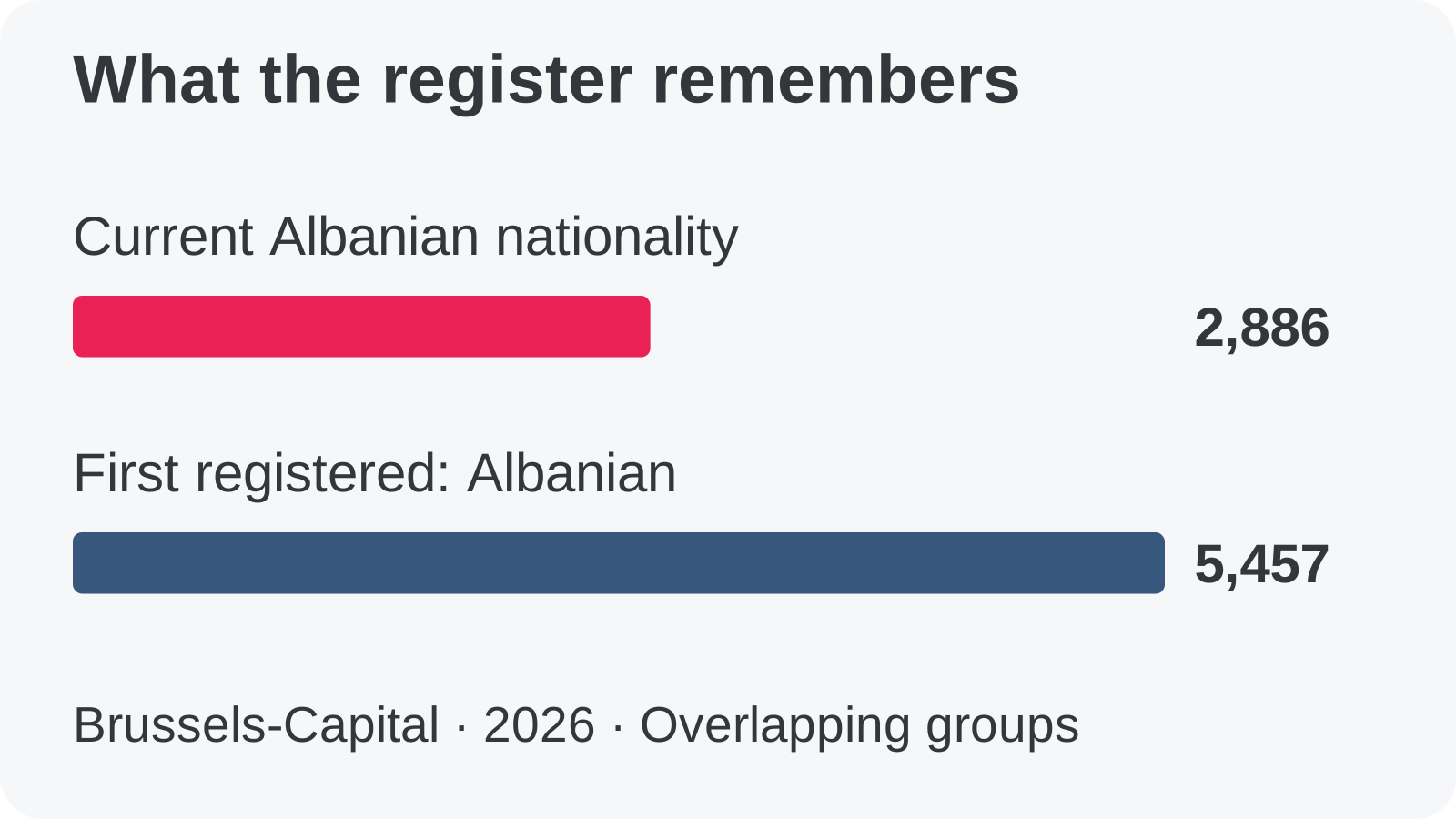
These groups overlap. Adding 5,457 to 2,886 would count many people twice. Their difference is not a direct count of naturalisations either. Children first registered Belgian are still outside the Albania-first category, and the workbook’s historical Serbia/former-Yugoslavia category cannot be converted into a Kosovo-Albanian total. There is no defensible single number for everyone of Albanian origin in Brussels in these tables.
Community estimates in reporting can describe a much wider population, but they do not repair the missing categories in an official dataset. We therefore use the register to map settlement, not to decide who belongs. IBSA explains the definitions; its 26 August 2026 workbook and Statbel citizenship file allow the figures to be checked.
A community spread across nineteen municipalities
The City of Brussels has the region’s largest Albanian-citizenship count, while Schaerbeek has its largest Kosovo-citizenship count. Evere also stands out, with 269 Albanian and 138 Kosovo citizens. Those three municipalities account for 1,845 of the region’s 3,870 people in the two selected categories, about 48 percent. The remainder live across the other sixteen municipalities.
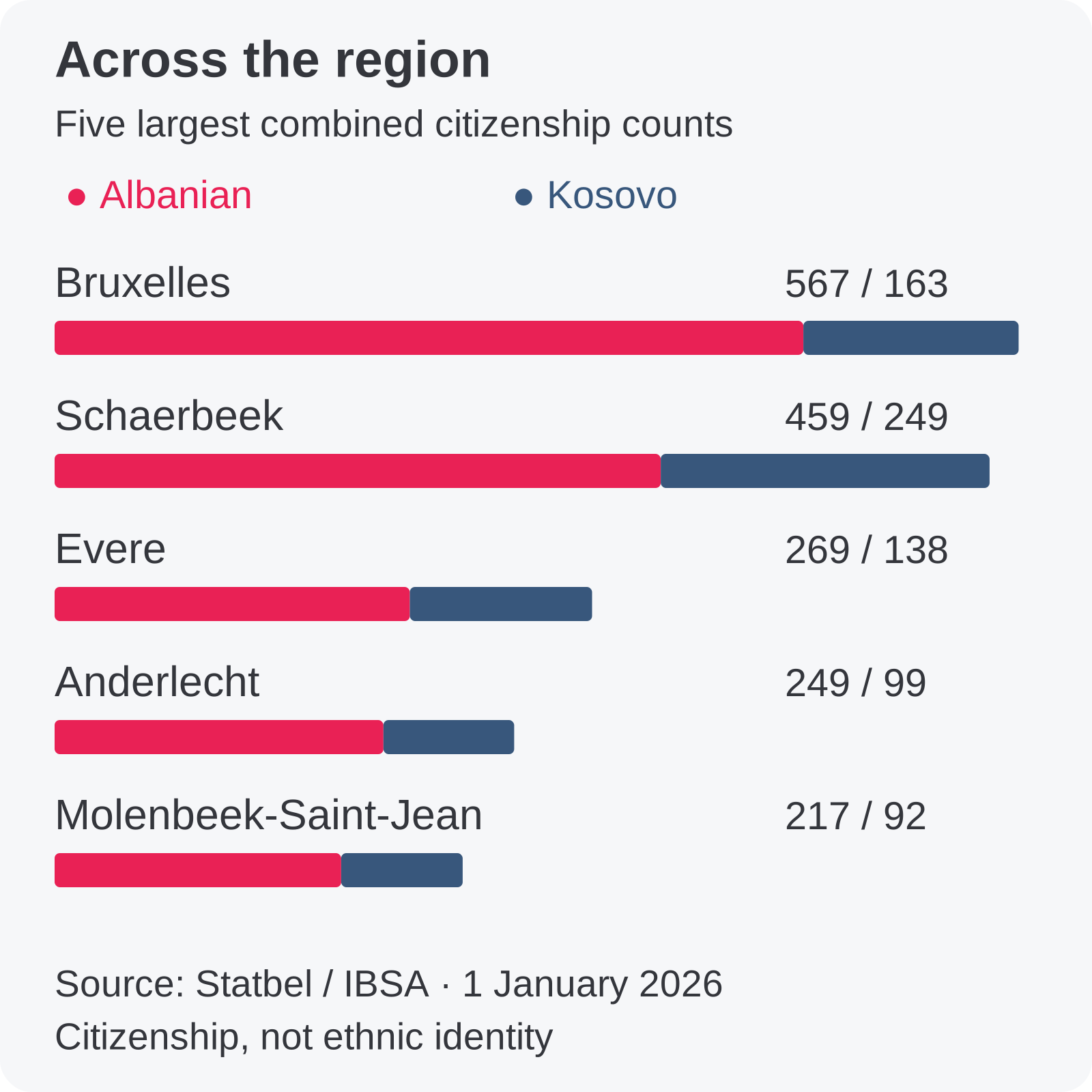
The map is therefore a network, not one enclosed “Albanian quarter”. Even a small municipality count can sit alongside a school, a friendship circle or an association with members from across the region. A place where people meet is not necessarily the place where they sleep. Grand Place’s cultural significance does not make the historic centre the residential centre of the diaspora.
The table keeps the two nationalities separate. It measures numbers of residents, not the share of each municipality’s population, and it should not be read as a ranking of how Albanian a neighbourhood feels.
Scroll the table horizontally to see every column.
| Municipality | Albanian citizenship | Kosovo citizenship |
|---|---|---|
| Bruxelles | 567 | 163 |
| Schaerbeek | 459 | 249 |
| Evere | 269 | 138 |
| Anderlecht | 249 | 99 |
| Molenbeek-Saint-Jean | 217 | 92 |
| Jette | 184 | 63 |
| Ixelles | 144 | 27 |
| Etterbeek | 120 | 7 |
| Saint-Gilles | 100 | 14 |
| Forest | 91 | 4 |
| Saint-Josse-ten-Noode | 86 | 14 |
| Uccle | 86 | 14 |
| Koekelberg | 74 | 31 |
| Ganshoren | 73 | 20 |
| Berchem-Sainte-Agathe | 64 | 27 |
| Woluwe-Saint-Lambert | 57 | 3 |
| Woluwe-Saint-Pierre | 26 | 4 |
| Auderghem | 12 | 6 |
| Watermael-Boitsfort | 8 | 9 |
Before the community: a journal in Brussels
Faik Konitza made Brussels part of Albanian cultural history before the post-war migration waves. His journal Albania began here in 1897. A memorandum he drafted in Brussels in January 1899 shows the city’s place in his political and intellectual network. His work belonged to a period when language, publishing and the idea of an Albanian national future were closely connected.
The journal is more than a ceremonial “first”. Kryemadhi’s later work with its popular literature shows how an archive can be used again. The Bibliothèque nationale de France records his 2015 collection of Albanian legends, fables and tales in French. A Brussels reader does not have to speak Albanian fluently to enter those stories. Translation becomes another route into a family’s inheritance.
Refuge, work and family
The year 1956 is a landmark in the community’s post-war memory. It is the migration wave commemorated at the Brussels Parliament seventy years later. It should not be confused with the first individual Albanian presence in Belgium, nor should every person in a mixed refugee convoy be counted as Albanian. Arrival in Belgium also does not establish later residence in Brussels.
Subsequent movement brought people from Albania and Albanian-speaking parts of Yugoslavia, through different combinations of employment, family reunification, political exile and refuge. The opening of Albania in the 1990s and displacement during the Kosovo war belong to this wider history. The older citizenship categories are one reason the register cannot provide a continuous ethnic time series. The Belgium guide follows those national migration waves in more detail.
An Albanian address on Grand Place
Maison Culturelle Belgo-Albanaise, known as ShqipVille, lists its address at Grand Place 39. The setting matters: a community organisation has placed itself in one of Brussels’ most public spaces. Its own programme combines exhibitions, culture and radio. IOM’s organisation profile also documents participation and support work. This is an address for engagement with Belgium as well as connection with Albania and Kosovo.
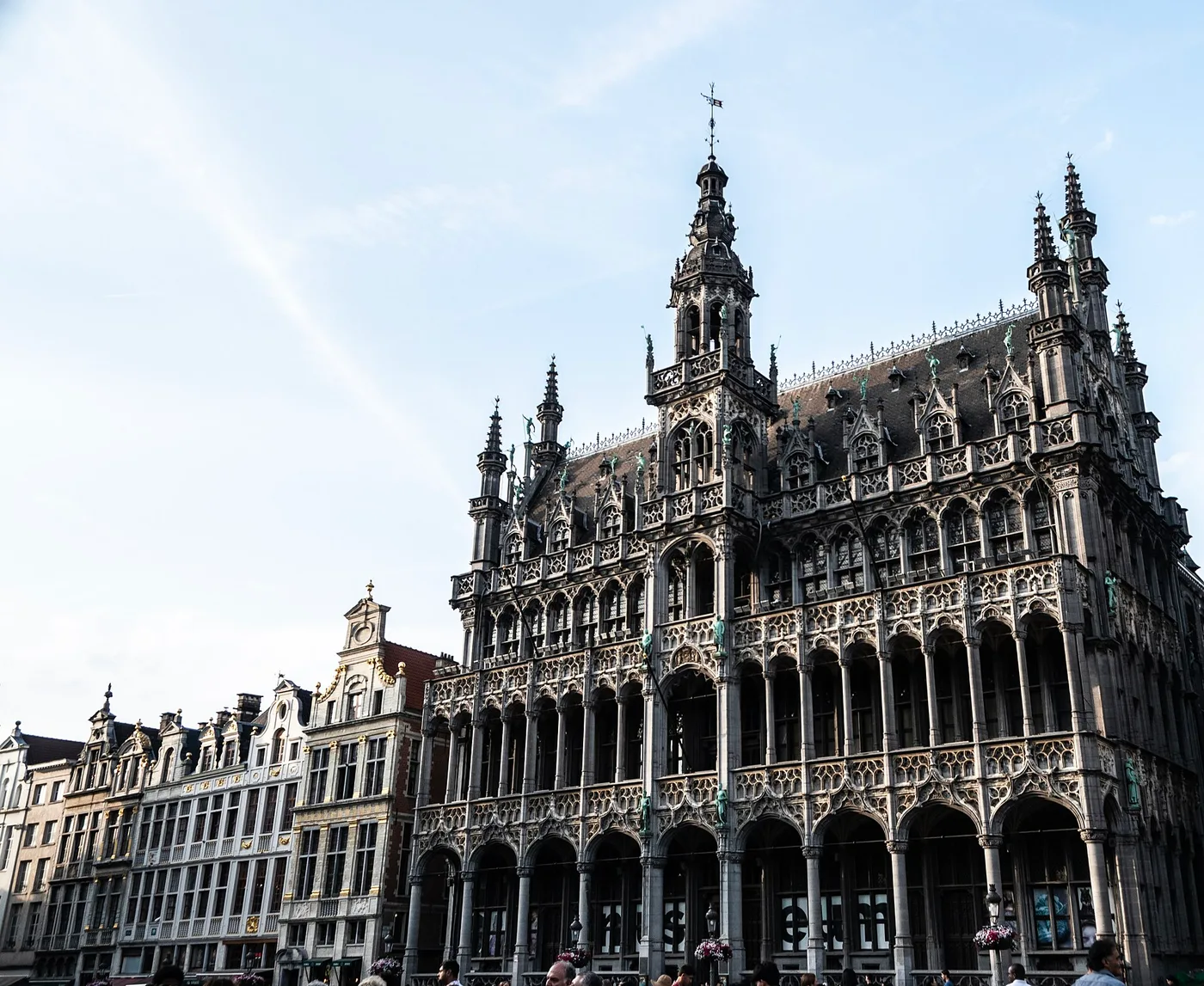
Journalist Ledja Canaj helped establish the organisation in February 2022 and ShqipVille later that year, as described in her television appearances and the organisation’s own archive. In the radio interview below, featured on ShqipVille’s website, she tells the story of the project.
The current website remains the best starting point for exhibitions and contact. An address in an archive is not a promise of walk-in access every day: check the current programme before making a special trip. Small organisations often fit public activities around the practical work that keeps them running.
Albanian at home, French or Dutch at school
Brussels-Capital is officially bilingual French and Dutch. Families may also use Albanian, English and other languages in daily life, but citizenship data cannot tell us who speaks which language or how well. A Belgian child with Albanian-speaking grandparents may be absent from every foreign-citizenship row in this article.
The official Albanian diaspora school directory lists Shkolla shqipe “Vatra” at Rue de Koninck 63, 1080 Molenbeek. This is a useful, concrete starting point for parents. The listing does not supply a current timetable, age range, fee schedule or enrolment total; confirm those with the school. See the school directory.
On 12 March 2026, Albania’s embassy reported a Brussels meeting recognising Albanian-language teachers and their work with younger generations. The report and original photographs document that effort. They do not establish that every Albanian-origin child attends classes, or that the same language is used in every family.
Open the original photo report
Two generations, one conversation
In a short ShqipVille video, Safije Tahiraj and Flora Bresa describe lives linked to both Brussels and Kukës. The publisher introduces Safije as Brussels-born and a primary-school teacher in Belgium, and Flora as born in Kukës and living in Brussels for twenty-three years at the time of filming. The conversation was published in January 2023; those biographical details belong to that moment.
Listen to the people as individuals. One interview cannot establish a community-wide rate of language loss or a common attitude to return. It can show something a table cannot: work and family life settled in one place, affection still reaching another. Being at home in Brussels does not require giving up that second connection.
Fritland: working life becomes a Brussels story
Behind the Bourse, Fritland serves a food associated with Belgium. Its Albanian family history also became the subject of Zenel Laci’s Fritland, staged at Théâtre de Poche in 2019. The theatre’s production account describes the family business and Laci’s desire for a life in literature and art. He performed his own story. Explore the original production, photographs and interviews.
A business can become familiar to a city while the migration behind it becomes less visible. Theatre makes that history audible again. Fritland’s own website lists Rue Henri Maus 49 and traces the business to 1978; its present-day operation should be distinguished from the earlier family story on stage.
Laci’s stage, Kryemadhi’s books and Vatra’s classroom reveal different working lives within the same city. A familiar shopfront can be the beginning of a family story; a book or a performance lets the rest of Brussels hear it.
Bringing colleagues into the community
ShqipVille’s January 2023 archive introduces Vanesa, born in Belgium to a family from Drenica, after completing police training in Limburg. Its description says she was working in the Brussels police region and brought colleagues to ShqipVille.
The direction of the visit is worth noticing. A community venue can be somewhere to meet people with a shared background, but also somewhere to bring people who do not share it. That is a small, documented example of belonging extending outwards.
A radio voice, a concert hall, a stage
Radio Jehona e Shqipes connects the community through spoken Albanian. The ShqipVille archive lets readers hear that work directly. In the programme below, Ledja Canaj speaks with Donika Rudi Berishaj about the ReMusica Vocal Ensemble’s Brussels appearance at Flagey during La Semaine du Son in February 2023.
Culture also travels sideways across the diaspora. On 29 November 2025, a Saint-Gilles event brought Arbëresh culture to Brussels through Konica Association and local partners. Arbëresh communities have their own centuries-long history in Italy. Their presence in a Brussels programme is an encounter between different Albanian inheritances, not evidence that the participants all belong to a single migration wave. The embassy’s account and photographs preserve the event.
Schaerbeek: a monument and a football pitch
At Square Prévost-Delaunay, beside Parc Josaphat, Skanderbeg has a place in the Brussels streetscape. The monument makes Albanian history visible in an ordinary urban setting. It is a cultural landmark; it does not identify the ethnicity of the people living around it.
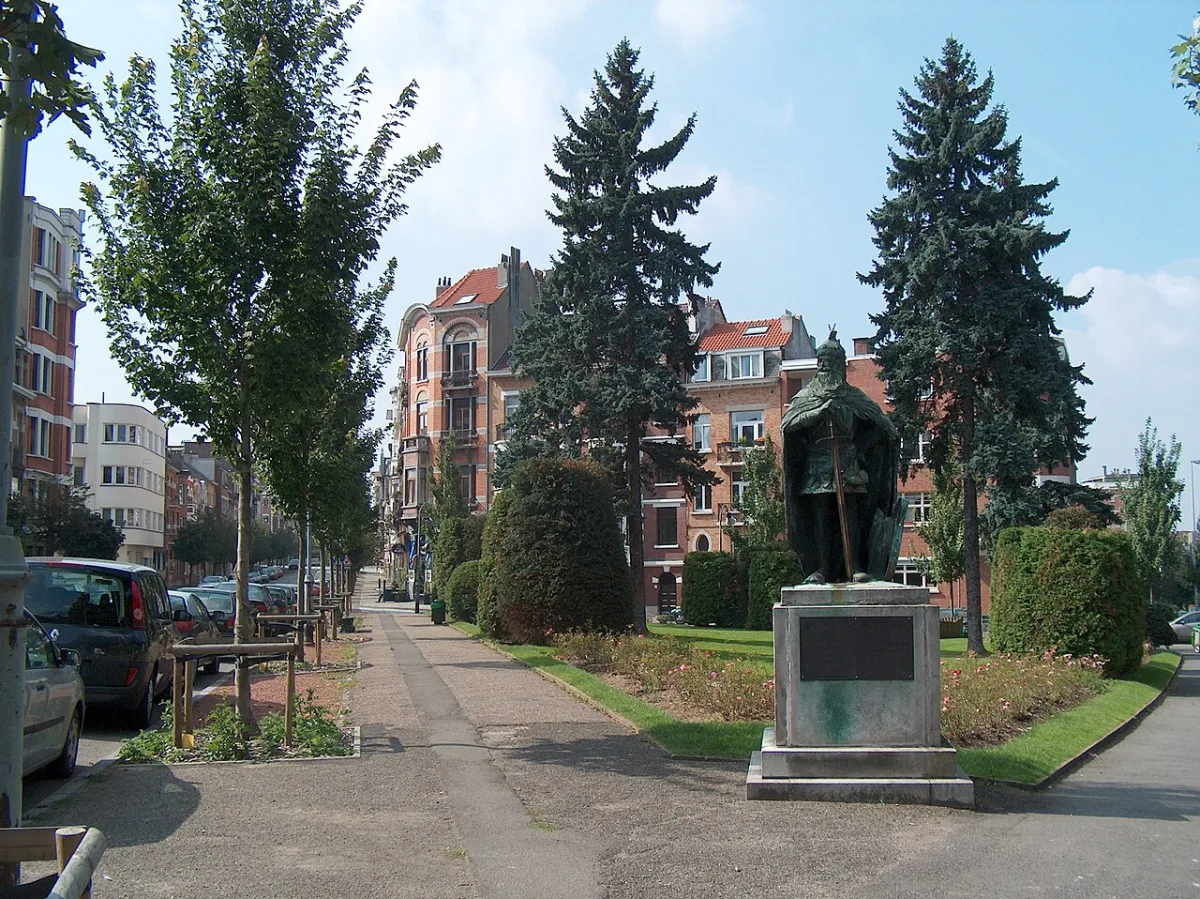
Nearby sporting life offers a different kind of connection. The regional sport.brussels directory lists F.C. Kosova Schaerbeek at Stade Chazal, Avenue Ernest Cambier 2. Use that official listing to reach the club and check current teams and training arrangements. The name expresses a connection to Kosovo; it does not establish the nationality of every player or restrict who may participate.
What is coming up—and what belongs to the archive?
Checked on 11 September 2026, Konitza’s own agenda lists Questions pour une Régularisation in Evere on 30 and 31 October 2026. It also lists 12 November in Ottignies–Louvain-la-Neuve, which is outside Brussels-Capital. Confirm venue, time, admission and performance language with the organiser; the short agenda is not a complete booking notice.
Albania’s Independence Day falls on 28 November and Kosovo’s on 17 February. They are useful dates to watch for community programmes, but they are not confirmation of a particular local event. The embassy documented Manneken Pis in Albanian traditional dress and a community gathering on 28 November 2025. See the original photo story. That record is an archive, not a 2026 invitation.
For association photography, Konitza’s gallery credits different contributors, including Gerta Kordalli and Timo Voet for the Arbëresh programme. Browse those original galleries alongside the videos here.
From migration memory to civic life
On 25 March 2026, a conference at the Parliament of the Brussels-Capital Region marked seventy years of Albanian migration to Belgium. The embassy reports that it was convened at the invitation of parliamentarian Kristela Bytyçi. A story once told through arrival and exile was being discussed inside a regional institution. Read the conference report.
The conference brought a migration history into a regional institution. Alongside that public recognition, the smaller encounters in this guide continue: teaching a class, bringing colleagues to a cultural venue and making room for a new audience.
Useful starting points in Brussels
Choose the organisation that matches the task. A cultural association, a municipality, a school and an embassy do different jobs. For a new arrival, the most practical first step is often the relevant public service; for a family looking for Albanian activities, it may be a teacher or an association’s current programme.
- ShqipVille / Maison Culturelle Belgo-Albanaise: culture, exhibitions, radio and community contact; Grand Place 39.
- Konitza: sociocultural activities, theatre and original community galleries; its contact page lists Chaussée de Waterloo 4, Saint-Gilles.
- Vatra school directory entry: Albanian-language learning in Molenbeek; confirm current lessons directly.
- F.C. Kosova Schaerbeek: the regional sports directory’s contact and location.
- Embassy of Albania and Embassy of Kosovo: separate consular authorities; use the one relevant to your citizenship and enquiry.
- BON: civic integration and Dutch-language orientation in Brussels.
- Brussels Expat Welcome Desk: administrative orientation through the Brussels-Capital Region.
Making a life, keeping a connection
Brussels’ Albanian story is not contained in Grand Place, Schaerbeek or a passport field. It moves between them: a school in Molenbeek, a football ground, a theatre, a microphone, a book written for readers who may use another language. Some of those connections are inherited. Others have to be made anew.
For people looking for personal connections across that dispersed city, dua.com offers another way to meet Albanians. It sits alongside the associations, friends and family networks described here.
Follow the wider story in Albanians in Belgium and explore other places through the worldwide community hub. Kryemadhi’s encounter with an old Brussels journal is a fitting thread to carry away: what one generation preserves can become something another generation makes its own.
Frequently asked questions about Albanians in Brussels
How many Albanians live in Brussels?
Brussels-Capital registered 2,886 Albanian citizens and 984 Kosovo citizens on 1 January 2026. These citizenship categories do not count everyone with Albanian roots. IBSA separately records 5,457 residents whose first registered nationality was Albanian; the measures overlap and must not be added.
Is Brussels-Capital the same as the City of Brussels?
No. The region has nineteen municipalities, including the City of Brussels. The city alone counted 567 Albanian citizens and 163 Kosovo citizens in January 2026. Schaerbeek, Evere and Anderlecht have their own municipal totals.
Where do Albanian families live?
Registered Albanian and Kosovo citizens live across all nineteen municipalities. Brussels City and Schaerbeek have the largest combined counts in those two categories. These figures describe citizenship, not ancestry or neighbourhood identity.
Where can children learn Albanian?
The Albanian Centre for Diaspora Publications lists Vatra at Rue de Koninck 63 in Molenbeek. Contact the school to confirm the current timetable, ages and enrolment arrangements. The directory does not publish an audited pupil total.
What is ShqipVille?
ShqipVille is the cultural venue associated with Maison Culturelle Belgo-Albanaise at Grand Place 39. Its programme includes exhibitions, radio and community activities. Check its website before visiting, as a listed address does not guarantee daily public opening.
Are the community videos current events?
No. The four embedded videos were published by Maison Culturelle Belgo-Albanaise in January and February 2023. They document community members and cultural work. Each includes a date, context and a direct publisher link if embedded playback is unavailable.
What Albanian events are planned in Brussels?
As checked on 11 September 2026, Konitza lists Questions pour une Régularisation in Evere on 30 and 31 October. Confirm practical details with the association. Its 12 November performance in Ottignies–Louvain-la-Neuve is outside the Brussels region.
How can I meet Albanians in Brussels?
Try a public programme at ShqipVille or Konitza, contact an appropriate school or sports club, or use dua.com for personal connections. Confirm participation and visiting arrangements with each organisation rather than assuming every activity is open to walk-ins.