
Fjolla & Arbër
- Engaged in 2025
- In a relationship since 2024
- Germany

From love to love

Fjolla

Arbër
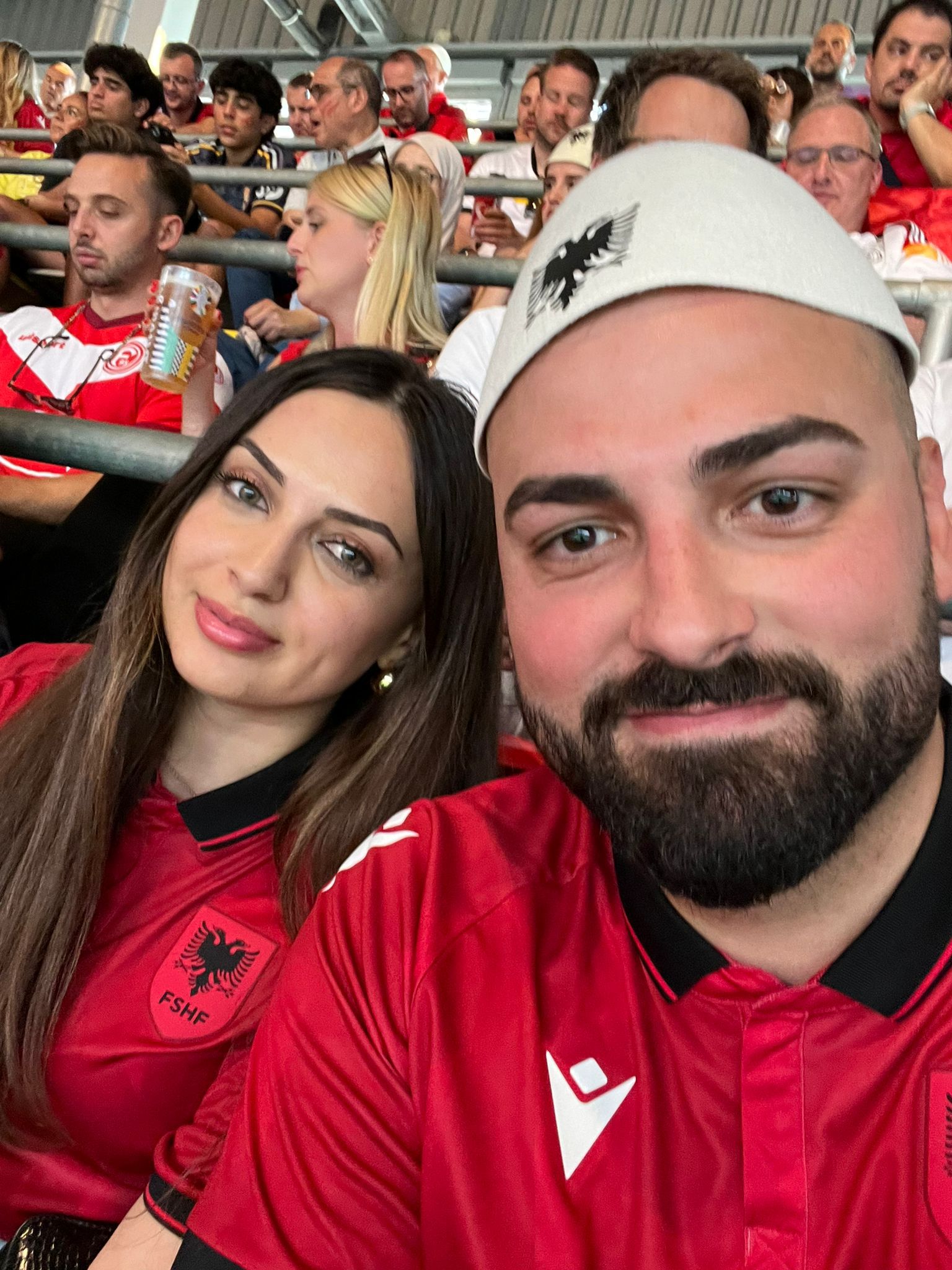
Some love stories begin with a glance, some with a mistake, and some when you encourage a friend to try an app—and then watch her find happiness. Today Fjolla and Arbër are engaged and planning their 2026 wedding. Without a man who refused to give up and a friend who fell head over heels in love, their story might never have begun.
Two Albanians, two paths to Germany
Fjolla, 29, is from Suhareka. She moved to Stuttgart in 2018 on a work visa. Far from home and family, she built her life around work and discipline: two jobs, a relentless pace and little room for anything outside the plan. Life had taught her to rely on herself, far from everything that had once felt easy.
Arbër, 31, is from Strellc and was born and raised in Germany. Fully integrated into the country where he lives and works, he joked, “I’ve become just like the Germans.” Beneath the humor, however, he knew exactly what he wanted: an Albanian woman who shared his language, traditions and roots. It was not a casual preference; it was a principle.

An app that did not work—until it did
In October 2023, Fjolla opened dua.com for the first time with little hope, plenty of curiosity and no patience for half-hearted conversations. That was exactly what she found: men who did not reply, chats that died after “Hey,” and matches that went nowhere. After a few weeks, she deleted the app without drama or regret. It simply did not feel like her place.
Then she met her friend Drenusha for coffee. As usual, the conversation turned to relationships and life. Even though Fjolla had just deleted the app herself, she gave her friend direct advice:
“Try dua.com. There are Albanians there, and you might find the love of your life.” Drenusha did. Not long afterward, Fjolla heard that her friend was talking to someone and that things were becoming serious.
The news stirred something in Fjolla. How could the app fail for her and work so quickly for her friend? Maybe the app had not been the problem. In February 2024, she opened it again—this time with a different outlook.
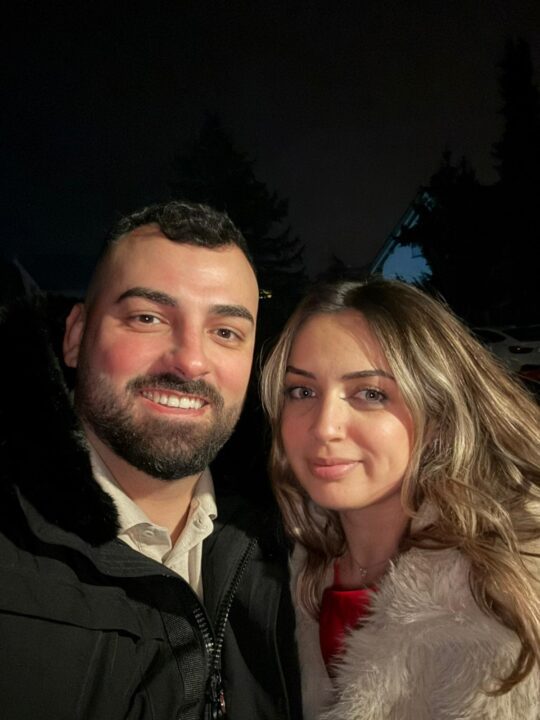
His German and her Albanian
Arbër had heard about dua.com by chance during a conversation with friends. The idea first came as a half-joke: “Maybe I should try it sometime.”
For him, however, it was not a game. He knew what he wanted, and apps such as Tinder had made it clear he would not find it there. When he joined dua.com, he joined with purpose.
He set the search radius to 200 kilometers and started browsing. Conversations came and went quickly, stopping at “Hey, how are you?” without leading anywhere. It all felt familiar.
Then Fjolla’s profile appeared. He later described the moment simply: “When I saw her eyes, I fell in love immediately.”
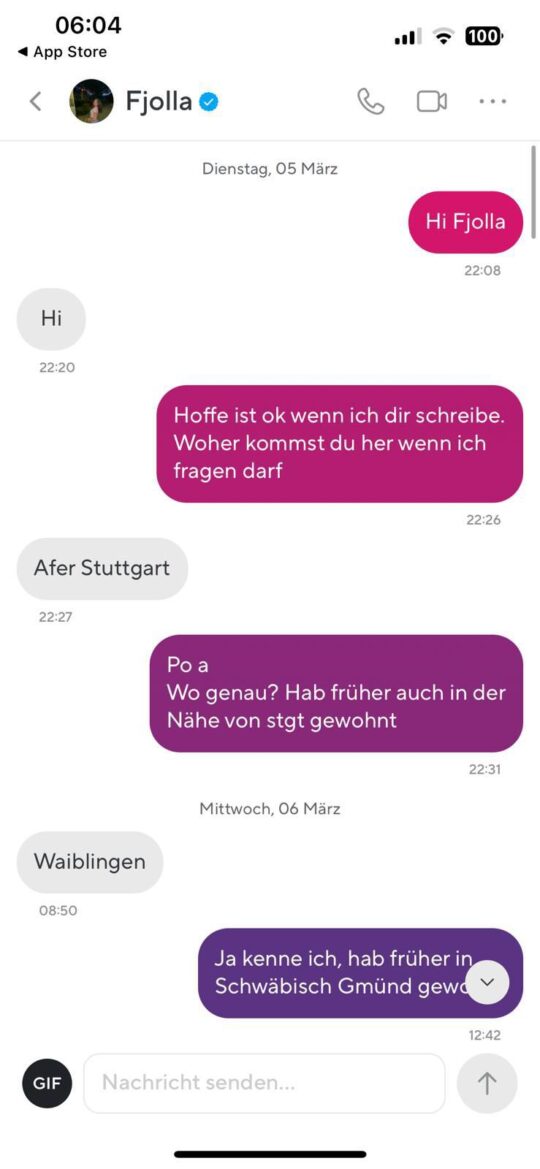
He liked her profile. Fjolla liked his in return. They matched on March 6, 2024.
Arbër wrote to her in German. It seemed logical because she lived in Germany. Fjolla answered in Albanian—not by accident, but deliberately. She was not looking for a German partner; she wanted an Albanian, and language was her first test. Arbër did not immediately understand what was happening. “I started getting nervous—what is going on with this girl?” he remembers. But he stayed, and soon he too was speaking the language of the heart.
After four or five days of chatting in the app, they moved to Instagram and then exchanged phone numbers. Arbër had a Premium account for a reason: he wanted to avoid fake profiles and had decided that if he invested his time, he would do it seriously.
Her voice and the night he could not forget
Their first call happened on a Saturday. Fjolla called while Arbër was absorbed in a PS5 match. He answered, spoke briefly, hung up and continued playing. “I ended the call and went straight back to the game,” he says now with a laugh, aware of how unbelievable that sounds.
The evening did not end there. As soon as the match was over, Arbër found himself thinking about Fjolla’s voice—its calm tone and the way she spoke. He felt he had let something important pass before fully recognizing it, so he called her back that same night.
From then on, their calls became a ritual. Every evening, without ever formally arranging it, they talked. Fjolla worked two jobs and often finished late, but she always found time. Their conversations lasted for hours. Sleep called, but neither heart wanted to stop.
Ten days after their match, Arbër made a decision. He drove 250 kilometers to Stuttgart for their first meeting.
“Shall we meet again?”—the first date and the question that could not wait
They met at Fjolla’s workplace and talked for three hours—about life, family, home and love. They were simply two people discovering how much they had to say to one another. “We talked about everything. I loved my conversations with Fjolla,” Arbër says.
When Arbër returned to his brother’s home, his mind stayed with those three hours, their conversation and the way Fjolla had spoken. He could not let the evening end without acting, so he sent her a message: “Shall we meet again?” Fjolla said yes.


Six months of fighting for the heart of an independent woman
Fjolla had been lonely in Germany—not in a way defined by sadness, but as someone who had built everything alone and become fiercely independent. With family far away, hard work and repetitive days, she had closed the doors of her heart without noticing. Letting someone in had never felt necessary.
“Arbër did so much for this relationship, while I was still confused,” Fjolla says honestly. “The interest came more from him than from me.”
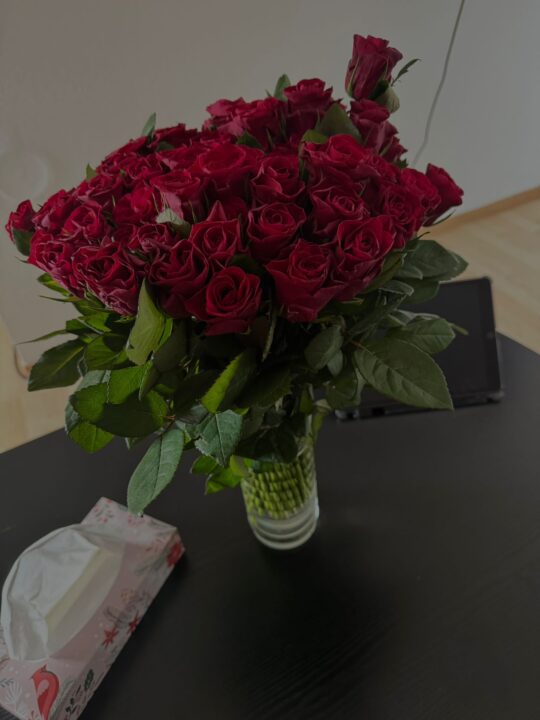
Arbër felt it. As a determined man, he knew what he had to do to win the love of his life. He fought not with grand declarations, but with presence: flowers that arrived without warning, 500-kilometer round trips without complaint and surprises that showed real commitment. “I even paid speeding fines for love—I got plenty of tickets,” he jokes. Behind the humor was a simple truth: love would eventually win.
Fjolla finally trusted her heart. “This man is serious,” she realized.
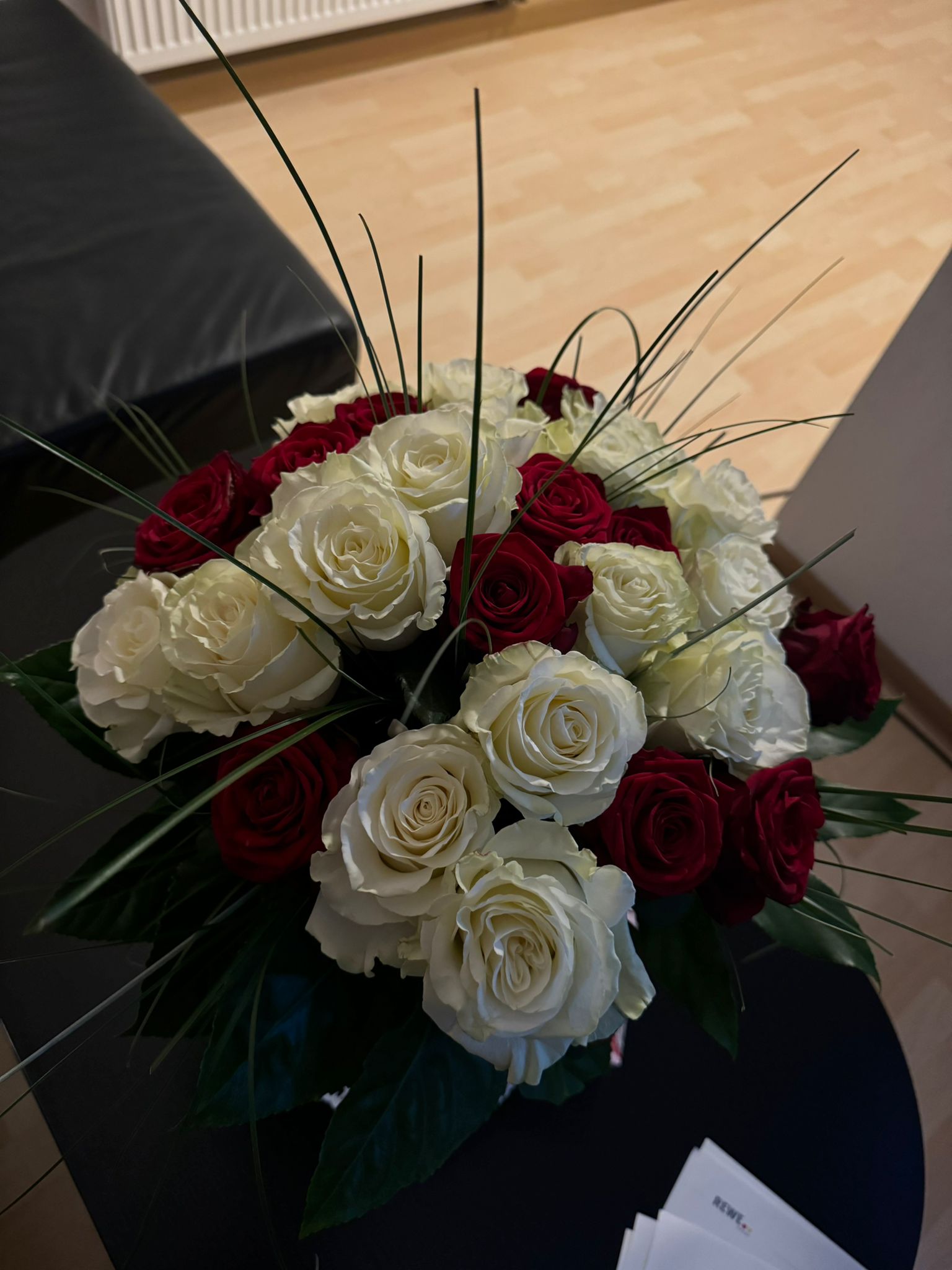
After six months of meetings, calls and patience, they officially became a couple on Friday, September 27, 2024. Arbër brought her 27 flowers.
The ring, the families and a name already chosen
Arbër’s mother sensed the change early—mothers have a radar that is difficult to fool. “Something about this boy has changed. He must be in love.” 🙂
Fjolla first shared the relationship with her cousin, then with her mother and father. Her parents lived in Croatia and initially met Arbër through a phone screen, but distance did not stop him from winning their hearts.
After three months as a couple, Fjolla moved in with Arbër. New Year 2025 brought both families together under one roof—a moment neither could have imagined only months earlier.
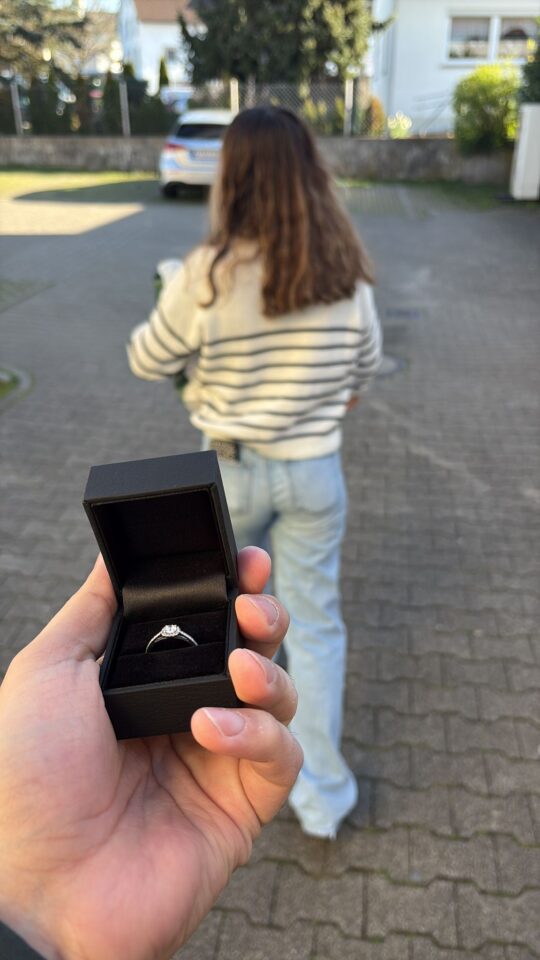
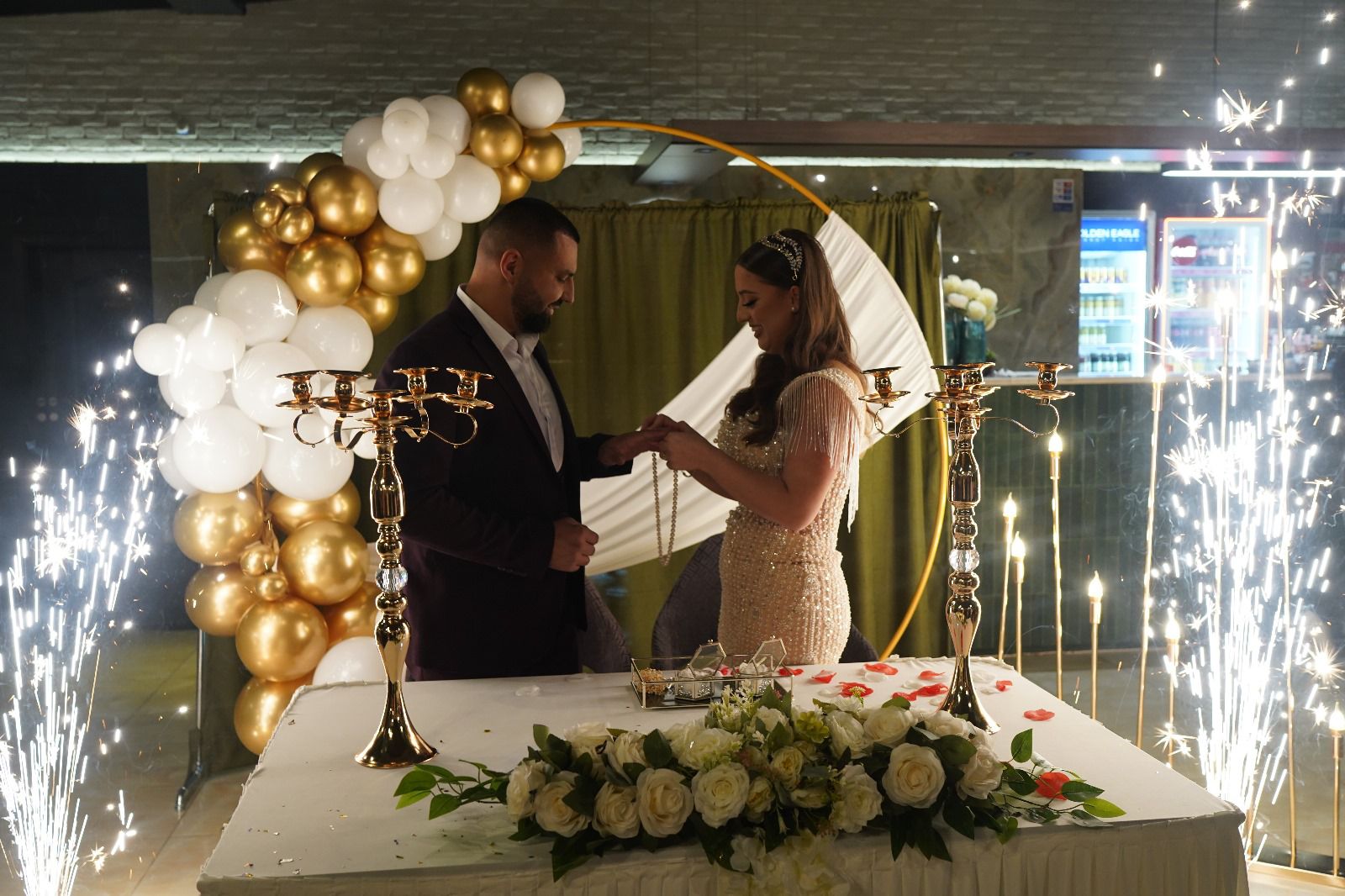
In April 2025, Arbër planned every detail of his proposal with help from his sister, exactly as Fjolla had dreamed it might happen. He proposed, and Fjolla said yes.
Their wedding is planned for 2026 in Germany. And if they have a daughter?
“We plan to name her Dua.”
Love finds you, whether you expect it or not
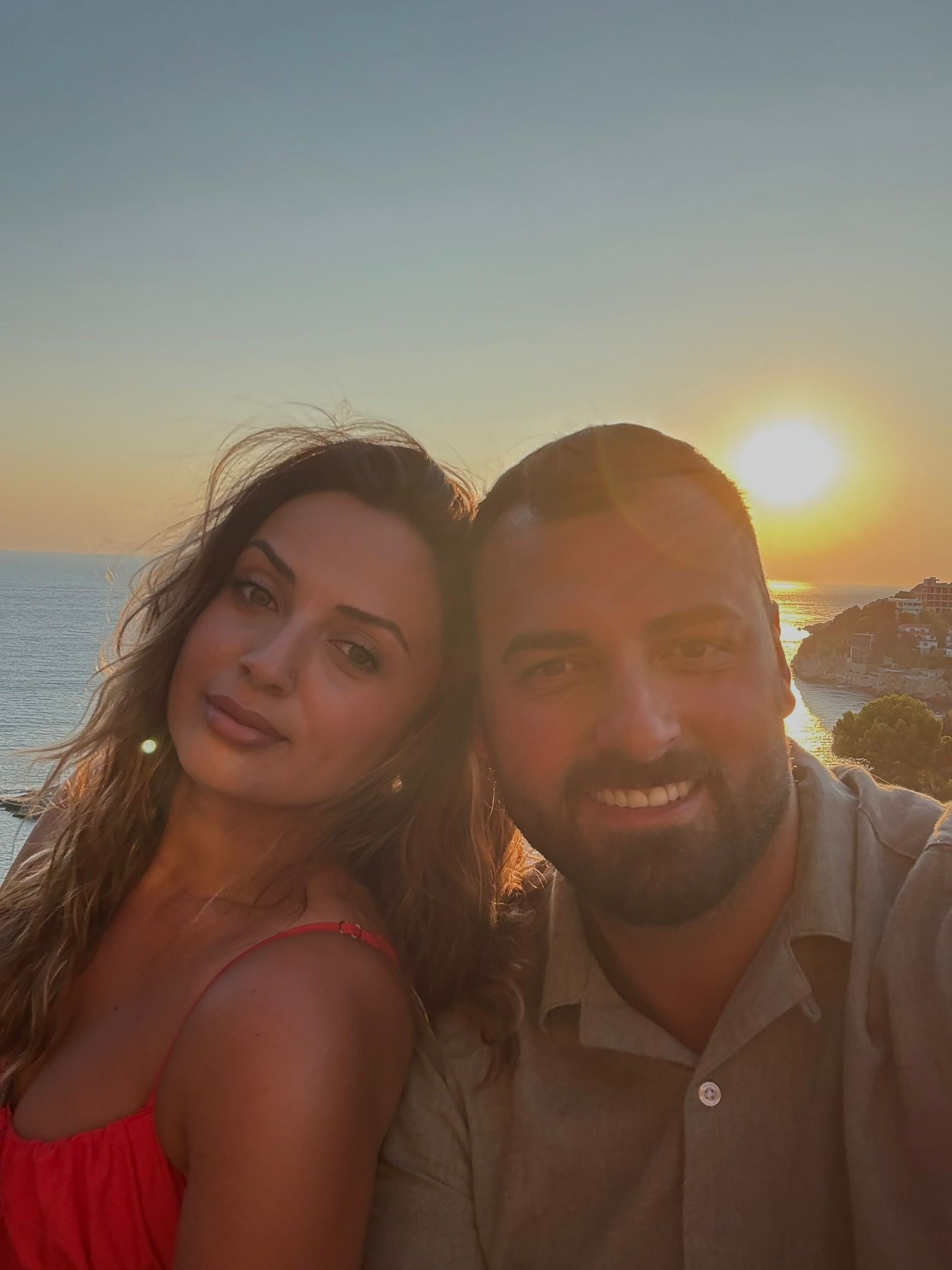
Fjolla and Arbër describe each other with the same words: loving, empathetic and understanding. They took their first holiday together in Ulcinj, and after seven months they knew their story was real.
For Arbër, language and tradition were never just preferences; they were non-negotiable. “It was very important for me to find an Albanian woman and preserve our traditions and language.” Fjolla shares that feeling.
And what would they say to people who still hesitate?
“I did not believe in it much at first, but today I am proof that love can begin with a match. Do not hesitate—it could be the start of your most beautiful story.”


Find the love of your life