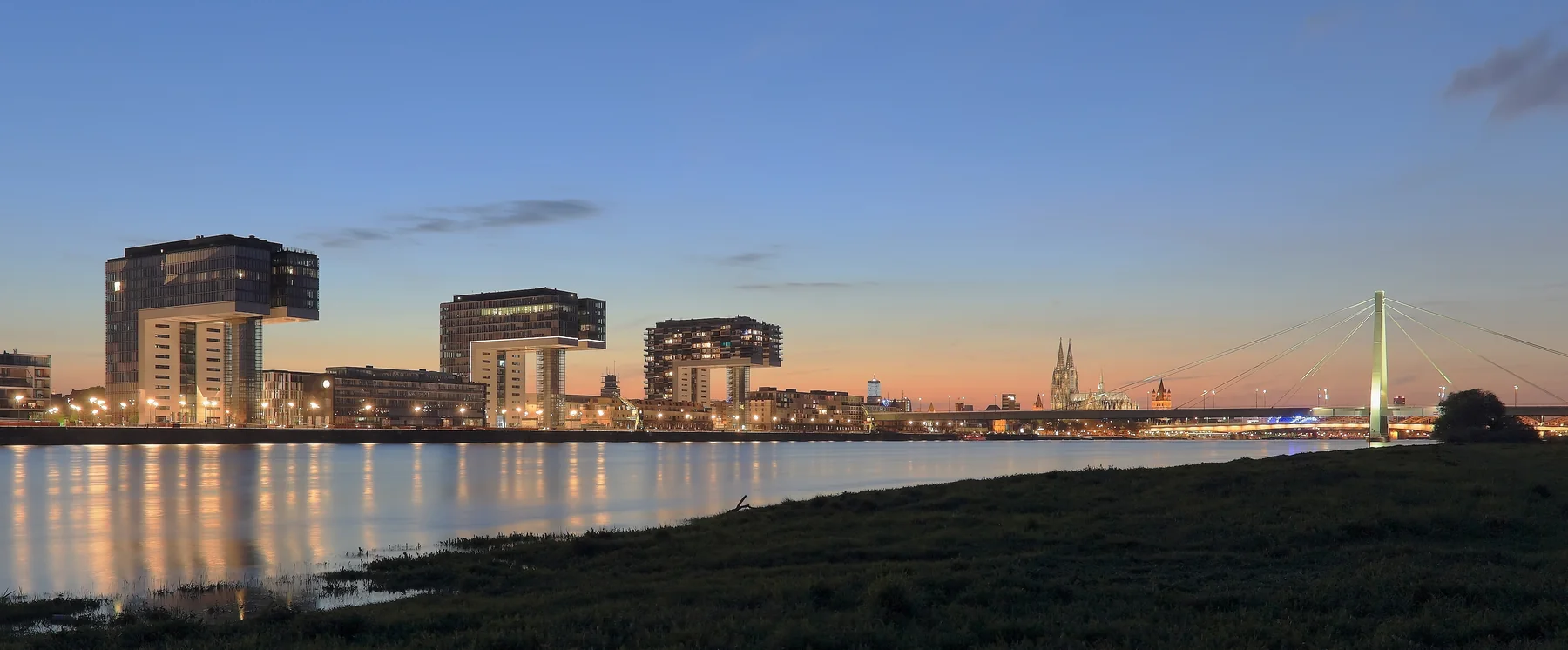
A book club creates a film festival. A pianist turns inherited melodies into new music. Children learn written Albanian at three schools across the city. Albanian Cologne is a network of people making things happen, from Filmhaus to a classroom in Höhenhaus. This guide follows those documented connections, explains the city’s latest nationality figures, and offers practical ways to meet Albanians, take part and build meaningful relationships.
On the programme for Cologne’s first Albanian Film Festival in September 2026, a local book club appeared as the organiser. That small detail is a useful place to begin: the community was making its own occasion to gather. The story below follows that work into music, education, cinema and everyday life, with the people and sources named rather than an imagined portrait of one uniform community.
Cologne, introduced by the dua.com team
The dua.com team’s short introduction is a starting point for exploring Cologne. The guide below adds independently checked city data, named cultural projects and practical local contacts.
For more on this topic, read Albanians in Düsseldorf and Albanians in Germany.
A book club opens a cinema door
ABC Book Club Köln began with a familiar idea: people meeting to discuss literature in Albanian. In September 2026, that circle extended to a public cinema. The first Albanian Film Festival Köln programme at Filmhaus ran from 26 to 29 September, bringing together 15 short and feature films. The advertised selection crossed Albania, Kosovo, North Macedonia and the diaspora. Screenings were advertised in their original languages with English subtitles, making the programme accessible beyond an Albanian-speaking audience.
In a pre-festival interview, organiser Brigite Peposhi described volunteers from different parts of the Albanian-speaking world working together. The book club reads international literature in Albanian; its interest in film grows from that wider cultural curiosity. The organisers described the first edition as a volunteer effort, self-funded at the time of the interview, and said they hoped to build a lasting local network.
That is a more useful introduction to Cologne than a list of famous surnames. A community becomes visible when somebody books a room, chooses a film, prepares a discussion and invites people beyond an existing circle. For a newcomer, the practical starting point is the festival’s own announcements. The September edition is now past; a hoped-for annual festival is not yet a confirmed next date.
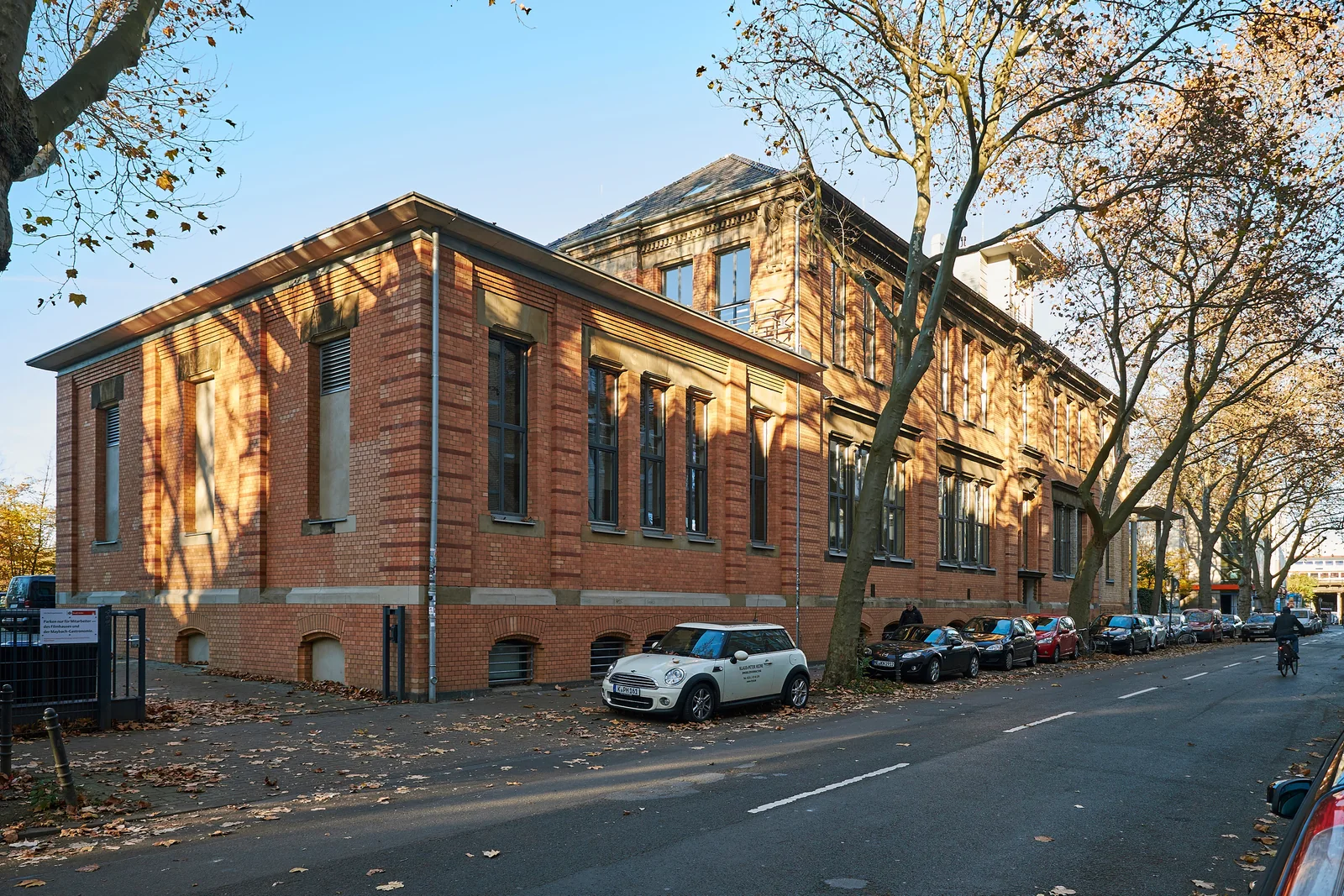
The venue is also part of the story. Filmhaus, at Maybachstraße 111 in Neustadt-Nord, is a Cologne cinema and cultural venue. It is not a permanent Albanian community centre. Checking its current programme alongside the organisers’ page is the best way to distinguish a new opportunity from a poster for an event that has already happened.
The opening night, through the organisers’ camera
Meet Albanians in Cologne, and make a new connection
You do not need to arrive with an established circle of friends. A public screening, a concert or a volunteer project gives a first conversation somewhere to begin. Some people are looking for Albanian-speaking friends; others want to meet someone who understands the family conversations, humour and expectations that can take longer to explain in another language.
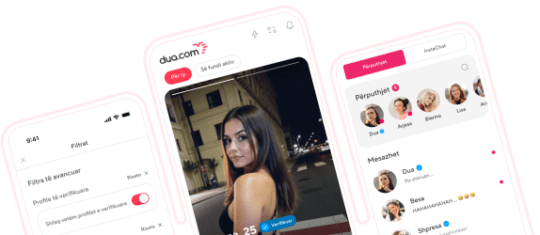
dua.com offers another way to meet Albanians in Cologne and beyond. If you are looking for a serious relationship or hoping to find your soulmate, be clear about what you want and where you can realistically meet. Cologne and the surrounding cities are connected, but two people’s working hours and travel plans still matter. A thoughtful introduction about your interests is more useful than assuming shared background means identical lives.
You can start a new connection on dua.com while also building a place for yourself in the city. The association directory below helps with the second part: people and organisations to follow, join or contact. No verified Cologne-specific dua account total is published in this guide, and app membership would not be a population census in any case.
How many Albanians live in Cologne?
There is no verified official total of ethnic Albanians in Cologne. The city’s register counted 2,711 non-German Albanian nationals and 2,698 non-German Kosovo nationals on 31 December 2025. These are separate citizenship categories, covering registered main and secondary residences within Cologne. They do not count everyone with Albanian family roots or everyone who speaks Albanian.

| Country of reference | Non-German nationals | Estimated migration background | Germans with second nationality |
|---|---|---|---|
| Albania | 2,711 | 3,064 | 243 |
| Kosovo | 2,698 | 3,913 | 1,114 |
| North Macedonia | 2,385 | 3,245 | 734 |
Source: Stadt Köln, 2025 population yearbook, Table 113; definitions in Graphic 106. The columns overlap: do not add them. The city estimates migration background from register attributes. A German second nationality is only one part of that broader measure. The North Macedonia row supplies context; it is not automatically an Albanian row.
Someone can become German and remain Albanian-speaking. A Kosovo citizen may identify with another ethnic community. A child may grow up with more than one family language. The register cannot settle those questions. It does, however, give a transparent, dated picture of legal nationality and a broader country-related background, without requiring an invented ethnic estimate.

Two citizenship groups, two different paths
The comparable city yearbooks show different five-year changes. The number of non-German Albanian nationals rose from 1,795 in 2020 to 2,711 in 2025. The Kosovo-nationality count rose from 2,526 to 2,698. Both snapshots use Cologne’s main-and-secondary-residence register, so the comparison stays within the same city and measurement framework.

Those are changes of 916 and 172 people respectively, or about 51.0% and 6.8%, calculated from Table 113 of the 2020 yearbook and its 2025 counterpart. They are two dated snapshots, not a continuous annual trend. Citizenship changes, births, deaths, movement and register corrections can all affect a nationality count.
One more city statistic makes that caution concrete. Among Albanian nationals, Cologne recorded 531 arrivals and 1,129 departures in 2024, followed by 799 arrivals and 568 departures in 2025. The net balance changed from minus 598 to plus 231. These are moves across the municipal boundary, including moves elsewhere within Germany, rather than a count of people arriving directly from Albania.

The city’s 2025 movement report, Table 4, documents the change; it does not explain individual motives. A move to a neighbouring municipality can leave a person’s job, friendships and cultural life in Cologne intact. That is one reason administrative boundaries and the everyday reach of a community need to be read together.
A community you can find through places
The useful map of Albanian Cologne is a map of doors you can actually approach: a school office, a cinema, an association’s programme or a listed congregation. The verified locations span both sides of the Rhine. Höhenhaus, Kalk and Bilderstöckchen appear in the city’s Albanian teaching list; Neustadt-Nord and the Südstadt appear in the cultural story.

This does not establish an Albanian residential district. A school can serve pupils from elsewhere, and a concert can attract people from several cities. The map therefore locates services and venues, rather than colouring neighbourhoods according to an ethnicity the available data do not measure. Use the street addresses in the directory to plan an actual visit.
Keep the wider Rhine network in view without merging it into Cologne. Düsseldorf has its own Albanian organisations and guide. Leverkusen, Bonn, Troisdorf and Bergisch Gladbach are separate municipalities. An event near Cologne may still be relevant to you, but a neighbouring centre is not a Cologne institution and its members are not additional Cologne residents.
For a first visit, choose the occasion before choosing the neighbourhood. Follow a cinema’s programme, ask a school about the relevant teaching group, or contact an association about volunteering. That gives you a specific reason to arrive and someone who can explain the next step, rather than sending you to an address on the assumption that a community gathering happens there every day.
From migration histories to a public cultural life
Albanian connections to Cologne have more than one starting point. People with roots in Albania, Kosovo and Albanian-speaking communities elsewhere did not all arrive through the same legal route, in the same decade or for the same reason. It would be misleading to attach one founding year to the whole community.
The city’s own history of nationalities describes postwar labour recruitment and subsequent arrivals from Yugoslavia, including before the wars of the 1990s. At national level, West Germany’s recruitment agreement with Yugoslavia dates to 1968. That agreement is context for migration to Germany; it is not evidence of the first Albanian arrival in Cologne. Former-Yugoslavia statistics cover many peoples and successor states.
Individual accounts can bring that broad history closer without pretending to represent everybody. Director Visar Morina dates his arrival in Germany to December 1994 in a direct interview. His later Cologne education and film career offer one documented route from migration into public cultural work. Other lives follow different routes through family, study and employment.

There is also a less obvious Cologne connection: Deutsche Welle began broadcasting in Albanian in June 1992, during the broadcaster’s Cologne era. Its own anniversary account describes an audience across Albanian-speaking regions and emigration. DW’s radio headquarters moved to Bonn in 2003. The link belongs to Cologne’s media history; it should not be advertised as a present-day Cologne office.
The timeline traces documented institutions and careers, rather than claiming a complete migration history. It leads from broadcasting and education to a cultural association and a film festival: different ways Albanian voices became part of the city’s public life.
Where children can learn Albanian in Cologne
Cologne lists three Albanian heritage-language teaching locations in its May 2026 school directory. The provision is called Herkunftssprachlicher Unterricht, usually shortened to HSU. It supplements a child’s ordinary schooling; the listed addresses are host schools, not three separate full-time Albanian schools.
| Neighbourhood | Listed Albanian HSU address | Host school type |
|---|---|---|
| Höhenhaus | Von-Bodelschwingh-Straße 24, 51061 Köln | Community primary school |
| Kalk | Falckensteinstraße 34, 51103 Köln | Municipal Catholic Hauptschule |
| Bilderstöckchen | Reutlinger Straße 50, 50739 Köln | Community Hauptschule |
Source: Stadt Köln’s May 2026 location list, page 1. The city describes HSU for grades 1–10, generally in the afternoon for three to five hours a week. Eligibility normally follows residence in Cologne or attendance at a Cologne school. A school’s label does not, on its own, tell you which current group your child can join.

Begin with the city’s HSU instructions: contact a listed school office and ask for the Albanian HSU teacher. The teacher checks language prerequisites and handles registration. Confirm the current group and timetable directly; the PDF does not provide weekly class times. Enrolment is binding for the school year, so this is a regular learning commitment rather than a casual drop-in activity.
For a family, that conversation is also a chance to explain what the child already understands, speaks, reads and writes. A familiar home language does not automatically mean the same level of confidence in written Albanian. Starting with the teacher’s assessment is more useful than guessing a level from age or family background.
Keeping Albanian alive beyond the classroom
A language needs ordinary occasions as well as lessons: choosing a book, understanding a song, following a film or speaking with relatives without someone translating every sentence. Cologne’s cultural organisations offer different settings for that practice. They are not interchangeable, and none requires every participant to have the same relationship to Albanian.
ABC Book Club’s international reading in Albanian gives adults a reason to discuss more than daily routines. A film programme with English subtitles can make room for a partner or friend who does not speak Albanian. At a concert, a familiar melody may provide the first connection even when the audience’s language skills differ. These are ways to take part without treating fluency as a test of belonging.
For adult beginners, school HSU is the wrong service. Sprachschule Aktiv Köln advertises Albanian courses and private tuition; it is a commercial provider, separate from the city’s school offer. Ask about current availability, teaching level and format before making plans. An advertised language is not a guarantee that a particular group is currently running.
Within a family or relationship, it helps to name the goal. Reading with a child, talking to grandparents and learning enough to join a dinner conversation are different starting points. Choose an activity that fits that goal, then return to it regularly. The strongest connection between school and culture is often that simple: the language has somewhere to be used again.
URACult: making the next gathering happen
URACult e.V. was founded in Cologne in 2014. Its own account describes support for Balkan music and art through concerts, cultural events, festivals and work with young musicians. Its programme provides an established route into the city’s Albanian cultural life, alongside the newer film initiative.
The association’s public invitation welcomes people of Albanian and other nationalities. That matters in a city where friends, partners and colleagues do not necessarily share the same first language. Music, theatre, painting and dance offer several reasons to participate. The association is a cultural network, not a substitute for the whole community or a register of everybody living in Cologne.

A concrete example came on 24 January 2026, when URACult presented Jehona Kicaj’s novel ë at Altes Pfandhaus, Kartäuserwall 20. The announced reading connected language, inherited memory and the Kosovo war as experienced from the diaspora. The association’s March retrospective confirms the evening and names a musical programme with Gert Kapo, Dorina Porodini, Migen Begolli and Epaminondas Ladas.
The pairing is revealing: a novel can open a difficult conversation, and music can keep people in the room together afterwards. That is an editorial reading of the programme, not a claim to have witnessed private conversations. For future participation, use URACult’s membership route or contact form. Event locations vary; a correspondence address should not be treated as a daily open community centre.
The association’s own camera makes this cultural life tangible. Its September 2026 posts show Petrit Çarkaxhiu’s concert at Altes Pfandhaus, while its video archive reaches back to earlier Cologne gatherings.
Petrit Çarkaxhiu and the audience at Altes Pfandhaus
URACult Classics — a portrait of the gathering
From the archive: Hava Bekteshi was already part of URACult’s Cologne programme in 2016, a decade before her appearance at the first Albanian Film Festival Köln. The recordings below document earlier events, with their original dates kept visible.
ETHNOSpring — Hava Bekteshi
URACult Classics — Flaka Goranci
Gert Kapo and the music entrusted to the next generation
Pianist Gert Kapo gives the city’s musical connection a name. A Cologne performance organiser’s biography describes him as born in Tirana and living in Cologne since the mid-1990s. His 2024 album Amanet contains nine original compositions drawing on Albanian and Balkan traditions.
The organiser explains amanet through the idea of something valuable entrusted to another person. It is a fitting way to think about cultural inheritance: a melody does not have to remain unchanged to remain recognisable. Kapo’s documented work across jazz and other musical forms shows tradition being used as material for new work, rather than kept only as a reminder of somewhere else.
His collaborator Bernd Delbruegge’s duo biography links that work to classical piano study at Cologne’s music conservatory and to Kapo’s later roles as pianist, arranger and producer. The collaboration is a local musical relationship as well as an Albanian connection. Follow the artist’s own site for current information; older performance pages document a career, but do not promise another show on the same date.
For someone new to the city, following a working artist can be easier than searching for a single annual “Albanian event”. A smaller performance may offer a different pace and a different audience from a festival. It also gives an Albanian-speaking and a non-Albanian-speaking friend a shared reason to go out together.
Closing night: the people behind the first edition
The Local Ambassadors live at Kölner Philharmonie
Visar Morina: from a Cologne diploma to international cinema
Visar Morina studied at the Kunsthochschule für Medien Köln from 2004 to 2009, according to the school’s own programme. Its archive identifies Der Schübling as his 2009 diploma film, written and directed by Morina and produced by KHM with Elsani Film Köln. The connection is specific: Cologne helped make his early work possible.
A September 2026 interview biography in epd Film describes the Prishtina-born director as living in Cologne since his youth. Later work retained a regional production connection: Film- und Medienstiftung NRW records Exil filming in Cologne and the surrounding area. “Surrounding area” matters; a regional production should not be turned into a claim that every scene was shot inside the city.
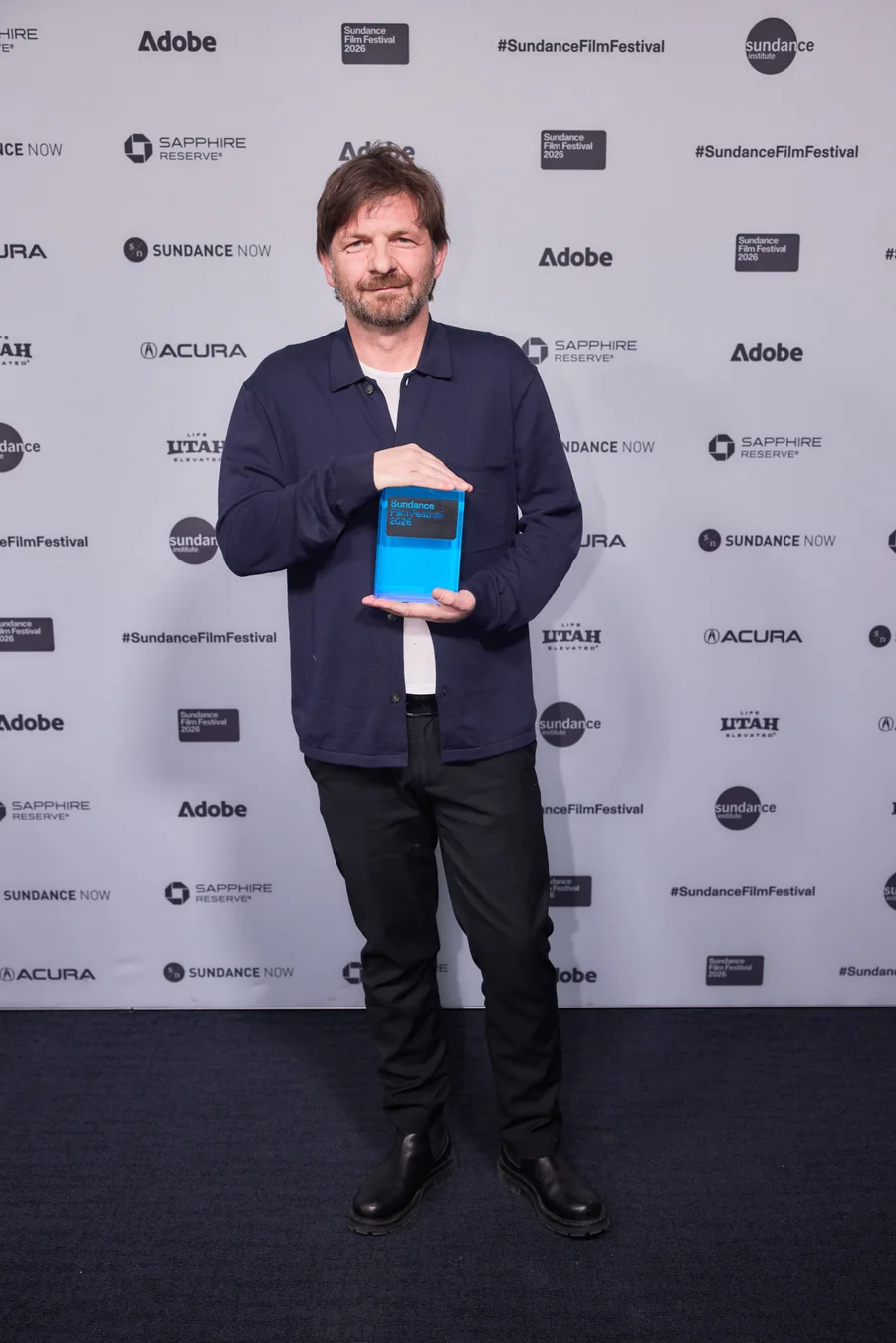
In 2026, KHM reported that Shame and Money / Von Scham und Geld won the World Cinema Dramatic Grand Jury Prize at Sundance and the CineMasters Award at Filmfest München. The school’s award report also identifies cinematographer Janis Mazuch and co-producer Pia Hellenthal as fellow KHM alumni. This is a creative network with Cologne roots, rather than a success story belonging to one nationality alone.
Morina’s film also appeared in the first Albanian Film Festival Köln programme. That brings the story back to a local screen: international recognition and community curation can meet in the same city. The photograph here was taken at Sundance, not at the Cologne festival, and the programme is not evidence that every advertised guest appearance occurred.
The festival’s own photographs now document Morina’s local appearance: after the 28 September screening, he spoke with Genc Hoxha and the audience at Filmhaus. The organisers describe that screening as sold out.
Visar Morina meets the Cologne audience
Albanian as a mother tongue, Kölsch as a home dialect
Actor Kasem Hoxha’s professional profile puts two details next to one another: Albanian as his native language and Kölsch as his home dialect. It lists Tirana as his birthplace and Cologne as his base. A brief casting biography can sometimes express belonging more precisely than a sweeping description of “integration”.
Neither language cancels the other. The profile describes a working actor who can bring both to a role. It is one person’s professional self-description, not a claim that all Albanians in Cologne speak Kölsch or share his experience. Its value is in the specificity: Albanian and Cologne identities can be present in the same everyday working life.
Read alongside Kapo’s music and Morina’s films, this gives a broader picture of public visibility. Albanian life in Cologne is not restricted to events advertised as Albanian. It can also appear in a German-language production, a jazz collaboration or a film-school network, sometimes with an obvious heritage connection and sometimes simply as part of the work.
Football connections that belong to Cologne’s record
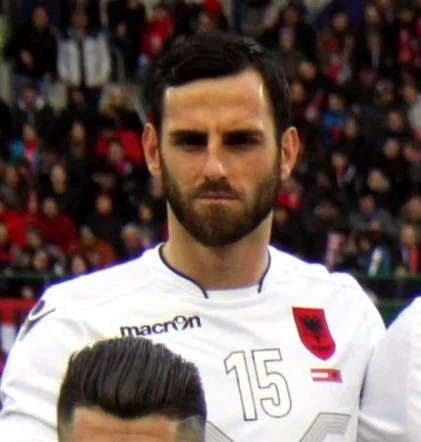
Two former 1. FC Köln players provide clear sporting links. Mërgim Mavraj was a Cologne defender when he represented Albania at EURO 2016. The UEFA tournament report records the club connection; the DFB career record lists 43 Bundesliga appearances for Cologne across the 2014/15, 2015/16 and 2016/17 seasons. Those are league appearances, not a combined total including cup matches.
Leart Paçarada, a Kosovo international, joined Cologne in summer 2023. In its 28 August 2025 departure announcement, the club credited his contribution to its return to the Bundesliga: 31 league appearances and eight assists in the promotion season. He then moved to Heidenheim. Both careers belong in Cologne’s sporting story, but neither player should be described as a current FC player on that evidence.
These are professional-club connections, not proof of an Albanian amateur team or a meeting place for every local supporter. Watching a match can start a conversation, while joining a team requires a separate current club contact. A club in Düsseldorf or Leverkusen remains outside Cologne even when its supporters or players travel from the city.
The useful distinction is between representation and participation. A familiar international player may make a club feel closer; a regular local training session creates a different kind of relationship. For the latter, check an actual team’s age group, training location and current availability instead of relying on a name found in an old fixture list.
Faith and different ways of belonging
The Union of Islamic-Albanian Centres in Germany’s member directory lists Albanischer Verein des Friedens at Breuerstraße 41, 51103 Köln, in Kalk. It is a documented contact point for readers looking for an Albanian Muslim association. The listing is undated, so confirm current visiting arrangements and activities before travelling.
A directory entry can establish a name and address without establishing everything else. This guide does not assign the association an unverified founding year, congregation size or teaching programme. The nearby AKSA centre listed in Leverkusen and the association listed in Troisdorf belong to other municipalities, even if they are practical options for some people in the region.
Religious participation is also only one way to belong. Some readers will want a congregation; others will begin with literature, music, school or sport. URACult’s stated respect for political and religious freedom and the film festival’s public programme offer routes that do not depend on a shared faith. Choose the setting that fits your own life, and leave room for people whose relationship to heritage differs from yours.
Work, study and everyday life beyond an event
Community connections often become useful between the occasions that appear on a public calendar. A parent needs to reach the right school office. A new student wants a circle beyond a course. Someone who has moved for work may know colleagues but few people to see at the weekend. The directory below is organised around those practical needs, rather than suggesting one organisation can answer every question.
Cologne has also hosted more formal diaspora networking. GERMIN’s Diaspora Flet programme for 7–9 November 2025 placed the conference at Novotel Köln City, with URACult as local partner. The programme connected diaspora organisations, culture and professional exchange and advertised Albanian with simultaneous German translation. It shows a Cologne meeting point within a wider network; it is not a list of Cologne-owned businesses or Cologne-resident participants.
For local orientation, begin with the Municipal Integration Centre and the city’s relevant services. A cultural association may know useful people, but administrative or school matters should still reach the responsible office. Likewise, this guide does not infer the occupations of Cologne’s Albanians from nationality tables or claim a particular employer hired a known ethnic total.
A workable first month can be modest: settle essential appointments, choose one recurring activity, and follow two or three reliable local programmes. Tell an organiser what interests you, rather than asking only where “the community” is. A book discussion, helping with an event or attending a performance gives a specific starting point and a reason to return.
Finding your people, from friendship to a soulmate
Cologne’s Albanian community comes into focus through repeated connections: children returning to lessons, volunteers organising another evening, a musician finding collaborators, a director bringing a film back to a local audience. None of these stories represents everyone. Together, they offer several ways into a city that may otherwise feel much larger than your own circle.
For relationships, shared background can open a conversation, but curiosity keeps it going. Ask about someone’s actual life in Cologne: the music they follow, the languages they use, what they want from a relationship and how they imagine their future. Being Albanian does not make two people’s expectations identical. Being clear and considerate gives a new connection room to become something meaningful.
On dua.com, you can meet Albanians for serious relationships and look for your soulmate, whether your next conversation begins nearby or across a city boundary. The local institutions in this guide help you build a fuller life around those connections. Explore the Albanian community hub, the wider Germany guide and neighbouring Düsseldorf when your friendships take you further along the Rhine.
Directory: useful Albanian community contacts in Cologne
Checked on 1 October 2026. Follow the linked organisation for current dates, availability and visiting details. Past events document the community’s work; they are not a current timetable.
Culture and people to follow
- URACult e.V. — Cologne-based cultural association; music, literature and participation. Use its contact form or membership page; venues vary.
- Albanian Film Festival Köln / ABC Book Club — organiser updates following the first edition on 26–29 September 2026. No next edition is assumed.
- Filmhaus Köln — Maybachstraße 111, 50670 Köln. General cinema and cultural venue; check the current programme.
- Gert Kapo — artist information and music; use current announcements to find performances.
Language, families and orientation
- Cologne HSU school office — school-language registration guidance; enquiries +49 221 221-29136. Start with the offering school and its HSU teacher.
- Höhenhaus teaching location — Von-Bodelschwingh-Straße 24, 51061 Köln; Albanian HSU in the May 2026 city list.
- Kalk teaching location — Falckensteinstraße 34, 51103 Köln; Albanian HSU in the same list.
- Bilderstöckchen teaching location — Reutlinger Straße 50, 50739 Köln; Albanian HSU in the same list.
- Sprachschule Aktiv Köln — commercial adult/private Albanian tuition enquiries; confirm current groups and terms directly.
- Municipal Integration Centre Cologne — municipal orientation and education information; not an Albanian-specific service.
Faith
- Albanischer Verein des Friedens — listed at Breuerstraße 41, 51103 Köln, in the Islamic-Albanian umbrella directory. Confirm current arrangements with the association before visiting.
For broader national context and other city directories, return to Albanians in Germany. Cologne’s directory is deliberately local: nearby municipalities remain separate even when their activities are within reach.
Frequently asked questions about Albanians in Cologne
How many Albanians live in Cologne?
There is no verified official ethnic-Albanian total. Cologne’s register recorded 2,711 non-German Albanian nationals and 2,698 non-German Kosovo nationals on 31 December 2025, including main and secondary residences. The broader country-related migration-background estimates are different, overlapping measures. Neither citizenship nor a country of reference is the same as ethnicity or Albanian language.
Where can children learn Albanian in Cologne?
The city’s May 2026 HSU list names teaching locations at Von-Bodelschwingh-Straße 24 in Höhenhaus, Falckensteinstraße 34 in Kalk and Reutlinger Straße 50 in Bilderstöckchen. Contact the school office and ask for the Albanian HSU teacher. Confirm the current group and timetable; these are host schools for supplementary heritage-language teaching, not separate full-time Albanian schools.
Is there an Albanian cultural association in Cologne?
URACult e.V. was founded in Cologne in 2014 and organises cultural work around music and the arts. Its public invitation welcomes Albanian and other nationalities. ABC Book Club Köln is another documented initiative, presenting the first Albanian Film Festival Köln in September 2026. Follow their own channels for participation and future dates; event venues vary.
When was Cologne’s first Albanian Film Festival?
Filmhaus Köln’s first Albanian Film Festival programme ran from 26 to 29 September 2026, presented by ABC Book Club Köln. It listed 15 short and feature films in their original languages with English subtitles. The venue was Filmhaus, Maybachstraße 111. This is a past edition; no date for a second edition is confirmed in this guide.
Which Albanians have a documented connection to Cologne?
Director Visar Morina studied at KHM Cologne from 2004 to 2009, pianist Gert Kapo is described by a local organiser as living in Cologne since the mid-1990s, and actor Kasem Hoxha lists Cologne as his base. Former 1. FC Köln defenders Mërgim Mavraj and Leart Paçarada provide dated football connections. A professional tie does not imply Cologne birthplace.
Is there an Albanian mosque or association in Cologne?
The Union of Islamic-Albanian Centres lists Albanischer Verein des Friedens at Breuerstraße 41, 51103 Köln, in Kalk. Its directory is undated, so confirm current activities and visiting details before travelling. The listing establishes a contact point, not the religion of all Albanians in the city. Cultural, educational and other routes into community life are also available.
Does this guide include Leverkusen and Düsseldorf?
The population figures and school addresses refer to Cologne city. Leverkusen, Düsseldorf, Bonn and Troisdorf are separate municipalities. Their events can still be relevant to someone living in Cologne, but their residents and institutions are not added to Cologne’s figures or labelled as city locations. The linked Düsseldorf and Germany guides provide a wider starting point.
How can I meet Albanians in Cologne?
Follow URACult’s programme, the Albanian Film Festival organisers and Filmhaus, or ask about a suitable recurring activity. Families can contact the city’s Albanian HSU teaching locations. For new connections, serious relationships and finding a soulmate, dua.com offers another starting point. Be clear about your intentions and practical travel plans, and treat shared background as the beginning of a conversation.