Denmark is the Nordic country that decided not to have an Albanian community. In 1998, the year Kosovo went to war, citizens of the Federal Republic of Yugoslavia lodged 98,390 asylum applications across Europe. Sweden received about 3,500 of them. Denmark received 370 — four in every thousand. A year later Denmark did take 2,823 Kosovars out of the camps in Macedonia, but under a law written to send them home again, and most of them went. What grew here instead was quieter and older: Albanian men from the villages around Tetovo who came to work in Copenhagen's factories in the 1970s, and a scattering of Kosovar families across provincial Jutland. This page counts both, and is honest about how much of the counting Denmark's registers simply cannot do.
Last evidence review: 26 August 2026. Every figure carries its reference date and source; where a number is ours rather than an authority's, we say so.
For more on this topic, read Albanians in Sweden: The Community Sweden Never Counted and Albanians in Austria: A 100,000-Strong Community.
How many Albanians live in Denmark?
Denmark keeps some of the most complete population registers in the world. Every resident has a CPR number, every move is recorded, and Danmarks Statistik can tell you the population of any municipality on the first day of any quarter. And it still cannot tell you how many Albanians live here — because Danish statistics record country of origin, never ethnicity or language. The question has no clean answer. What follows is the honest version: what is counted, what the counting misses, and why the gap is unusually large in this particular country.
The two codes that unambiguously mean Albanian
On 1 July 2026 the register held 5,092 people of Kosovo origin — 2,931 immigrants and 2,161 born in Denmark — and 1,836 of Albanian origin, of whom 1,613 were immigrants. Together, 6,928 people. Against a Danish population of 6,031,699 that is 0.11 per cent, roughly one resident in 870.
| Country of origin | Immigrants | Born in Denmark | Total |
|---|---|---|---|
| Kosovo | 2,931 | 2,161 | 5,092 |
| Albania | 1,613 | 223 | 1,836 |
| North Macedonia | 4,569 | 2,849 | 7,418 |
| Yugoslavia (defunct code) | 6,687 | 5,055 | 11,742 |
| FR Yugoslavia + Serbia and Montenegro | 1,232 | 698 | 1,930 |
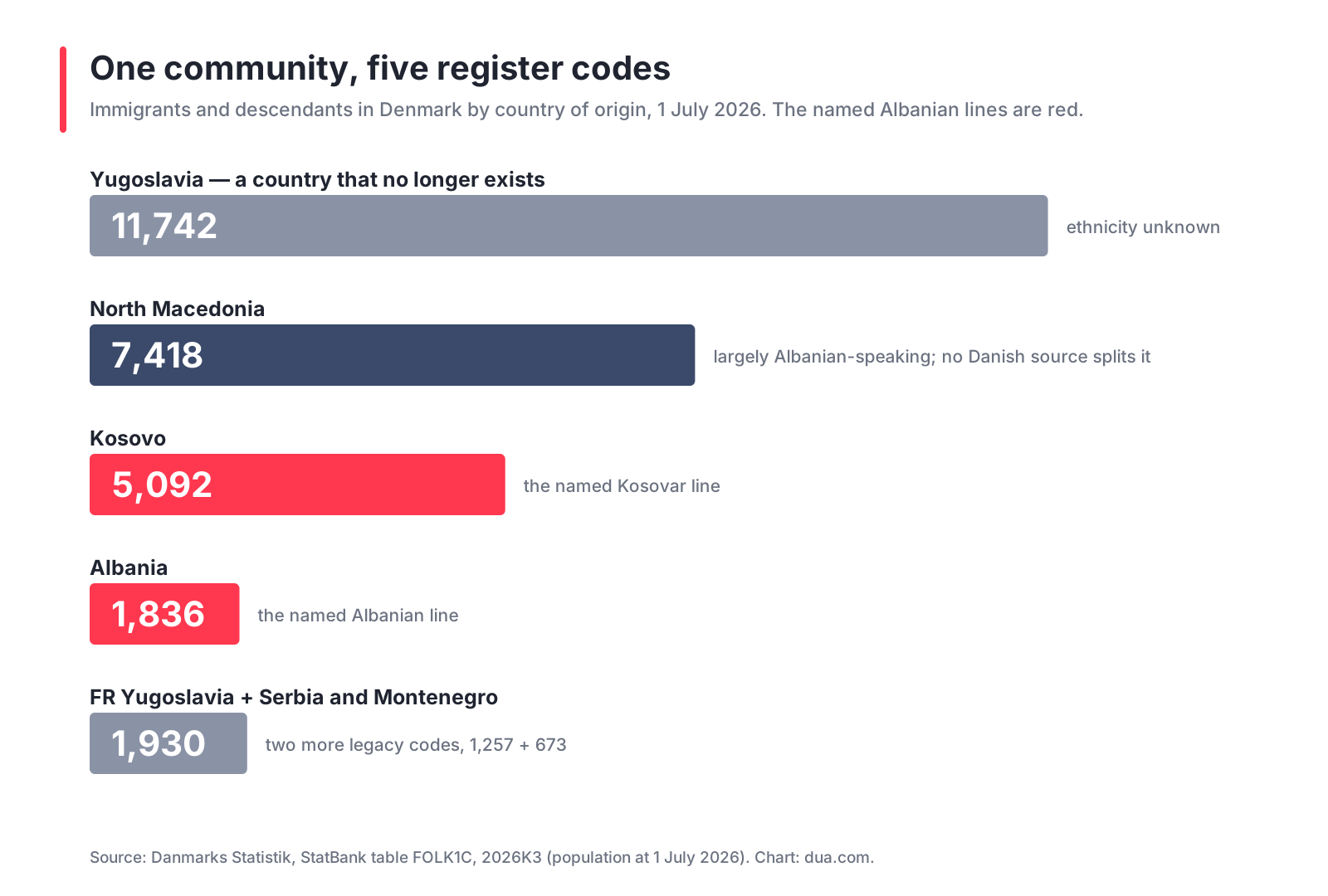
The country that no longer exists
Now the complication. Denmark assigns country of origin from the state that existed when a person was registered, and it has never gone back to recode anyone. So on 1 July 2026, thirty-four years after Yugoslavia dissolved, 11,742 residents still carry "Jugoslavien" as their country of origin, with another 1,257 under "Jugoslavien, Forbundsrepublikken" and 673 under "Serbien og Montenegro" — 13,672 people filed under three dead states. Wartime Bosnians are mostly not among them: Bosnia-Hercegovina has had its own code since the 1990s and already held 21,846 people in early 2008. The Kosovo Albanians who reached Denmark in the 1990s are inside those codes, indistinguishable in the data from the Serbs and Montenegrins registered at the same counters.
The proof that no retroactive recoding happened is in the series itself. "Kosovo" first appears as a Danish origin country in the second quarter of 2008, immediately after independence, at 58 people. It reached 241 by that autumn and 660 by 2010. Nothing happened to the population in those months; a code was created and applied to new registrations. Anyone reading Denmark's Kosovo line as a count of Kosovo Albanians in Denmark is reading a code's age, not a community's size.
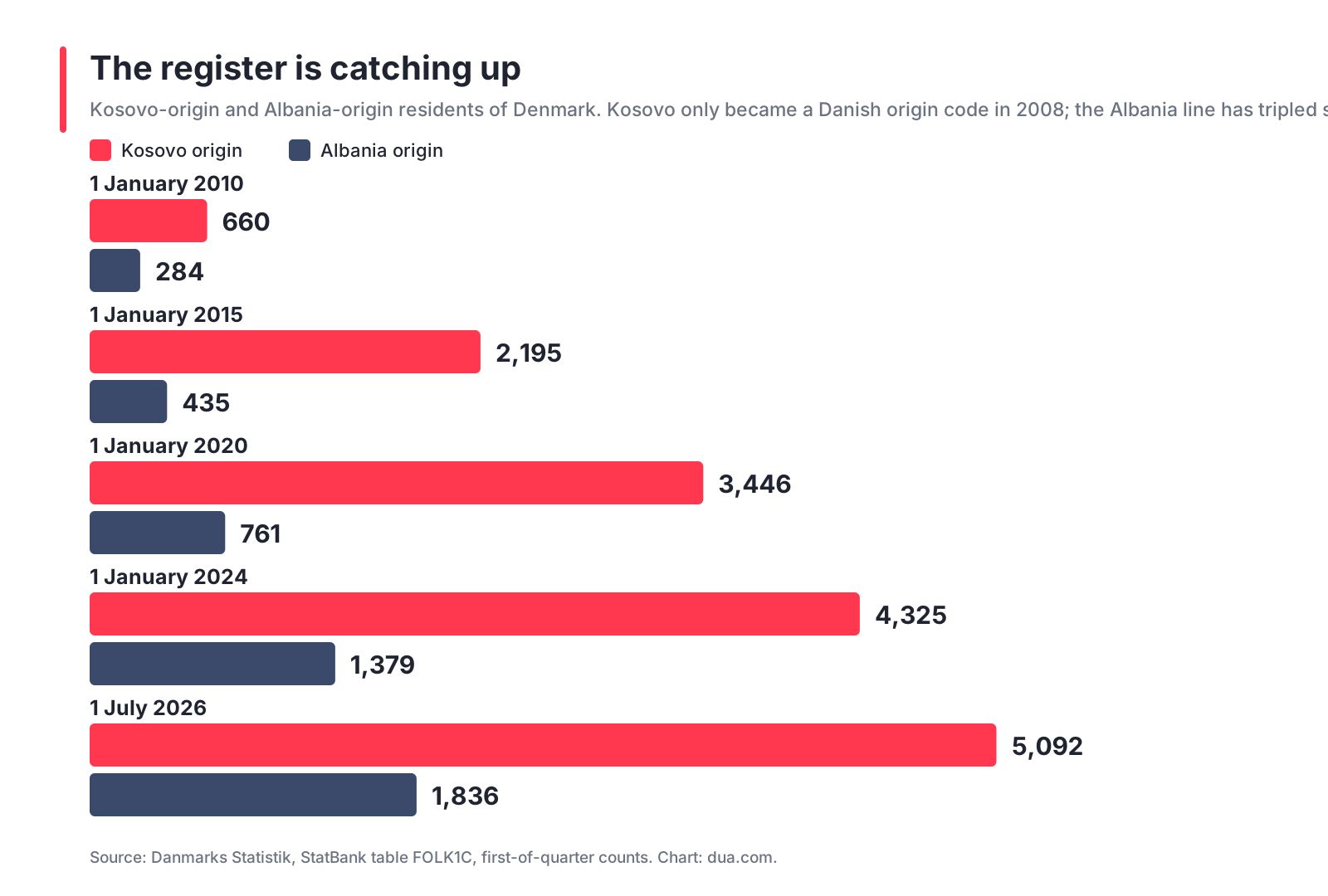
One more caution about growth. During 2024 the registers moved thousands of people off the defunct Yugoslav citizenship codes: holders of "Jugoslavien" citizenship fell from 2,691 to 1,114 in twelve months, while Serbian citizenship rose by 910, North Macedonian by 539 and Kosovar by 363. We can see the shift plainly in the quarterly data; we have found no methodological note from Danmarks Statistik explaining it, so we describe it rather than name a cause. The point for a reader is simply that part of the recent rise in these numbers is people being re-registered, not people arriving.
The third code, and the honest limit
Then there is North Macedonia: 7,418 people, the largest of the three and the oldest community of the three, with 2,849 born in Denmark. Albanians make up about a quarter of North Macedonia's own population and were heavily over-represented in the emigration from its western districts — and, as the history section below shows, Copenhagen's oldest Albanian institution was founded by exactly these families. But the Danish register records a passport's country, never a language, so the Albanian share of that 7,418 is unknowable from any official source. We will not print a share, and neither should anyone else.
So the arithmetic runs like this. 6,928 people are unambiguously Albanian by origin code. 14,346 is the total across all three codes, including ethnic Macedonians. Add an unknown but real number of Albanians inside the 13,672 people still filed under vanished countries, plus everyone who has become Danish and slipped out of the statistics altogether, and a community of fifteen to twenty thousand is a reasonable order of magnitude — but it is an estimate resting on assumptions about ethnicity that no Danish authority has ever made. It is not a figure from Danmarks Statistik, and this page will not dress it up as one.
Where the counting stops
The last reason these numbers are a floor is a rule about grandchildren. Danmarks Statistik defines an immigrant as someone born abroad neither of whose parents is both a Danish citizen and Danish-born, and a descendant (efterkommer) as someone born in Denmark under the same condition. Then comes the stop-rule, in the statistical office's own words: "Hvis blot én af forældrene er født i Danmark og opnår dansk statsborgerskab, vil personen fremadrettet blive registreret som værende af dansk oprindelse." If just one parent is Denmark-born and acquires Danish citizenship, the person is registered from then on as being of Danish origin.
In other words the third generation disappears — by design, and quite reasonably, since a statistical office has to stop somewhere. But it means that as the Albanian families who arrived in the 1970s watch their Danish-born children have Danish-born children, the community shrinks in the data while growing in the street. And becoming Danish is a bigger threshold here than almost anywhere: under § 44 of the 1953 constitution, "Ingen udlænding kan få indfødsret uden ved lov" — no foreigner can acquire citizenship except by statute. Every new Danish citizen is named in an act of parliament. Since 2008, 1,008 former Kosovo citizens have been through that process, peaking at 310 in 2016; only 172 former Albanian citizens have ever been, in the entire record. The larger historical wave is invisible again: 9,939 former "Jugoslavien" citizens have been naturalised, 8,860 of them before 2008.
How the community was built
There is no single Albanian arrival in Denmark. There are three, and they barely know each other: factory workers from Yugoslav Macedonia in the 1970s, a small stranded group of Kosovars in the 1990s, and a recent wave of Albanian citizens on work permits. The famous episode — the 1999 evacuation — is the one that left the fewest people behind.
1967 to 1973: the six years the door was open
Denmark recruited foreign labour for six years. The first workers from Turkey, Pakistan and Yugoslavia arrived in 1967, and the Yugoslav-origin population grew from 2,185 in 1970 to 6,896 in 1975 — heavy industry and slaughterhouses, the Copenhagen shipyards among the recruiters. On 29 November 1973, with the oil crisis breaking, the Social Democratic labour minister Erling Dinesen imposed an immediate stop on labour immigration from outside the European Community. It was never lifted for unskilled work. Every subsequent route into Denmark ran through family reunification or asylum, which is the single most important structural fact on this page.
Were any of those Yugoslav recruits ethnic Albanians? Danish statistics of the period record citizenship only, and no Danish source we could find breaks them down by republic or ethnicity. So the register cannot answer it — but the community can, because the people who came built an institution and wrote down where they were from.
Theklavej: the mosque that remembers the factories
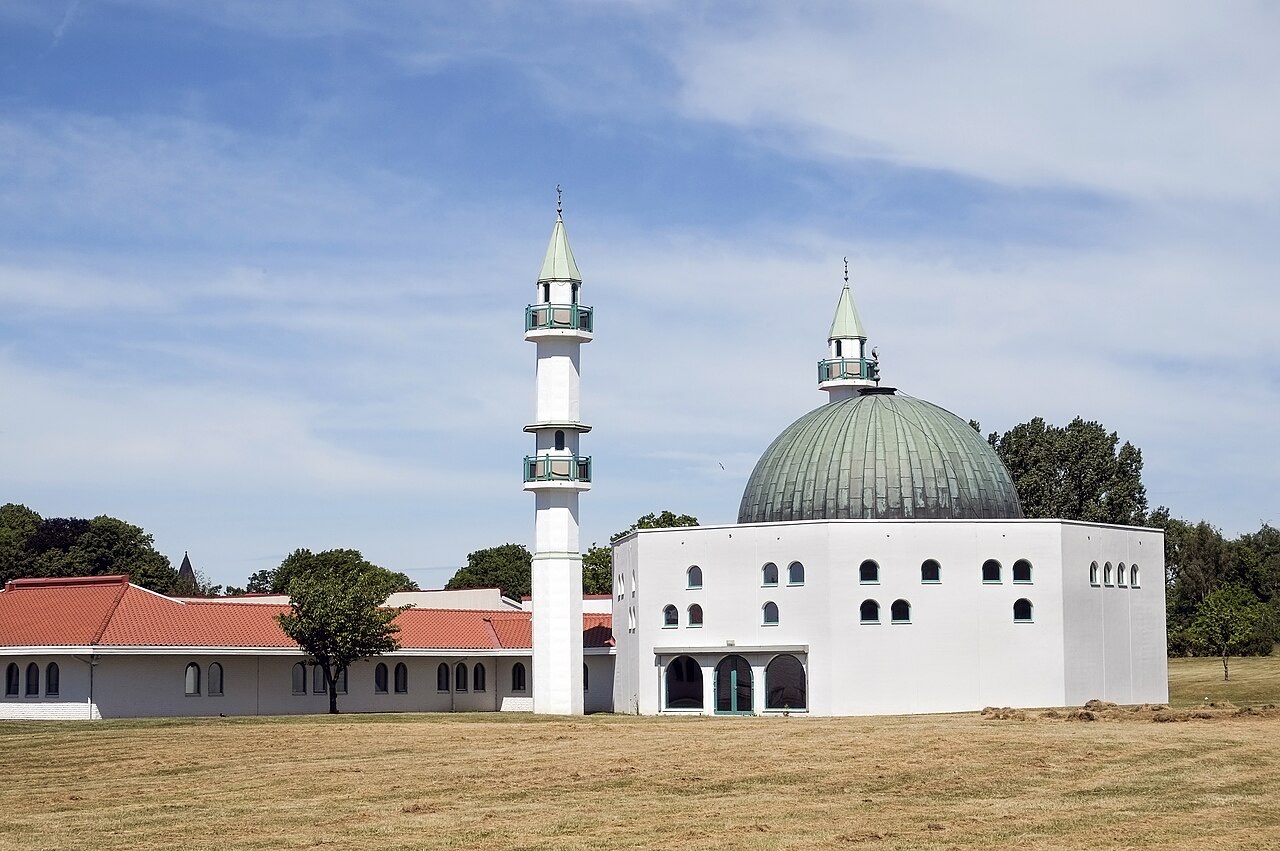
Den Centrale Albanske Moske sits at Theklavej 26 in Copenhagen NV, and its own history page is the best documentary evidence of how Albanian Denmark actually began. In its words: "I løbet af 1970-1990 drog flere unge albanske mænd fra Jugoslavien (Den Tidligere Jugoslaviske Republik Makedonien) ud i det store Europa for at arbejde." Through 1970 to 1990 young Albanian men from Yugoslav Macedonia went out into Europe to work; most of those who came here, it continues, chose to make Denmark their own and build a life in and around Copenhagen.
Those men worked for two or three decades before founding anything. The association was formally established on 25 February 2009 as Dansk Albansk Kulturhus, bought its building outright in 2012, and renamed itself Den Centrale Albanske Moske in 2018, when its members wanted recognition as an actual religious community. By its own count it had around 1,800 members that year. Read the sequence again: labour migration from the 1970s, an institution in 2009. Denmark's Albanian community spent forty years without a building.
The 1990s: two thousand people nobody could send back
Denmark's June 1983 Aliens Act was briefly one of Europe's most liberal, and the country took roughly 20,000 asylum seekers from the Yugoslav wars in 1992–95 — overwhelmingly Bosnians, handled under a dedicated 1992 law. Kosovars were a different story. By October 1997, about 2,000 rejected Kosovo-Albanian asylum seekers were stuck in Denmark on temporary permits because Belgrade refused to take them back. When the two-year deadline ran out, their permits converted automatically to permanent residence — there was, as one MP put it, nothing else to be done. This stranded group — people Denmark tried to remove and could not — is the true nucleus of Kosovar Denmark, and it predates the evacuation everyone remembers.
The law caught up late. On 23 October 1998 the Danish Refugee Appeals Board decided three test cases in favour of Kosovo Albanians, granting full Convention refugee status, and from then on ethnic Albanians from Kosovo were granted § 7(1) status as a rule. Five months later the war made the question moot.
1999: a law built for going home
The bill was introduced on 14 April 1999, passed the Folketing on 23 April, and was signed at Amalienborg on 28 April 1999 by Margrethe II and interior minister Thorkild Simonsen. Nine days from introduction to statute. Its name is a mouthful and its intention is not: Lov om midlertidig opholdstilladelse til nødstedte fra Kosovoprovinsen i Forbundsrepublikken Jugoslavien, the Kosovonødloven, the Kosovo Emergency Act.
Almost every clause points one way. Under § 1, permits went to people invited from the region by agreement with UNHCR, within quotas set by the interior minister — an invitation, not an asylum right. § 4: "Opholdstilladelse efter denne lov meddeles midlertidigt for en periode af 6 måneders varighed", six months, renewable six months at a time under § 5. § 8 put accommodation in dedicated centres run by the Danish Red Cross or the emergency-management agency, with expropriation powers and an exemption from the planning act. § 10 arranged adult education in "fag af betydning for tilbagevenden til Kosovo" — subjects of significance for the return to Kosovo. § 13 is one sentence long: "En udlænding med opholdstilladelse efter denne lov skal ikke folkeregistreres." Holders of these permits were not entered in the civil register at all. Under § 26 any asylum application they made would not be processed while the permit lasted, and could be deferred for up to two years. And § 15 set out the money for leaving: up to 18,000 kroner per adult and 6,000 per child, plus travel, two cubic metres of belongings, up to 10,000 kroner of work equipment, a year of health insurance and a year's prescribed medicine.
There was one mercy in the design. Under § 18, a permit lapsed only after more than three continuous months outside Denmark — so a family could go home, look at what was left, and still come back within the window. Some did.
Denmark evacuated 2,823 people from Macedonia between 30 April and 15 June 1999, under an initial quota of 1,500 that the Finance Committee doubled in May. A Danish Immigration Service delegation selected them with UNHCR, prioritising those who most burdened the region — the elderly, the sick, families with small children — and keeping families together. (The Refugee Appeals Board's own annual report prints 2,832 for the same period; we use the government's 2,823. The frequently repeated "around 2,900" is supported by nothing.) They were a small slice of the UNHCR and IOM Humanitarian Evacuation Programme, which moved 91,057 people out of Macedonia to some thirty countries that spring.
Then they went back. By 14 April 2000, 1,353 had voluntarily repatriated, 1,220 of them before the last organised flight of 10 November 1999. 124 used the three-month regret right and returned to Denmark. By 31 May 2000 the count of supported returns had reached 1,577, with 1,458 people remaining — most of whom the Immigration Service expected to leave within months, and only around a hundred of whom, the elderly and the seriously ill, were expected to qualify for extensions. The law itself was repealed on 31 May 2000. Its residue is still in Danish law today: the Aliens Act's § 9 e exists because of this episode.
Denmark's national broadcaster filmed it. DR's documentary series Flygtningene fra Kosova, directed by Per Wennick and first shown in May 2000, followed two families — the Cunacus, parents with eight children plus grandparents and an aunt, and the widow Vahide Makolli with eight children — from a reception centre in Randers through their first Danish school weeks and into the decision the whole series is really about: go back, or stay. In October 1999 DR News reported on the first evacuee to use the regret right and return to Denmark; his house in Kosovo had been destroyed.
How many of the 2,823 are still here? No Danish source states a final number, and we will not invent one. The verified checkpoints — 1,353 returned by April 2000, 1,458 remaining that August with most expected to follow — point to a residual in the hundreds. When the emergency law was repealed, those who stayed had to apply for asylum in the ordinary way: Kosovars received 341 asylum-case permits in 2000 and 594 in 2001.
2002: the door closes
Then it stopped. On 31 May 2000, the same day the Kosovo law was repealed, Denmark introduced the attachment requirement and a housing requirement for spousal reunification. Two years later came the reform that defines Danish immigration policy to this day: Lov nr. 365 af 6. juni 2002, in force 1 July 2002, whose own title announces the tightening of family-reunification conditions. It abolished de facto refugee status, introduced the 24-year rule, required that a couple's combined attachment to Denmark exceed their attachment to any other country, and pushed permanent residence from three years to seven.
The effect on the numbers was immediate and permanent. Danish family-reunification permits fell from 10,950 in 2001 to 8,150 in 2002, 4,788 in 2003 and 3,521 in 2005 — a 68 per cent fall in four years. Asylum applications halved from 12,512 to 6,068 in a single year, and Kosovar asylum permits collapsed from 594 to 64. For the specific nationalities that carry Denmark's Albanians, family migration went from modest to negligible: family permits to Yugoslav citizens fell from 148 in 1997 to 38 in 2003 and 19 in 2005; North Macedonian from 146 to 40 to 18.
This is where the Danish story diverges from every other in the region. A diaspora compounds through family formation — a marriage brings a spouse, a spouse brings children, children bring in-laws. Denmark closed that mechanism in 2002, at exactly the moment its small Balkan communities would otherwise have started to multiply. It is fair to say the reform did not destroy a large flow, because the flow was never large. It prevented one from ever developing.
The newest arrival: Albanian work permits
One line in the data is growing fast. Residents of Albanian origin have more than doubled since 2020, from 761 to 1,836, and the reason is visible in the permit statistics: of 455 first-time residence permits granted to Albanian citizens in 2025, 422 were work permits. In 2015 the whole year's total was 42. This is a young, male-skewed labour migration — 60 per cent men, 53 per cent aged 25 to 44, and only 12 per cent born in Denmark. Kosovo's figures stay small and family-led by comparison: 72 permits in 2025, of which 44 work and 20 family.
Why Denmark's community is a fraction of its neighbours'
Put the four Nordic countries side by side and Denmark is the outlier. Norway records 17,978 people with Kosovo background. Finland, which does not have a Kosovo code at all but does register mother tongue, counted 19,600 Albanian speakers at the end of 2025. Sweden has 24,758 people of Kosovo origin and 15,598 of Albanian origin across two generations, before touching the 140,340 in its Yugoslavia bucket. Denmark has 6,928 under the equivalent codes. The gap is not marginal; it is a factor of three or four in countries of comparable size and wealth, and it has three specific causes.
| Country | Register-visible figure | What the register does |
|---|---|---|
| Denmark | 6,928 (Kosovo + Albania origin, 1 Jul 2026) | Never recoded; 13,672 still under dead Yugoslav codes |
| Sweden | 40,356 (Kosovo + Albania, both generations, 31 Dec 2025) | Never recoded; 140,340 counted as Yugoslavia-born or their children |
| Norway | 17,978 (Kosovo background, 1 Jan 2026) | Recoded ex-Yugoslavs to successor states — the most complete figure |
| Finland | 19,600 (Albanian speakers, 31 Dec 2025) | No Kosovo code at all, but records mother tongue |
These four numbers are built differently and must not be read as a league table — Norway's is close to complete because it recoded, Finland's counts language rather than origin, Denmark's and Sweden's both leak into defunct codes. But the order of magnitude survives every caveat.
First cause: Denmark was not on the map in the 1990s
The starkest single figure on this page comes from UNHCR's tally of asylum applications lodged by citizens of FR Yugoslavia in 1998. Across Europe: 98,390. Germany took 35,000. Sweden about 3,500. Norway 1,600. Denmark 370 — four tenths of one per cent, on a par with Finland's 360. Whatever the reasons, the practical consequence is decisive: when the 1999 war came, there was no substantial Kosovar community in Denmark for refugees to arrive into, and no Danish-Kosovar network to pull family members later.
Sweden's position was the opposite. Something on the order of 60,000 to 80,000 Kosovo Albanians sought asylum there in 1991–93, and on 13 April 1994 the Swedish government let roughly 20,000 of them stay permanently — refugee families with children who had waited more than fifteen months, including families in hiding after failed appeals. Single adults were still refused, so this was not an open door. But it seeded a permanent community of a size Denmark has never had.
Second cause: the 1999 fork
All four Nordic countries took evacuees from Macedonia in 1999. The numbers matter less than what each country did next.
| Country | Evacuees from Macedonia, 1999 | What happened to those who stayed |
|---|---|---|
| Norway | 6,072 | Collective protection; 3,700 left in autumn 1999, the rest moved into ordinary residence |
| Sweden | 3,675 | 4,099 applied for asylum when permits expired; 2,730 had permanent residence by March 2002 |
| Denmark | 2,823 | Six-month permits outside the Aliens Act; 1,353 repatriated by April 2000 |
| Finland | 958 | Temporary protection, the smallest Nordic quota |
| For scale: the whole programme moved 91,057 people to some thirty countries between April and July 1999; Germany took 14,689 and the United States 9,198. | ||
Denmark's law, as set out above, was engineered for return, and it worked: most of the 2,823 went home. Sweden gave temporary permits too — but when they expired, 4,099 Kosovars applied for asylum, and by 31 March 2002 2,730 of them, about two thirds, had permanent residence. Norway gave collective protection to around 8,000 people and saw 3,700 leave in autumn 1999 with 15,000 Norwegian kroner each on offer, yet still ended up with the largest Kosovo community in the Nordics, because those who remained when protection lapsed had a route into ordinary residence. The fork fits in one sentence: in Denmark the default outcome was return, and in Sweden and Norway the default outcome for anyone who stayed was permission to stay.
Third cause: 2002
And then, as the previous section described, Denmark shut family reunification at precisely the point where the compounding would have begun. Sweden's and Norway's communities doubled through the 2000s and 2010s largely through family formation. Denmark's could not.
One more comparison closes the argument. Kosovo's central bank publishes remittances by source country: in 2025 Kosovo received €1,413.7 million, of which Germany sent 38.6 per cent and Switzerland 17.7. Among the Nordics, Sweden sent about €48 million, Norway €30 million, Finland €12.5 million — and Denmark about €4.8 million, roughly a third of one per cent of the total, and about a tenth of what Sweden sends. Money follows people, and the money says the same thing the registers do.
Two communities, two maps
Here is the finding that surprised us most, and it undoes the usual assumption about where a small immigrant community lives. Denmark's Albanian-speaking population is not one community in one place. It is two, in opposite halves of the country, and they arrived for different reasons in different decades.
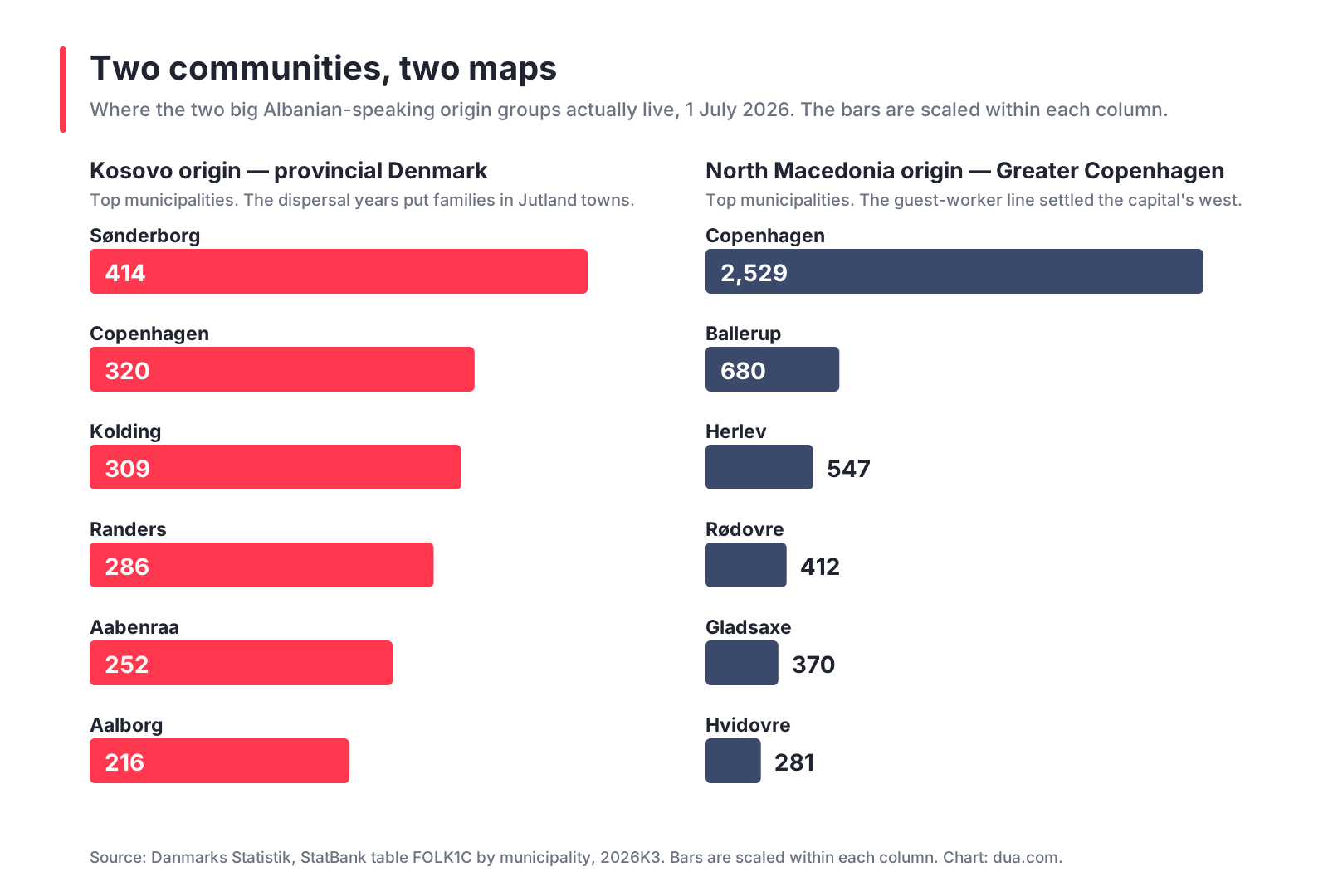
The Kosovo map is provincial
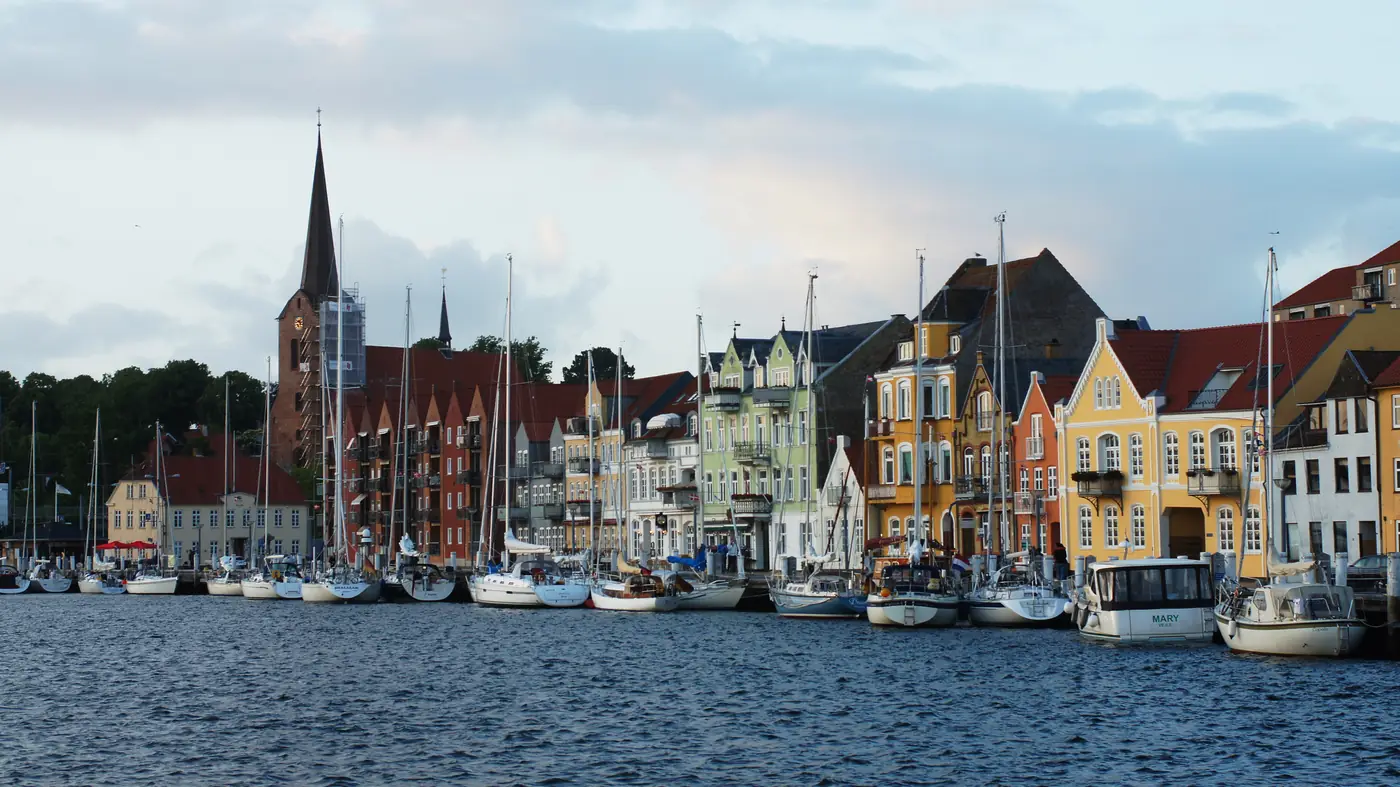
The largest Kosovo-origin municipality in Denmark is Sønderborg, on the German border, with 414 people. Copenhagen — a city of 660,000 — is second with 320, six per cent of the national total. Then Kolding 309, Randers 286, Aabenraa 252, Aalborg 216, Horsens 195, Lolland 187, Vejle 184, Fredericia 182, Haderslev 173, Odense 168. Aarhus, Denmark's second city, has 89. Region Syddanmark alone holds 41.8% of the country's Kosovo-origin residents.
That is a refugee-dispersal map, not a chain-migration one. Denmark's 1990s policy placed asylum seekers in reception centres across provincial municipalities — Kristeligt Dagblad's reporting names a centre in Randers, and the Danish Red Cross opened eight of them in 1999 alone — and where people are first placed is very often where they stay. We grade the causal link as probable rather than proven: the law and the dispersal practice are documented, the connection to the 2026 settlement pattern is our inference from the shape of the data.
The Macedonian map is metropolitan
Now the other one. North Macedonia-origin residents are overwhelmingly a capital story: Copenhagen 2,529, then Ballerup 680, Herlev 547, Rødovre 412, Gladsaxe 370, Hvidovre 281, Brøndby 247, Høje-Taastrup 240, Glostrup 169. 88% of the entire group lives in Region Hovedstaden, and nearly half the national total lives in the ring of western and north-western suburbs alone. This is textbook 1960s and 1970s industrial-suburb settlement — people who came for factory work and stayed near it, exactly as the mosque on Theklavej describes.
One correction while we are here, since the trope is common in Danish writing about immigrant communities: Ishøj and Brøndby are not Albanian hubs. Ishøj has 22 Kosovo-origin and 10 Albania-origin residents; Brøndby 23 and 28. Both are outranked several times over by Ballerup, Herlev and Rødovre on the Macedonian code and are irrelevant on the Kosovo one. The generic Vestegnen story does not fit this community.
The third map is smaller and different again. Albania-origin residents — the recent work-permit arrivals — concentrate in Copenhagen (342) and Odense (274), with a genuinely odd third place: Kerteminde, a town of 24,000 on Funen, with 87. They are the youngest group in the data, 52 per cent aged 20 to 39.
Embassy, mosques, schools and clubs
A community's institutions are the part of it that leaves a paper trail. Denmark's Albanian institutional map is small, almost entirely concentrated in Copenhagen, and contains one detail no other diaspora page in Europe can claim.
One address, two states
The Embassy of the Republic of Albania sits at Frederiksholms Kanal 4, ground floor left, 1220 Copenhagen K, directly across the canal from Christiansborg, the Danish parliament. Ambassador Sokol Dedja presented his credentials on 24 May 2024. The Consulate of the Republic of Kosovo is at Frederiksholms Kanal 4, ground floor right. Albania and Kosovo share one building, one staircase, opposite the Danish parliament.
Two precisions matter here, because the aggregator sites get both wrong. Kosovo has no embassy in Denmark: its ambassador to Denmark, Faruk Ajeti, is non-resident and accredited from Berlin, per the Danish foreign ministry's own Copenhagen Diplomatic List. Nor is Denmark covered from Stockholm, whose stated jurisdiction runs to Iceland, Finland, Estonia, Latvia and Lithuania. The Copenhagen post is a consulate, and it has been there since at least August 2019, when its state emblem was vandalised and Kosovo's foreign ministry protested. Albania also keeps an honorary consulate at Marievej 8 in Hellerup, run since 2007 by Hans-Georg Nielsen. North Macedonia has a full embassy on H.C. Andersens Boulevard, though the ambassador's post was vacant as of 25 August 2026, with Ilcho Taleski as chargé d'affaires.
Two mosques, and only two
Denmark's official register of recognised religious communities lists exactly two Albanian entries, and both are in Copenhagen.
Det Albanske Trossamfund i Danmark — Bashkësia Islame Shqiptare në Danimarkë — was founded in 1983 by Albanians already living here together with the first Albanian imam, which makes it the oldest documented Albanian institution in the country. After decades on Vodroffsvej in Frederiksberg, in a building owned by the Saudi-backed Muslim World League though the community itself was independent of it, it bought its own home: a 1,400-square-metre former cinema at Frederikssundsvej 304B in Brønshøj, taken over in early 2023 after a state-approved national fundraising campaign. Its chairman, Besim Ramadani, described the plan simply — it should be an activity centre open to everyone.
Den Centrale Albanske Moske at Theklavej 26 is the guest-workers' institution described earlier: founded 2009, building bought outright in 2012, renamed in 2018, around 1,800 members, Sunni and Hanafi, member-financed with no public funding, running a youth club on Friday and Saturday evenings.
And that is the complete list. We searched in Danish and Albanian for Albanian mosques or Islamic associations in Aarhus, Odense, Slagelse and Helsingør and found none, and there is no Albanian Catholic mission anywhere in Denmark — unlike Switzerland or Germany, where such missions are common. Outside Copenhagen, Albanian religious life runs through general mosques. Note the geography problem that creates: the Kosovo-origin community lives in Jutland, and both Albanian mosques are in the capital.
Albanian on the timetable, in five Copenhagen schools
Albanian is taught in Denmark by a municipality, not by a diaspora network. Copenhagen's Modersmålsskolen offers Albanian as one of 32 mother-tongue languages, with eight weekly classes across five schools scheduled for the 2026/27 school year: Tagensbo, Utterslev, Nørrebro Park, Korsager and Tingbjerg, in sessions of two and a half hours. Lessons are free for grades 0 to 5; from grade 6 a fee applies to languages outside the EU and EEA, which includes Albanian. The programme has run since at least 2014, when it covered seven schools. The five addresses sit in Bispebjerg, Nørrebro and Brønshøj–Tingbjerg — precisely the settlement belt in the register data. There is no LAPSH supplementary-school branch in Denmark of the kind that serves Albanians in Sweden and Switzerland, and no Albanian student association at any Danish university that we could find.
The working address book
What follows is the contactable version: institutions with a legally required company registration, a published telephone number, or an entry in the Danish foreign ministry's own diplomatic list. All reviewed on 26 August 2026. Where an organisation's current activity could not be confirmed, the card says so rather than hiding it.
Embassy of the Republic of Albania
Frederiksholms Kanal 4, st.tv., 1220 København K. Tel. +45 33 91 79 79, [email protected]. Ambassador Sokol Dedja since 24 May 2024. Directly opposite Christiansborg. ambasadat.gov.al/denmark
Consulate of the Republic of Kosovo
Frederiksholms Kanal 4, st.th., 1220 København K — the same building as Albania's embassy. Political and economic affairs +45 31 12 14 05; consular service +45 50 11 38 26; [email protected]. Kosovo's ambassador to Denmark is non-resident, in Berlin. Ignore the addresses and Stockholm phone numbers that embassy-aggregator sites attach to this post; they are wrong.
Det Albanske Trossamfund i Danmark
Bashkësia Islame Shqiptare në Danimarkë. Frederikssundsvej 304B, 2700 Brønshøj. Tel. 60 57 66 37, [email protected]. CVR 30288343. Founded 1983; moved into its own 1,400 m² building in Husum in early 2023. Prayer, homework help, sport, language teaching. bish.dk
Den Centrale Albanske Moske
Xhamia Qendrore Shqiptare në Danimarkë. Theklavej 26, 2400 København NV. CVR 31970881. Founded 25 February 2009 as Dansk Albansk Kulturhus by former guest workers from Yugoslav Macedonia; renamed 2018; building bought and fully paid off in 2012. Around 1,800 members; youth club Friday and Saturday evenings; Islamic weddings with civil validity. dcam.dk
Albanian mother-tongue classes, Copenhagen
Modersmålsskolen, Copenhagen Municipality. Eight weekly Albanian classes at Tagensbo, Utterslev, Nørrebro Park, Korsager and Tingbjerg schools in 2026/27, 2.5 hours per session. Free for grades 0–5; fee-paying from grade 6 because Albanian is a non-EU language. mms.aula.dk
Honorary Consulate of Albania, Hellerup
Marievej 8, 2900 Hellerup. Tel. +45 39 62 00 90, [email protected]. Honorary consul Hans-Georg Nielsen since 2007; open Mon–Fri 13:00–16:00. albanskkonsulat.dk
Dansk-Albansk Forening (D.A.F.)
Marievej 8, 2900 Hellerup — the honorary consul's address and telephone. CVR 42911135, registered 16 December 2021; works to strengthen mutual knowledge between Danes and Albanians. Published a 2024 annual report and announced a restart on 4 May 2026. albanske.dk
Two Jutland associations
Den Albanske Forening, Vejle (CVR 39331136, registered 13 February 2018) and Dansk-Albansk Kulturforening, Kolding (CVR 44367947, registered 14 October 2023). Both are live voluntary-association registrations in two of the top Kosovo-origin municipalities. We could not document their activity beyond registration, so treat them as registered associations rather than as busy clubs.
aktuale.dk
The community's own Albanian-language online magazine, published from Copenhagen and still active in 2025. Carries mosque anniversaries, schooling guides and a directory of clubs. The best single window into Danish-Albanian community life. aktuale.dk
Buka Bakery
Five Copenhagen locations. Co-founded in 2019 on Store Kongensgade by Albanian-born Zeqir Haziri with Nickie Mydung; organic sourdough and filled croissants made it a Copenhagen favourite, with later openings on Frederiksberg and Østerbro. Buka is Albanian for bread.
Village and hometown clubs
A cluster of small Albanian clubs appears in aktuale.dk's directory around Copenhagen NV, Ballerup and Brønshøj — among them Shoqata Kulturore Shqiptare "Nerashti", named for a village near Tetovo. The directory is undated and partly stale, and we could not verify any of them individually, so they appear here as texture rather than as contacts.
FC Dardania
DBU-registered football club no. 5681 under DBU Jylland, home ground Skrødstrup Stadion, 9550 Mariager, kit red and blue. It is in rural East Jutland, not Copenhagen, and the current-season overview showed no teams entered, so it may be dormant. No Albanian-founded club exists under DBU København.
Two deliberate omissions. We found an Albanian burial fund, Loti i Fundit — "the last tear" — registered in Nakskov and repatriating deceased members to Kosovo and Albania for 100 kroner per family member; the institution type is real and page-worthy, but its visible announcements stop around 2015, so we do not print it as a live service. And a Danish-Albanian radio station and several 1990s associations appear in old directories with addresses we could not confirm. Publishing a dead organisation's address helps nobody.
Work, money and the road home
Denmark's registers cannot tell you how Albanians earn a living, for the same reason they cannot count them: the finest available category in every Danish labour-market table is "Jugoslavien". There is no Kosovo row and no Albania row. That is a confirmed absence, not a gap in our searching, and it is worth stating plainly rather than filling with invention.
What the Yugoslavia category does show is encouraging. Immigrants under that code aged 30 to 64 had an employment rate of 57% in 2024 — 62 per cent for men, 51 for women, against 83 per cent for people of Danish origin — and the trend is up, from 49.7 per cent in 2015. Their Danish-born children have very nearly closed the gap: among 20-to-40-year-old male descendants, the ex-Yugoslav group scores above 89 on an employment index where men of Danish origin are 100, one of the four highest of the ten largest descendant groups. The sectors are welfare-state service work rather than the restaurant cliché: care and social institutions, cleaning, transport, retail, health care.
The thin corridor
Denmark's air link to Kosovo is one of the weakest in Western Europe, and it is a fair proxy for the size of the community. As of August 2026, exactly one carrier flies Copenhagen to Prishtina nonstop — Norwegian, twice a week on Wednesdays and Saturdays, a Boeing 737-800 on a 2 hour 50 minute hop. SAS tried the route, launching in summer 2024, and gave up: the last Copenhagen–Prishtina service flew on 22 October 2025, and the planned 2026 return was cancelled before tickets went on sale. Copenhagen–Tirana does better, with about five flights a week between Norwegian and SAS.
Set that against Prishtina's real corridors. Zurich alone takes about 43 departures a week from Prishtina — 19 per cent of the airport's entire traffic — against Copenhagen's two. There is no Billund–Prishtina flight at all, which is the awkward part, because most Kosovo-origin Danes live in Jutland. Their practical options are the drive to Copenhagen, the connection through Hamburg, or the Øresund bridge to Malmö, where GP Aviation — the Prishtina-focused diaspora carrier — flies twice weekly on Thursdays and Sundays. (Wizz Air does not fly Malmö–Prishtina, whatever the search results suggest.)
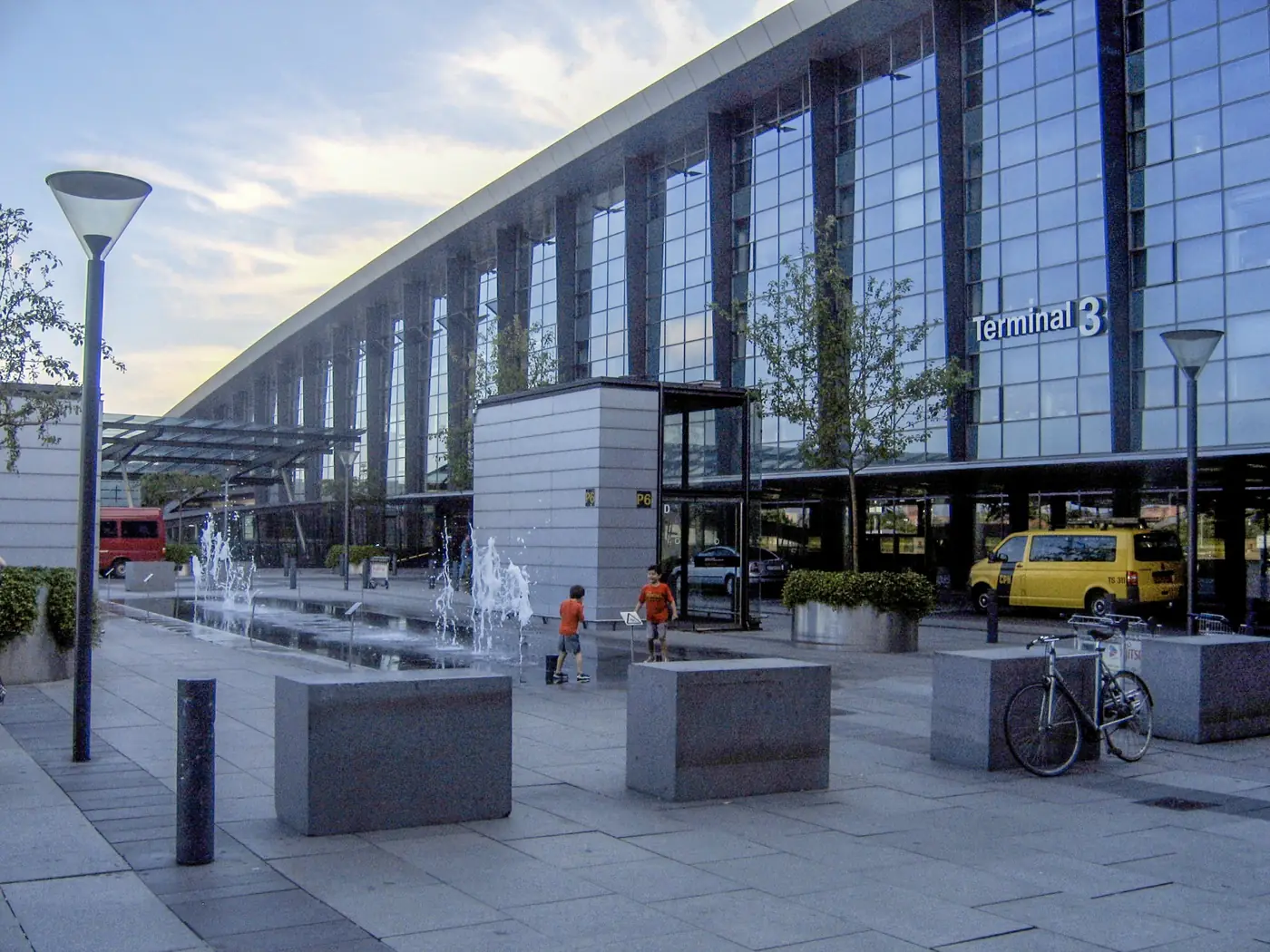
One thing did get easier. Since 1 January 2024, holders of biometric Kosovo passports travel visa-free to the Schengen area, Denmark included, for 90 days in any 180 — the last of the six Western Balkan territories to get liberalisation, fourteen years after its neighbours. Before that, a grandmother in Prishtina coming to a christening in Sønderborg needed a visa file, a fee and weeks of waiting. Now she needs a seat on the Wednesday flight. Visa-free travel is not work rights: employment still requires a Danish permit.
Where the community is visible
A community of this size does not close streets or fill arenas. Denmark's Albanians are visible in narrower, more specific places, and the honest account includes what is missing.
The largest documented Albanian gathering in Danish history was on 27 November 2012, when around 2,000 people filled Nørrebrohallen in Copenhagen for the centenary of Albanian independence — organised by the embassy with local associations, with the ambassador and a professor from Prishtina speaking and singers from across the diaspora performing. Diaspora press reported the hall was too small for everyone who came. We attribute that as reporting rather than a verified count, because a single publisher covered it.
Beyond that, the pattern is that Denmark's Albanians plug into other people's events. For the sixth anniversary of Kosovo's independence in February 2014, the Copenhagen Albanian school and ensemble travelled to Helsingborg in Sweden for a pan-Scandinavian celebration. We searched hard for a documented annual 17 February gathering in Copenhagen and did not find one, so we do not claim it exists. The mosques mark 28 November, Flag Day, on their own channels.
The concert circuit skips Denmark too. Albanian stars fill arenas in Cologne and Milan; we could not document a single show by a major Albanian-language artist at a named Copenhagen venue. Even Dua Lipa, the most famous Kosovar Albanian on earth, has played Denmark only twice, both at Roskilde Festival — the Orange Stage in 2018 and as its headliner on 30 June 2022. A Royal Arena date announced for May 2020 was cancelled outright, never rescheduled. Danish reviewers described her simply as the British pop star; her Kosovar background went unmentioned, which is its own small observation about how visible this community is here.
Football supplies the rest. Denmark and Albania have met twice, in Euro 2016 qualifying — 1–1 in Elbasan in October 2014 and 0–0 at Parken in Copenhagen on 4 September 2015, in front of 35,648 people, the only competitive Albania or Kosovo international ever played on Danish soil. Albania then finished above Denmark in that group, 14 points to 12, qualifying for their first major tournament while Denmark went to a play-off and lost to Sweden. The two sides never beat each other; Albania got there on other results. Kosovo and Denmark have met once, a 2–2 friendly at the Fadil Vokrri stadium in Prishtina in March 2019.
People who carry the story
The people map mirrors the register map exactly, and once you see it you cannot unsee it. The Macedonian line produces Copenhagen names; the Kosovo line produces provincial Jutland ones.
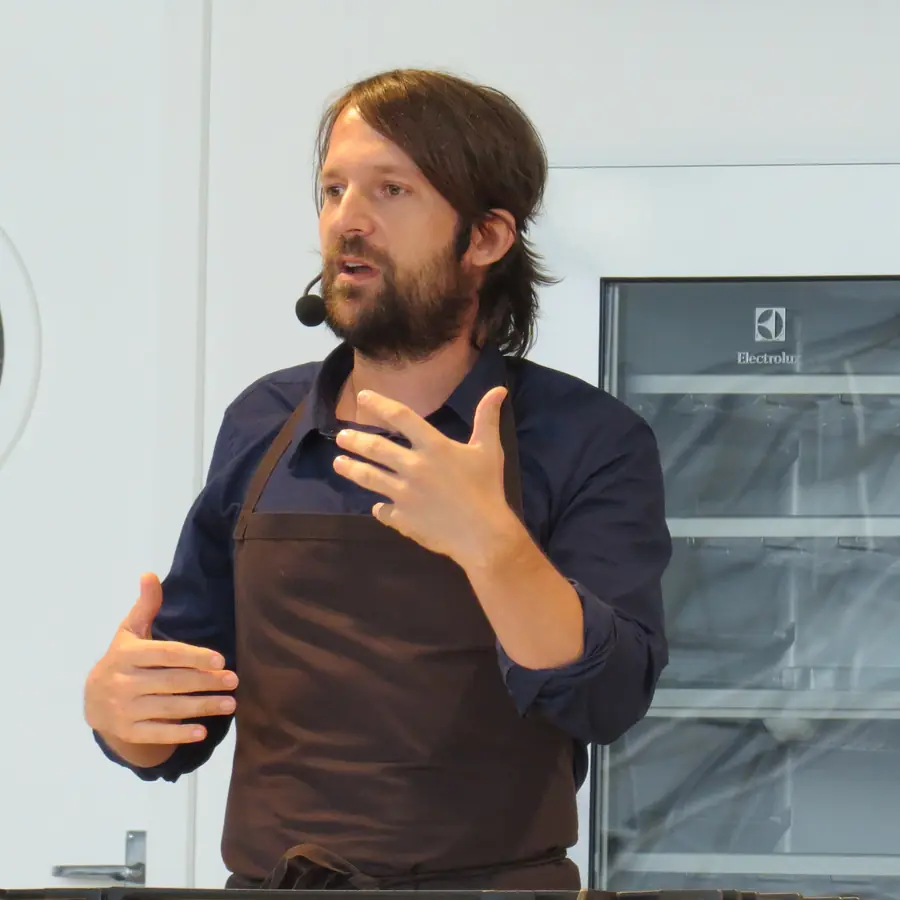
René Redzepi
Born in Copenhagen to a Danish mother and an Albanian father from Yugoslav Macedonia. The family lived near Tetovo until 1992 — the same district Copenhagen's Albanian mosque was founded from. Noma has been named the world's best restaurant five times.
Photo: Brian Minkoff-London Pixels / Wikimedia Commons, CC BY-SA 3.0.
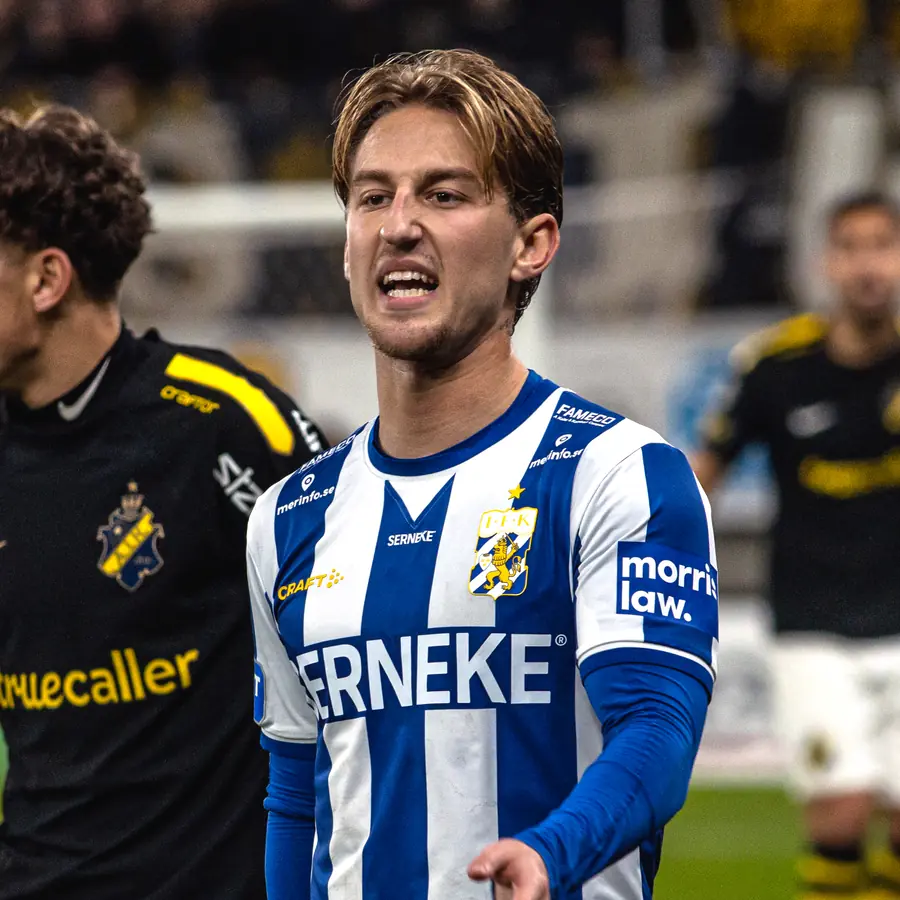
Arbnor Muçolli
Born in Fredericia in 1999 to parents from Podujeva. 149 league games for Vejle, Danish 1st Division Player of the Season 2019–20, then four Denmark youth caps traded for an Albanian passport in 2018 and six senior Albania caps.
Photo: Amanda Aikioniemi / Wikimedia Commons, public domain.
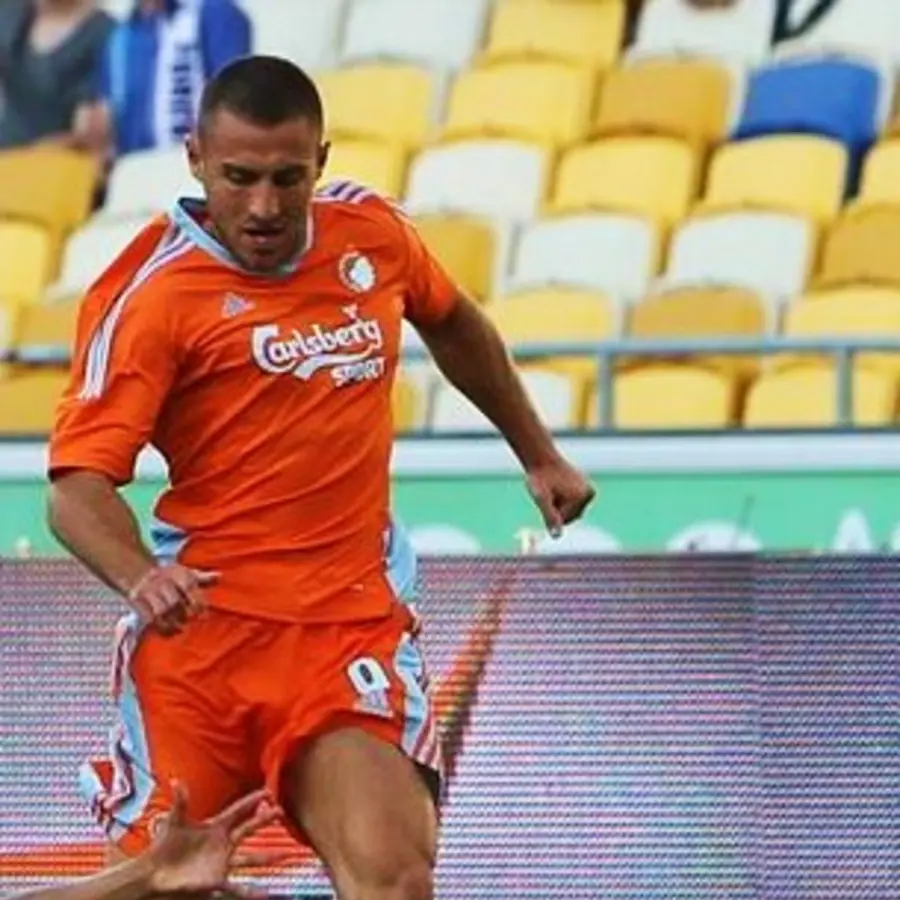
Bashkim Kadrii
Born in Nørrebro in 1991 and described by his boyhood club B.93 as "af albansk afstamning". One senior Denmark cap, in a 2–1 win in Scotland in 2011, plus a decade at OB and FC Copenhagen.
Photo: Станислав Ведмидь / Wikimedia Commons, CC BY-SA 3.0.
The Copenhagen line
Denmark's most internationally famous person of Albanian descent is almost certainly René Redzepi, whose Albanian father came from the Socialist Republic of Macedonia and whose family lived near Tetovo until the wars began in 1992. His father, one of the hundreds of thousands of Albanians who spread across Europe, settled in Denmark after seeing a newspaper advertisement for work in a fish factory — the guest-worker story in a single sentence, ending in the kitchen that reinvented Nordic cooking.
Artigeardit — Ardit Aliti, born at Herlev Hospital in 1996 to Albanian immigrants from North Macedonia, a bus driver and a cleaning assistant — grew up in Mørkhøj in Gladsaxe and became one of the defining Danish rappers of his generation. He has described feeling completely split: who am I, Danish or Albanian, raised in Danish schools but with his parents' Albanian values. Besir Zeciri, born to Albanian parents from North Macedonia and raised in Avedøre on the western outskirts, won best male lead at the 2026 Robert Awards — the Danish film academy's prize — for Pigen med nålen, the night's most decorated film. He had been nominated three times before, including for playing a wrongly imprisoned Kosovo Albanian in DR3's Fredløs in 2022. He was rejected by the national acting academy four times before being admitted on the fifth, and he is sharp about the labels: as children, he has said, we are constantly told "you are Danish, Arab, Somali", and he thinks that is wrong. Herlev, Gladsaxe, Avedøre. The register said Ballerup, Herlev, Rødovre, Gladsaxe.
The Jutland line
And then the other map. Olti Hyseni, born in Sønderborg in 2007 to Kosovar refugee parents — his mother reached Denmark in 1999, his father's residence permit came through the day before he was born — became SønderjyskE's youngest ever professional goalscorer at 16 and, on 31 July 2026, the club's record sale, joining Brøndby on a contract to 2031. Albert Rrahmani, also born in Sønderborg, in 2007, came through the same academy, scored on his senior debut and plays for Kosovo at under-19 level. Two national-level talents out of a single municipality that holds 414 Kosovo-origin residents.
Vejle produced the other cluster. The brothers Arbnor and Agon Muçolli, both born in Fredericia to a family from Podujeva, moved to Vejle Boldklub together in 2012; for two seasons they shared a squad with Ylber Ramadani, who spent four formative years there before Aberdeen, Serie A with Lecce and fifty caps for Albania, three of them starts at Euro 2024. A small Danish provincial club was, for a few years, an Albanian football node.
Handball tells the same story from the women's side and from the same map. Leonora Demaj, born in Hvidovre, is captain and record scorer of Kosovo's women's national team and has spent her entire club career in Danish handball. The sisters Marigona and Arlinda Hajdari, born in Tarm in west Jutland, both play for Kosovo; Arlinda told a local paper that the first time she sang the anthem in a Kosovo shirt, it meant rather more than she had expected.
Two passports, one choice
Nearly every athlete on this page has faced the same question, and it is the most Danish-Albanian thing about them. Arbnor Muçolli played four times for Denmark's under-18s before taking Albanian citizenship in February 2018. His brother Agon made his Albania under-20 debut on 14 November 2017 — the citizenship decree was issued that same day. Lirim Qamili, born and raised in Glostrup to a North Macedonian family, was offered an Albanian passport at AC Horsens, called up by Albania's under-21s, and finally chose North Macedonia in 2025 at 26 — playing, as TV 2 put it, for the national team whose language he does not speak, because he grew up speaking Albanian. The earliest documented case is Bajram Fetai, in Denmark from the age of one, a Denmark youth international who waited publicly for a senior call-up that never came and accepted North Macedonia in 2010. Olti Hyseni's choice is still open.
And then Denmark's most-told Albanian story, which belongs to none of these maps. Jimilian — Xhemilian Ismaili, born in Laç in 1994, son of a well-known Albanian folk musician — fled Albania's unrest with his family in 1999, reportedly in the back of a truck, passed through Belgium, spent time at the Sandholm asylum centre and settled in Maribo on Lolland, which is itself a top-twenty Albanian-origin municipality. He entered the Danish children's song contest at 11, won the MTV Europe Music Award for Best Danish Act in 2013, took a single to number one in 2020 and won Vild med dans, Denmark's Strictly, in November 2021. Asked about Christmas, he described a household running on Danish mechanics — presents on the 24th — with Albanian rice pudding on the table beside the Danish dishes.
Now the honest part, which is as telling as the list. We searched in Danish and Albanian and found no member of the Folketing, no mayor and no named municipal councillor of Albanian origin anywhere in Denmark. No professor, no widely covered business figure, no boxer or MMA fighter, and no published Danish-Albanian memoir or novel about growing up Albanian here. A community that has been in Copenhagen since the 1970s has produced world-class cooking, chart-topping music, an award-winning actor and a shelf of footballers — and not one elected representative or one book. The absence is not a slight; it is a measure of how small, how recent and how dispersed this community still is.
Method and evidence ledger
This page keeps three categories apart, and it is worth saying which is which before anyone quotes a number from it.
Official counts. All population figures come from Danmarks Statistik's StatBank, pulled directly from the public API on 26 August 2026. Population by origin, municipality, age and sex is table FOLK1C for the quarter 2026K3, meaning the population on 1 July 2026; citizenship counts are FOLK1B; the national total is FOLK1A; residence permits are VAN66; naturalisations are DKSTAT; country of birth is BEF5; employment is RAS204, RAS308 and the annual report Indvandrere i Danmark 2025. Nordic comparisons come from each country's own statistical office: Statistics Sweden for 31 December 2025, Statistics Norway table 09817 for 1 January 2026, and Statistics Finland for 31 December 2025. The 1999 evacuation figures, the return counts and the text of the Kosovo Emergency Act come from the Danish parliament's own documents on retsinformation.dk, whose § quotations on this page we read in full and reproduced verbatim. The Humanitarian Evacuation Programme totals come from UNHCR situation reporting of July 1999. Remittances come from the Central Bank of Kosovo's own time series.
Our arithmetic. Several figures here are ours, computed from official counts and labelled where they appear: that Kosovo and Albania origin together total 6,928 and all three codes 14,346; that this is 0.11 and 0.24 per cent of Denmark's population; that the defunct Yugoslav codes hold 13,672 people; that Region Syddanmark holds 41.8 per cent of Kosovo-origin residents and Region Hovedstaden 88 per cent of North Macedonia-origin ones; that Denmark's share of Kosovo's 2025 remittances, weighting each month's Danish percentage by that month's total, comes to about €4.8 million; and the per-country comparison table, whose four numbers are built on four different definitions and are offered as an order of magnitude, not a ranking.
What we refuse to state. No Danish register records ethnicity or language, so we do not print an Albanian share of the North Macedonia-origin group, or of the people filed under Yugoslavia, or a single total for "Albanians in Denmark". Where a widely repeated figure fails, we say so: the 1999 evacuation was 2,823 people, not "around 2,900"; Kosovo has a consulate in Copenhagen, not an embassy, and is not covered from Stockholm; Ishøj and Brøndby are not Albanian hubs; Dua Lipa has never played a Danish arena; Albania never beat Denmark. We could not establish whether any of Denmark's 1967–73 Yugoslav guest workers were ethnic Albanians, and say so rather than assuming. Institution details were reviewed on 26 August 2026 and establish neither residential concentration nor future schedules; where an organisation's current activity was unconfirmable, the card says so.
Frequently asked questions
How many Albanians live in Denmark?
On 1 July 2026 Denmark registered 5,092 residents of Kosovo origin and 1,836 of Albanian origin — 6,928 people under the two unambiguously Albanian country codes. A further 7,418 are registered as North Macedonia origin, a group that is substantially Albanian-speaking but that no Danish source splits by ethnicity. Adding an unknown share of the 13,672 people still filed under defunct Yugoslav codes, plus everyone who has become Danish and left the statistics, a community of fifteen to twenty thousand is a reasonable order of magnitude — but that is an estimate, not an official figure.
Why is Denmark's Albanian community so much smaller than Sweden's or Norway's?
Three reasons compound. Denmark barely featured in the 1990s Kosovar exodus — 370 asylum applications from FR Yugoslavia in 1998 against Sweden's 3,500 and Norway's 1,600. Its 1999 evacuation law was written for return, and most of the 2,823 evacuees went home, while Sweden and Norway ended up granting permanent residence to those who stayed. And the 2002 aliens-act reform closed family reunification just as a diaspora normally begins compounding: Danish family-reunification permits fell from 10,950 in 2001 to 3,521 in 2005.
Which Danish city has the most Albanians?
It depends which community you mean, and this is the page's most surprising finding. For Kosovo origin, the largest municipality is Sønderborg with 414 people — ahead of Copenhagen's 320, then Kolding 309, Randers 286 and Aabenraa 252. For North Macedonia origin, it is overwhelmingly Copenhagen (2,529) and its western suburbs: Ballerup 680, Herlev 547, Rødovre 412. The two maps barely overlap.
Are these figures official?
The counts are: they come from Danmarks Statistik's StatBank, pulled from the public API on 26 August 2026, and refer to 1 July 2026 unless stated. What is not official is any figure describing "ethnic Albanians", because Danish registers record country of origin and citizenship but never ethnicity or language. Every estimate on this page is labelled as one.
What was the Kosovonødloven?
Denmark's Kosovo Emergency Act — Lov nr. 251, signed 28 April 1999 after passing the Folketing in nine days. It let Denmark invite Kosovars from the region within quotas agreed with UNHCR, on six-month renewable permits outside the ordinary Aliens Act. Holders were not entered in the civil register, their asylum claims were frozen, adult education was aimed at return to Kosovo, and up to 18,000 kroner per adult was available to those who went home. Denmark evacuated 2,823 people under it; 1,353 had repatriated by April 2000. It was repealed on 31 May 2000.
Does Kosovo have an embassy in Denmark?
No. Kosovo runs a consulate in Copenhagen, at Frederiksholms Kanal 4, and its ambassador to Denmark is non-resident, accredited from Berlin. Denmark is not covered by Kosovo's Stockholm embassy either. Albania does have a resident embassy — in the same building, ground floor left, with the Kosovo consulate on the right, opposite the Danish parliament.
Where can my child learn Albanian in Denmark?
Through Copenhagen Municipality's Modersmålsskolen, which teaches Albanian as one of 32 mother-tongue languages. Eight weekly classes run at five schools in 2026/27 — Tagensbo, Utterslev, Nørrebro Park, Korsager and Tingbjerg — in sessions of two and a half hours. Lessons are free for grades 0 to 5; from grade 6 there is a fee, because Albanian is a non-EU language. Both Copenhagen mosques also run their own classes. Outside the capital there is no organised Albanian supplementary schooling that we could document.
Are there Albanian mosques in Denmark?
Two, both in Copenhagen and both on Denmark's official register of recognised religious communities. Det Albanske Trossamfund i Danmark, founded in 1983, has occupied a 1,400 m² former cinema on Frederikssundsvej in Brønshøj since early 2023. Den Centrale Albanske Moske on Theklavej was founded in 2009 by former guest workers from Yugoslav Macedonia and has around 1,800 members. There is no Albanian mosque outside Copenhagen and no Albanian Catholic mission anywhere in Denmark.
How do I fly from Denmark to Kosovo?
Norwegian flies Copenhagen–Prishtina nonstop twice a week, on Wednesdays and Saturdays, in about 2 hours 50 minutes. SAS flew the route from 2024 but ended it on 22 October 2025. Copenhagen–Tirana has around five weekly flights between Norwegian and SAS. There is no Billund service, so from Jutland the alternatives are Copenhagen, a connection through Hamburg, or the bridge to Malmö, where GP Aviation flies to Prishtina on Thursdays and Sundays. Kosovo passport holders have travelled visa-free to Denmark since 1 January 2024.
Who are the best-known Danish Albanians?
René Redzepi of Noma, whose Albanian father came from the Tetovo area of what is now North Macedonia, is the most internationally famous. In music, Jimilian arrived from Albania as a child refugee in 1999 and won Vild med dans in 2021; the rapper Artigeardit grew up in Gladsaxe with parents from North Macedonia. The actor Besir Zeciri won best male lead at the 2026 Robert Awards. In sport: Arbnor and Agon Muçolli, Ylber Ramadani, Bashkim Kadrii, Olti Hyseni and Albert Rrahmani in football, and Leonora Demaj and the Hajdari sisters, who play for Kosovo's women's handball team out of Danish clubs.
Why do so many Danish-born players choose Albania or Kosovo over Denmark?
Usually because the senior call-up comes from one side and not the other. Arbnor Muçolli played four times for Denmark's under-18s before taking Albanian citizenship in 2018; his brother Agon's Albanian citizenship decree was issued on the day of his Albania under-20 debut. Lirim Qamili, born in Glostrup, was offered an Albanian passport, called up by Albania's under-21s and finally chose North Macedonia in 2025 — the country whose language he does not speak, having grown up with Albanian. Bajram Fetai waited publicly for a Denmark call that never came and joined North Macedonia in 2010.
Is the Albanian community in Denmark growing?
Yes, but read the growth carefully. Kosovo-origin residents rose from 660 in 2010 to 5,092 in 2026, and Albania-origin from 284 to 1,836 — but the Kosovo code only exists from 2008, so early growth mixes genuine arrivals with re-coding, and registers moved thousands of people off defunct Yugoslav codes during 2024 alone. The clearly real growth is Albanian work migration: 422 of the 455 residence permits granted to Albanian citizens in 2025 were work permits, against 42 permits of all kinds in 2015.