A footballer returning after a missed opportunity. A literary association keeping Albanian books in circulation. Children learning the written language after their regular school day. Albanian Essen takes shape through places people return to: a classroom, a rehearsal, a congregation, a circle of friends. This guide follows those connections across the city and into the Ruhr, with verified local stories, practical contacts and a careful explanation of what the population figures can actually tell us.
On 6 January 2025, Klaus Gjasula completed his medical and signed for Rot-Weiss Essen. The Tirana-born midfielder had been here before: more than a decade earlier, he had tried out under coach Waldemar Wrobel without securing a place. This time he arrived with Bundesliga experience and a European Championship behind him. The club’s announcement records a return to a door that had once stayed closed.
That is one professional footballer’s story, not a model for every Albanian family in Essen. But it gives this guide a starting point: a city becomes part of a life through repeated encounters. Some are public, like a signing at the Hafenstraße. Others happen quietly, when a parent finds a language class or a newcomer discovers a person who can help with a difficult letter. To understand Albanian Essen, follow both kinds of connection.
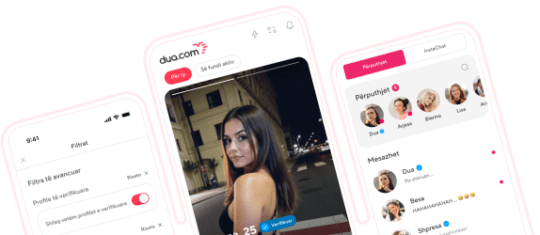
Meet Albanians in Essen on dua.com
Shared language can make a first conversation feel familiar. It does not mean you already know the other person. For Albanians in Essen who want to meet someone beyond their existing circle, dua.com offers a way to start that conversation and look for a serious relationship.
You might be new to the Ruhr, returning after time elsewhere, or living close to the family you grew up with. Each situation brings a different question about meeting people. The starting point can be the same: a thoughtful message, an honest profile and the possibility of a connection that grows beyond the screen.
A city guide can help you find classrooms, associations and cultural places. A relationship begins between individuals. Both matter when you are trying to make a place your own.
How many Albanians live in Essen?
The sources checked for this guide do not provide a reliable, complete count of ethnic Albanians in Essen. Citizenship, language and family background describe different things. A citizen of Albania, a German citizen with Albanian parents and an Albanian speaker with Kosovan citizenship do not necessarily appear in the same statistical category.
The city’s current population summary records 590,338 people with their main residence in Essen on 30 June 2026. It separately identifies 79,539 people with German and another citizenship and 119,814 people with exclusively non-German citizenship. Those two figures include people of many origins. They show how the register is organised; they do not measure the Albanian community.

A city press release about a 2022 Albanian delegation refers to around 5,000 people “from Albania”, but gives no statistical definition or reference date for that statement. It cannot safely answer today’s question about ethnicity, language or citizenship. This guide therefore does not turn it into a population headline.
The city’s 2025 statistical handbook groups Serbia, Kosovo and Montenegro because historic state codes remain in the register. That combined category cannot be relabelled “Albanian”. North Macedonian citizens must not be counted as Albanians by default. Adding passport categories would still leave the fundamental question unanswered: which people are being counted, and on what basis?

For a family, these distinctions are ordinary rather than abstract. Siblings can hold different passports; a child can grow up speaking two languages; someone can naturalise without losing a connection to their grandparents. A useful account of the community needs room for those lives even when no single official total captures them.
Where to begin: the places, not an assumed enclave
The verified points of contact stretch from Altenessen to the Ostviertel and the city centre. Albanian heritage-language lessons are listed at Hauptschule Glückauf in the north and Frida-Levy-Gesamtschule’s Hofterbergstraße site near the centre. The Medina congregation is listed on Elisenstraße in the Ostviertel. These addresses describe institutions people can use, not a map of Albanian households.
There is no sound basis in the evidence collected here for naming one district as Essen’s “Albanian quarter”. Choosing where to live is more usefully approached through your own school, work, transport and family needs. An organisation’s address can be across town from the people who attend it, especially when a particular language class serves several neighbourhoods.
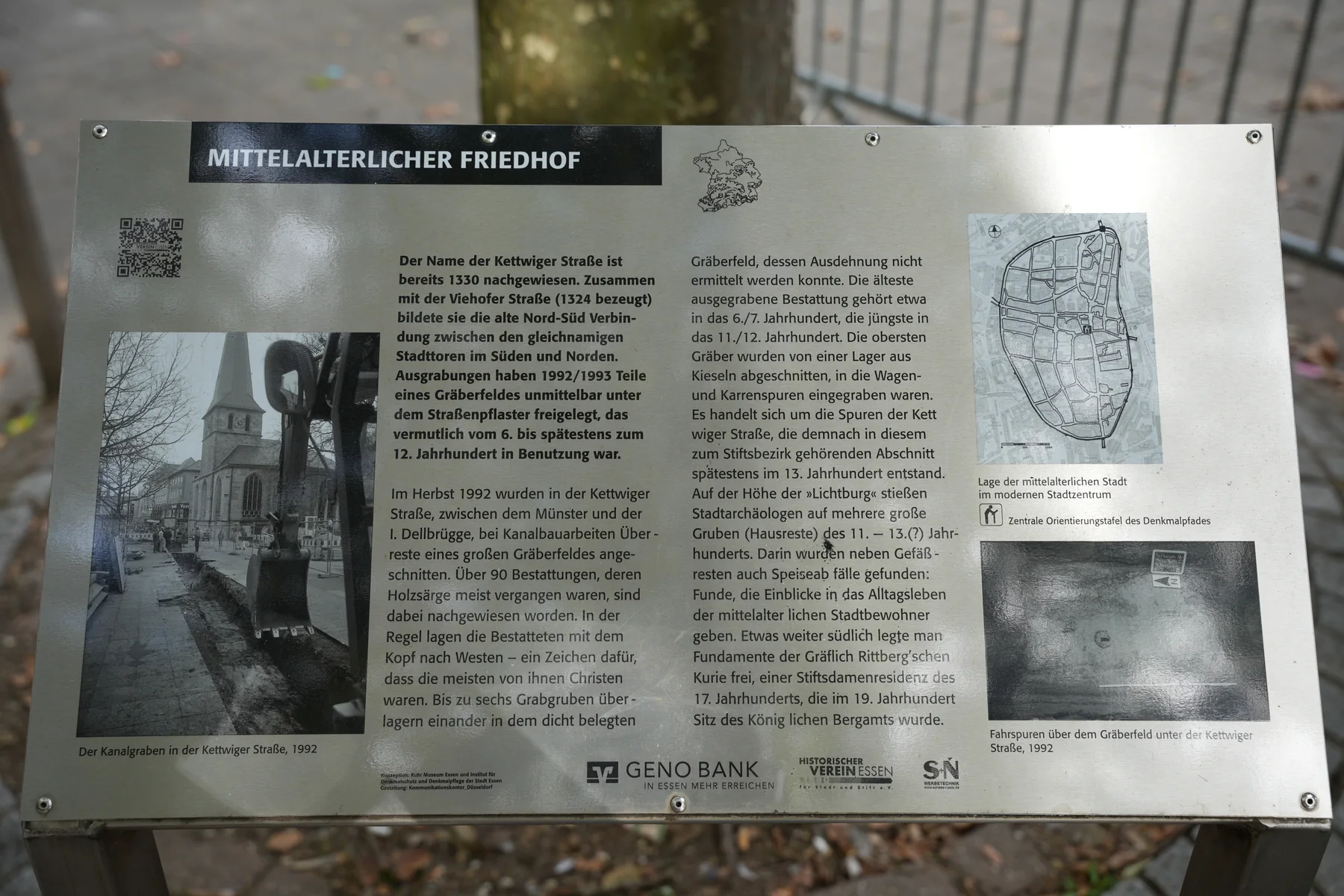
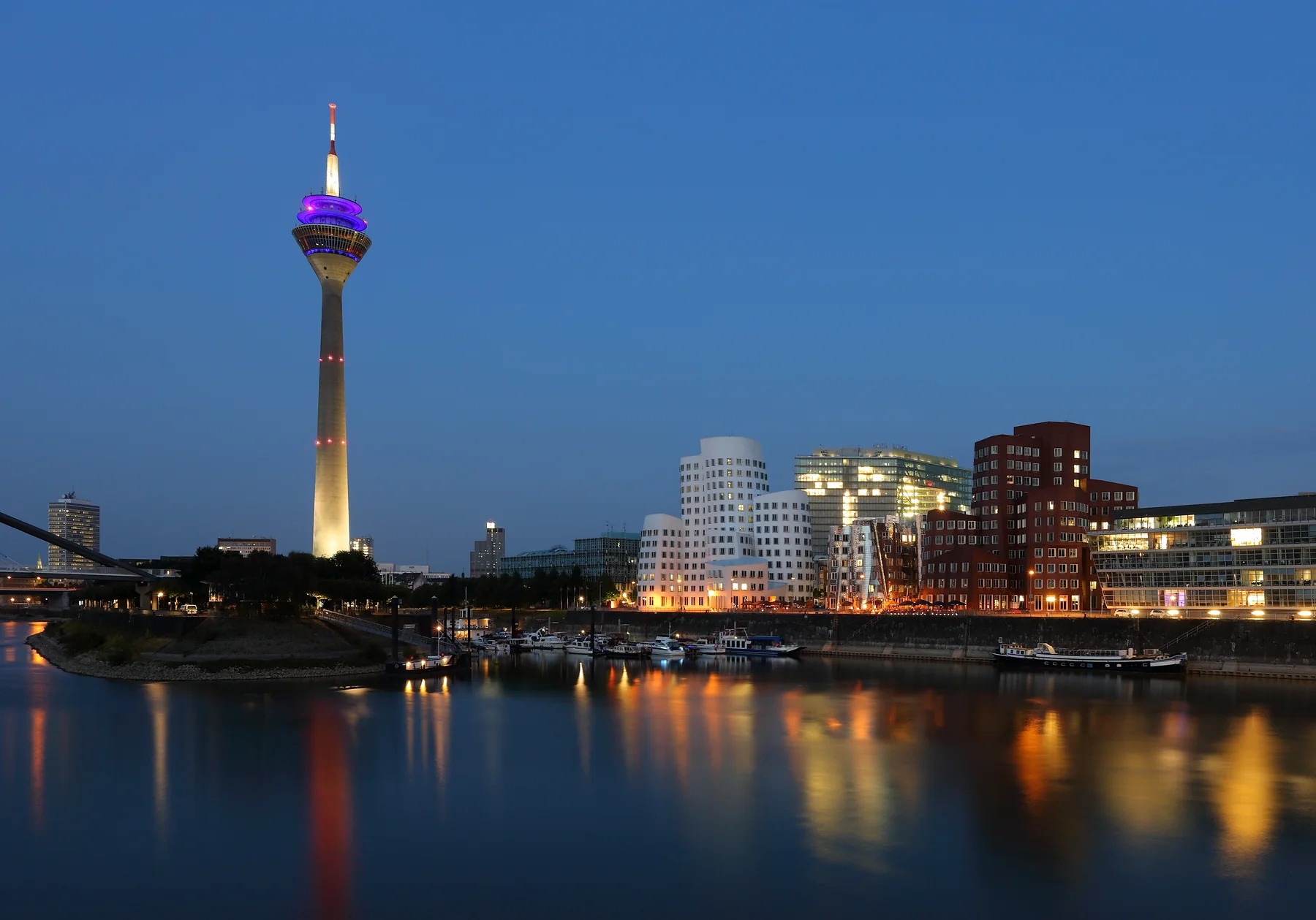
The Ruhr also makes the edge of a city an imperfect guide to daily life. Essen, Oberhausen and Duisburg are different municipalities, while Düsseldorf lies farther south in the Rhine-Ruhr network. A university connection, a music career or a consular appointment can cross those boundaries. The regional locator below keeps the cities distinct instead of folding all their residents into Essen.

Before travelling, use Ruhrbahn’s current journey planner and the institution’s own directions. A familiar city name is not enough: the school office, teaching building and event venue may be different places.
A history built through work, study and organisation
Albanian life in Essen belongs to the broader history of migration to Germany, but local dates must come from local evidence. West Germany’s 1968 recruitment agreement with Yugoslavia is part of the national migration history. It is not evidence of the first Albanian arrival in Essen, and people recorded as Yugoslav citizens did not all share an ethnicity or language.
By December 1996, the city had an Albanian association for culture and integration. Its own account on TopKadare dates its founding to that month. The record is modest but important: it documents people organising around culture, rather than appearing only in a labour or nationality table. Two years later, a different route brought pianist Desar Sulejmani to study at Folkwang.

The Kosovo war and the displacement of the 1990s form part of Germany’s wider Albanian story. The evidence gathered for this guide does not establish an Essen-specific refugee-arrival total, a founding migration wave or a first family. Those details should come from archives and first-person accounts, not be reconstructed from the city’s industrial reputation.
The local milestones are already revealing. An association predates the new millennium; an art project enters a public square; interfaith guests visit a church and the town hall; students present their career plans. They show a community participating in several parts of civic life. There was no single moment when arrival became belonging.
Albanian lessons after the regular school day
Essen lists Albanian HSU at two teaching locations. HSU means Herkunftssprachlicher Unterricht: supplementary heritage-language teaching alongside regular German schooling. It is not a separate full-time Albanian school. The formal type of the host school and the ages served by the supplementary class are different questions.
| Teaching location | Formal host-school type | What to check |
|---|---|---|
| Hauptschule Glückauf | Municipal Gemeinschaftshauptschule: a general lower-secondary school | Bischoffstraße 120, Altenessen; confirm the appropriate primary or secondary HSU group |
| Frida-Levy-Gesamtschule | Gesamtschule: a comprehensive secondary school | Hofterbergstraße site; confirm the teaching entrance and group before attending |
The municipal HSU list names Karlschule as the coordinating school. It explicitly places the lessons at the two hosts above. Its listed contact is 0201 340116 or [email protected]. This distinction saves a parent a wasted journey: the office that organises a class is not necessarily the building where the child should arrive.

The published list shows separate groups for primary and secondary pupils. A primary-age child attending HSU in a Hauptschule building does not thereby become a pupil of that school’s regular secondary programme. Ask the coordinating school about the right level, registration and the timetable for the current school year.
For children who use Albanian mainly with family, a class can give reading and writing a regular place in the week. For children who have recently moved, the balance between spoken fluency and written confidence may be different. Tell the teacher what the child already knows rather than assuming that every Albanian-speaking pupil needs the same starting point.
The practical questions are worth asking early: where is the entrance, which adult collects the child, what materials are needed and how are absences reported? A sustainable routine matters more than an ambitious plan that becomes impossible after two afternoons. Keeping a language close is often a matter of making space for it repeatedly.
An Albanian literary memory kept in Essen
TopKadare is a distinctive trace of Essen’s Albanian cultural life. Its about page identifies the Essen association behind it and describes literary meetings, cultural celebrations, interviews and publications, with special attention to Ismail Kadare. Luan Lapi and Xhevat Ukshini are named in the page’s account of the work.
A literary archive does something different from a one-evening celebration. It lets someone return to a text, hear how an author read it, or discover a discussion years after it happened. For a reader outside Albania, the language is available as an intellectual home as well as the language of family conversation.
The location distinction matters here too. An Essen-based association can document a meeting held elsewhere; TopKadare’s account includes Kadare speaking to readers in Cologne. The archive establishes an Essen organising connection, not proof that every encounter happened in Essen. Its visible older material is also not a current events calendar.
For someone seeking secular cultural connection, this is a useful starting point: explore the archive and use the association’s published channel to ask about present activity. We have not verified a standing 2026 meeting venue or schedule. The cultural achievement documented here is the sustained attention to books and readers, not an invented weekly programme.
Faith, tolerance and room for different ways of belonging
The local interfaith initiative’s directory lists Essen’s Medina mosque at Elisenstraße 18, 45139 Essen. It is one concrete contact for Albanian Muslim religious life in the Ostviertel. Consult the congregation’s current information before attending, particularly for activities beyond ordinary prayer.
Religious institutions are one part of the community. Participation in them cannot be assumed from an Albanian name, language or passport. The literary archive, school classes, music and sport in this guide offer other points of connection, including for people who are not religious.
On 14 May 2022, the Kreuzeskirche hosted Interfaith and tolerance – an Albanian-European Added Value. The city’s report connects that event with an Albanian delegation’s reception at the town hall two days later. It is a documented historical encounter between Albanian visitors and Essen’s public life, not evidence of a recurring festival.
The setting is worth noticing: a church could host a conversation about religious coexistence that involved people from Albania and German public institutions. A community guide need not assign everyone to one faith to acknowledge that encounter. It can instead show where dialogue took place, and leave individuals room to describe their own beliefs.
Desar Sulejmani and the Folkwang connection
Music provides an unusually clear thread between Albania and Essen. Pianist and conductor Desar Sulejmani began studying in Essen in 1998, as documented in the city of Gelsenkirchen’s archived musician biography. His later work included teaching piano at the city’s Folkwang Musikschule from 2012 and artistic leadership of the Neue Folkwang Symphoniker from 2018, according to the City of Oberhausen’s account of his career.
This is a contribution to the city’s shared musical institutions, not only music performed for an Albanian audience. Teaching, accompanying and rehearsing are forms of work that often remain less visible than a concert. Their influence is carried by the people who learn and perform together.
The names need care. Folkwang University of the Arts and the municipal Folkwang Musikschule are distinct institutions. The university’s faculty profile lists Sulejmani in voice, music theatre and accompaniment. The municipal career account records his move to lead Oberhausen’s Musische Bildung department on 1 October 2025. Calling him Essen’s current music-school department head would therefore be outdated.
His career also explains why a strictly city-contained portrait would miss something. Training in Essen can lead to work in a neighbouring Ruhr city while an artistic network continues across the region. For readers interested in concerts or lessons, follow the relevant institution’s current programme rather than assuming that an artist’s past position tells you where they work now.
A Kosovo-born artist on an Essen square
Leunora Salihu offers another cultural connection with a precise place and time. Her Tube End was a temporary Kunst am Moltkeplatz project in 2010–2011. The work brought her sculpture into an Essen public space; it does not make the Düsseldorf-based artist an Essen native.
A sculpture in a square meets people who did not necessarily plan a gallery visit. It can enter a walk to school or an ordinary neighbourhood conversation. That is a different kind of presence from a national celebration: a person’s creative work becomes part of what a city sees.
This is an archived example. The organiser’s 2012 record describes the subsequent temporary exhibition, so visitors should not expect to find Tube End still on the lawn. Follow Kunst am Moltkeplatz for the current works and programme. The archive remains useful for understanding the range of Albanian and Kosovo-linked contributions to Essen’s cultural life.
From an international player to a local team
Gjasula’s return at the start of this guide became more than a brief transfer announcement. On 11 April 2026, Rot-Weiss Essen confirmed a further contract year. His connection to Albania and his work at the Hafenstraße can be acknowledged together: an international career became part of a local team’s daily effort.
There are younger pathways too. RWE’s February 2023 reporting documented Milot Ademi’s nomination for Albania’s under-19 national team. This is a dated youth-football example, not a claim about his current club or international status. It shows how a player developed in Essen can have a sporting connection beyond Germany.
For people looking to play rather than watch, the local amateur game has a different scale. FUSSBALL.de lists FC Besa Essen, founded in 2024, with two men’s teams in Kreisliga C groups 1 and 2 for 2026/27. Use the federation listing for the current fixtures and contact route. The club’s name alone is not proof of every member’s background, and a local amateur side should not be presented as a professional team.
Sport offers both an audience and a routine: one person follows an international player, another commits to weekly training. Ask a club directly about trial sessions, membership and age groups. A list of senior teams does not promise a youth place, and an old match report does not confirm a current training time.
Students, children and a view from the town hall
On 12 April 2024, students with Albanian and Kosovan roots visited the 22nd floor of Essen’s town hall. Some came from the University of Duisburg-Essen. The city’s account describes them introducing their studies and career paths; six Albanian children also performed a traditional dance in folk costumes.
It is a small scene with more than one generation in it. The students were talking about the work ahead of them, while the children presented something inherited. Both could happen in the same room. Culture did not have to be set aside for professional ambition, nor did a traditional dance explain everything about the children who performed it.
The event is not a measure of university attendance or a portrait of every family. Its value is more specific: it documents young people being heard in a city institution. Alongside the heritage-language classroom and the literary archive, it gives this guide another way to see continuity across generations.
Work, businesses and the right place to ask
A useful community guide should make working life easier to navigate. Essen’s Beratungsstelle Migrationsökonomie brings together EWG, the JobCenter and the municipal integration centre to support entrepreneurs with migration backgrounds. Its published services cover starting and developing a business, finding staff, training apprentices and building professional contacts.
This is a service for a wider group than Albanians. No reliable Essen-specific count of Albanian-owned firms was found for this guide, and we do not classify a restaurant or trades business by its owner’s surname. A menu, a company name or a family connection is not a verified business census.
For an individual planning the next step, a concrete question is more useful than a vague search for “contacts”: do you need help with a business plan, recognition of a qualification, an apprenticeship or understanding a letter? That question helps the first adviser direct you to the right service.
The Welcome- und ServiceCenter Essen handles defined groups including students, trainees and people coming for skilled work, research or self-employment. Its current page explains the responsibilities and appointment process. Other residence matters belong to the municipal foreigners’ authority. Use those official instructions for your own situation; a community organisation and a government office play different roles.
Everyday help in a language you understand
ViBB Essen’s adult migration advice service can arrange Albanian-language support when needed. Its published offer is free and confidential and covers practical questions such as language courses, qualifications, work, housing and dealing with public offices. Albanian is available on request, so ask when arranging a consultation rather than assuming an Albanian-speaking adviser will be present at any time.
The service lists Witteringstraße 2, 45130 Essen, telephone 0201 7291607 and [email protected]. Check eligibility and availability with the organisation. Its adult migration service is aimed principally at people aged 27 and over; younger people should ask for the appropriate referral.
For families, community knowledge and professional advice can complement one another. A friend may know the right bus or explain how an appointment feels. A qualified adviser can help identify the responsible office and the documents it needs. Keeping those roles clear reduces the pressure on relatives to solve every difficult administrative question themselves.
For consular matters, consult the Federal Foreign Office’s Albanian representation directory or its Kosovo directory. Essen’s former Albanian honorary consulate closed on 31 March 2023, as recorded in the NRW gazette. Old Essen listings should not be used as a current appointment address. Albanian and Kosovan consular services are also not interchangeable.
Finding culture without chasing an old poster
The documented events here include the May 2022 interfaith programme, the April 2024 town-hall visit and the earlier Moltkeplatz exhibition. They tell us something about what has happened in Essen. They do not provide an upcoming calendar for September 2026.
For a new event, begin with the organiser, venue or institution itself. Check the year as well as the day and month; confirm whether it is open to the public, whether tickets are needed and which city the venue is in. An Essen association may organise beyond the city, and a regional concert may attract Essen residents without taking place here.
There is no need for every useful connection to be a large festival. A reading, a music-school programme, a club match or a class can give people something to return to. The strongest local directory is one that helps you find the next real point of contact.
Making Essen part of your own story
Gjasula’s route back to the Hafenstraße was unusually public. Most people’s relationship with a city is assembled in smaller steps: learning where a class meets, recognising a face at an event, finding someone who remembers your name. The institutions in this guide do not prescribe how Albanian life should look. They show several ways to take part.
If you want to meet new Albanians or find a serious relationship, start a conversation on dua.com. A shared language can open a door; curiosity, patience and time together determine what follows. Essen can be where that begins, whether your roots are nearby or spread across countries.
For the wider picture, read Albanians in Germany, explore the nearby community in Düsseldorf, or browse the Albanian community hub. Each city has its own institutions and story, even when the people move between them.
Directory: useful Essen and regional contacts
Checked on 28 September 2026. Use the linked institution for current details, registration and appointments. Historical archives are identified below.
Language and practical support
- Albanian HSU — Essen school authority: Karlschule coordinates (0201 340116; [email protected]); teaching is listed at Hauptschule Glückauf, Bischoffstraße 120, and Frida-Levy-Gesamtschule’s Hofterbergstraße site. Confirm this year’s group, entrance and timetable.
- ViBB Essen adult migration advice: Witteringstraße 2, 45130 Essen; 0201 7291607; [email protected]. Free, confidential advice; Albanian on request.
- Welcome- und ServiceCenter: official appointment and service information for eligible students, trainees, workers and other specified groups; telephone 0201 88-38777.
- EWG Migrationsökonomie: advice for starting, running and developing a business with a migration background.
- Ruhrbahn Essen: current journey planner for reaching schools, services and events.
Culture, faith and sport
- TopKadare: literary archive run by an Essen Albanian cultural association. Historical material; a current meeting programme is not confirmed.
- Medina Essen: Albanian Muslim congregation listed at Elisenstraße 18, 45139 Essen.
- Folkwang University of the Arts: Desar Sulejmani’s faculty profile and the university’s programme.
- Kunst am Moltkeplatz: organiser’s archive for Salihu’s temporary sculpture and links to current public art.
- Rot-Weiss Essen: the club’s Gjasula story and links to current team and ticket information.
- FC Besa Essen: federation record, teams and fixtures; ask the club about participation.
Consular services outside Essen
- Albanian representations in Germany: official current directory; check which office can perform the service you need.
- Kosovo’s Consulate General in Düsseldorf: regional consular contact for NRW, listed in the official directory.
Frequently asked questions about Albanians in Essen
How many Albanians live in Essen?
No reliable complete ethnic-Albanian total was verified for Essen. The city counted 590,338 main-residence inhabitants on 30 June 2026, but its general citizenship categories cover all origins. An undefined “around 5,000 people from Albania” in a 2022 press release is not a current census. Citizenship, Albanian language use and family ancestry must be kept separate.
Where do Albanians meet in Essen?
Documented points of contact include Albanian HSU classes in Altenessen and at the Hofterbergstraße school site, the Medina congregation in the Ostviertel and the Essen association behind the TopKadare literary archive. Music, sport and wider city events offer other connections. These institutions do not establish where most Albanian residents live.
Where can children learn Albanian in Essen?
The municipal HSU list names Karlschule as coordinator and lists lessons at Hauptschule Glückauf, Bischoffstraße 120, and Frida-Levy-Gesamtschule’s Hofterbergstraße site. HSU is supplementary heritage-language teaching alongside regular German schooling. Contact the coordinator to confirm current registration, class level, teaching entrance and schedule.
Are these separate Albanian schools?
No. Hauptschule Glückauf is a municipal Gemeinschaftshauptschule, a general lower-secondary school; Frida-Levy-Gesamtschule is a comprehensive secondary school. Their buildings host supplementary Albanian HSU. The published HSU list includes primary and secondary groups, so the host building’s formal school type does not determine the age group of every child attending the extra lessons.
Which Albanian people have a documented Essen connection?
Tirana-born Klaus Gjasula signed for Rot-Weiss Essen in January 2025. Musician Desar Sulejmani studied and taught in Essen and later took a municipal role in neighbouring Oberhausen. Kosovo-born artist Leunora Salihu exhibited Tube End temporarily at Moltkeplatz in 2010–2011. These are specific professional connections, not claims that all three were born or raised in Essen.
Can I get practical advice in Albanian?
ViBB Essen’s adult migration advice service says it can provide Albanian-language support when needed. Advice is free and confidential. Contact 0201 7291607 or [email protected] before visiting Witteringstraße 2, and ask about language availability and eligibility. The service is principally for adults aged 27 and over; younger people can ask for a referral.
Is there an Albanian consulate in Essen?
Essen’s former Albanian honorary consulate closed on 31 March 2023, according to the NRW gazette. Use the Federal Foreign Office’s current directory of Albanian representations for the appropriate office and service. Kosovo has a separate Consulate General in Düsseldorf for NRW. Check the relevant authority before making an appointment or travelling.
How can I meet Albanians and find a relationship in Essen?
Cultural activities, language-related community contacts and sport can help you broaden your circle. For dating and a serious relationship, dua.com lets you connect with Albanians beyond the people you already know. No verified Essen-specific membership count is published in this guide. Start with a conversation and choose a public place for a first meeting.