Massachusetts has one of the oldest Albanian communities in the United States, and its life today stretches across festivals, schools, churches, local television and neighbourhood businesses. Worcester is its strongest city centre; South Boston holds historic institutions; Quincy and Braintree connect the South Shore; and Peabody, Beverly and Salem form a distinct North Shore corridor.
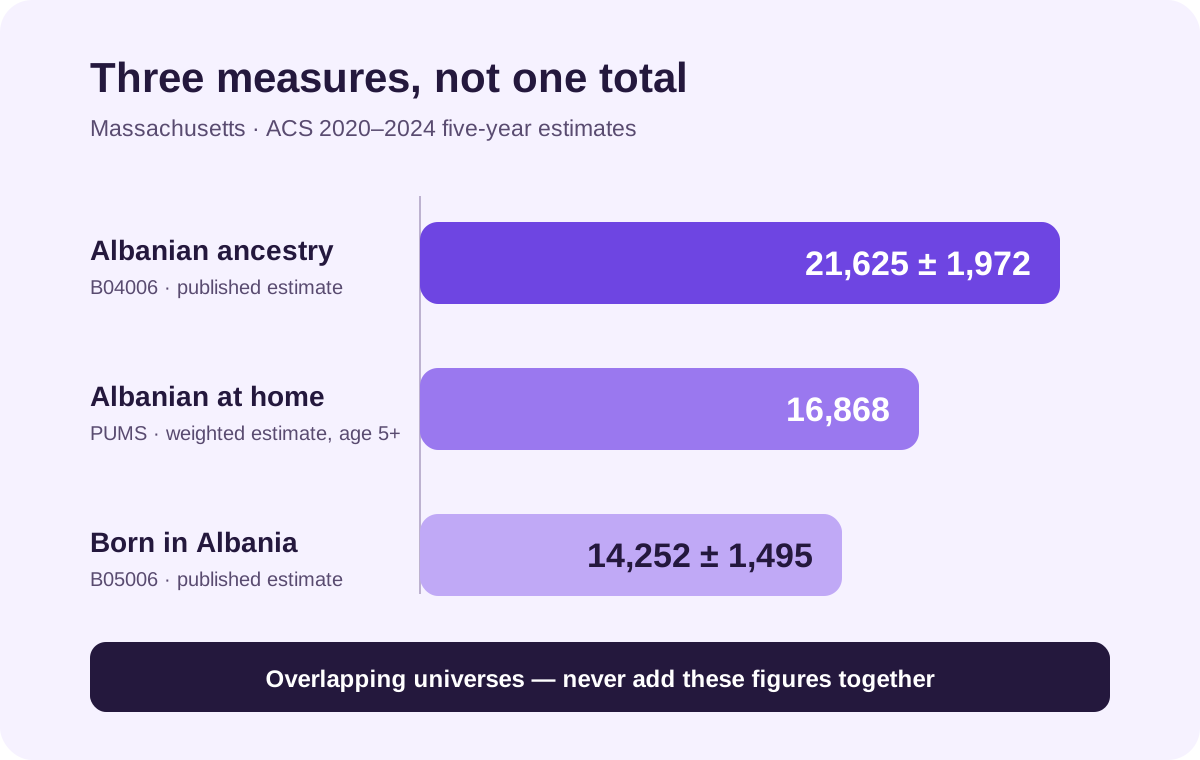
The 2020–2024 American Community Survey estimates 21,625 ± 1,972 residents reporting Albanian ancestry. That is a useful statewide measure, not a complete count of every Albanian connection. This guide follows the people and places behind it, keeping ancestry, birthplace, language and community life distinct.
Last evidence review: 28 August 2026. ACS values use the 2020–2024 five-year survey and show the published 90% margin of error. No individual-level Census or dua.com data appears on this page.
The Albanian community in Massachusetts right now
There is no single gate into this community and no one organisation speaks for everyone. The most useful map follows what people actually do: worship and preserve archives in South Boston, volunteer and celebrate in Worcester, attend school and family programmes around Braintree, Quincy, Salem and Beverly, watch local Albanian media, and meet through food, music, dance and civic events.
Worcester: festival, media and everyday community
St Mary’s parish, the Albanian Festival, MAAS Besa school activity, WCCA’s Albanian-language programmes, Independence Day ceremonies and a visible restaurant scene make Worcester the state’s most complete local ecosystem.
Faith, memory, arts and a new cultural home
St George Cathedral and the Albanian Archdiocese carry the historic institutional story. The Fan Noli Cultural Center adds arts, literature, youth and family programmes, professional development, culinary heritage, a calendar and a developing living archive.
Quincy and Braintree: family networks and enterprise
MAAS Besa’s Braintree centre connects language, culture and families. Quincy joins a substantial residential community to restaurants where Albanian owners and stories are publicly documented.
Peabody, Beverly and Salem: a connected corridor
Population evidence is strongest in Peabody, while Vatra Boston and Shkolla Iliria use Beverly as an organisational address and MAAS Besa identifies school activity in Salem.
See the community in motion
These videos show two views of public community life: a Worcester news report from the 2019 parish festival and the Massachusetts Cultural Council’s film archive from the 2009 edition. They are embedded from YouTube’s privacy-enhanced domain; dua.com does not download or re-license the footage or thumbnails.
For more still images, explore the festival organiser’s 2009 photo and video archive. This page links to the official gallery rather than copying its rights-reserved photographs.
How many Albanians live in Massachusetts?
The clearest official statewide measure is 21,625 ± 1,972 residents reporting Albanian ancestry, from the US Census Bureau’s 2020–2024 American Community Survey, table B04006. The margin of error is reported at the 90% confidence level. Respondents can name up to two ancestries, so the measure can include Albania-born immigrants, US-born descendants and mixed families who report Albanian roots. It is not an ethnic register.
A separate table, B05006, estimates 14,252 ± 1,495 residents born in Albania. Birthplace excludes US-born descendants and does not identify ethnic Albanians born in Kosovo, North Macedonia, Montenegro or elsewhere. These measures overlap and must not be added. Neither captures everyone with an Albanian family or cultural connection.
Swipe horizontally to explore the full chart.
| Measure | Massachusetts value | What it sees | What it misses |
|---|---|---|---|
| Albanian ancestry | 21,625 ± 1,972 | Up to two reported ancestries, all ages | People who do not write Albanian |
| Born in Albania | 14,252 ± 1,495 | Country of birth | US-born descendants and Albanians born elsewhere |
| Albanian at home | 16,868 weighted PUMS estimate | Language among people age five and older | Children under five and people who have shifted to English |
| Kosovo refugee arrival | about 450 in 1999 | An attributed Massachusetts resettlement episode | The wider Kosovo-origin population |
| dua.com | No state figure published | — | Not used as a population proxy |
Weighted Massachusetts PUMS suggests about 61.5% of the Albanian-ancestry universe is foreign-born and about 18.5% is under 18. Those are useful composition signals, not new population totals. No microdata record is exposed, and the page does not construct an individual profile.
The statewide map: Worcester first, then a two-shore network
Massachusetts has no single “Little Albania”. Worcester is the clearest concentrated city. Greater Boston is a distributed network whose institutions and homes do not occupy the same map. South Boston holds the national church address; Quincy and Braintree organise much of the South Shore; Peabody, Beverly and Salem connect the North Shore.
Swipe horizontally to explore the full chart.
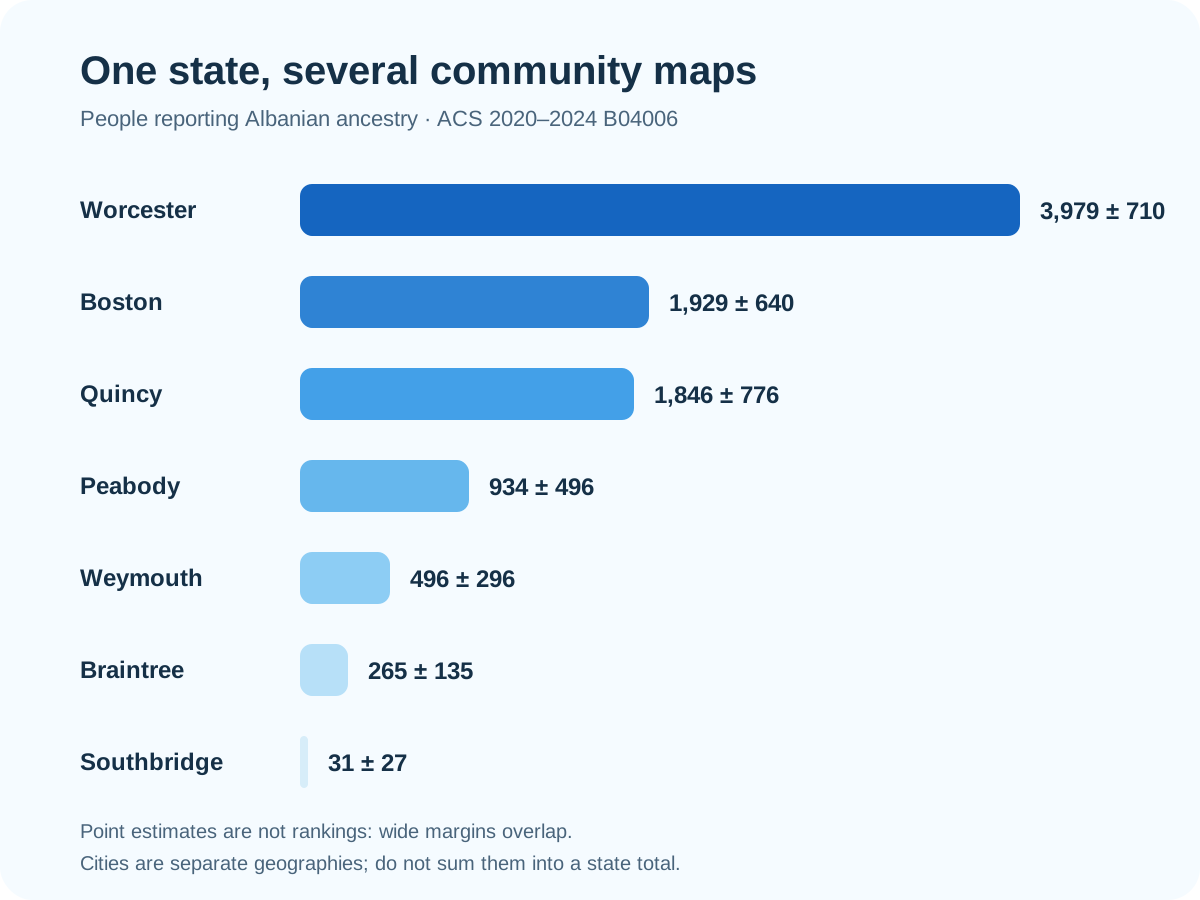
County data makes the distributed pattern visible: Worcester County records 5,885 ± 878; Norfolk 4,118 ± 992; Middlesex 3,278 ± 710; Essex 3,093 ± 731; Suffolk 2,694 ± 777; and Plymouth 1,134 ± 615. The Boston–Cambridge–Newton MA–NH metro estimate of 14,717 ± 1,708 crosses into New Hampshire, so it is neither “Boston city” nor a Massachusetts subtotal.
South Boston is an address; Boston is a city; the metro is a region
Those three labels are routinely blurred. Boston city records 1,929 ± 640 residents reporting Albanian ancestry. ZCTA 02127, an approximation for South Boston, records 173 ± 96. South Boston matters because St George Cathedral and the archdiocesan chancery are there, not because every Albanian in metropolitan Boston lives around East Broadway.
Quincy and the South Shore
Quincy’s point estimate is 1,846 ± 776, or 1.81% of the city. Braintree hosts MAAS Besa’s community centre, and Weymouth records 496 ± 296. Restaurants and school activity give this Norfolk–Plymouth belt a visible social infrastructure. The estimates are uncertain, but the convergence of Census and first-party institutional evidence supports “South Shore hub”.
Peabody, Beverly and the North Shore
Peabody records 934 ± 496, or 1.71% by point estimate. Beverly holds the address used by Vatra Boston and the New Center Albanian Boston Community / Shkolla Iliria listed by Albania’s QBD directory; MAAS Besa lists school activity in Salem. The North Shore is therefore a corridor, not one neighbourhood.
Southbridge: a smaller population with an outsized history
Southbridge records only 31 ± 27 in the latest ancestry estimate. That number is too small and uncertain for claims of a large present-day centre. St Nicholas, founded in 1912, nonetheless preserves the industrial-era colony and describes itself as the first church built specifically for Albanian-language Orthodox worship. History and current population are separate claims.
Korçë, mills and the institutions that came before a state
The first-arrival story needs one correction. A man from Korçë is reported to have reached the United States in 1876 and soon continued to Argentina; his name is not securely preserved. Kolë Kristofori, known in America as Nicholas Christopher, was a different person. Academic accounts place his Boston arrival in the mid-1880s, and the 1939 Massachusetts WPA history conventionally gives 1886. He returned to Katundi and in 1892 led seventeen men back to Boston. He is best described as the first permanent settler and pioneer of chain migration, not indisputably the first Albanian ever to touch US soil.
The founding migration came primarily from villages around Korçë in southern Albania. These early migrants were often young, Tosk-speaking and Orthodox. They followed relatives into foundries, wire works, textile mills and other New England jobs where physical labour mattered more than English.
A 1906 account preserved in later scholarship placed 280 Albanians in Southbridge and 250 in Worcester, with smaller groups in Webster and nearby mill towns. Treat those numbers as a period observer’s map, not a census that can be compared directly with today’s ACS.
In Boston, Sotir Peçi began Kombi in June 1906. An Orthodox burial dispute then exposed the cost of worship in a language a community did not control. Fan Noli was ordained in March 1908 and celebrated the first Albanian Divine Liturgy on 22 March 1908. St George was founded that year.
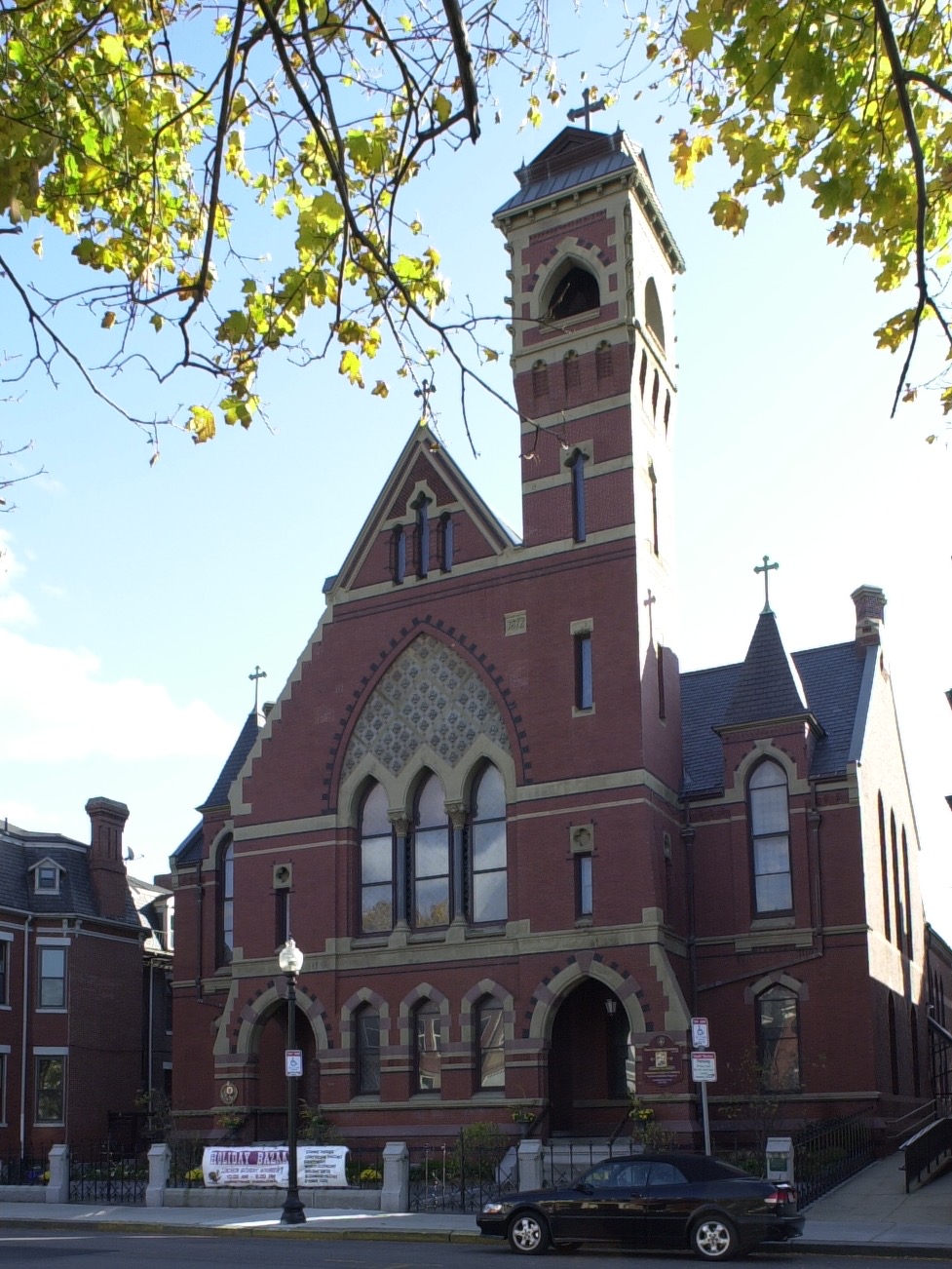
Dielli appeared in Boston in 1909. The Library of Congress catalogues its 1909–1910 holdings and successor titles. Vatra was founded in Boston in 1912, the same year Albania declared independence. For a short period, newspapers, church translation, fundraising and national politics made Massachusetts one of the central addresses of the Albanian national movement.
Institution building did not stop at Boston. Worcester’s congregation organised in 1911. Southbridge founded St Nicholas in 1912. These parishes were spiritual homes, mutual-aid networks, Albanian-language spaces and civic schools at once.
Worcester is not a Boston footnote
Worcester has the strongest case for a community page of its own. Its 3,979 ± 710 Albanian-ancestry estimate is the largest among Massachusetts cities in the current table. Its 3,258 ± 626 Albania-born estimate is a different measure pointing to the same conclusion: the city is a substantial contemporary migration centre, not only a historic parish.
The geography is concentrated enough to be experienced in daily life. ZCTA 01602 records 2,057 ± 634 people reporting Albanian ancestry, or 7.59% by point estimate; 01603 records 631 ± 328 and 01609 records 594 ± 306. ZCTAs approximate postal service areas rather than neighbourhood boundaries, but the central-west Worcester cluster remains clear after uncertainty is shown.
A century-old institution that changed language without disappearing
St Mary’s was organised in 1911 and established its permanent parish home in the following decade. The current OCA parish history links its architecture to St George in Korçë and says services are about 65% English, with the rest in Albanian. That is not cultural loss reduced to a percentage. It shows how an immigrant institution can become locally rooted while retaining a liturgical bridge.
Civic visibility
Worcester’s long-range planning process identifies Albanian among the principal languages used for public outreach. The city records Albanian Independence Day flag-raising, and St Mary’s recurring festival brings food, music, dance and parish fundraising into public space on the organiser’s published schedule. MAAS Besa lists a Worcester Albanian school. Together, these are stronger evidence of a functioning community than a business list alone.
Should Worcester have a standalone page?
Yes. The evidence meets five tests: a leading and statistically meaningful population concentration; more than a century of documented institutions; current language education; municipal civic recognition; and a distinct business and event ecology. A future Worcester guide should add consent-based interviews, current school-enrolment figures and a verified rolling calendar. Until then, this statewide page keeps Worcester substantive rather than teasing an empty future route.
Boston, South Boston and two shores
Boston’s role is national. It produced newspapers before Albania was independent, gave Fan Noli a platform, formed Vatra and still hosts the Albanian Archdiocese. Yet the contemporary residential and family map has expanded into a metropolitan network.
South Boston: church, archive and memory
St George is active, bilingual and connected to families across the region. Its Fan Noli Library preserves books and archival materials and is available by arrangement. Visitors should treat it as a working church and archive, not a drop-in museum.
The South Shore: Quincy, Braintree and Weymouth
Quincy joins population evidence with visible enterprise. Rozafa Mediterranean Bistro’s first-party history identifies owner Marlon Vila’s Albania background and the restaurant’s name from Rozafa Castle. Alba and related Quincy restaurants belong to the longer Albanian path through Italian and Mediterranean hospitality. MAAS Besa’s centre in Braintree adds classrooms and community programming to the map.
The North Shore: Peabody, Beverly and Salem
Peabody leads the North Shore point estimates, while Beverly and Salem carry organisations and schools. The current Vatra Boston chapter posts activities from Beverly; QBD lists Shkolla Iliria at the same broader community address. This is a newer geography layered over an old Boston name.
The second migration: post-1990 Albania and the Kosovo era
Albania’s communist closure interrupted direct migration for decades. After the regime collapsed, diversity visas, family sponsorship, study and work reopened the Massachusetts route. The age and arrival pattern in weighted PUMS is decisive: the foreign-born ancestry population is overwhelmingly a post-1990 story.
A Massachusetts refugee-office overview published in 2003 estimated roughly 5,000 Albania diversity-visa arrivals during the 1990s and about 450 Kosovar refugees resettled in the state in 1999. Those are attributed programme estimates from a republished historic overview, not Census figures and not the current Kosovo-Albanian population.
The International Institute of New England documents Boston-area Kosovo resettlement and a “Kosovo Kids” programme that prepared children in Lynn for public school. It provides direct evidence of the refugee response without turning country of birth into an ethnicity label.
This later migration changed the community’s institutions. Older parish halls received people raised under an officially atheist state. New schools and associations appeared beyond the original factory towns. English, standard Albanian, Tosk family speech and Gheg varieties can meet in the same event. None of that permits an estimate of religious affiliation, and this guide does not manufacture one.
Churches, schools and civic organisations
The OCA Massachusetts deanery lists St George in South Boston, St Mary’s in Worcester, St Nicholas in Southbridge and Annunciation in Natick. The Albanian Archdiocese has eleven US parishes and maintains its chancery in South Boston.
These Orthodox institutions are the best-documented legacy of the founding migration, but they are not a census of belief. Research did not verify a current dedicated Albanian mosque in Massachusetts through an official or first-party directory. That is a directory limitation, not evidence that Muslim Albanians are absent; many worship through multiethnic Islamic centres or outside Albanian-specific institutions.
MAAS Besa combines language classes, culture and family activity, with a centre in Braintree and school activity identified in Quincy, Salem and Worcester. Albania’s QBD school directory lists Shkolla Iliria / New Center Albanian Boston Community in Beverly. Vatra Boston connects today’s activities to the federation founded in the city in 1912. A famous name does not guarantee an event is current, so the practical directory links to first-party pages rather than copying schedules.
Community infrastructure also exists outside worship and school. The Fan Noli Cultural Center in South Boston publishes arts, literature, youth, family, professional and culinary programmes. Worcester community television archives Albanian World and ARB TV, giving local people a media platform and newcomers a way to hear the community before attending in person.
From mills to restaurant ownership and professional life
The early economic story is industrial: wire, textiles, metal, factory and railroad-related labour across central Massachusetts and Greater Boston. Kinship reduced the risk of arrival. A job, room and interpreter could pass through the same village network.
Hospitality became another ladder. Anthony Athanas arrived from Albania, built Anthony’s Pier 4 and made it both a major American restaurant and an Albanian-American meeting address. Later newcomers learned kitchens, suppliers and customers inside restaurants that did not always advertise Albanian ownership. Today, businesses such as Rozafa name Albanian culture openly.
Worcester’s business story is more than restaurants, but consent-based profiles make hospitality especially visible. The Worcester Women’s Oral History Project records Oriola Koci’s path from Tirana through the diversity-visa programme to Livia’s Dish and Altea’s Eatery. Local reporting profiles Nuovo owner Aleksander Gjonca. These are named examples, not proof that one occupation defines the community.
A 2015 Harvard Growth Lab profile helps explain the shift from factory work to professional life, but it is a historical snapshot. It used the 2012 one-year ACS PUMS and a combined Albania-birth-or-Albanian-ancestry definition. It found Massachusetts older and more highly educated than its New York and Michigan comparison groups and documented work across food and accommodation, construction, real estate and professional services. Its roughly 21,300 Massachusetts estimate is not reused as today’s count because the vintage, sample and definition differ from the 2020–2024 B04006 baseline.
For discovery, the City of Worcester diverse-business directory is useful. Its entries are self-identified; listing is not an endorsement by the city or dua.com. Confirm ownership, opening hours and accessibility directly.
People and personalities who made Massachusetts an Albanian address
A community is remembered through people, not only institutions. These profiles connect public, sourced lives to specific Massachusetts places; they are not a celebrity ranking or a claim that one person represents everyone.
Fan Noli and Sotir Peçi
Peçi’s Kombi made Boston an Albanian printing centre in 1906. Noli’s liturgy, St George, publishing and Vatra made the city a religious and political-intellectual address for Albanians across borders.
Anthony Athanas
The restaurant owner turned Anthony’s Pier 4 into a major Boston business and a civic meeting place. His story places Albanian entrepreneurship inside the city’s wider public life rather than treating it as an ethnic niche.
Oriola Koci
Koci’s first-person Worcester oral history follows arrival from Tirana through the diversity-visa programme, work, family and ownership of Livia’s Dish and Altea’s Eatery. It makes the post-1990 story personal without speaking for every migrant.
Nikolin “Niko” Vangjeli
Worcester’s official staff profile says the current city clerk moved from Albania in 2001 and has worked in public service for more than a decade. His role shows a migration story becoming part of the city’s civic infrastructure.
Notability here means a documented Massachusetts contribution, not celebrity ranking. The page avoids unsourced hometown claims and does not use a public person to stand in for an entire generation.
The next generation: belonging after the factory map
The first Massachusetts institutions were built around village, church and labour. The next generation inherits a different map: school in Worcester or the shores, family across New England, English as the strongest public language and Albanian learned in different degrees at home or on weekends.
Three facts hold that story together. Weighted PUMS suggests roughly one in five ancestry respondents is under 18. MAAS Besa and Shkolla Iliria create formal language space outside the home. St Mary’s reports a liturgy that is now mostly English while retaining Albanian. Identity can therefore outlast full language fluency, while schools make language maintenance an active choice rather than a family assumption.
“Next generation” is not one experience. An Albania-born teenager in Worcester, a Quincy child with one Albanian parent and a South Boston family whose parish history reaches back a century may all answer “Where are you from?” differently. This page does not prescribe the answer.
Practical Massachusetts directory
Check the linked organiser before travelling. Services, classes, admission, accessibility and event dates change. A listing documents a current official or first-party address; it is not an endorsement.
| Place or service | Area | Use | Official link |
|---|---|---|---|
| St George Cathedral & Fan Noli Library | South Boston | Parish, archdiocese, archive by arrangement | Official site |
| Fan Noli Cultural Center | South Boston | Arts, literature, youth, family, professional and culinary programmes | Programmes and calendar |
| St Mary’s Albanian Orthodox Church | Worcester | Parish and festival organiser | Official site |
| St Nicholas | Southbridge | Historic Albanian Orthodox parish | OCA directory |
| Annunciation Orthodox Church | Natick | Albanian Archdiocese parish | Official site |
| MAAS Besa | Braintree / Quincy, Salem, Worcester | Albanian school and community programmes | Official site |
| Shkolla Iliria / New Center Albanian Boston Community | Beverly | Albanian school listing | QBD directory |
| Vatra Boston | Beverly / Greater Boston | Civic and cultural activities | Activities |
| Albanian World & ARB TV | Worcester / online | Albanian community news, interviews, events and culture | WCCA archive |
| Massachusetts ORI community partners | Statewide | General refugee and immigrant services | State directory |
| Worcester diverse-business directory | Worcester | Self-identified business discovery | City directory |
Events and participation to watch
Albanian Festival
Food, dance, music, church tours and volunteer work bring the parish and wider city together. Official material identifies the 2025 event as the 21st biennial festival, so this page does not call it annual or invent a 2026 date. Check the organiser.
Independence and Flag Day
Worcester flag-raising and Vatra activities create public civic space for speeches, songs and dance. Venue and date come from the organiser; check the city’s cultural-flag programme and Vatra’s current posts.
Arts, youth and family programmes
The Fan Noli Cultural Center publishes its programme areas and current calendar. Subscribe or check the organiser rather than relying on a copied date.
Language and family activities
MAAS Besa and local schools connect children and parents in Braintree/Quincy, Salem, Worcester and Beverly. Ask MAAS Besa or the listed school about current registration and age groups.
Food and business starting points
First-party or independently documented examples include Rozafa Mediterranean Bistro and Alba in Quincy; Shkodra Byrek in Dedham/Braintree; and Livia’s Dish, Altea’s Eatery and Nuovo in Worcester. Opening status changes: check the business directly. The list is a route into the community, not a “best of” ranking.
Method, safeguards and what comes next
Population results come from the Census Bureau’s official 2024 ACS five-year table-based summary files: B04006 for ancestry, B05006 for Albania birthplace and B01003 for denominators. ZCTAs are postal approximations. PUMS uses the Massachusetts five-year person file and person weights only for aggregates. Consecutive five-year surveys overlap, so this page does not call a difference between vintages a migration flow.
The National Albanian Registry was permitted for discovery but not accepted as proof of population, institution status or media rights. Important directory claims were independently checked through churches, organisations, government or first-party businesses. No individual-level data, inferred religion, exact user location or small dua.com segment is published.
Worcester standalone recommendation: build it next, but only after adding local interviews, live organiser confirmation, current school-enrolment context and a dedicated media-rights review. The statewide guide should continue to explain how Worcester fits with Boston and both shores.
Frequently asked questions
How many Albanians live in Massachusetts?
The current ACS estimates 21,625 ± 1,972 residents reporting Albanian ancestry. A separate estimate counts 14,252 ± 1,495 residents born in Albania. They overlap and should not be added.
Where is the largest Albanian community in Massachusetts?
Worcester is the clearest city-level centre in the latest ancestry and Albania-born tables. Greater Boston holds more people across a wider, overlapping region, but no single Boston neighbourhood contains the whole community.
Is South Boston still the centre?
It remains the institutional centre through St George Cathedral and the Albanian Archdiocese. Today’s residential map extends through Worcester, Quincy and the South Shore, Peabody and the North Shore, and other suburbs.
Are most Massachusetts Albanians from Albania or Kosovo?
The Albania-born population is large and early history is strongly tied to Korçë, but ACS does not provide a complete ethnic-origin breakdown for Albanians born elsewhere. Kosovo refugee history is documented; a statewide ethnic split is not.
Is there an Albanian mosque in Massachusetts?
This review did not verify a current dedicated Albanian mosque through an official or first-party directory. That does not describe residents’ faith: Muslim Albanians may use multiethnic Islamic centres or no institution.
When is the Worcester Albanian Festival?
It is a recurring late-spring event; official 2025 material described that edition as the 21st biennial festival. The organiser had not published a 2026 date at the 28 August 2026 review, so check before making plans.