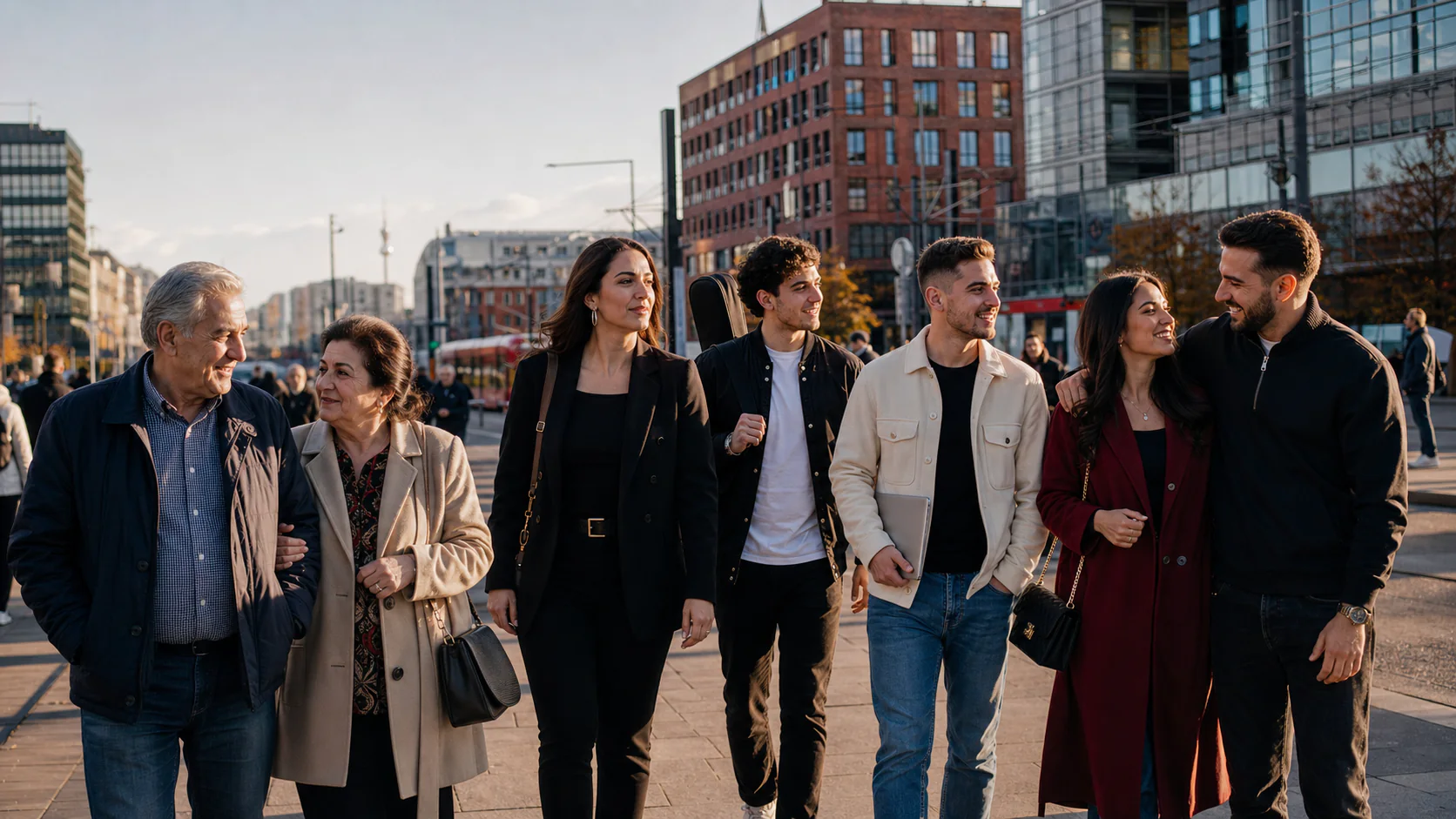
Albanians have been part of Milan’s social fabric for decades. Some arrived during the major waves of migration from Albania in the 1990s, while others came later from Kosovo, North Macedonia and elsewhere in the Balkans. Today, the community includes first-generation families, students, professionals and a younger generation that has grown up between Albanian and Italian culture.
That mix is what makes Albanian life in Milan feel familiar and different at the same time. Albanian is still spoken at home, family ties remain strong, and traditions travel easily across borders — but daily life is also shaped by Milan itself: work, university, friendships, relationships and the pace of a city that attracts people from everywhere.
For many Albanians here, staying connected to their roots does not happen in just one place. It can mean family gatherings, community associations, cultural events, Albanian businesses, group chats or simply meeting other people who understand the experience of living between cultures.
For more on this topic, read Albanians in Italy: History, Population and Community and Albanians in Switzerland: Numbers, History and Community.
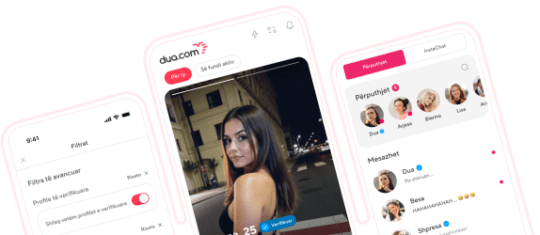
For Albanians in Milan who want to meet others from the community, whether for dating, friendship or a sense of familiarity in a big city, dua.com offers another way to make those connections.
Last evidence review: 11 August 2026. Official statistics, national context, editorial interpretation and first-party dua.com data are labelled separately throughout.
Milan holds more Albanians than you think
Albanians are one of Milan’s established Balkan communities. According to official data from the Municipality of Milan, 4,984 residents with Albanian citizenship were registered in the city at the end of 2022.
That number doesn’t tell the whole story. Official statistics are based on citizenship and registered residence, so they don’t include everyone of Albanian heritage living in Milan. Albanians who have acquired Italian citizenship, for example, are counted as Italian, while people who live in Milan but are officially registered elsewhere may not appear in the city’s figures.
The community Milan knows today has been shaped over more than three decades. Many Albanians came to Italy during the migration waves that followed the fall of communism in Albania in the early 1990s. Over time, what began largely as a story of migration became one of settlement: families reunited, children grew up in Italy, and newer generations arrived for university, work and professional opportunities.
Today, being Albanian in Milan can mean many different things. You might have arrived a few months ago, have parents who moved here in the 1990s, or have grown up speaking Italian outside the home and Albanian around the family table. Together, those experiences make up a community that is no longer simply “new to Milan,” but part of the city itself.
From 34 residents to a settled Milanese community
The Comune’s historical series begins long before mass migration. It records 34 Albanian citizens in 1979, 19 in 1989 and 62 in 1991. The curve changes in the following decade: 438 in 1995, 2,205 in 2000 and 4,273 in 2005.
Swipe horizontally to explore the full chart.
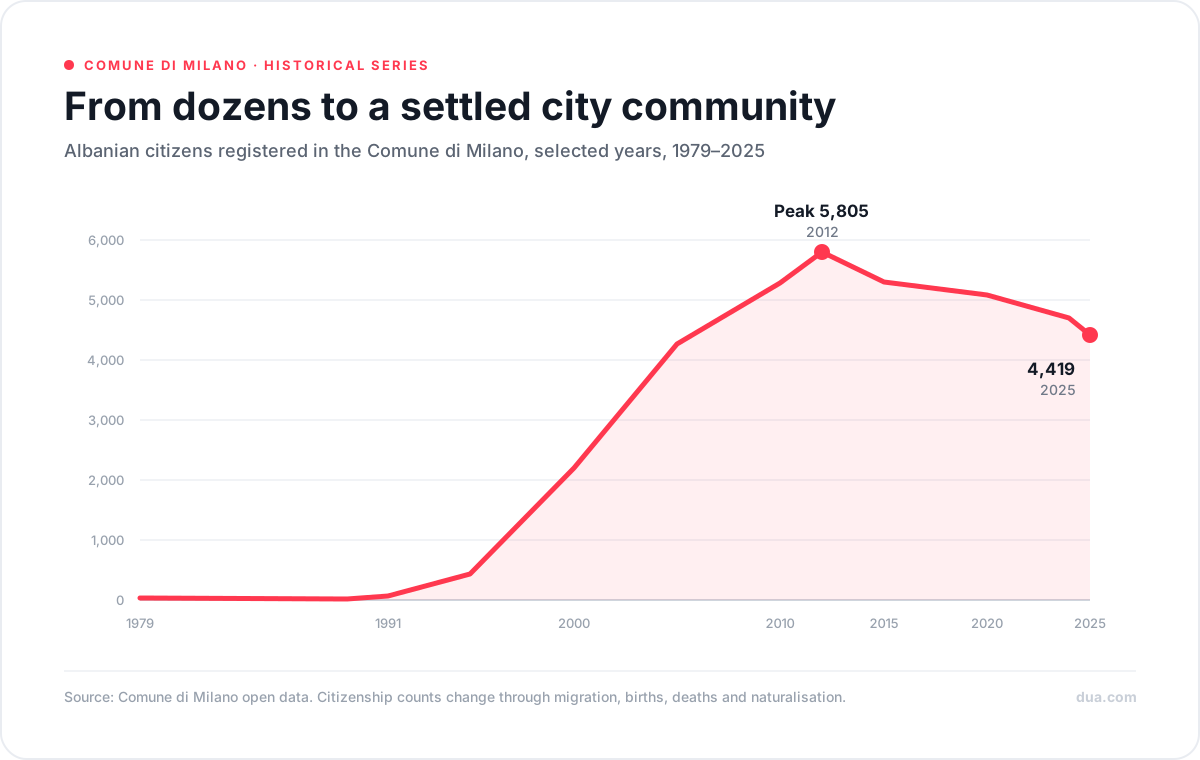
The city count passed five thousand before 2010 and peaked at 5,805 in 2012. By then the first large post-communist migration had become a family community: adults had moved from temporary work to long-term residence, children were in Milanese schools, and associations were building permanent institutions.
The line then bends downward—to 5,298 in 2015, 5,084 in 2020, 4,707 in 2024 and 4,419 in 2025. Read alone, that looks like a shrinking community. Read beside the citizenship-acquisition series, it becomes a story about settlement as well as migration.
Why the official Albanian count is falling
From 2021 through 2025, Milan recorded 1,414 Italian citizenship acquisitions by people whose previous citizenship was Albanian: 146 in 2021, 326 in 2022, 329 in 2023, 307 in 2024 and 306 in 2025.
Swipe horizontally to explore the full chart.
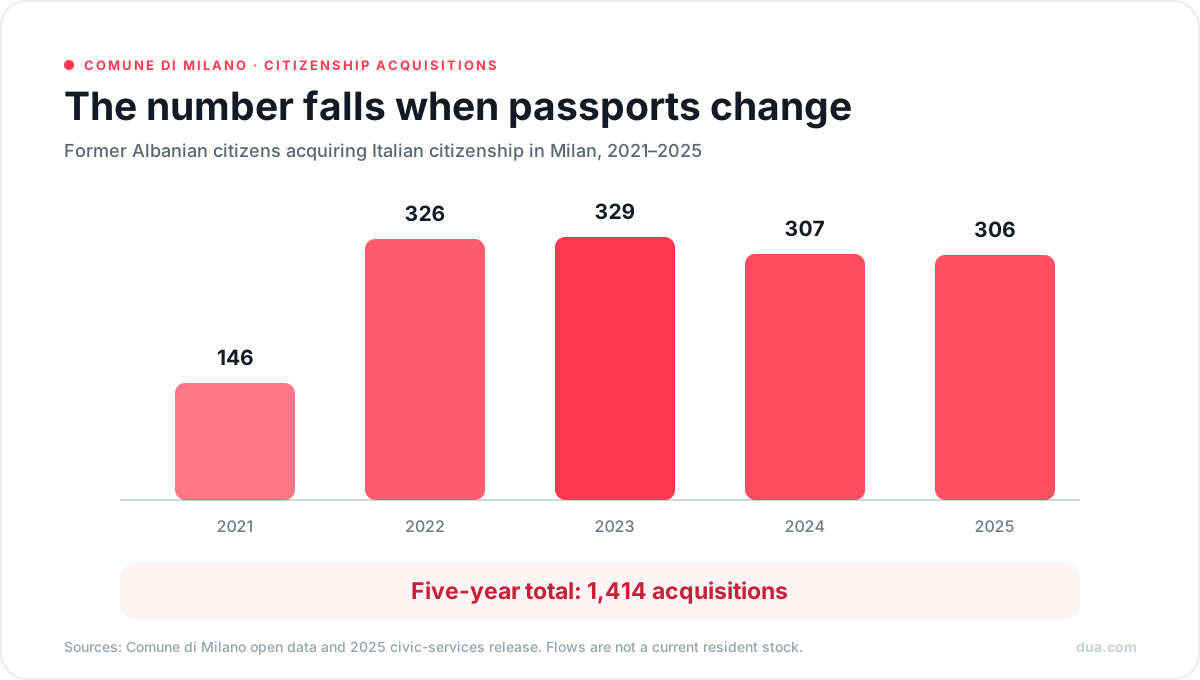
The five-year flow equals almost one third of the current Albanian-citizen stock, but it must not be added directly to 4,419. Some new citizens may have moved away; births, deaths and international or internal migration continued; and people naturalised before 2021 are outside this short series. The comparison proves a mechanism, not a new headcount.
The same pattern is visible nationally. Albania has long been one of Italy’s leading previous nationalities for citizenship acquisition. Milan’s falling foreign-citizen row is therefore compatible with deeper roots: Italian passports, Italian-born children and lives increasingly difficult to separate into “immigrant” and “local.”
Where do Albanians live in Milan?
Municipalities 9 and 8 have the largest Albanian-citizen totals, followed by Municipalities 2 and 4. Yet all nine municipalities have residents in the register, and no single neighbourhood contains more than a small share of the city total.
Swipe horizontally to explore the full chart.
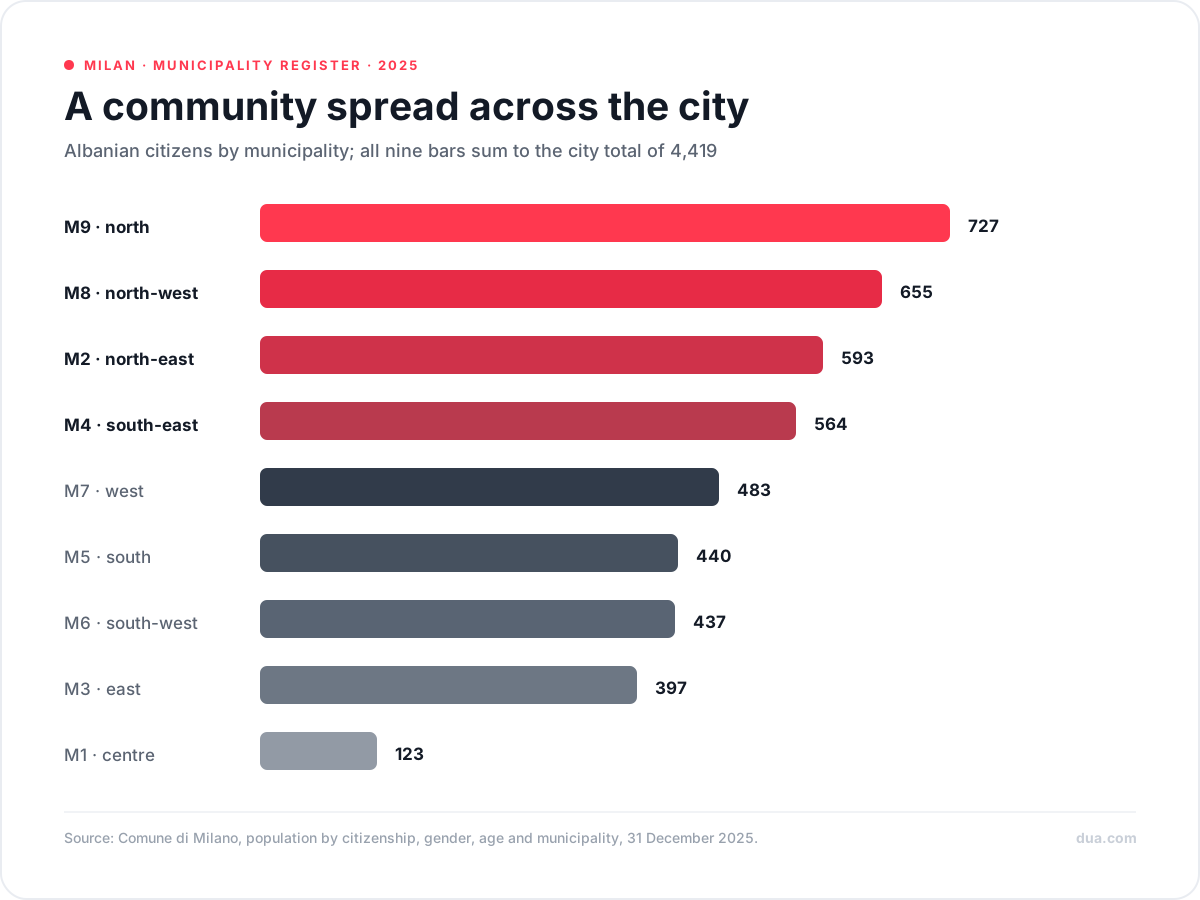
| Municipality | Official area label | Residents |
|---|---|---|
| 9 | Garibaldi–Bovisa–Niguarda–Fulvio Testi | 727 |
| 8 | Volta–Fiera–Gallaratese–Quarto Oggiaro | 655 |
| 2 | Centrale–Greco–Crescenzago | 593 |
| 4 | Vittoria–Romana–Rogoredo | 564 |
| 7 | Forze Armate–San Siro–Baggio | 483 |
| 5 | Ticinese–Vigentino–Gratosoglio | 440 |
| 6 | Genova–Giambellino–Lorenteggio | 437 |
| 3 | Venezia–Lambrate–Città Studi | 397 |
| 1 | Centro Storico | 123 |
No single “Albanian quarter”
The finer NIL dataset makes the dispersion clearer. Padova–Turro–Crescenzago leads with 183 Albanian citizens. Loreto–Casoretto–NoLo and Lodi–Corvetto each have 174; Quarto Oggiaro–Vialba–Musocco has 172; Villapizzone–Cagnola–Boldinasco has 144; Affori has 140.
The leading NIL holds only 4.1% of the city’s registered Albanian citizens. Porta Venezia, Baggio, Niguarda, Gorla, Corvetto, NoLo and Quarto Oggiaro all form pieces of the map, but the data supports no claim that one is “the” Albanian neighbourhood. Social life is organised through families, schools, workplaces, associations and metropolitan travel more than through a single enclave.
The metropolitan map is the real map
In the metropolitan yearbook, Albanian citizens appear among the six largest foreign nationalities in 104 of 133 municipalities. They rank first in 12 and second in 25. That distribution is one of the page’s most important facts: Albanian Milan stretches far beyond the ring roads and municipal border.
Age, families and the second generation
The city register shows an almost exact gender balance: 2,193 women and 2,226 men. The largest age band is 35–44 with 1,102 residents, followed by 25–34 with 887. Together, residents aged 25–44 make up 45.0% of the Albanian-citizen total.
| Age | Residents | Share |
|---|---|---|
| 0–14 | 538 | 12.2% |
| 15–24 | 406 | 9.2% |
| 25–34 | 887 | 20.1% |
| 35–44 | 1,102 | 24.9% |
| 45–54 | 578 | 13.1% |
| 55–64 | 355 | 8.0% |
| 65+ | 553 | 12.5% |
The 538 children under fifteen are only the Albanian citizens in that age group. Children born Italian to naturalised parents are absent, as are young people recorded under another citizenship. That limitation matters most when discussing the second generation: the official Albanian-citizen row becomes less complete as families naturalise.
Language schools and cultural programmes therefore reveal something the register cannot. They exist not merely to help newcomers learn Italian, but to help Milan-born children keep Albanian alongside it—turning language from a migration tool into a heritage choice.
Work, enterprise and the link back to Albania
Milan does not publish a complete labour-market table by Albanian origin, so local claims need restraint. The best contextual source is the Italian Ministry of Labour’s 2025 report on the Albanian community in Italy. Its figures are national or regional, not city findings.
At 31 December 2024, the report counted 360,965 Albanian citizens with valid residence status in Italy. Lombardy held 19.6%, the country’s largest regional share. Nationally, it recorded 42,076 individual business owners born in Albania; 18.8% were in Lombardy, and construction accounted for 66% of the national total.
Those figures explain why building, trades and small enterprise form part of the community’s Italian history, but they do not prove that two thirds of Milan’s Albanian entrepreneurs work in construction. Milan also contains professionals, students, artists, service workers and founders in finance, technology and design. City-level interviews would be needed to quantify that mix.
Economic ties still run in both directions. The Ministry report recorded €178.442 million in remittances from Italy to Albania in 2024, with Milan originating 5% of the measured flows. Summer flights, family visits, property decisions and professional networks make the relationship more than a bank transfer: many lives operate in both Milan and Albanian-speaking Europe.
Culture, language and community life
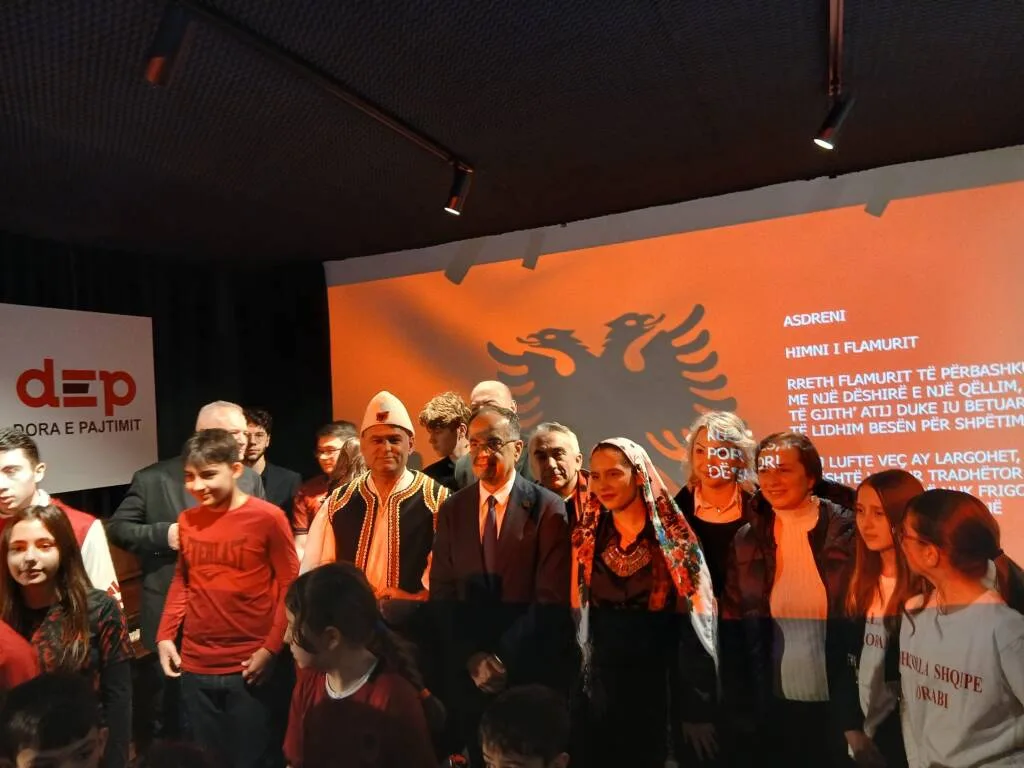
The most visible cultural address is Slow Mill in Isola. Run by the Italo-Albanian association Dora e Pajtimit, active since 2007, the centre opened in 2022 at Via Volturno 32. Its programme connects literature, language, social projects and exchanges between Milan and Shkodër.
Slow Mill’s account of the association places culture and participation in the same room. That matters in a dispersed city: a permanent address can do what a neighbourhood enclave does elsewhere, giving people a place to hear Albanian, organise a project, bring children and meet outside family circles.
Learning Albanian on a Saturday
Dora e Pajtimit lists an Albanian language and culture school at Slow Mill on Saturdays from 10:00 to 12:00. It is designed around second-generation children but is open to different ages. Dates and enrolment should always be checked with the organisation before attending.
The Albanian Diaspora Publishing Centre also lists teaching in the wider Milan area, including Rozzano. Together these schools show how the community’s central language question has changed: first-generation parents learned Italian to build a life; the next generation often needs organised space to keep Albanian.
FjalaFest and the literary city
FjalaFest brings Albanian literature into Milan’s cultural calendar through writers, translators, discussion and performance. Its third edition is scheduled for September 2026. Because event details change, readers should use the festival’s official site for the final programme.
A community visible in public
Recent events show a community that is cultural, intergenerational, religious and politically engaged. They also show why “Milan” often means a wider Lombardy network: people routinely arrive from Legnano, the hinterland and other regional cities.
Watch the community at FjalaFest
FjalaFest is easier to understand when the people behind the programme can be seen and heard. These two short reports show authors, organisers and visitors using Albanian literature to build a bridge between Albania and the diaspora in Milan.
| Date | Event | What it shows |
|---|---|---|
| 26 May 2024 | Albanian Pride gathering in Busto Arsizio | RAI described a 90,000-person Albanian community in Lombardy; this is regional context, not a Milan count. |
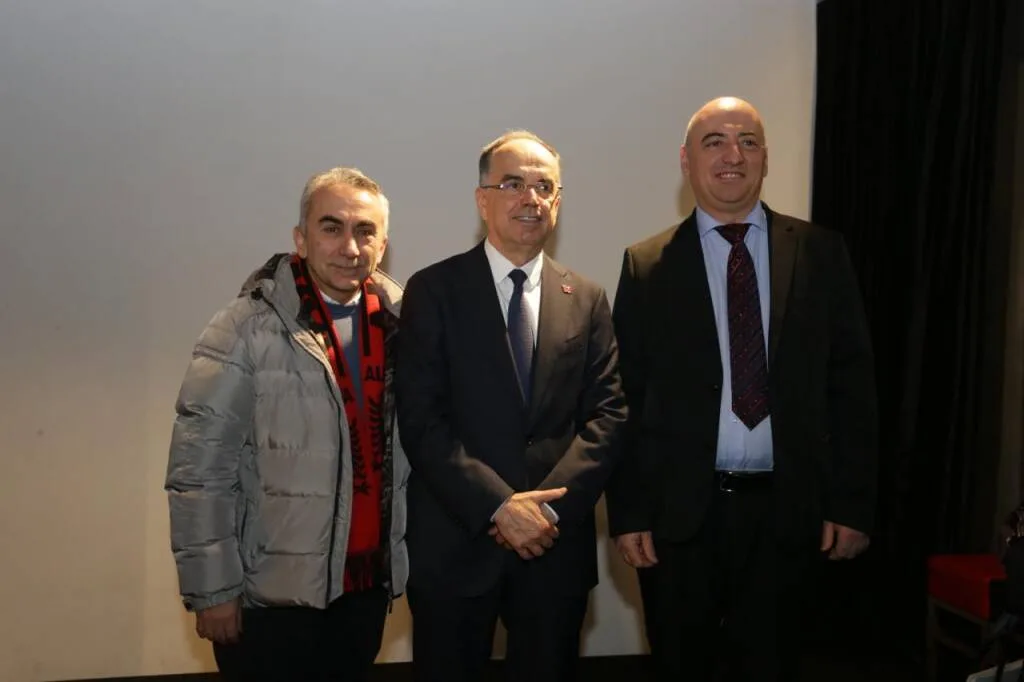
| 7 Feb 2026 | President Bajram Begaj met families and young people at Slow Mill | The gathering included a delegation from Legnano and made the centre a meeting point for the metropolitan community. |
| 24 May 2026 | Festa delle Genti, Rogoredo | Albanian Catholics joined Milan’s other migrant Catholic communities in the diocesan Pentecost celebration. |
| 13 Jun 2026 | Albanian civic demonstration at Piazza Castello | Local reporting counted almost 1,500 participants, many from Milan and others from across Lombardy. |
| Sep 2026 | Third FjalaFest edition | An upcoming public programme centred on Albanian writing, translation, performance and conversation. |
Attendance should never be converted into a population estimate: a regional rally may draw thousands while a weekly class may involve dozens. Together, however, these events answer a different question—whether an organised and visible community exists. It does, across culture, education, faith, civic debate and family life.
Faith and association
Albanian Milan is religiously plural and includes Muslim, Catholic, Orthodox, Bektashi, other and secular lives. One long-standing institution is the Unione degli Albanesi Musulmani in Italia, founded in Milan in March 2009 by people and associations with roots in Albania, Kosovo and North Macedonia. UAMI lists its address at Via Ronchi 16/8.
No citizenship table can measure faith, and no one organisation represents the whole community. The practical directory below is an entry point, not a declaration of who belongs.
Milan as an Albania–Italy bridge
Milan’s Albanian connection also has official addresses. The Consulate General of Albania and the Consulate General of Kosovo are both listed at Via San Martino 10. They serve different states and must be described separately.
The Comune has documented cooperation with Tirana on migration and development, while Albania remains part of Milan’s current international-cooperation geography. In 2026 the Prefecture of Milan, during a meeting with Albania’s president, described Lombardy as the Italian region with the country’s highest concentration of the Albanian community.
These links make Milan more than a destination. The city is a diplomatic, commercial and cultural relay between northern Italy and Albania: consular paperwork, municipal projects, flights, study, art and family movement all pass through it.
People who illustrate Albanian Milan
A city community is easier to understand through lives than lists of celebrities. Three Milan stories show different periods and kinds of contribution.
| Person | Field | Milan connection |
|---|---|---|
| Ibrahim Kodra | Modern art | Built a decades-long career in Milan and exhibited repeatedly in the city |
| Adrian Paci | Contemporary art | Moved from Shkodër to Milan in 1997; his work explores displacement, memory and migration |
| Uljan Sharka | Technology | Founder and CEO of the Milan-headquartered AI company Domyn |
Ibrahim Kodra: the long artistic bridge
Ibrahim Kodra’s Milan belongs to an earlier layer than the mass migration of the 1990s. The painter studied and built his career in Italy, carrying Albanian motifs into a modernist visual language. The Lombardia cultural-heritage catalogue documents exhibitions and works tied to Milan.
Adrian Paci: migration becomes the subject
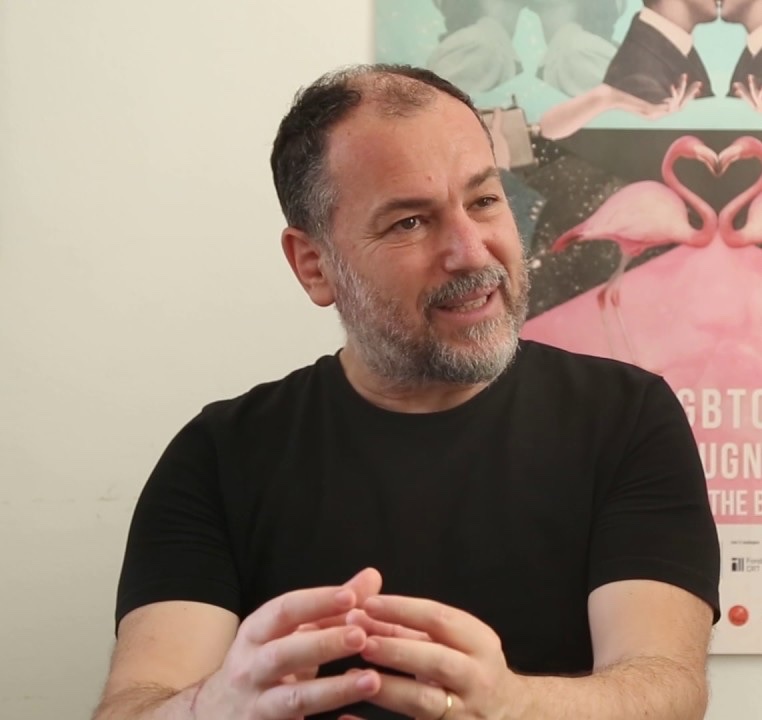
Adrian Paci moved from Shkodër to Milan in 1997. In his work, migration is not background biography but material: absence, labour, family archives and the suspended condition of waiting. His gallery biography records the move, while his teaching connects the story to a new generation in Milan.
Uljan Sharka: Milan as a place to build
Uljan Sharka represents a later chapter: the Albanian founder of Milan-headquartered Domyn, working in enterprise artificial intelligence. His story is useful precisely because it breaks a narrow labour stereotype. Albanian Milan includes the construction trades that helped build northern Italy and the technology companies now being built inside it.
Dating as an Albanian in Milan
Dating in Milan comes with the usual big-city questions. For Albanians, there can be a few extra ones — especially when culture, family and identity enter the picture.
Does any of this sound familiar?
- “Do they have to be Albanian?”
For some, sharing the same background matters. For others, it’s much more about finding someone who understands where they come from. - Albanian or Italian at home?
You might speak perfect Italian together but switch to Albanian around family — or mix both in the same sentence without even noticing. - When does the family find out?
Some people introduce a partner early. Others would rather wait until things are serious. There’s no single Albanian rule, even if your family might disagree. - “Where are you really from?”
In Milan, that answer isn't always simple. Maybe you were born here, your parents are from Albania, or your family comes from Kosovo or North Macedonia. Sometimes “home” means more than one place. - Shared culture helps, but it isn’t everything.
Meeting another Albanian can mean fewer things to explain — the humour, family dynamics, traditions and those very specific references only another Albanian seems to get. But shared roots don't automatically mean shared values.
And where does dua fit in?
That shared background can simply be the starting point.
On dua, you might meet someone who grew up Albanian-Italian like you, someone who recently moved to Milan, or someone whose Albanian experience is completely different from yours.
Same roots can break the ice. What happens after that is up to you.
Practical directory for Albanians in Milan
Check official channels before travelling. Consular appointments, class times, event programmes and contact details can change after this page’s evidence-review date.
| Organisation | Purpose | Location / official link |
|---|---|---|
| Consulate General of Albania | Albanian consular services | Via San Martino 10 · official site |
| Consulate General of Kosovo | Kosovar consular services for northern regions | Via San Martino 10 · official listing |
| Slow Mill / Dora e Pajtimit | Culture, language, community projects | Via Volturno 32 · slowmill.it |
| Albanian language school | Language and culture teaching | Slow Mill · school page |
| FjalaFest | Albanian literature festival | Milan · official programme |
| UAMI | Union of Albanian Muslims in Italy | Via Ronchi 16/8 · organisation page |
| Diaspora organisation directory | Additional Albanian associations | Albanian National Diaspora Agency |
| Albanian school directory | Teaching locations in Italy | Diaspora Publishing Centre |
This list is deliberately practical and non-exhaustive. Organisations can request a correction through dua.com’s editorial contact process; additions should include an official page, current contact and evidence of activity.
How this page counts Albanian Milan
This page uses a boundary-first method. Every population figure is labelled by geography, date and statistical universe before it is compared with another.
- City proper: Comune di Milano open data, with the latest resident count at 31 December 2025.
- Metropolitan city: the 2026 statistical yearbook, reporting residents at 1 January 2025 across 133 municipalities.
- Citizenship change: annual Comune records of Italian acquisitions by previous citizenship.
- Origin estimate: the metro citizenship stock multiplied by ISTAT’s national 2023 and 2024 Albanian-origin ratios, then rounded to a 35,000–40,000 sensitivity band and labelled as an editorial model.
- Regional and national context: ISTAT, Ministry of Labour and RAI figures, never silently presented as Milan statistics.
- Community life: official consular, municipal and organisation pages, last reviewed 11 August 2026.
- dua.com data: separately labelled first-party platform measures, never used as population counts.
The official method leaves naturalised Italians of Albanian origin, Italian-born descendants, dual citizens recorded only as Italian, and ethnic Albanians registered under another state uncounted. The editorial range repairs part of the first gap but not all of the others. That is why 40,000 is presented as the maximum supported estimate for Albania origin—not a ceiling on Albanian identity.
Albanian Milan is one city and a wider community
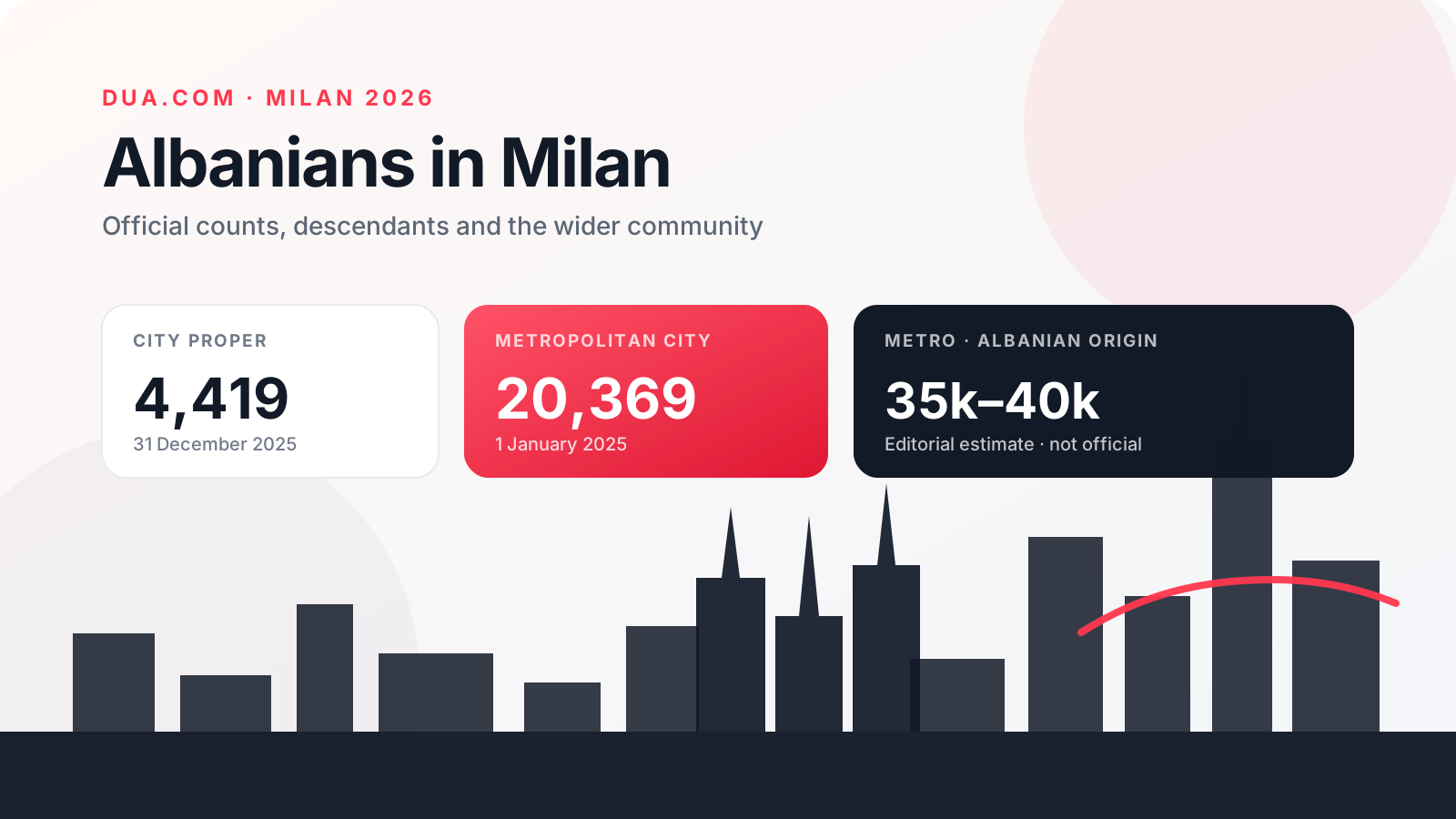
So how many Albanians live in Milan? The defensible answer is layered: 4,419 Albanian citizens in the city proper, 20,369 across the metropolitan city, and roughly 35,000–40,000 people of Albania origin across metropolitan Milan once naturalisation is modelled. About 40,000 is the highest evidence-led figure this page recommends publishing.
What the evidence can show is more useful: a community established over three decades, spread across the city and hinterland, increasingly Italian by citizenship, and connected through schools, culture, work, institutions and digital networks. Explore an organisation in the directory, follow a current event, or meet Albanians in Milan and across the diaspora on dua.com.
Frequently asked questions about Albanians in Milan
How many Albanians live in Milan?
The latest official counts are 4,419 Albanian citizens in the Comune di Milano on 31 December 2025 and 20,369 across the Città Metropolitana di Milano on 1 January 2025. Applying ISTAT’s national naturalisation ratios gives an editorial estimate of about 35,000–40,000 people of Albanian origin across metropolitan Milan. The range is not an official local statistic.
Does the 35,000–40,000 estimate include Albanian descendants?
It captures many former Albanian citizens who became Italian, including minors who acquired citizenship with a parent. It does not fully count children born Italian after their parents naturalised, Arbëreshë descendants who moved north, or every ethnic Albanian holding Kosovar, North Macedonian, Montenegrin or Serbian citizenship. The wider self-identified community could therefore exceed 40,000, but Milan has no ancestry census that can measure it.
Where do most Albanians live in Milan?
Municipalities 9 and 8 have the largest totals, with 727 and 655 Albanian citizens respectively in 2025. At neighbourhood level, Padova–Turro–Crescenzago leads with 183. Because that is only 4.1% of the city total, the evidence shows a dispersed community rather than one Albanian quarter.
Why has Milan's Albanian-citizen count fallen since 2012?
Naturalisation is an important reason. Milan recorded 1,414 Italian citizenship acquisitions by former Albanian citizens from 2021 through 2025. Each acquisition removes a resident from the Albanian citizenship row even if the person stays at the same address. Migration, births and deaths also change the total.
Are people from Kosovo included in Milan's Albanian number?
Only if they hold Albanian citizenship. Official Italian tables record Kosovo as a separate citizenship; the metropolitan yearbook lists 701 Kosovar citizens. Many may identify as Albanian, but adding every Kosovar citizen to the Albania row would replace a citizenship statistic with an unsupported ethnicity estimate.
Are there Albanian schools in Milan?
Yes. Dora e Pajtimit lists Albanian language and culture teaching at Slow Mill, Via Volturno 32, on Saturday mornings. The Albanian Diaspora Publishing Centre lists other teaching in the Milan area, including Rozzano. Families should verify current schedules and enrolment directly with each provider.
Where is the Albanian Consulate in Milan?
The Consulate General of Albania is at Via San Martino 10, 20122 Milano. Its official site lists current services, appointments, telephone details and opening information. The Consulate General of Kosovo is listed at the same street address but is a separate institution serving Kosovar citizens.
How can I meet Albanians in Milan?
Community routes include Slow Mill programmes, FjalaFest, Albanian language classes, religious and civic associations, and public cultural events. dua.com adds a digital route for friendship, cultural connection or serious relationships; its 2026 internal extract contained 6,109 registered accounts associated with Milan.