Albanians arrived in Italy twice — once five centuries before the modern border existed, and once on live television. The first arrival built fifty villages in the South, many of which still pray in Byzantine Greek and speak fifteenth-century Albanian. The second began on 8 August 1991, when a hijacked sugar freighter called the Vlora entered the port of Bari with some 20,000 people aboard — widely described as the largest arrival of migrants on a single ship in Italian history.
What happened in the thirty-five years since is told far less often than the arrival itself. The community that Italian television spent the 1990s treating as a national emergency became, by every official measure, one of the most settled in the country — and then it did something no other Albanian diaspora has done at this scale: it became Italian. Since 2012 more than 343,000 Albanians have taken Italian citizenship, more than any other nationality in most years. The official count of “Albanians in Italy” falls year after year not because people leave, but because the state keeps moving them to a different column.
This page holds the whole story in one place: the numbers with their sources, the two arrivals, the villages and the cities, the money and the work, the organisations holding the community together — and the people, from a two-time Prime Minister of Italy with Arbëreshë roots to the winner of Sanremo 2018, born in Fier.
For more on this topic, read Albanians in Switzerland: Numbers, History and Community and Albanians in Austria: A 100,000-Strong Community.
Last evidence review: 5 August 2026. Official statistics, historical record and editorial interpretation are labelled separately throughout.
How many Albanians live in Italy?
Approaching 900,000 — of whom about 754,000 come from two official measures alone. Italy does not record ethnicity, but it publishes something almost no one reads together: how many Albanian citizens live in the country, and how many former Albanian citizens have already become Italian. Read separately, the first number looks like a community in slow decline. Read together, they describe the opposite. Add the Arbëreshë villages and the Kosovar community and the total nears 900,000.
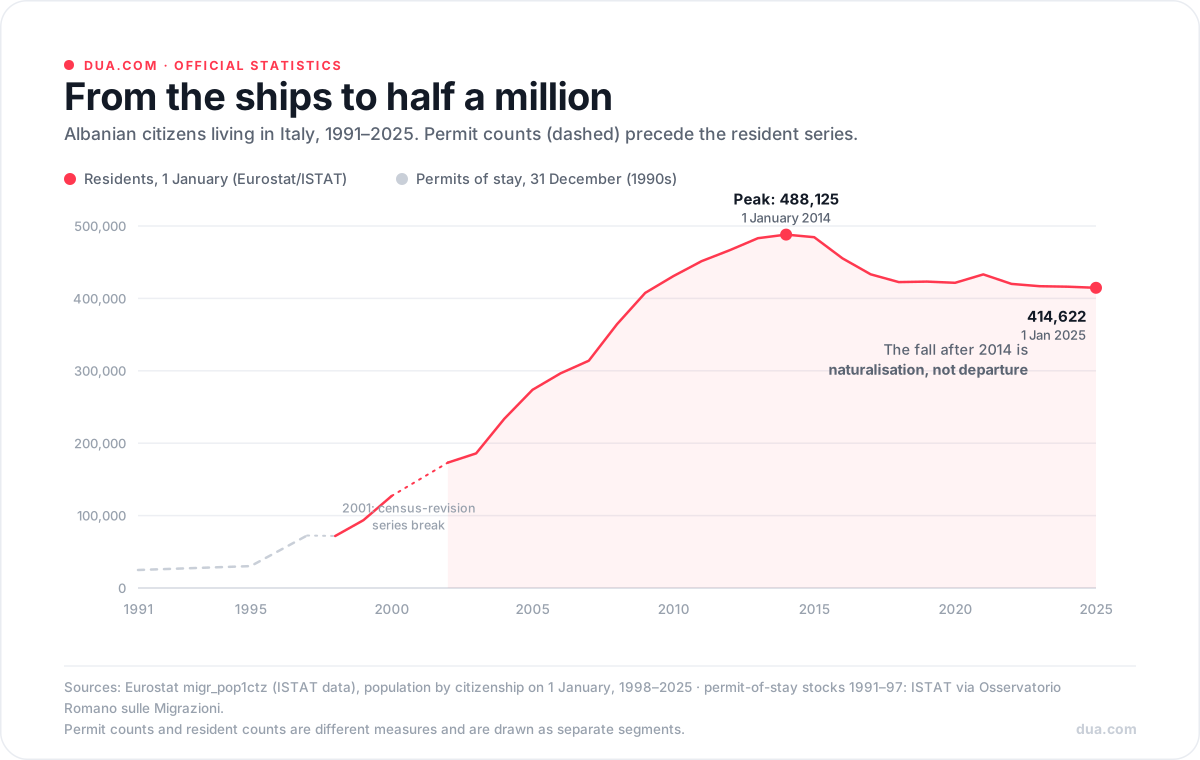
On 1 January 2025, 414,622 Albanian citizens were resident in Italy — the second-largest foreign nationality, behind Romania’s 1,053,042 and just ahead of Morocco’s 412,457, and 7.7 percent of all 5.37 million foreign residents. That count has fallen in all but two years since its peak of 488,125 on 1 January 2014.
The number that explains the number
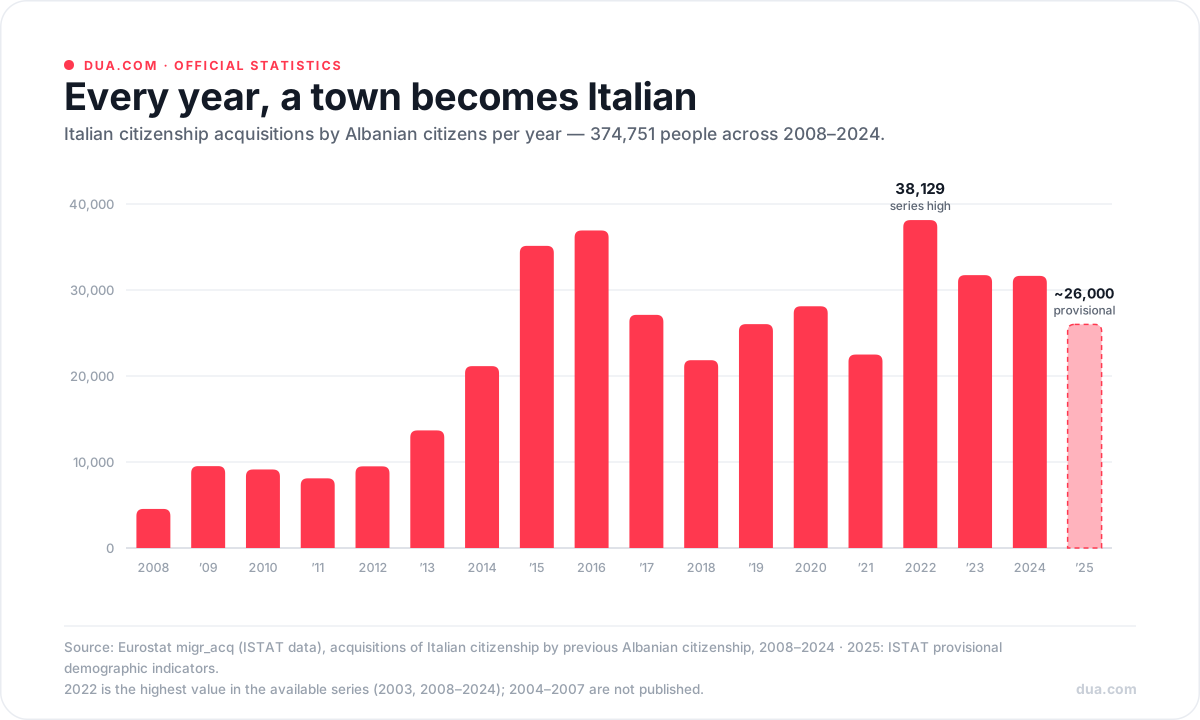
Between 2012 and 2024, 343,452 Albanians acquired Italian citizenship — with roughly 26,000 more in 2025 on ISTAT’s provisional figures. In most of those years Albanians were the first nationality in Italy’s naturalisation table, ahead of communities twice their size. Every one of those people left the “Albanian citizens” row and entered the “Italians” row, taking their Italian-born children with them.
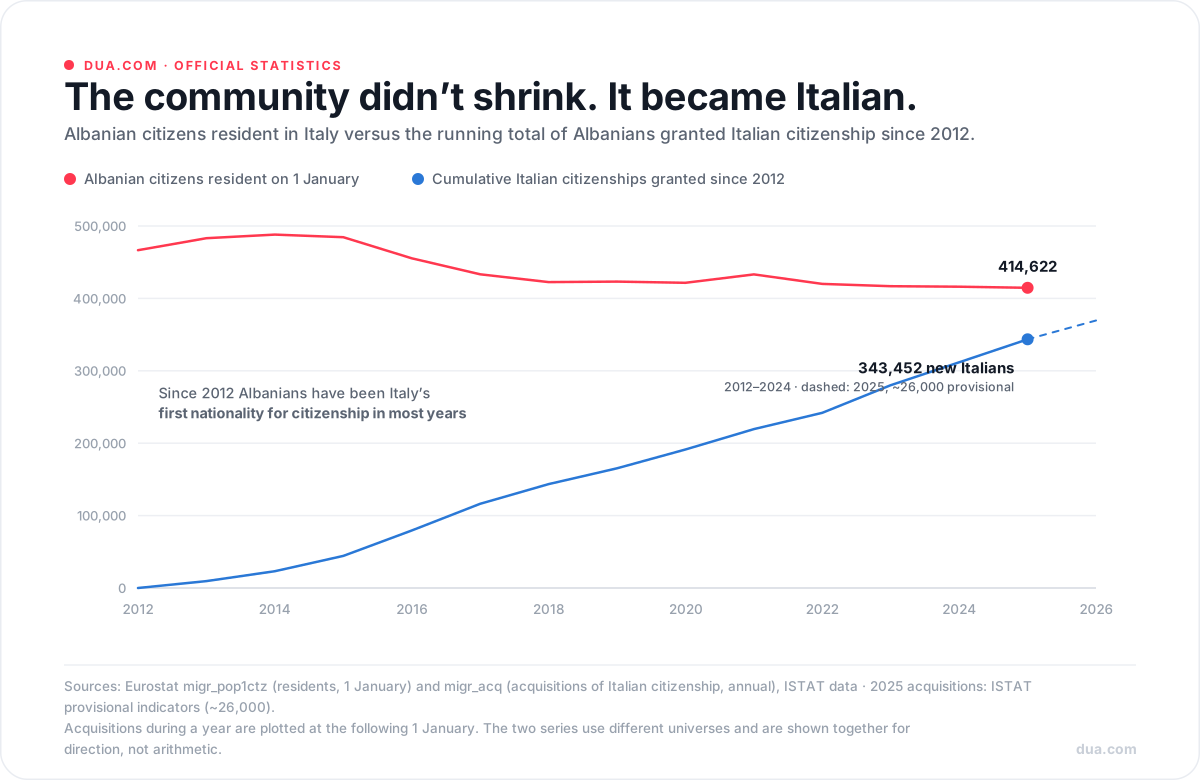
ISTAT states the consequence plainly. Set against every 100 Albanian citizens living in Italy there are now more than 94 people who used to be Albanian citizens and are Italian today. In other words the community has split almost exactly in half: one half still counted as foreign residents, the other half already Italian and therefore invisible in every figure above. No other large community is close — the same comparison gives about 73 for Moroccans, 12 for Ukrainians and 6 for Chinese citizens. Applied to the 360,965 Albanians holding residence permits, it means at least 339,000 Italians of Albanian origin: a floor rather than a ceiling, worked through step by step in the ledger.
| Measure | Value | Reference date | What it counts |
|---|---|---|---|
| Albanian citizens resident | 414,622 | 1 January 2025 | Population register (anagrafe), by citizenship — 2nd nationality |
| Non-EU permit holders | 360,965 | 31 December 2024 | Permit registry — 3rd non-EU community; 54.2% hold open-ended permits |
| Became Italian in 2024 | 31,643 | 2024 | Citizenship acquisitions — 1st nationality |
| Became Italian 2012–2024 | 343,452 | cumulative | Sum of annual Eurostat/ISTAT acquisition figures |
| Italians of Albanian origin | ≥ 339,000 | 31 December 2024 | Derived from ISTAT’s finding that naturalised Italians of Albanian origin nearly equal Albanian citizens — a floor |
| Visible baseline | ≈ 754,000 | 2025 | Residents plus derived naturalised stock; no other additions |
These universes overlap imperfectly — the permit registry excludes the naturalised and includes some non-residents; the resident count and the derived stock use different reference dates. This is an order-of-magnitude model, and its every assumption is opened up in the full ledger.
Beyond the 754,000 stand the groups this page names but never adds: children born Italian to already-naturalised parents, roughly 40,000 citizens of Kosovo, Albanians from North Macedonia, and the Arbëreshë themselves — five centuries Italian, and the subject of their own chapter below.
The second arrival: the ships, the stadium, the turnaround
To understand why Albanians came to Italy, start with what they were watching. Communist Albania deliberately sold televisions that could not receive foreign frequencies — so Albanians built their own converters, a soldered tin can known as the kanoçe, and pointed them across the Adriatic. Watching Italian television was punishable with years of prison until the end of 1990. People watched anyway. Among the Albanians who landed in Italy in March 1991, surveys later found that 97 percent had watched Italian television regularly, and 89 percent had learned their Italian from it. Italy was not a foreign country to them; it was the country their living rooms had been visiting illegally for decades.
1990–1991: the embassies and the ships
The first breach came in July 1990, when thousands of Albanians climbed the walls of Western embassies in Tirana; after mediation, the first shiploads left Durrës for Brindisi that month. In March 1991, as the regime disintegrated, around 25,000 people crossed the Strait of Otranto in anything that floated, landing at Brindisi and along the Puglia coast — among them 1,938 unaccompanied minors. Puglia’s response entered national memory: families brought food to the docks and took strangers into their homes.
Then came the day the arrival became an icon. On 7 August 1991 a crowd in the port of Durrës boarded the Vlora, a freighter just returned from Cuba with a cargo of sugar, and compelled its captain to sail. It docked in Bari on the morning of 8 August 1991 carrying some 20,000 people — a figure Italy’s own Labour Ministry still uses. The images of a ship whose every surface was human went around the world.
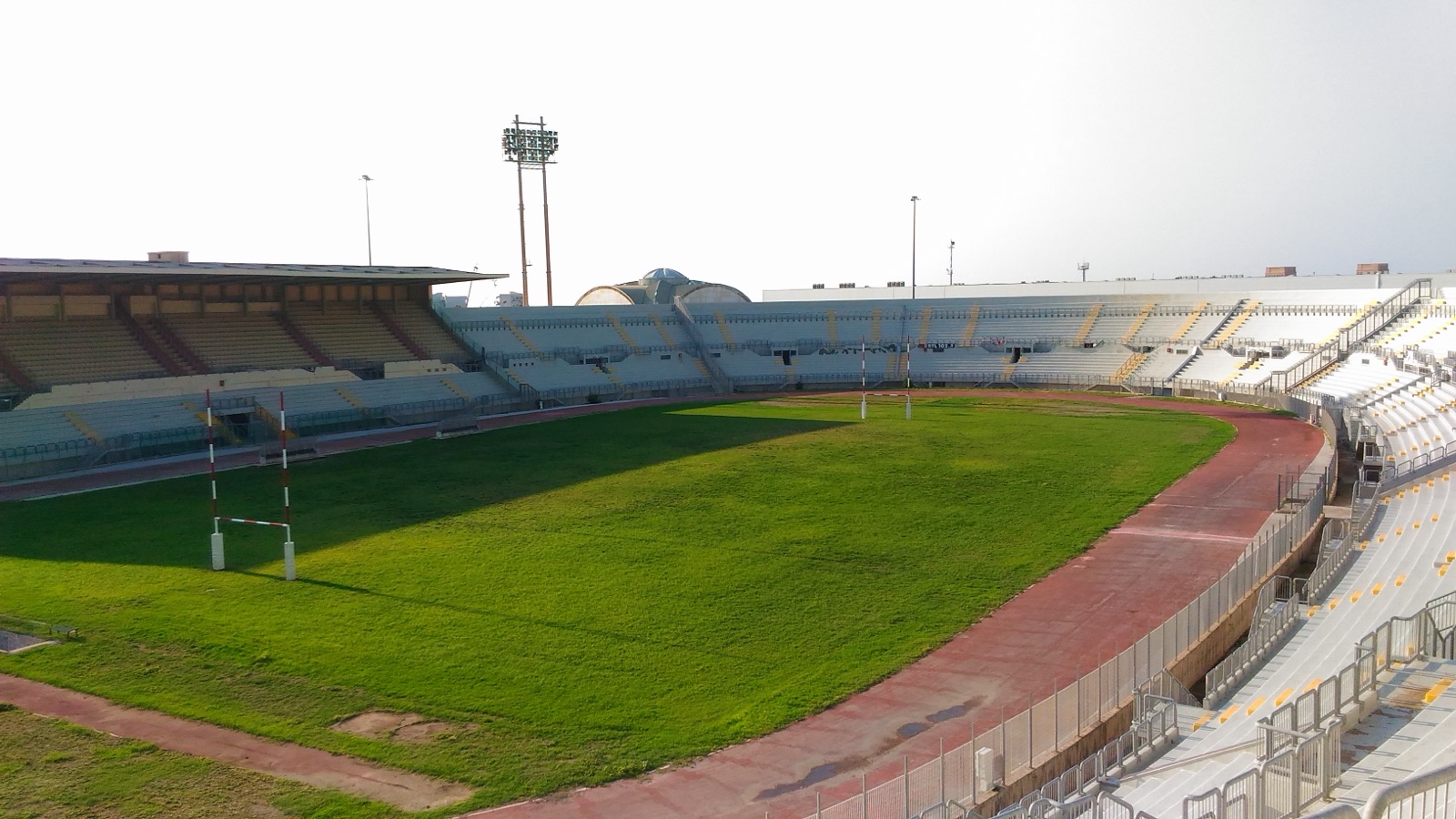
What followed in Bari is remembered with less pride. The passengers were confined in the Stadio della Vittoria in the August heat, supplied from outside the sealed stadium, and almost all forcibly repatriated within days. Italy’s welcome had turned — and for the next decade, “albanese” served Italian headline writers as shorthand for criminality. The historians King and Mai later documented both the “brutal campaign of stigmatisation” of the 1990s and the paradox that grew inside it: while the media narrative hardened, the actual community was quietly regularising, working and putting children through Italian schools.
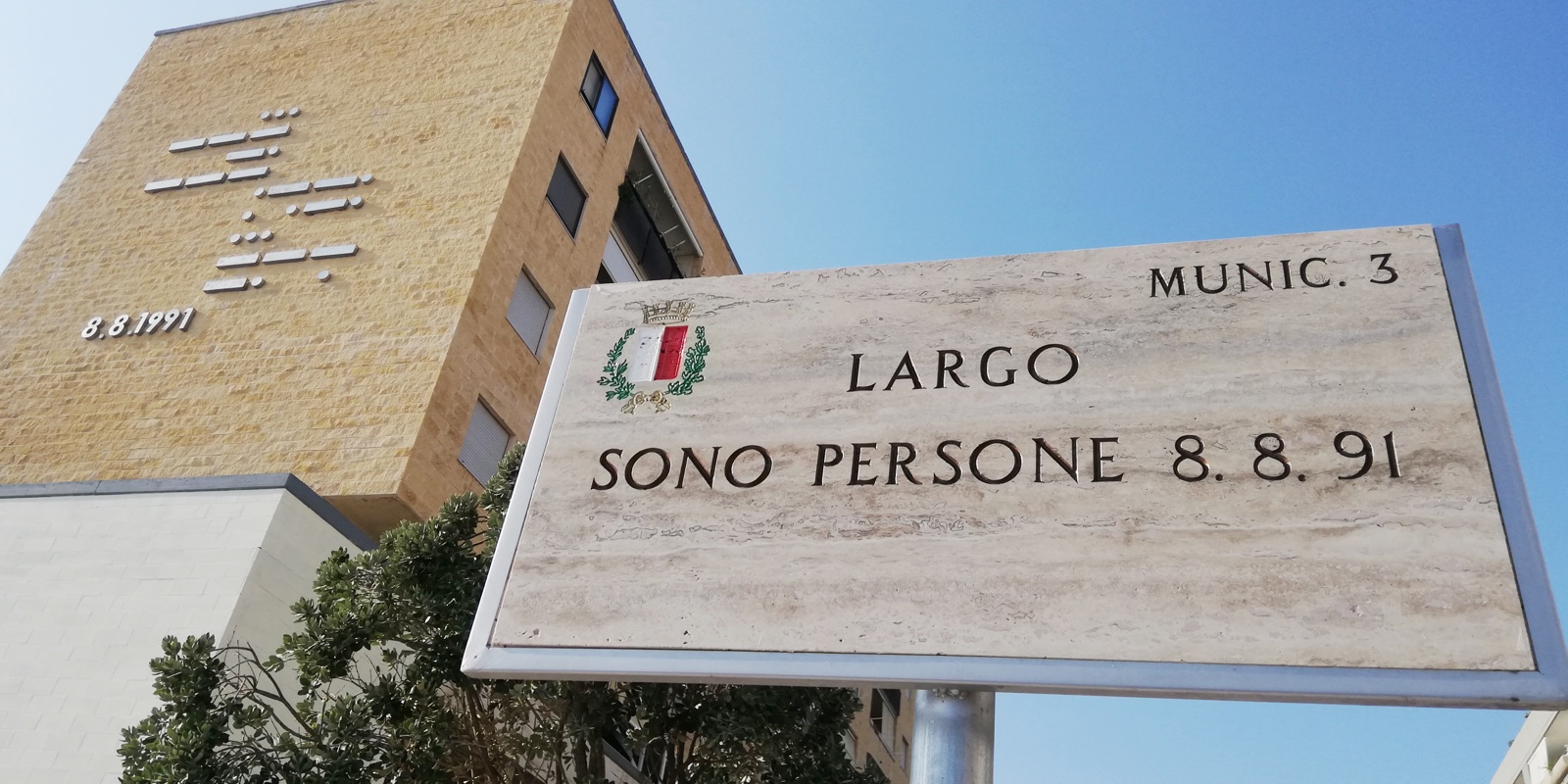
Bari has since chosen its own memory of that morning. A square by the port now bears the name “Largo Sono Persone 8.8.1991” — “They Are People”, the words of Bari’s then-mayor Enrico Dalfino, who insisted on treating the arrivals as human beings when Rome wanted them gone.
1997: the second exodus and the Katër i Radës
Albania’s pyramid investment schemes collapsed in early 1997, consuming savings estimated at $1.2 billion; in the armed chaos that followed, around two thousand people died and a second wave took to the sea — some 12,000 people in March alone, more than 16,000 across the year. On 28 March 1997 the Italian corvette Sibilla, enforcing the naval interdiction Italy was then putting in place (the formal blockade agreement followed on 3 April), collided with the refugee boat Katër i Radës in the Strait of Otranto. At least 81 people drowned — estimates reach 84, against 34 survivors. It remains the deadliest single tragedy of the Albanian crossings, commemorated in Otranto by a memorial made from the vessel’s own hull. Weeks later Italy led Operation Alba, a UN-mandated force of some 7,000 troops from eleven nations, to stabilise Albania — the first multinational military operation Italy had ever led.
The turnaround
Three regularisations tell the integration story in administrative prose: 29,744 Albanians legalised in 1995, 39,454 in 1998, 55,038 in 2002. Each was a bet by families on an Italian future, made while Italian television was still running the crime headlines. By the 2010s the bet had visibly paid: employment in line with the non-EU average, an above-average share of open-ended permits, the naturalisation table’s first place — and the quiet disappearance of “albanese” from the crime pages. Italian cinema had marked both ends of the arc already: Gianni Amelio’s Lamerica (1994) filmed the exodus as tragedy, and Daniele Vicari’s La nave dolce (2012) returned to the Vlora twenty years on, as the origin story of neighbours.
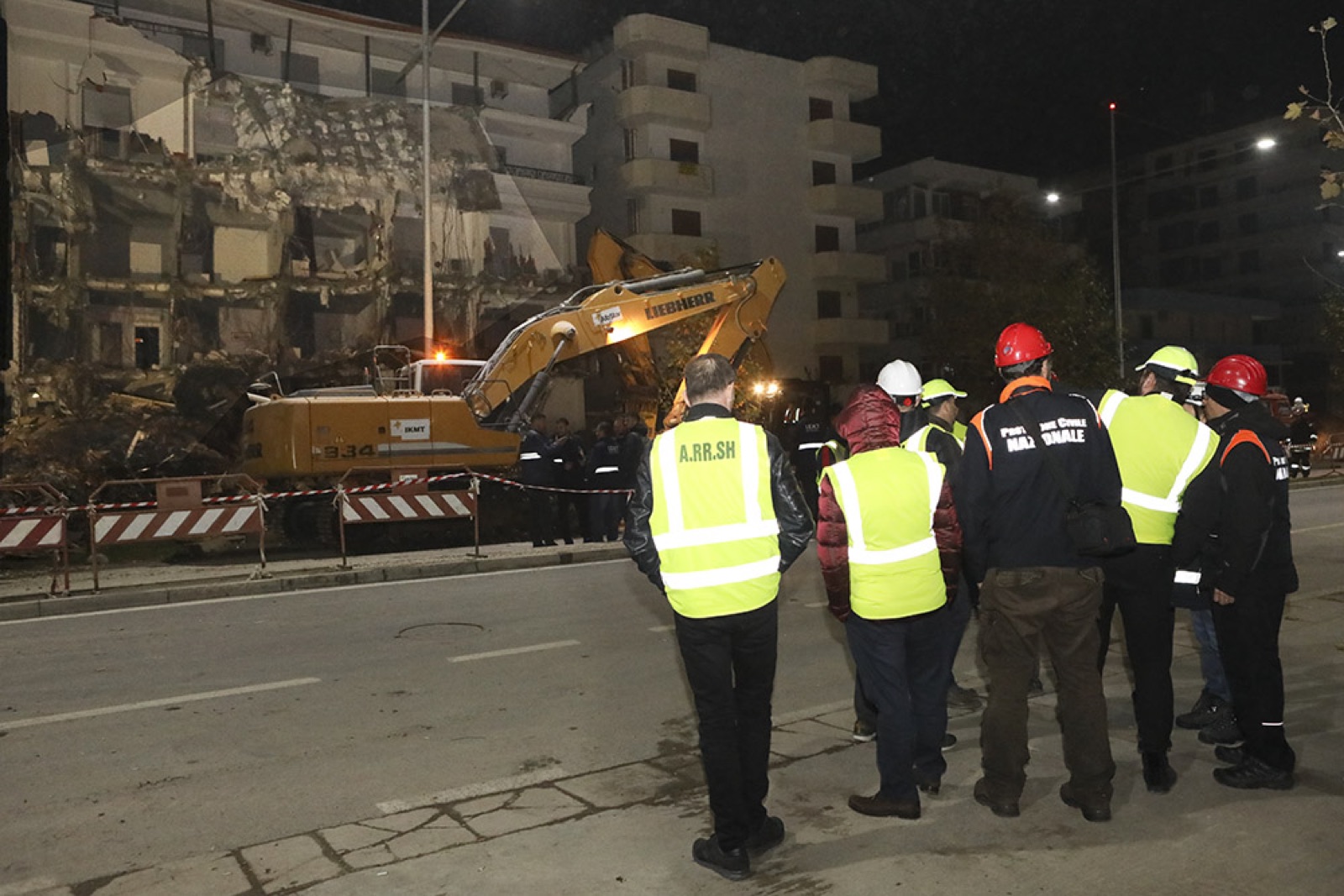
The relationship now runs in both directions. When an earthquake struck Durrës on 26 November 2019, Italian Civil Protection teams and firefighters deployed across the Adriatic within hours — to a country where nearly half their own Albanian neighbours had been born.
The first arrival: five centuries of the Arbëreshë
Italy is the only country in this series where the modern diaspora arrived to find Albanian villages already waiting — five hundred years old, and still singing in the language.
The story begins with Gjergj Kastrioti Skanderbeg, whose quarter-century of resistance against the Ottomans made him an ally of the Kingdom of Naples — he crossed to Italy himself in 1461 to relieve Barletta for King Ferdinand I, and was rewarded with fiefs in the South. After his death on 17 January 1468 the resistance slowly collapsed; Krujë fell in 1478, and the exodus began in earnest. Wave after wave of Albanian refugees — soldiers, clergy, whole villages — crossed to the Kingdom of Naples between the mid-fifteenth and mid-eighteenth centuries, the last of them founding Villa Badessa in Abruzzo in 1743–44. Piana degli Albanesi, the largest Arbëresh centre in Sicily, dates its founding charter to 30 August 1488.
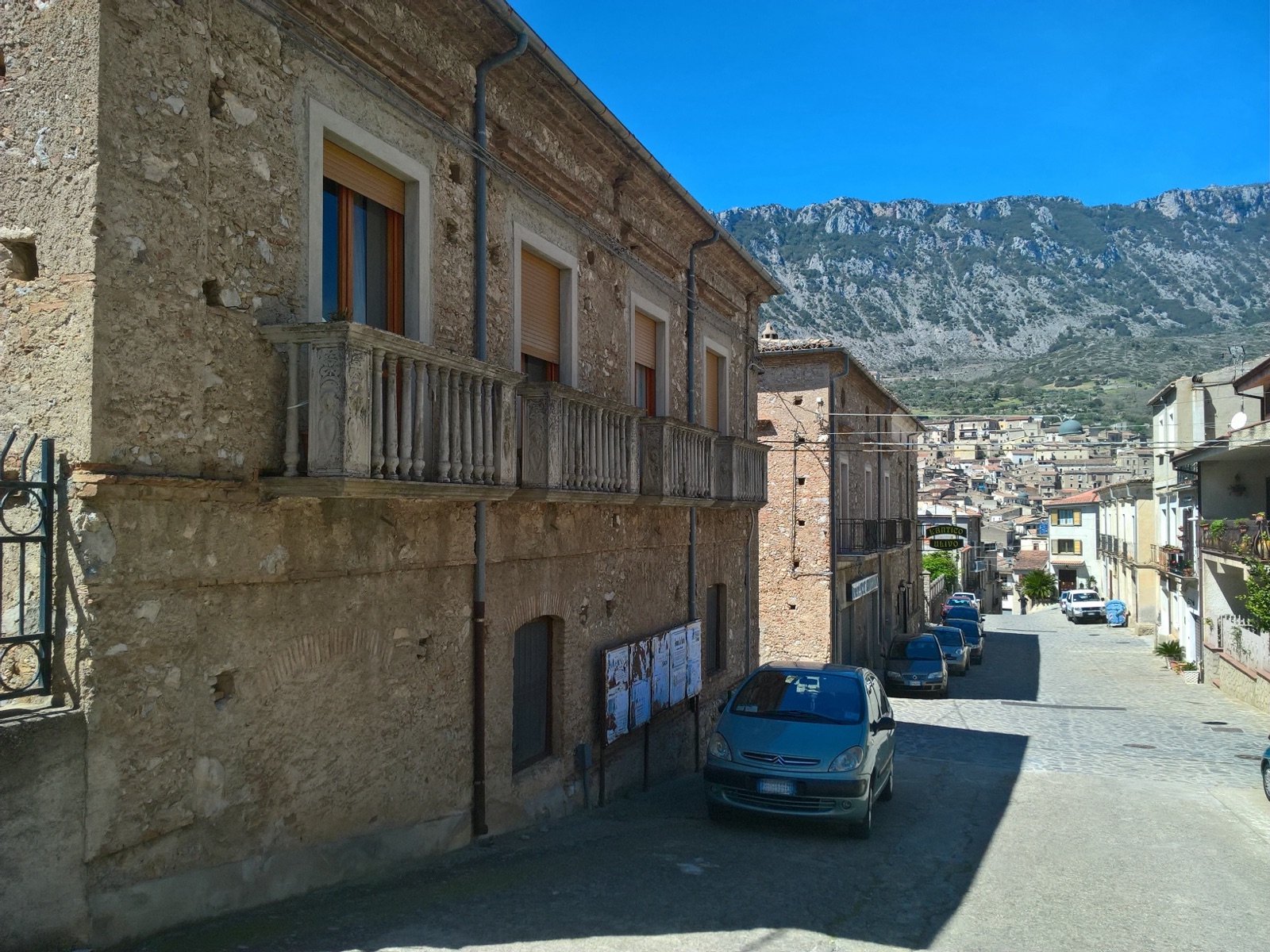
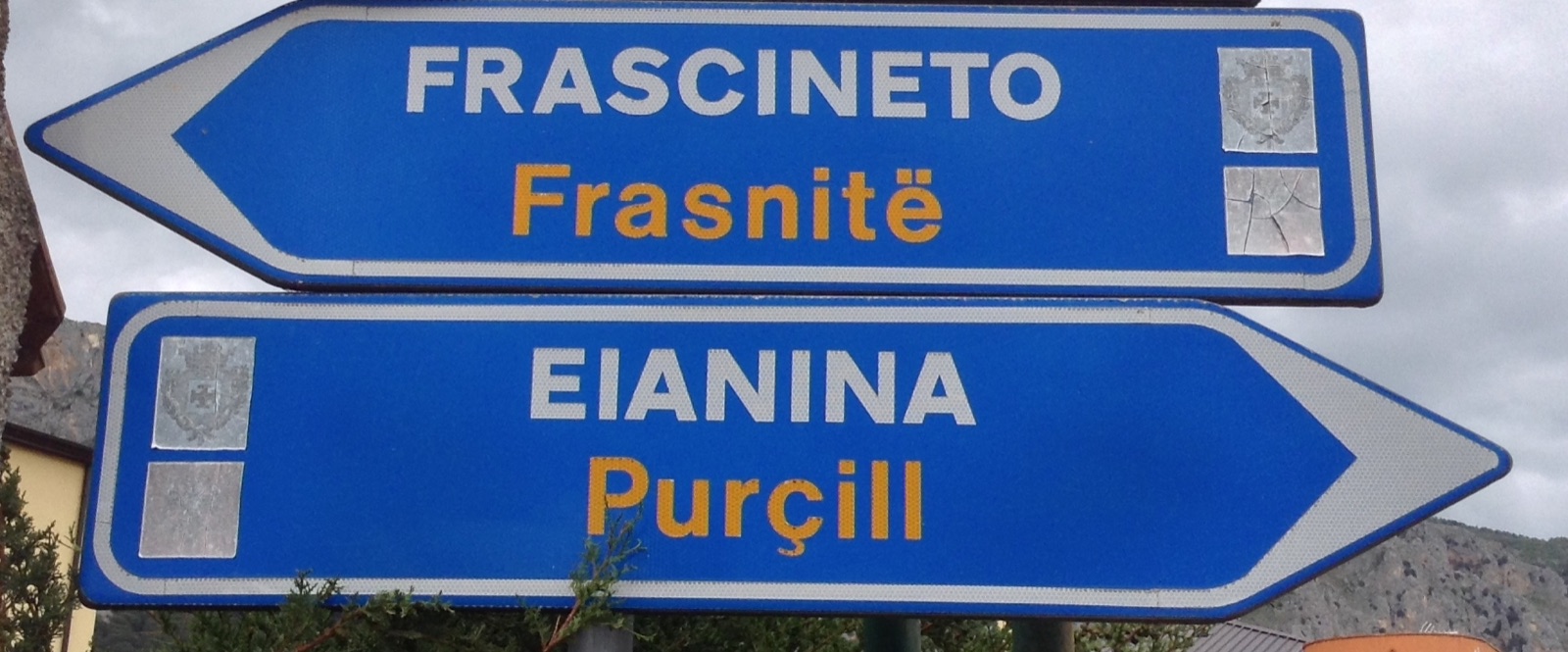
Their descendants, the Arbëreshë, still inhabit roughly fifty communities — 41 municipalities and nine hamlets — across seven regions of the South, with more than thirty in Calabria alone, alongside Sicily, Basilicata, Molise, Campania, Puglia and Abruzzo. How many are they? The honest answer is that nobody has counted since 1921, when the census recorded 20,113 Albanian-speaking families — 80,282 people. That was the last time Italy asked about language at all: Fascism ended the practice and no republic has restored it, so every figure since is a scholar’s estimate. The estimates disagree because they measure different things. About 100,000 people live in the fifty Arbëreshë communities, of whom Treccani’s Enciclopedia dell’Italiano reckons 60–70 percent know Arbërisht; estimates built around speakers rather than residents cluster at 80,000 to 90,000. Counts of descent run higher again — the much-quoted 260,000 traces to a survey from 1976 and is a ceiling on ancestry, not a current fact — because roughly thirty further towns, from Piacenza down to Taranto, keep a visible Arbëreshë heritage after losing the language entirely. Their language, Arbërisht, preserves the Tosk Albanian of the fifteenth century — UNESCO lists it as definitely endangered, and a speaker of standard Albanian understands it only partly. Since Law 482 of 1999, the Albanian populations have been one of Italy’s twelve legally protected historical linguistic minorities — which is why road signs in these villages greet you twice.
A church of their own
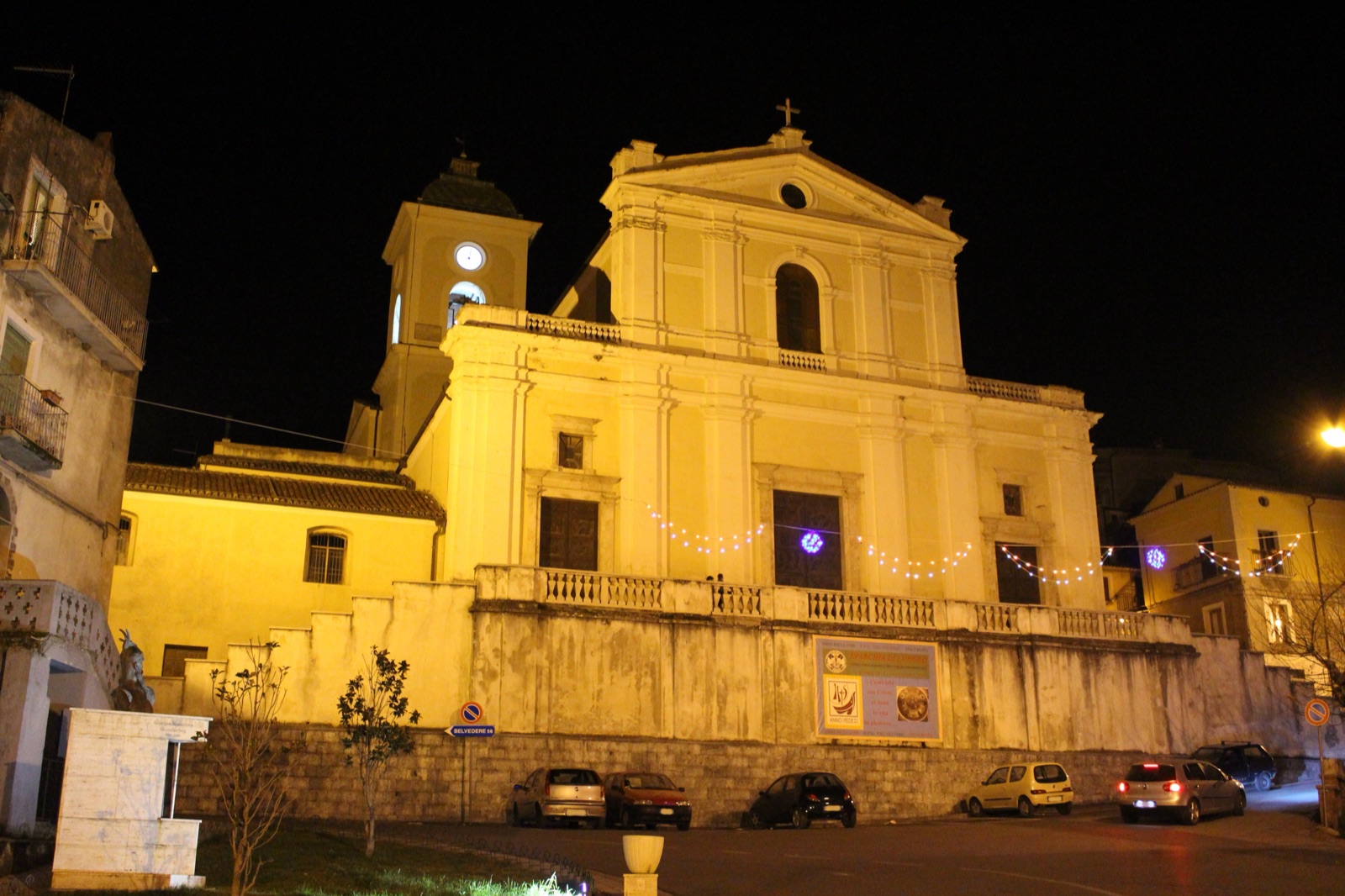
What preserved the Arbëreshë for five centuries was, above all, a church. The Italo-Albanian Byzantine Catholic Church is Catholic in communion but Byzantine in everything the eye and ear can register — Greek and Albanian liturgy, icons, married parish clergy. It lives in two eparchies created for the Arbëreshë: Lungro in Calabria (erected by Benedict XV in 1919; about 32,000 faithful in 30 parishes) and Piana degli Albanesi in Sicily (1937; about 23,400 faithful in 16 parishes), joined by the monastery of Grottaferrata outside Rome — founded in 1004, half a century before the East–West Schism, and the last surviving Byzantine monastery of medieval Italy.
Easter in Albanian
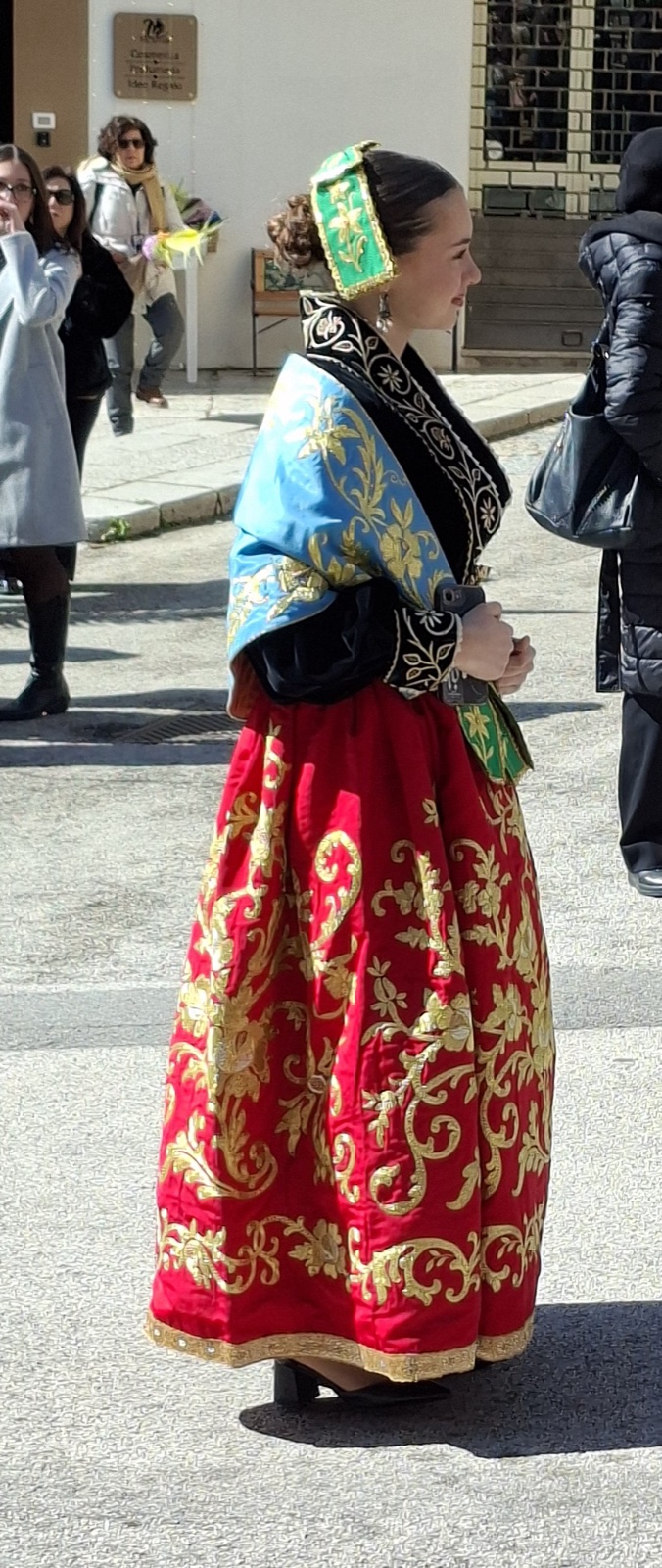
The culture is at its most visible in Holy Week. In Piana degli Albanesi, Byzantine Easter is celebrated in gold-embroidered costumes whose design reaches back to the fifteenth century; in Civita and Frascineto, Easter Tuesday brings the vallje — chained ring-dances through the streets commemorating Skanderbeg’s victories.
Holy Week, Piana degli Albanesi
The Byzantine Easter of Piana degli Albanesi, photographed in March 2026. The gold-embroidered festival dress is handed down and remade to designs that predate the discovery of America; the liturgy is sung in Greek and Albanian.
Photo: Effems / Wikimedia Commons · CC BY-SA 4.0
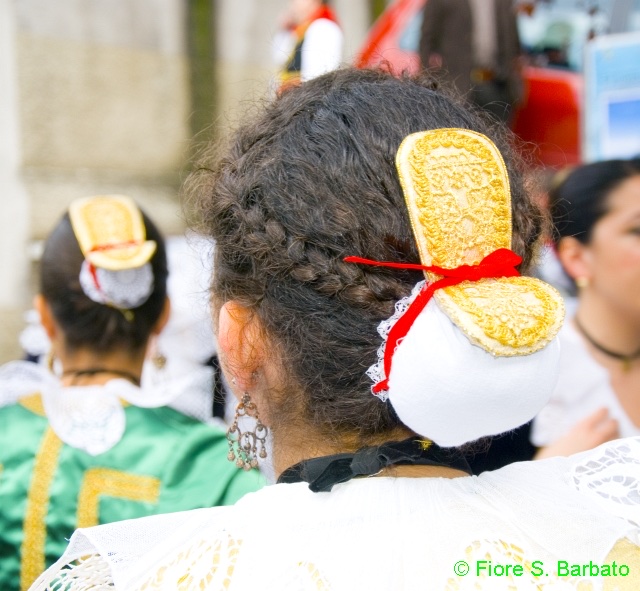
The vallje of Civita
Easter Tuesday’s vallje in Civita: dancers in traditional dress, linked by handkerchiefs, wind through the village singing rhapsodies that remember Skanderbeg’s wars.
Photo: Fiore Silvestro Barbato / Wikimedia Commons · CC BY-SA 2.0
“Mora Mandolinën” in Piana degli Albanesi
In Piana degli Albanesi, the largest Arbëreshë community in Sicily, residents sing “Mora Mandolinën”, an old Albanian folk song passed from one generation to the next. The performance is a living example of how the Arbëreshë have preserved Albanian language, music and traditions for centuries.
Portella della Ginestra
The Arbëreshë villages were not bystanders in Sicily’s twentieth century. Piana degli Albanesi produced Nicolò Barbato, a doctor born there in 1856 who founded the town’s Fascio dei Lavoratori in March 1893 and built it past two thousand members. A Palermo military tribunal convicted him in 1894 of conspiracy against the state and incitement to civil war and gave him twelve years; the town elected him to parliament in May 1895 while he was still in prison. In 1921 the mafia shot dead Vito Stassi, president of the local peasant league, outside his own home — he is recorded in Italy’s register of mafia victims.
Then came the morning the whole country remembers. On 1 May 1947, at the mountain pass of Portella della Ginestra where the town had marked May Day since the 1890s, the band of the bandit Salvatore Giuliano opened fire on a crowd gathered from Piana degli Albanesi, San Giuseppe Jato and San Cipirello — some eight hundred rounds from at least seven weapons, on the reconstruction accepted at the Viterbo trial of 1950–52. Treccani and the Italian parliament’s antimafia commission record eleven dead and twenty-seven wounded; three of the dead were children, the youngest a girl of eight. The Archivio Centrale dello Stato’s own file says twelve, and because some of the wounded died later several accounts put the eventual toll higher still.
The crowd had voted, three weeks earlier, for the Blocco del Popolo. No court has ever established who ordered the shooting: Viterbo convicted Giuliano’s men and found no instigator above them, and the state archive calls the case the first of post-war Italy’s unsolved mysteries. Historians read it as mafia interests and the harder edges of Sicilian autonomism giving a bandit cover against a peasant movement that had just won. Italy’s first post-war massacre was carried out against Albanian-speaking villagers, at a pass their grandparents had made a rallying ground.
The villages that made a nation
The Arbëreshë did not just preserve Albanian culture — for a crucial century, they led it. The second-oldest book in the Albanian language is Arbëresh: Lekë Matrënga’s catechism of 1592, written by a priest of Piana degli Albanesi and containing the first known Albanian poem. The college of Sant’Adriano in San Demetrio Corone and the Greek-Albanian seminary founded in Palermo in 1734 educated generations of clergy and intellectuals. And when the Albanian national awakening — the Rilindja — needed a literature, an Arbëresh wrote it: Girolamo De Rada, whose Songs of Milosao (1836) founded Albanian romantic poetry and whose journal Fiàmuri Arbërit circulated from Calabria to the Balkans. The world’s first university chair of Albanian was created at Naples’ Istituto Orientale in 1900. Much of the Albanian national awakening was drafted in Italy, decades before an Albanian state existed.
In 1991, when the ships came, the circle closed: Arbëreshë villages were among the first to organise welcomes for the refugees, recognising in the arrivals the same journey their own ancestors had made five hundred years earlier. And the state’s recognition still deepens: in September 2025, RAI Calabria began the first RAI radio and television programming ever produced in Arbëresh.
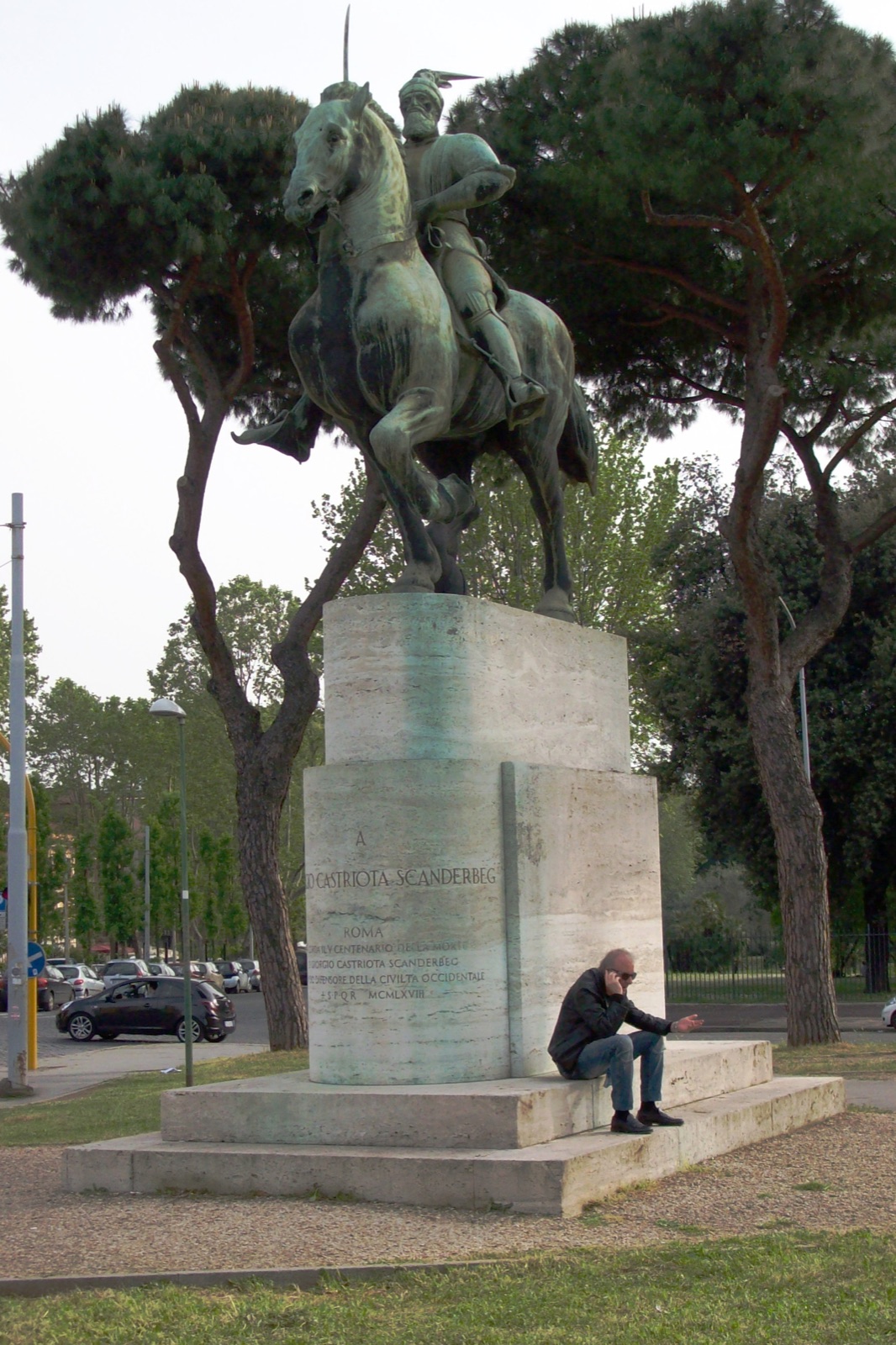
Where the community lives
In the North, and everywhere. The modern community’s centre of gravity is industrial northern and central Italy: 59.9 percent of Albanian permit holders live in the North and another 25.4 percent in the Centre (non-EU average: 23.1) — while only 14.7 percent live in the South and islands the ships first reached (non-EU average: 17.1). People landed in Puglia and kept moving, to where the factories, building sites and workshops were.
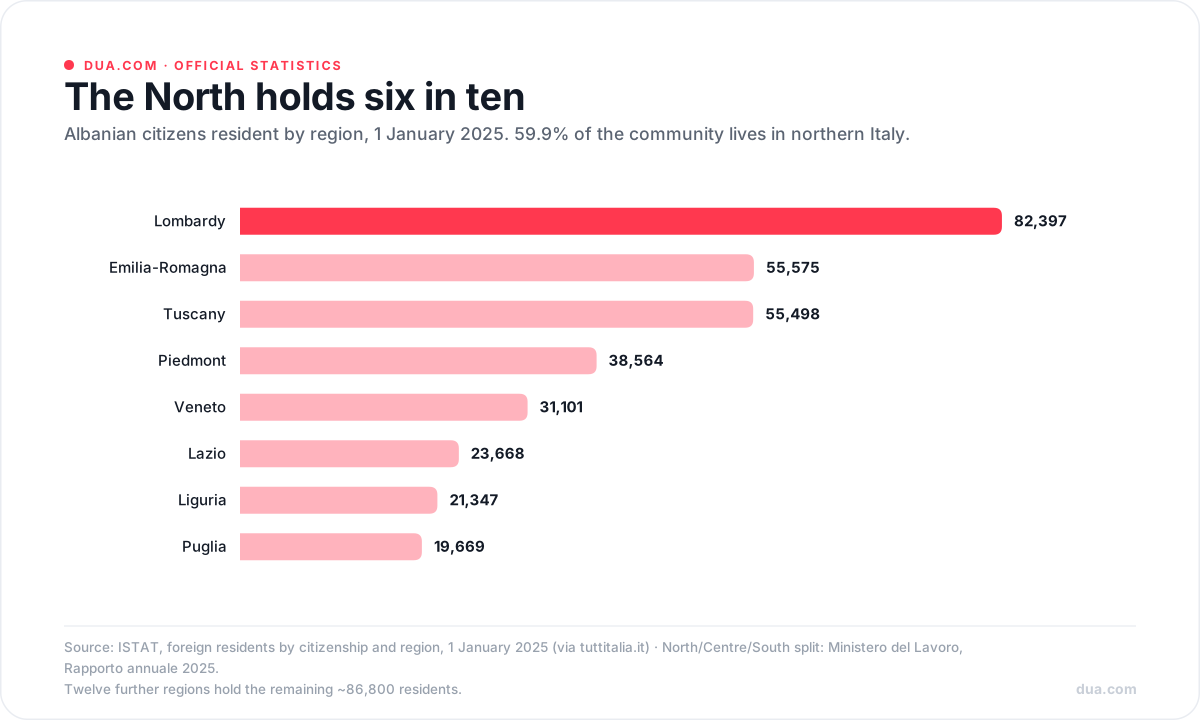
But the defining trait of Albanian Italy is dispersal. The provinces of Rome (16,086 Albanian residents) and Milan (20,369) together hold barely nine percent of the total. The real map is provincial: Florence (15,824) and Brescia (15,468) rival Rome; Cuneo (10,923) holds more Albanians than Turin (9,645); Bergamo, Pistoia, Modena, Bologna, Ravenna, Varese and Pisa all hold five to eleven thousand each. Tuscany is a particular stronghold: the provinces of Florence and Pistoia alone hold nearly 25,000 Albanian residents.
| Province | Albanian residents | Region |
|---|---|---|
| Milan | 20,369 | Lombardy |
| Rome | 16,086 | Lazio |
| Florence | 15,824 | Tuscany |
| Brescia | 15,468 | Lombardy |
| Cuneo | 10,923 | Piedmont |
| Bergamo | 10,891 | Lombardy |
| Turin | 9,645 | Piedmont |
| Varese | 9,151 | Lombardy |
| Pistoia | 8,917 | Tuscany |
| Modena | 8,303 | Emilia-Romagna |
Source: ISTAT, 1 January 2025. The Cuneo–Turin inversion is real: Albanian settlement followed construction and agri-food work into provincial Piedmont, not the metropolis.
The door that opened
Here Italy inverts the story told on our Austria page. Austria tightened its citizenship rules in 2006 and never loosened them; Italy’s door, heavy as it is — ten years of residence for non-EU adults, income tests, oath — has been walked through by a third of a million Albanians. In 2024, 31,643 Albanians became Italian, the most of any nationality; 2022 set the series high of 38,129. More than 84 percent of Albanian acquisitions come through residence and through transmission to minor children — the two routes that follow from a settled life. Marriage accounts for just 11 percent, and ISTAT notes those are largely Albanian women marrying a former co-national who had already become Italian.
There is a legal asymmetry underneath this success that the community knows well: children born in Italy to foreign parents are not Italian at birth. They may elect citizenship at eighteen — nearly 11,000 young people across all nationalities did in 2024 — or receive it earlier when a parent naturalises. That is why the second generation shows up in the school statistics long before it shows up in the citizenship column.
The generation that is already Italian
118,517 Albanian pupils sat in Italian classrooms in 2023/24 — the second-largest nationality in the school system — and 70.3 percent of Albanian pupils were born in Italy (2022/23 data), above the 65.1 percent non-EU average. Another 7,678 study at Italian universities, again the second nationality. Add the 5,570 Albanian babies born in Italy in 2024 — 13.1 percent of all non-EU births — and the shape of the next decade is already set.
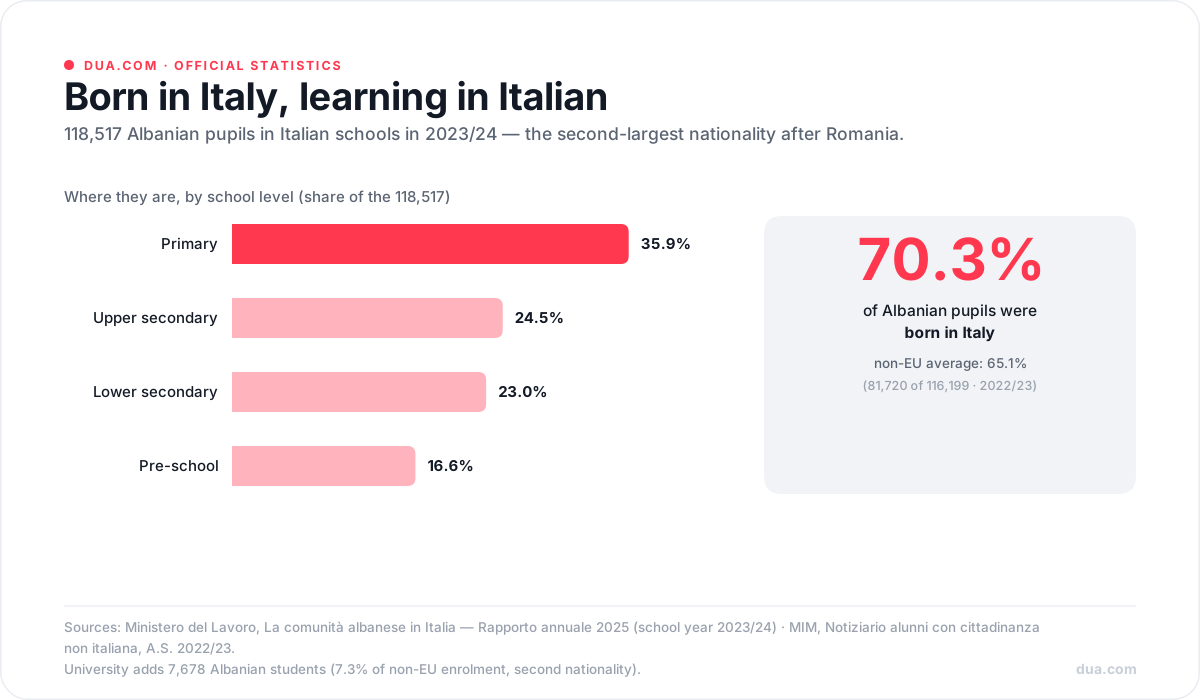
One law changed the rhythm recently: decree-law 36/2025 tightened Italy’s famously generous ius sanguinis rules for descendants of emigrants. It shaved the national acquisition total from 217,448 in 2024 to about 196,000 in 2025 — but Albanians, whose route is residence rather than ancestry, stayed first, at roughly 26,000.
Work, business and money
The community’s economic base was poured in concrete. Nearly 30 percent of employed Albanians work in construction — and more than a third (35.9 percent) of all non-EU construction workers in Italy are Albanian. Skilled manual trades account for 47.4 percent of Albanian employment, the profile of a workforce that built the North’s housing stock for thirty years and now increasingly owns the firms doing it.
Union membership tells the same settledness story: 109,813 Albanians were members of Italian trade unions in 2023 — the largest non-EU nationality among unionised workers. And entrepreneurship keeps climbing: 28.8 percent of all non-EU construction entrepreneurs in Italy were born in Albania, with Albanian-owned firms concentrated in Lombardy, Tuscany and Emilia-Romagna — exactly where the community lives.
Language, faith and community life
Albanians arrived speaking Italian — the kanoçe generation had learned it from RAI before ever buying a ferry ticket — and that head start shaped everything. Linguistic assimilation ran faster here than anywhere in the diaspora; the community’s anxiety today is not learning Italian but keeping Albanian. The answer has been weekend schools: Shkolla shqipe “Besa” in Rome, “Scanderbeg” in Parma, “Foleja e Shqiponjave” in Macerata and others, supplied with free textbooks by Albania’s state Diaspora Publishing Centre, teaching Saturday Albanian to children whose first language is now Italian.
Faith in Albanian Italy is plural, as it is in Albania: Catholic families who found the local parish already familiar; the Union of Albanian Muslims in Italy (UAMI), founded in Milan in 2009, networking mosque communities from Albania, Kosovo and North Macedonia; Orthodox parishes; and the Byzantine-rite Arbëreshë eparchies, which celebrate liturgies for the new diaspora too — in Milan, Rome and Turin. The Archdiocese of Milan runs Albanian-language Catholic chaplaincies in Varese and Legnano. Religion here works the way it does at home — worn lightly, carried as heritage — with the 28 November flag day the one feast every community keeps.
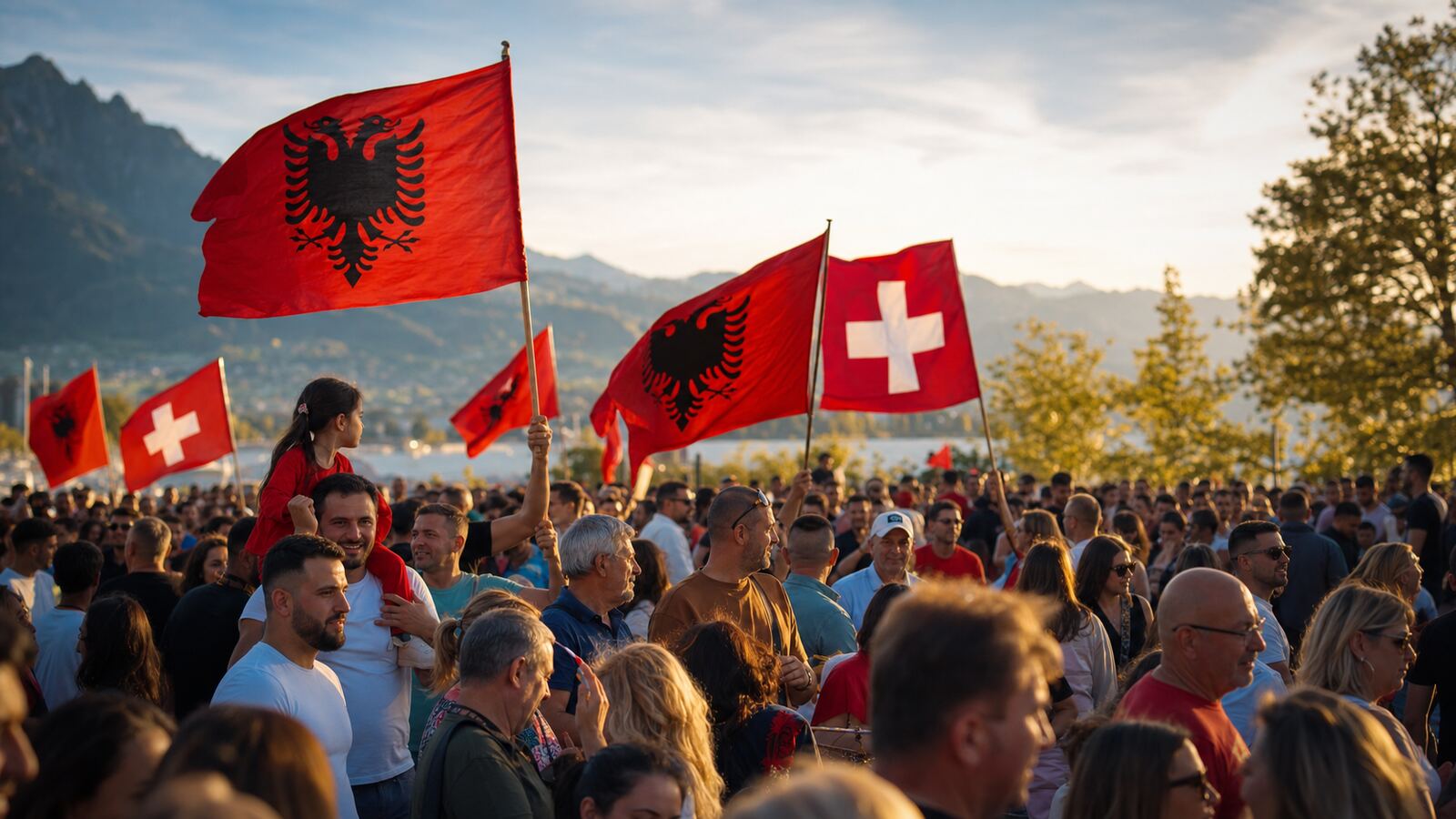
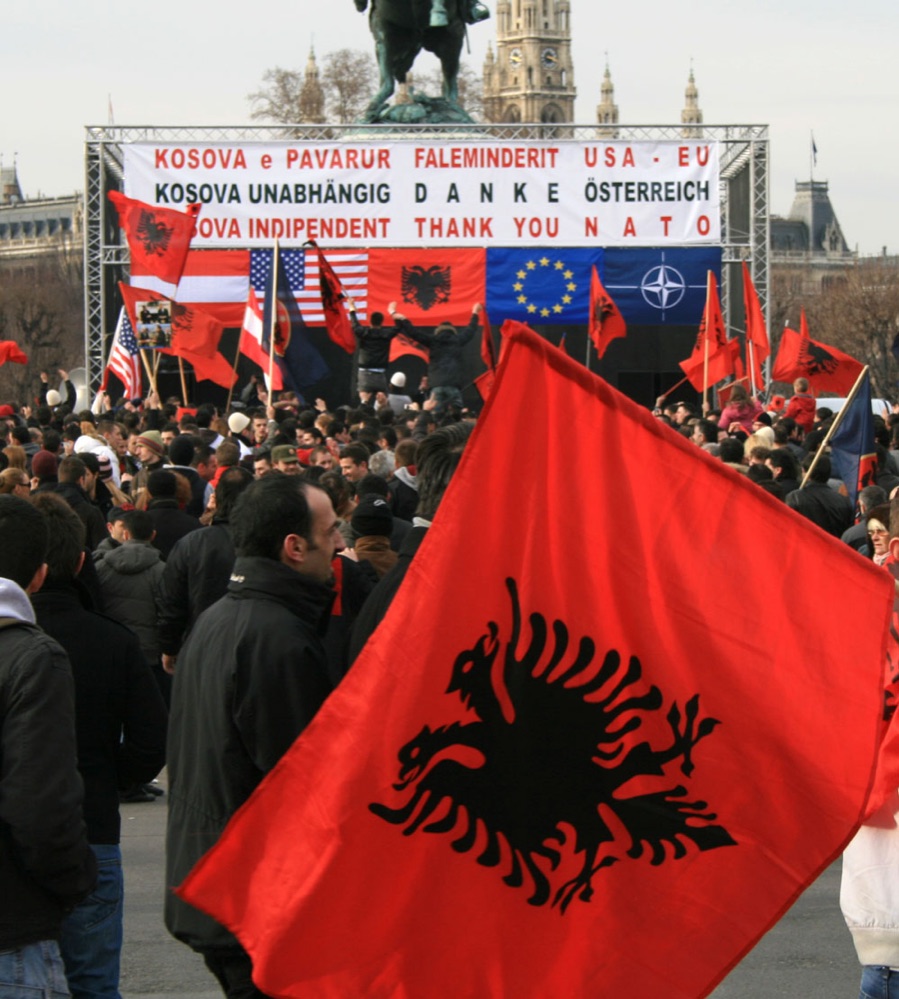
On 28 November, Milan’s Piazza Duomo fills with red and black as the community celebrates Albanian Independence Day under the cathedral — the city’s Albanian associations organise concerts and dinners, and for one evening one of Italy’s least visible large communities is impossible to miss.
The organisations that hold Albanian Italy together
For a community this dispersed, the connective tissue matters more than anywhere else. It has four strands: the diplomatic network, the associations, the media, and the academic institutions that have studied this community since before Albania existed as a state.
Associations and festivals
The FNAI — the National Federation of Albanian Associations in Italy, founded in 2015 — federates local associations nationwide and marked its tenth anniversary in 2025. In Rome, Associazione BESA, founded at La Sapienza in 2002, runs an Albanian school and projects for students, workers and unaccompanied minors. In Milan, Dora e Pajtimit (“The Hand of Reconciliation”, active since 2007) runs the Slow Mill cultural centre and FjalaFest, the Albanian literature festival whose 2025 edition ran three days on the theme “Narrating Albania”. In Rome, the Occhio Blu – Anna Cenerini Bova association (founded 2000) organises the Euro Balkan Film Festival, now past its eighth edition. Women’s associations like TEUTA in Trento, student unions like USAB in Bologna, and the entrepreneurs’ network AssoAlbania in Tuscany complete a landscape that Albania’s National Diaspora Agency catalogues in its official registry — the best single directory of local associations from Turin to Fermo.
Media
The community’s newspaper of record is Shqiptari i Italisë — “The Albanian of Italy” — the Rome-based portal that continues the print weekly Bota Shqiptare founded in 1999, covering citizenship law, community news and culture in Albanian and Italian. Albanian television travels well: RTSH and the main private broadcasters stream across Italy, and diaspora platforms carry the full Albanian channel bouquet into Lombard living rooms. The newest voice is the oldest: RAI’s first-ever Arbëresh-language programming, launched from Calabria in September 2025.
The academy
Italy has taken Albanian seriously as a subject for longer than any country on earth: the world’s first university chair of Albanian at Naples’ L’Orientale (1900), the historic Albanian-studies tradition at Palermo, rooted in the Sicilian Arbëreshë, and the Albanology section of the University of Calabria, where Albanian language and literature have been taught since 1973 amid the Arbëresh villages themselves. In Rome, the albanological journal Shêjzat, founded by Ernest Koliqi in 1957, publishes again as a peer-reviewed quarterly.
The people: from Crispi to Sanremo
No Albanian community anywhere has been shaping its host country for longer. The names below run from the Risorgimento to this decade’s charts — and they divide naturally into the two arrivals: the Arbëreshë greats who helped build modern Italy, and the post-1991 generation now visible on its stages, pitches and mastheads.
The Arbëreshë who built Italy
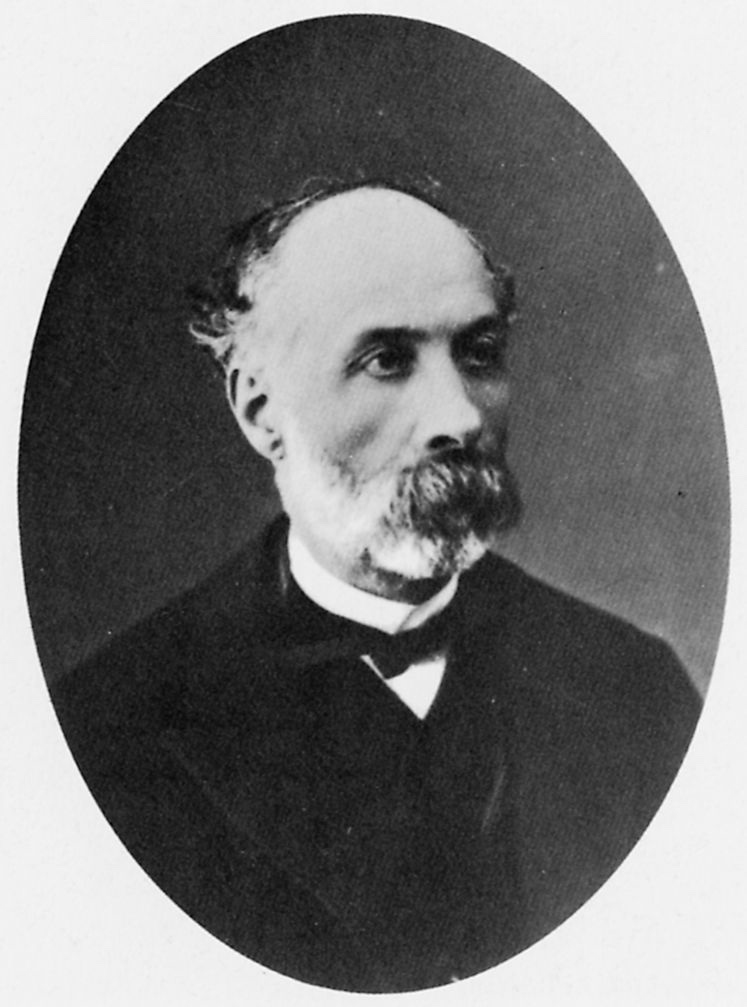
Francesco Crispi
Twice Prime Minister of Italy (1887–91, 1893–96) and before that a maker of the country itself: a protagonist of Sicily’s 1848 revolution and the organiser of Garibaldi’s Expedition of the Thousand. Born in Ribera in 1818 to a family the Treccani biographical dictionary describes as “of Albanian stock”, from the Arbëresh town of Palazzo Adriano, he was educated at the Greek-Albanian seminary of Palermo — the school founded in 1734 to keep the Byzantine rite alive. The first Albanian-descended head of government of a great European power.
Photo: Alinari brothers / Wikimedia Commons · public domain
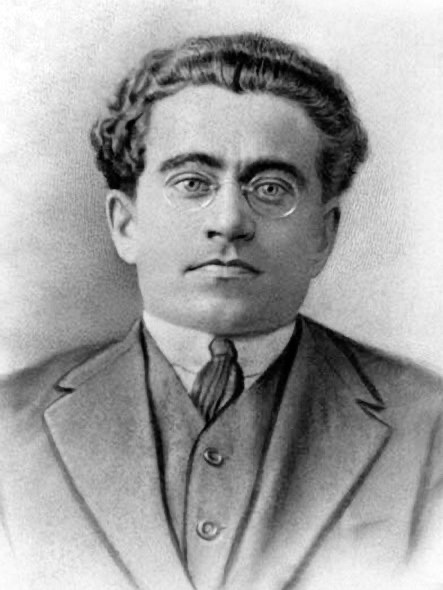
Antonio Gramsci
The founder of the Italian Communist Party and author of the Prison Notebooks — among the most cited political thinkers of the twentieth century — described his own roots in a 1931 letter from prison: “my father is of recent Albanian origin.” The parish records are even more Arbëreshë than his memory: the Gramsci family — the surname derives from Gramsh — had been settled in the Albanian-rite town of Plataci in Calabria since the 1700s. His ancestors belonged to the Arbëreshë world of the South; the Prison Notebooks remain among the most cited works of twentieth-century political thought.
Photo: unknown, 1922, via Wikimedia Commons · public domain
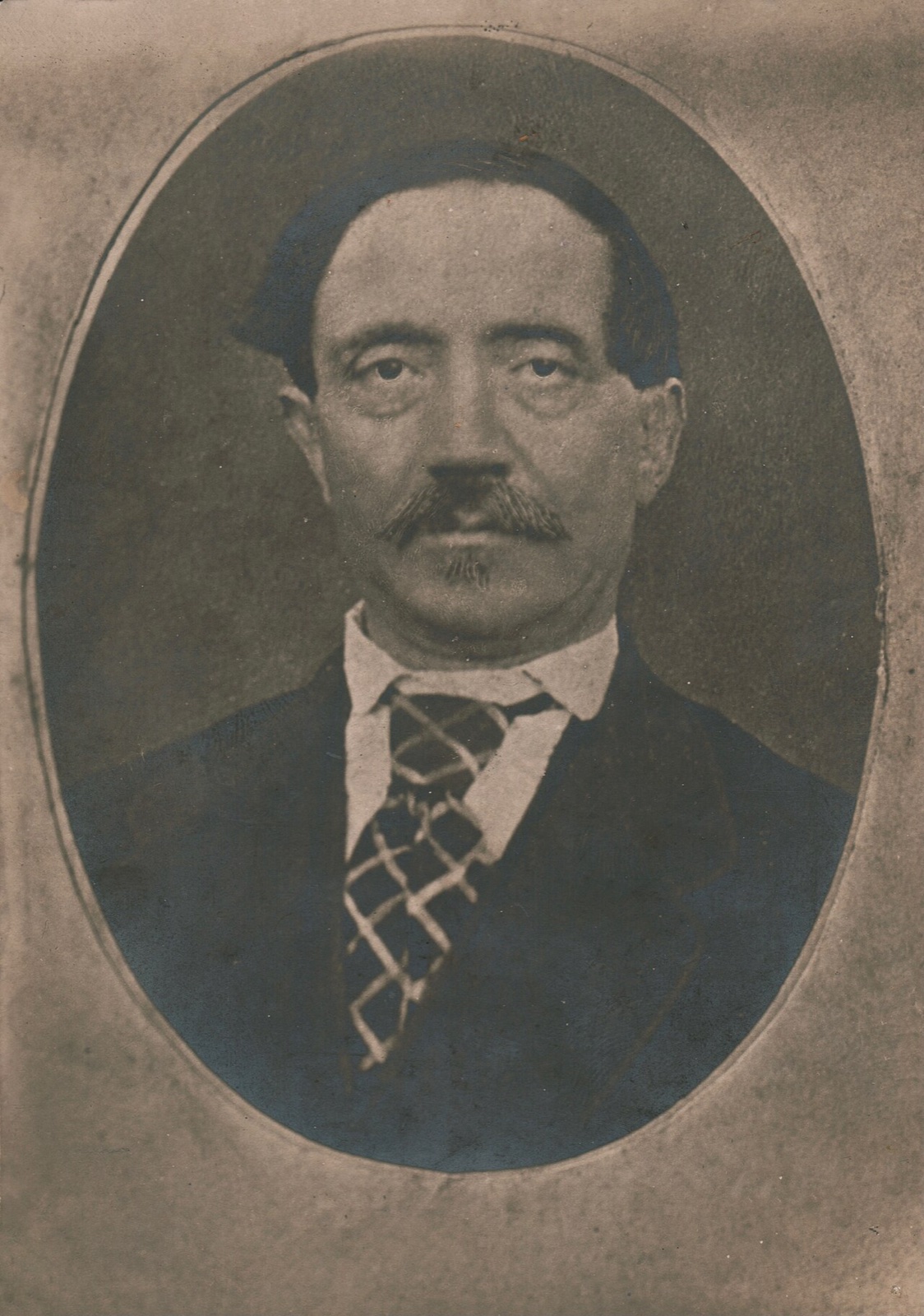
Girolamo De Rada
The father of Albanian romantic literature never lived in Albania. Born in Macchia Albanese in Calabria in 1814, De Rada published the Songs of Milosao in 1836, edited the first Albanian-language periodicals from Italian soil, taught at the Italo-Albanian college of Sant’Adriano and spent seventy years arguing Albania into cultural existence. The Rilindja — the Albanian national awakening — kept some of its brightest fires in Calabria.
Photo: Wikimedia Commons · public domain
When Albanian roots become invisible
Five centuries of integration mean that many Italians with distant Arbëreshë ancestry are Italian in language, citizenship and public identity while Albanian roots survive mainly in surnames and family memory.
Beyond the famous names, the Arbëreshë gave modern Italy a Constitutional Court vice-president (Costantino Mortati, one of the fathers of the 1948 Constitution, born to an Italo-Albanian family of Civita and San Basile), the jurist Stefano Rodotà — Italy’s first data-protection authority president, whose family tradition traces to Arbëresh San Benedetto Ullano — the Renaissance general Giorgio Basta, the Hellenist Pasquale Baffi, and the linguist Demetrio Camarda, whose 1864 grammar was among the first scientific arguments for Albanian’s ancient roots.
In this Albanian television clip, circus owner Attilio Bellucci says he is Monica Bellucci’s cousin and traces the family’s distant roots to the Arbëreshë migration around 1470. Monica Bellucci has not publicly confirmed the ancestry, so the clip records a family claim rather than genealogical proof. User-supplied social-media copy; original television footage shown in the video.
Stage and song
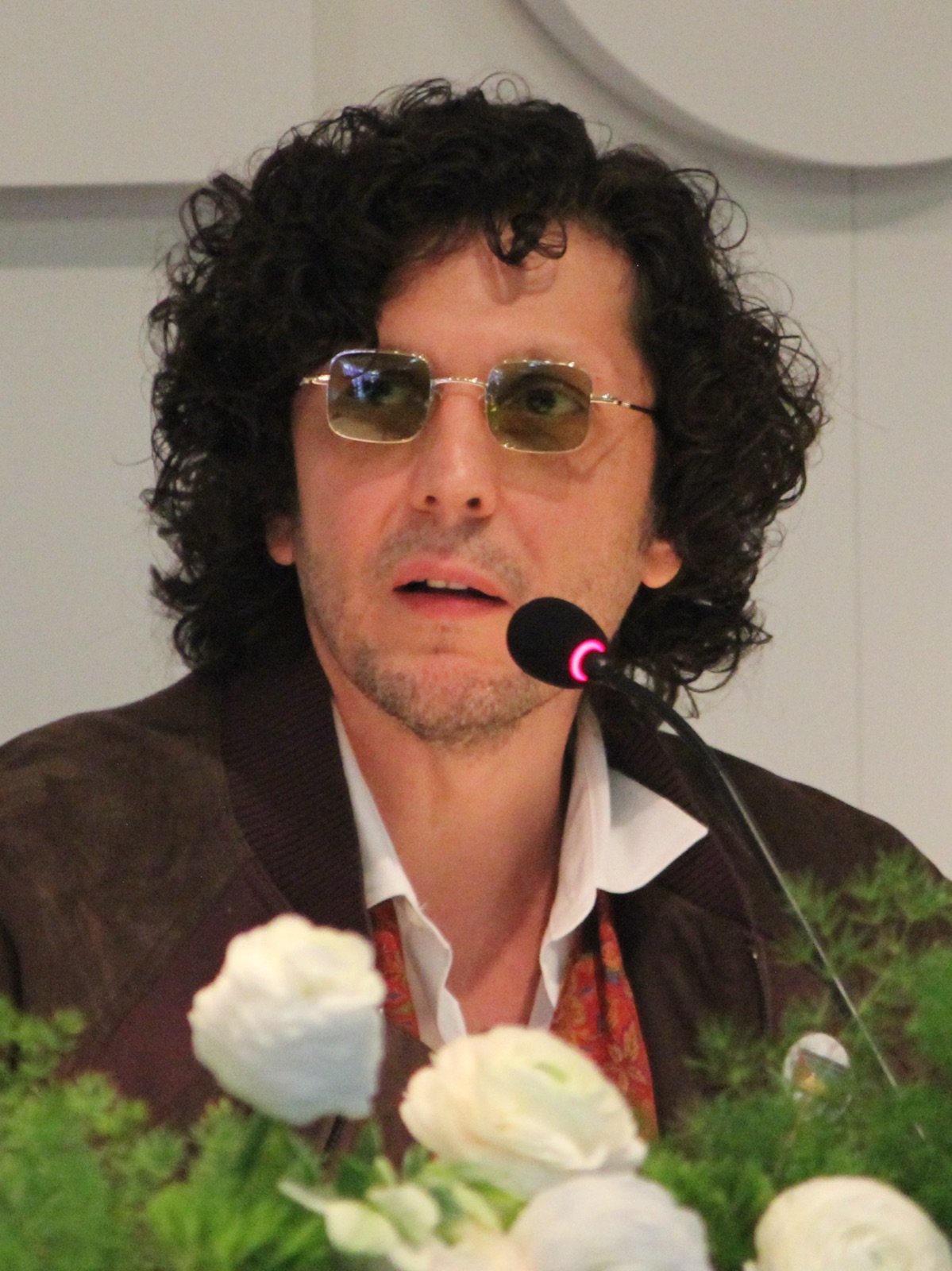
Ermal Meta
Born in Fier in 1981, in Bari from age thirteen, and since then one of Italian pop’s defining singer-songwriters. He took third place at Sanremo in 2017, won the Festival outright in 2018 with Fabrizio Moro (“Non mi avete fatto niente”) and carried Italy’s flag to Eurovision that year; his album Vietato morire — the title a message to his younger self — went to number one. Albanian television covers his wins as a hometown story; Italian radio plays his songs as its own.
Photo: Ferdinando Traversa / Wikimedia Commons · CC BY-SA 4.0
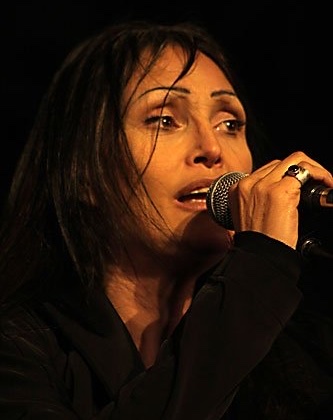
Anna Oxa
Fifteen Sanremo festivals across six decades, two victories (1989 and 1999), a Eurovision appearance and one of the most restlessly reinvented careers in Italian music. Born Anna Hoxha in Bari in 1961 to Qazim Hoxha, an Albanian father from Krujë, she carried the community’s story before the community arrived — and in 2020 Albania granted her citizenship.
Photo: Wikimedia Commons · CC BY-SA 3.0
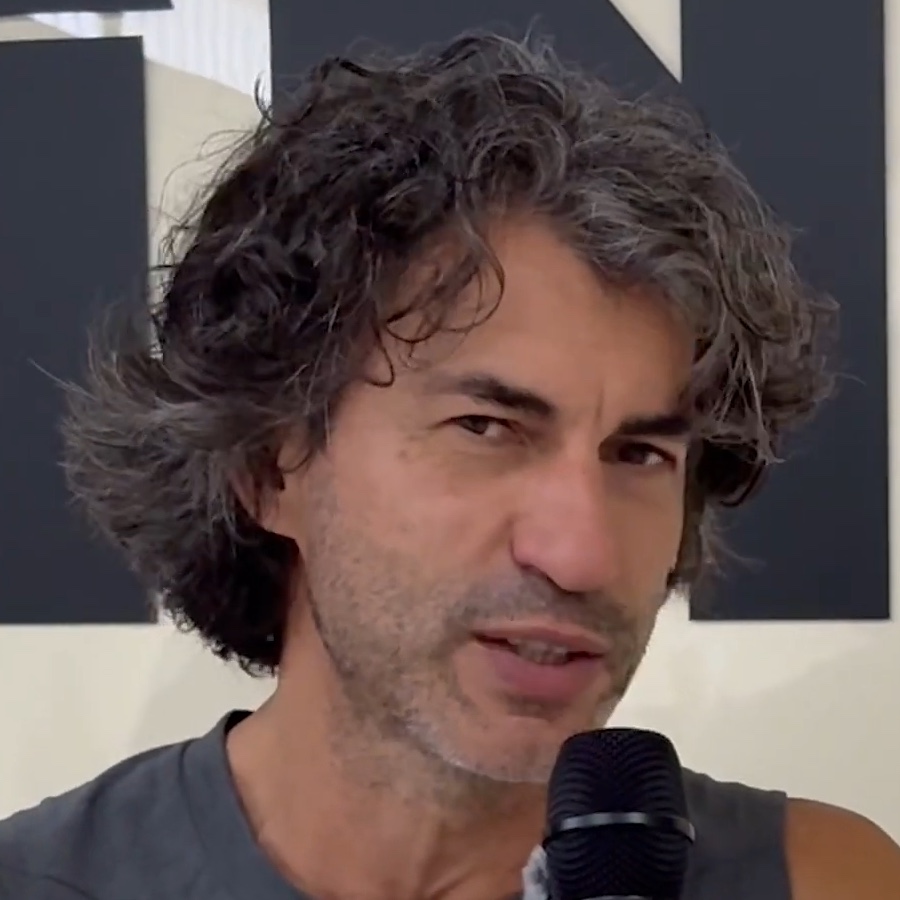
Kledi Kadiu
For a generation of Italians, the most familiar Albanian face in the country. Trained at Tirana’s National Academy of Dance, Kledi arrived in Italy in the early 1990s and became the star ballerino of Amici di Maria De Filippi and a fixture of Maria De Filippi’s shows for two decades — the refugee-turned-primo-ballerino whose citizenship ceremony was held at the Quirinale in 2008.
Photo: ArezzoTV via Wikimedia Commons · CC BY 3.0
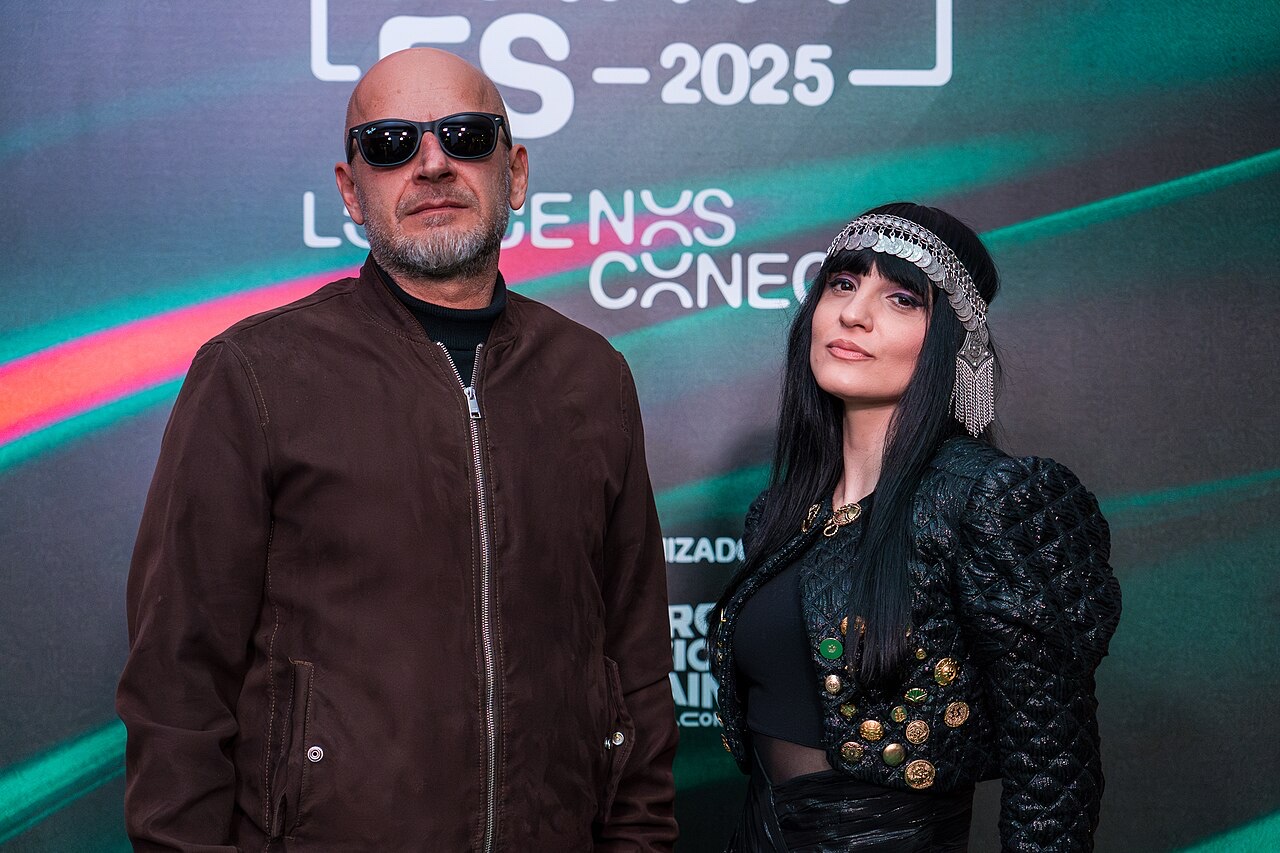
Shkodra Elektronike
The sound of the second generation. Beatriçe Gjergji and Kolë Laca — both with roots in Shkodër, both raised in Italy — call their music “post-immigrant pop”: Albanian folk memory run through Italian synthesisers. Representing Albania at Eurovision 2025 with “Zjerm”, they finished eighth in the final, Albania’s best result in years — a diaspora act singing in Gheg for two countries at once.
Photo: Wikimedia Commons · CC BY-SA 4.0
The list runs on: Elhaida Dani won the first season of The Voice of Italy in 2013 with over 70 percent of the final vote before representing Albania at Eurovision; dancer Klaudia Pepa followed Kledi’s path through Amici; cellist Redi Hasa, longtime collaborator of Ludovico Einaudi, told his own 1990s crossing on the Decca album The Stolen Cello; and Durrës-born violinist Olen Cesari took his Tirana conservatory training through Rome’s Santa Cecilia to the world’s pop and jazz stages.
The opera house
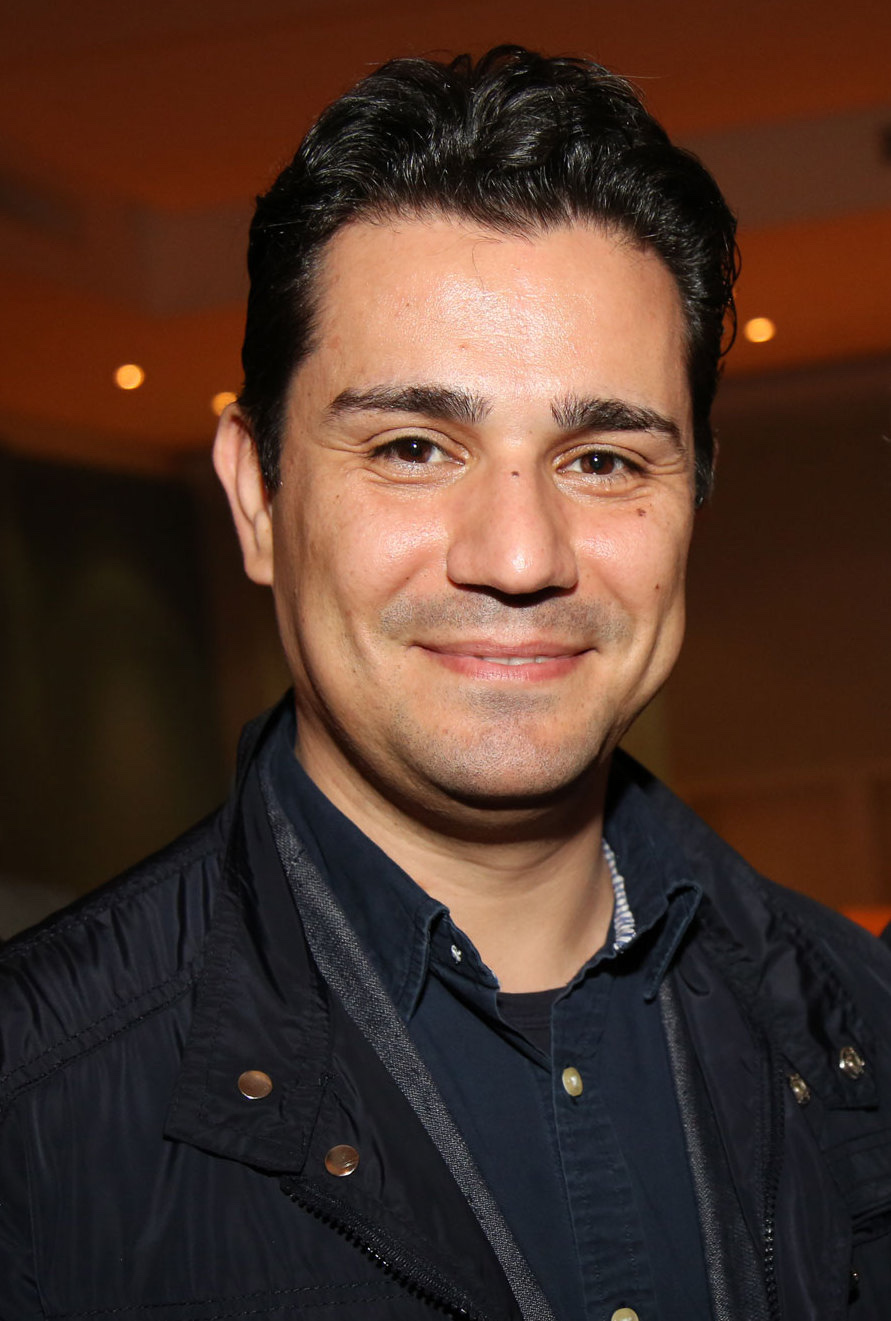
Saimir Pirgu
Discovered by Claudio Abbado in 2002, the Elbasan-born tenor studied at the Bolzano conservatory and became — according to his official biography — the youngest singer to debut a principal role at the Salzburg Festival; the Pavarotti d’Oro prize followed in 2013. A regular at La Scala, the Met and Vienna, he earned a Grammy nomination for the Royal Opera’s Król Roger — by common account the first Albanian nominated for a Grammy. The road from Elbasan to La Scala ran, as it has for two centuries of singers, through Italy.
Photo: Wikimedia Commons · CC BY-SA 2.0
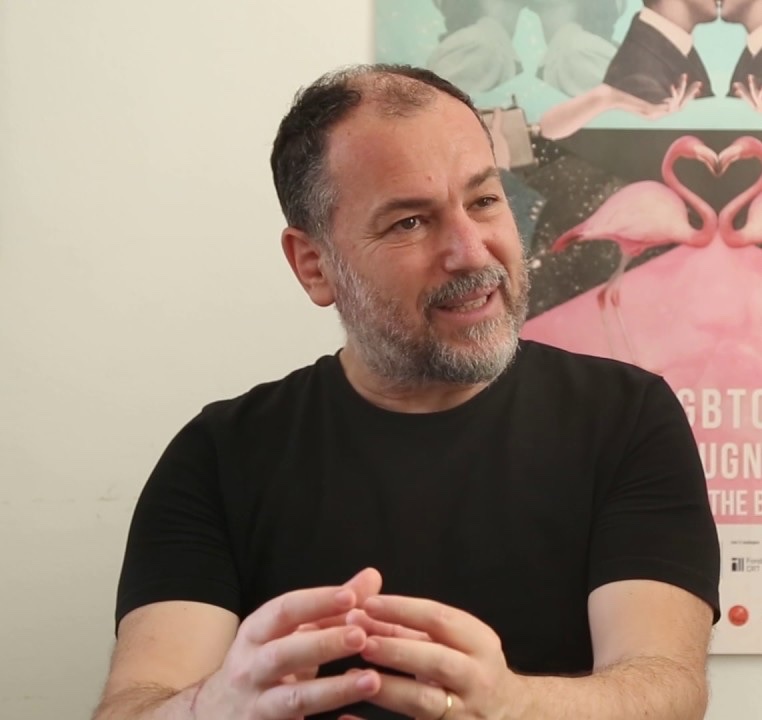
Adrian Paci
One of contemporary art’s essential voices on migration. Paci left Shkodër for Milan in 1997, escaping that year’s armed collapse, and turned displacement itself into his medium — most famously in Centro di Permanenza Temporanea, migrants ascending an aircraft staircase that leads to no aircraft. He represented Albania at the Venice Biennale in 1999 and 2005, has shown at MoMA PS1 and the Jeu de Paume, and lives and works between Milan and Shkodër.
Photo: Wikimedia Commons · CC BY 3.0
The roll of sopranos on Italian stages now reads Albanian too: Ermonela Jaho, who moved to Italy in 1993 after winning a competition organised by Katia Ricciarelli and trained at Rome’s Santa Cecilia, is by the Economist’s account among the most acclaimed sopranos in the world; Inva Mula — the voice of the Diva in The Fifth Element — returns to La Scala and the Arena di Verona; and the young Enkeleda Kamani sang Gilda at La Scala in 2019 while still at the theatre’s own academy. In the visual arts, Ibrahim Kodra (1918–2006) arrived from Ishëm on a royal scholarship in 1938 and spent six post-cubist decades at the heart of Milanese painting; Helidon Xhixha floated a mirrored-steel Iceberg in the Venice lagoon for the 2015 Biennale and filled the Boboli Gardens in 2017; and Kosovo-born Sislej Xhafa crashed the 1997 Venice Biennale as a one-man “Clandestine Albanian Pavilion” — an artist gate-crashing the party his country wasn’t invited to, sixteen years before Italy put him in its official pavilion.
The writers
A literature now exists that could only have been written here — in Italian, by Albanians. Ornela Vorpsi’s Il paese dove non si muore mai became a founding text of Italy’s new migrant literature; Anilda Ibrahimi’s Einaudi novels of southern Albanian family life have collected a shelf of Italian prizes; Ron Kubati, who crossed in 1991, wrote the arrival’s first novels; Elvira Dones wrote Vergine giurata in Italian and watched it premiere at the Berlinale as a film; the poet Gëzim Hajdari, exiled from Lushnjë, won the Premio Montale and honorary citizenship of Frosinone; lawyer-novelist Darien Levani writes prize-winning noir from Ferrara; and Elvis Malaj, who arrived at fifteen, reached the 2018 Premio Strega selection with his debut stories of life suspended between Albania and the Italian dream. The exodus found its chroniclers; they write in the language of the country that once feared them.
The pitch and the boardroom
Football is where the two countries meet weekly. Igli Tare, born in Vlorë, played seven Serie A seasons and then ran Lazio’s sporting operations for fifteen years — the most senior Albanian executive in the history of Italian football — before a stint as AC Milan’s sporting director in 2025–26. On the pitch, the Albania national team is half a Serie A alumni association: Elseid Hysaj (a decade and a half at Empoli, Napoli and Lazio), Thomas Strakosha (208 appearances in Lazio’s goal), Berat Djimsiti (Atalanta’s captain in their historic 2024 Europa League triumph), Ardian Ismajli (whose 2025 Torino unveiling, Albanian media reported, came with an Albanian eagle), Marash Kumbulla — born near Verona to Albanian parents — and Kristjan Asllani, brought to Tuscany at age two and raised through Empoli’s academy — choosing Albania over Italy — before anchoring Inter’s Scudetto-winning midfield. At Euro 2024, Nedim Bajrami scored after 23 seconds against Italy — the fastest goal in European Championship history, by an Empoli product, against the country that trained him.
And the newest chapter is corporate: Uljan Sharka, who arrived from Albania at sixteen, founded iGenius (now Domyn) in Milan and built it into Italy’s first AI unicorn — valued around €1.7 billion, building one of Europe’s largest supercomputers with Nvidia. The boy from the exodus generation now runs one of Italy’s most valuable technology companies. Sindi Manushi, elected mayor of Pieve di Cadore in 2023 — reported by the Italian press as the country’s first sindaca of Albanian origin — closes the circle Crispi opened: from an Arbëresh Prime Minister in 1887 to a new-diaspora sindaca in the Dolomites.
How do Albanians in Italy connect today?
The community’s meeting places are the ones thirty-five years of settlement built: the associations and their 28 November celebrations, the parishes and mosque communities, the Saturday-morning Albanian schools, the calcetto pitches, the bars where the espresso is Italian and the conversation is not. The National Diaspora Agency’s registry maps the associations; the section above names the ones doing the most visible work.
The harder part is everything between those places. Italy’s Albanians are the most dispersed community in this series — not three or four hub cities but hundreds of provincial towns, from Bergamo’s valleys to the heel of Puglia, wherever the building sites and workshops were. Someone in Treviso and someone in Prato belong to the same community and may never meet — the exact gap a diaspora platform exists to close.
If you wanted to meet another Albanian, where did you go?
In Italy the question has a particular shape. The community is enormous — but it is scattered across a country of 8,000 municipalities, and its biggest concentrations sit in mid-sized provincial towns. A general dating app in a town of 40,000 people will surface the same few hundred faces it shows everyone. The odds that the next profile is Albanian and genuinely right for you are tiny — and for a community where marrying inside the culture remains a common expectation, stated by family or simply preferred, those odds set the length of the search.
Most people still solve it the old way — a cousin’s wedding in Kosovo, an association dinner in Milan, the August ferry queue at Durrës. That works, and it caps your options at whoever your family happens to know.
dua.com removes exactly that ceiling. The discovery pool is Albanian before the first swipe, so nobody in Bergamo has to explain what Bajram is, why the Saturday school matters, or what it means when the family asks to meet you. Compatibility stays personal and stays hard — but the geography stops deciding it.
The shortest distance in the diaspora
Italy is the only Western country whose Albanian community can almost see the homeland from its own coast — barely 70 kilometres separate Puglia from Albania across the Strait of Otranto. The connection is physical in a way no other diaspora knows: overnight ferries sail from Bari and Ancona to Durrës, the short Brindisi–Vlorë crossing runs most days of the week, and no country sends more airline seats to Tirana than Italy, across 21 airports — Milan Bergamo alone runs six flights a day in season. Tirana’s airport crossed 11 million passengers in 2025 — aviation-press reports put its busiest day ever, 50,892 travellers, on 4 August, at the height of the diaspora summer. In the first half of August 2025, 117,006 passengers and 31,602 vehicles moved through Durrës port; by mid-month the flow reversed, as Italy’s Albanians drove back north to work.
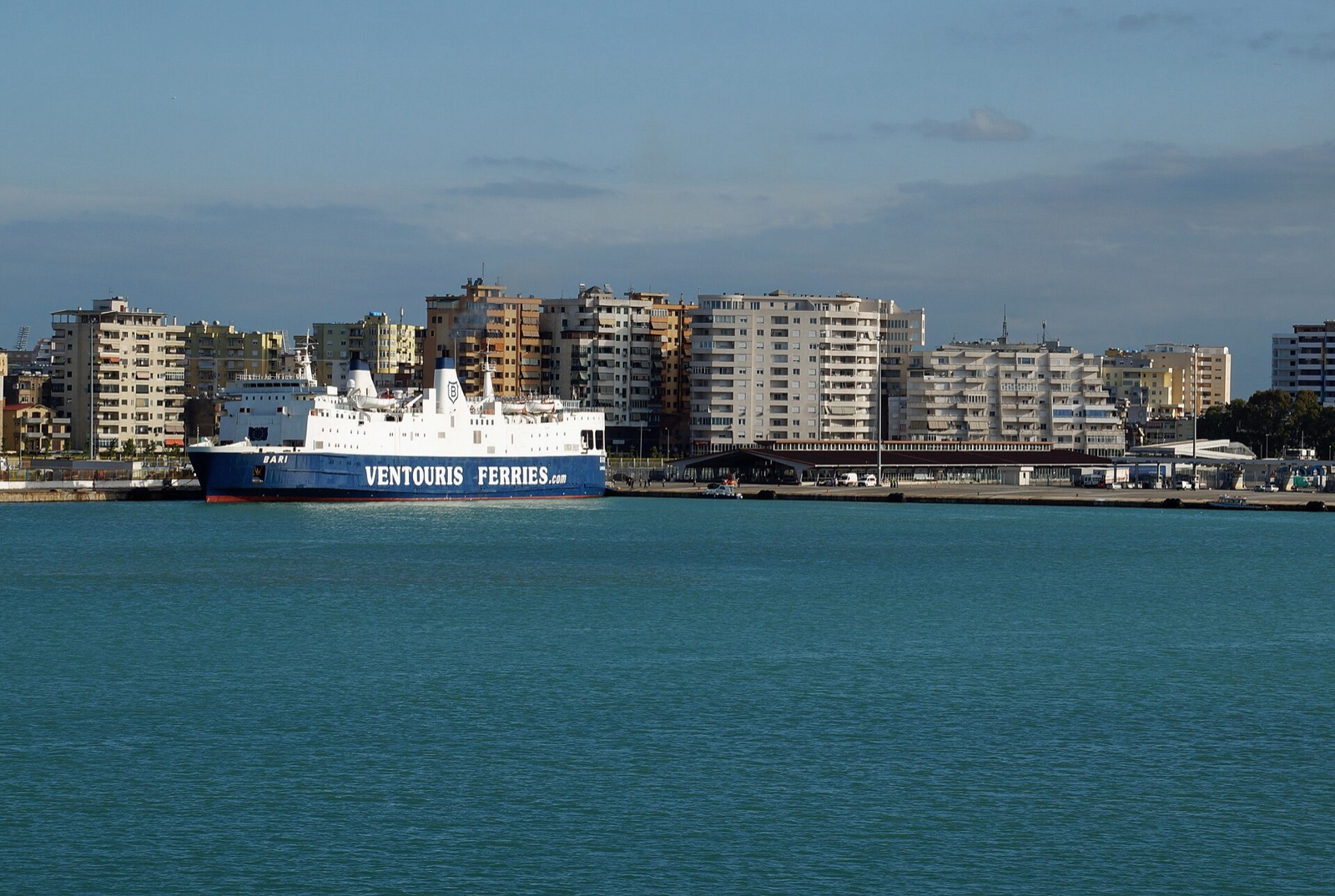
Both states allow dual citizenship — Italy under its 1992 law, Albania under its own — so the naturalised keep their Albanian passports. And in 2025, for the first time, Albania let its diaspora vote by post: Albanians in Italy formed the largest registered bloc in the world, over a third of all diaspora voters.
dua.com’s Flight Mode is built for exactly this geography. It lets members search in a city other than their own — Milan today, Tirana in August, Pristina for a cousin’s wedding — and makes the whole Albanian world searchable from a town in Lombardy. For a community whose life has always run across the Adriatic rather than stopping at it, that is the closest thing to a single map of itself.
Thirty-five years, and counting
The people who climbed off the ships in 1991 are grandparents now. Their children grew up between two languages and hold the passports their parents queued for. Their grandchildren are born Italian, in hospitals from Turin to Lecce, and learn the other language at the kitchen table on Saturdays. The arc of Albanian Italy runs the opposite way to most migration stories: it began with one of the most desperate arrivals in modern European memory, and it has ended — on every measure this page can count — as the most naturalised Albanian community abroad.
Love, family and the next generation
Everything in the numbers chapters is counted by the state. What happens at home is decided by the people. If you grew up Albanian in Italy — or arrived with a work contract and a suitcase — you may know the particular feeling: the community is large enough to fill a major city, and it can still take years to meet one person who carries both halves of your life without explanation. The Italian schooling and the working rhythm of Lombardy or the Veneto on one side; the language, the family closeness and the cultural memory that never needed translating on the other.
dua.com was built for exactly this gap. And unlike almost any other page in this series, the couples below are not borrowed from elsewhere in the diaspora. These are dua.com couples whose stories run through Italy itself — Portogruaro, Bressanone, a small town in the north. The same map as this article.
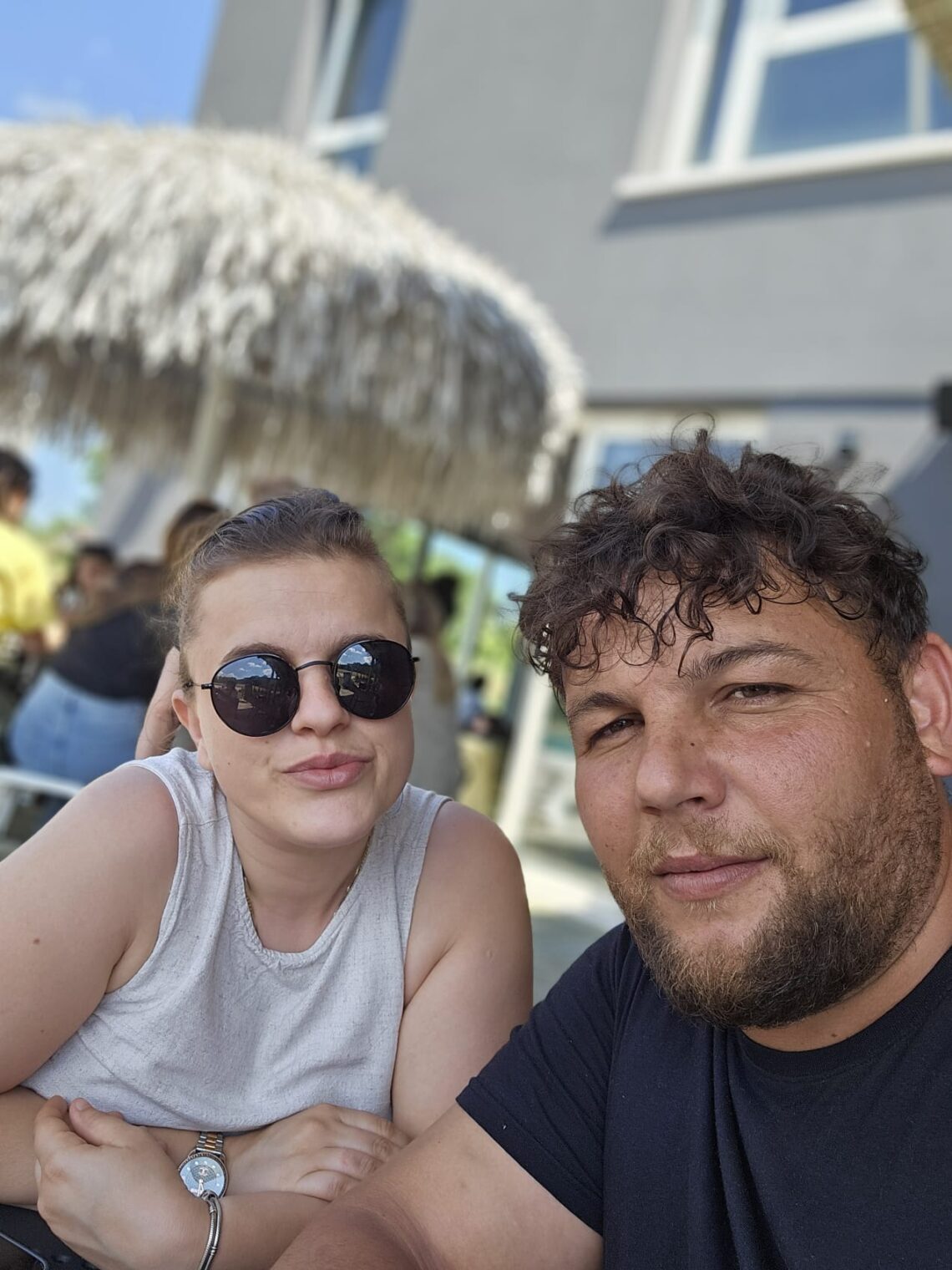
Arsim & Senada: love across the Adriatic’s shores
Arsim left Suhareka in Kosovo for northern Italy in 2022, for work. Senada is from Ulqin, on Montenegro’s coast. He found dua.com through a TikTok video one evening at home in Italy and matched with her within minutes of going Premium. Their first real conversation began on Christmas Day 2023; they met in Ulqin that March and married there on 19 August 2024 — engagement and wedding on the same day. In February 2025 Senada joined him in Portogruaro, in the Veneto, where they are planning a family.
Lirije & Besarti: when the heart finds its way home
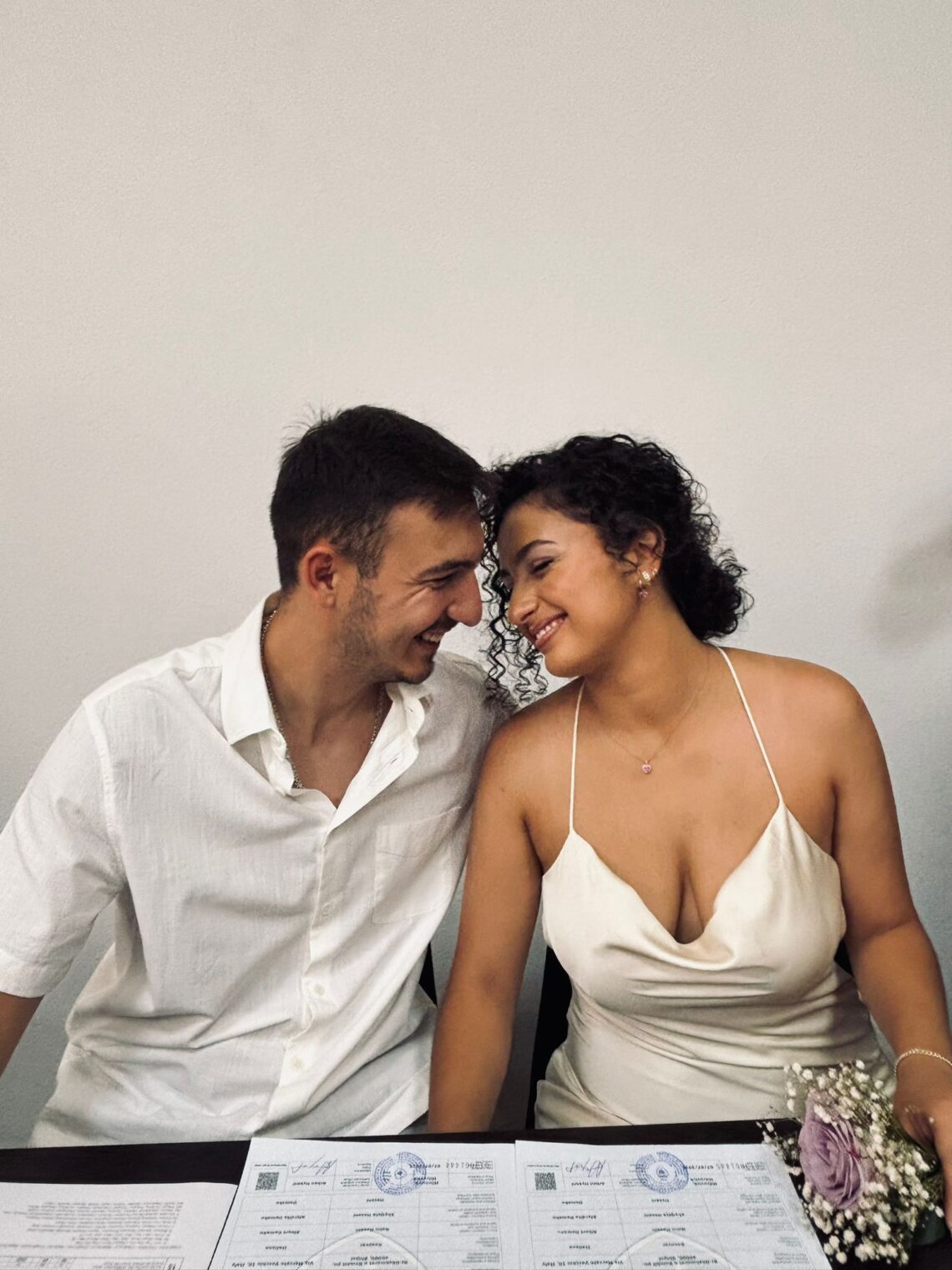
Lirije was born in Mitrovica in wartime and raised in Bressanone, in South Tyrol, where her family settled — a dental assistant with an Italian life and an Albanian home. Besarti, a nurse, had stayed in Mitrovica. They matched on 3 January 2024, and after five months of calls she flew back to the city of her birth and surprised him at an internet café, mid-game. He proposed on New Year’s Eve in Bolzano; they married on 7 July 2025 and live in Bressanone, ten minutes from her parents. She found her partner in the city she was born in — and brought him home to the city that raised her.
Genton & Leonora: born nearby, married across a border
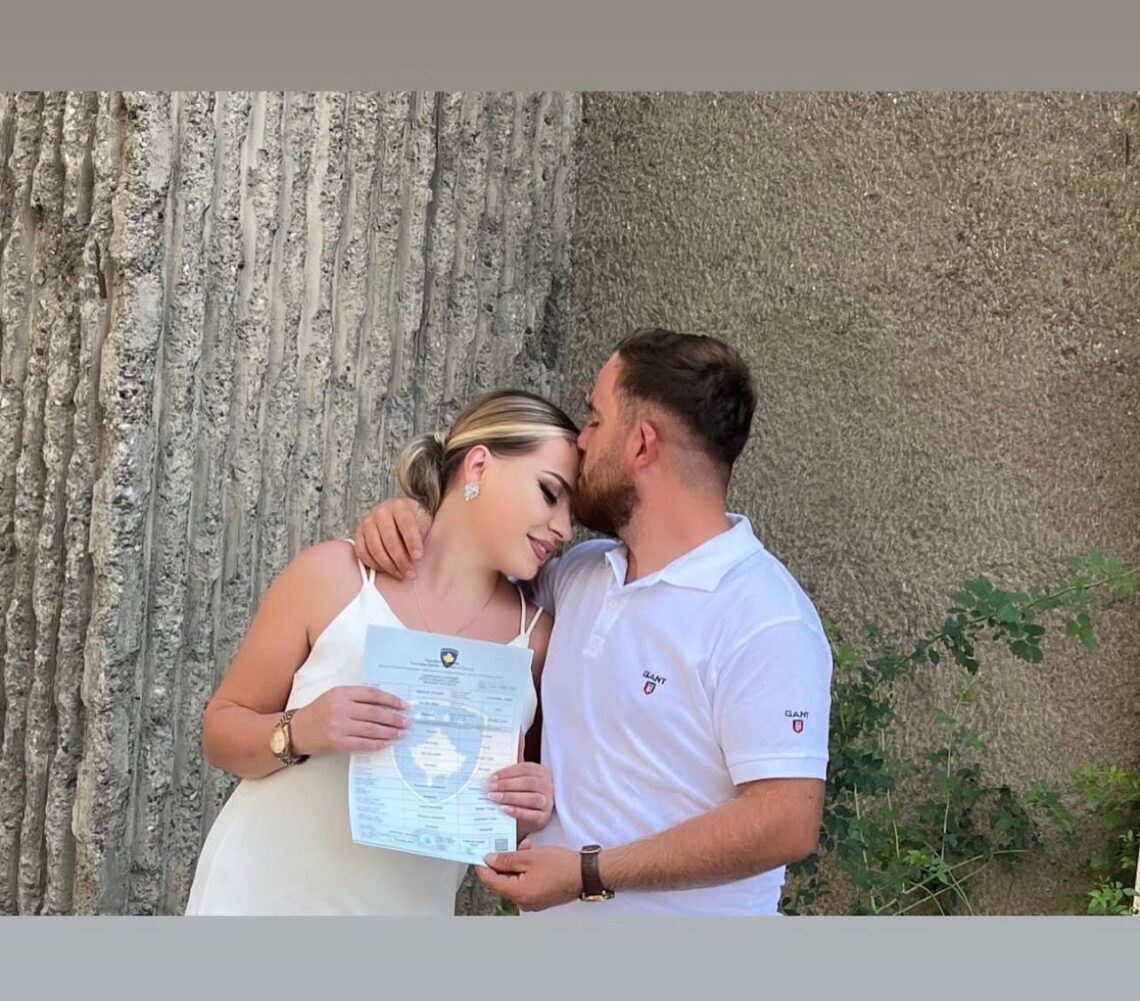
Genton is from Kramovik near Rahovec, Leonora from Has near Gjakova — half an hour apart, and it took a pandemic and a dating app for them to meet. He messaged her in July 2020; she answered within hours, certain before she could explain why. They met in person fourteen days later and were engaged by Christmas. Then came the hard part: from 2023 Genton worked in Italy while Leonora waited in Kosovo, with secret visits holding them together. They married on 10 August 2024 and now build their life in a small town in northern Italy.
Practical directory for Albanians in Italy
Primary and community-run resources covering diplomacy, citizenship, language and community life. Always verify current requirements on the linked site.
| Need | Where to start | Why this source |
|---|---|---|
| Albanian consular services | Embassy of Albania in Rome · consulates general in Milan and Bari | Official Albanian diplomatic missions |
| Kosovo consular services | Kosovo’s missions in Italy | Official mission directory (Rome embassy, Milan consulate) |
| Italian citizenship rules | Ministero dell’Interno — Cittadinanza | Official statement of requirements and procedures |
| Community news | Shqiptari i Italisë | The community’s newspaper of record since 1999 (as Bota Shqiptare) |
| Diaspora organisations | National Diaspora Agency registry | Official directory of associations, city by city |
| Albanian classes for children | Qendra e Botimeve për Diasporën | State textbooks for the weekend schools (Rome, Parma, Macerata and more) |
| The Arbëreshë church | Eparchy of Lungro · Eparchy of Piana degli Albanesi | The two Byzantine-rite eparchies, in Calabria and Sicily |
| Albanian Muslim communities | UAMI — Union of Albanian Muslims in Italy | The national network, based in Milan since 2009 |
| Ferries to Albania | GNV · Adria Ferries | Bari/Ancona–Durrës overnight routes, daily in season |
The full ledger: how the total is built
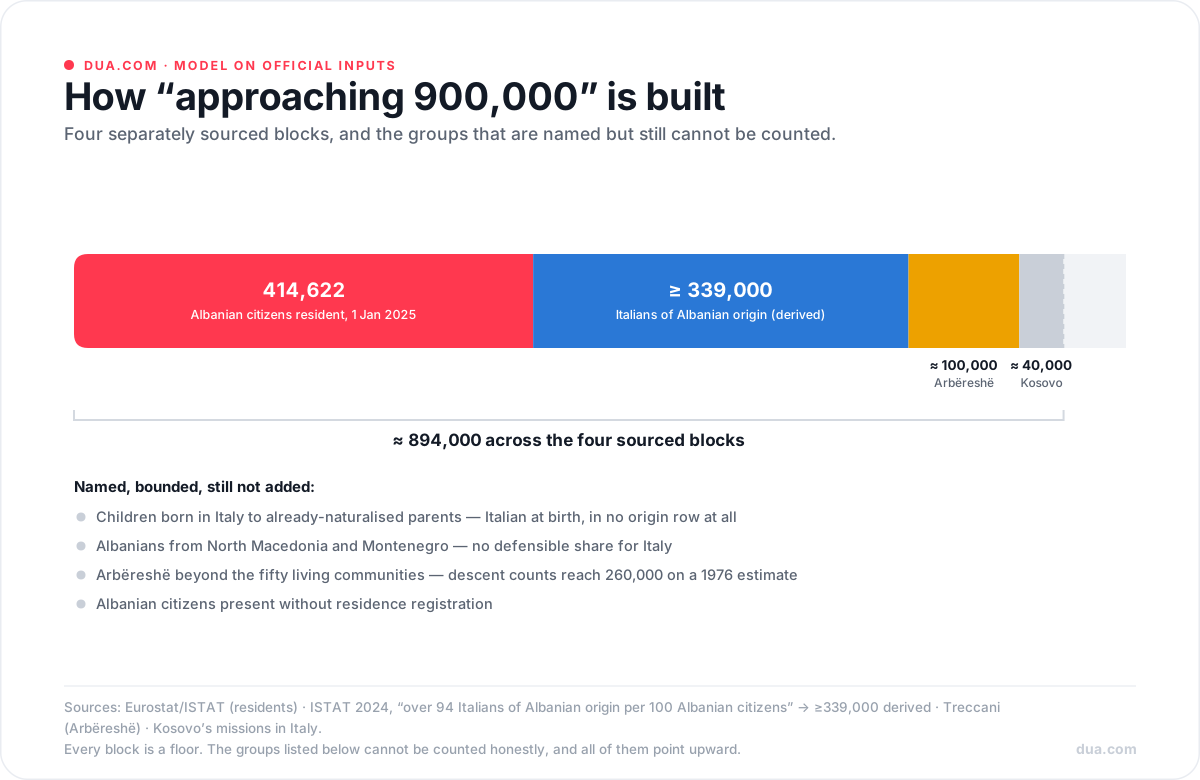
Everything above told the story. This section shows its accounting. Approaching 900,000 is this page’s description of Italy’s full Albanian world. About 754,000 of that comes from two official measures; the rest is two further groups that are separately sourced and, unlike the migration figures, are not in any Italian foreign-population table at all.
The one derivation this page uses
The resident count — 414,622 on 1 January 2025 — is taken as published. The second block is derived, and here is the arithmetic in full view. ISTAT’s October 2025 report finds that Italians of Albanian origin now come to “over 94” for every 100 Albanian citizens regularly present — the highest such ratio among the ten largest communities. Multiply the 360,965 Albanians holding residence permits on 31 December 2024 by 0.94 and the result is at least 339,000 naturalised Italians of Albanian origin. The independent cross-check: summing every published annual acquisition figure from 2008 to 2024 gives 374,751 — some of whom have died or moved on — so the 339,000 floor is conservative from both directions.
The two blocks added beyond the migration
Those two figures describe the community that arrived after 1990. Two further groups are of Albanian origin, are separately sourced, and appear in no Italian foreign-population table — so they are added here rather than left implied. The Arbëreshë contribute about 100,000: the residents of the fifty historic communities, on Treccani’s figure. They enter on the same principle as the naturalised Italians already counted — Italian citizens of Albanian origin — and the page counts residents of those communities rather than the 80,000–90,000 who still speak Arbërisht, because origin, not fluency, is what is being measured. Kosovo’s missions in Italy put their own citizens here at roughly 40,000 — above the 36,180 ISTAT registers as resident on 1 January 2025, the gap being presence that is never registered — a group that is Albanian in language and identity but sits in a different citizenship row.
| Block | Figure | Source |
|---|---|---|
| Albanian citizens resident | 414,622 | ISTAT, 1 January 2025 |
| Italians of Albanian origin | ≥ 339,000 | Derived from ISTAT’s ratio, 31 December 2024 |
| Arbëreshë | ≈ 100,000 | Treccani — residents of the fifty communities |
| Citizens of Kosovo | ≈ 40,000 | Kosovo’s missions in Italy; ISTAT registers 36,180 resident |
| Total | ≈ 894,000 | Approaching 900,000 |
Two honest caveats on the added blocks. Some Kosovo citizens are not ethnic Albanians, and some hold Albanian citizenship as well, so a small overlap with the resident count cannot be ruled out. And counting all residents of the Arbëreshë communities includes people of non-Albanian descent living in those towns. Both effects are small relative to the total and pull in the opposite direction to the uncounted groups below.
What is deliberately left out
| Group | What is known | Why it is not added |
|---|---|---|
| Children born to already-Italian parents | 5,570 Albanian-citizen births in 2024 alone; births to naturalised parents are Italian from birth and appear in no origin row | No official count exists; adding an estimate would be invention |
| Albanians from North Macedonia and Montenegro | Present but small; no Albanian-share data for Italy | No defensible coefficient |
| Arbëreshë beyond the fifty communities | Roughly thirty further towns keep the heritage without the language; counts of descent reach 260,000 on a 1976 estimate | The total counts the fifty living communities only; descent figures are half a century old |
| Unregistered presence | Permit and register data miss short-term and irregular presence | By definition uncounted |
Every one of these groups pushes the figure higher still, and none of them can be counted honestly. That is why the page says approaching 900,000 rather than naming a precise total: 894,000 is what the four sourced blocks come to, and everything left out points upward.
Measures that must never be mixed
Five universes appear on this page, and each is labelled where it is used: residents by citizenship (414,622; anagrafe); non-EU permit holders (360,965; permit registry — excludes the naturalised, includes some non-residents); naturalisation flows (31,643 in 2024) and the derived naturalised stock (≥339,000); Albanian-born business owners (42,076; country of birth, not citizenship); and ethnic-cultural populations — Arbëreshë, Kosovars, self-identified Albanians — which Italian statistics do not measure at all. Rankings differ by universe: Albania is the 2nd nationality among residents but the 3rd non-EU community among permit holders. Where a number on this page disagrees with one you have seen elsewhere, the odds are the two come from different universes.
Frequently asked questions about Albanians in Italy
How many Albanians live in Italy?
Approaching 900,000. Four sourced blocks make up the figure: 414,622 Albanian citizens resident on 1 January 2025; at least 339,000 Italians of Albanian origin, derived from ISTAT’s finding that the naturalised now nearly match the citizens; about 100,000 Arbëreshë in the fifty historic communities; and roughly 40,000 citizens of Kosovo. That comes to about 894,000, before the Italian-born children of naturalised parents, who are Italian at birth and appear in no origin row at all.
Why is the official number of Albanians in Italy falling?
Because the community keeps becoming Italian. The resident count peaked at 488,125 in 2014 and has drifted down to 414,622 — while 343,452 Albanians acquired Italian citizenship between 2012 and 2024. Each new citizen leaves the “Albanian” statistical row without leaving the country. The decline is a bookkeeping effect of integration, not an exodus in reverse.
Who are the Arbëreshë?
Descendants of Albanians who crossed to southern Italy between the mid-fifteenth and mid-eighteenth centuries, the largest waves following the Ottoman conquest after Skanderbeg’s death in 1468. About 100,000 people live in the fifty communities across Calabria, Sicily, Basilicata, Molise, Campania, Puglia and Abruzzo, of whom some 80,000–90,000 still speak Arbërisht — fifteenth-century Tosk Albanian — and the Byzantine rite, organised in the eparchies of Lungro (1919) and Piana degli Albanesi (1937). Since Law 482/1999 they are one of Italy’s twelve protected linguistic minorities.
What happened on 8 August 1991?
The freighter Vlora, seized by a crowd in Durrës harbour, docked in Bari with around 20,000 people aboard — widely described as the largest single-ship arrival of migrants in Italian history. The passengers were held in the Stadio della Vittoria and almost all repatriated within days. Bari later named a square by the port “Largo Sono Persone 8.8.1991” — “They Are People”, the words of its then-mayor Enrico Dalfino.
Where in Italy do most Albanians live?
In the North and Centre — 59.9 percent and 25.4 percent of permit holders respectively. Lombardy leads with 82,397 residents, followed by Emilia-Romagna (55,575) and Tuscany (55,498). But the community’s weight sits in the provinces: Florence and Brescia rival Rome, and Cuneo holds more Albanians than Turin. Only about one in seven lives in the South where the ships first landed.
How many Albanians have become Italian citizens?
374,751 acquisitions were recorded from 2008 to 2024, including 343,452 since 2012 — with roughly 26,000 more in 2025 on provisional figures. Albanians have been Italy’s first nationality for citizenship in most recent years; the series high was 38,129 in 2022. Over 84 percent acquire through residence or transmission to their children, the routes that signal permanence.
Are children born in Italy to Albanian parents Italian?
Not automatically. Italy has no birthright citizenship for children of foreign parents: they become Italian when a parent naturalises, or may elect citizenship at eighteen. In practice the wave of parental naturalisations is carrying the second generation with it — which is why 70.3 percent of Albanian pupils were born in Italy while the “Albanian citizens” statistic keeps shrinking.
Can Albanians hold dual Italian and Albanian citizenship?
Yes. Italian law (Law 91/1992) does not require renouncing a previous citizenship, and Albanian law explicitly permits dual citizenship. Because neither law requires renunciation, Albanians who naturalise in Italy can keep their Albanian citizenship — and since 2025 they can vote in Albanian elections by post, where Italy’s diaspora forms the largest registered bloc in the world.
Which famous Italians have Albanian roots?
Two arrivals, two lists. From the Arbëreshë: Prime Minister Francesco Crispi, Antonio Gramsci (by his own account, of recent Albanian origin), the poet Girolamo De Rada and constitutionalist Costantino Mortati. From the modern diaspora: Sanremo 2018 winner Ermal Meta, Anna Oxa, dancer Kledi Kadiu, tenor Saimir Pirgu, artist Adrian Paci, iGenius founder Uljan Sharka, and a Serie A generation from Igli Tare to Kristjan Asllani.
Do Albanians in Italy still speak Albanian?
The first generation does; the second generation’s Albanian is the community’s main worry, because Italian fluency came unusually fast — many arrivals had already learned it from Italian television watched illegally under communism. Weekend schools in Rome, Parma, Macerata and other cities, supplied with free textbooks by Albania’s Diaspora Publishing Centre, teach the language to Italian-born children. The Arbëreshë, meanwhile, have kept their Albanian for five hundred years.
How connected is the community to Albania?
More physically than any other diaspora: nightly ferries from Bari and Ancona to Durrës, the short Brindisi–Vlorë crossing, and more flight seats to Tirana than from any other country, across 21 Italian airports. Tirana airport handled more than 11 million passengers in 2025 — its busiest reported day fell on 4 August, in the peak of the diaspora summer — and 117,006 people crossed through Durrës port in the first fifteen days of that August.
How do Albanians in Italy meet other Albanians?
Traditionally through family networks, associations, the 28 November celebrations and the summer return to Albania and Kosovo. Increasingly through dua.com, the diaspora’s own platform, where the discovery pool is Albanian from the first profile and Flight Mode lets someone in a provincial Italian town search Milan, Tirana or Pristina. The couples on this page — in Portogruaro, Bressanone and beyond — met exactly that way.