Argentina is the far end of the Albanian world. Two migrations reached it by different roads and overlapped for decades: Arbëreshë from the hill villages of Calabria, who landed as Italians, and men from Korçë and Gjirokastër in Albania itself. Nobody has ever counted their descendants. What holds the community together today is a handful of associations, a small church on the edge of Buenos Aires, a dance group in a meat-packing town, and family memory.
Dora Rapi's mother cried at the parade. When the immigrant festival of Berisso was new, at the end of the 1970s, children marched past in the costumes of the countries their families had left, and she wept. “We would see her cry when the children went by in their costumes,” Rapi told the local news site Berisso Ciudad, in Spanish, in 2013, when she presided over the town's Albanian collectivity.
Both her parents were Albanian. Her father came in 1923, leaving his wife behind, and settled on Calle Nueva York in Berisso, the meat-packing town beside La Plata. Once he and his brother had work at the Swift and Armour plants, they sent for relatives. Two years after he arrived he bought a plot, his countrymen helped him build a long house of corrugated iron and wood, and he sent for his wife; their six children were born in Berisso. In 1979 Rapi took her mother back to Albania. “There they taught me some dances, with a kind of drum,” she said. At home she formed a group of her nephews and nieces, aged eight to ten. “It turned out lovely.”
Albanian dance in Berisso begins there, by her account, and it has outlived the language of the people who brought it. The youth ballet Bashkimi, “unity” in Albanian, still dances every year at the festival for a collectivity that traces itself to a Sociedad Albanesa of 1907, older than the Albanian state.
Berisso is one of three places where Albanian Argentina can still be found. In the capital, migrants from Albania founded an association in 1926 that kept a house in the Barracas district into this century, and Arbëresh patriots from Calabria had founded a society named after Skanderbeg there as early as 1889, by its founder's own account. West of the city, in Luján, families from five Albanian-speaking villages of Calabria built a neighbourhood of their own across the river. The rest is harder to see: Argentina's records register where people were born, and the Arbëreshë were born in Italy.
How many Albanians live in Argentina?
Nobody knows. The census records a person's country of birth, not a family's origin. It found 2,145 residents born in Albania in 1947, while the immigrant generation was alive, and 164 in 2022. The Arbëreshë, born in Italy, were counted as Italians, and the children of both groups as Argentines. The larger figures in circulation, from 20,000 to 40,000, are estimates published without a method; the section on counting, further down, traces each to its source.

Two migrations that share one name
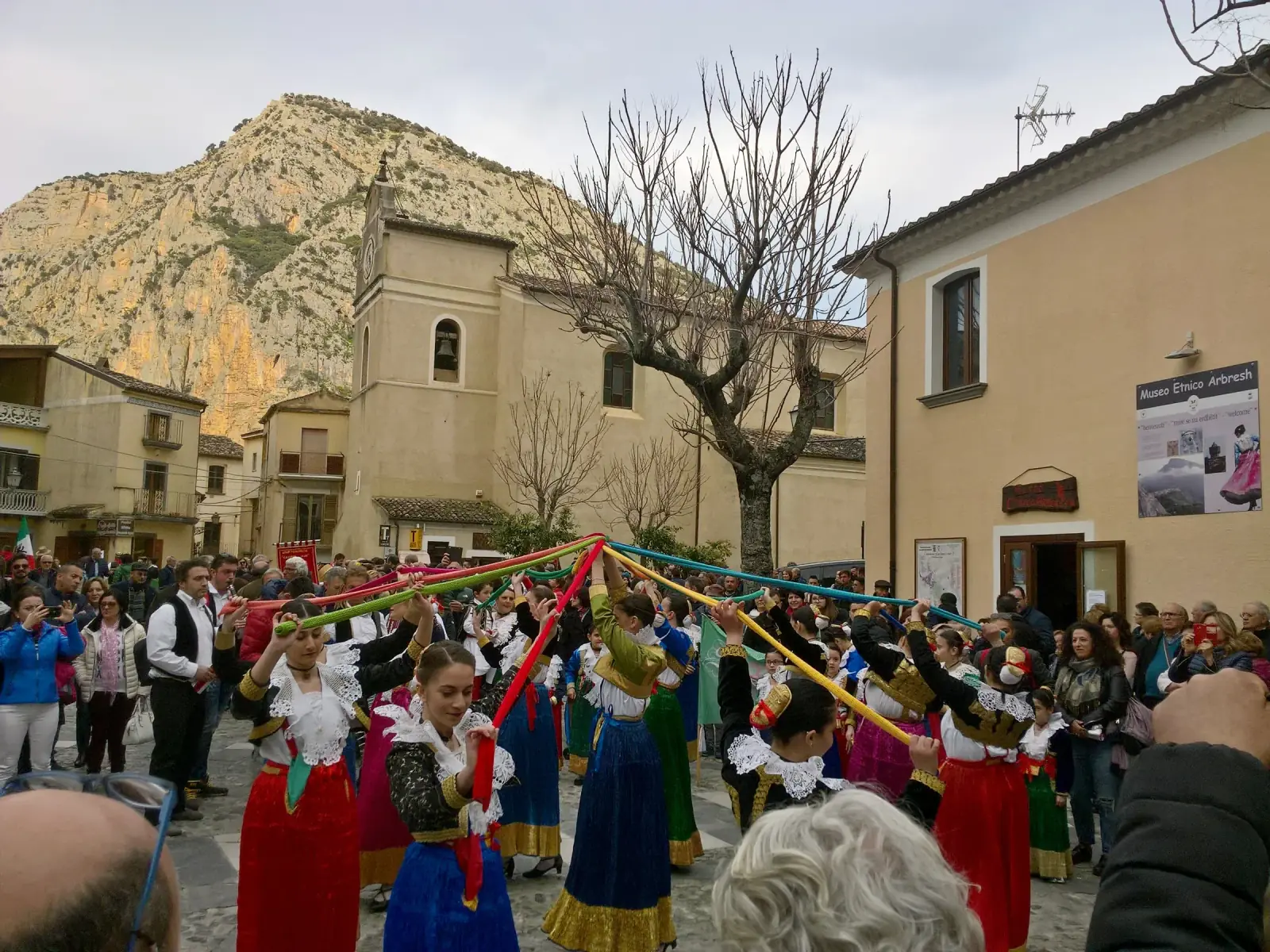
In Spanish both groups are simply albaneses, and that is where most confusion begins. The Arbëreshë are the Italo-Albanians of southern Italy. Their ancestors came from Albania and from Albanian settlements in Greece from the fifteenth century onwards; some fifty towns and villages still speak their language, and many kept the Byzantine rite. When southern Italy emptied towards the Americas, they left with their neighbours, as Italians. They are not migrants from Albania, nor the Albanians who moved to Italy after 1990.
The second group came from Albania itself, mostly from the regions of Korçë and Gjirokastër, in the years around and after independence in 1912. They were few, most were men, and by the account of the Buenos Aires association's president in 1995 about four in five were Orthodox Christians. In Argentina the two met. A visitor to that association's house in 2018 was told that Albanians and Arbëreshë gathered there together for the independence days of Albania, of Kosovo and of Argentina.
Buenos Aires, 1889 to 1913: the patriots
Their earliest traces in the capital are political. Orazio Irianni, a teacher and journalist from the Arbëresh town of Lungro, had lived in Buenos Aires since about 1880. In September 1889, according to the historian Francesco Fabbricatore, writing in Italian and drawing on Irianni's own account of 1911, he founded a mutual-aid society of “Albanians of Italy abroad” and named it after Skanderbeg. In June 1904 he became president of an Albanian Committee, which called all the Albanians of Buenos Aires to a public meeting that July.
He also published, in Italian. The National Library of Albania keeps the fourth issue of his monthly La Questione Albanese, dated May 1905, and the first issue of Lega Albanese, “monitor of the Albanian national movement”, dated 27 February 1907 and edited from Calle Chile 2080. The paper promised to fight for “the Albania of the Albanians”; the library records no second issue. Its Albanian rendering, Lidhja Shqiptare, is now sometimes taken for the name of a society founded that year, of which no document has come to light.
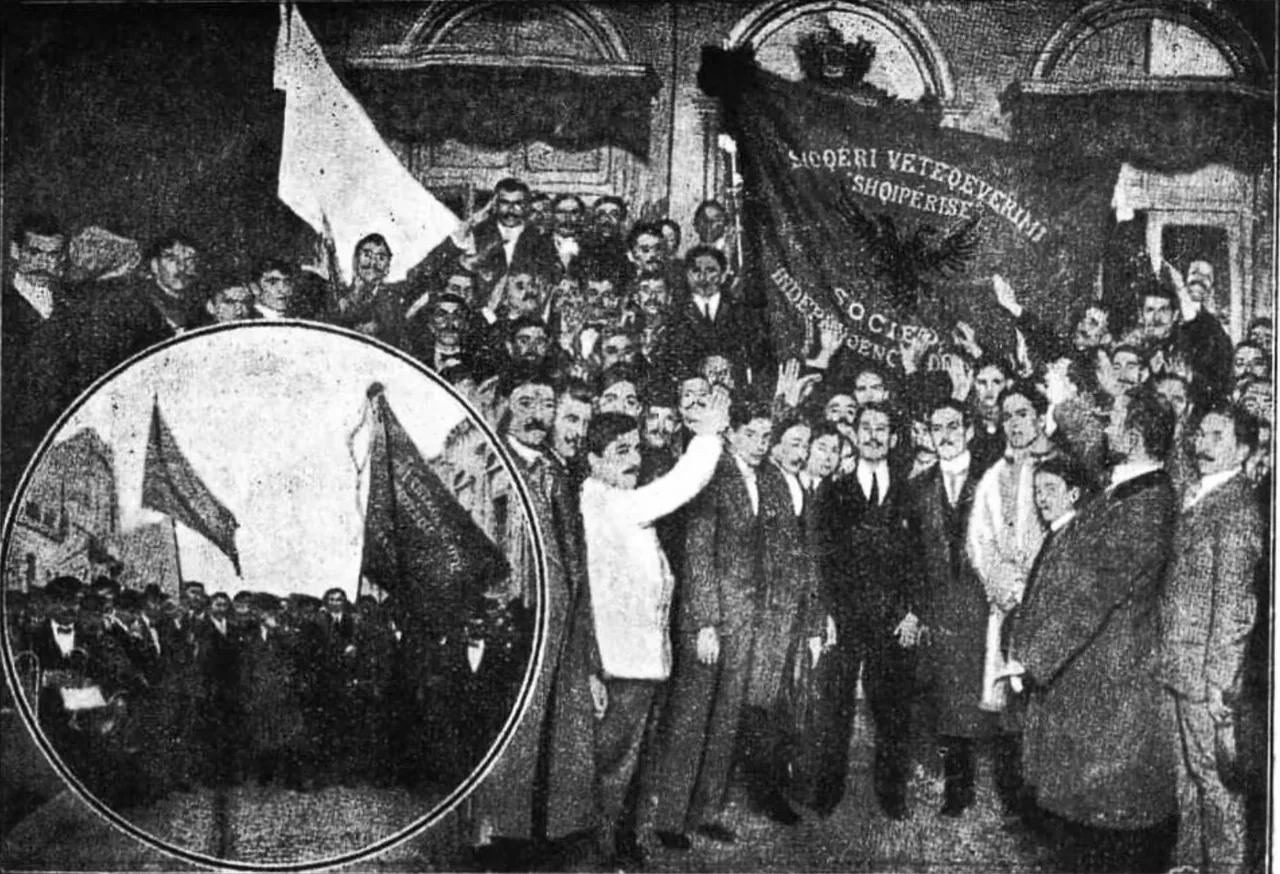
When Albania declared its independence in November 1912, the Buenos Aires weekly Caras y Caretas followed the city's Albanians, in Spanish. On 14 December it showed a speaker addressing them at a meeting held at the society Patria e Lavoro “to support Albanian independence from here”. On 7 June 1913 it reported that the Albanians resident in Buenos Aires had formed a patriotic society “whose first act was the oath of loyalty to the flag of Albania”. The magazine did not say whether they had come from Albania or from Calabria. Both were in the city by then: Arbëreshë organised since 1889, by Fabbricatore's account, and the first migrants from Albania since 1912, by Luca's.
The Arbëreshë: Albanians who arrived as Italians
They came inside the great migration from Calabria. The historian Pantaleone Sergi shows that from 1876 to 1915 Cosenza was the Calabrian province that sent most emigrants to Argentina, and he notes among them, in Italian, “a sizeable contingent of Calabro-Albanians”. Mario Bolognari, who studied the Arbëresh villages of Calabria, adds the later rhythm: after the First World War and until 1940 the largest number of Arbëresh emigrants left for Argentina, families followed fathers and husbands after 1945, and the flow stopped in 1952 and 1953.
Luján: the neighbourhood across the river
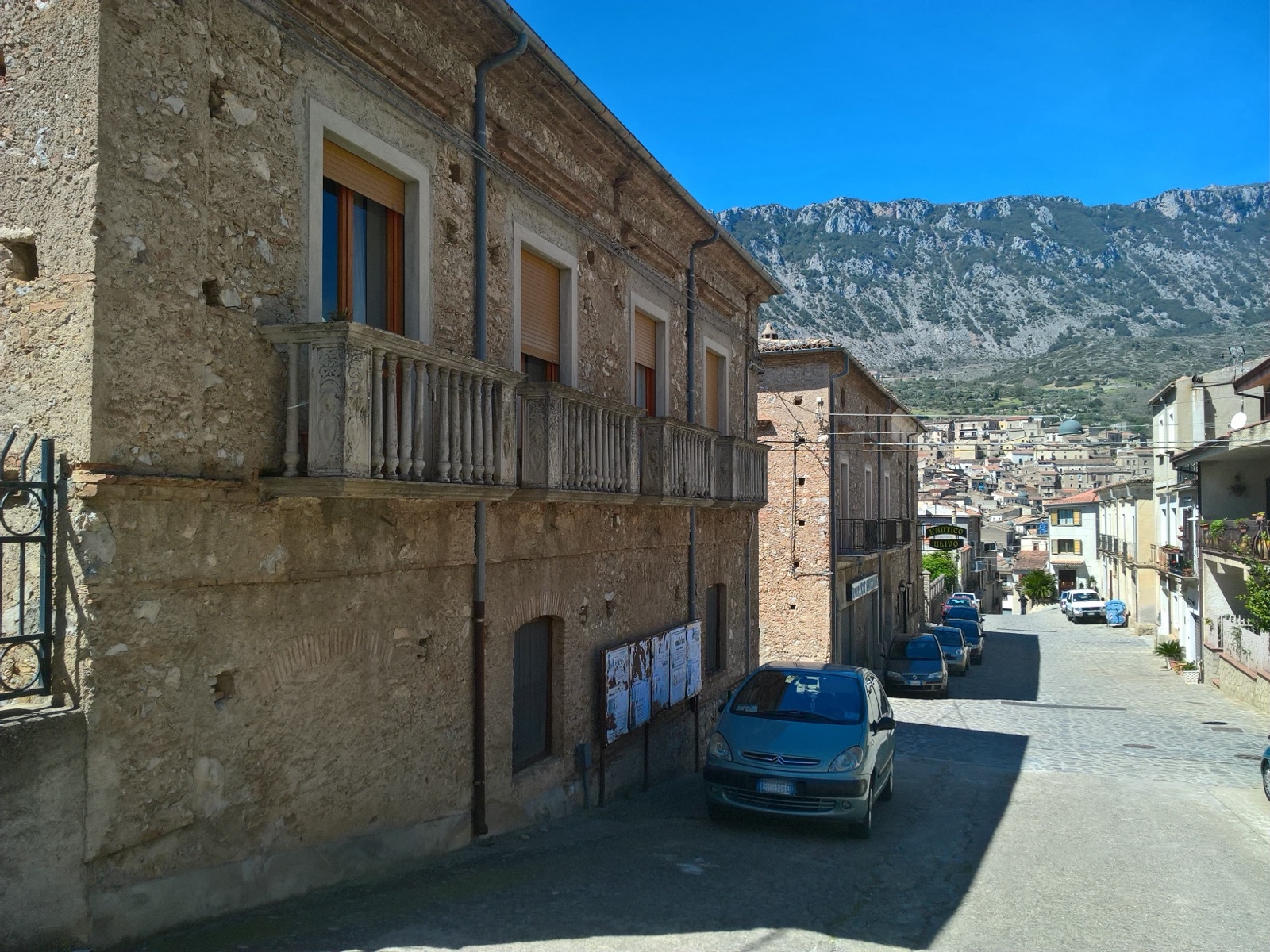
The best-documented Albanian-speaking community in Argentine history is the one in Luján, because the historian Dedier Norberto Marquiegui, of the National University of Luján, reconstructed it from the marriage and birth registers of the civil registry. Luján in the 1890s was a farming district with a growing town and a basilica under construction. Its Italians numbered 2,567 in 1895 and 3,406 in 1914. From 1895, Marquiegui writes, southerners began to stand out among the new arrivals, and among them the group that ended up the most numerous was the Italo-Albanians of Cosenza.
They came from five neighbouring villages that fit inside a circle with a radius of ten kilometres: San Demetrio Corone, Santa Sofia d'Epiro, Vaccarizzo Albanese, Macchia Albanese and San Cosmo Albanese. They came by chain migration, each family following relatives who had gone ahead. Almost all of them, on arrival, spoke only Arbëresh.

As the town grew, they built their homes in a new quarter on the far bank of the River Luján. Between 1905 and 1920, when Santa Elena took its final shape, 65% of the Italo-Albanians who arrived in Luján settled there. The river kept the quarter apart from the town, and so did the language. Newcomers depended on fellow villagers who had arrived before them for every contact with the world outside, including work.
The work was the hardest and least secure on offer. At the time of their marriage, 68.6% of the Italo-Albanian men in the registers of 1889 to 1920 were unskilled manual labourers and 13.7% were small farmers. Not one was a clerk or a professional. Marquiegui compares them with another chain migration to the same town, from Soria in Spain, whose men were mostly shopkeepers and traders. The Spaniards had arrived earlier, when the good places were still open.

The numbers describe a start, not a verdict. The elderly Italo-Albanians whom Marquiegui interviewed did not remember those years as stagnation. They had done the same work as their fathers, but for better pay, and it had brought what the village could not: a house of their own and schooling for their children. Between the wars a large group of Arbëresh-speaking workers from San Demetrio Corone and San Cosmo Albanese was hired by the Algodonera Flandria cotton mill, an important employer in the district.
In the town's Italian life they were present without quite belonging. They supplied many members of the southerners' mutual-aid society, founded in 1897, though Marquiegui, writing in Spanish, suspects that the membership of its unskilled Italo-Albanians was “more nominal than anything”, the work of traders seeking influence in it. Italians in Luján, he writes, first described themselves by origin, as Genoese, Calabrians or Italo-Albanians, and by the early 1990s their descendants had revived the patron-saint festivities of San Demetrio in the town.
Buenos Aires: one association for each village
In the capital the Arbëreshë organised by village of origin. The Frascineto Association was founded in 1955 by families from Frascineto, in the province of Cosenza. “I always say that I am Albanian, Italian-Argentine and Latin-American, but the most important thing for me is my Albanian blood,” María Colacino told the reporter Tringa Berisha, who quoted her in English for Kosovo 2.0 in 2014. Her brother Ludovico and she, both born in the village, still spoke Arbëresh with each other. He had left at the age of five; his first words were Arbëresh, and he met the Italian language only in Argentina.
Ludovico said they ate kurskull and petulla on every national holiday, and one member kept her grandmother's costume “as good as new”. Only relatives of people from Frascineto and their spouses could become active members. Its secretary and one of its founders had married into the community and learned its ways, and both feared that the rule would end the association if their children did not take it up.
Bishop Ercole Lupinacci of Lungro, the Italo-Albanian diocese in Calabria, visited in November 2001. He found the Frascineto Association in modernised premises of its own with a copy of the village's statue of the Assumption, an association of San Benedetto Ullano with its Madonna of Good Counsel, and emigrants from Firmo, Lungro, Acquaformosa, Cerzeto and San Martino di Finita.
From Korçë and Gjirokastër: the migrants from Albania
The migration from Albania was short, male and early. Its fullest account is a single interview, given in 1995 to the journalist Larry Luxner by Nicolás Luca, a Buenos Aires architect who was then president of the Skenderbeu association and the son of immigrants from Gjirokastër.
By Luca's account the first Albanians, his uncle among them, reached Buenos Aires in 1912. More followed in the 1920s, when King Zog's Albania had no work to offer and relatives in Argentina sent word. Most came from Korçë and Gjirokastër, and about 80% were Orthodox Christians. Men who arrived without a relative to receive them were often sent by the authorities to the province of Río Negro or north to Misiones, Chaco and Corrientes to cut timber, and most of them made their way to Buenos Aires in the end. After 1930, he said, the immigration stopped and Albanians married Argentines.
The statistics fit that outline. The 73 Albanian nationals recorded on arrival between 1921 and 1924 were all men, and in 1947 men were still nearly three quarters of the Albania-born; why the census found so many more people than the arrival tables is explained in the section on counting.
Berisso: a society older than the Albanian state
Berisso grew out of its slaughterhouses. A cold-storage plant opened there in 1904, the Swift company bought it in 1907, and Armour built a second plant a few blocks away in 1915. The men who worked in them came from across Europe and the Middle East, and they organised by origin.
The first to organise, writes the historian María Eugenia Costa, were the Albanians, who founded the Sociedad Albanesa de Berisso in 1907, the year Swift arrived. The society gave its countrymen what she calls moral support and helped them to find work in the meat-packing plants or in the port of La Plata. The researcher Nicolás Herrera, who has studied the town's festival, puts the same society first in his list of twenty-one ethnic associations created in Berisso between 1907 and 1936.
Who its founders were, the published sources do not say. Recent Albanian-language articles call them Arbëreshë without citing a source.
Buenos Aires: from “Hope” to Skanderbeg
The Albanians of the capital founded their association on 1 November 1926 under the name Shpresa, “Hope”, and renamed it after Skanderbeg around 1933. Both dates come from a single account, published in the Tirana daily Panorama in 2024 by Mimoza Dajçi, who visited the association while she was in Buenos Aires for the G20 meetings of 2018.
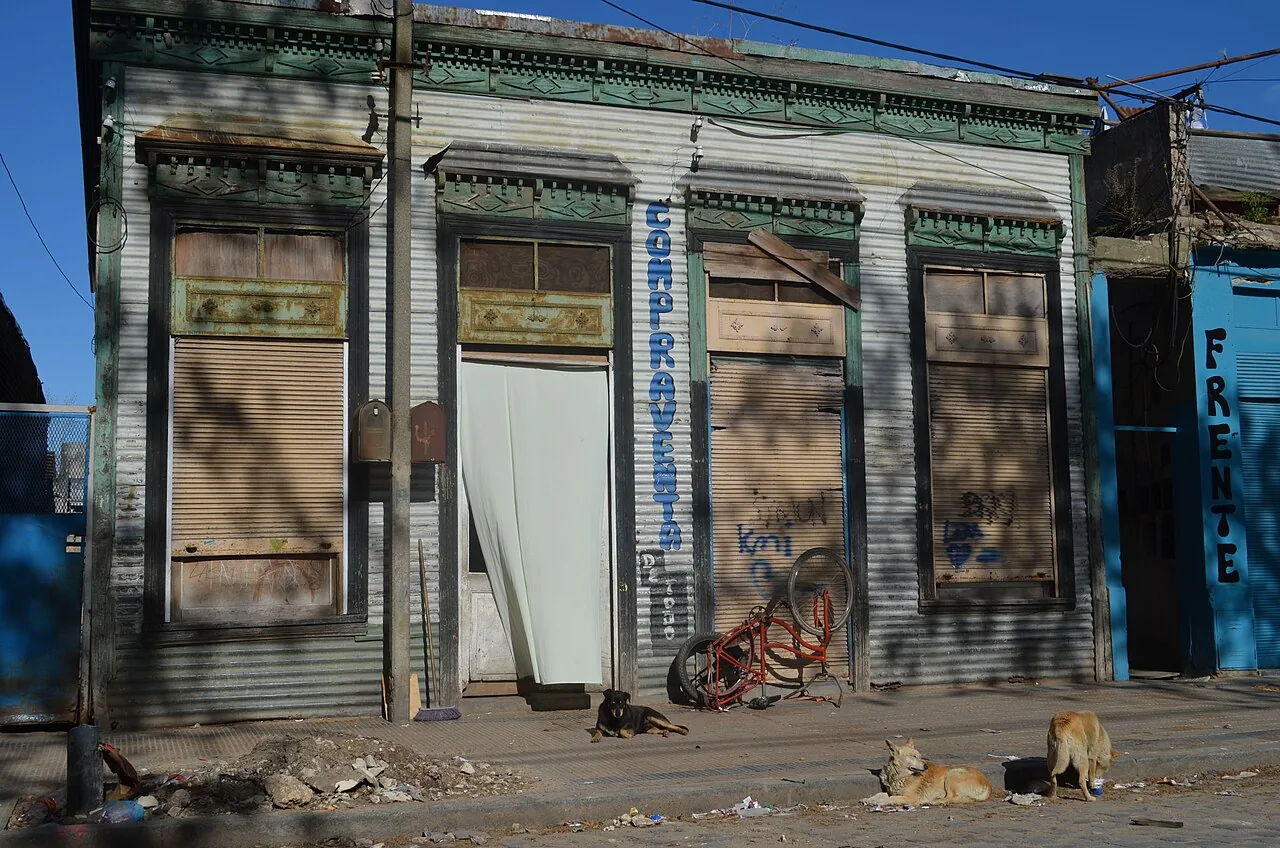
The Asociación Patriótica Albanesa Skenderbeu has its house at Gonçalves Dias 429 in Barracas, a working-class district in the south of the city. Luxner described it in 1995 as an old house with a fading mural of Skanderbeg leading his men against the Ottomans and a plaque that few passers-by could read. The association let the building to other groups and met there two or three times a year. Four years later Luca told La Nación that it celebrated Flag Day every year on 29 November with songs and traditional food, and managed to bring together between 60 and 70 people.
Dajçi found the house in the care of Kristofor Ndreu, a lawyer and former employee of the Albanian embassy, whose wife Efti worked as a cellist at a university in Buenos Aires. A bust of Skanderbeg cast in bronze greeted visitors at the door, a second bust stood at the head of the hall, and Albanian flags without the communist-era star hung beside women's national costumes.
After 1945: exiles and late arrivals
The communist takeover in Albania produced a different kind of migrant. Filip Llupi, born in Shkodër, had taken his doctorate in Vienna and had been headmaster of the Nëna Mbretëreshë school in Tirana. In 1943 the government sent him back to Vienna to teach a hundred Albanian students. By the only account of it, which Dajçi published in Panorama in 2024, he also carried a delicate brief. Germany wanted to send the students of Vienna to the war in Russia, the Albanians among them, and Llupi negotiated work contracts in the city's factories that let the Albanian students go on studying instead.
After the war he did not go home. “When father understood that Albania had ended up worse off than before the war,” his son Genc told Dajçi, in Albanian, “we decided as a family to travel to Argentina, where my uncle, my mother's brother, was waiting for us.” The family arrived in 1948 by way of Italy, and Filip Llupi died in 1984. In 2018 Genc was being asked to lead the association again, and he and his sister Etleva still spoke Albanian.
The embassy that communist Albania kept in Buenos Aires from the 1970s touched the community only at its edge. Members went when they were invited, Luca recalled, and did not talk politics. After 1990 a few people came the other way. The actor Minella Borova, from Korçë, moved to Buenos Aires in 1993 on an invitation from his wife's aunt, who had emigrated before the Second World War, and lived there until his death twenty years later. A former Albanian diplomat was living in the association's house when Luxner visited in 1995.
A little movement continues: the Albania-born more than doubled between 2010 and 2022, from 77 to 164, though the census does not record when anyone came or why. For Kosovo the record is thinner still. In March 1999, as refugees crossed into Albania, Luca told La Nación that almost everyone in the association had relatives in Kosovo, and the Albanian embassy collected medicines on Avenida del Libertador. On 9 April 1999 the Argentine government offered to receive 100 families of Kosovo Albanians. Whether any came, we could not establish.
A timeline of Albanian Argentina
The two migrations overlapped from 1912 to about 1930. These are the dates for which a document exists.
- 1889: a Skanderbeg societyOrazio Irianni of Lungro founds a mutual-aid society of Italo-Albanians in Buenos Aires, by his own later account.
- From 1895: Cosenza comes to LujánItalo-Albanians become the largest southern Italian group in the town.
- 1905–1907: an Albanian pressIrianni publishes La Questione Albanese and Lega Albanese in Buenos Aires.
- 1907: Sociedad Albanesa, BerissoThe first immigrant society of the meat-packing town is founded.
- 1912: the first arrivals from AlbaniaBy one account; most who follow come from Korçë and Gjirokastër.
- 1913: an oath to the flagAlbanians in Buenos Aires form a patriotic society and swear loyalty to the flag of the new state.
- 1921–1924: 73 menThe only years in the arrival summary for 1857 to 1924 that list Albanian nationals.
- 1926: Shpresa, later SkenderbeuThe Albanians of Buenos Aires found an association, renamed after Skanderbeg around 1933.
- 1947: 2,145 born in AlbaniaThe census counts the immigrant generation, nearly three quarters of them men.
- 1948: the Llupi familyExiles from communist Albania arrive by way of Italy.
- 1952–1953: the Arbëresh flow endsEmigration from the villages of Calabria to Argentina stops.
- 1955: Frascineto AssociationOne village's families found their own association.
- 1973: diplomatic relationsAlbania and Argentina establish relations on 5 October.
- 1979: dances from AlbaniaDora Rapi brings dances home to Berisso; its Albanian association co-founds the festival's organising body.
- 1996: Sabato in TiranaThe novelist receives a prize in his mother's ancestral country.
- 2001: a Byzantine churchThe church of Saint George in Luis Guillón is consecrated on 11 November.
- 2013: Ballet BashkimiThe youth ballet of the Berisso collectivity is formed on 23 August.
- 2025: Casa AlbanesaThe collectivity moves into the first seat of its own.
Where Albanian Argentina is
Almost all of it lies in and around Buenos Aires. Archbishop Alejandro Greco, of whom more below, explained it with the Argentine saying that God is everywhere but holds office hours in Buenos Aires.

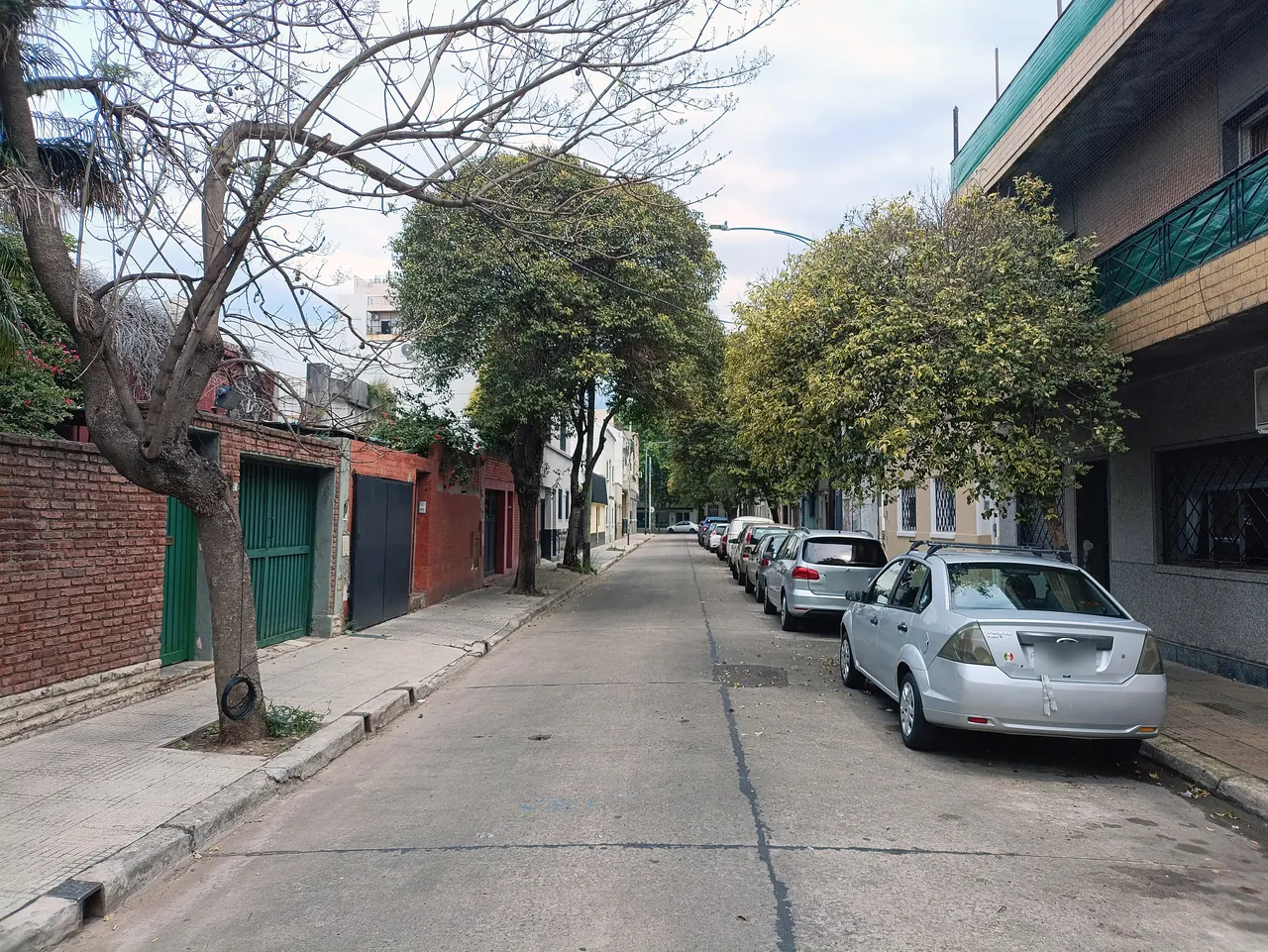
In the capital the points are scattered: the Skenderbeu house in Barracas, the Frascineto Association in Palermo, and a short street in Monte Castro called Pasaje Albania. La Nación wrote in 2017 that the passage honours the Albanians who came to Argentina during the First World War and that the Italian government had 44 small houses built there. The article gives no source, and two readings fit it. An Italian hand would suit Arbëreshë, who were Italian citizens; but on 3 June 1917 Italy also proclaimed Albania independent under its own protection, so it would suit migrants from Albania as well. Both readings are inferences.
South of the city, in Luis Guillón, stands the Arbëreshë's church; down the river, beside La Plata, is Berisso; to the west are Luján and, beyond it, Rojas, the town in the pampas where Ernesto Sabato's parents settled.
Outside that region the evidence thins. Luxner's report of 1995, in English, placed “a few families” in Rosario and Córdoba, and the 2022 census found people born in Albania in twenty of the twenty-four jurisdictions, usually fewer than ten in each.
Faith: a Byzantine church on the edge of Buenos Aires
Many Arbëreshë are Catholics of the Byzantine rite, and in Argentina they had no church of their own for most of a century. The one they have now was consecrated in 2001.
In the 1990s Bishop Lupinacci answered the pressing requests of the Arbëreshë of Buenos Aires and opened a mission there, with the goodwill of the city's archbishops, Cardinal Antonio Quarracino and then Cardinal Jorge Mario Bergoglio, the future Pope Francis, who was in law the bishop of Eastern-rite Catholics in Argentina without a bishop of their own rite.
The church of San Giorgio Megalomartire, Saint George the Great Martyr, stands in Luis Guillón on land that the municipality of Esteban Echeverría donated to the diocese of Lungro through the association of emigrants from Firmo. Lupinacci consecrated it on Sunday 11 November 2001, in Spanish, with icons by the iconographer Josif Droboniku. Four hundred people stayed for lunch, and he returned in 2008 to bless the rectory. The diocese still lists the church as its chaplaincy for the Italo-Albanians of Buenos Aires. In 2013 Papàs Elia Hagi, whom Lupinacci had asked to look after them from time to time, described in Italian the faithful “who have not forgotten their origins and, for the love of their Byzantine church, travel many kilometres to gather and pray”. By the latest published accounts, of 2020 and 2021, a Ukrainian priest, Papàs Nazariy Kashchak, celebrates the Divine Liturgy for them once a month, and on other Sundays the church serves Latin-rite Catholics of the neighbourhood.
The migrants from Albania were mostly Orthodox, and they left no parish on record. No source describes Muslim religious life among them either, though by Luca's figure about one migrant in five was not Orthodox.
The most visible Orthodox voice of recent years came from the Arbëresh side. Alejandro Greco was the son of a man from San Benedetto Ullano who had arrived in 1950. He led a small Orthodox church which, by his account, descends from the one that Fan Noli founded in the United States and has no institutional ties to the Orthodox Church of Albania. He appeared in public with a scarf in the Albanian national colours, said some of the prayers in Albanian and the rest in Spanish, and died in April 2025.
Language, food and dance: what survives
The language went first. In Luján before the First World War almost every newcomer spoke only Arbëresh. “Those who were born here learned the customs and traditions, but didn't learn Albanian,” Luca told Luxner in 1995, when by his estimate fewer than fifty Albanians in Argentina could still speak it; in 1999 he said that 80% of the immigrants' children and grandchildren could not.
The loss divided families within a generation. Teki Bekolli, from the Albanian village of Floq, emigrated in the 1910s, worked as a foreman on the sewers of Buenos Aires until a crane's steel bucket crippled him, married a Spanish woman, Pura, and later presided over the Skenderbeu society. On a visit to Tirana in 1982 he asked his nephew who would keep the family in touch once he was dead. “They do not know Albanian and you do not know Spanish,” he said, by the nephew's memoir of 2021, written in Albanian, and he left him an Albanian–Spanish dictionary that he had compiled himself with the help of a friend at the Albanian embassy.
In 2019 Greco said that much of the language had been lost. He was teaching himself standard Albanian, since there was nobody to teach it, and found that the Arbëresh he had heard from his father was not understood when he visited Albania in 2014. What his community asked of Albania and Kosovo was modest: a dictionary between Albanian and Spanish, a course, and one day a teacher. The Endangered Language Alliance in New York, which records Arbëresh speakers in the United States, has said that it would like to extend its archive to Argentina.
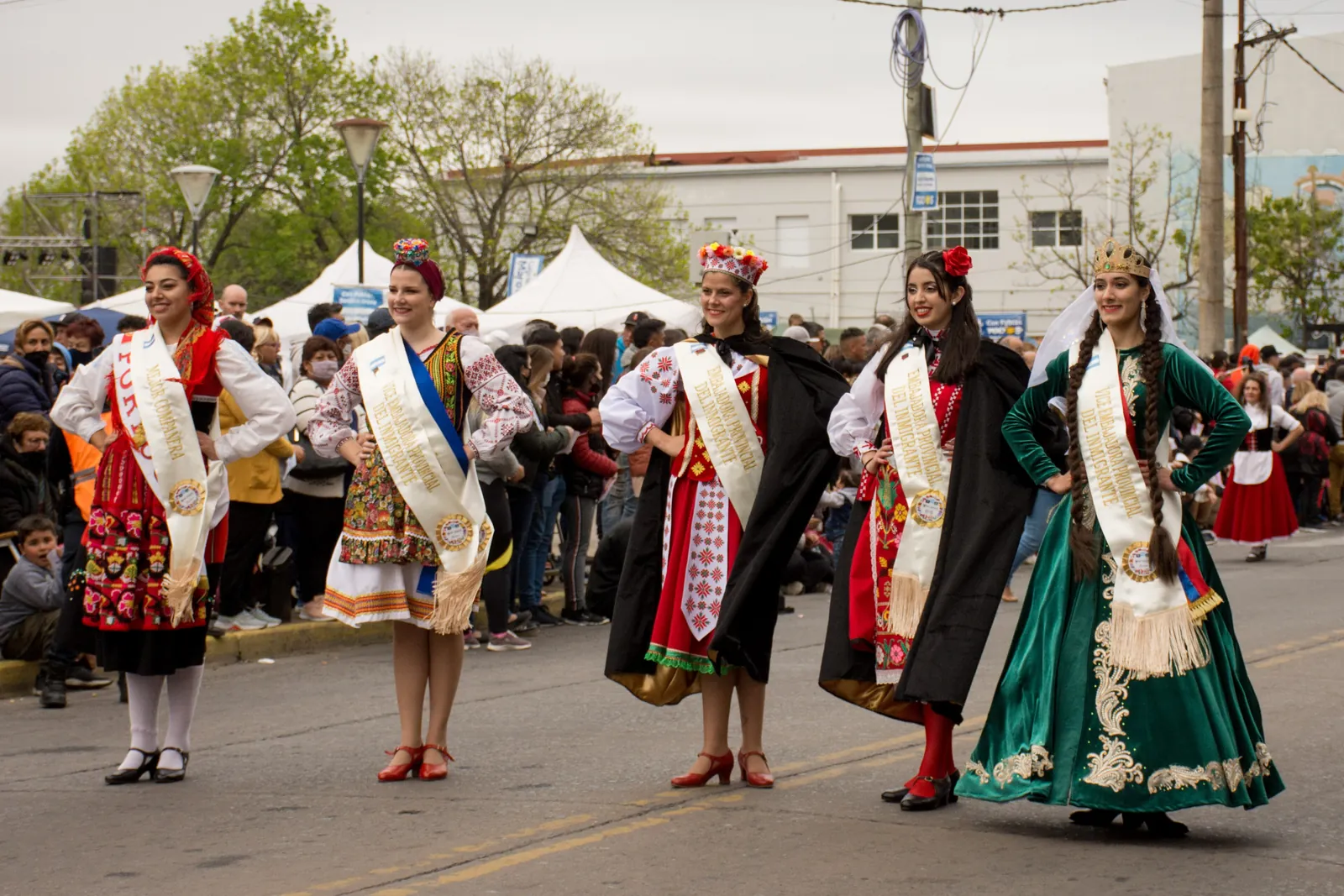
Food and dance have lasted longer, as they usually do. At the Berisso festival the Albanian stand sells byrek, which Rapi described as layers of pastry with chard, ricotta and cheese, and baklava, and one of the dances is performed in the fustanella, the pleated kilt, with a waistcoat embroidered in gold thread.
The calendar has kept its own dates. The collectivity in Berisso crowns its cultural representative each year before the festival, and in 2022 the Albanian news site Diaspora Shqiptare reported that a young woman from the collectivity, Julinda Ibraj, had been chosen Queen of the Immigrants two years earlier.
Ernesto Sabato and other names
The best-known Argentine of Albanian descent is the novelist Ernesto Sabato (1911–2011), and the evidence is his own. In his memoir Antes del fin he writes that his father descended from Italian mountain people and that his mother belonged to “una antigua familia albanesa”, an old Albanian family.
His biographers Pablo Morosi and Sandra Di Luca date her birth to 1874 and place it in San Martino di Finita, an Arbëresh village in the province of Cosenza. Giovannina Ferrari, known in Argentina as Juana María, married Francesco Sabato of Fuscaldo there on 8 June 1893, according to the municipal register they cite. The couple settled in Rojas, where Ernesto was born in 1911.
Sabato told the Albanian writer Luan Rama that his mother had lived with the nostalgia of her ancestors and always spoke Albanian with her brother. In April 1996, at the age of 84, he travelled to Tirana to receive a prize named after Ismail Kadare. A poet handed him an urn of earth from his mother's village. “A quarter of my blood is Albanian,” he told the Albanian news agency, which reported it in Albanian, though his memoir counts his mother's whole family as Albanian; the report does not explain the difference. The Argentine Senate recorded its satisfaction at the award in a declaration approved on 26 June 1996.
In the same memoir, walking along the river in Buenos Aires, Sabato lists the peoples who crossed it in the last years of the nineteenth century, driven by hunger: Spaniards, Italians, Jews, Poles, Albanians, Russians, Germans.
Other documented names
- Nicolás Luca, architect, son of immigrants from Gjirokastër and president of the Skenderbeu association in the 1990s. When he travelled to Albania in 1994 he took a cassette of tango and some yerba mate.
- Tomás Guidara, defender of Club Atlético Huracán and former Argentine youth international. In January 2026, in remarks reported in Albanian, he said that he was in contact with the Albanian football federation and that he knew “very little” about his Albanian ancestry but wanted to learn more.
Lists that circulate online go much further, attributing Arbëresh roots to tango composers, presenters, footballers and even a nineteenth-century president on the strength of a surname. A surname is not evidence, and those names are left out here.
Ties with Albania, Kosovo and Calabria
The states are far apart, and the links that work are personal. Albania and Argentina established diplomatic relations on 5 October 1973. Albania kept an embassy in Buenos Aires from the 1970s, closed it in 1991 and 1992 to save money and reopened it in 1994 on Avenida del Libertador. It has since closed again. “Few as we Albanians in Argentina are, we are very upset that the Albanian state closed the embassy in Buenos Aires some years ago,” Genc Llupi told Dajçi in 2018. Albania's foreign ministry states that the country is now represented in Argentina by a non-resident ambassador in Brazil.
The arrangement is mirrored on the other side. Argentina's ambassador in Rome is also its ambassador to Albania, under a decree of 25 September 2024 that added the Albanian post to his existing one. Argentina's foreign ministry lists an honorary consulate of Albania in La Plata, with jurisdiction over the whole country, and gives the post of honorary consul as vacant.
Argentina has not recognised Kosovo. In February 2008 its foreign minister, Jorge Taiana, referred to United Nations Security Council Resolution 1244 and the principle of territorial integrity, and the position has not changed since. We record the fact and take no view on it. In practice it means that a Kosovo passport holder needs a travel certificate from an Argentine consulate to enter the country; the directory below gives the details.
The warmer ties run through families and churches: Bishop Lupinacci's visits of 1992, 2001 and 2008, Rapi's journey of 1979, Sabato's of 1996, Greco's of 2014. They also run the other way. In Lungro, the Arbëresh town that gives the diocese its name, emigrants returning from Argentina brought home the habit of drinking mate some 140 years ago, La Nación reported in August 2026, and the town held its twelfth mate festival on 31 July and 1 August. “When the people of Lungro went to Argentina as immigrants, they quickly took up the country's traditions, mate above all,” Anna Stratigò, who founded the town's Academia del Mate, told La Nación in Spanish. In October 2025 the Albanian broadcaster SCAN aired a report, in Albanian, on “the unknown history of the Albanians of Argentina”.
Counting Albanian Argentina
Every figure below is about where people were born, not about descent. As the historian Dedier Norberto Marquiegui has observed, Argentina's censuses work only with national categories. The national statistics office, INDEC, publishes the answers in its public census database: 66 people born in Albania in 2001 (29 men and 37 women), 77 in 2010 (28 men and 49 women) and 164 in 2022 (74 men and 90 women). The 2022 database covers people living in private homes, so that count is a floor. Of the 164, 64 lived in the province of Buenos Aires, 29 in the City of Buenos Aires and 16 in Santa Fe. The remaining 55 were spread across seventeen other provinces.
The census of 10 May 1947, as compiled in the United Nations Demographic Yearbook 1956, counted 2,145 residents born in Albania: 1,578 men and 567 women. No other published count of the immigrant generation while it was alive has come to light. Their children and grandchildren, born in Argentina, never entered the statistic.
Kosovo is harder still. The 2001 census had a line for people born in Kosovo and found four, all of them in the City of Buenos Aires. The 2010 and 2022 country lists have no such line, so anyone born in Kosovo is filed under another label and cannot be identified. North Macedonia has its own line, with 31 people in 2001, 32 in 2010 and 39 in 2022, but a birthplace says nothing about whether a person is Albanian.
Inside 2.6 million Italians
The Arbëreshë are invisible for a different reason. They arrived with Italian papers, and the Argentine state recorded them as Italians. The immigration service's own statistical summary for 1857 to 1924 counts 5,481,276 second- and third-class immigrants from overseas. Italians were 47.5% of them; the period totals in the same volume add up to 2,604,029 Italian arrivals. No table separates the Albanian-speaking villages of Calabria from the rest.
“Albanians” appear as a nationality only in the tables for 1921 to 1924, after Albania became a state. Among second- and third-class immigrants from overseas they number 13 in 1921, two in 1922, 51 in 1923 and seven in 1924. All 73 were men.

Why 73 arrivals and 2,145 residents
The 73 men of 1921 to 1924 cannot be the 2,145 people of 1947, and the 1925 summary itself shows why. It ends in 1924, while Luca dated the end of the migration to about 1930. It counts only second- and third-class passengers from overseas. And it can list Albanians only once Albania existed: before 1912 migrants from Albania were Ottoman subjects, filed with all the others under “Otomanos en general (Turcos)”, a heading that rose from 672 arrivals in the 1870s to 66,558 in 1901 to 1910, then 59,272 in 1911 to 1920. How many Albanians it holds, or how many came in the 1910s on another state's papers or among the 38,799 “Varios” of those years, the tables do not say; that part is inference. The 1947 census asked where people were born, so it counted everyone still living in Argentina who gave Albania as their birthplace, whatever papers they had arrived on.
The estimates, and where they come from
Because no count of descendants exists, round numbers have filled the gap. Each can be traced back to a single sentence.
| Figure | What it describes, and who said it |
|---|---|
| “around 40,000” | Albanian immigrants, most of them Arbëreshë from Italy. The Albanian ethnographer Mark Tirta (1999), as reported by the migration scholar Julie Vullnetari in 2007; no method is given. |
| “20,000 to 30,000” | Italo-Albanians who arrived “at the beginning of the century”. One unattributed sentence in La Nación, 31 March 1999, which Spanish-language Wikipedia now presents as an estimate of descendants. |
| “150 families” | Albanian families in Argentina, according to Nicolás Luca of the Skenderbeu association in the same report. |
| “300 or so” | Albanians “left in Argentina”, in Larry Luxner's report in the Albanian-American paper Illyria, 5 June 1995. |
| “thousands” | People of Albanian descent in South America, according to Archbishop Alejandro Greco in December 2019. |
Albania's own statistics office gives no number: its report Diaspora in Figures says only that the community grew out of the Arbëresh diaspora and settled mostly in Buenos Aires.
Our own inference is modest. The descendants of these migrations must number in the thousands: more than two thousand people born in Albania were alive in Argentina in 1947, and the district of Luján alone had 3,406 Italian residents in 1914, among whom the historian who studied them found the Italo-Albanians of Cosenza to be the largest southern group. Any national total beyond that would be a guess, and we do not make one.
The community today
Albanian Argentina is small, old and not finished. Its largest generation, the Albania-born of the 1947 census, is gone, and the Arbëreshë who learned the language as children are old. Of the four institutions this page follows, the church had a monthly liturgy at last report, in 2020 and 2021, and the collectivity in Berisso is visibly gaining ground; the other two cannot be shown to be active.
Colectividad Albanesa Bashkimi, Berisso
Berisso was declared Provincial Capital of the Immigrant in 1978 and held its first festival that year. The Asociación de Entidades Extranjeras, which has organised the Fiesta Provincial del Inmigrante ever since, was created in 1979 by eleven associations. Herrera's list of the founders begins with the Asociación Patriótica Albanesa de Berisso.
Rapi's group passed to her sister Sofía when Rapi moved to Ushuaia. The present youth ballet, Bashkimi, was formed on 23 August 2013, and a children's ballet, Lullezoj, dances beside it. By 2025 they had spent three years rehearsing in the hall of an Italian association, the Ital Lazio, and held dinners and coronations at the town's Arab club, the Hogar Árabe.
In 2024 a family close to one of the dancers donated a house, and in 2025 the collectivity began to use it as its seat: the Casa Albanesa, at the corner of streets 27 and 174. Its president, Alejandra Desimone, told the local press, in Spanish, that the collectivity, one of the first in Berisso and more than 100 years old, had a seat of its own “for the first time”. The group planned to relaunch an adult ballet, open to anyone. “You don't need Albanian ancestry,” said its cultural representative, Johanna Barra; “the idea is for it to be a space for exchange, for learning, for sharing …”
That openness is how a very small community stays alive. In 2013 Rapi called the Albanians of Berisso a small, family-sized group; a decade later the stage, the costumes and the food stand belong to the young, whatever their surnames.
Asociación Patriótica Albanesa Skenderbeu, Buenos Aires
The oldest Albanian association still listed in the capital is the hardest to reach. Albania's National Diaspora Agency lists it at Gonçalves Dias 429, and the City of Buenos Aires included it in a register of community institutions published in 2019. The same register still lists an Albanian embassy that had closed by 2018, so it is not evidence of current activity. A business-data listing gives 28 December 1944 as the date of its founding contract. The association has no website and no public social-media account. The telephone number that La Nación printed for it in 1999 was still in the city's register in 2019; it is untested here. No event after the visit of 2018 has been reported. That does not mean it has closed; its present life cannot be confirmed from outside.
The village associations
The Frascineto Association, like the associations of San Benedetto Ullano and Firmo, has no public website, and the last dated account of its activity is the report of 2014. In 2021 a website of the Italian community of La Plata wrote that large Italo-Albanian communities, especially from Acquaformosa and Frascineto, lived in Tapiales, Luis Guillón, Berisso and La Plata, but it named no association.
Against the losses stand a church consecrated in this century, a youth ballet thirteen years old, a house in Berisso and a footballer who wants to learn about his Albanian ancestry: descent that has outlived language, and curiosity that has outlived descent.
What the community lacks is what nobody outside it can supply without being asked: a teacher, an archive, and a count. If you belong to one of these families and can correct or complete this account, we would like to hear from you.
For the older story, read our guide to the Arbëreshë of Italy; for the Albanians who have moved to Italy since 1991, Albanians in Italy; and for every other community, the worldwide Albanian community hub. If you are in Argentina and would like to meet other Albanians, wherever they live, you can find them on dua.com.
Directory: where to start
Checked in November 2026 on official pages or the organisations' own; older pages are dated. Confirm dates and addresses before you travel.
- Colectividad Albanesa Bashkimi, Berisso: ballets Bashkimi and Lullezoj; Casa Albanesa, corner of streets 27 and 174. No telephone or e-mail is published; enquiries go to Instagram, @bashkimi_albania, or its Facebook page. Performances on its YouTube channel.
- Fiesta Provincial del Inmigrante, Berisso: every September and October. The 49th edition ended on 11 October 2026; the 50th had no dates yet. Programme from the Municipality of Berisso and the organisers.
- Church of San Giorgio Megalomartire (San Jorge), Luis Guillón: Calle Bourquet between Córdoba and Grierson. Byzantine-rite Divine Liturgy on the third Sunday of each month at 11:30, by the page of the parish that runs the church, Nuestra Señora de la Anunciación (apparently last updated in 2020). The chaplain, Papàs Nazariy Kashchak, is listed with his contacts in the directory of the Eparchy of Lungro (October 2020).
- Albanian citizens: no embassy in Argentina; Albania's foreign ministry assigns the country to the embassy in Brazil, SMDB Conjunto 04, Lote 03, Casa D, Lago Sul, Brasília; +55 61 3364 0519; website, with a link to online consular services. The honorary consulate in La Plata is listed by Argentina's foreign ministry with the post vacant.
- Kosovo passport holders: Argentina's migration authority requires a travel certificate (certificado de viaje) from an Argentine consulate. The embassy in Belgrade gave the fee as USD 250 and the time as about ten working days, and asked for applications at least 40 days ahead (page of September 2022). Kosovo's embassy in Panama, its only one in Latin America, says it also serves other countries of the region, including some that do not recognise Kosovo.
- Argentina's embassy for Albania: the embassy in Rome, Piazza dell'Esquilino 2; +39 06 4807 3300; weekdays 9:30 to 16:40 (official page).
- Asociación Patriótica Albanesa Skenderbeu: Gonçalves Dias 429, Barracas, as listed by Albania's National Diaspora Agency. Telephone, as printed by La Nación in 1999 and listed by the city in 2019: +54 11 4302-4392. No activity reported since 2018.
- Museo de la Inmigración: the former Hotel de Inmigrantes, Avenida Antártida Argentina, Puerto Madero. Wednesday to Sunday, 11:00 to 18:00; free entry, limited places. Website.
- Tracing an ancestor: CEMLA searches arrivals from 1882 to 1960 by name and years, not by village; Arbëreshë were usually recorded as Italians, so search by surname and check the birthplace in each record (given, partially, from 1925). The Archivo General de la Nación searches passengers landed at Buenos Aires from 1882 to 1937 by name, dates or ship and issues a certificate.
How this guide was put together
Every figure on this page was read in the document that publishes it or, where the text says so, in the study that reports it. The census counts of 2001, 2010 and 2022 were tabulated by us in INDEC's public database on 16 November 2026 and can be repeated by anyone. The 1947 count was read in the United Nations yearbook, because the Argentine census volume is not online. The arrival figures were read in a scan of the 1925 summary held by the Internet Archive.
The history of Luján rests on the published research of Dedier Norberto Marquiegui, that of Berisso on María Eugenia Costa and Nicolás Herrera, and that of Arbëresh emigration on Pantaleone Sergi and Mario Bolognari. The societies of Buenos Aires from 1889 to 1913 rest on the historians Francesco Fabbricatore and Pantaleone Sergi, on the catalogue and scans of the National Library of Albania, and on the Buenos Aires weekly Caras y Caretas. The Buenos Aires association is known mainly through three press reports, of 1995, 1999 and 2024, and a family memoir of 2021; where a date rests on one of them alone, the text says so. Statements by members of the community are given as theirs, translated where they were published in Spanish, Albanian or Italian.
We kept apart five things that are often added together: people born in Albania, people born in Kosovo or North Macedonia, Arbëreshë born in Italy, descendants born in Argentina, and estimates. We did not use figures from Wikipedia, and we left out every claim of Albanian origin that rests on a surname. Directory entries were checked only on official pages or the organisation's own; nobody was contacted for this edition.
Some things we looked for and could not find. We could not open the 1895, 1914, 1960, 1970, 1980 and 1991 census volumes, Marquiegui's 1996 book on Santa Elena, or Mark Tirta's 1999 article. We found no second source for the founding dates of the Skenderbeu association or for Filip Llupi's work in Vienna, no list of the founders of Berisso's society of 1907, no report after the early 1990s of the San Demetrio feast in Luján, and no recent dated account of the Frascineto Association. Nor did we find an Albanian-language school or course in Argentina, a parish of the Orthodox migrants from Albania, or any description of Muslim religious life among the migrants. A reader who has any of these can improve this page.
Frequently asked questions about Albanians in Argentina
How many Albanians are there in Argentina?
There is no reliable total. The census counts country of birth: 164 residents born in Albania in 2022, against 2,145 in 1947. Arbëreshë born in Italy were counted as Italians, and descendants born in Argentina as Argentines. Figures such as 20,000 to 30,000 or 40,000 describe past immigration and were published without a method.
Are the Arbëreshë of Argentina Albanians or Italians?
Both, in a sense: they are Italo-Albanians, whose ancestors settled in southern Italy from the fifteenth century and kept the language and often the Byzantine rite. They came to Argentina as Italian citizens and were recorded as Italians, unlike the migrants from Albania, whom the census counts by their birthplace.
How can I trace an Albanian or Arbëresh ancestor who emigrated to Argentina?
Search CEMLA's database of arrivals from 1882 to 1960 and the passenger records of the Archivo General de la Nación for 1882 to 1937. Neither searches by village, and Arbëreshë usually appear as Italians, so search by surname and check the recorded birthplace. Before emigration, the civil registers of the home village in Calabria are the next step.
Where can Albanians and Kosovars in Argentina get consular help?
Albania covers Argentina from its embassy in Brasília; the honorary consulate in La Plata has no consul. Kosovo's embassy in Panama says it serves the region. Because Argentina does not recognise Kosovo, a Kosovo passport holder needs a travel certificate from an Argentine consulate before travelling.
Is there an Albanian church in Buenos Aires?
The Arbëreshë have one: San Giorgio Megalomartire, or San Jorge, in Luis Guillón, south of the capital, a chaplaincy of the Eparchy of Lungro. By the parish's own page the Byzantine-rite Divine Liturgy is held on the third Sunday of each month at 11:30. The Orthodox migrants from Albania left no parish on record.
Where can I see Albanian dance and food in Argentina?
At the Fiesta Provincial del Inmigrante in Berisso, beside La Plata, every September and October, where the Albanian collectivity dances and sells byrek and baklava; in 2026 it had the stage on Sunday 27 September at 13:30. Its other dinners and events are announced on Instagram as @bashkimi_albania.
Can I learn Albanian in Argentina?
Not in a classroom, as far as any public listing shows. The community has asked Albania and Kosovo for a dictionary, a course and a teacher; Archbishop Alejandro Greco taught himself. In Berisso the collectivity teaches dances rather than the language, and its planned adult ballet is open to anyone.
Was Ernesto Sabato of Albanian origin?
Yes, through his mother. Sabato wrote that she belonged to an old Albanian family, and his biographers date her birth to 1874 and place it in San Martino di Finita, an Arbëresh village in Calabria. His father was Italian, from Fuscaldo. In April 1996 Sabato travelled to Tirana to receive a literary prize and said that a quarter of his blood was Albanian.
When did Albanians come to Argentina?
In two streams. Arbëreshë from Calabria came with the Italian migration from the late nineteenth century until 1953, mostly between the wars. Migrants from Albania came mainly between 1912 and about 1930, followed by a few exiles after 1945 and newcomers since the 1990s.
How can I meet Albanians in Argentina?
Start with the Colectividad Albanesa Bashkimi in Berisso, whose planned adult ballet is open to anyone, and the church of San Giorgio in Luis Guillón for the Arbëreshë. The community is small and scattered, so many people also look further afield; on dua.com you can meet Albanians wherever they live.