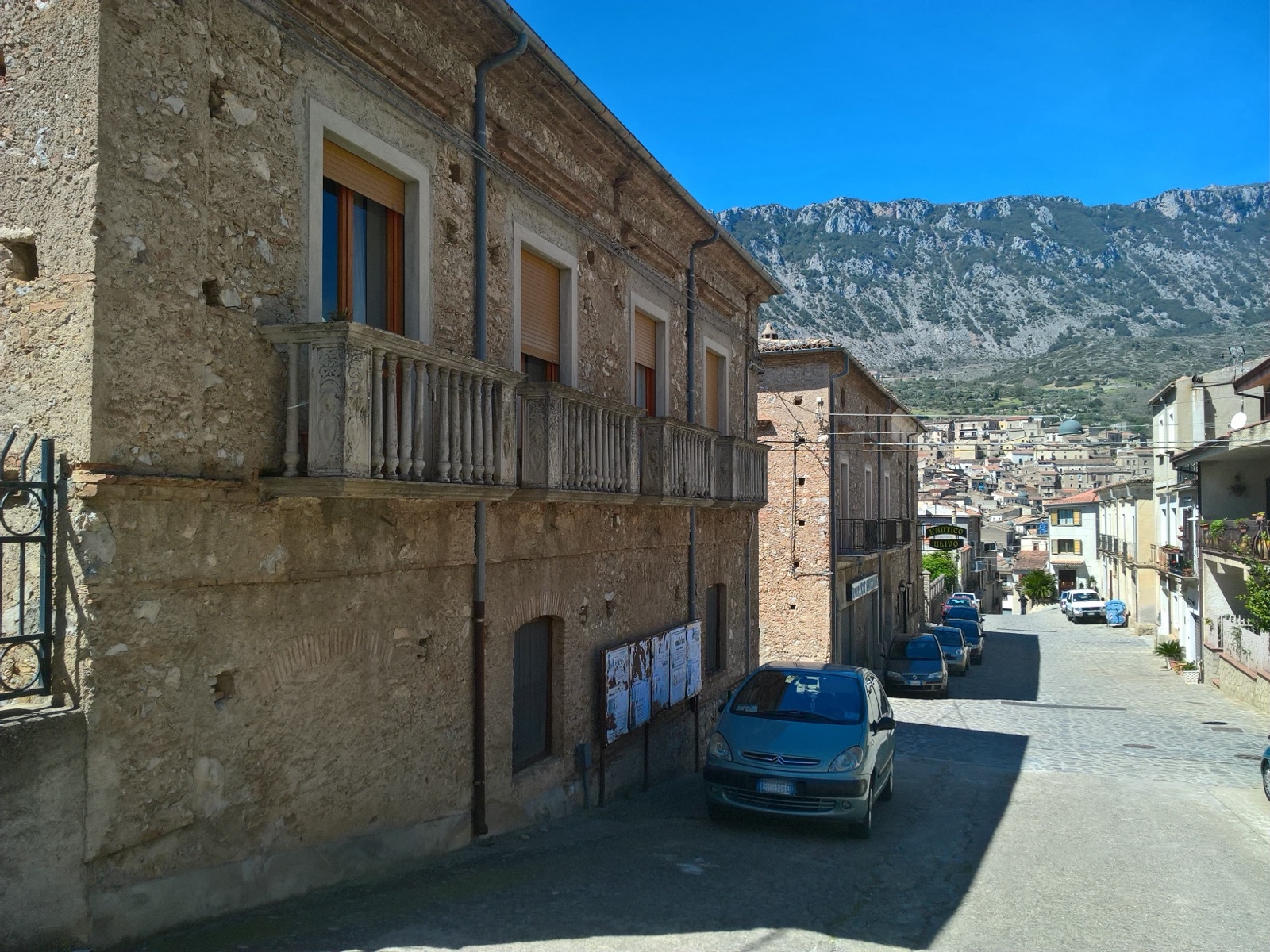
Photograph: Asia / Wikimedia Commons, CC BY-SA 4.0. Cropped for display.
The Arbëreshë are Italy’s historic Albanian communities, rooted in migrations that began in the fifteenth century. Their villages are spread across southern Italy, with especially important concentrations in Calabria and Sicily. Language, literature, religious institutions and community celebrations connect places whose individual histories are often very different.
For people exploring their roots or planning a visit, this guide introduces eight places to start, explains what makes them important, and lists all 50 municipalities in the government’s 2026 Albanian minority register. It also identifies hamlets and historic communities that a municipality list alone cannot explain.
Where to start
Choose Piana degli Albanesi for Sicilian language and Easter traditions; San Demetrio Corone and Macchia Albanese for education and literature; Lungro for Byzantine Catholic institutions; or Civita and Frascineto for the Vallje. Contessa Entellina, San Giorgio Albanese and Santa Cristina Gela add distinct local stories.
Who are the Arbëreshë in Italy?
The settlements grew through successive movements of people from Albanian-speaking territories in the Balkans between the fifteenth and eighteenth centuries. Ottoman expansion and the death of Giorgio Castriota Skanderbeg in 1468 form part of this history, alongside earlier military connections and local agreements that allowed newcomers to settle or repopulate villages. A single founding date cannot describe the whole community. Leonardo M. Savoia’s historical overview explains these different movements.
These communities also helped shape the wider Albanian world. The Corsini College, established in San Benedetto Ullano in 1732 and transferred to San Demetrio Corone in 1794, educated clergy and intellectuals. Arbëreshë writers and political figures contributed to the Italian Risorgimento and the Albanian cultural revival, or Rilindja. Their villages were places where new ideas circulated as well as traditions being maintained. Read the study of their educational and literary role.
Today, Arbëreshë heritage sits alongside the story of more recent Albanian migration to Italy. Both belong in the wider Albanians in Italy guide, while this page concentrates on the historic communities and their places.
Language, faith and belonging
Arbëreshë varieties belong to the Albanian branch of Indo-European and largely share a Tosk foundation. Centuries of life in Italy have produced local differences and contact with Italian and neighbouring dialects. Speaking modern standard Albanian can help a visitor connect, but understanding varies between people and places. These are living varieties with their own development. Vito Matranga’s linguistic overview describes that diversity.
Language is only one part of local identity. Some communities retain Byzantine Catholic worship, others follow the Latin rite, and some preserve cultural memory after everyday Arbëreshë use has faded. Church music, traditional dress, family histories and newer cultural projects can each express belonging. Ask people how they describe their community rather than assuming that everyone speaks the same language or follows the same religious tradition.
Arbëreshë villages in Calabria
Northern Calabria offers several connected village groups around the Pollino and Crati valley. The Crotonese communities form another important cluster. These five starting destinations combine historical influence, institutions and traditions.
San Demetrio Corone and Macchia Albanese
San Demetrio’s Sant’Adriano College gives it a central place in Arbëreshë educational history. Nearby Macchia Albanese, a hamlet within the municipality, adds the birthplace of writer Girolamo De Rada to the visit. Allow time for both settlements. The contemporary Arbëreshë Song Festival connects this literary inheritance with new music: its 44th edition was listed for 6–8 August 2026 at the college. The school’s history explains the institution’s longer role.
Lungro
Lungro is the seat of the Eparchy established on 13 February 1919 for Italo-Albanian Byzantine Catholics in continental Italy. The cathedral and the continuing work of the Church make it an institutional centre, alongside its village life and traditions. The word Byzantine describes a liturgical tradition; it should not be treated as a synonym for Orthodox. The Eparchy’s own history provides the clearest introduction to why Lungro matters.
Civita
Civita brings village heritage into the dramatic landscape of the Pollino. Its neighbourhoods and distinctive houses reward time on foot, while the ethnic museum introduces local traditions. The Vallje, communal dances accompanied by song and traditional dress, provide a particularly strong reason to visit around Easter. The municipality’s 2026 Vallje announcement documents their continuing place in village life. Plan the cultural visit separately from any excursion into the surrounding landscape.
Frascineto and Eianina
Frascineto combines living traditions with the Museum of Icons and Byzantine Tradition, established in 2007. Eianina is a separate settlement within the municipality and belongs in the same itinerary. The regional calendar listed Vallje on 7 April 2026 in Frascineto and 19 April in Eianina, showing why their programmes should be checked individually. The official event listing introduces the songs, dances and community participation.
San Giorgio Albanese
San Giorgio Albanese deserves a place for its contribution to literature. Its poet Jul Variboba, also known as Giulio Variboba, wrote the religious poem Gjella e Shën Mërisë Virgjër, published in Rome in 1762. This gives a small place significance well beyond its population. Read the municipal overview of Arbëreshë literature before visiting: it places Variboba within a tradition that later includes De Rada and the Albanian cultural revival.
For a longer Calabria itinerary, add Vaccarizzo Albanese’s Museum of Costume and Gold, Santa Sofia d’Epiro, Firmo, Acquaformosa and the communities of Carfizzi, Pallagorio and San Nicola dell’Alto.
Arbëreshë villages in Sicily
The principal living-language destinations lie in the Palermo area. Start with these three communities, then explore the Byzantine and historical heritage of Palazzo Adriano and Mezzojuso.
Piana degli Albanesi
Piana degli Albanesi brings together language, the Eparchy, historic dress and religious celebrations. The municipality commemorates founding chapters dated 30 August 1488. Holy Week and Easter are especially meaningful times to encounter processions, liturgy and festive clothing, while churches and the village itself support a visit throughout the year. Visit Sicily’s Piana guide introduces the traditions; the municipal annual report documents the founding anniversary.
Contessa Entellina
Contessa Entellina, also known locally as Kuntisa, is a place to explore the relationship between language, religious life and cultural exchange. Its 2026 programme ran from 1–8 September, including an Arbëreshë Identity Day on 6 September and the Madonna della Favara feast on 8 September. Participation by communities from Calabria makes that exchange visible. The Kuntisa programme offers a recent example of how the village brings heritage into a shared public celebration.
Santa Cristina Gela
Santa Cristina Gela is another of Sicily’s language-preserving communities and a natural companion to Piana. Its Latin rite is a useful reminder that Arbëreshë identity has never required identical religious practice. The municipal statute records a concession in 1691, which should be distinguished from later stages of settlement. Start with that local historical record, then leave room for the smaller-scale experience of exploring a community whose story differs from its neighbours.
Arbëreshë places across seven Italian regions
The following is the complete 50-municipality Albanian minority inventory in the Italian government’s 2026 register. It is an administrative directory. Inclusion does not establish that everyone in a municipality identifies as Arbëreshë, or that the language is still spoken throughout it. Scholarly accounts also describe roughly 50 linguistic communities, but use a different unit: settlements and hamlets. These two totals answer different questions.
Calabria: 30 municipalities
Acquaformosa; Andali; Caraffa di Catanzaro; Carfizzi; Castroregio; Cervicati; Cerzeto; Civita; Falconara Albanese; Firmo; Frascineto; Gizzeria; Lamezia Terme; Lungro; Maida; Marcedusa; Mongrassano; Pallagorio; Plataci; San Basile; San Benedetto Ullano; San Cosmo Albanese; San Demetrio Corone; San Giorgio Albanese; San Martino di Finita; San Nicola dell'Alto; Santa Caterina Albanese; Santa Sofia d'Epiro; Spezzano Albanese; Vaccarizzo Albanese.
The largest group in this register. In Maida and Lamezia Terme, the relevant historic settlements are Vena and Zangarona; the entire cities should not be described as Arbëreshë villages.
Sicily: 5 municipalities
Contessa Entellina; Mezzojuso; Palazzo Adriano; Piana degli Albanesi; Santa Cristina Gela.
Piana, Contessa and Santa Cristina are the main living-language destinations. Mezzojuso and Palazzo Adriano retain significant Byzantine and Albanian heritage after language replacement.
Basilicata: 6 municipalities
Barile; Brindisi Montagna; Ginestra; Maschito; San Costantino Albanese; San Paolo Albanese.
The Vulture and Pollino communities offer different histories. Brindisi Montagna belongs to the protected inventory but has experienced language replacement.
Molise: 4 municipalities
Campomarino; Montecilfone; Portocannone; Ururi.
These four communities connect the national story to the Adriatic side of Italy.
Puglia: 3 municipalities
Casalvecchio di Puglia; Chieuti; San Marzano di San Giuseppe.
Casalvecchio and Chieuti are in the Foggia area; San Marzano di San Giuseppe is near Taranto.
Campania: 1 municipality
Greci.
Greci, also called Katundi, is the protected community in the province of Avellino.
Abruzzo: 1 municipality
Rosciano.
The relevant settlement is Villa Badessa, a hamlet of Rosciano. Its Byzantine heritage remains significant despite profound language loss.
Hamlets to locate within their municipalities
Cavallerizzo and San Giacomo di Cerzeto belong to Cerzeto; Eianina to Frascineto; Farneta to Castroregio; Macchia Albanese to San Demetrio Corone; Marri to San Benedetto Ullano; Vena to Maida; Zangarona to Lamezia Terme; and Villa Badessa to Rosciano. Use the settlement name when planning a visit. Matranga’s settlement table records these relationships; its resident totals are dated and are not speaker counts.
Historical places beyond this inventory
Rota Greca and San Lorenzo del Vallo in Calabria, and Biancavilla, Bronte, San Michele di Ganzaria and Sant’Angelo Muxaro in Sicily, also belong to the broader historical story. Cervicati, Mongrassano and Gizzeria need similar care when discussing present language use. Historical origins can remain meaningful after language transmission changes. Savoia’s study and the municipal national overview help distinguish these layers.
Events, traditions and cultural institutions
For religious visits, start with the Eparchy of Lungro and the Eparchy of Piana degli Albanesi parish directory. The latter includes the Sicilian communities and San Nicolò dei Greci alla Martorana in Palermo. Sant’Adriano College and the museums in Frascineto and Vaccarizzo offer other routes into educational, artistic and cultural history. Confirm opening arrangements with each institution before travelling.
Easter traditions and the Vallje are a starting point, but the calendar also contains contemporary music, visual art and discussions about the future of the communities. Santa Sofia d’Epiro’s sixth Ylberi festival was listed for 27 July–2 August 2026, combining murals, music, workshops and public encounters. Its format shows how cultural activity can create new work as well as preserve inherited forms.
The second Arbëria Digital Fest was announced for 23–25 October 2026 across Pallagorio, Carfizzi and San Nicola dell’Alto, with Muzé Spazio Arbëria in Pallagorio as a focal point. These are dated programme examples. Future editions need their own announcements; recurring traditions do not establish next year’s dates.
The calendar extends beyond Calabria and Sicily. In Basilicata, Barile’s Good Friday Passion play and San Paolo Albanese’s San Rocco grain procession and falcetto dance connect public celebrations with local history. In Molise, the Carrese traditions of Ururi and Portocannone are another reason to explore the smaller communities. These are local traditions with different histories, not interchangeable performances; consult the current organiser’s programme for dates and arrangements.
Planning a visit to the communities
Choose a small geographical group and give each place time. Combine San Demetrio with Macchia, Frascineto with Eianina, or Piana with Santa Cristina. Check museum opening arrangements, the parish calendar and local transport before setting out. A procession may be a religious occasion with a public audience; follow local guidance about photography and participation.
Family connections and community life also extend beyond the historic villages. Matranga records migration to cities including Milan and Rome. Our guides to Albanians in Milan and Albanians in Rome explore the wider communities there. For village history, use local institutions and the sources linked here as your starting points.
How many Arbëreshë people live in Italy?
There is no single current, comprehensive figure established by this directory. Municipal residents, people with Arbëreshë ancestry and active speakers are different populations. Families living elsewhere also remain connected to village life. A small resident population therefore says little on its own about a place’s literary influence or the importance of its celebrations. The linguistic research explains these counting limits; research on Villa Badessa also shows why language loss needs its own history.
Questions about Arbëreshë communities in Italy
Who are the Arbëreshë?
The Arbëreshë are Italy’s historic communities of Albanian origin, formed through migrations beginning in the fifteenth century. Their heritage includes local Albanian language varieties, literature, religious traditions and family connections. Communities differ in present language use and religious practice, and their histories are distinct from more recent Albanian migration to Italy.
Where are the Arbëreshë villages in Italy?
The principal settlement areas are in Calabria and Sicily, with further communities in Basilicata, Molise, Puglia, Campania and Abruzzo. The government’s 2026 Albanian minority register contains 50 municipalities across those seven regions. Some relevant villages, including Macchia Albanese, Eianina and Villa Badessa, are hamlets within larger municipalities.
Which Arbëreshë villages are good places to start?
Piana degli Albanesi, San Demetrio Corone with Macchia Albanese, Lungro, Civita, Frascineto with Eianina, Contessa Entellina, San Giorgio Albanese and Santa Cristina Gela offer a useful starting selection. They combine living community traditions, language, religious institutions, literature and documented events. Their significance extends beyond the size of their resident populations.
Do all Arbëreshë communities speak Albanian and follow the Byzantine rite?
Language use and religious traditions vary. Some places retain everyday Arbëreshë speech and Byzantine Catholic worship; others, such as Santa Cristina Gela, preserve the language while following the Latin rite. Some historically Albanian settlements maintain cultural or religious heritage after language replacement. Administrative protection alone does not establish present language use.
Continue exploring Albanian communities
Use the Global Albanian Community hub to explore other countries, or return to the Italy community guide for the broader migration story. The Arbëreshë in Italy are part of that wider connection, with local histories that deserve to be discovered on their own terms.