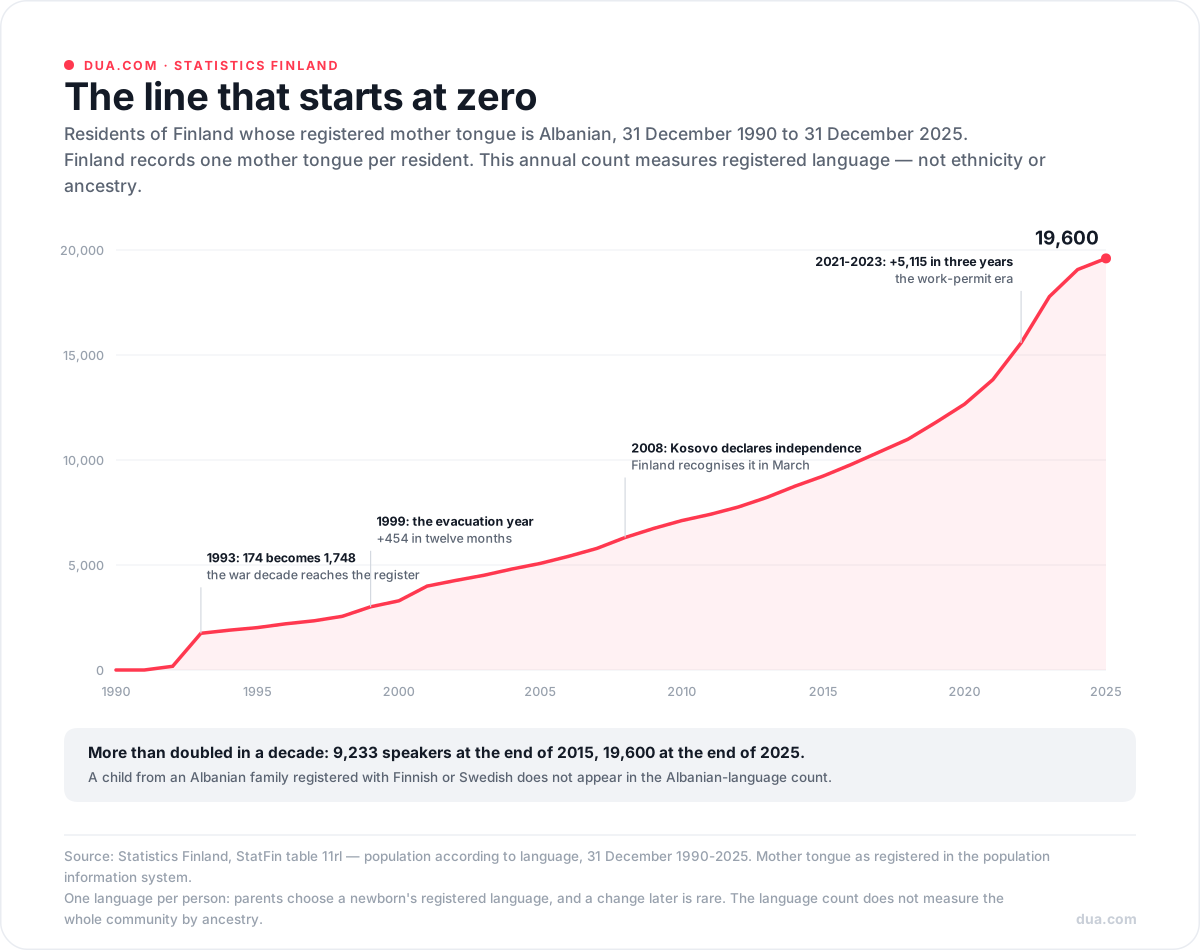
Finland is the one country in the Albanian diaspora that can answer the first question of this series exactly. At the end of 2025, the Finnish population register held 19,600 residents whose registered mother tongue is Albanian — not an estimate, not a model, not a diaspora federation's guess. A count, person by person, published every spring. In 1990 that number was zero. Nobody else in Europe can draw this community's line from zero to today with a single official statistic. Finland can.
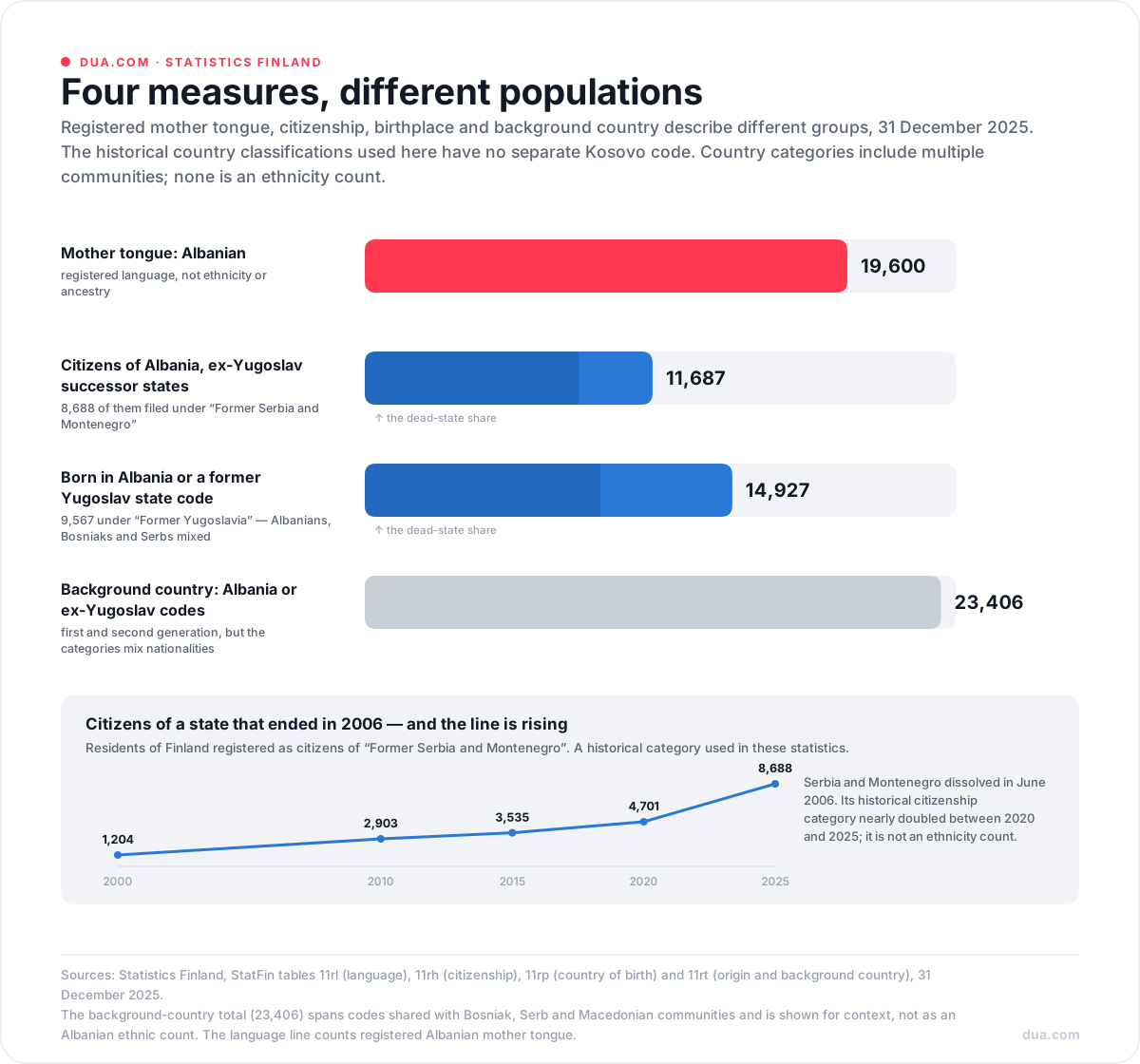
And the same register cannot see Kosovo at all. Finland's country classification has no Kosovo code anywhere — not in country of birth, not in citizenship, not in background country. The state most of this community comes from does not exist in the file. 8,688 residents of Finland are registered, today, as citizens of "Former Serbia and Montenegro" — a state that dissolved in June 2006 — and that category is still growing, because new Kosovan passports keep being filed under it. Finland cannot see Kosovo. But it can hear Albanian, one registered mother tongue at a time, and that is the thread this whole page hangs on.
What follows is the full account, held to the standard of its sister pages on Sweden, Germany, Greece and Italy — with the opposite problem to all of them. Everywhere else the work is building an honest estimate out of categories that hide the community. Here the number is exact, and the work is explaining how a country that counts this precisely came to hold these 19,600 people: the war wave of 1993, the airlift of 1999, the Finnish president who ended the Kosovo war, the work-permit surge that doubled the community in a decade, Vantaa, and how Albanians in Finland find each other now.
For more on this topic, read Albanians in Germany: A Million-Strong Community and Albanians in Sweden: The Community Sweden Never Counted.
Last evidence review: 26 August 2026. Every population figure on this page is an exact register count from Statistics Finland unless labelled otherwise; the reference date is 31 December of the stated year. Registered mother tongue is the master measure throughout, and its one known bias — it slightly undercounts the second generation — is stated wherever it matters.
How many Albanians live in Finland?
19,600 people — exactly. Finland registers a mother tongue for every resident in its population information system, parents declare a newborn's language at birth registration, and Statistics Finland publishes the totals every year, language by language, back to 1990. On the Sweden page this series had to build a model out of eight blocks and publish a range twenty-eight thousand people wide. Here the national statistical office simply prints the number.
That makes Albanian the ninth-largest foreign language in Finland — behind Russian (102,618), Estonian, Ukrainian, Arabic, English, Somali, Persian and Chinese, and just ahead of Kurdish. Albanian speakers are 3.0 percent of Finland's 646,392 foreign-language speakers and 0.35 percent of the country's 5,652,881 people: one Finnish resident in 288.
| Measure | Value | Reference date | What it counts |
|---|---|---|---|
| Registered mother tongue: Albanian | 19,600 | 31 Dec 2025 | The master count — every resident registers one language |
| Citizens of Albania | 1,959 | 31 Dec 2025 | Republic of Albania passports only |
| Citizens of "Former Serbia and Montenegro" | 8,688 | 31 Dec 2025 | Where Finland files Kosovan passports — a state that ended in 2006 |
| Born in "Former Yugoslavia" | 9,567 | 31 Dec 2025 | Albanians, Bosniaks and Serbs mixed in one birth code |
| Foreign background, ex-Yugoslav codes + Albania | 23,406 | 31 Dec 2025 | First and second generation, but the categories mix nationalities |
| Albanian speakers under 15 | 5,199 | 31 Dec 2025 | The countable second generation — a quarter of the community |
The register that hears Albanian — and cannot see Kosovo
Two facts about Finnish statistics define this whole page, and they pull in opposite directions.
The first: Finland records a mother tongue for every resident. When a child is born or a migrant registers, one language goes into the population information system — self-declared, free to choose, almost never changed later. It is why this page can say "19,600" without a model. The measure has one honest weakness: it is conservative about the second generation. A child of Albanian parents whose language is registered as Finnish leaves the Albanian line for good, and nothing in the register brings them back. 19,600 is exact for registered speakers, and a floor for the community of Albanian origin.
The second: Finland's country classification has no Kosovo. Statistics Finland codes country of birth by the state that existed at the time, and citizenship against a country list that — verified against the register's own classification of 210 states — contains no Kosovo entry at all. A Kosovar born in 1985 is "born in Former Yugoslavia". A Kosovan passport is filed under "Former Serbia and Montenegro", the short-lived state union that dissolved in June 2006. And because new arrivals keep being coded that way, Finland's register of a dead state keeps growing: 4,701 of its citizens at the end of 2020, 8,688 at the end of 2025. Nearly doubled in five years — every one of them, in practice, a Kosovo passport holder Finland has no column for.
Put the two facts together and Finland becomes the mirror image of its neighbour. Sweden has meticulous country-of-birth statistics and no language register, so its Albanians disappear into an undivided "Yugoslavia" category and the honest answer is a range. Finland's country categories are just as blind — but the language register cuts straight through them. The same people who are invisible as "Former Serbia and Montenegro" citizens are counted exactly as Albanian speakers. One column fails, the other answers.
Three arrivals: the war, the airlift, the work permit
Three distinct migrations built Albanian Finland, and the register timestamps each one. Unlike Germany or Switzerland, there was no 1960s labour recruitment here — no Yugoslav guest-worker agreement reached Helsinki. Albanian Finland begins, almost to the month, with the wars.
1992–1998: the war wave
At the end of 1991 the register held not one Albanian speaker. At the end of 1992 it held 174. At the end of 1993, 1,748 — a tenfold jump in a single year, the sharpest the Albanian line would ever record. These were asylum seekers from a Yugoslavia coming apart, most of them Kosovo Albanians fleeing the Milošević regime's takeover of the province, arriving in a Finland that had barely done asylum before: the Finnish Red Cross opened some twenty reception centres in the early 1990s to receive refugees from the Yugoslav wars and elsewhere.
One family in that wave carried three future members of Finnish public life. In the autumn of 1992 the Hetemajs of Skenderaj — in the Drenica valley, the hardest ground of the coming war — reached Finland and were placed in a reception centre in Oulu, 600 kilometres north of Helsinki. Përparim was five, Mehmet four, their sister Fatbardhe seven. The family later moved south for their father's asthma. Two of the boys would play for Finland's national football team; the sister would sit on Helsinki's city council. The whole arc of this community, in one asylum file.
Through the mid-1990s the line climbed steadily rather than steeply — 2,019 by 1995, 2,556 by 1998 — family reunification and a continuing trickle of asylum as Kosovo's crisis deepened.
1999: the airlift
When the expulsions from Kosovo began in the spring of 1999, nearly a million people crossed into Albania and North Macedonia within weeks. Under UNHCR's Humanitarian Evacuation Programme — the airlift that moved almost 96,000 refugees out of the Macedonian camps to 28 countries — Finland agreed in April 1999 to take in about 1,000 Kosovars. The first group of 164 arrived in late April 1999 and was housed at the Joutseno reception centre near the Russian border; later flights were distributed to centres in Turku, Vaasa, Oravais, Kontiolahti, Oulu and Kotka. They received temporary protection, not asylum.
And then most of them went home. By the end of 1999, around 400 of the roughly 1,000 evacuees had already returned to Kosovo; Finland's foreign ministry puts the final share of returnees at over 65 percent. The 1999 airlift is why the Albanian line in the register moves so modestly that year — up just 454 — and it is the one chapter of this story that ran in reverse. The community Finland has today was built by the people who came before the airlift and the people who came long after it, more than by the airlift itself.
The Finn who ended the war
No other country in this series has a chapter like this one. In the spring of 1999, while the evacuees were landing at Joutseno, the President of Finland was shuttling between Bonn, Moscow and Belgrade carrying the terms that would end the war they had fled.
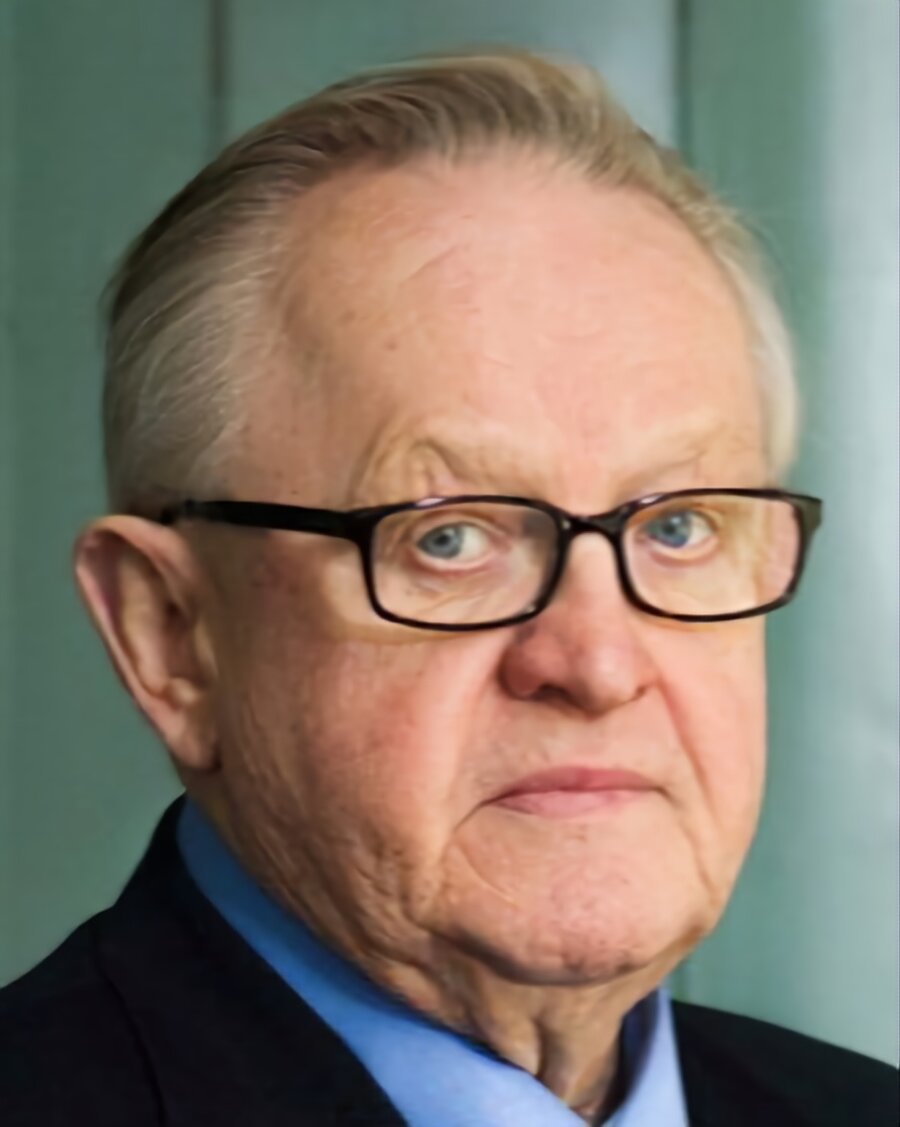
Martti Ahtisaari
As President of Finland and the EU's envoy, Ahtisaari negotiated the war's endgame with Viktor Chernomyrdin and Strobe Talbott at Petersberg near Bonn, then flew to Belgrade on 3 June 1999 and put the terms to Slobodan Milošević, who accepted them. Six years later the UN made him Special Envoy for Kosovo's future status; his Comprehensive Proposal of March 2007 — the Ahtisaari Plan — recommended internationally supervised independence and became the blueprint for the state Kosovo declared on 17 February 2008. He received the 2008 Nobel Peace Prize, with Kosovo named among his life's mediations. He died on 16 October 2023; Kosovo's President Vjosa Osmani said he "laid the foundations of our state". He called Kosovo the hardest job he ever did.
Photo: Exodus / Wikimedia Commons · CC BY 4.0
Finland's other contribution wore camouflage. In August 1999 Finland became one of the first non-NATO countries to join KFOR; the Finnish battalion in Lipjan, south of Pristina, ran for eleven years at a peak strength of more than 800 soldiers, and closed its camp on 31 December 2010. About 70 Finnish soldiers still serve in KFOR today. Add it up and the count of Finns who served in Kosovo runs into five figures — for a generation of Finnish conscripts, "Kosovo" is not an abstraction but a tour.
2008: the night Helsinki sang
Kosovo declared independence on 17 February 2008, on the framework Ahtisaari wrote. Finland recognised the new state on 7 March 2008 and pledged 15 million euros for its development. In Helsinki, the roughly five thousand Kosovo Albanians then in Finland celebrated at Senate Square; in Vantaa the flags came out in Tikkurila; there were parties in Turku and Tampere. A celebrant named Muzafer Sulejmani gave the Finnish broadcaster Yle the quote this page cannot improve on: "Thank you Finland! And thank you Ahtisaari! He is our star!"
2015–2026: the work-permit era
The largest wave is the quietest and the most recent. Between the end of 2015 and the end of 2025 the register added 10,367 Albanian speakers — more than the community's entire first twenty-five years — and the drivers this time were work permits and family, not war. In 2021, Kosovo was the fifth-largest nationality for first work-based residence permits in Finland (562 permits, behind Ukraine, Russia, the Philippines and India); Kosovar practical nurses were recruited into Finnish care homes, Kosovar crews onto Finnish building sites. The passport stock tells the same story: Albanian citizens in Finland went from 828 to 1,959 in five years, and the "Former Serbia and Montenegro" file — the Kosovan one — from 4,701 to 8,688.
The era got easier to live in January 2024, when Kosovo passport holders gained visa-free travel to the Schengen area — the last country of the Western Balkans to get it. A grandmother in Vushtrri can now board a flight to visit Vantaa without a consulate appointment, something that was impossible for the whole first thirty years of this community's life.
Where the community lives: Vantaa first
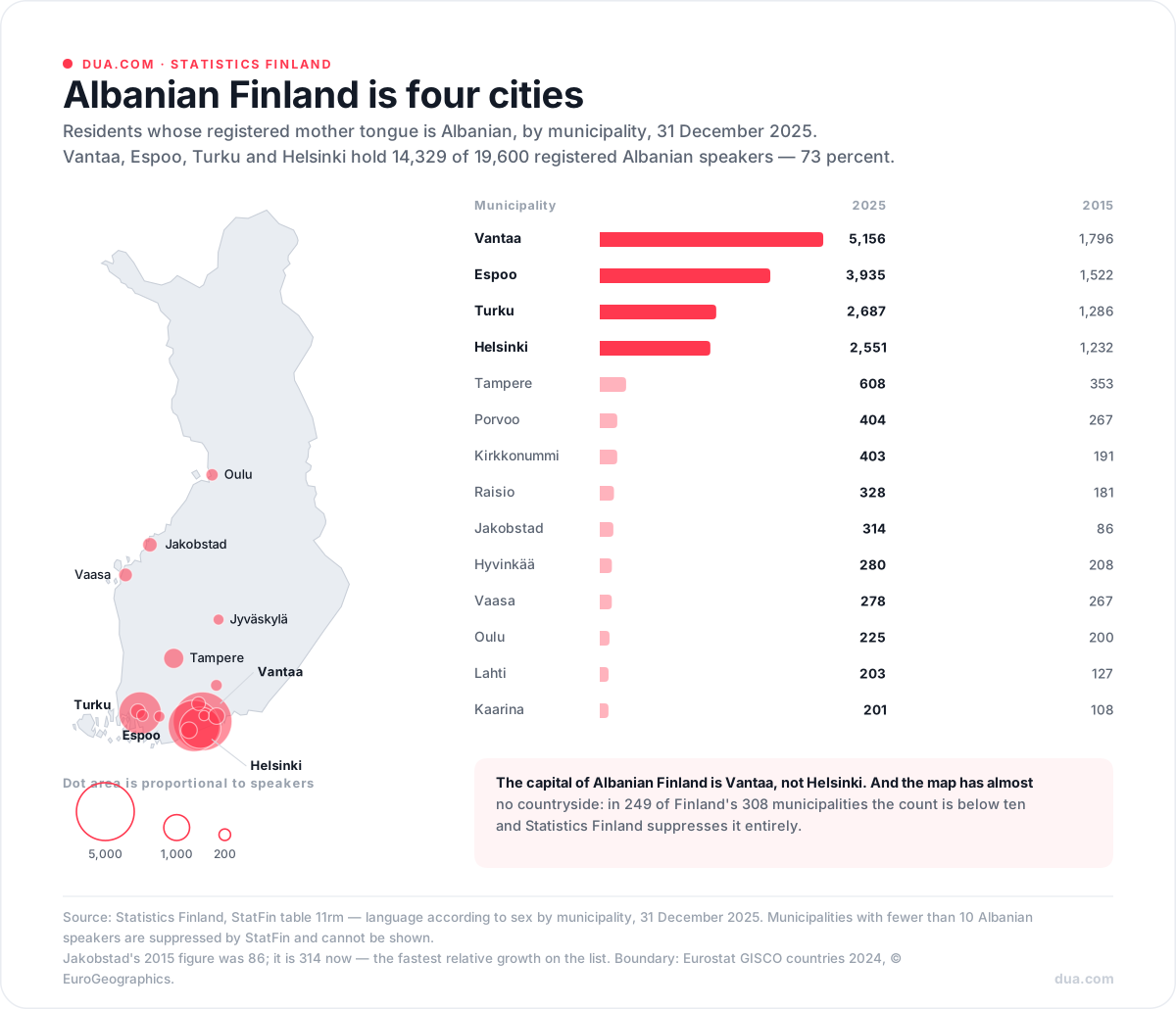
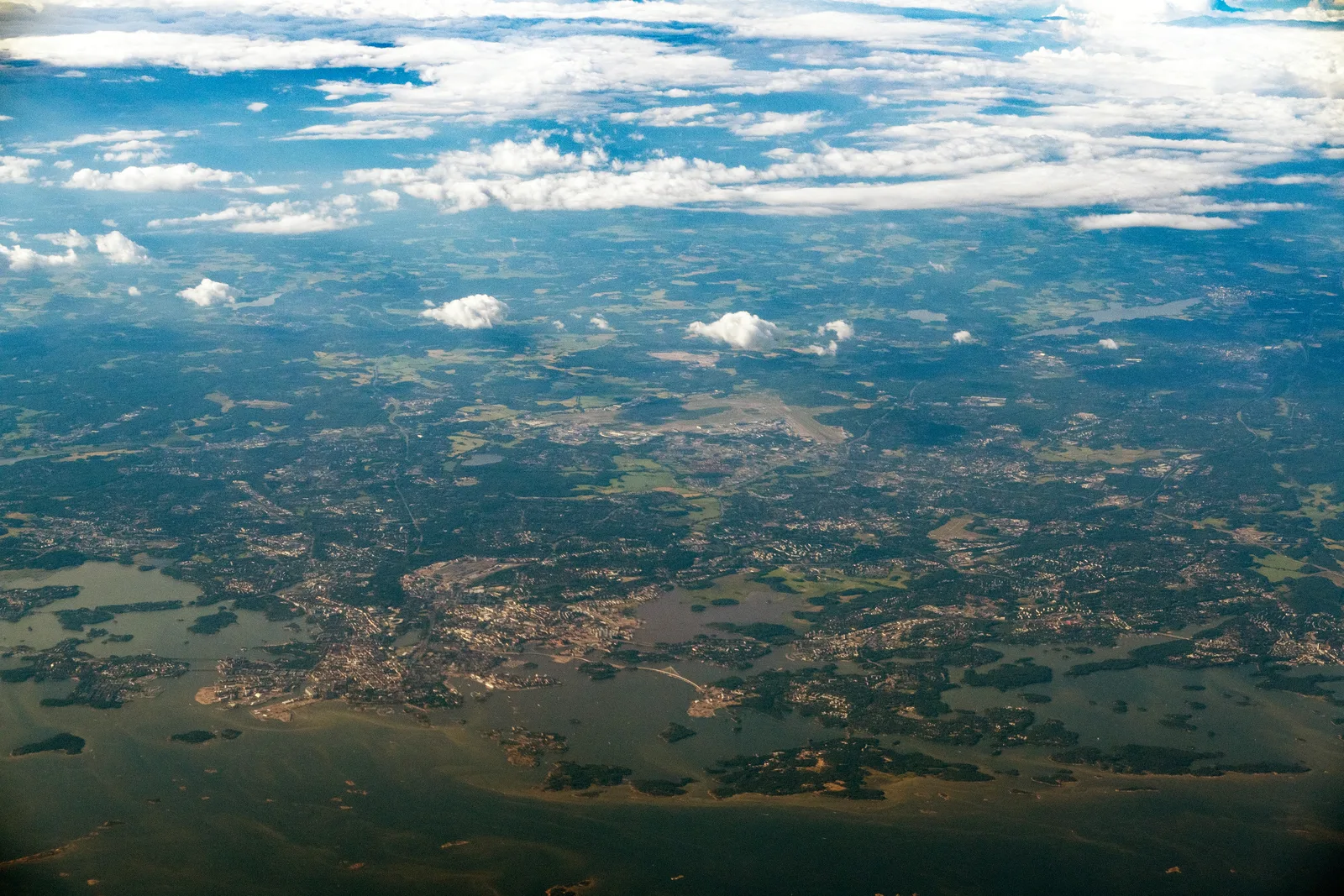
The capital of Albanian Finland is Vantaa. Not Helsinki, the capital of everything else — Vantaa, the airport city north of it, holds 5,156 Albanian speakers, one resident in forty-nine, 2.0 percent of the city. Espoo follows with 3,935, then Turku with 2,687, and Helsinki proper comes fourth with 2,551 — 0.37 percent of a much bigger city. Four municipalities hold 73 percent of the entire community; the top ten hold 85 percent.
The rest of the map is nearly empty. In 249 of Finland's 308 municipalities the Albanian count is below ten and Statistics Finland suppresses it for privacy. Albanian Finland is not a scattered community with urban clusters; it is an urban community with almost no scatter — the opposite of Sweden, where a 1980s dispersal policy seeded Albanian families across dozens of small towns and left the capital an afterthought. Finland never dispersed anyone at that scale for long: the reception centres of the 1990s were spread from Oulu to Kotka, and the community walked out of them and moved, family by family, to where the work and the cousins were.
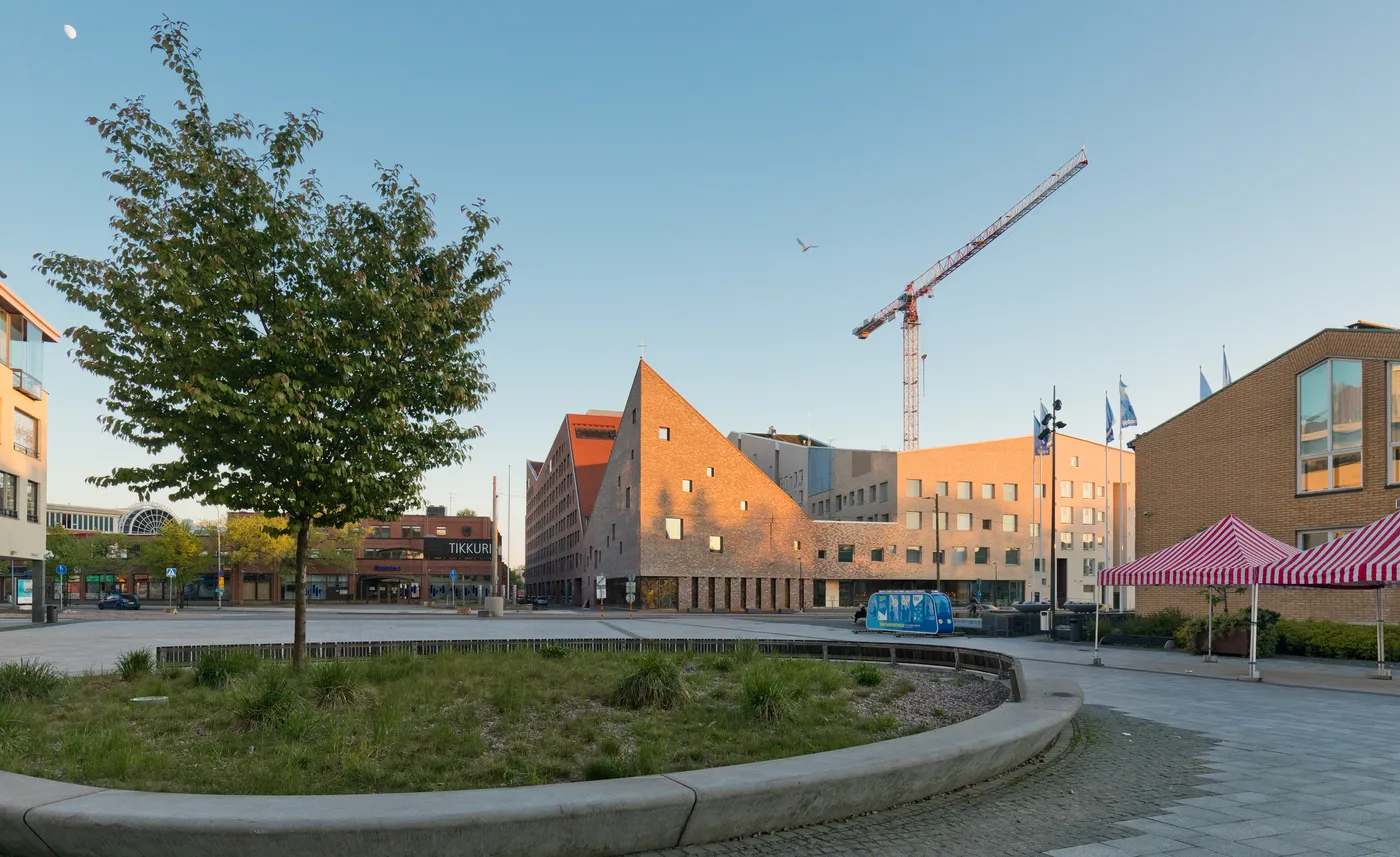
Inside the capital region the community has a heartland with a nickname. Suvela, in Espoo, is called "Pikku-Kosovo" — Little Kosovo. Of Espoo's roughly four thousand Albanian speakers, about 1,500 live in the Suvela–Espoon keskus–Tuomarila belt, a concentration that formed in the 1990s when families fleeing the wars clustered where the rentals were affordable, the flats fit large families and the trains ran — and stayed. The Finnish broadcaster Yle profiled it in March 2026: first-generation men who have spent thirty years there, their children buying homes in the same postcode, the futsal courts full, the Neste petrol station at Muurala serving as the community's unofficial living room. In Vantaa the same role is played by Hakunila and Tikkurila, where the Hakunila International Organization has run an Albanian culture group for decades.
Turku is the second pole, and the oldest organised one — its Albanian association was founded in 1998, its futsal club plays in Finland's top division, and with 2,687 speakers plus another 529 in the suburbs of Raisio and Kaarina, greater Turku holds more Albanians than Helsinki proper. And then there is the map's one genuine surprise: Jakobstad (Pietarsaari), a largely Swedish-speaking coastal town of under 20,000 in Ostrobothnia, where the Albanian count went from 86 in 2015 to 314 in 2025 — 1.6 percent of the town, the fastest relative growth in the country, work migration writing a brand-new chapter in a place with no 1990s Albanian history at all.
The generation born in Finland
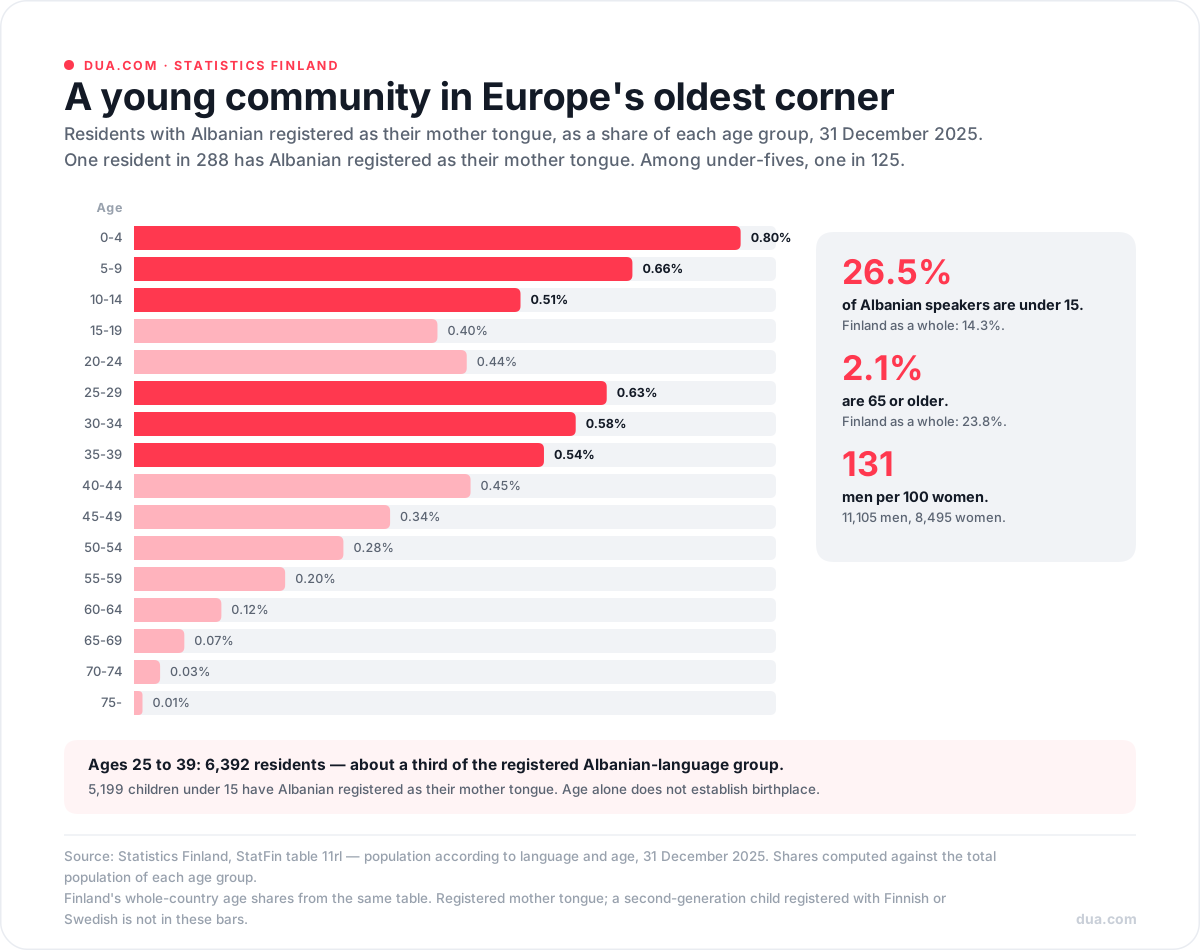
This is one of the youngest communities in one of Europe's oldest countries, and the register can prove both halves of the sentence. 26.5 percent of Albanian speakers are under 15 — for Finland as a whole the figure is 14.3 percent. Only 2.1 percent are 65 or older, against a national 23.8. Among children under five, one in every 125 residents of Finland speaks Albanian — more than double the community's share of the whole population.
The 5,199 Albanian-speaking children under 15 are almost all Finland-born: the second generation, already a quarter of the community, growing up bilingual between Drenica and the schoolyard. And the register's background-country tables add what the language line alone cannot: 5,462 Finland-born residents carry a "Former Yugoslavia" background, 901 a "Former Serbia and Montenegro" one, 343 an Albanian one — categories that mix nationalities, but in Finland's case are dominated by exactly these families.
Remember the caveat that cuts the other way: a child of Albanian parents registered as Finnish-speaking vanishes from the Albanian line entirely. Every second-generation figure the language register produces is a floor. The community of Albanian origin in Finland is at least 19,600 people — and by any honest reading of the background tables, somewhat more.
Finland does one more thing for that generation that deserves naming: it teaches them Albanian, at public expense. Municipalities organise heritage-language classes wherever five pupils can be gathered, two hours a week, with state-paid teachers — and in autumn 2023, 1,138 pupils were studying Albanian in Finnish schools, one of the largest heritage languages taught, with classes running in Helsinki, Espoo, Vantaa, Kirkkonummi, Hyvinkää and Porvoo in the south and Vaasa, Oulu and Nykarleby in Ostrobothnia. Albanian teachers in Finland built bilingual school dictionaries as early as 1995. A country with no Kosovo code pays for Kosovo's grandchildren to read Migjeni.
Work: from the reception centre to the payroll
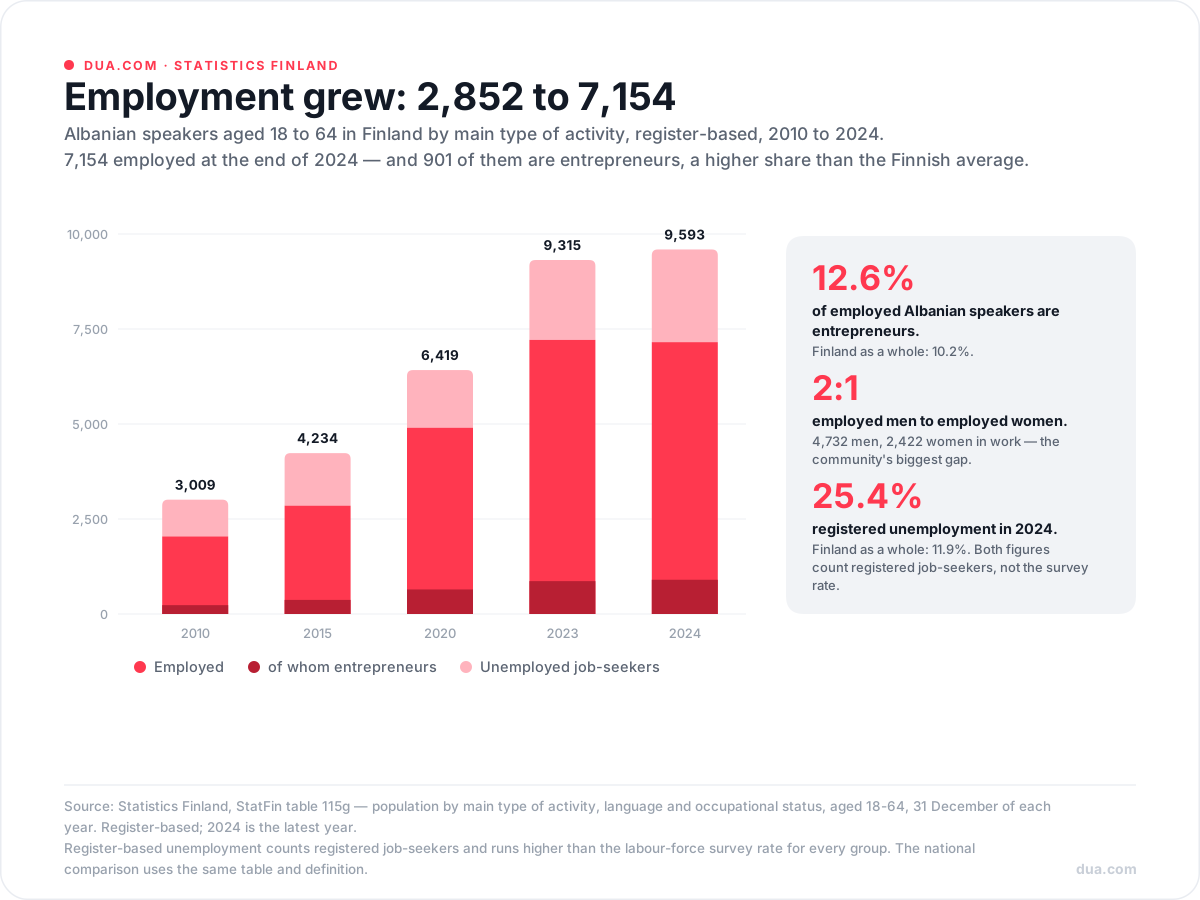
Because Finland's employment statistics also run on the language register, this is one of the few countries where the community's working life can be read directly. The headline: employment tripled in a decade. 2,852 Albanian speakers aged 18–64 were in work at the end of 2015; 7,154 at the end of 2024.
The most Albanian number in the table is the entrepreneur line. 901 Albanian speakers run their own business — 12.6 percent of everyone in work, against a Finnish average of 10.2. A community that arrived with asylum files and reception-centre addresses now out-founds the country that took it in: construction crews, cleaning firms, kebab-and-pizza kitchens that became restaurant groups, barber shops, logistics. The recent work-permit wave feeds it from the other end — the practical nurses recruited into care homes and the site crews of the early 2020s are this decade's first rungs.
Two honest numbers belong beside the good ones. Registered unemployment among Albanian speakers was 25.4 percent in 2024 — double the national 11.9 percent on the same register-based measure, a gap that widened with the construction downturn that hit the community's biggest industry hardest. And work in Albanian Finland is still sharply gendered: 4,732 employed men against 2,422 employed women, two to one, the community's biggest internal gap and the one the second generation is most likely to close — its daughters are in Finnish classrooms at the same rate as its sons.
Language, faith and community life
The institutions of Albanian Finland are young, small and concrete — built by a first generation that arrived with nothing and organised anyway.
The oldest is in Turku. Albaaniyhdistys Bashkimi ry — "Unity" — was registered in 1998, and out of its integration work grew the community's proudest sporting story: KF Kosova, a futsal club founded in 2005 by Albanian-speaking Kosovars, which in 2025 won promotion to the Miesten Futsal-Liiga, Finland's top division — an all-Albanian club, in red, playing at the top level of Finnish sport out of Samppalinna hall. In the capital region, the Hakunila International Organization in Vantaa has run an Albanian group for decades under the long-time chairman Harun Osmani, a teacher of Macedonian-Albanian origin — culture evenings, women's and children's circles, an Albanian children's programme with the local library, performances up to the Savoy Theatre and Vantaa's city celebrations. The Finland–Albania Friendship Society, improbably, dates to 1971 — a relic of a stranger era, reactivated in 2006.
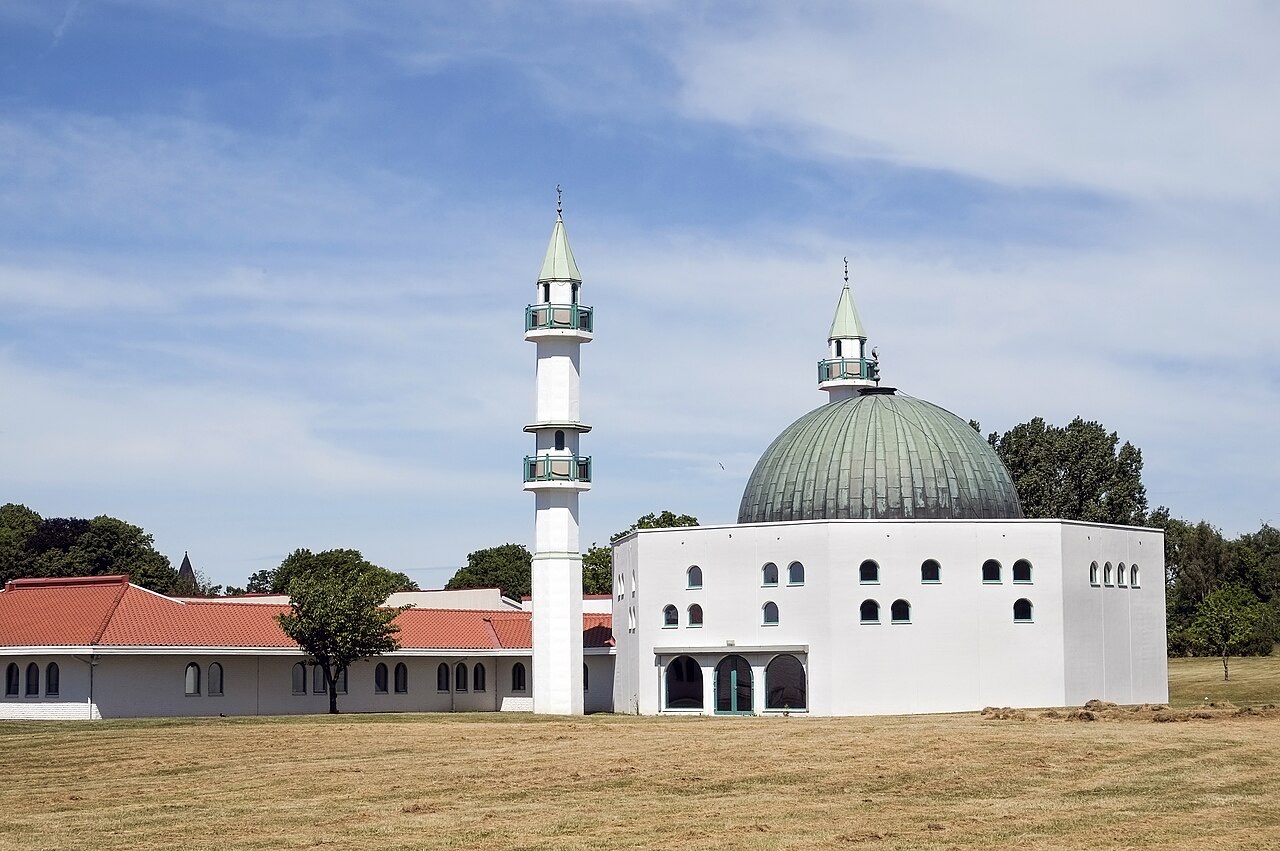
Faith is mostly Muslim and mostly informal. The one registered specifically-Albanian religious community, the Albanian Islamic Cultural Centre "Dituria" — "knowledge" — was registered in Helsinki only in April 2019, and its formal membership is tiny, because formal registration is the exception: most Albanian Muslims in Finland pray, when they pray, in the capital region's general mosques, and carry their religion the way Kosovo does — lightly, culturally, with the big feasts as family days. There is no Albanian-language mosque row in Finnish politics, no headline imam. The quietness is the story.
The language institution that matters most is the school system itself — the 1,138 children in municipal Albanian classes of the section above — plus the weekend life every diaspora recognises: the wedding circuit that fills halls in Vantaa and Turku through the summer, the Flag Day gatherings each 28 November in association rooms rather than city squares, the Kosovo independence anniversary each 17 February that has, since the Senate Square night of 2008, been the community's own national day.
The people: from a reception centre in Oulu to Serie A
For a community of under twenty thousand, Albanian Finland has put a remarkable roster into Finnish public life — and its beating heart is one family's asylum file. Every person below has a sourced statement of Albanian origin; an Albanian-sounding surname was never treated as evidence.
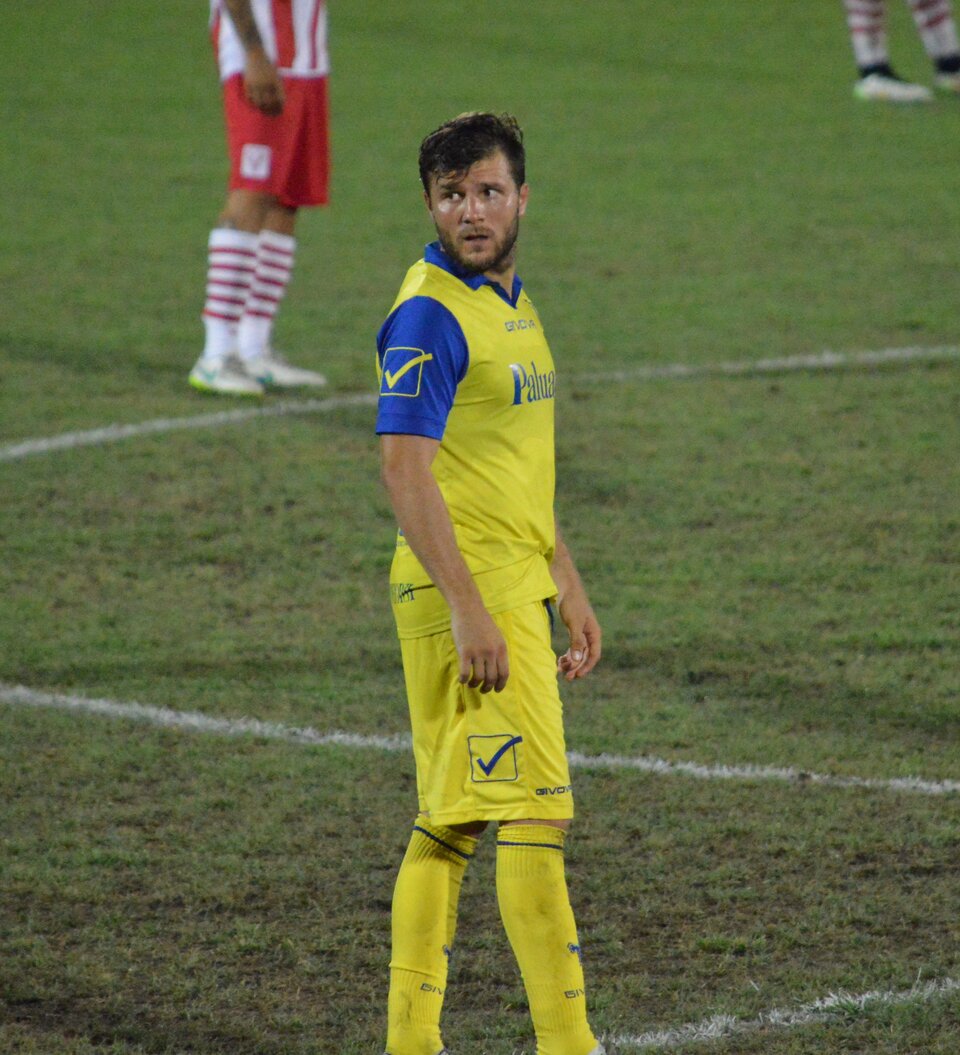
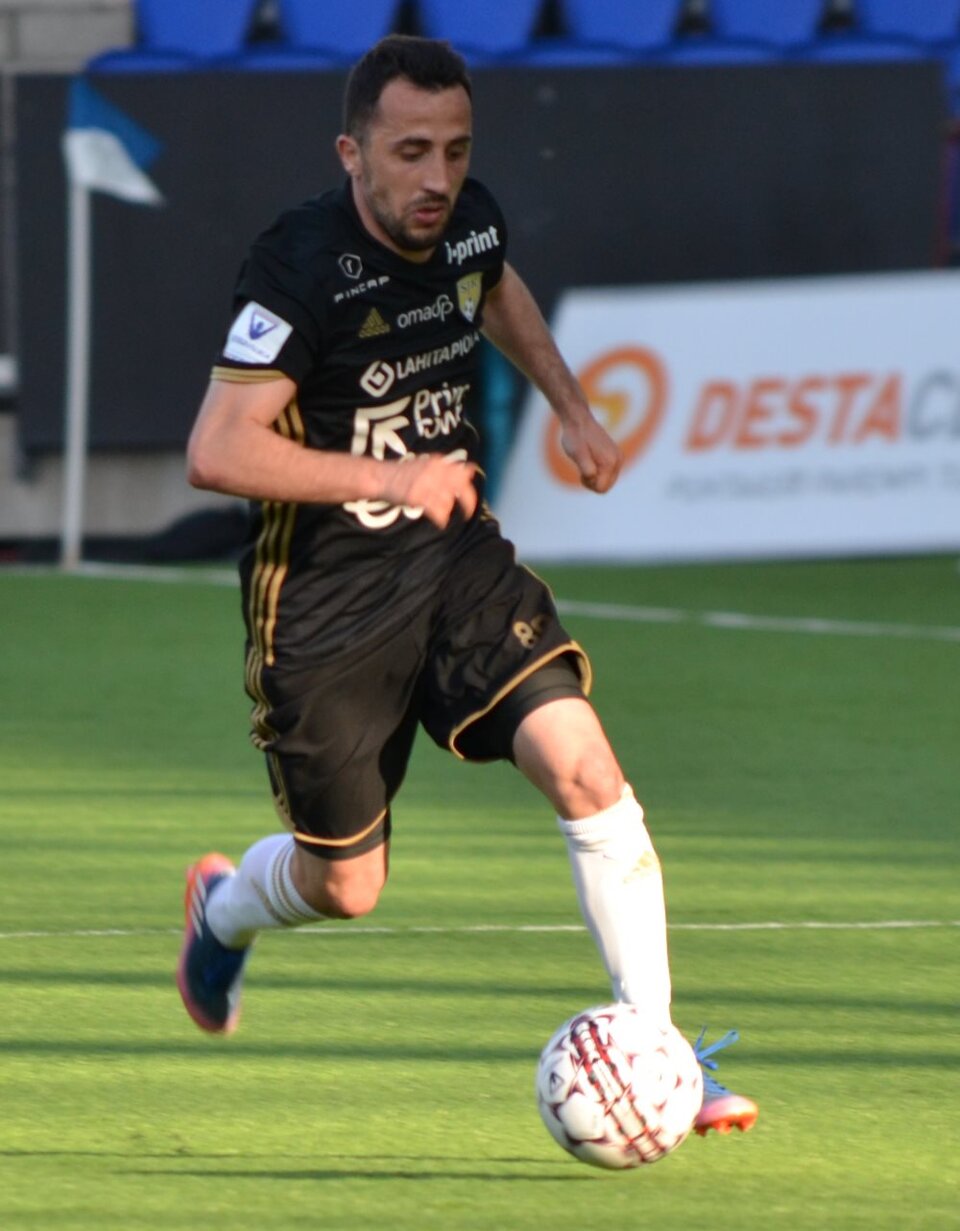
Përparim Hetemaj
Born in Skenderaj in 1986, in Finland from the autumn of 1992 — first address: a reception centre in Oulu. Raised through HJK Helsinki's youth ranks, he made 50 appearances for Finland and played 239 Serie A matches for Chievo Verona, more than 300 in Italy in all. In 2017 he declined to play World Cup qualifiers against Kosovo — he would not take the field against the country his family fled. Finland's shirt on his back, Drenica in his chest, and no apology for holding both.
Photo: Pottercomuneo / Wikimedia Commons · CC BY-SA 4.0
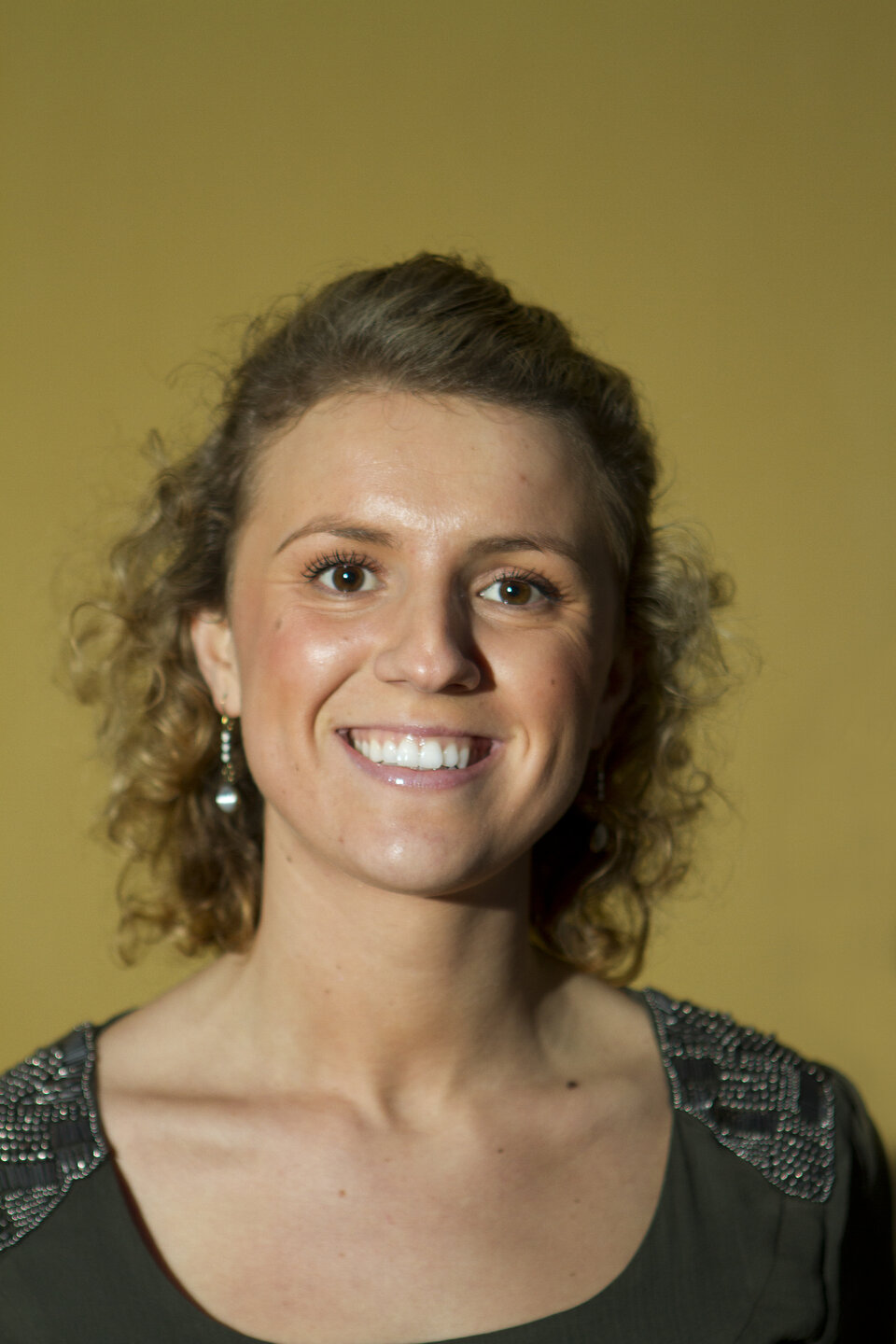
Fatbardhe Hetemaj
The eldest of the Hetemaj siblings, born in Skenderaj in 1985, seven years old on the journey north. Elected to Helsinki City Council in 2012 for the National Coalition Party, named Refugee Woman of the Year in 2009, and author of a memoir whose title translates as A Suitcaseful of Sunshine: an escape to the north. The reception-centre child who ended up governing the capital that took her in.
Photo: Hannu Sääskilahti / Wikimedia Commons · CC BY-SA 3.0
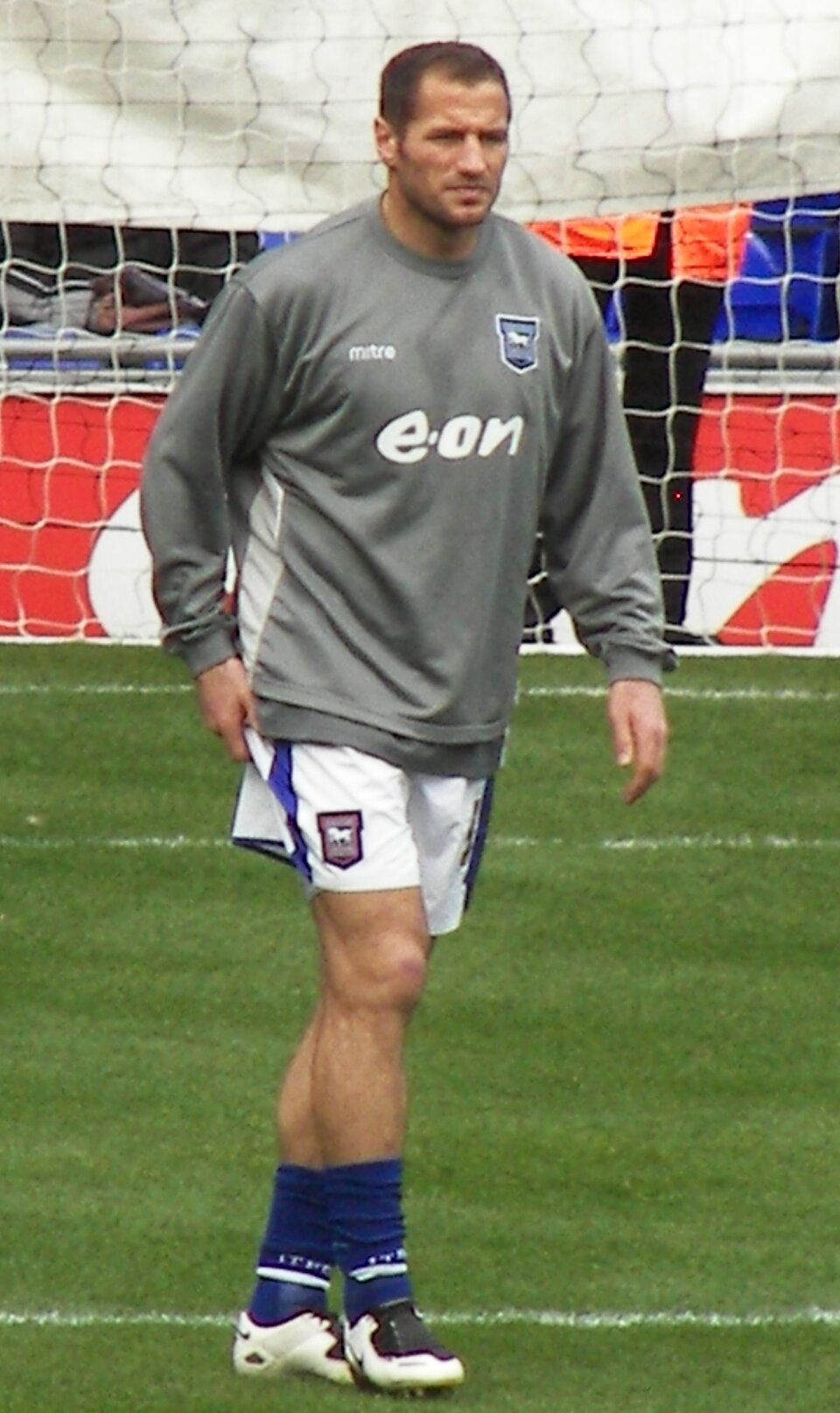
Shefki Kuqi
Born in Vushtrri in 1976, in Finland from the early 1990s after the family fled rather than surrender a son to the Yugoslav army. 62 caps and 8 goals for Finland — more caps than any other Albanian-origin player has won for the country — and a decade of English football at Sheffield Wednesday, Ipswich, Blackburn, Crystal Palace, Fulham, Swansea and Newcastle, where fans adored the swan-dive belly-flop he unleashed after every goal. English crowds called him the Flying Finn; the flight plan was Vushtrri to Helsinki.
Photo: Nick, Chelmsford / Wikimedia Commons · CC BY 2.0
Njazi Kuqi
Shefki's younger brother, born in Vushtrri in 1983, a Finland international like his brother — the family put two sons in blue-and-white. Twenty goals for FC Lahti bought him a move to Birmingham City in 2005 and a career through England, the Netherlands and the Veikkausliiga; a third brother, Albert, turned professional too. One Kosovar family, three forwards, one adopted country.
Photo: Aleksi Stenberg / Wikimedia Commons · CC BY-SA 4.0
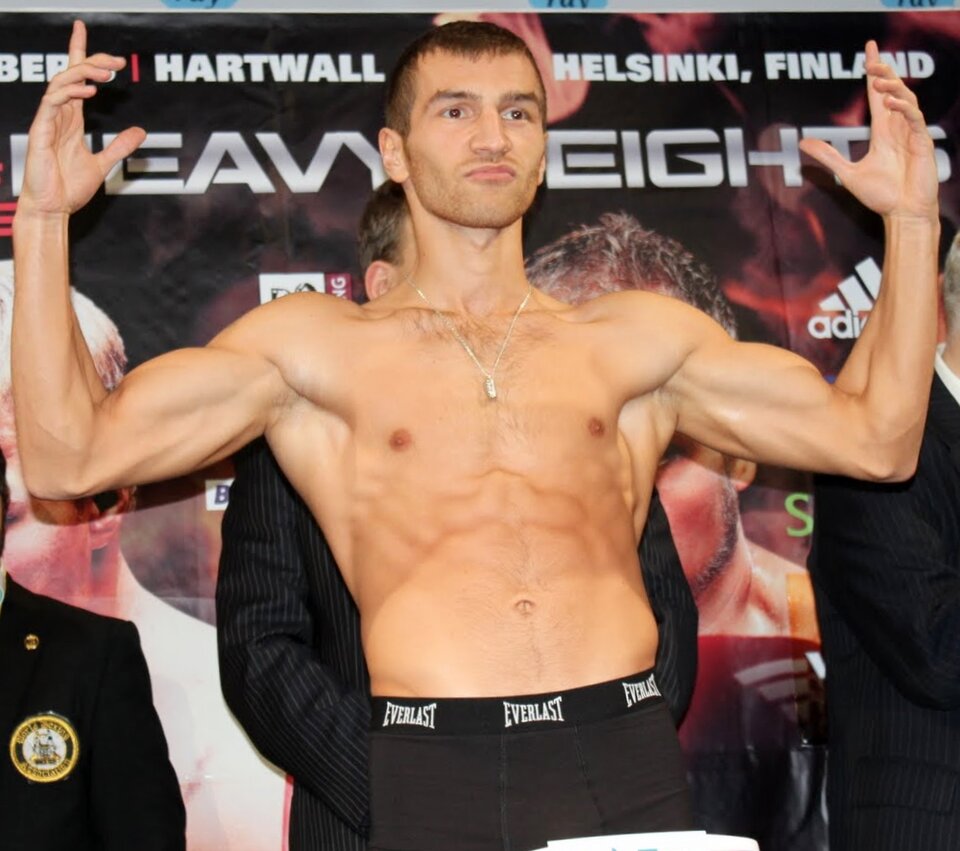
Edis Tatli
Born in Prizren in 1987 to an Albanian mother and a Turkish father, in Finland from the age of four, raised in Hämeenlinna. Twice European lightweight champion (2015–17 and 2017–18, record 32-3), he fought a world-title bout in a sold-out Helsinki arena in 2014 and boxed Teofimo Lopez at Madison Square Garden in 2019 — then won Finland's Dancing with the Stars for good measure. Prizren footwork, Finnish discipline.
Photo: Pasi T / Wikimedia Commons · CC BY-SA 3.0
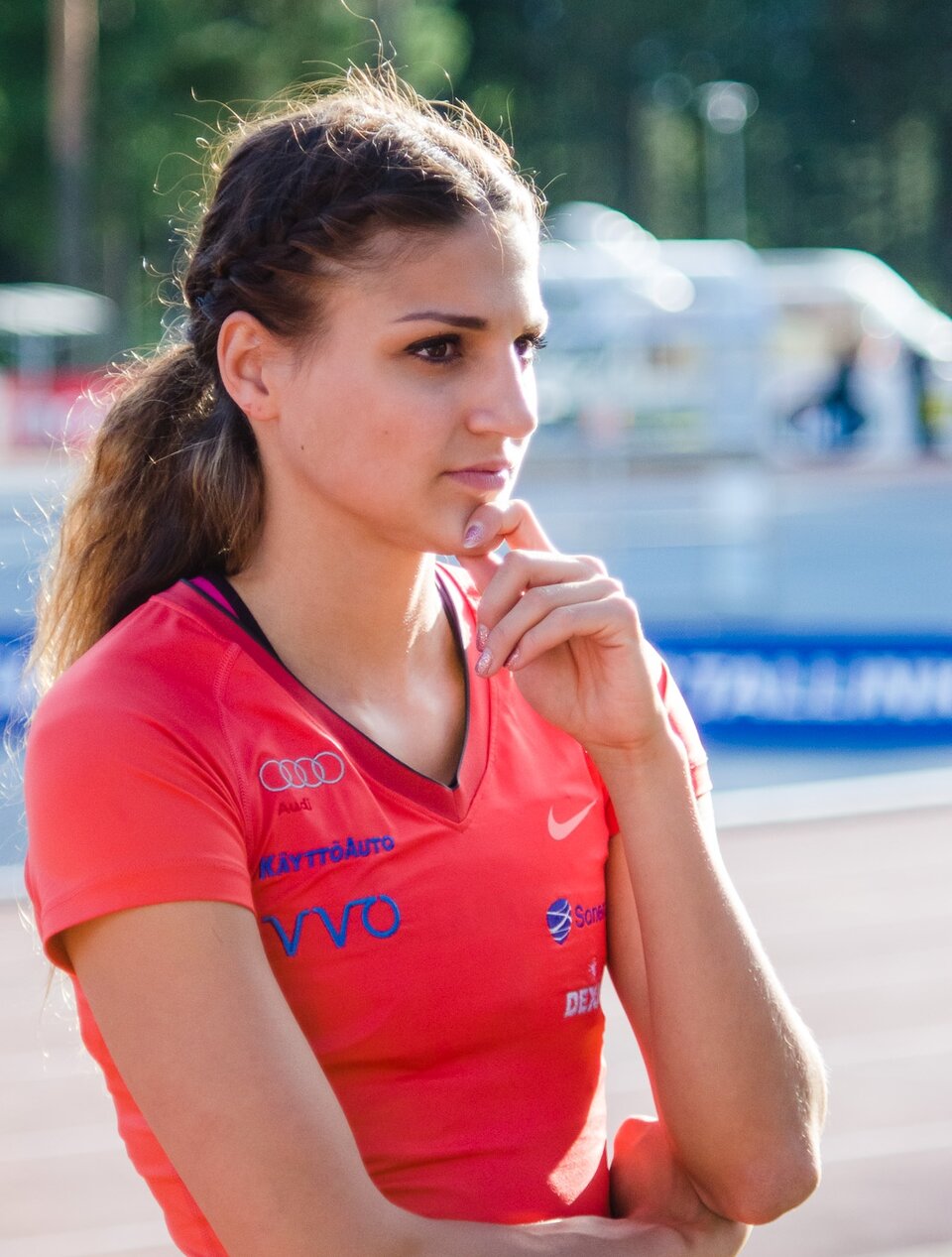
Nooralotta Neziri
Born in Turku in 1992 to a Finnish mother and a Macedonian-Albanian father, the finest hurdler Finland has produced in a generation: European junior gold at 18, a Rio 2016 Olympian, co-holder of the Finnish indoor 60-metre-hurdles record, and still lowering her personal best — 12.73 seconds in Espoo in 2025, at 32. The labour-migration Macedonia branch of the diaspora, on the Finnish record books.
Photo: Ronny Martin Junnilainen / Wikimedia Commons · CC BY-SA 3.0
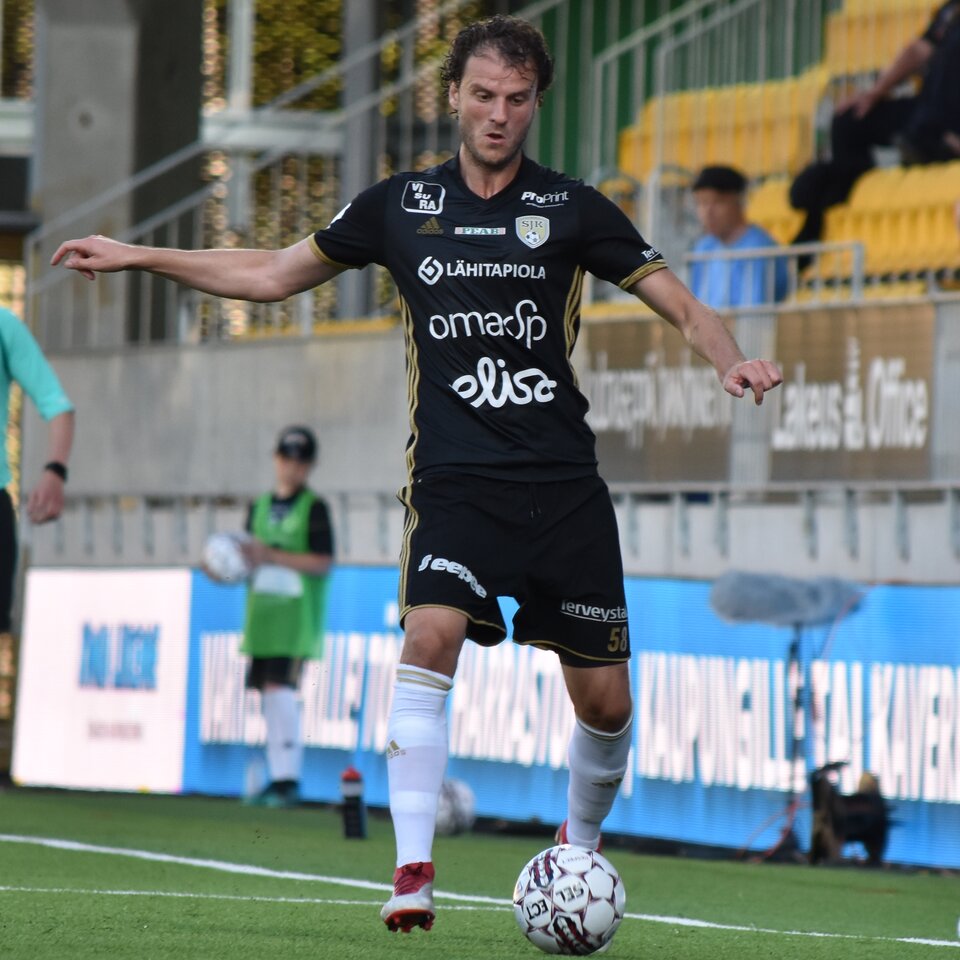
Erfan Zeneli
Born in 1986 to a Kosovar family, a one-club heart in an era that has none: the striker spent the core of his career at HJK Helsinki through title after title, with spells in Israel and Kazakhstan, and pulled on Finland's shirt as an international. In Espoo's Suvela — "Pikku-Kosovo" — his is the name the futsal kids say first.
Photo: Peltimikko / Wikimedia Commons · CC BY-SA 4.0
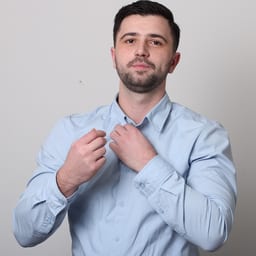
Mehmet Hetemaj
The third Hetemaj of this page, born in 1987, four years old at the Oulu reception centre. A defensive midfielder out of HJK's academy, he did what his brother would not let himself do — he played for both Finland and Kosovo, wearing each of his two countries once the rules allowed it. Today he talks football on Finnish television. Between the two brothers, every possible answer to the diaspora's hardest question.
Photo: Peltimikko / Wikimedia Commons · CC BY-SA 4.0
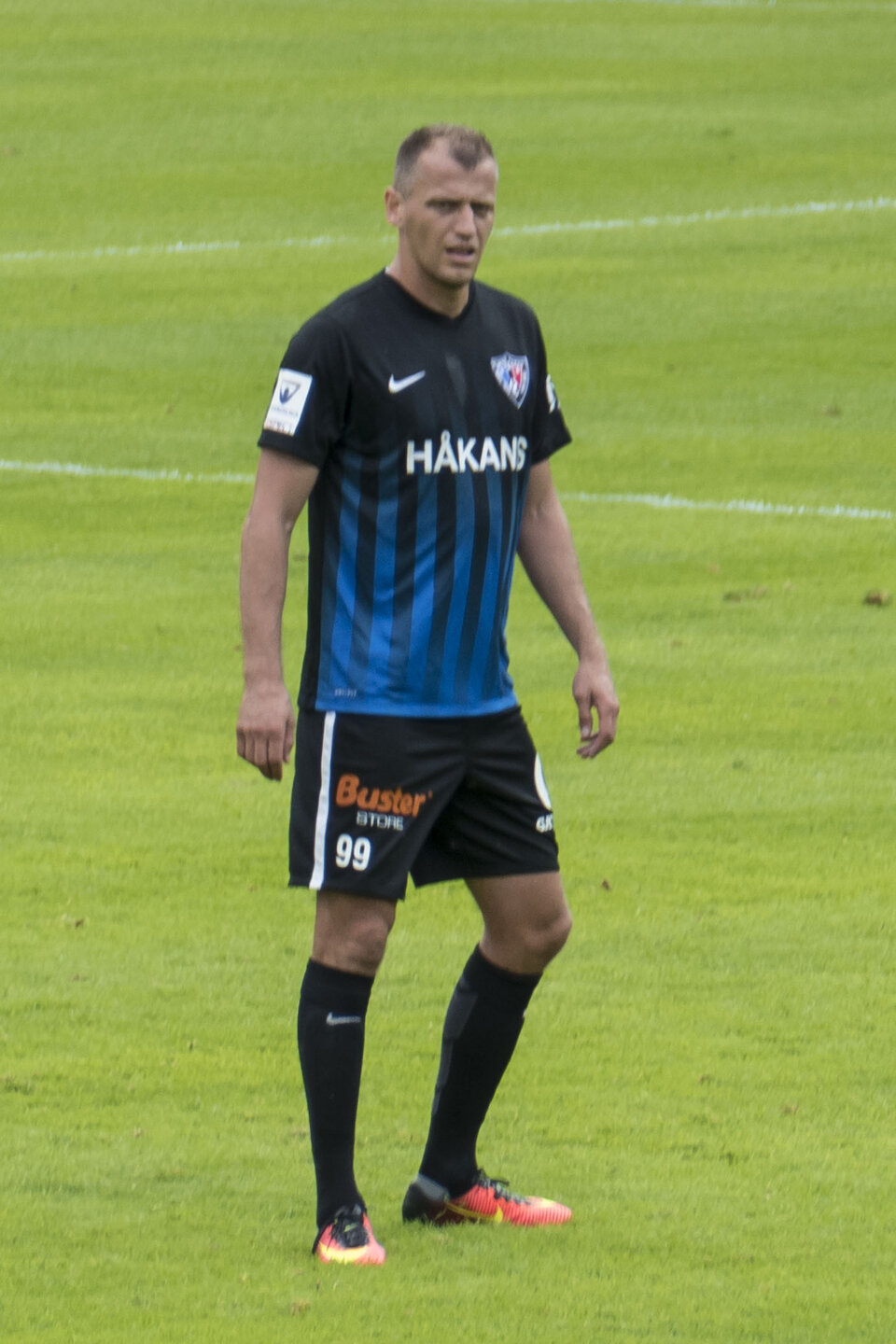
The roll runs on past the photographs. Agon Sadiku, born in Raahe in 2003, came through HJK and Honka to Dutch football, played two friendlies for Kosovo and then chose Finland — the two-anthems question, answered a new way by each generation. Lum Rexhepi, Finland-born in 1992, answered it the other way and has defended for Kosovo since 2014. Berat Sadik, a Finland international striker of Macedonian-Albanian descent, took the road through the Veikkausliiga to the Macedonian first division. And in Vantaa, a rapper called T Swoop — Artin Zogiani, born around 2000 to Kosovar parents — put Balkan brass under Finnish rap and watched his single "Mon ami" run up half a million streams in a month in 2022: the second generation, making the hyphen sing.
How do Albanians in Finland connect today?
Run the numbers of this page again, from the point of view of a single Albanian in Finland trying to find another one. The community is 19,600 people in a country of 5.7 million — one in 288. It lives, three-quarters of it, in four cities; in 249 of Finland's 308 municipalities there are fewer than ten Albanians of any age. It is young — nearly half the community is between 15 and 39 — and it is the most male-skewed in the Nordics: 131 Albanian-speaking men for every 100 women, and in the prime marrying years the surplus is worse. An Albanian man in his early thirties in Tampere shares his entire region with 737 Albanian speakers of every age — and nationwide, Albanian-speaking women in his five-year age band number 937.
The marriage register catches only the visible end of it. Albanian-speaking grooms married in Finland exactly 131 times in each of the last three years — a number so steady it reads like a quota — and 29 of those marriages were to Albanian-speaking brides, up from four in 2005. But most Albanian weddings in this community's life do not happen in Finland at all. They happen in Kosovo, Albania and North Macedonia in July, and enter Finnish statistics months later as family-ties residence permits — which is exactly how a large share of this community got here in the first place. The couple meets across a border; the paperwork follows.
The border got thinner recently. Since January 2024, Kosovo passport holders travel to Schengen visa-free. And the air bridge is real: Norwegian flies Helsinki–Pristina nonstop twice a week, and on 30 April 2026 Finnair opened Helsinki–Tirana, its first route to Albania ever — three hours and a quarter from Vantaa's airport to the homeland, in a city where one resident in forty-nine would recognise the language at the gate.
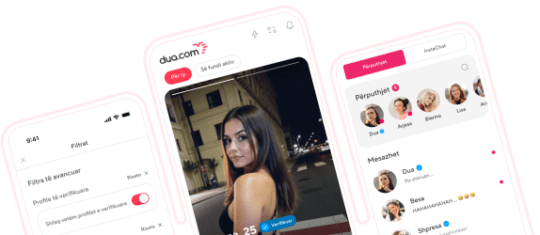
For fifty years of diaspora life everywhere else, the answers to "where do I meet someone?" were the association, the mosque, the wedding circuit and the summer. Albanian Finland has all four, at Finnish scale: a handful of registered associations, a futsal club, a mosque community that most of the community never formally joined, and a July that empties Suvela toward Drenica. They work — and they are small, and the geometry above is unforgiving. This is the exact gap dua.com exists to close: it makes the pool national and cross-border instead of municipal. A twenty-eight-year-old in Jakobstad — one of 314 Albanians in a Swedish-speaking town most Finns have never visited — is choosing from the same community as someone in Vantaa, Stockholm, Zurich or Pristina, and nobody on the other side of the match needs "where is Skenderaj?" explained. Choosing well is as hard as it has ever been. Having someone to choose from no longer depends on which reception centre the 1990s assigned your parents to.
Practical directory for Albanians in Finland
Primary and community-run resources. Verify current requirements on the linked sites — permit rules tightened in 2024–2026.
| Need | Where to start | Why this source |
|---|---|---|
| Kosovan consular services | Ministry of Foreign Affairs and Diaspora, Republic of Kosovo | Kosovo's embassy in Stockholm is the consular hub for the Nordic region, Finland included |
| Albanian consular services | Embassy of Albania in Stockholm | Accredited to Finland as well as Sweden, Norway and Iceland |
| Residence permits and citizenship | Migri — Finnish Immigration Service | The official authority; statistics portal at tilastot.migri.fi |
| Population registration and mother tongue | Digital and Population Data Services Agency (DVV) | Where your registered language lives — you can register a child's mother tongue as Albanian here |
| Albanian classes for children | Your municipality's education services (oman äidinkielen opetus) | Five pupils entitle a group to two state-funded hours a week; 1,138 pupils were enrolled in autumn 2023 |
| Community life, capital region | Hakunila International Organization, Vantaa | Runs the Albanian culture group, children's and women's circles |
| Community life, Turku | Albaaniyhdistys Bashkimi ry / KF Kosova | The oldest Albanian association in Finland (1998) and its top-flight futsal club |
| Faith | Albanian Islamic Cultural Centre "Dituria", Helsinki | The registered Albanian religious community (2019); most Albanian Muslims attend the capital's general mosques |
| Flights home | Helsinki-Vantaa (HEL) | Norwegian flies nonstop to Pristina twice weekly; Finnair opened Helsinki–Tirana on 30 April 2026 |
The ledger: what is measured and what is not
Every sister page in this series ends by building its headline out of blocks. This one ends by explaining why it did not have to — and where even Finland's register stops.
What is measured exactly
The 19,600 is a census-grade count, republished annually. Registered mother tongue: 19,600 Albanian speakers at 31 December 2025, of whom 11,105 men and 8,495 women; 5,156 in Vantaa; 5,199 under fifteen. Employment (7,154 in work), entrepreneurship (901), even marriages by language (131 Albanian-speaking grooms in 2025) all run on the same register. Nothing on this page needed modelling to say any of that. No other country in this series can make that claim — Germany models its second generation, Italy infers it, Sweden lost most of its community inside a dead country code.
What the register cannot do
Three things, each stated once and plainly. It cannot see Kosovo — no code exists, so country-based tables file this community under "Former Yugoslavia" (9,567 born there) and "Former Serbia and Montenegro" (8,688 citizens), categories that also contain Bosniaks, Serbs and Macedonians and are never treated as Albanian counts on this page. It undercounts the second generation — a child registered Finnish-speaking leaves the Albanian line for good, so 19,600 is a floor for the population of Albanian origin; the background-country tables put the ceiling somewhere below 23,400, and the honest single sentence is "close to twenty thousand registered, somewhat more by origin". And it says nothing about identity — a register line is not an ethnicity, and Finland, like every Nordic country, collects no ethnicity data at all. The difference here is only that Finland's proxy is uniquely good.
Measures that must never be mixed
Four universes appear on this page, each labelled where used. Language (19,600) — the master count. Citizenship (1,959 Albanian, 8,688 "Former Serbia and Montenegro") — passport stock, shrunk by naturalisation. Country of birth (2,204 Albania, 9,567 "Former Yugoslavia") — first generation only, in mixed codes. Background country (23,406 across all relevant codes) — two generations, mixed nationalities, shown for scale and never as an Albanian count. Anyone who adds numbers across these universes — and diaspora sites do it constantly — is counting some people twice and some strangers once.
Frequently asked questions about Albanians in Finland
How many Albanians live in Finland?
19,600 residents of Finland had Albanian registered as their mother tongue at 31 December 2025 — an exact count from the population register, not an estimate. Because some second-generation children are registered as Finnish-speaking, the population of Albanian origin is somewhat larger: close to twenty thousand registered speakers, with an upper bound below about 23,400 from the background-country tables. Finland is the only major Albanian destination whose headline number needs no model.
Why can Finland count its Albanians when Sweden and Germany cannot?
Because Finland registers a mother tongue for every resident and publishes population by language annually back to 1990. Sweden and Germany record no language and no ethnicity, so their Albanian communities must be reconstructed from birth-country and citizenship codes that scatter Albanians across Yugoslavia's successor states. Finland's country codes are just as blind — it has no Kosovo code at all — but the language register cuts through them.
Where do most Albanians in Finland live?
In four cities. Vantaa leads with 5,156 Albanian speakers — one resident in forty-nine, the highest share in Finland — followed by Espoo (3,935), Turku (2,687) and Helsinki (2,551): together 73 percent of the whole community. Espoo's Suvela district is nicknamed "Pikku-Kosovo", Little Kosovo, with about 1,500 Albanians in its belt. In 249 of Finland's 308 municipalities the Albanian count is below ten. The one outlier is Jakobstad in Ostrobothnia, where work migration lifted the count from 86 to 314 in a decade.
When did Albanians first come to Finland?
In 1992, statistically speaking: the register recorded its first 174 Albanian speakers that year, and 1,748 by the end of 1993 — a tenfold jump driven by Kosovo Albanian asylum seekers fleeing the Milošević regime as Yugoslavia collapsed. Finland had no 1960s labour recruitment from Yugoslavia, so unlike Germany, Austria or Switzerland, Albanian Finland has no guest-worker generation: the community begins with the wars.
What did Finland do during the Kosovo war?
Three things. It airlifted about 1,000 Kosovar refugees out of North Macedonia's camps under UNHCR's Humanitarian Evacuation Programme, starting with a first group of 164 housed at the Joutseno reception centre in late April 1999 — most returned home after the war. Its president, Martti Ahtisaari, negotiated the war's end, personally delivering the peace terms to Milošević in Belgrade on 3 June 1999. And from August 1999 it sent peacekeepers: the Finnish KFOR battalion in Lipjan ran for eleven years at a peak of over 800 soldiers, and about 70 Finns serve in KFOR still.
What is the Ahtisaari Plan?
The Comprehensive Proposal for the Kosovo Status Settlement, written by Martti Ahtisaari as UN Special Envoy after sixteen months of negotiations and presented in March 2007. It recommended internationally supervised independence with strong minority protections, and when talks with Belgrade deadlocked, it became the framework on which Kosovo declared independence on 17 February 2008 and wrote its constitution. Ahtisaari received the 2008 Nobel Peace Prize; when he died in October 2023, Kosovo's president said he had laid the foundations of the state.
Does Finland recognise Kosovo?
Yes — Finland recognised Kosovo on 7 March 2008, less than three weeks after the declaration of independence, and pledged 15 million euros for the new state's development. Finland maintains an embassy in Pristina. The statistical irony is that Finland's own registers still contain no Kosovo country code, so Kosovan citizens in Finland are filed under "Former Serbia and Montenegro" to this day.
Why is there a work-migration boom from Kosovo to Finland?
Since the mid-2010s Finland has recruited Balkan labour into construction, care and services, and Kosovo became one of its top work-permit nationalities — fifth-largest in 2021 with 562 first work-based permits, behind only Ukraine, Russia, the Philippines and India. The register shows the result: Albanian speakers grew 55 percent in five years, and the Kosovan passport stock nearly doubled. Kosovar practical nurses in Finnish care homes and site crews on Finnish builds are this decade's version of the 1990s reception centres — the first rung.
Do Finnish schools teach Albanian?
Yes, at public expense. Municipalities organise heritage-language classes wherever five pupils can be gathered — two hours a week with state-paid teachers — and in autumn 2023, 1,138 pupils were studying Albanian in Finnish schools, one of the largest heritage languages taught. Classes run across the capital region and Southwest Finland and up into Ostrobothnia. Finnish-Albanian bilingual school dictionaries have existed since 1995.
Which famous people belong to this story?
The Hetemaj family above all: brothers Përparim (50 Finland caps, 239 Serie A games for Chievo) and Mehmet (capped by both Finland and Kosovo), and their sister Fatbardhe, a Helsinki city councillor — all three carried through a reception centre in Oulu in 1992. Shefki Kuqi, Finland's swan-diving striker with 62 caps, and his brothers Njazi and Albert. Boxer Edis Tatli, twice European lightweight champion. Hurdler Nooralotta Neziri, an Olympian with a Macedonian-Albanian father. HJK's Erfan Zeneli, the young forward Agon Sadiku, Kosovo international Lum Rexhepi, and the Vantaa rapper T Swoop.
How does Finland's Albanian community compare with Sweden's and Norway's?
It is the smallest of the three but the most precisely counted and among the fastest-growing. Finland: 19,600 registered Albanian speakers, up 55 percent in five years. Norway: 21,809 people with Albanian or Kosovar background on the statistics agency's count. Sweden's community is much larger — this series estimates more than 60,000 — but Sweden cannot count it, because most of its Kosovo Albanians are registered as born in "Yugoslavia". Finland is also the youngest and most male of the Nordic communities: 26.5 percent under 15, and 131 men per 100 women.
How do Albanians in Finland meet other Albanians?
Through a small, dense institutional world — the Bashkimi association and KF Kosova futsal club in Turku, the Hakunila International Organization's Albanian group in Vantaa, the mosque communities, the wedding circuit and the July return — and, increasingly, across borders. Most Albanian weddings in this community happen in Kosovo or Albania and reach Finnish statistics as residence permits; since 2024 Kosovars travel to Schengen visa-free, and Helsinki now has nonstop flights to both Pristina and Tirana. dua.com closes the same gap digitally: it makes the pool national and cross-border, so meeting another Albanian no longer depends on living in one of four cities.