
Istanbul's Albanian community is spread across districts, generations and languages—but it does not have to stay disconnected. dua.com gives Albanians in Istanbul one place to meet people who share their roots, values and relationship intentions, while opening the same connection to the wider Albanian diaspora.
No reliable current count of Albanians in Istanbul exists. The last provincial figure was 4,341 Albanian mother-tongue speakers in 1965, down from 6,148 in 1927. Today's population with Albanian roots is much larger, but six-figure claims have no published method.
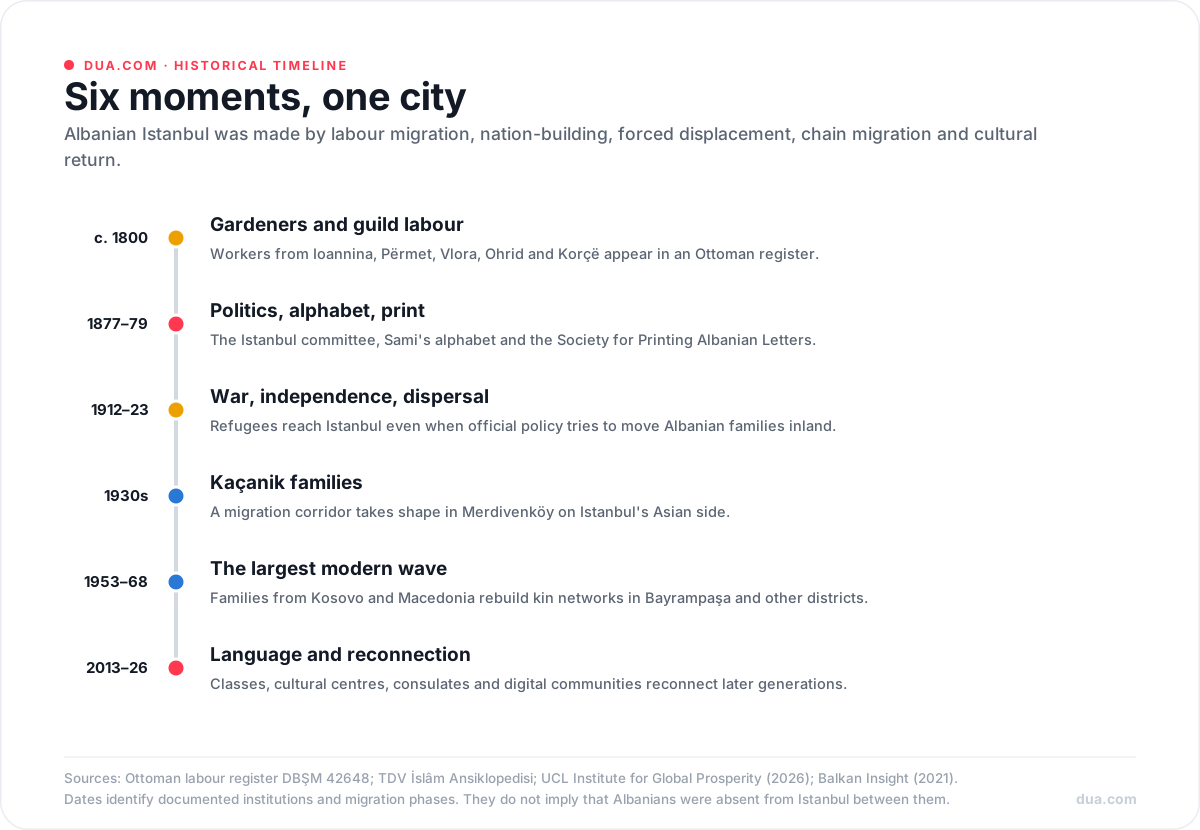
What can be documented is remarkable. Albanian-speaking migrants fed the Ottoman capital; the Frashëri brothers helped standardise written Albanian here; and later families rebuilt village networks in Bayrampaşa, Merdivenköy and Küçükçekmece. This guide follows that history and the community today while keeping language, descent, citizenship and identity separate.
For more on this topic, read Albanians in London: A Community of About 80,000 and Albanians in America: A Community Estimated at 750,000 to 1 Million.
How many Albanians live in Istanbul?
The honest answer is that nobody knows. Istanbul had 15,754,053 registered residents in 2025, but Turkey records citizenship, not ethnicity. Historic Albanian-descended families are usually Turkish citizens and often speak Turkish at home, so no current register can identify them.
| What is measured | Figure | What it does — and does not — tell us |
|---|---|---|
| Albanian mother tongue | 6,148 | 1927 census: language used in the home, not descent |
| Albanian mother tongue | 4,341 | 1965 census: last provincial Albanian result ever published |
| Citizens of Albania | 951 | 2025 register: current foreign citizenship, not Turkish citizens of Albanian origin |
These rows cannot be added together. A Turkish citizen whose grandparents came from Kaçanik, speaks no Albanian and holds no Albanian or Kosovar passport appears in none of them.
Swipe horizontally to explore the full chart.
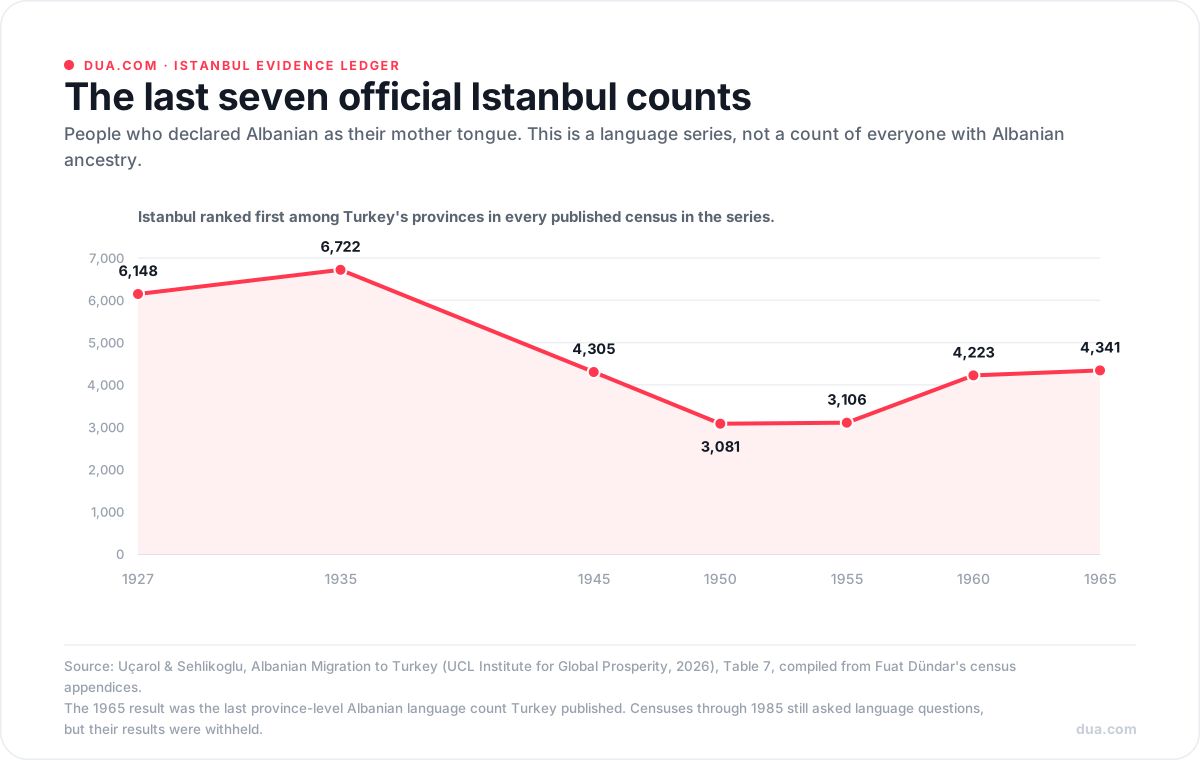
What the seven censuses show
The declared mother-tongue population peaked at 6,722 in 1935, fell to 3,081 in 1950, then rose with migration from Yugoslavia to 4,341 in 1965. The rebound shows new arrivals; the long decline during rapid city growth shows language shift. Istanbul still ranked first in all seven published provincial tables.
Why the six-figure claims do not hold up as statistics
A large descent population is plausible, but no six-figure claim publishes a sampling frame, date, district coverage or treatment of partial ancestry. The national Albanians in Turkey page reconstructs a country-wide floor; no defensible city allocation survives, so this page does not manufacture one.
The exact modern number: passports
At the end of 2025 Turkey counted 1,833 citizens of Albania, with 951 in Istanbul. The figure is useful for recent migration and consular services, but says little about Turkish citizens descended from Ottoman- or Yugoslav-era families.
Before there was a community: Albanians in the Ottoman capital
Albanians reached Constantinople through palace service, the military, administration, study, trade and seasonal labour. Ottoman records usually classified religion, office and birthplace rather than ethnicity, so a route from Përmet is not automatic proof of identity. Clearer cases include Koca Sinan Pasha near Delvinë, Köprülü Mehmed Pasha from the Berat sancak and Avlonyalı Mehmed Ferid Pasha from Vlora—figures integrated into the imperial elite, not a separate ethnic institution.
The workers behind the city
An Ottoman survey around 1800 recorded more than 2,000 shops and roughly 6,000 workers around the Bosphorus and Golden Horn. Cengiz Kırlı's study of the register traces large worker streams from Ioannina, Grevena, Përmet, Monastir, Vlora and Ohrid.
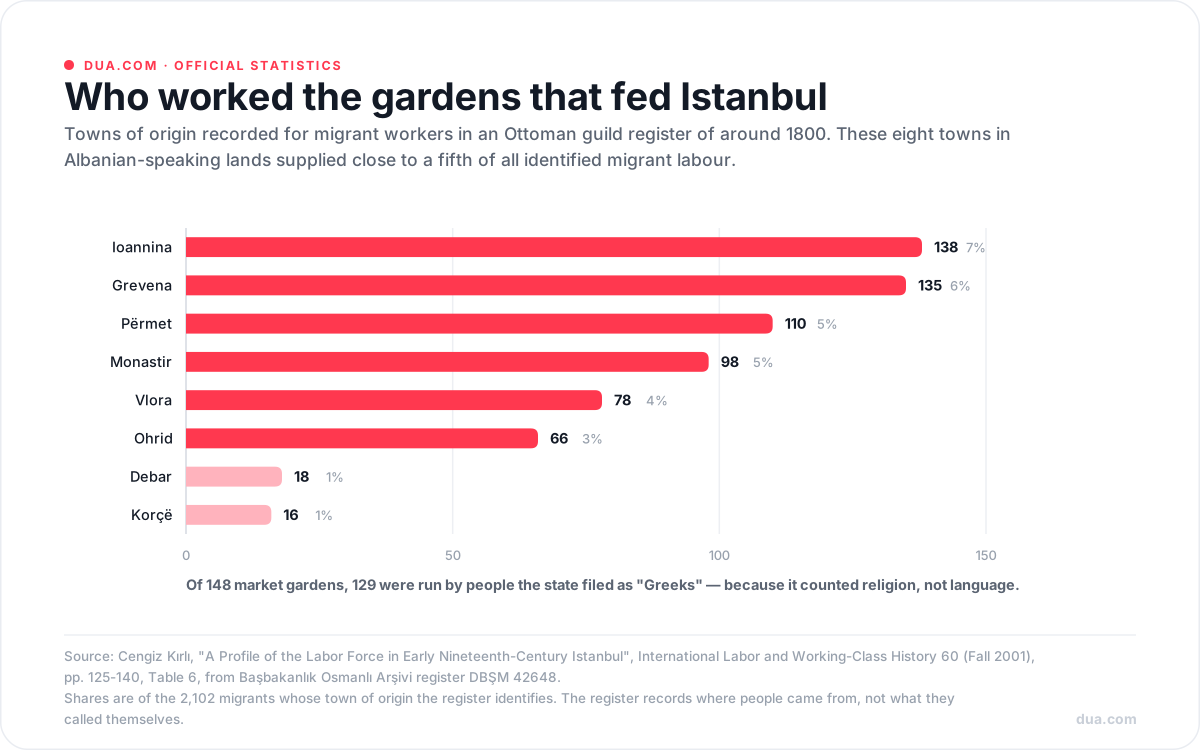
Market gardening was the strongest pattern: 129 of 148 gardens were run by people recorded as Greek because they were Orthodox, a category that could hide Albanian speakers. Other Albanian-associated trades included livestock, watch work, boza and liver selling.
A trace that still has an address
Vefa Bozacısı says founder Hacı Sadık Bey came from multilingual Prizren, sold boza in Istanbul from 1870 and opened the Vefa shop in 1876. The origin does not prove ethnicity, but preserves a clear Balkan family route into an Albanian-associated trade.
Arnavutköy: what the name proves
Arnavutköy means “Albanian village”, but it is not today's Albanian quarter. The name refers here to the historic Bosphorus neighbourhood in Beşiktaş, not the airport district. Tradition says Mehmed II moved Albanian families there after the conquest, sometimes dated to 1468. The contemporary record is thin: the safe conclusion is an early Albanian association, not a known number, origin village or duration of language use.
By 1912 the quarter had 7,482 residents: 5,973 Greek Orthodox, 493 Muslims, 342 Armenians, 32 Jews and 642 others. The place-name had clearly outlived an Albanian-speaking concentration.
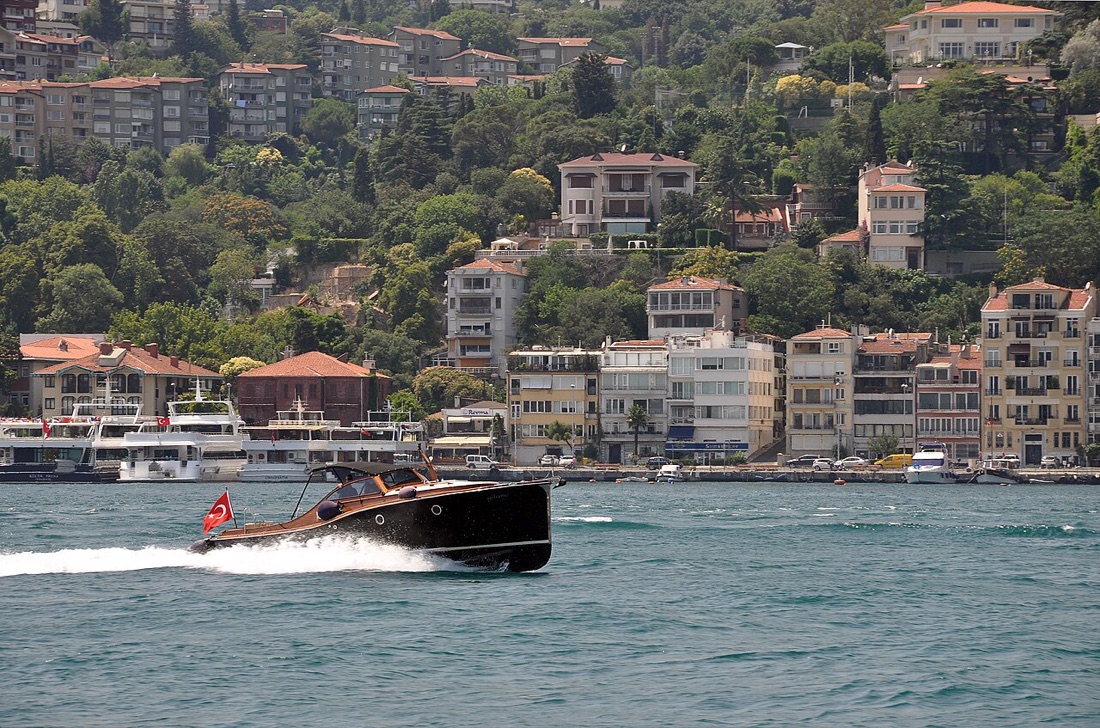
Photo: Moonik / Wikimedia Commons · CC BY-SA 3.0
Why names outlive people
Istanbul place-names can survive migration and language change. Arnavutköy preserves historical memory; Bayrampaşa, Merdivenköy and Küçükçekmece are better starting points for today's documented community.
The city where Albania was written down
Late-nineteenth-century Istanbul brought Albanian-speaking civil servants, merchants, teachers and writers from three faiths close to ministries and printers—and to imperial censorship. In December 1877 Abdyl Frashëri chaired the Central Committee for Defending Albanian Rights here, anticipating the League of Prizren. The next challenge was practical: one printed language across religious divisions.
The Istanbul alphabet
Albanian then used Latin, Greek and Arabic-derived scripts. Sami Frashëri, Hasan Tahsini, Pashko Vasa, Jani Vreto and others created a mainly Latin, one-sound-one-sign system. Approved on 19 March 1879, the thirty-six-letter Istanbul alphabet made common-language books possible and helped centre Latin script in the later standardisation debate.
The multi-faith Society for Printing Albanian Letters followed on 12 October 1879. It met on Mercan Slope near today's Istanbul University gate at Beyazıt—an Albanian publishing workshop within walking distance of the offices that governed it.
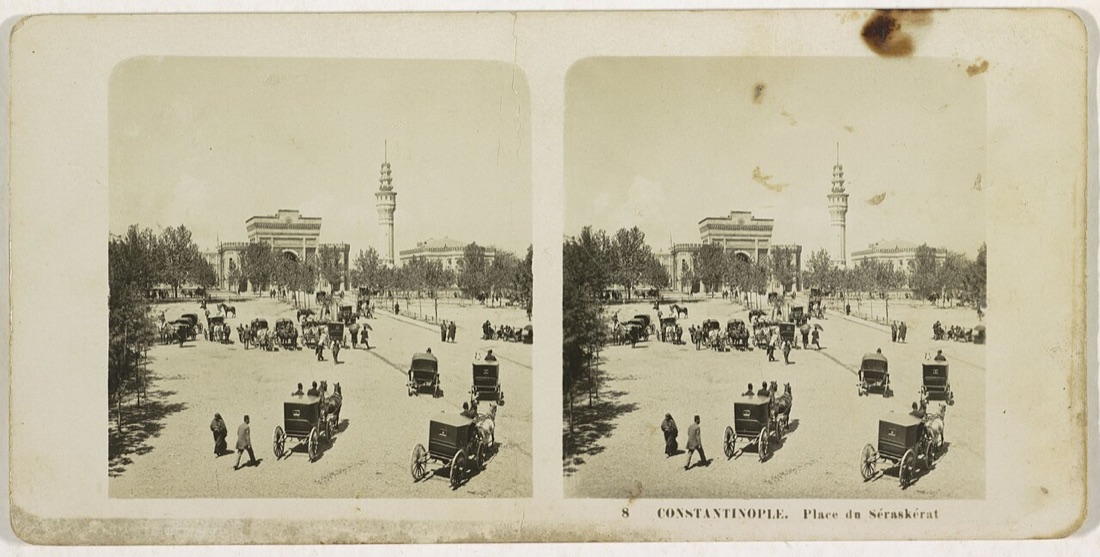
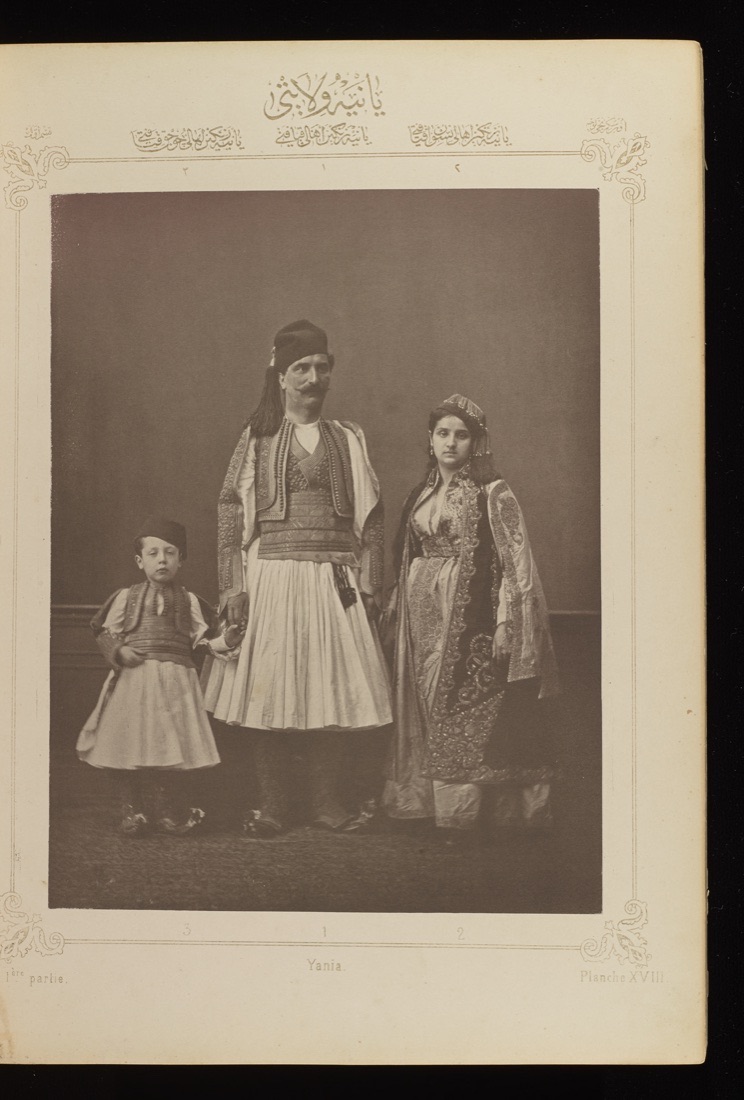
Photo: Rijksmuseum / Wikimedia Commons · CC0
The three Frashëri brothers
Abdyl Frashëri (1839–1892), an Ottoman deputy, organised the Istanbul committee and led the League of Prizren. Imprisoned after its defeat, he spent his final years in Istanbul; his son Mit'hat later chaired the Congress of Monastir.
Naim Frashëri (1846–1900) made Albanian a language of poetry and schools while working in the Ottoman education bureaucracy. A Bektashi, he was first buried at the Şahkulu Sultan lodge in Merdivenköy; Albania transferred his remains in 1937.
Sami Frashëri (1850–1904), Şemsettin Sami in Turkey, transformed both literatures: he designed the Istanbul alphabet and school texts while producing a Turkish novel, six-volume encyclopaedia and major dictionary. Albanian scholarship generally attributes the anonymous 1899 political programme Shqipëria — ç'ka qenë, ç'është e ç'do të bëhet? to him; some Turkish scholarship disputes it.
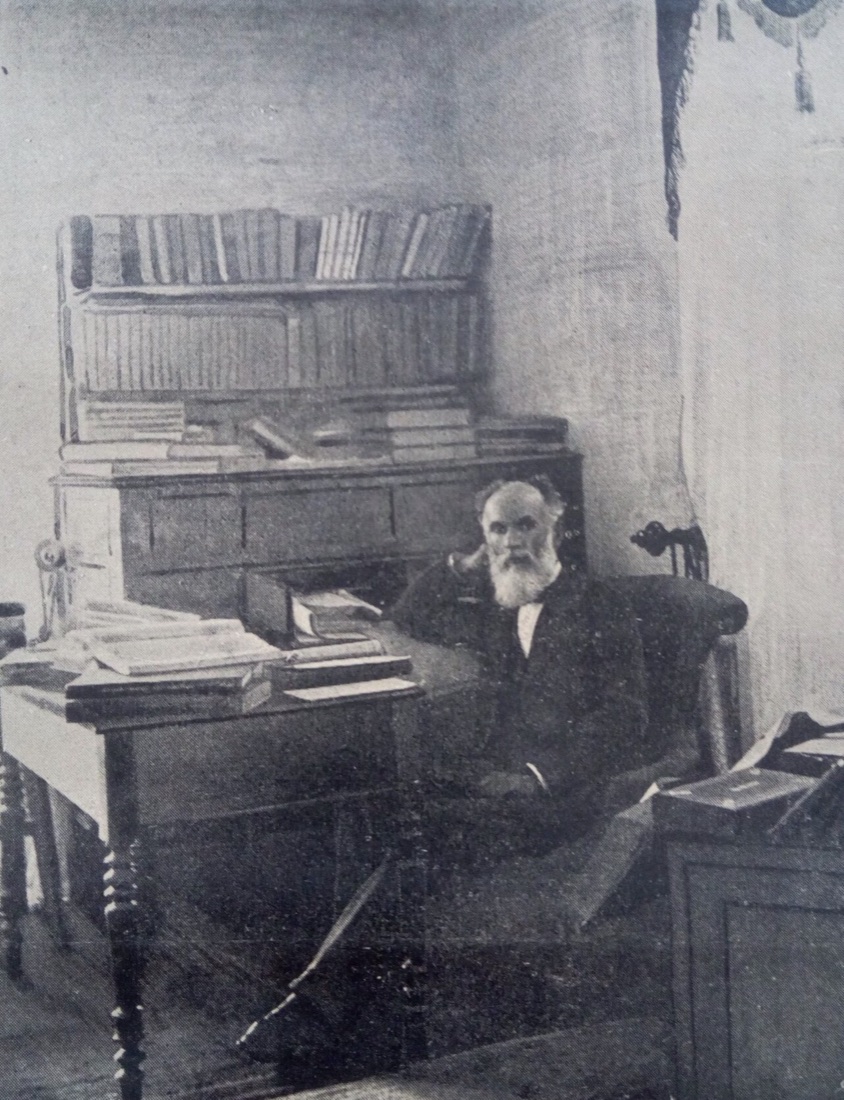
Sami Frashëri, 1896
One desk, two national canons: Albanian language-building and Turkish literature and lexicography.
Photo: Unknown author / Wikimedia Commons · Public domain
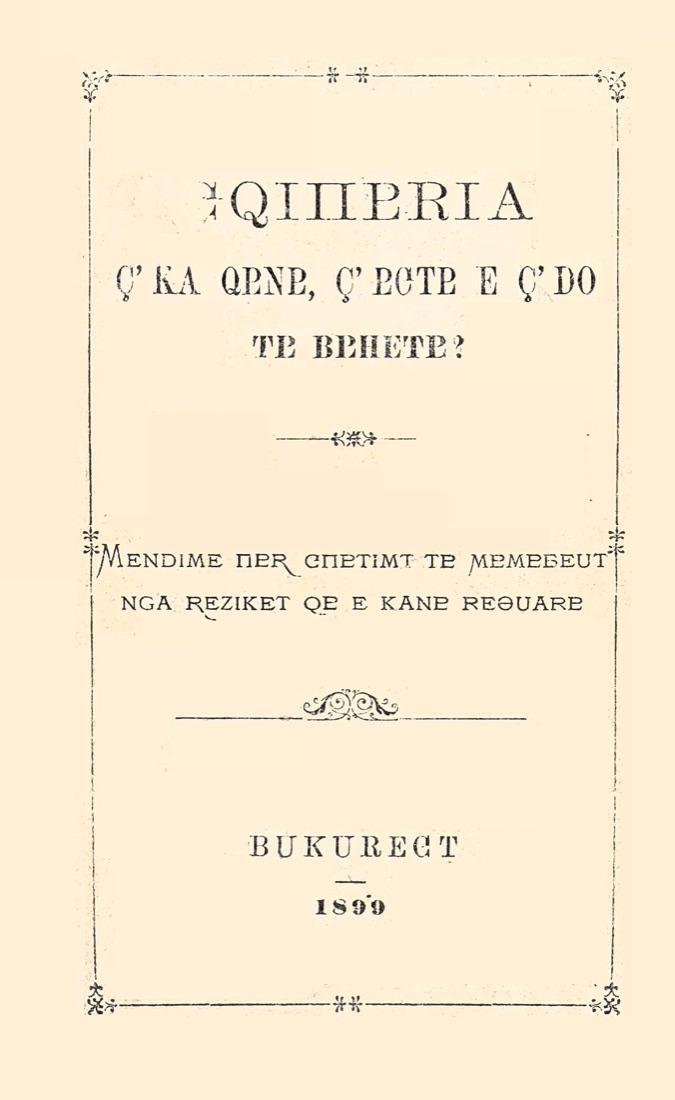
The 1899 programme
Published anonymously in Bucharest while its presumed author lived under restriction in Istanbul.
Photo: Alba1912 / Wikimedia Commons · CC BY-SA 4.0
Their roles were distinct: Abdyl organised, Naim created a literary imagination, and Sami built linguistic tools while reshaping Turkish letters. Together they make Istanbul a workshop of Albanian nation-building, not simply a place of settlement.
The wider circle
Pashko Vasa worked on the alphabet; Hasan Tahsini became the first director of the institution that developed into Istanbul University; Jani Vreto shifted printing to Bucharest when Ottoman publication became impossible; and Ibrahim Temo helped found the organisation that became the Committee of Union and Progress. They disagreed on politics but shared one premise: Albanian needed education and print.
From Ottoman reform to Albanian independence
In 1908 Albanian-origin officer Resneli Ahmed Niyazi Bey and mass mobilisation in Kosovo helped force restoration of the Ottoman constitution. Albanian clubs and schools briefly expanded. The Congress of Monastir, chaired by Abdyl Frashëri's son Mit'hat, then adopted two Latin-based alphabets.
By 1910 schools and presses were restricted and the alphabet had become a test of whether Albanian public life could exist inside the empire. Albanian organisers met in Istanbul again in January 1912 seeking autonomy and rights. The Balkan Wars changed the horizon; Ismail Qemali declared independence in Vlorë on 28 November.
The family that crossed the new border in both directions
The Frashëri family crossed the new border in both directions: Abdyl's son Mit'hat entered Albanian politics, while Sami's children remained in Istanbul. His son Ali Sami founded Galatasaray and became Ali Sami Yen. The family helped build institutions in both national projects.
How modern Albanian Istanbul was made
Most Istanbul families who actively remember Albanian or Kosovar roots trace them to displacement and chain migration from the late nineteenth to the late twentieth century—not to the older Ottoman elite.
1877–1878: displacement from the Niš region
The Russo-Ottoman War and new borders displaced Muslim communities across the Balkans. Many Albanians moved south into Kosovo or east toward Ottoman territory. About 1.5 million Balkan Muslims were displaced across the crises of 1877–78 and 1912–13, but the Albanian and Istanbul shares cannot be isolated.
1912–1923: arrival, prohibition and escape
The Balkan Wars sent families through Edirne and Greek ports. Istanbul was a natural destination, but policy treated Albanian concentration as a security risk and directed migrants inland. Many later moved without permission toward Istanbul, Bursa and İzmir, following relatives and work rather than the official settlement map.
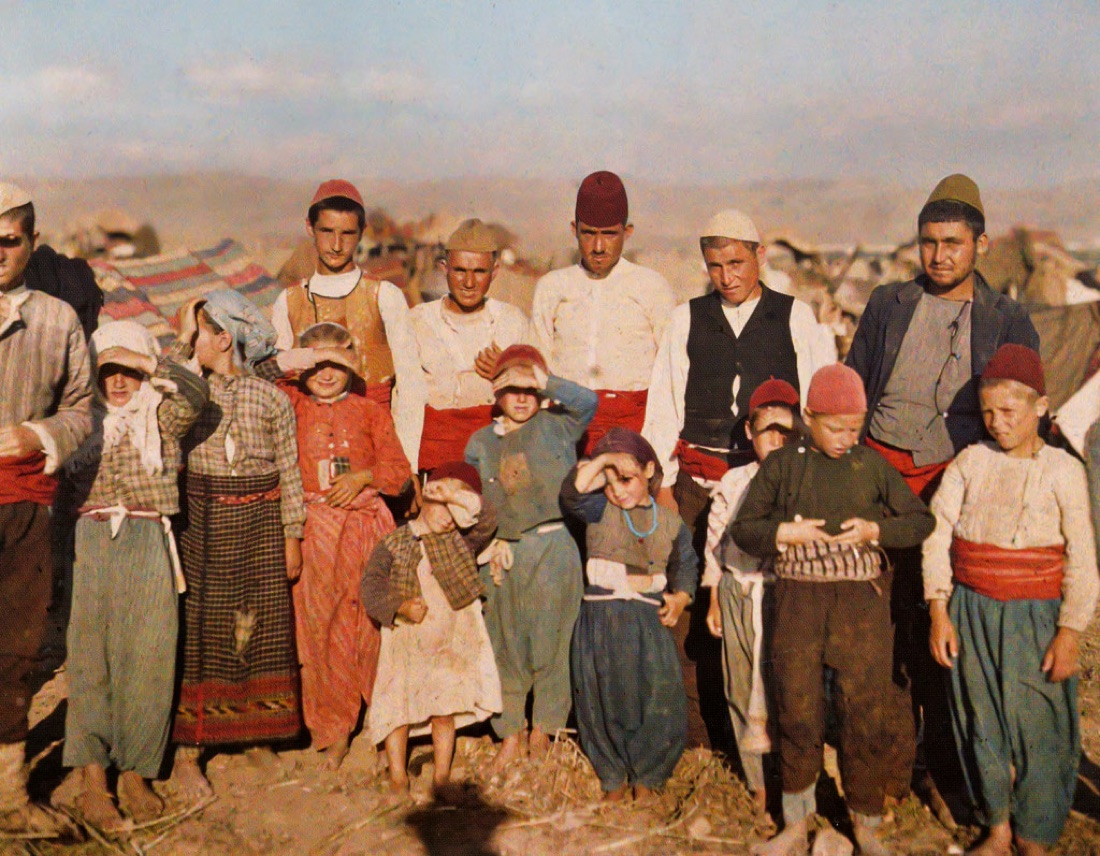
Photo: Stéphane Passet / Wikimedia Commons · Public domain
The interwar years: “settled” and “free” migrants
State-supported migrants accepted assigned destinations; self-financed migrants could choose where to live. Although Albanian families were often dispersed away from western cities, a Kaçanik-origin stream was already forming in Merdivenköy during the 1930s.
1953–1968: the wave that built the living neighbourhoods
The largest migration remembered by today's associations came from socialist Yugoslavia after a 1953 arrangement. Between 1954 and 1958, 107,262 people moved to Turkey. Official categories usually called them Turks or Yugoslav Muslims, although many were Albanian families from Kosovo and Macedonia who had presented Turkish cultural affiliation to qualify.
Citizenship and integration were rapid, but relatives still determined addresses. Village networks reassembled within walking distance, producing the remembered map of Bayrampaşa, Merdivenköy and Küçükçekmece.
1990s: Albania reopens and Kosovo goes to war
After 1990, a smaller migration arrived directly from Albania and remained more visible in citizenship data. During the Kosovo war, roughly 14,000 Kosovars reached Turkey; about 6,500 stayed in Kırklareli and others with relatives, including in Istanbul. Most returned, but diaspora mobilisation and easier post-war travel renewed family and language ties.
The neighbourhood map
Istanbul has no officially designated Albanian quarter. No district keeps an ethnic register, and a family address is not proof of identity. The locations below are the places supported by fieldwork, official community contacts or reported oral history. They are starting points, not boundaries.
Swipe horizontally to explore the full chart.
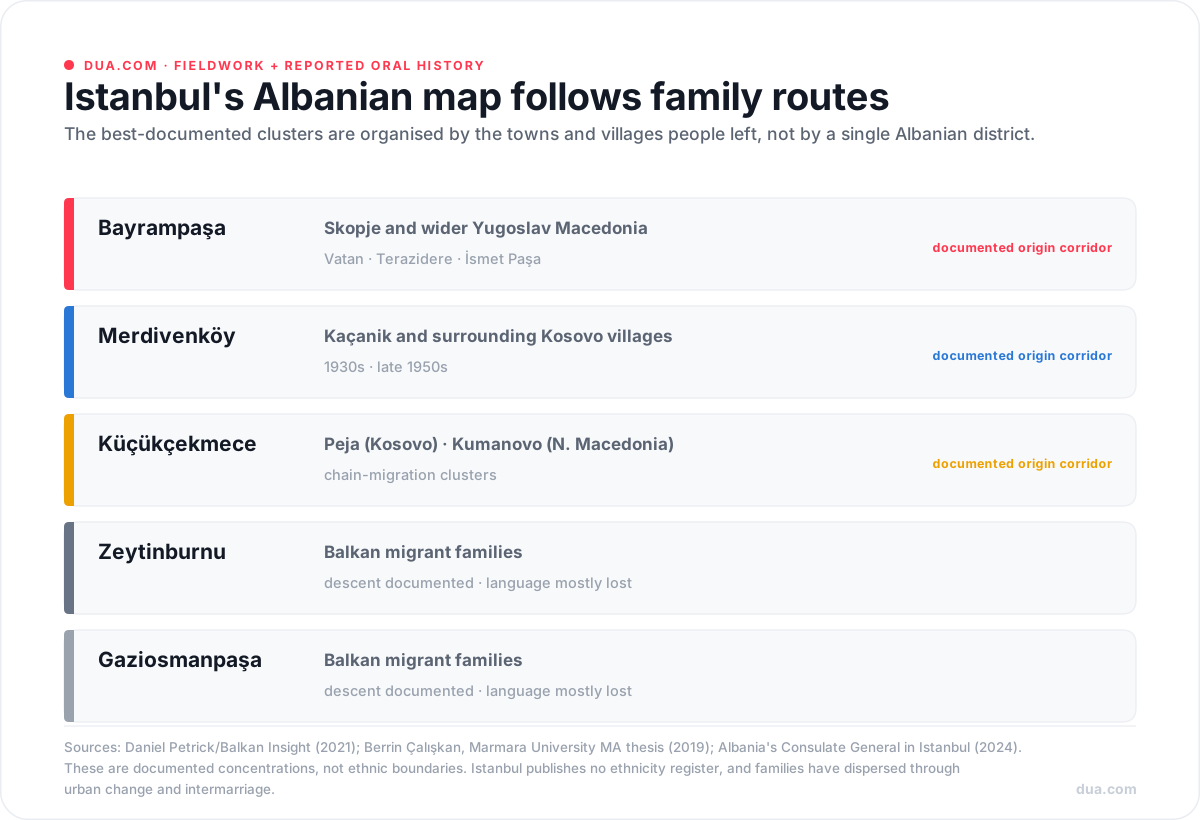
Bayrampaşa: the institutional centre
Bayrampaşa has the strongest combined evidence. The district history records rapid growth with migration from Yugoslavia after 1955 and says migrants of all origins once formed 40 percent of the population. A 2019 Marmara University thesis places Albanian-origin clusters in Vatan, Terazidere and İsmet Paşa, but treats this as neighbourhood knowledge rather than a census.
The district hosts the Turkish-Albanian Brotherhood and the Kosovo Cultural Centre, and is strongly associated with families from Skopje. Albania's Consulate General describes it as one of Istanbul's municipalities with the largest Albanian-origin population.
Merdivenköy: Kaçanik on the Asian side
Interview reporting found that almost every Albanian family in Merdivenköy traced roots to Kaçanik and nearby villages, with arrivals in the 1930s and late 1950s. The area also holds the Şahkulu Sultan Bektashi lodge, Naim Frashëri's first burial place, and a later association with language classes.
Küçükçekmece: Peja and Kumanovo routes
Küçükçekmece has documented concentrations from Peja and Kumanovo, plus a Turkish-Albanian Brotherhood branch. Because official records could classify an Albanian-speaking Muslim family in several ways, family language and place memory supply the missing detail.
Zeytinburnu and Gaziosmanpaşa
Research also identifies Albanian-descended families in Zeytinburnu and Gaziosmanpaşa, generally with weaker language retention. Affordable land, factories, housing clearance and chain migration shaped both districts.
Why the old streets dissolved
Streets that once reproduced a Balkan village dissolved through redevelopment, mobility, intermarriage and generational change. Albanian Istanbul shifted from proximity by migration to connection by choice: relatives, classes, associations, commemorations and online groups now replace the old street.
How the language left — and returned
The census curve and the family interviews describe the same process. First-generation migrants spoke Albanian inside dense family networks. Their children learned Turkish at school and work. Later generations married outside the group and used Turkish at home. Identity often survived after fluency disappeared.
The social bargain
Citizenship offered security after displacement, and many families saw Turkish identity and Albanian ancestry as compatible. Public pressure favoured Turkish, while marriage within Yugoslav-migrant networks preserved Albanian for a generation. Later intermarriage accelerated the shift—explaining how new arrivals could raise the census count while household language still declined.
A name changed to remember the old one
Kamil Bitiş was born Kamil Bytyqi near Lipjan in 1959 and moved to Istanbul in 1964. His grandfather chose the Turkish surname Bitiş because it echoed Bytyqi. The family settled in Bayrampaşa, where older neighbours lived largely in Albanian; his children learned it, but the grandchildren were unlikely to. One household captures the shift from fluency to symbolic identity.
The classroom as a new neighbourhood
The Kosovo Cultural Centre opened in Bayrampaşa in 2013 and offered free classes to learners from school age to their seventies—dialect speakers, people with a few family words and beginners. Merdivenköy and Yıldız Technical University have also offered Albanian. Schedules change, but the model matters: the classroom assembles generations who no longer share a street.
The significance goes beyond language. Earlier generations inherited an Albanian network simply by living inside it. Today's descendants may have to seek one out.
A language classroom can therefore do something the old neighbourhood once did automatically: bring together people who share a connection but no longer share a street.
Which Albanian did Istanbul families speak?
There is no single Istanbul dialect. Kosovo and North Macedonia mainly brought Gheg varieties; southern streams brought Tosk or transitional speech. Ask which generation, family side and origin—and whether “Albanian” means inherited dialect, the standard language or a few remembered words.
Faith, food and the traces that survived
Albanian Istanbul was never one faith. The 1879 printing society crossed Muslim, Orthodox and Catholic lines; later mass migration was mainly Muslim because settlement policy used religious and cultural criteria.
Bektashi Istanbul
The Bektashi order has the deepest organised Albanian link among Ottoman Sufi traditions. Naim Frashëri wrote Bektashi works and was first buried at Şahkulu Sultan in Merdivenköy. After Turkey closed dervish lodges in 1925, the world centre eventually moved to Tirana.
Why the dish is called Arnavut ciğeri
Evliya Çelebi's 1638 guild account identifies Istanbul liver-sellers as Albanians from Ohrid, Korçë and Hrupishta. The occupational association survived in Arnavut ciğeri—diced, seasoned liver served with onion.
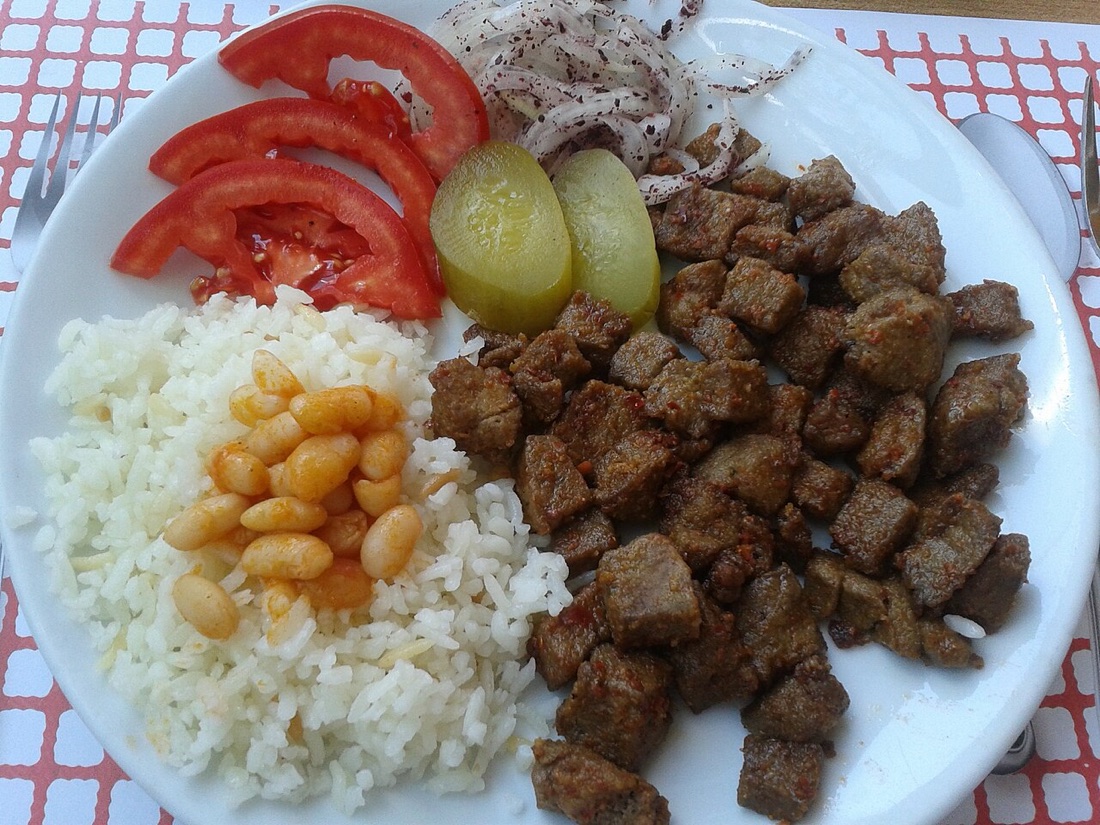
Photo: E4024 / Wikimedia Commons · CC BY-SA 4.0
The evidence supports the seventeenth-century workers and the name, not claims that the modern recipe arrived in the fifteenth century.
The Albanian character in shadow theatre
Karagöz shadow theatre's stock Arnavut character appeared as a gardener, dealer, watchman, boza-seller or liver-seller. The stereotype echoes guild records but shows how Istanbul represented migrants, not how real people behaved.
Music, dance and commemorations
Associations preserve valle, national dress and 28 November events after everyday language shifts to Turkish. A shared national repertoire now brings together families from Skopje, Kaçanik and Albania whose migration memories remain different.
People who changed both cities and countries
Birthplace alone does not prove ethnicity. The people below have documented family or institutional links and are described only at the level the evidence supports.
Ali Sami Yen: from Frashëri to Galatasaray
Born Ali Sami Frashëri in Üsküdar in 1886, Sami's son co-founded Galatasaray in 1905, later led the Turkish Olympic Committee and coached Turkey's first international football team. He became Ali Sami Yen after the Surname Law.
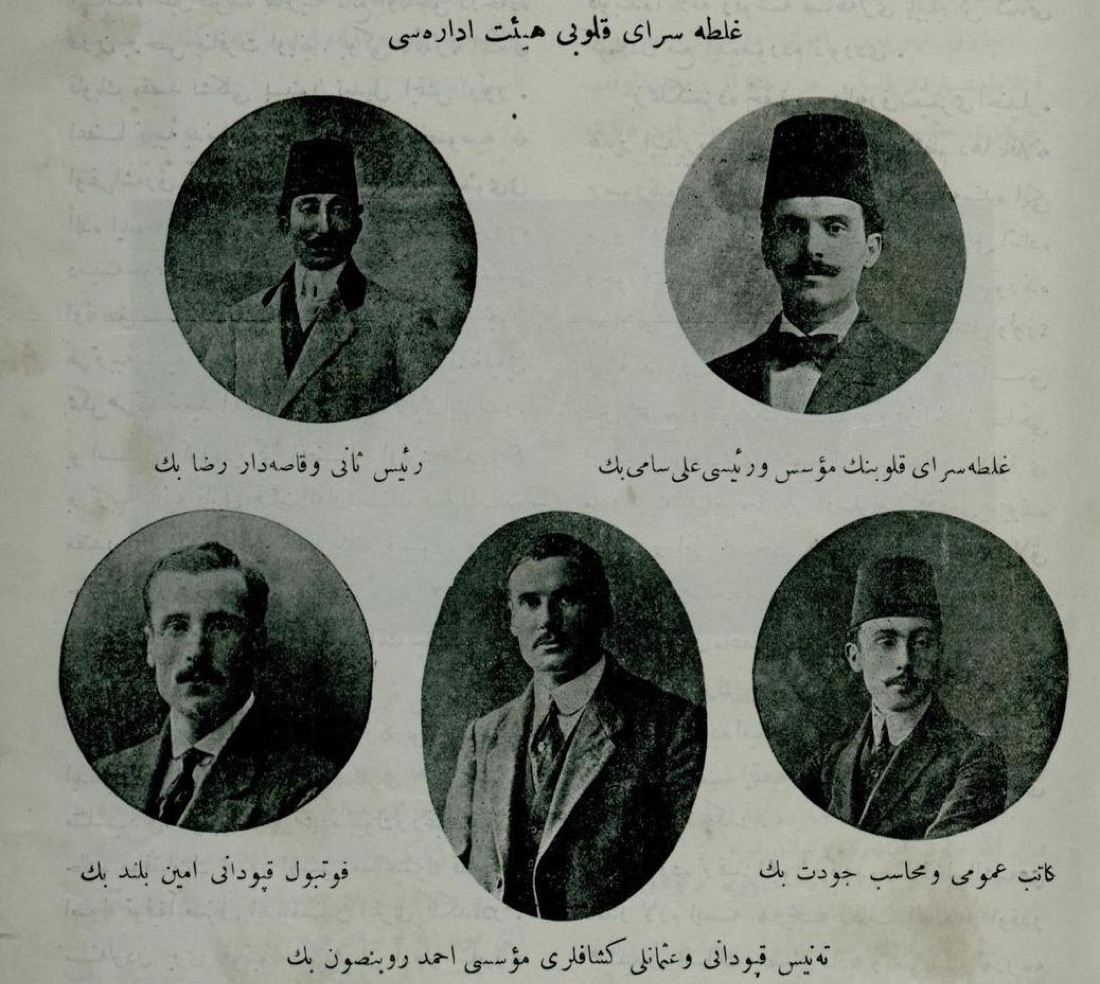
Photo: İdman magazine / Wikimedia Commons · Public domain
Mehmet Âkif Ersoy: the anthem writer's Peja line
Turkey's anthem writer Mehmet Âkif Ersoy was of Albanian paternal descent. His TDV biography traces his father from Shushicë near Peja to study and teaching in Fatih. Âkif was an Ottoman Islamist and Turkish national poet, not an Albanian nationalist.
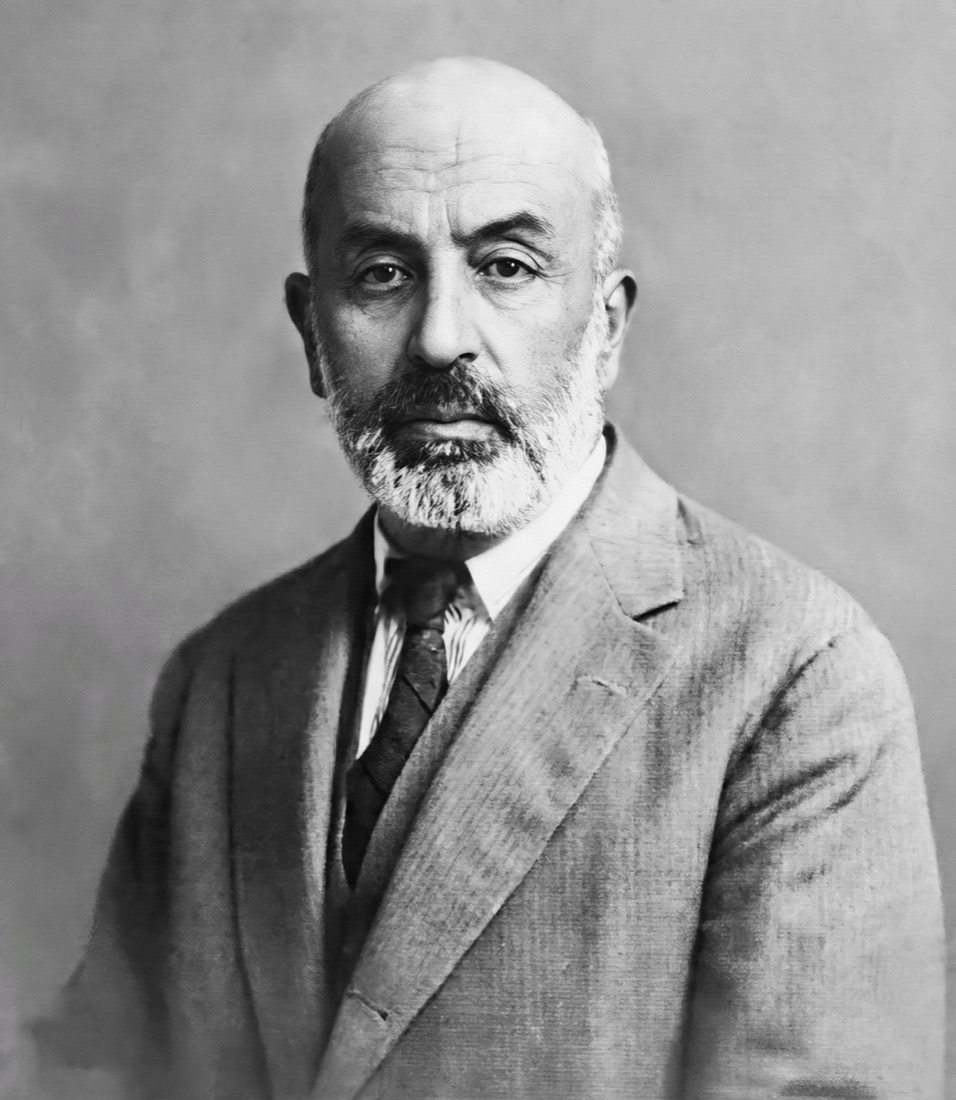
Photo: Furkan / Wikimedia Commons · Public domain
Hasan Tahsini: the first university director
Hasan Tahsini came from the Konispol area, studied in Istanbul and Paris, and became the first director of Darülfünun, the institution from which Istanbul University developed. He also participated in the Albanian alphabet circle. His life joins scientific education in the Ottoman capital to the Albanian cultural movement.
Pashko Vasa and Ibrahim Temo
Pashko Vasa served the Ottoman state, wrote in several languages and helped formulate an Albanian unity above confessional division. Ibrahim Temo studied military medicine in Istanbul and in 1889 co-founded the secret organisation that became the Committee of Union and Progress. Both show Albanian intellectuals acting inside broader Ottoman reform politics rather than in an isolated national sphere.
Was Atatürk Albanian?
The surviving record does not settle the claim. Several biographers and family traditions propose Albanian ancestry on Atatürk's paternal side; Turkish institutional accounts describe a Yörük-Turkmen line from Kocacık. A Salonica birthplace proves neither. This page records the dispute without presenting it as fact.
Istanbul and the Albanian world today
Istanbul remains Turkey's main bridge to Albania, Kosovo and Albanian communities in North Macedonia—through flights, universities, trade, health care, diplomacy and family visits.
Citizenship and consulates
The 951 Albanian citizens registered in 2025 include students, workers, business owners and family members. Other Albanian speakers hold Kosovar or North Macedonian passports, so nationality data still cannot count the whole migrant community. Albania's consulate is in Levent and Kosovo's in Nişantaşı; current details appear in the directory.
Movement and memory
Visitor totals measure trips, not residents, but show intense movement through Istanbul. Older generations called the city Stamboll: for one family it marks Ottoman service, for another refuge after Kosovo or Macedonia, and for a recent arrival a metropolis one short flight away.
The old migration routes have not disappeared; they have changed direction and purpose. Earlier generations arrived from Kosovo, North Macedonia and Albania to settle in Istanbul. Today, families, students, visitors and professionals move back and forth along many of the same routes.
Albanian Istanbul is therefore no longer simply a community created by migration into the city. It is part of a living network between Istanbul and the wider Albanian world.
How Albanians in Istanbul connect now
For earlier generations, the network often came with the address. Families from the same village or region settled near one another, relatives introduced relatives, Albanian could be heard at home and community life reproduced itself within a few streets.
Istanbul changed, and so did that system.
Families moved. Children and grandchildren grew up speaking Turkish. Intermarriage widened social circles. The neighbourhoods remained part of Albanian memory, but living in Bayrampaşa, Merdivenköy or Küçükçekmece no longer automatically meant living inside an Albanian social network.
What replaced the old street is not one institution but several. Language classes bring together descendants who want to recover what their families stopped speaking. Associations preserve folklore and commemorations. Consulates and cultural organisations maintain links with Albania and Kosovo. Online communities make it possible for people spread across Istanbul's thirty-nine districts to find one another.
The common thread is choice. Earlier generations were connected because migration placed them together. Many of their descendants connect because they actively decide that the Albanian part of their identity still matters.
That is where dua.com fits into the story. It does not recreate the old Albanian neighbourhood or replace the family, association or language classroom. It provides another way for people who value that shared connection to find one another beyond the street, family network or district they already know.
Watch Albanian Istanbul
Current community photos appear in Prishtina Insight's Bayrampaşa and Merdivenköy report and the Albanian Consulate's 2026 student iftar gallery. Neither page states a reuse licence, so this article links rather than copies them. The publisher-hosted videos below show community life directly.
Four ways the network works
- Associations preserve public culture, commemorations, folklore and practical contacts.
- Language classes reconnect generations whose family transmission broke.
- Consulates and cultural diplomacy connect Istanbul institutions to Albania and Kosovo.
- Digital communities allow people dispersed across thirty-nine districts to find one another without an Albanian street.
Together they replace an inherited street network with a city-wide community people choose to join.
A practical Istanbul directory
Checked 10 August 2026. Organisations, staff and opening hours change; confirm directly before visiting. Community bodies without a stable official website are described without unverified street addresses or schedules.
Official missions
| Mission | Official details | Use |
|---|---|---|
| Consulate General of Albania | Çamlık Cd. No:11, Levent, Beşiktaş · +90 212 244 32 56 · [email protected] · official contact page | Albanian passports, civil and notarial services, emergencies and official guidance |
| Consulate General of Kosovo | Vali Konağı Cad. No:74 D 3, Nişantaşı · +90 212 234 82 62 · [email protected] · official missions page | Kosovar consular services, documents, emergencies and diaspora contact |
Community and culture
- Turkish-Albanian Brotherhood — Bayrampaşa-based, with a Küçükçekmece branch; known for events, language activity and 28 November commemorations.
- Kosovo Cultural Centre, Bayrampaşa — opened in 2013 and associated with free Albanian classes; confirm current programmes through Kosovo's mission.
- Merdivenköy Albanian association — an Asian-side community body associated with language courses; current public contacts are inconsistent.
- TOKOB — Istanbul's Union of Kosovar Students in Turkey, active through social and university networks.
Places that explain the history
- Beyazıt and Mercan Slope — the landscape around the Society for Printing Albanian Letters; no dedicated museum or reliable plaque marks the meeting place.
- Şahkulu Sultan Dergâhı, Merdivenköy — the active Bektashi lodge where Naim Frashëri was first buried; check access and visit respectfully.
- Feriköy Cemetery — burial place of Sami Frashëri and Ali Sami Yen.
- Historic Arnavutköy, Beşiktaş — explains the old place-name, not today's community geography.
- Vefa Bozacısı — a Prizren-to-Istanbul family business founded in 1876.
Before tracing a family
Start with the oldest civil document. Record every surname spelling, religion, village, district and migration year; documents may say Üsküp for Skopje or İpek for Peja. Turkey's ancestry service follows registered lines but does not determine ethnicity, so compare it with family papers, cemetery records and recorded oral history.
The evidence ledger and methodology
This page uses a hierarchy designed for a city whose ethnic population is not counted. It prefers official tables and archival scholarship, uses fieldwork for neighbourhood and family patterns, attributes community statements, and rejects unattributed web totals.
| Evidence class | What it supports | Main limitation |
|---|---|---|
| Turkish censuses, 1927–1965 | Declared Albanian mother tongue by province | Language, not ancestry; possible under-declaration; no publication after 1965 |
| 2025 address register | Istanbul's total population and residents with Albanian citizenship | Cannot identify Turkish citizens of Albanian descent or Albanian Kosovars/North Macedonians |
| Ottoman registers | Place of origin, occupation, religion and administrative treatment | Place and faith do not always establish ethnicity or language |
| Academic fieldwork and theses | Family origins, settlement choices, marriage and language transmission | Local and qualitative; cannot be expanded into a city total |
| Consulates and associations | Current institutions, activities and community self-description | Not population authorities; association estimates lack sampling frames |
The answer to carry forward
No current ethnic total exists. Use 4,341 Albanian mother-tongue speakers in 1965 and 951 Albanian citizens in 2025 only with those definitions. The descent population is larger but unmeasured. For family research, start with an origin village and migration year; for community contacts, start with Bayrampaşa, Merdivenköy and Küçükçekmece.
Frequently asked questions
How many Albanians live in Istanbul?
No reliable current ethnic total exists. The last published province count recorded 4,341 Albanian mother-tongue speakers in 1965, down from 6,148 in 1927. That is a language count and misses descendants who spoke Turkish at home. The 2025 register counted 951 citizens of Albania in Istanbul, but most historic Albanian-descended families are Turkish citizens. Six-figure ancestry claims have not published a method.
Which Istanbul neighbourhood has the most Albanians?
No ethnic district count exists. Bayrampaşa has the strongest institutional and documentary evidence and is described by Albania's consulate as one of the municipalities with the largest Albanian-origin population. Merdivenköy has a documented Kaçanik-origin network, while Küçükçekmece has links to Peja and Kumanovo. These are concentrations, not ethnic boundaries.
Is Arnavutköy an Albanian neighbourhood?
Historically the name means “Albanian village” and preserves an old settlement association. It is not a modern Albanian enclave. The Bosphorus neighbourhood's 1912 yearbook population was overwhelmingly Greek Orthodox: 5,973 of 7,482 residents, compared with 493 Muslims. Today's documented Albanian community institutions are elsewhere.
Why were the Frashëri brothers and Istanbul alphabet important?
Abdyl organised Albanian politics, Naim built its literary culture and Sami designed the mainly Latin, thirty-six-letter Istanbul alphabet approved in 1879. Their multi-faith printing society made common-language books possible. The modern alphabet was finalised later at Monastir, but Istanbul supplied a decisive predecessor and much of its intellectual network.
Was Atatürk Albanian?
It is an unresolved ancestry claim, not an established fact. Several biographers and family traditions have proposed Albanian ancestry on his father's side. Turkish institutional accounts describe the paternal line as Yörük-Turkmen. His birth in multilingual Ottoman Salonica does not by itself prove either identity, and the surviving genealogy does not settle the disagreement.
Why did Albanians move to Istanbul?
Ottoman-era arrivals came for service, study, skilled work and trade. Later families fled the border changes of 1877–78 and 1912–13. The historic twentieth-century community is strongly connected to Kosovo and North Macedonia, especially the 1953–68 migration. Smaller post-1990 migrations came directly from Albania, while Kosovo-war refugees arrived in 1999.
Do Istanbul Albanians still speak Albanian?
Some do, especially recent arrivals and older people from dense family networks, but language loss is advanced among Turkish-born descendants. The last official figures already showed a decline. Today's classes often include people learning standard Albanian for the first time alongside elders who know a regional dialect or a limited family vocabulary.
Where can I learn Albanian in Istanbul?
The Kosovo Cultural Centre in Bayrampaşa and the Merdivenköy Albanian association have been associated with Albanian courses, and Yıldız Technical University has offered instruction. Programmes and schedules change, so confirm through Kosovo's consulate or the current organisation before travelling.
How can I trace Albanian ancestry in Istanbul?
Begin with civil documents and the oldest known village, not a surname website. Record Ottoman, Turkish, Albanian and Serbian place-name variants and all surname spellings. Turkey's ancestry service can follow registered family lines but does not state ethnicity. Compare it with family documents, cemetery records and oral history, and preserve disagreements until stronger evidence appears.





,_RP-F-F13249.jpg)
.jpg)


