In 2011 Serbia's census counted 5,809 Albanians in the whole country. Eleven years later it counted 61,687. Nobody arrived.
That gap is the single most useful thing to understand about this community, and it is not a scandal — it is a boycott in one census and a change of definition in the other, and the statistical office documents both itself. What follows is an attempt to say how many Albanians live in Serbia, where, and since when, using the state's own numbers and saying plainly where those numbers stop being able to answer the question.
How many Albanians live in Serbia?
The 2022 census of Serbia counted 61,687 Albanians, or 0.93% of a resident population of 6,647,003. That makes Albanians the country's fourth-largest national minority, after Hungarians (184,442), Bosniaks (153,801) and Roma (131,936).
For more on this topic, read Albanians in Kosovo and Albanians in North Macedonia.
Every figure on this page covers Serbia excluding Kosovo and including Vojvodina — the territory the Republic Statistical Office reports on. Censuses were not conducted in Kosovo in 2002, 2011 or 2022. A reader who assumes otherwise will misread every number here by an order of magnitude.
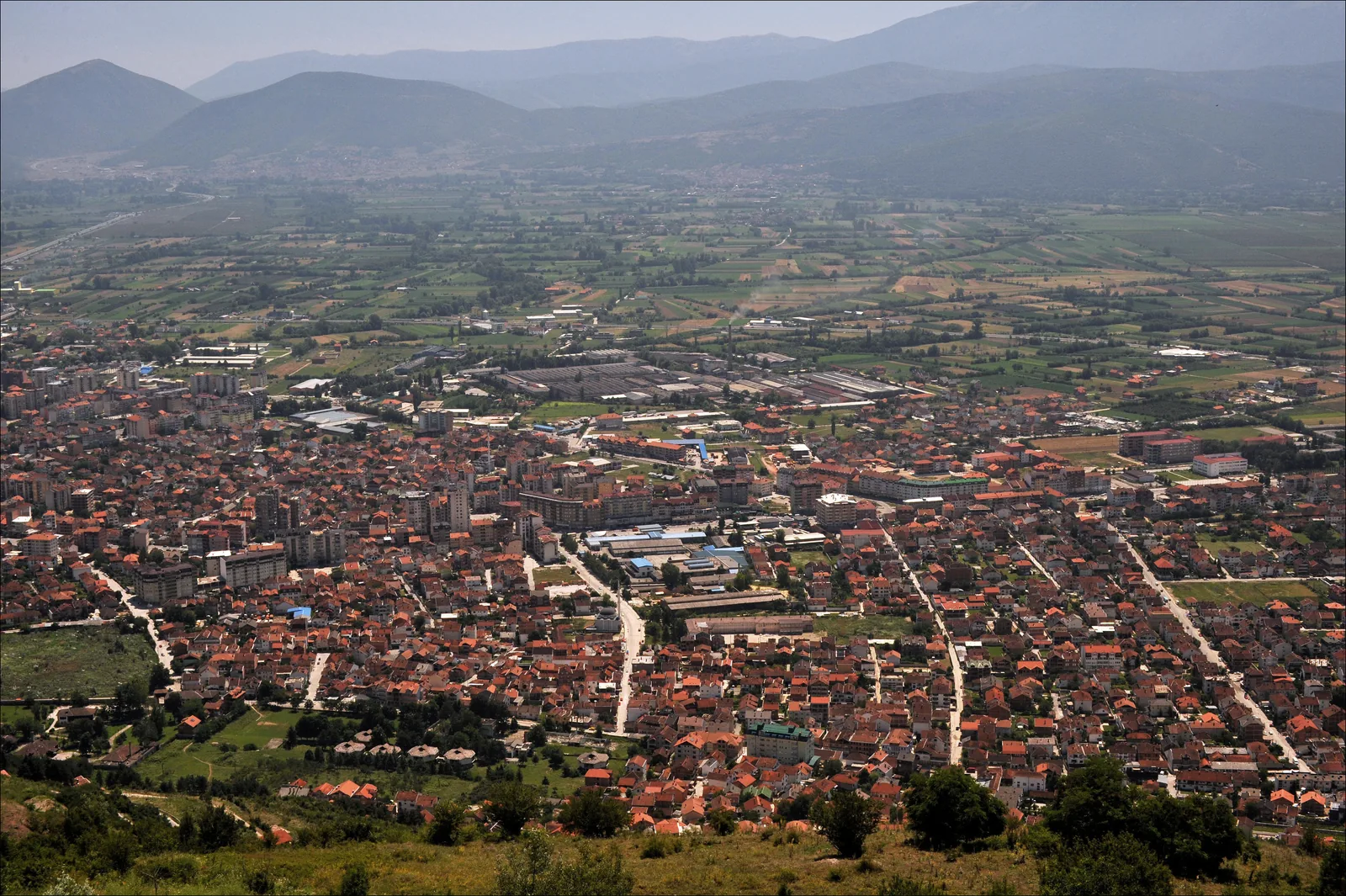
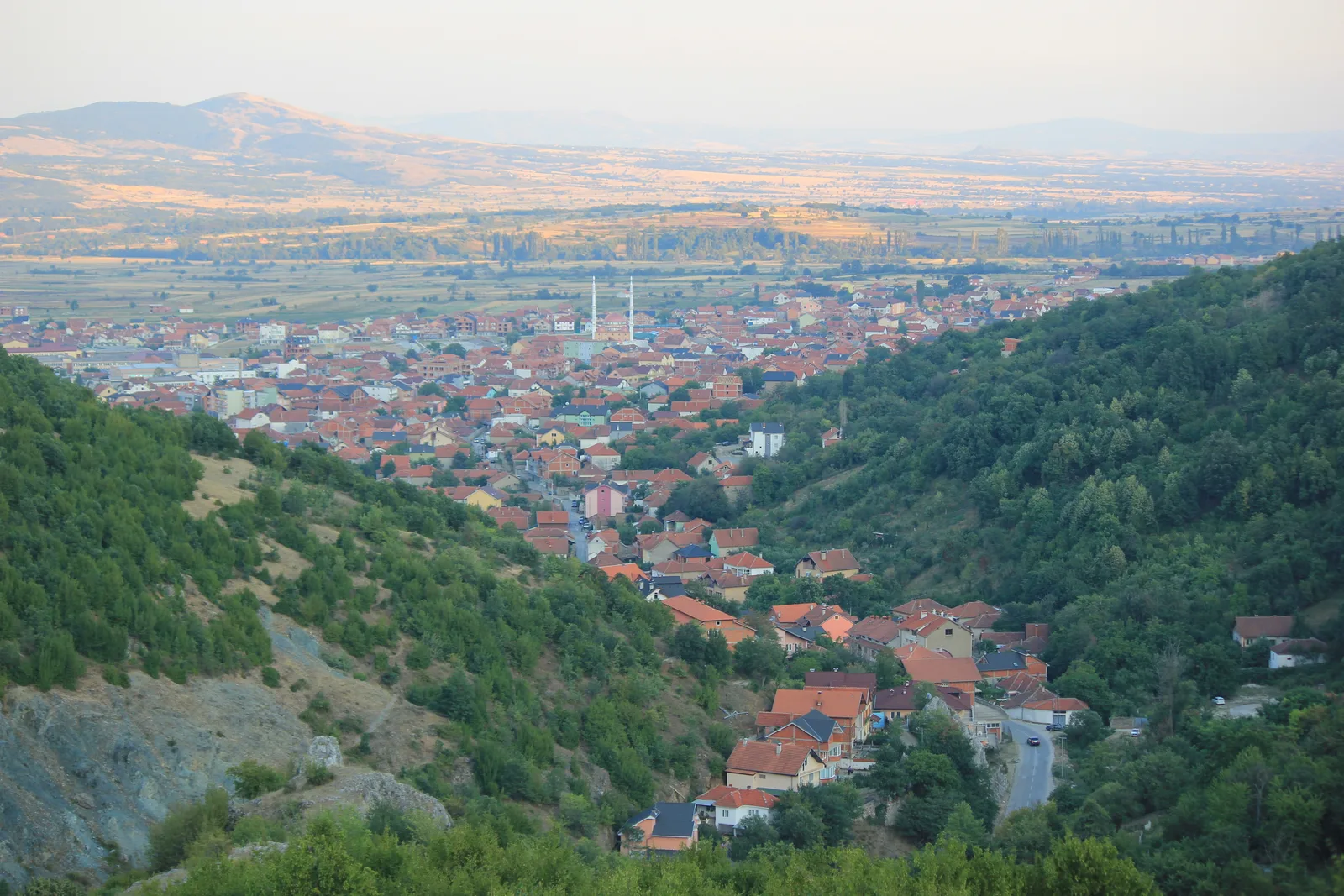
57,710 of those 61,687 — 93.6% — live in three municipalities in the far south: Preševo, Bujanovac and Medveđa. The community calls the area the Preševo Valley, Lugina e Preshevës; Serbian official usage is simply "the municipalities of Preševo, Bujanovac and Medveđa". This is not a diaspora. It is a population that has been where it is for centuries, and which the border moved to meet.

Two numbers, both from the census
The census produced two different, equally official numbers for the same places, and the difference between them is the whole argument.
Across the three municipalities, enumerators wrote down 123,852 people. The statistical office then counted 80,877 of them as residents — a difference of 42,975, or 34.7% of everyone enumerated. Nationally the same gap is 3.24%. In Preševo alone it is 44.8%.
The reason is a definition, not a dispute. Since 2011 Serbia has used the international "usually resident" concept: you are counted where you have lived, or intend to live, for at least twelve months. The 1971, 1981 and 1991 censuses did the opposite — they explicitly included citizens working abroad and the family members living with them. In a region where a very large share of households has someone abroad, changing that rule moves tens of thousands of people out of the total without anyone moving house.
So the honest answer to "how many Albanians are there in Serbia" is a range with its definitions attached, not a single figure.
| Measure | Value | Note |
|---|---|---|
| Counted as residents, 2022 census | 61,687 | territory excluding Kosovo |
| Gave Albanian as their mother tongue, 2022 census | 65,475 | territory excluding Kosovo |
| Recorded in the boycotted 2011 census | 5,809 | territory excluding Kosovo |
| Enumerated in the three municipalities, 2022 census | 123,852 | Preševo, Bujanovac, Medveđa |
| Government-adopted estimate for the three municipalities, 2015 | 75,342 | Preševo, Bujanovac, Medveđa |
| Albanian National Council's figure, November 2022 | ≈ 100,000 | territory excluding Kosovo |
The rows measure different things and are not alternatives to one another; the note column says which territory each one covers. The last is a figure given by the community's own representative body while enumeration was still running, months before the final results. The statistical office publishes no ethnic breakdown of the enumerated-minus-resident gap, and this page does not invent one.

Why 2011 says 5,809
The 2011 figure of 5,809 is not a population, and the statistical office says so itself. Its own note records that in the municipalities of Bujanovac and Preševo "the coverage of census units was reduced due to the boycott by the majority of members of the Albanian ethnic community", and the municipality rows carry the footnote that the data refer only to the enumerated population. In the comparative population volume, every settlement in those two municipalities has its 2011 entry printed as an ellipsis. There is no settlement-level 2011 data for them at all.
The boycott was decided by the assembly of Albanian municipal councillors. The stated reasons were that the census forms were printed in Serbian in Cyrillic, that enumerators did not speak Albanian, and that there was no agreement on how family members abroad would be registered.
Medveđa is not named in that note. Its 2011 count of 527 was an ordinary enumeration, which is why Medveđa's numbers cannot be explained by a boycott and have to be explained some other way.
In 2022 there was no boycott. On 25 July 2022, after consultations involving the OSCE Mission to Serbia and the Ministry for Human and Minority Rights, Albanian political and institutional representatives signed a joint declaration to take part. The forms were printed in Albanian, and a household member could be registered without being present. The community turned out, and the count went from 5,809 to 61,687.
The estimate Serbia adopted instead
Between those two censuses, Serbia's government did something that says more about the reliability of the 2011 figure than any campaign could. In 2015 it commissioned an estimate of the population of the three municipalities, run with the OSCE Mission, the European Union and the United States, and by Conclusion 05 no. 90-7304/2015 of 2 July 2015 it formally decided to use that estimate instead of the census result for policy purposes.
The Council of Europe's Advisory Committee on the Framework Convention recorded the decision approvingly and added the sentence that matters most here: official statistics "for a variety of reasons, may not fully reflect reality".
The estimate put the three municipalities at 75,342 residents — Bujanovac 38,300, Preševo 29,600, Medveđa 7,442. Representatives of the Albanian minority objected to it at the time as too low.
Seven years later the 2022 census counted 80,877 residents in the same three municipalities — more than the internationally-backed estimate that had been adopted precisely because the census could not be trusted. That cuts against a simple story of official undercounting, which is why it belongs here.
“About 100,000 Albanians live in Serbia — far more than the official 5,809.”
Ragmi Mustafi, president of the National Council of the Albanian National Minority, speaking to Radio Free Europe on 7 November 2022, the last day of enumeration and five months before the final results were published
“Fewer than 12,000 Albanians live in Bujanovac.”
Svetislav Veličković, then a Bujanovac municipal official, quoted in Politika, December 2022
Neither of those figures has a stated method, and they are quoted here together because quoting one without the other would take a side. The census result sits between them, closer to neither than it looks: 61,687 counted, 123,852 enumerated in the Valley.
It is worth being clear about why any of this is argued over at all. The census figure is not a matter of pride; it is an input to law. The budget and the seat count of a national minority council are set from census data, and when the 2011 result came in, the Albanian National Council's membership fell from 29 to 15 in 2014. Budget transfers to the three municipalities were reduced. Some courts were closed and some state agencies moved to Vranje.
That is the practical case the community itself now makes for having taken part in 2022, and it is the reason the president of the National Council treated the 61,687 not as an undercount to be rejected but as evidence to be used. After the final results he said the census proved the minority had been discriminated against for twelve years on the strength of the 2011 numbers.
The opposite objection was made too. While enumeration was still running, President Aleksandar Vučić said the true number would still not be known afterwards, because "many Albanian families register members who have moved away and no longer live there". The same census was called too low by the community and too high by the head of state.
Where they live
Serbia's Albanians are among the most geographically concentrated communities in Europe. 93.6% of them live in three municipalities that together cover a little over a thousand square kilometres in the far south, on the Macedonian and Kosovan borders.
They are also, on the census's own classification, overwhelmingly rural: 88.2% of Albanians in Serbia live in settlements the statistical office classes as non-urban, against 38.0% of the country as a whole. And they are young — a mean age of 38.08 against 43.85 for Serbia, the lowest of any sizeable community in the country.
| Municipality | Total | Albanians | Share | Serbs |
|---|---|---|---|---|
| Preševo / Presheva | 33,449 | 31,340 | 93.69% | 1,607 |
| Bujanovac / Bujanoci | 41,068 | 25,465 | 62.01% | 10,467 |
| Medveđa / Medvegja | 6,360 | 905 | 14.23% | 4,927 |
| Total | 80,877 | 57,710 | 71.36% | 17,001 |
Source: Republic Statistical Office, Census 2022.

Preševo / Presheva
Preševo is the one place in Serbia where Albanians are not a minority in any practical sense. Of 33,449 residents, 31,340 declared Albanian ethnicity and 1,607 Serbian. The municipality covers 264 km² across 35 settlements; the town itself holds 14,219 people, and the statistical office classifies every settlement in the municipality, the town included, as non-urban.
It is also where the enumerated-versus-resident gap is widest anywhere in Serbia. 60,568 people were written down; 33,449 were counted — 44.8% of them excluded by the twelve-month rule. If Preševo were counted under the rules the 1981 census used, it would be a municipality of about sixty thousand people rather than about thirty-three.
Bujanovac / Bujanoci
Bujanovac is the mixed one, and the mixing is geographic rather than social. Of 41,068 residents, 25,465 are Albanian, 10,467 Serbian and 3,532 Roma — the largest Roma community of the three by a wide margin.
The split runs between the town and the villages. In the town of Bujanovac, 11,468 residents divide into 2,933 Serbs, 3,902 Albanians and 3,442 Roma — three communities of roughly comparable size. In the rest of the municipality, 21,563 of 29,600 residents are Albanian. Veliki Trnovac / Tërnoc, with 7,894 people, is the largest Albanian village in Serbia and is larger than the municipal seat's Albanian population several times over.
Medveđa / Medvegja
Medveđa is the anomaly, and the one that has to be handled carefully. It is the largest of the three by area — 524 km² across 44 settlements — and by far the emptiest, with 6,360 residents. 4,927 of them are Serbian and 905 Albanian.
That Albanian figure has fallen a long way: 5,509 in 1981, 2,816 in 2002, 527 in 2011 and 905 in 2022. Medveđa is named in neither boycott note, so unlike Preševo and Bujanovac its figures are ordinary enumerations throughout. Its total population has fallen too, from over twenty-four thousand in the 1950s to 6,360 — this is a depopulating municipality for everyone in it.
The 2022 result put Albanians at 14.23% of Medveđa's residents. The Law on the Official Use of Languages and Scripts sets the threshold for minority-language official use in a local authority at 15%. In 2002 Medveđa was 26.2% Albanian. It is now, by 0.77 of a percentage point, below the line.
Two things are true about that at once, and the page gives both. The local census commission's own estimate during fieldwork was that Medveđa held about two and a half thousand Albanians — roughly what the twelve-month residence rule would remove from a municipality whose Albanian population is largely abroad. And Medveđa is also the municipality with by far the highest number of passivised addresses in Serbia, which is the subject of a later section.
| Municipality | Enumerated | Counted as resident | Not counted as resident | Share |
|---|---|---|---|---|
| Preševo | 60,568 | 33,449 | 27,119 | 44.8% |
| Bujanovac | 54,684 | 41,068 | 13,616 | 24.9% |
| Medveđa | 8,600 | 6,360 | 2,240 | 26.0% |
| Total | 123,852 | 80,877 | 42,975 | 34.7% |
Source: Republic Statistical Office, first results and final results of the 2022 census.

The Preševo Valley today
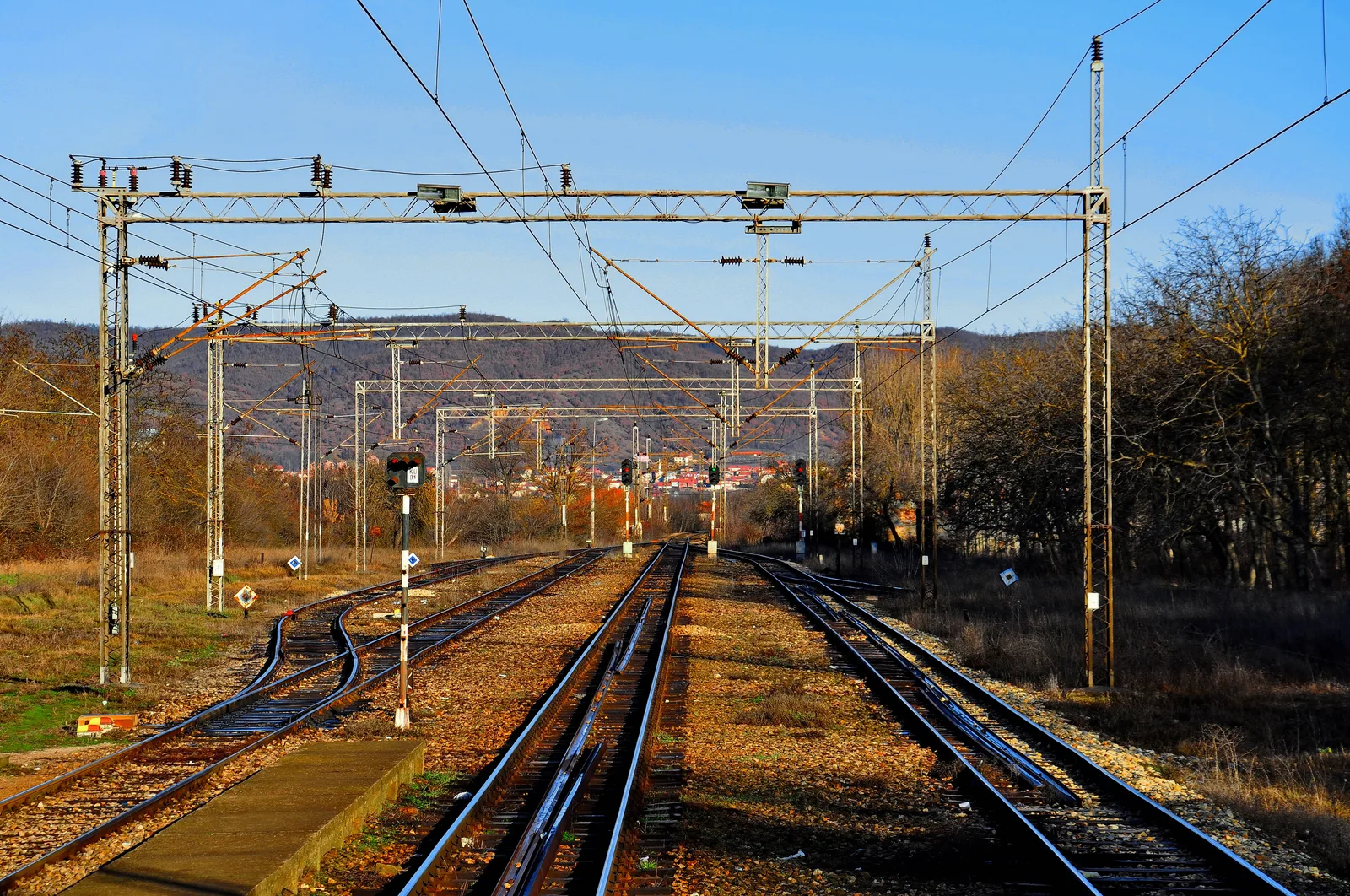
The three municipalities sit in the Pčinja and Jablanica districts, along the corridor that carries the Belgrade–Skopje–Thessaloniki motorway and railway. Preševo and Bujanovac are in Pčinja; Medveđa, further west and across a mountain ridge, is in Jablanica, and has always been the odd one out geographically as well as demographically.
The corridor is the region's one structural advantage: Pan-European Corridor 10 runs straight through it, and the Preševo crossing is the main land gateway between Serbia and North Macedonia. Very little of the traffic stops.
Work, roads and the development list
All three municipalities sit in the bottom group of Serbia's official development classification — the category the ordinance calls devastirana područja, local authorities below half the national average. The last unified list, adopted in 2014 and still the one ministries cite, places 19 units in that group and all three of these are among them. The ordinance lists them alphabetically and publishes no per-municipality percentage, so there is no rank to quote.
The consequence is the one every household here already knows: the local labour market cannot absorb the people who are born into it. That is the mechanism behind the enumerated-versus-resident gap, behind the summer return, and behind the fact that the largest single group of people from these municipalities is not in Serbia at all.
Belgrade, Vojvodina and the confectioners
There is a second Albanian community in Serbia with a completely different history, and the census records it shrinking to almost nothing: 8,212 people in Belgrade in 1981, 4,985 in 1991, 1,492 in 2002, 932 in 2022.
The 1981-to-1991 half of that fall cannot be cleanly explained. The 1991 census was boycotted by Albanians in Kosovo, and Kosovo Albanians living in Belgrade may have taken part in that boycott; the statistical office's note names only Kosovo, Bujanovac and Preševo as affected territories, so the Belgrade figure sits outside it. Departure and non-response cannot be separated with the data that exists.
One measure suggests the community is larger than the ethnicity question shows. In 2022, 3,017 people in Belgrade gave Albanian as their mother tongue against 932 who declared Albanian ethnicity — more than three times as many. Nationally the same comparison gives 65,475 Albanian speakers against 61,687 declared Albanians. Some of that difference is Ashkali and Balkan Egyptians, who are Albanian-speaking and counted separately, and some is Roma and Muslims by declaration. It is nevertheless the cleanest available floor: at least 65,475 people in Serbia speak Albanian at home.
Belgrade's Albanians are also, unusually, older than the city around them — a mean age of 43.04 against Belgrade's own 42.73. That is the demographic signature of a long-settled urban population that has stopped being replenished.

The confectioners and bakers
What that population did for a living is one of the best-known and least-written-down facts about Albanians in Serbia: they ran the confectioneries, the bakeries and the ice-cream shops. The trade came north with the seasonal labour migration the Balkans called pečalba or gurbet, from the Debar, Struga and Korça regions and from Kosovo, and it was passed down within families and villages rather than learned in schools.
It is worth naming one correction here, because the example everyone reaches for is the wrong one. Belgrade's most famous confectionery dynasty, Pelivan — whose first shop was bought in 1851 — is Gorani, from the village of Vraništa in Gora, not Albanian. The Albanian presence in the trade was real and large; it simply is not that family.
Neither the English nor the Albanian encyclopaedia article on this community mentions the confectioners at all. It is the part of the story that has almost entirely fallen out of the record.
How the border found them
The single most common error made about this community is to treat it as one story. It is two, with different dates, different treaties and different consequences, and keeping them apart is the only way the rest of the page makes sense.
Medveđa has been in Serbia since 1878. Preševo and Bujanovac since 1912.
Medveđa: in Serbia since 1878
In December 1877 the Serbian army crossed into the Ottoman Sanjak of Niš. Prokuplje fell on the third day, Kuršumlija soon after; Niš surrendered on 10 January 1878 and Vranje was taken on 31 January 1878. Under the Treaty of Berlin later that year the territory — including the Medveđa basin, which the treaty names — passed to Serbia.
The Albanian and Muslim population of the Toplica, Jablanica and Pusta Reka valleys left or was driven out, most of it during the fighting itself. There is no agreed figure, and the disagreement is the historiography rather than noise in it. Jovan Cvijić put the number of Albanian refugees at about 30,000 in 1911, and that figure was long accepted in Serbian scholarship. The Belgrade historian Miloš Jagodić, working from Serbia's own post-war inventories of abandoned property, put it at about 71,000 Muslims of whom about 49,000 were "surely Albanians", and added that the true total was certainly larger but could not be established from the sources. Noel Malcolm's rough estimate for those who settled in Kosovo itself is about 50,000; the governor of the Kosovo vilayet gave 65,000 in 1881. Justin McCarthy gives the Muslim population of the Sanjak of Niš as 131,000 in 1876 and 12,000 in 1882.
Jagodić's underlying material is what makes the scale concrete rather than rhetorical. The Prokuplje inventory of spring 1878 lists 131 settlements, all Albanian, all abandoned. Rakić, travelling in 1878–79, found the town of Kuršumlija completely vacant.
They went, overwhelmingly, just across the new border: the Lab region and northern Kosovo, Priština — which took the largest concentration of those from Niš and Leskovac — Vučitrn, Ferizaj, the Upper Morava, Kumanovo, and the corridor running down to Preševo. More than 30 large rural settlements were founded, and the refugees named them after the places they had come from, so their descendants were still identifiable fifty years later. Others went on to Anatolia, around Samsun.
No scholarly source quantifies how much of today's Preševo and Bujanovac population descends from those refugees, and this page does not guess. What can be said is that Medveđa's Albanians are the remnant of the population that was otherwise cleared from that territory — which is why a municipality annexed in 1878 still had 5,509 Albanians a century later, and has 905 today.
Preševo and Bujanovac: in Serbia since 1912
Preševo and Bujanovac were not part of that. They were a kaza of the Sanjak of Priština in the Kosovo Vilayet, and they remained Ottoman until the First Balkan War. Serbian forces took them after the battle of Kumanovo in 1912, and the Treaty of London of 30 May 1913 confirmed the transfer.
That thirty-four-year difference is why the two halves of this community have different relationships to the Serbian state, different settlement patterns, and — as the census shows — very different trajectories.
Yugoslavia, and why the Valley stayed outside Kosovo
In socialist Yugoslavia the three municipalities stayed inside Serbia proper rather than being attached to the autonomous province of Kosovo, whose boundary was drawn in 1945. That boundary was not immutable — it was revised once, in 1959, when Leposavić was transferred into Kosovo from the Kraljevo district — but it was never revised in the other direction here.
The practical consequence was that Albanians in Preševo, Bujanovac and Medveđa lived under Serbian republican administration while sharing a language, a religion and family networks with a population next door that had provincial autonomy, its own university and its own institutions. Albanian-language schooling existed in the three municipalities; higher education, for most of those who pursued it, meant Priština.
The like-for-like census series for Serbia proper — the republic without either autonomous province, which is the only territorially consistent way to read the long run — shows the community growing steadily through that period: 33,289 in 1948, 72,484 in 1981.
The 1990s
The revocation of Kosovo's autonomy in 1989–90 reached the three municipalities immediately, because their institutional life ran through Priština. In March 1992 an unofficial referendum on political and territorial autonomy for Preševo, Bujanovac and Medveđa was organised locally; Serbia did not recognise it and it had no legal effect.
The 1991 census was boycotted. The federal statistical office published estimates for Bujanovac and Preševo instead of counts, which is why the headline figure of 78,281 for that year has to be read carefully: 15,406 people were actually enumerated across the territory, and 62,875 were estimated for those two municipalities alone. Four-fifths of the published figure is therefore an estimate, and the statistical office labels it as one.
In 1999 the Kumanovo Military-Technical Agreement that ended the NATO campaign created a five-kilometre Ground Safety Zone along the boundary with Kosovo, from which Yugoslav army and Serbian police forces were excluded. The zone ran through Preševo and Bujanovac.
- 1877–78 · Serbia takes the Sanjak of Niš. The Albanian population of Toplica, Jablanica and Pusta Reka is expelled or flees, mostly to Kosovo and Macedonia. Medveđa passes to Serbia under the Treaty of Berlin.
- 1912–13 · Preševo and Bujanovac pass to Serbia after the battle of Kumanovo; the Treaty of London of 30 May 1913 confirms it.
- 1945 · The boundary of the autonomous province of Kosovo is drawn. The three municipalities stay in Serbia proper.
- 1959 · The Kosovo boundary is revised once — Leposavić is transferred in from the Kraljevo district.
- 1989–90 · Kosovo's autonomy is revoked; the institutional life of the three municipalities, which ran through Priština, is disrupted.
- March 1992 · An unofficial referendum on autonomy for the three municipalities is organised locally. It is not recognised and has no legal effect.
- 1991 · Census boycotted. The federal statistical office publishes estimates for Bujanovac and Preševo rather than counts.
- June 1999 · The Kumanovo agreement creates a five-kilometre Ground Safety Zone along the Kosovo boundary, running through Preševo and Bujanovac.
- 26 January 2000 · Two brothers are killed outside Dobrosin. Uniformed men appear at their funeral days later — the first public appearance of the UÇPMB.
- 22 November 2000 · The UÇPMB launches a wider offensive and takes physical control of villages inside the Ground Safety Zone.
- 16 December 2000 · Serbia establishes the Coordination Body for the municipalities of Preševo, Bujanovac and Medveđa.
- 12 March 2001 · KFOR and Serbia agree a phased return of Yugoslav forces to the Ground Safety Zone.
- 21 May 2001 · The Končulj agreement: demilitarisation and disbandment of the UÇPMB, an amnesty, a multi-ethnic police force and international monitoring.
- 2002 · Census. Albanians take part; 61,647 are counted nationally.
- 2011 · Census boycotted in Bujanovac and Preševo. 5,809 Albanians are recorded in the whole of Serbia.
- 2 July 2015 · The Serbian government formally adopts an OSCE/EU/US-backed population estimate for the three municipalities in place of the 2011 census figure.
- 25 July 2022 · Albanian representatives sign a joint declaration to take part in the census. Forms are printed in Albanian.
- 2022 · Census. 61,687 Albanians counted as residents; 123,852 people enumerated in the three municipalities.
2000–2001, and what was agreed
Between 2000 and 2001 there was an armed conflict in the Ground Safety Zone. It is reported here as briefly and as neutrally as the facts allow, because it is the part of this subject where partisan accounts diverge most and where casualty figures differ by source.
Two brothers, Isa and Shaip Saqipi, were killed on the outskirts of Dobrosin in Bujanovac municipality on 26 January 2000. Uniformed men made the first public appearance of the Liberation Army of Preševo, Medveđa and Bujanovac — the UÇPMB — at their funeral at the end of that month. The International Crisis Group's assessment at the time was that the UÇPMB was not a single organisation but a cluster of locally based groups.
On 22 November 2000 the UÇPMB launched a wider offensive and took physical control of villages inside the zone. Yugoslav and Serbian forces were excluded from it by the Kumanovo agreement and could not enter. Through the spring of 2001 KFOR and Belgrade negotiated a phased return, agreed on 12 March 2001. Fighting continued alongside the negotiations; the UÇPMB commander known as Ridvan Qazimi was killed on 24 May 2001.
The Končulj agreement
The conflict was ended by agreement rather than by defeat. On 21 May 2001, at Končulj near Bujanovac, a declaration was signed for the UÇPMB by Shefket Musliu, Mustafa Shaqiri and Ridvan Qazimi, witnessed for NATO by Sean Sullivan.
Its terms were demilitarisation and disbandment of the UÇPMB by the end of that month, safe entry of the Joint Security Forces into the remaining sector, an amnesty, the creation of a multi-ethnic police force, the handover of weapons and uniforms to KFOR, and NATO and EU monitoring and verification. The International Crisis Group reported later that year that around 2,000 former fighters — between half and three-fifths of the total — had been demobilised.
There is no agreed casualty figure for the conflict and this page does not supply one. The dates on which Yugoslav forces re-entered each sector of the zone are frequently published but rest on a single unsourced account, so they are omitted here.
The Coordination Body
Serbia established the Coordination Body for the municipalities of Preševo, Bujanovac and Medveđa on 16 December 2000, before the Končulj agreement, and it still exists. It coordinates central-government activity in the three municipalities and runs subsidy programmes for small businesses there.
Two further documents sit alongside the 2001 agreement in the community's account of what was promised: an agreement of 2007 on reorganising the Coordination Body and on integrating Albanians into state and public institutions, and a seven-point plan of 2013. Proportional representation in the police, the courts and the public administration is the recurring subject of all three, and the recurring complaint is that it has not been reached.
Passivised addresses
The most contested administrative issue affecting this community is pasivizacija adresa — the passivisation of addresses. It is worth setting out precisely, because it is also the issue most often described inaccurately, in both directions.
What the law actually says
Passivisation is a real statutory act, not an informal practice. Article 18 of the Law on Residence and Domicile of Citizens (Official Gazette 87/2011) provides that at the request of a court, a state body, another organisation or a person with a justified legal interest, the police shall check whether a citizen actually lives at the address where they are registered. If it finds they do not, or that they gave untrue information when registering, it issues a decision marking the address as passivised.
The law then requires the citizen, if living in Serbia, to register a new address within eight days, and requires the authority to determine an address for them under Article 11 if they do not. Appeal lies to the Interior Ministry within eight days. The mechanism applies across Serbia and is applied across Serbia.
It does not remove anyone from the civil registry, delete their citizenship or make them legally non-existent, and descriptions along those lines are legally wrong. What a passivised address does do, on the Serbian government's own 2026 public information brochure, is prevent the issue of an identity card or a passport until a new address is registered.
What the numbers actually show
The figures most often quoted for this are not the figures the state has released. The Interior Ministry's own numbers, obtained by the Youth Initiative for Human Rights under freedom-of-information in August 2023 and covering January 2012 to June 2023, record 2,905 passivisation decisions across the three municipalities: 1,595 in Medveđa, 880 in Bujanovac and 430 in Preševo.
Three caveats travel with those numbers and none of them can be dropped. The Ministry did not supply Medveđa's figures for 2020, 2021, 2022 or the first half of 2023, so the true total is higher by an unknown amount. The data contains no ethnicity variable at all, so no source can say how many of the people concerned were Albanian. And Medveđa's peak year is 2016, with 820 decisions — not an election year, which complicates the explanation most often offered.
What the numbers do show, unambiguously, is concentration. Medveđa is a municipality of 6,360 residents and accounts for well over half of all the decisions recorded in the three municipalities. Campaigners express this as a rate of around a fifth of the population; that calculation divides a multi-year flow of decisions by a single-year population figure, so it is reported here as what they compute rather than as a rate.
A second measure is quoted as often and is not what it is usually said to be. Medveđa's electoral roll fell from 10,456 voters at the 2015 local elections to 6,147 in 2022 — a fall of 4,309, or 41.2%. The Youth Initiative, which published it, says 3,370 of that fall (78.2%) came from Albanian-majority settlements, and describes it as an indicator of potential abuse rather than as a count of people passivised. The underlying document came from an anonymous source. It is not a passivisation figure and should not be quoted as one.
On the institutional record: the European Commission against Racism and Intolerance addressed passivisation directly in its Sixth Report on Serbia, adopted on 9 April 2024, and issued a recommendation to the authorities. Serbia's Ombudsman has published no finding, opinion or recommendation on the practice; his annual reports for 2023 and 2024 record it among the complaints citizens of the three municipalities brought to his local offices, and the equivalent passage in the 2025 report does not mention it. The European Court of Human Rights has decided nothing on it — a search of its case database returns no results for the term.
| Municipality | decisions |
|---|---|
| Medveđa | 1,595 |
| Bujanovac | 880 |
| Preševo | 430 |
| Total | 2,905 |
Source: Ministry of the Interior, via the Youth Initiative for Human Rights, 2023.

Language, schools and faith
Albanian is an official language in Preševo and Bujanovac, and the community's institutions operate in it. The dialect is Gheg, continuous with the speech of eastern Kosovo and north-western North Macedonia rather than distinct from it.
In the 2022 census 65,475 people in Serbia gave Albanian as their mother tongue — 3,788 more than declared Albanian ethnicity. Of the 61,687 who declared Albanian ethnicity, 60,666 gave Albanian as their mother tongue.
Schools and textbooks
There is no single official published series for the number of pupils taught in Albanian in Serbia, and figures in circulation vary by a factor of two. The most solid school-by-school data is the Coordination Body's own annex for 2013/14, which counted 3,419 pupils in Preševo's Albanian stream across 7 schools and 2,287 in Bujanovac across 6. 16 of the 24 primary schools in the three municipalities have classes in Albanian. The often-repeated figure of about ten thousand pupils is a community estimate that cannot be reconciled with the school-level data.
Textbooks are the long-running dispute. Albanian-language textbooks for the Preševo Valley have for years been funded by the government of Kosovo and their transfer has repeatedly been obstructed; in the 2025/26 year some 35,448 books were distributed, and on 1 September 2026 3,686 Albanian primary pupils began the year without free textbooks after a funding transfer was blocked. Under Serbian law a class in a minority language is provided where at least 15 pupils opt for it at first-grade enrolment.
Recognition of diplomas issued by institutions in Kosovo remains unresolved in practice and is the reason repeatedly given for why graduates of the University of Priština struggle to enter Serbian public employment in the three municipalities.
Faith
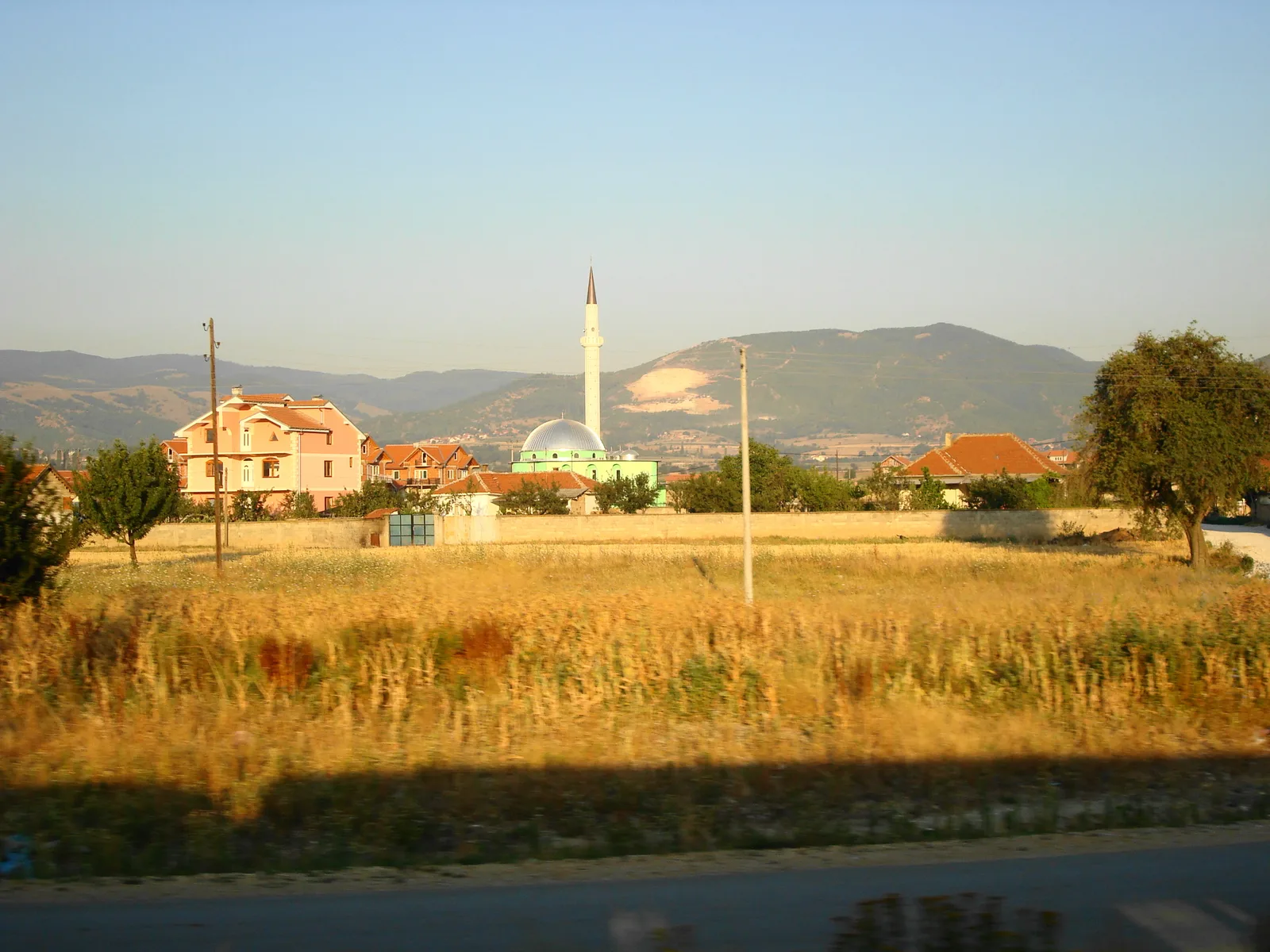
The community is overwhelmingly Muslim: of the 61,687 people who declared Albanian ethnicity in 2022, 60,253 — 97.7% — declared Islam. 829 declared Catholicism and 168 Orthodoxy. Albanians are just over a fifth of all Muslims recorded in Serbia.
Councils, parties and seats
Serbia's framework for national minorities is built on national councils — elected bodies with competences in education, culture, language and information — and on an electoral rule that lets minority lists into parliament below the ordinary threshold.
The National Council
The National Council of the Albanian National Minority was established in 2010 and is seated in Bujanovac, not Belgrade. Its budget and its size are set from census data, which is the mechanism by which the 2011 boycott cost it 14 of its 29 seats in 2014.
The Council has had a difficult institutional decade of its own, including a period without an elected president after a deadline expired in January 2023 with no candidate securing a majority. It operates in a community where the political competition is real and often sharp.
Parties and seats
Albanian parties contest Serbian elections and have never boycotted them — the boycott in this story is of the census, not of the ballot. The Party for Democratic Action is the largest of them; at the most recent national council election it took 30.02% of the vote and 5 seats.
In the National Assembly, minority lists benefit from a rule that lets a national-minority electoral list take part in the allocation of seats even when it wins less than three per cent of the votes cast. Albanian representation in the Assembly has been continuous but small, usually a single member.
Proportional representation in state employment is the community's longest-standing institutional grievance, and it is one the Council of Europe's monitoring bodies have repeatedly taken up.
People
People from this community are frequently described as Kosovar or Albanian without the Serbian connection being mentioned at all, which is one reason the community is easy to overlook. Everyone below has a sourced link to Preševo, Bujanovac, Medveđa or Belgrade's Albanian community; where a birthplace is contested between sources, the person is not on the list.
- Idriz Ajeti — Linguist, born in Tupallë in Upper Jablanica — today Medveđa — in 1917; rector of the University of Priština, chairman of the Kosovo Academy of Sciences and Arts, and, earlier, an assistant at Belgrade's Albanology seminar. He was awarded the 7 July Prize of the Socialist Republic of Serbia. Kosovo Academy of Sciences and Arts
- Riza Halimi — Mayor of Preševo and later a member of the National Assembly of Serbia, for many years the community's most recognisable political figure in Belgrade. National Assembly of Serbia
- Shaip Kamberi — Member of the National Assembly of Serbia for the Party for Democratic Action, and previously president of the municipality of Bujanovac. National Assembly of Serbia
- Ragmi Mustafi — President of the National Council of the Albanian National Minority, and the person who put the community's own figure of about 100,000 into the public record during the 2022 census. Radio Free Europe
- Berat Djimsiti — Captain of the Albania national football team and a long-serving Serie A defender for Atalanta, born in Zürich to a family from Tërnoc / Veliki Trnovac near Bujanovac. Atalanta BC
- Atdhe Nuhiu — Footballer whose family is from Preševo; he was born in Pristina, played for the Kosovo national team and is now an assistant coach of its senior side. Football Federation of Kosovo
- Nexhmedin Saqipi — Born in Tërnoc in 1965, head imam in Bujanovac from 1994 and chairman of the Islamic Community for Preševo, Bujanovac and Medveđa, which he co-founded; elected reis-ul-ulema of the Islamic Community of Serbia in October 2023 for a five-year term. Islamic Community of Serbia
The Valley abroad
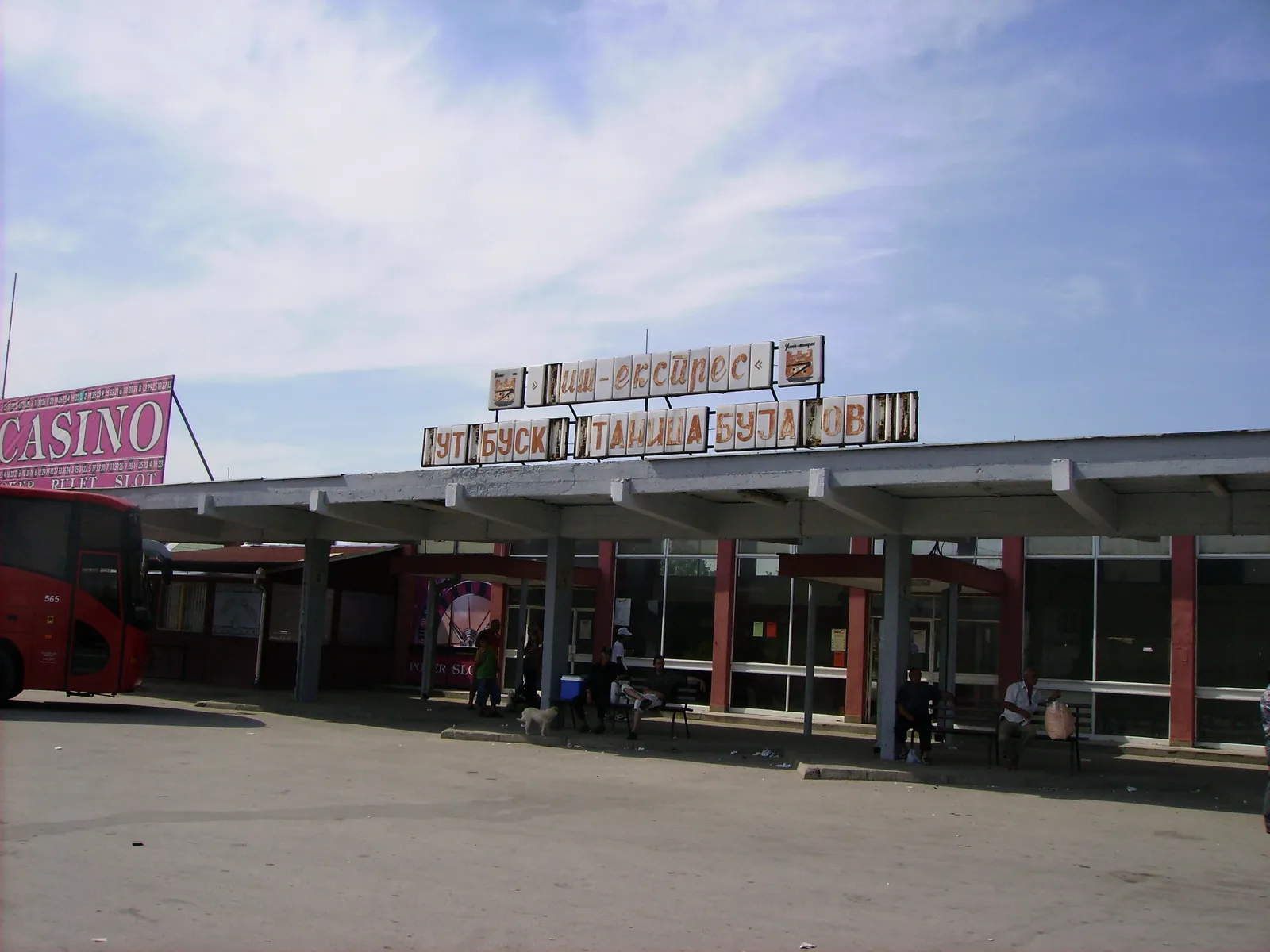
The largest single group of people from Preševo and Bujanovac is not in Serbia, and the Serbian statistical office's own migration research says where it is.
In the 2002 census, of everyone from Bujanovac and Preševo recorded as working or staying abroad, 59.5% were in Switzerland — 13,907 of 23,371 people. For Serbia as a whole the Swiss share was 15.8%. Germany took 21.0% from these two municipalities against 24.8% nationally, and Austria, the classic Serbian destination, barely features. Italy took 64 people.
Put the other way round: the two municipalities held about 1.04% of Serbia's population and supplied about 21.2% of everyone the Serbian census placed in Switzerland.
The pattern is self-reinforcing. Among those who had been abroad eleven years or more, the Swiss share rises to 70.1% — new migrants go where the network already is. The authors of the study make exactly that point, and the statistical office adds, in its own words, that had there been no census boycott in 1991 and 2011 an even larger number of migrants in Switzerland would probably have been registered, "since it is known that this country is the favourite destination of Albanian migrants".
Those figures are from 2002 and predate two decades of further movement, and the study itself notes it is missing most Albanians in the two municipalities because of the boycotts. They are a floor and a direction, not a current count. Germany today holds 272,690 Serbian citizens and 313,615 Kosovan citizens of all ethnicities.
Meeting each other today
Put the pieces together and the shape of this community is clear enough. It is young — a mean age of 38.08, the lowest of any sizeable community in Serbia. It is concentrated, with 93.6% of it in three municipalities. It is rural by the census's own classification, at 88.2%. Its local economy is in the bottom group of the national development list. And a very large part of it — 34.7% of everyone the census enumerated in the Valley — was living somewhere else on census night, most of that somewhere else being Switzerland and, a long way behind it, Germany.
That combination produces a specific social problem, and it is not an abstract one. Families are split across two or three countries. The village you are from and the city you live in are several borders apart. Summer is when everyone comes home at once and the calendar of weddings, festivals and introductions compresses into six weeks. For the rest of the year, the people you would most naturally meet are a plane ride away.
That is the gap dua.com was built for. It is an app for Albanians, wherever they are — which in practice means Kosovo, Albania, North Macedonia, southern Serbia, and the large communities in Switzerland, Germany, Austria, Sweden and the United States.
For someone from Preševo, Bujanovac or Medveđa, that is not a nice-to-have. The people who share your language, your dialect and your family's frame of reference are distributed across exactly the countries the migration data names — and finding each other by chance, in Zürich or Stuttgart or Vienna, is largely a matter of luck. An app that starts from the community rather than from the postcode changes the odds.
Where to find the community
| Place | Organisation | Note |
|---|---|---|
| Belgrade | Ministry for Human and Minority Rights and Social Dialogue | The state body responsible for national minority councils, including the Albanian one, which is seated in Bujanovac. |
| Preševo, Bujanovac, Medveđa | Coordination Body of the Government of Serbia | The central-government body for the three municipalities, established in December 2000. |
| Belgrade | Republic Statistical Office — Census 2022 | The primary source for every census figure on this page. |
| Strasbourg | Council of Europe — Framework Convention monitoring on Serbia | Advisory Committee opinions and Serbia's state reports. |
| Preševo | Municipality of Preševo | Official municipal site. |
| Bujanovac | Municipality of Bujanovac | Official municipal site. |
See every Albanian community, country by country
Frequently asked questions
How many Albanians live in Serbia?
Serbia's 2022 census counted 61,687 people who declared Albanian ethnicity, 0.93% of the population, making Albanians the fourth-largest national minority. That is a count of residents. In the three Albanian-majority municipalities enumerators wrote down 123,852 people of all ethnicities and 80,877 were counted as residents; the statistical office publishes no breakdown of the difference. All figures exclude Kosovo.
Why did the 2011 census record only 5,809 Albanians?
Because Albanians in Bujanovac and Preševo boycotted it. The statistical office records this in its own notes and marks the municipality data as covering only the enumerated population; the comparative volume prints an ellipsis for every settlement in those two municipalities. The figure is not a population and should never be quoted as one.
Was the 2022 census also boycotted?
No. On 25 July 2022 Albanian political and institutional representatives signed a joint declaration to take part, after consultations involving the OSCE Mission to Serbia. Census forms were printed in Albanian and household members could be registered without being present. The president of the National Council afterwards treated the result as vindication rather than as an undercount.
Where is the Preševo Valley?
It is the area of the three municipalities of Preševo, Bujanovac and Medveđa in southern Serbia, on the borders with North Macedonia and Kosovo. The name Lugina e Preshevës is the community's own; Serbian official usage is simply the names of the three municipalities. Preševo and Bujanovac are in the Pčinja district, Medveđa in Jablanica.
Are Albanians in Serbia a diaspora?
No. They are a native population. Medveđa has been in Serbia since 1878 and Preševo and Bujanovac since 1912; the Albanian presence in the region predates both. Belgrade and Vojvodina hold a separate, older urban community built by labour migration into trades such as confectionery and baking.
What is pasivizacija adresa?
It is a statutory act under Article 18 of Serbia's Law on Residence and Domicile of Citizens: the police mark in their records that a person does not live at their registered address. It does not remove anyone from the civil registry, but it prevents the issue of an identity card or passport until a new address is registered. Interior Ministry figures released to an NGO record 2,905 such decisions across the three municipalities between 2012 and mid-2023, concentrated in Medveđa; the data has no ethnicity variable.
Why did Medveđa's Albanian population fall so far?
It fell from 5,509 in 1981 to 2,816 in 2002 to 905 in 2022, and Medveđa was covered by neither census boycott. Its total population has fallen for everyone, and the twelve-month residence rule excludes household members abroad. It is also the municipality with by far the most passivised addresses in Serbia. The result puts Albanians at 14.23%, just below the 15% threshold for minority-language official use.
Where do Albanians from southern Serbia emigrate to?
Overwhelmingly to Switzerland. In the 2002 census, 59.5% of everyone from Bujanovac and Preševo recorded as abroad was in Switzerland, against 15.8% for Serbia as a whole; Germany was second. The Serbian statistical office describes Switzerland in its own publication as the favourite destination of Albanian migrants.