Yes, Kosovars are Albanians. In the 2024 census 1,454,999 residents declared Albanian ethnicity, 90.79% of a population of 1,602,515, and 1,485,170 named Albanian as their mother tongue. Same people as Albanians in Albania, same language, different state since 2008.
That is the answer to the question most people arrive with. The number that actually needs explaining is the other one: Kosovo counted 137,310 fewer people in 2024 than in 2011 — 7.9%, on two official totals whose coverage differs, which the census section below reconciles. And the World Bank puts 700,000 to 900,000 people of Kosovo origin abroad, a diaspora roughly half the size of the resident population. Germany alone is home to close to 600,000 people of Kosovan citizenship or origin, by the German Federal Foreign Office's own description.
So this page answers both halves. Who Kosovo Albanians are, how many there are, which religion and which language, where they live inside the country, and then why such a large share of them lives in Stuttgart, Zurich, Vienna, Istanbul and New York, wave by wave, with dates.
For more on this topic, read Global Albanian Community and Albanians in Switzerland.
Every figure here names its source and its base, because the two official answers to "how many Albanians live in Kosovo" differ by almost a percentage point, and most pages on the internet still quote a third number from 2011.
- 90.79% Albanian — 1,454,999 of 1,602,515 residents (Kosovo Agency of Statistics, 2024 census, first final results, published 19 December 2024)
- 92.50% Muslim, 3.35% Orthodox, 1.74% Catholic — declared religion, in one of Europe's most secular Muslim-majority societies
- 700,000–900,000 people of Kosovo origin abroad (World Bank, 2024) — Germany, Switzerland, Italy, Austria, the United States, Türkiye
- €1.41 billion in remittances in 2025 — Germany and Switzerland alone are 56.4% of it (Central Bank of Kosovo)
One more figure belongs at the top, because it is ours: 223,085 people in Kosovo are on dua.com, and in the twelve months to 27 July 2026 Germany and Kosovo exchanged 102,272 matches — 280 a day, the busiest route in our data. That corridor is where this page ends.
Who are the Kosovo Albanians?
Kosovo Albanians are not a separate people from Albanians in Albania. They are the same ethnic group speaking the same language, divided by a border drawn at the London Conference of 1913, which left an Albanian-majority region outside the new Albanian state. Everything that reads as a difference today comes from the 113 years since: the northern Gheg dialect, the euro in one pocket and the lek in the other, the passport, which flag comes out at a wedding.
The majority is old, not new. The first Yugoslav census after the Second World War, in 1948, counted 498,242 Albanians in Kosovo: 68.5% of 727,820 people. By 1981 it was 1,226,736 of 1,584,440, or 77.4%. The 90.79% of 2024 is the end of a long curve, driven by a high birth rate and, from the 1960s, by Serb and Montenegrin out-migration toward central Serbia, not by anyone arriving.
Ethnicity, language and citizenship are three different things, and the census measures them separately. 1,454,999 people declared Albanian ethnicity. 1,485,170 named Albanian as their mother tongue, about 30,000 more. That gap is not rounding: Ashkali, Egyptian, Gorani and Bosniak respondents partly speak Albanian at home while declaring a different ethnicity. A page that reports one of those two numbers as "the number of Albanians" is reporting something other than what it thinks.
| What the census measured | 2024 |
|---|---|
| Declared Albanian ethnicity | 1,454,999 (90.79%) |
| Albanian as mother tongue | 1,485,170 (92.68%) |
| Albanians counted in 1948 | 498,242 (68.5%) |
| Albanians counted in 1981 | 1,226,736 (77.4%) |
Ethnicity is not language, and neither of them is citizenship.
Kosovo Agency of Statistics, Census 2024 first final results (Tab 5.1 and Tab 5.3); ICTY expert report on the size and ethnic composition of the population of Kosovo, Table 3, for 1948 and 1981.
Why Kosovo is not part of Albania
Because 2008 was a declaration of independence, not of union. Kosovo became a sovereign state inside its existing borders (the form the Ahtisaari plan and Western recognition both assumed), and the two countries built the relationship out of open borders, a joint customs and police arrangement, shared school textbooks, joint diplomatic missions and a single-market agreement instead. Kosovo's own constitution, in force since June 2008, is explicit: the republic "shall have no territorial claims against, and shall seek no union with, any State or part of any State". The declaration of independence itself contains no such clause, which is a detail almost every retelling gets wrong. Union has supporters in both parliaments and majorities in neither.
Which is why "do Albania and Kosovo get along" gets a duller answer than the question expects: yes, unremarkably, with the ordinary friction of two states: a football rivalry, an argument about which dialect is proper Albanian, jokes in both directions about accents and money. Ask someone in Prishtina what they are and you will often get "Albanian" and "Kosovar" in the same sentence, meaning ethnicity by the first and citizenship by the second.
How many Albanians live in Kosovo — and why there are two official answers
Both answers come from the same census, and both are official. The difference is not about Albanians at all. It is about who else got counted.
1,602,515 total population — the census plus the estimate for the four northern municipalities, and the official figure for 5 April 2024
1,585,566 population actually enumerated, without that estimate
1,454,999 residents who declared Albanian ethnicity — 90.79% on the official total, 91.76% on the enumerated one
Kosovo's census ran from 5 April to 24 May 2024. In the four Serb-majority municipalities north of the Ibar (Leposaviq, Zubin Potok, Zveçan and North Mitrovica) it was, in the statistics agency's own words, boycotted "to a considerable extent" following calls from Serbian political entities. Enumerators counted 6,708 people there. The agency then produced a population estimate for those four municipalities together with international experts and added it to the census result: 16,949 people, taking the country total to 1,602,515.
That estimate barely touches the Albanian figure and transforms the Serb one. It adds 36 Albanians, taking 1,454,963 to 1,454,999, and 16,369 Serbs, from 36,652 to 53,021. Divide by the enumerated population and the Albanian share is 91.76%; divide by the official total and it is 90.79%. Neither is wrong, and mixing them is the common error. This page uses the official total of 1,602,515 throughout.
What the two answers still do not settle
Two things the numbers do not settle. The Serb figure is an estimate rather than a count, and the method behind it has not been published beyond a reference to "international practices and standards for population estimation". And the boycott was not only northern: Serb residents of Graçanica and Shtërpce in the south also stayed away in part, and those municipalities were not estimated at all, so the Serb total is still low.
Two verdicts on this census sit side by side, and both are fair. The European Commission's 2024 report on Kosovo records that participation by non-majority communities was "extremely low" and criticises the communication campaign directed at them. A UNFPA and UNECE mission that observed the enumeration in April 2024 called the operation highly organised and in compliance with international standards. The census was well run, and one community largely did not take part. It was not audited by Eurostat, whatever else you may read.
The comparison everyone reaches for, 1,739,825 people in 2011 against 1,602,515 in 2024, a fall of 137,310 or 7.9%, puts two different bases side by side. The 2011 census covered 34 municipalities and did not enumerate the north at all; 2024 covers 38 with the north estimated. Measured against the 2024 enumerated figure of 1,585,566, the fall is 8.9%. Either way, Kosovo has fewer people than it did thirteen years ago. That is the emigration story, and it gets its own section below.
One number to distrust: 1,586,659. That was the preliminary count published on 12 July 2024, and it is still quoted as the final population. The final enumerated figure is 1,585,566 and the official total is 1,602,515, both published on 19 December 2024.
On the official total, the rest of the country is Serb 3.31%, Bosniak 1.69%, Turkish 1.21%, Ashkali 1.01%, Egyptian 0.66%, Gorani 0.57% and Roma 0.54%, with 0.14% declaring another ethnicity and 0.06% preferring not to answer. The Serb share is a floor rather than a count: 16,369 of those 53,021 people come from the agency's estimate for the boycotted north, and the partial boycott in Graçanica and Shtërpce was never estimated at all.
dua.com's own figures appear further down this page and are never used as a demographic input. Members are members; the population numbers come from the census and from nowhere else.
Where Albanians live inside Kosovo
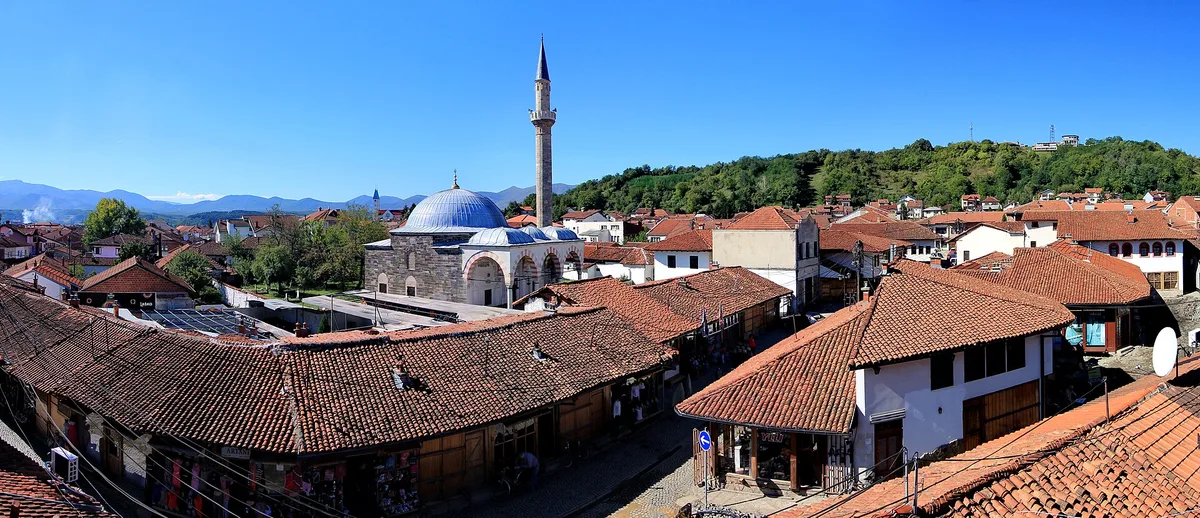
Ordered by Albanian population rather than by fame, which puts Ferizaj third and Gjilan ahead of Peja and Gjakova — the reverse of the lists that rank the town rather than the municipality.
Prishtina — 222,898
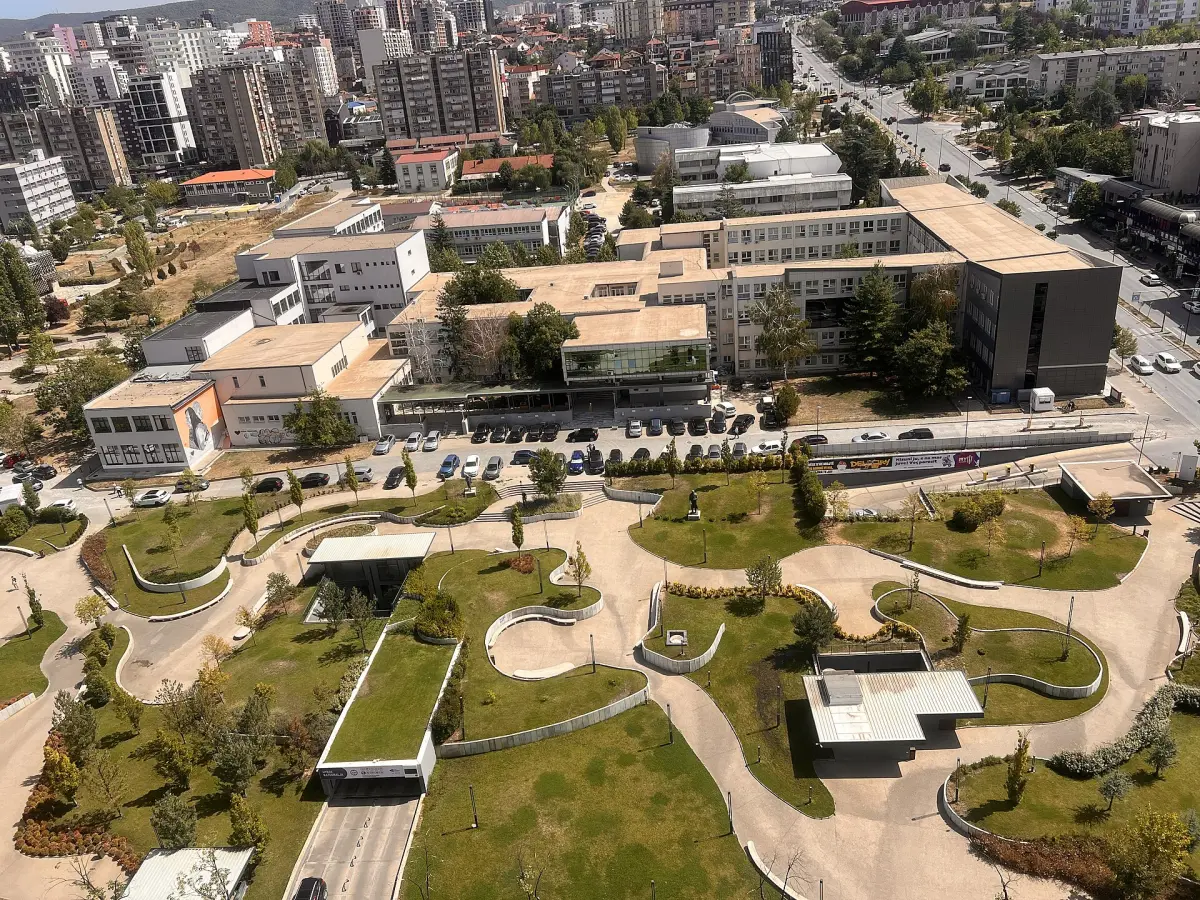
The capital holds 222,898 Albanians among 227,466 residents: more than one in seven of all the Albanians in Kosovo. It is where internal migration lands, which is why the city keeps growing in a country that is shrinking.
Prizren — 114,484
The most mixed of the big cities. 114,484 Albanians is 77.8% of 147,246 residents, alongside 18,379 Bosniaks and 9,819 Turks; Turkish is in official municipal use here, and Prizren holds about half of all the Turks the census counted in Kosovo. The only Turkish-majority municipality, Mamusha, is twenty minutes away.
Ferizaj — 105,025
The third-largest Albanian population in the country: 105,025 Albanians of 109,255 residents, strung along the motorway and railway between Prishtina and Skopje.
Gjilan — 80,642
80,642 Albanians of 82,980 — more than Peja or Gjakova. Eastern Kosovo's centre, and the nearest city to the Albanians of the Preševo valley on the Serbian side of the border.
Peja — 75,479
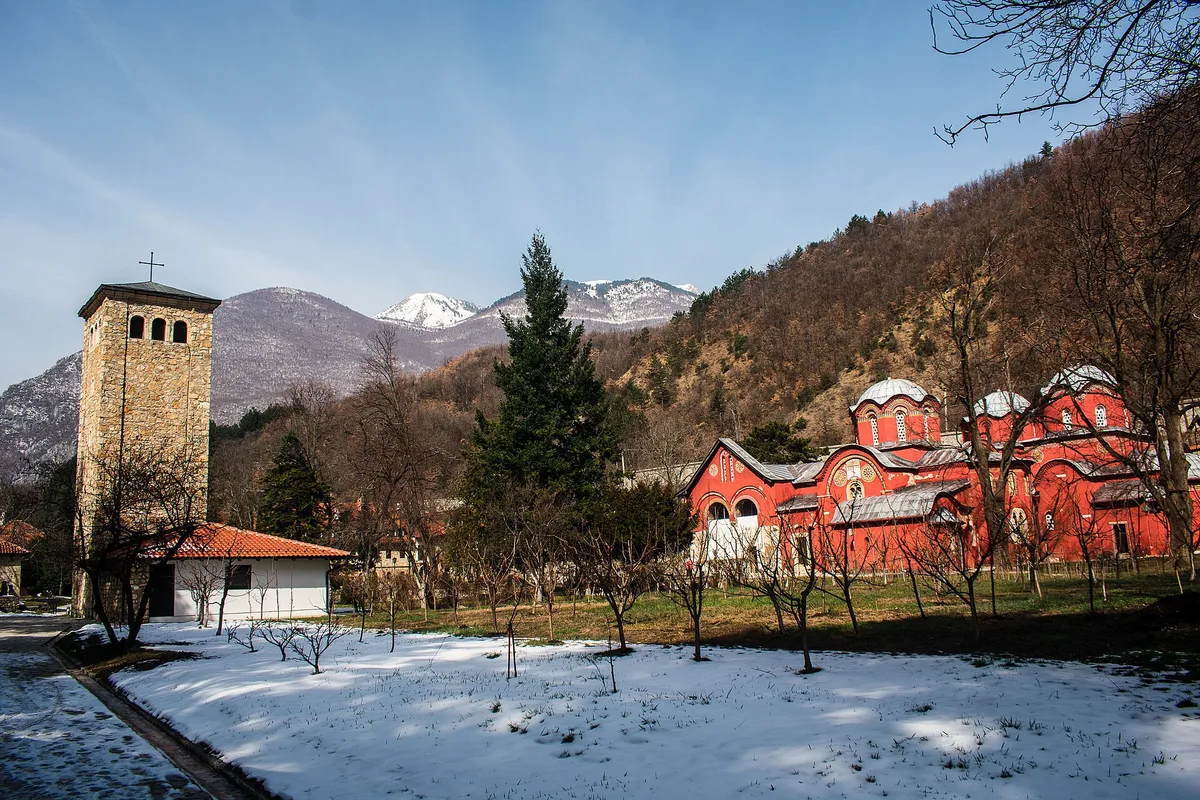
75,479 Albanians of 82,745, under the Rugova gorge and the Accursed Mountains, with the Patriarchate of Peć, the historic seat of the Serbian Orthodox Church, inside the municipality.
Gjakova — 72,096
72,096 Albanians of 78,699. Its Grand Bazaar burned in 1999 and was rebuilt stall by stall, and its diaspora in Germany and the United States is large enough to be audible in the town every August.
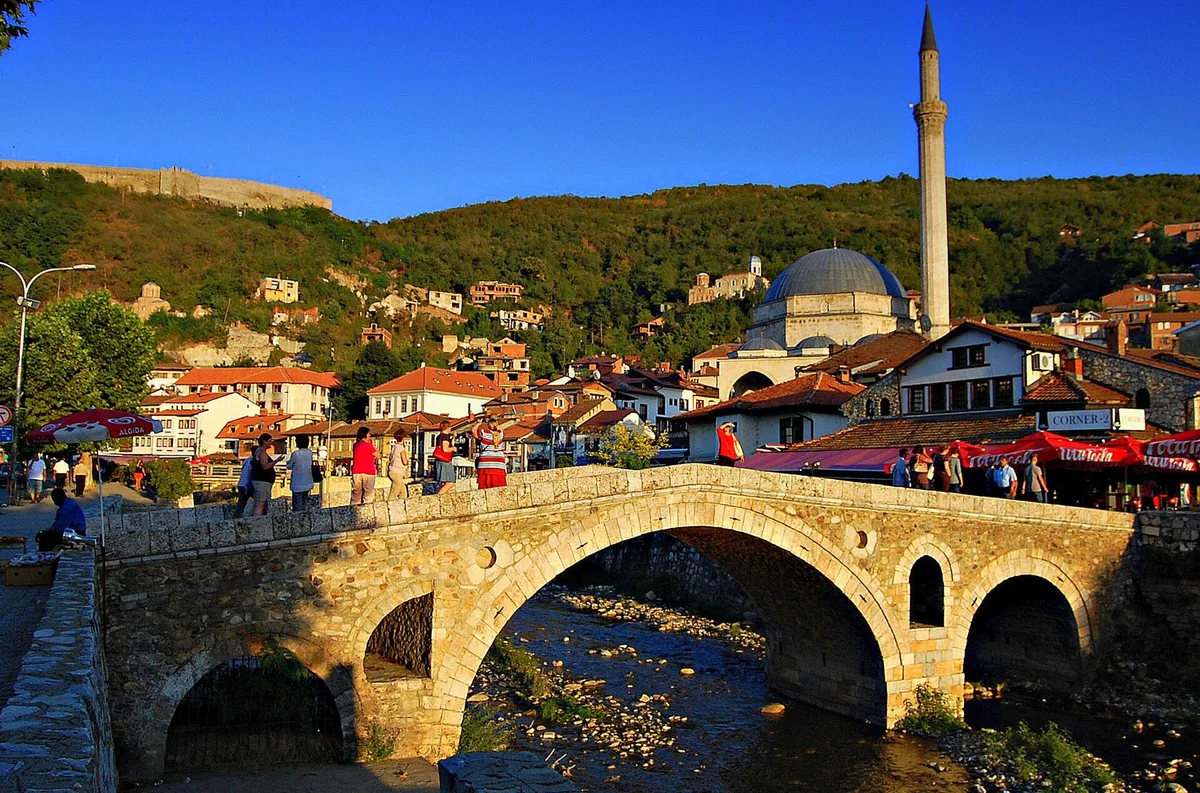
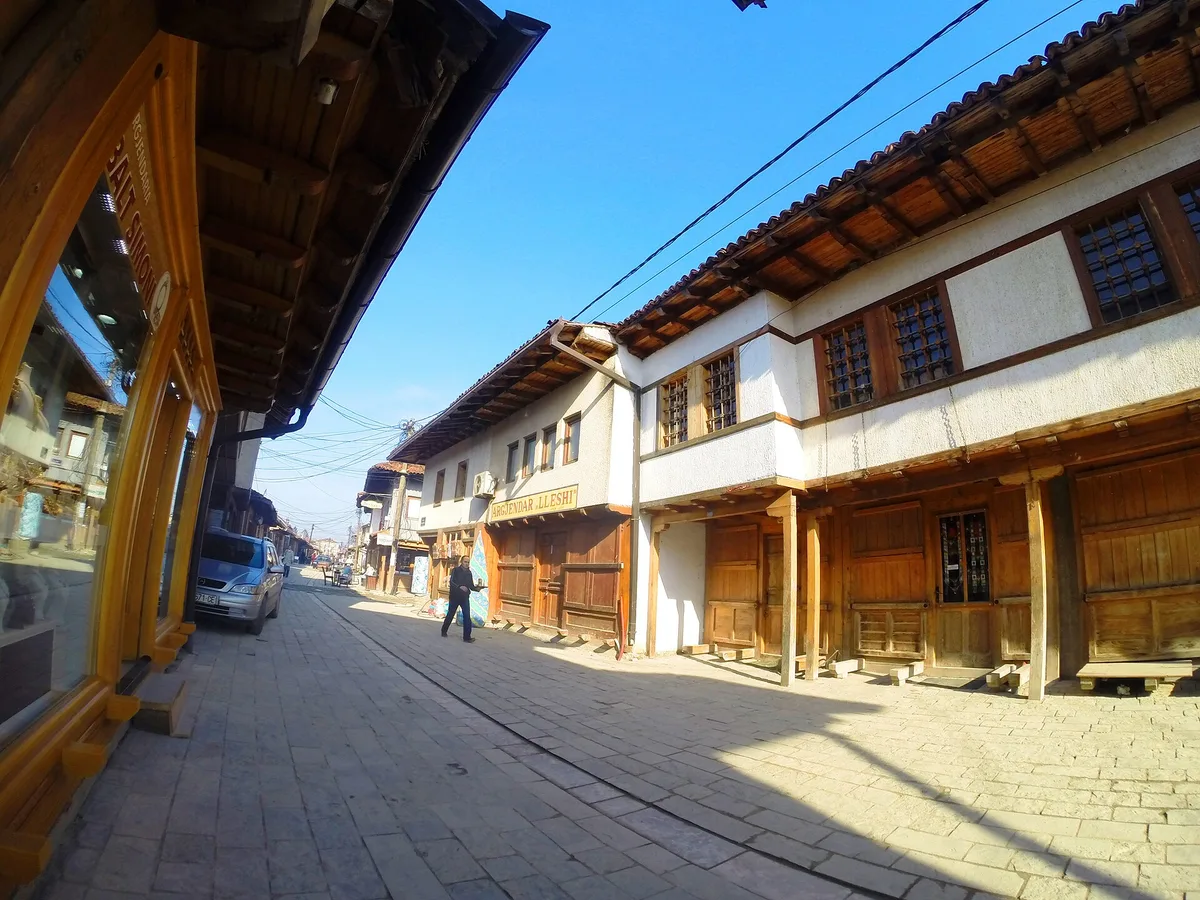
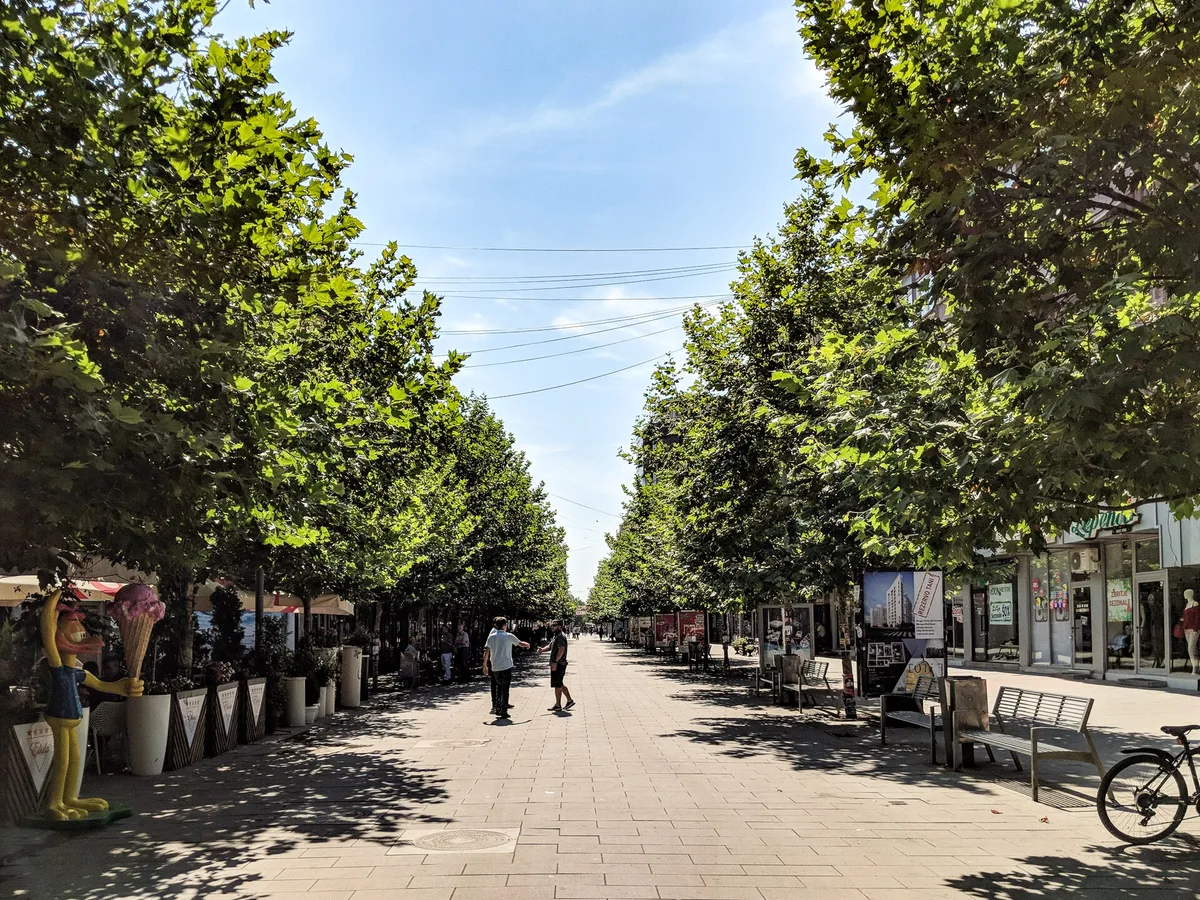
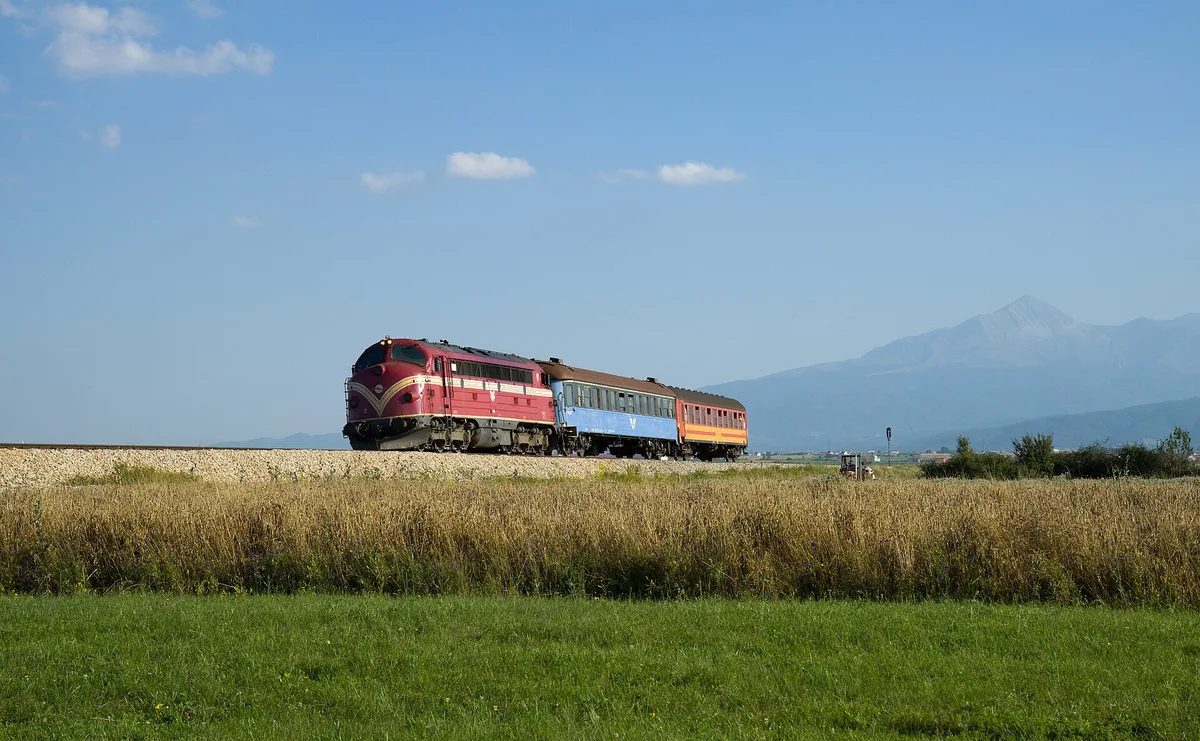
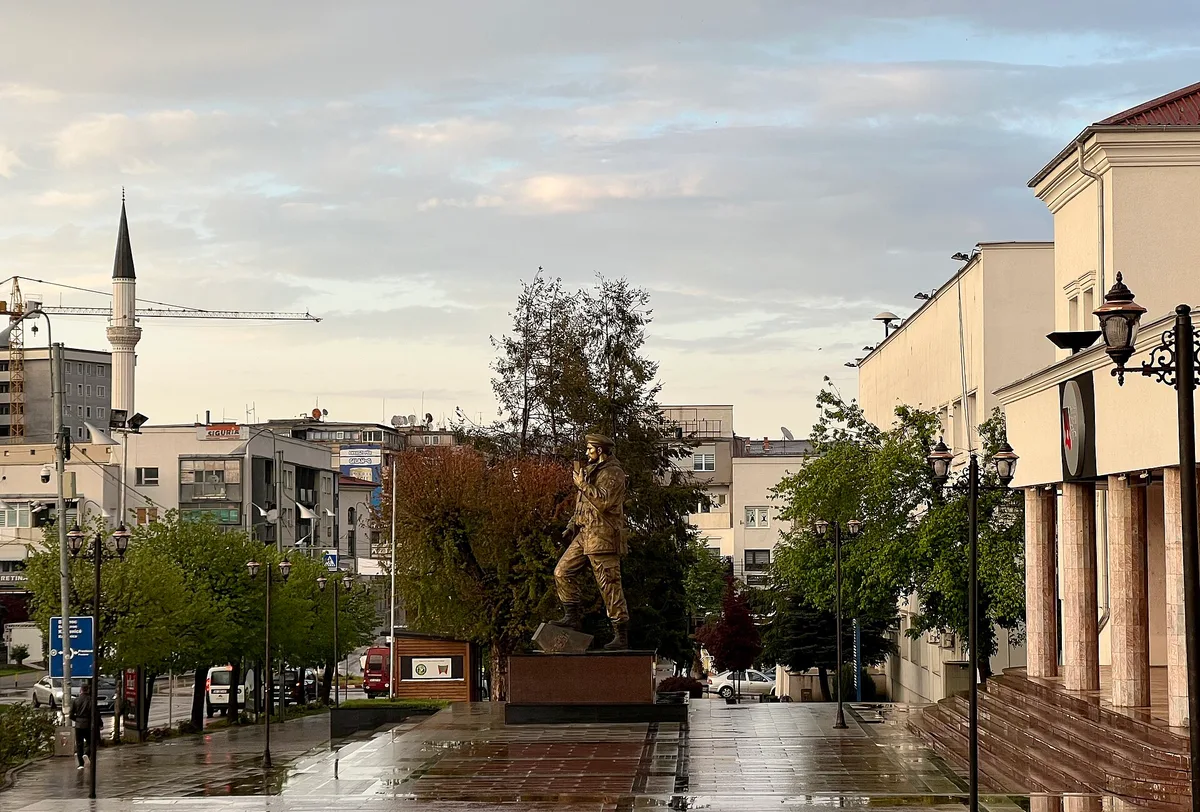
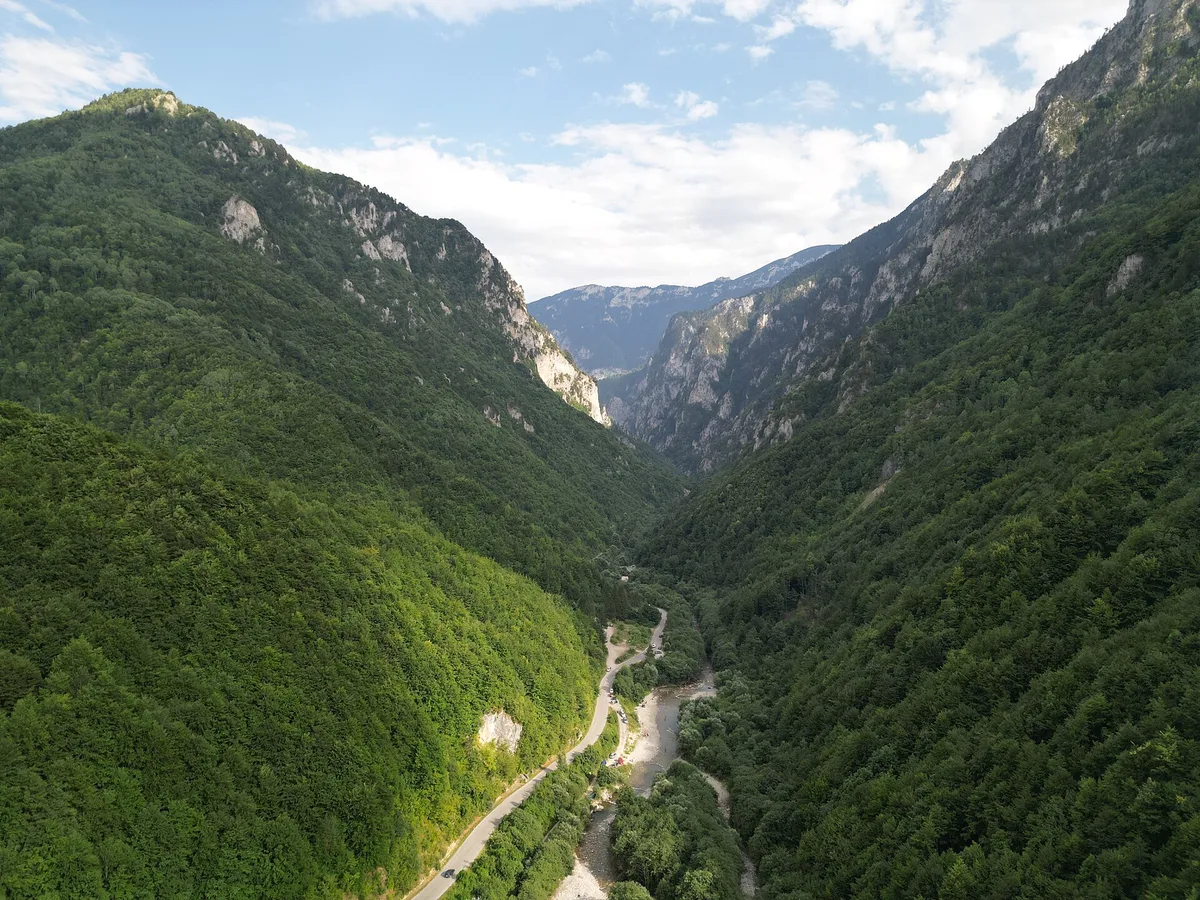
Then Podujeva (70,071 Albanians, 98.7% of the municipality), Mitrovica (62,693 — the southern municipality; the north is counted separately), Vushtrri (60,847) and Fushë Kosovë (58,401), which has grown fast as Prishtina's overflow.
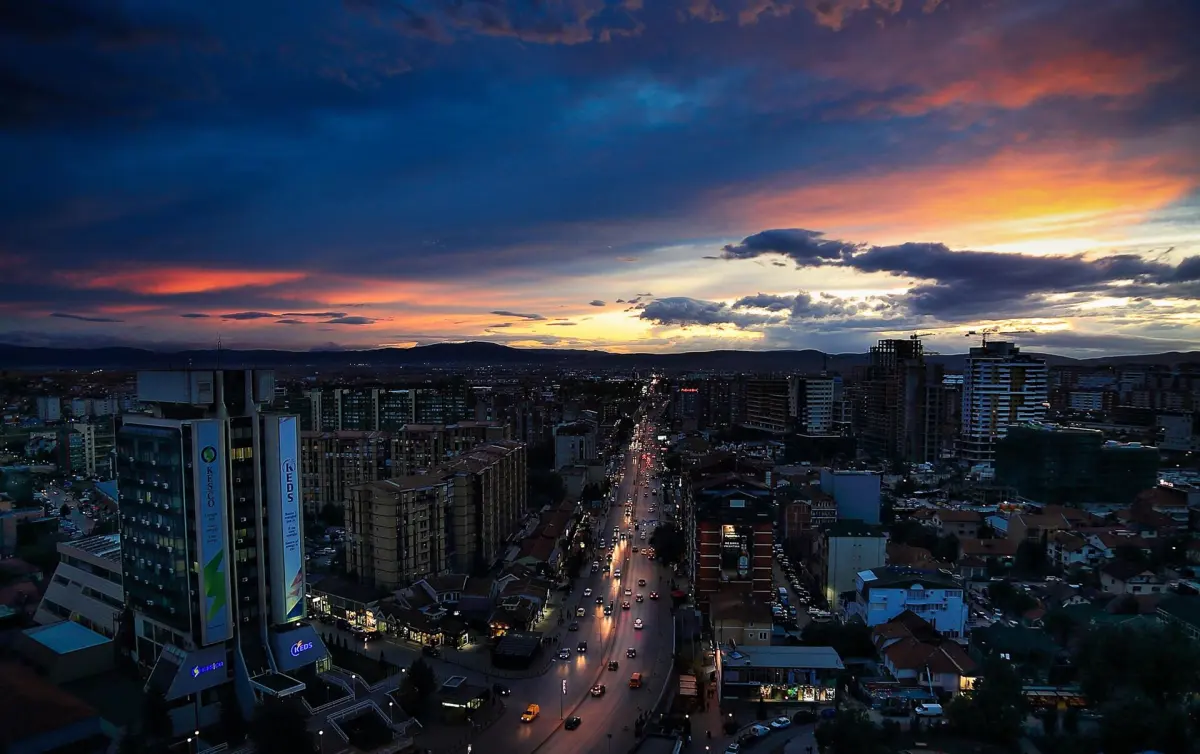
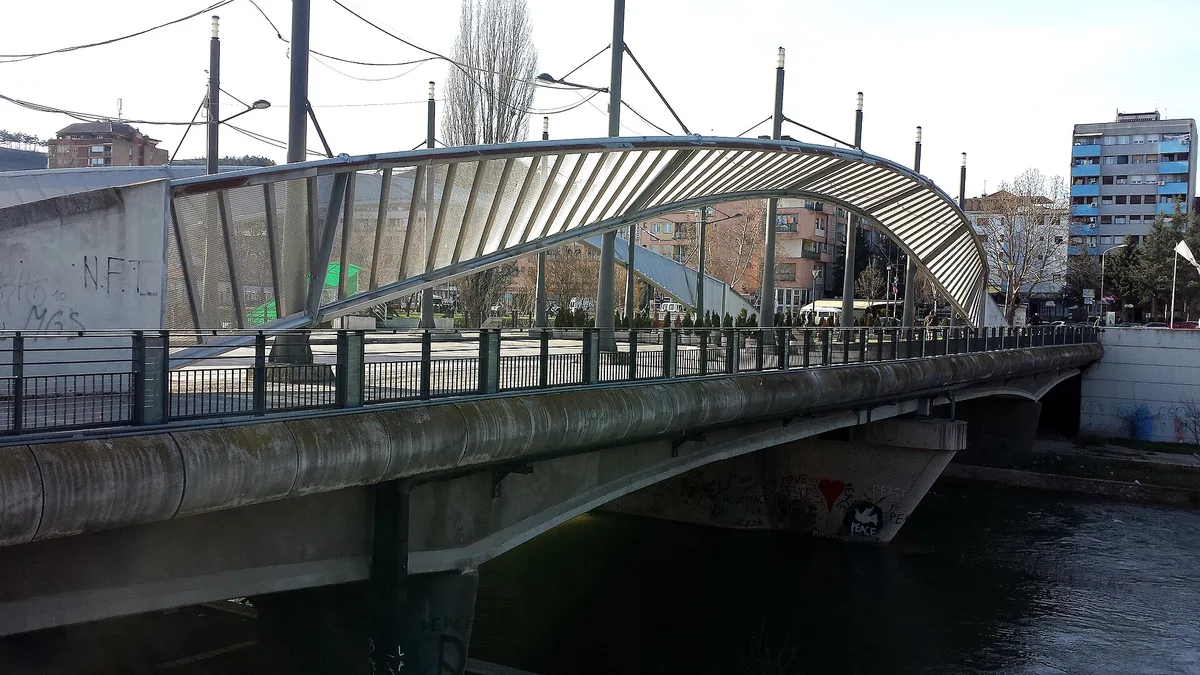
North of the Ibar the picture inverts, and every figure there is an estimate rather than a count: 1,489 Albanians among 7,920 people in North Mitrovica, 682 of 3,385 in Zubin Potok, 360 of 2,867 in Zveçan and 178 of 9,485 in Leposaviq.

Muslim, Catholic, secular — and the language question
Declared religion in the 2024 census, on the official total of 1,602,515:
- Islam — 1,482,276 people (92.50%), overwhelmingly Sunni, with Bektashi and Sufi tekkes mainly around Prizren, Gjakova and Rahovec
- Orthodox Christianity — 53,632 (3.35%), almost entirely the Serb community
- Catholicism — 27,815 (1.74%), Albanian Catholics concentrated around Gjakova, Klina, Prizren and Peja
- No religion 7,899 (0.49%), another religion 7,175 (0.45%), preferred not to answer 23,718 (1.48%)
The census counts a declared religion, not a practice, and the distance between the two is the whole point. Kosovo is among the most secular Muslim-majority societies in Europe. The constitution declares the state secular and neutral in matters of religious belief; the education law requires public schools to refrain from religious instruction; alcohol is sold everywhere; a headscarf is a minority choice, and a ministry circular bars religious dress on school premises — a rule some schools enforce against girls in hijab and others ignore. Ramadan and Bajram are family occasions on a national scale, in the same way Christmas is in Catholic families. Mixed-faith Albanian marriages are unremarkable, and the old line that the religion of Albanians is Albanianism gets quoted by people who go to the mosque and by people who never do.
If you are reading this because you are meeting a family: the practical shape of it is usually food, hospitality and the calendar rather than doctrine. Conversion is not usually asked for, and the questions you do get will be about work, family and whether you can be relied on.
The language, and the dialect question
The language is Albanian, in the Gheg group of the north — the same variety spoken in northern Albania, western North Macedonia and Montenegro's Malësia. Standard Albanian, taught in school and used in broadcasting, rests mainly on Tosk from the south, which is why a Prishtina family speaks Gheg at the table and writes standard Albanian at work without giving it a thought. A Tirana speaker and a Prishtina speaker understand each other completely and can each tell you exactly where the other is from inside one sentence.
Albanian and Serbian are both official languages of Kosovo nationwide, with equal status in its institutions. Turkish, Bosnian and Romani carry official status at municipal level where the numbers require it, which is how a Prizren municipal notice ends up in three or four languages.
Kosovar, Kosovo Albanian or shqiptar?
Three labels for overlapping things. Shqiptar is the ethnicity, and what Albanians call themselves in Albanian. Kosovar is anyone from Kosovo, Serb and Bosniak and Turkish citizens included, and it is how most Kosovo Albanians describe their citizenship. Kosovo Albanian is the compound the outside world uses when it needs to say both at once — in German, Kosovo-Albaner, which is an everyday word in Switzerland and Germany and almost never heard inside Kosovo.
Why is a third of Kosovo somewhere else?
Five waves, one long coda and one return. Each card gives the cause, where people went, and what came back, because the return matters as much as the leaving. The receiving end of the same story is told in full elsewhere: the 1968 recruitment agreement, the 2015 hinge and the Westbalkanregelung on Albanians in Germany, the seasonal permits and the war generation on Albanians in Switzerland.
Before any of it
The Ottoman centuries, when Kosovo's towns were provincial administrative centres and its people mostly stayed where they were. Then movement in both directions at once: Serbia's expansion into the Sanjak of Niš in 1877–78 displaced a large Muslim, mostly Albanian population, tens of thousands of whom moved into Kosovo and some of whom carried on to Anatolia — the muhaxhirë, whose descendants still carry village names from around Niš and Toplica. The London Conference of 1913 then drew the new Albanian state's border south of an Albanian-majority region and handed Kosovo to Serbia, and interwar Yugoslavia settled Serb and Montenegrin colonists on Kosovo land. By the first Yugoslav census in 1948, Albanians were 68.5% of Kosovo. The majority predates every modern border in the region.
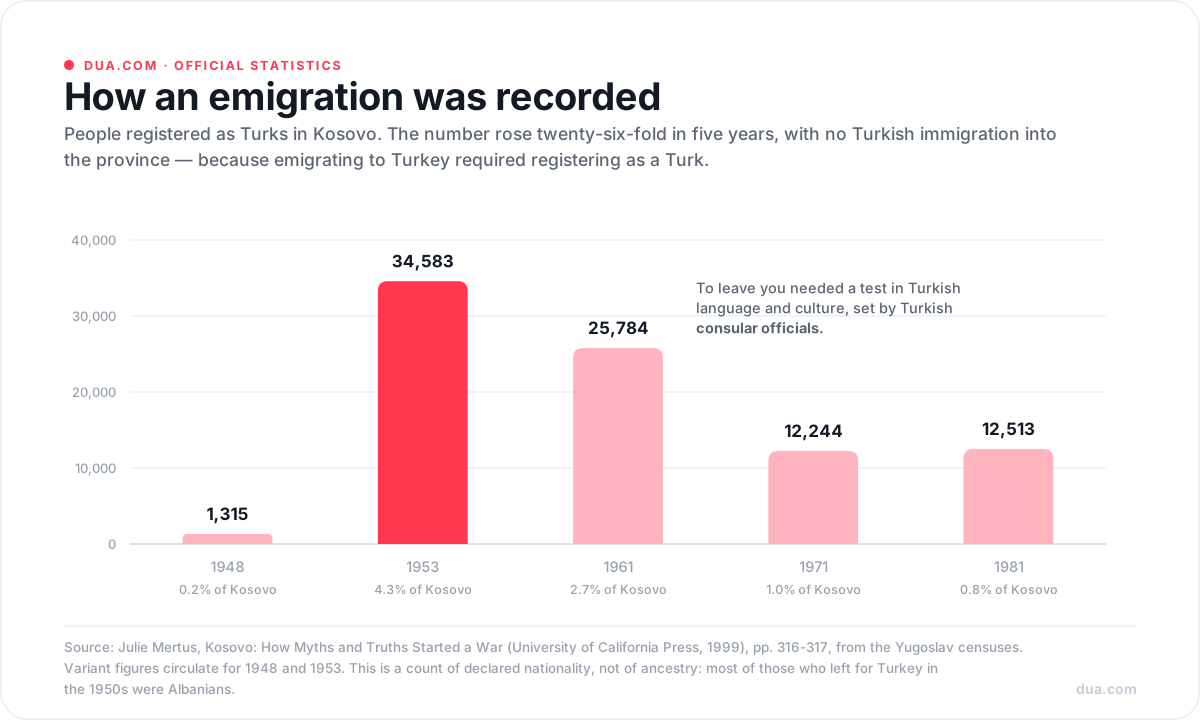
The largest single departure from Kosovo happened before the first guest worker left, and it was recorded under someone else's name. A Turkish–Yugoslav draft convention of 1938 had proposed moving 40,000 Muslim families out of southern Yugoslavia; it was never ratified. Then in 1953 Belgrade and Ankara reached an understanding that let Yugoslavia's Turkish population emigrate, and a family needed four things to use it: an invitation from relatives already in Turkey, a test in Turkish language and culture set by Turkish consular officials, renunciation of Yugoslav citizenship, and a substantial fee. Kosovo's own census records what followed. The number of people registered as Turks in Kosovo rose from about 1,315 in 1948 to about 34,583 in 1953 — twenty-six-fold in five years, with no Turkish immigration into the province whatsoever — and then fell back to 12,244 by 1971 as the emigrants left. Roughly 172,000 people went from Yugoslavia to Turkey between 1953 and the mid-1960s, and perhaps 100,000 of them were Albanians. Paperwork was not the only pressure: Kosovo's weapons-collection campaign of 1955–56 produced thousands of documented complaints of beatings and mistreatment. They settled by village of origin rather than by nationality, which is why Kaçanik families cluster in Istanbul's Merdivenköy and Peja families in Küçükçekmece, and why Albanians in Türkiye has to reconstruct a range where every other destination page reports a count.
Yugoslavia signed labour recruitment agreements with Austria in 1965 and West Germany in 1968, and Switzerland issued seasonal permits. Kosovars left for Munich, Stuttgart, Zurich and Vienna on Yugoslav passports, and appear in German and Swiss statistics of the period as Yugoslavs, which is why the first generation is almost invisible in the receiving countries' own data. Yugoslav statistics recorded 25,000 Kosovars at temporary work abroad in 1971 and 39,434 in 1981, and the demographer who compiled the series for the ICTY flagged both as undercounts, because whole households left and dropped out of the register. Net out-migration ran at 3,685 people a year in the 1960s and 6,213 a year in the 1980s. Almost none of it reversed: the guest-worker generation brought its families over instead.
Kosovo's autonomy was dissolved in 1989. Albanians were dismissed from public employment on a mass scale (including, as the statistics agency notes in its own census report, from the staff of the statistics agency itself), and a parallel Albanian system of schools, clinics and salaries grew up alongside the Serbian state. Albanians boycotted the 1991 census, so the figures published for that year (1,596,072 Albanians, 81.6%) are a Yugoslav Federal Statistical Office estimate that Kosovo institutions have never accepted. The decade's emigration was asylum: Germany, Switzerland and the United Kingdom together received two thirds of every asylum application lodged in Europe from Kosovo during 1998. No reliable total exists for the decade as a whole; the most-quoted figure, 368,000 Kosovo Albanians in Western Europe by 1993, is an academic estimate by the historian Noel Malcolm rather than a statistic.
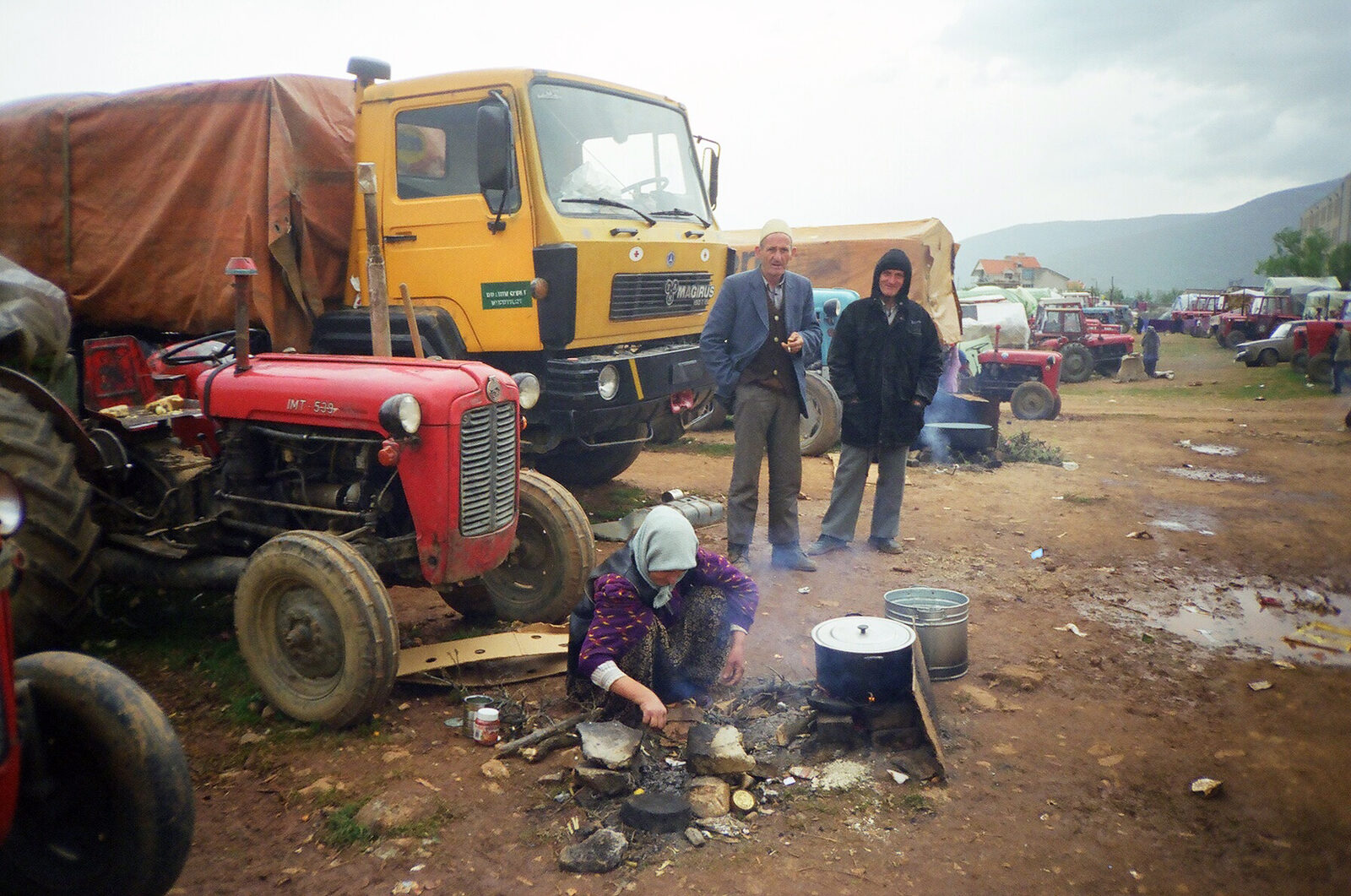
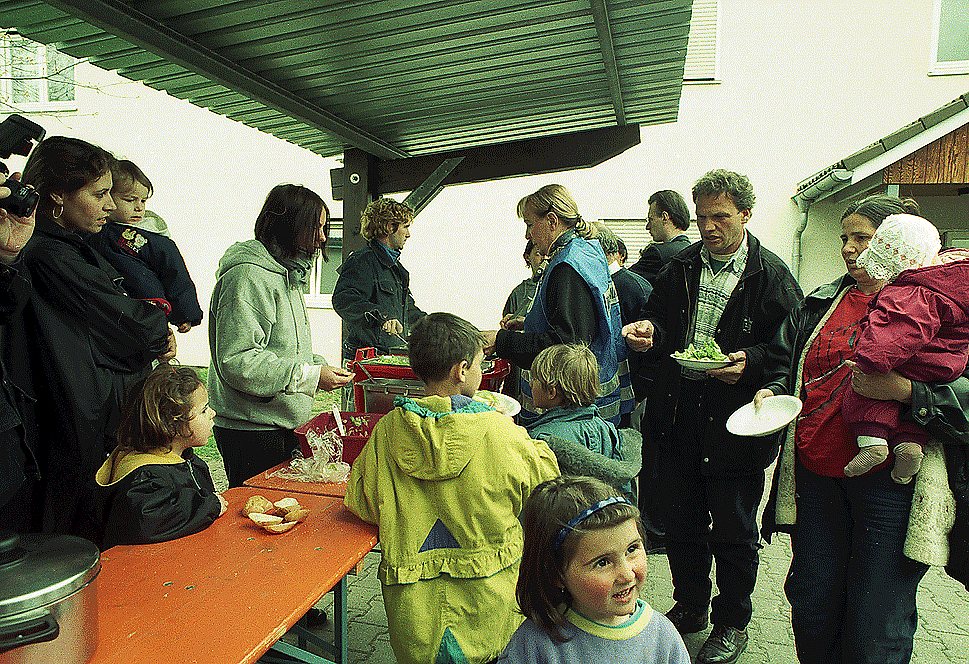
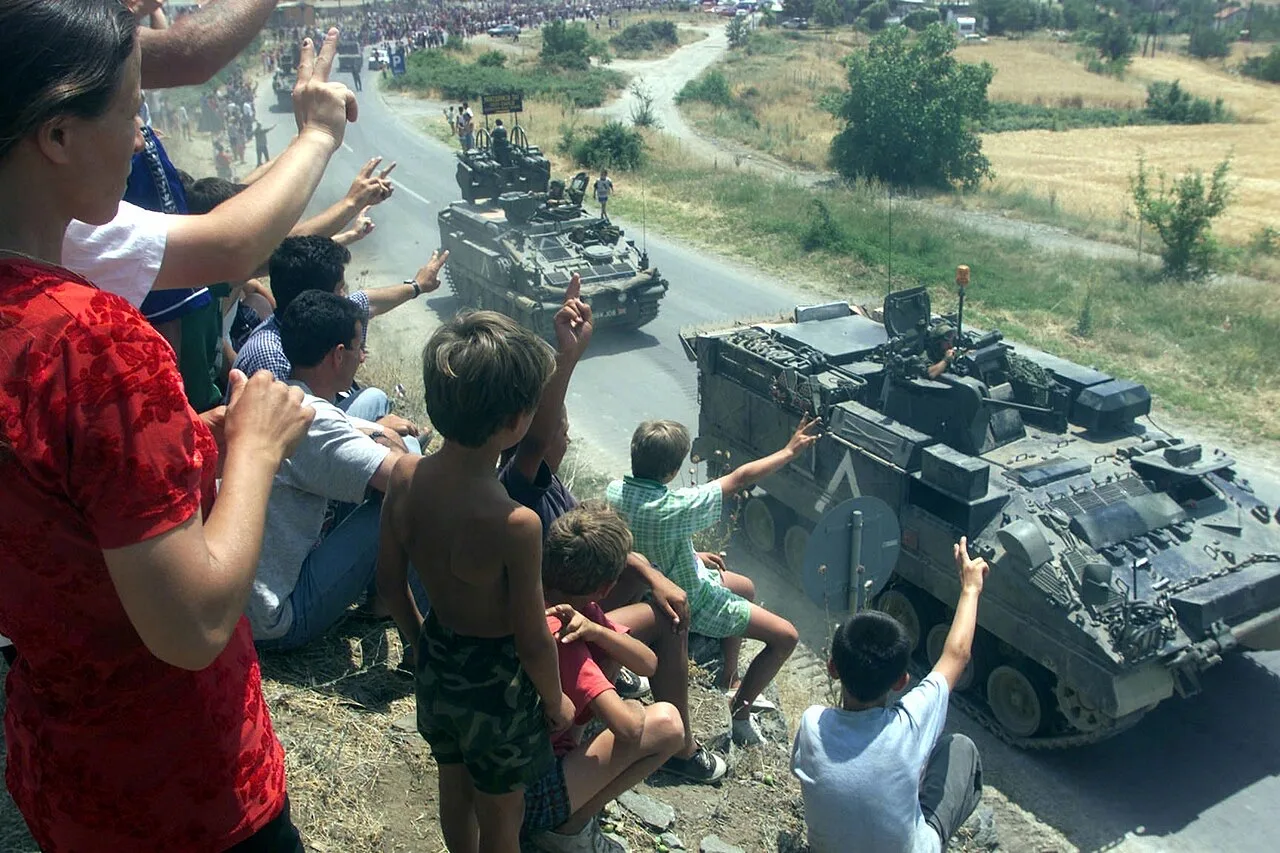
Within nine weeks of the start of the NATO air campaign, Yugoslav army, Serbian police and paramilitary units had driven nearly 860,000 Kosovo Albanians across the borders: 444,600 to Albania, 344,500 to Macedonia and 69,900 to Montenegro, in UNHCR's own account of the emergency, with several hundred thousand more displaced inside Kosovo. The Humanitarian Law Center's Kosovo Memory Book, the one count both communities work from, documents more than 13,500 people killed or missing between 1998 and 2000. 81,705 people were flown out of Macedonia to third countries under the UNHCR and IOM Humanitarian Evacuation Programme. Germany took the largest single share: 14,134 people as at 9 June 1999, ahead of Türkiye, Norway, the United States and Italy. And then most of them went home: by 23 June, 566,900 had already left the neighbouring countries — one of the fastest mass returns UNHCR had recorded. The families evacuated to Germany, Switzerland, Sweden, Norway, Denmark, Finland and North America largely stayed, which is why the Nordic Albanian communities date so largely from the war.
Reunification and marriage. The waves that had left were now households abroad, and the legal route out of Kosovo ran through a wedding. The 2011 census found roughly 550,000 Kosovo-born people living abroad plus about 150,000 born to them — where the 703,978 figure that still circulates comes from. Remittances became the second leg of the economy in this decade and have never stopped being it.
In December 2014 more than 20,000 people from the Western Balkans, mainly Kosovars, applied for asylum in the EU in a single month — the highest monthly figure ever recorded at that point. In the first quarter of 2015 Kosovo produced 48,900 first-time asylum applicants in the EU: 26% of the total, ahead of Syria, and 90% of them registered in just two member states, Hungary (22,800) and Germany (21,100). The route was a bus to Subotica and a walk into Hungary, so the same people were often counted twice. Across the full year Hungary registered 23,690 Kosovar first-time applicants and Germany 33,425 on Eurostat's count, 33,427 on the German asylum office's own. German registration data show 41,492 arrivals from Kosovo in 2015 against 20,012 the year before. Claims were rejected almost across the board, Kosovo was designated a safe country of origin, and by 2016 departures from Germany (19,916) exceeded arrivals (12,506). The widely repeated "50,000 to 100,000 people left Kosovo" is a press estimate; no statistical source publishes it.
Germany's Westbalkanregelung opened a work route with no shortage-occupation test: uncapped until the end of 2020, then capped at 25,000 pre-approvals a year for the whole region and oversubscribed, and doubled to 50,000 in June 2024. From 2017 arrivals settled between 15,900 and 22,200 a year — care work, construction, trades, nursing, hospitality, universities and family. This is the least dramatic and by far the largest chapter of the last decade.
Kosovo passport holders can travel to the Schengen area without a visa for 90 days in any 180 — the last Western Balkan country to get it. It is travel, not work: it grants no right to a job or to residence, and Kosovo's own institutions took pains to say so at the time. The first visa-free year is nevertheless visible in German figures: 25,660 arrivals against 8,897 departures, a net gain of 16,763, the highest since 2015. Kosovo's statistics agency estimated 37,451 emigrants and 9,038 immigrants for 2024, a net migration loss of 28,413 people, most of it to the EU and EFTA for family reunification, marriage, work and study.

And every July, the direction reverses
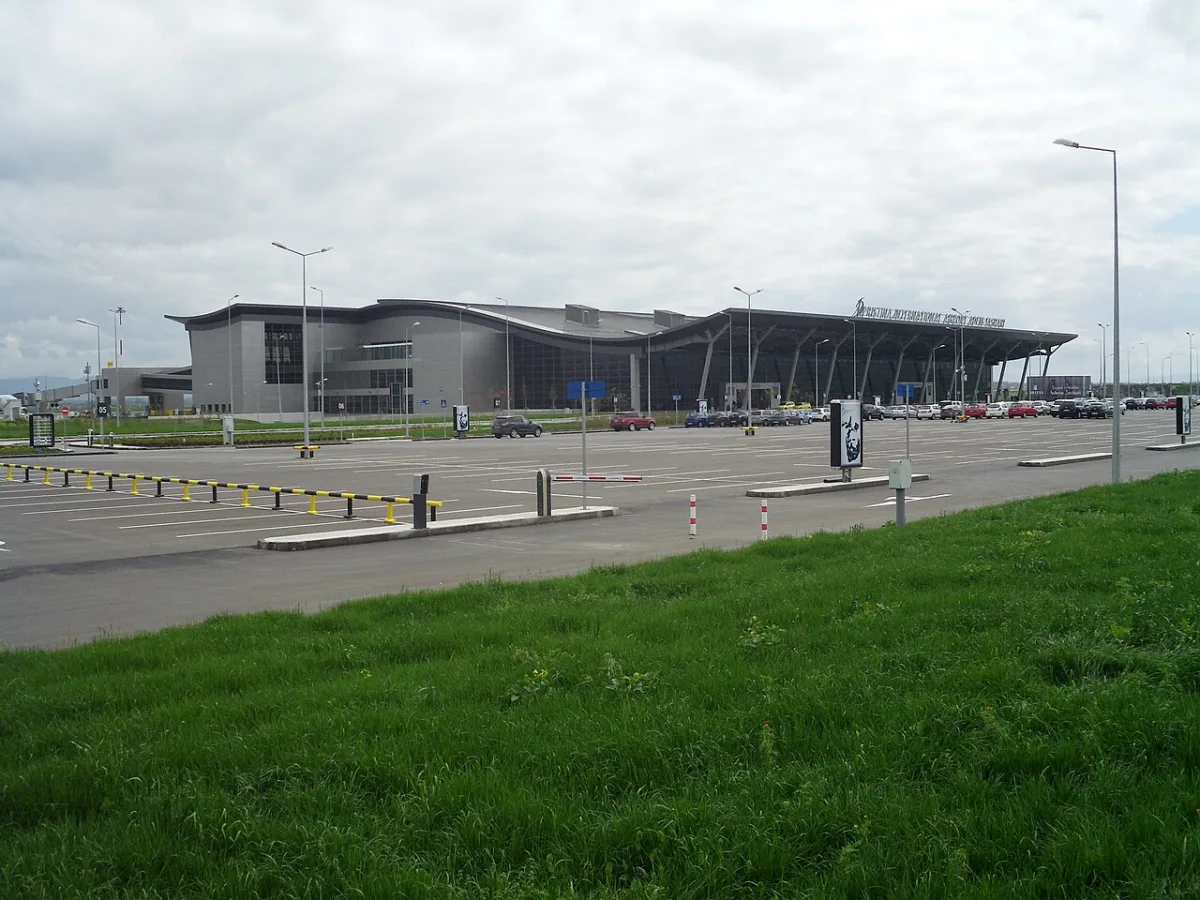
Number plates from Baden-Württemberg, Zurich, Vienna and Lombardy fill the streets of Ferizaj and Gjakova. Weddings are scheduled for August because that is when the diaspora is home. 4,573,524 passengers went through Prishtina airport in 2025 on the statistics agency's own monthly series (the airport puts it at 4.6 million), in a country of 1.6 million people.
No statistical office counts the summer return, so nobody should print a figure for it. It is still the most visible demographic event of the Kosovar year, and the reason a page about Kosovo cannot stop at the resident population.
Where they went — and why Germany has two numbers
Ask how many Kosovo Albanians live in Germany and you will be told 300,000, or 313,615, or close to 600,000, or 615,000. All four are current, and they answer different questions.
313,615 is a citizenship count: Kosovan nationals on Germany's central register of foreigners at the end of 2024. Close to 600,000 is an origin count: the German Federal Foreign Office describes the Kosovar diaspora in Germany as the largest in the world and puts it near 600,000 people with Kosovan citizenship or origin. Its German edition says «knapp 600.000», just under; its English edition says more than 600,000. The two were updated a week apart in April 2026, which tells you how firm the estimate is. 615,000 is the 2025 Microcensus count of people in Germany with a Kosovo migration background, and it is the only origin measure produced by a statistical office rather than a foreign ministry. The 300,000 in Wikipedia's infobox is the citizenship number, a few revisions behind. Nothing bridges the gap except naturalisation and children: a Kosovar who becomes German leaves the first number and never leaves the second.
The same distinction runs through every destination, which is why the table below says what each figure counts rather than only how large it is. Germany publishes the largest origin-inclusive figures; Switzerland's State Secretariat for Migration put the Kosovar community there at 150,000 to 170,000 in its 2010 diaspora study, well above the passport count; Austria publishes a count of people born in Kosovo and nothing beyond it. And the oldest and possibly largest community of all cannot be counted on any base: the people who left for Türkiye in the 1950s entered as Turks, and neither state has asked the question since.
Count descent rather than emigration, every naturalised generation no passport register can see, and the total moves toward a million. That is why our own worldwide model carries 0.9 to 1.1 million people of Kosovo origin — and it is a model, not a count: the World Bank's 700,000 to 900,000 is what the registers actually support.
| Where | People | What the figure counts |
|---|---|---|
| Germany | 313,615 | Kosovan nationals on the central register of foreigners, 31 December 2024 |
| Germany | close to 600,000 | People with Kosovan citizenship or origin, the Federal Foreign Office's own estimate, 2026 |
| Germany | 615,000 | People with a Kosovo migration background, 2025 Microcensus — the only origin measure produced by a statistical office |
| Switzerland | 116,425 | Kosovan nationals in the permanent resident population, 31 December 2024. Naturalised Kosovars are not in it: the State Secretariat for Migration's 2010 diaspora study put the whole community at 150,000 to 170,000 |
| Austria | 29,578 | Kosovan citizens, 1 January 2026. A separate count of people born in Kosovo reaches 39,298; Austria never breaks Kosovo out of its ex-Yugoslav grouping for the naturalised generation |
| Italy | 36,180 | Kosovan citizens resident in Italy, 1 January 2025. The 43,763 in circulation is not an ISTAT figure and appears in no year of its published series; our own Italy page uses a higher ≈40,000 from Kosovo's missions in Italy |
| United Kingdom | 30,515 | Kosovo-born residents of England and Wales, 2021 census. Three quarters of them (75.6%) arrived between 1991 and 2000 and 89.9% now hold a British passport: the war generation, counted |
| United States | 23,069 | Kosovo-born residents, 2024 — from the census microdata, where a Kosovo birthplace code has existed since 2017. No published ACS table carries a Kosovo line; the 228,504 people of "Albanian" ancestry it does publish pool Albania, Kosovo and North Macedonia origins |
| Türkiye | 1,571 | Citizens of Kosovo on Turkey's address register, 31 December 2025 — and that measures current foreign nationals, nothing about descent. The 1950s arrivals were registered as Turks, no Turkish census has ever asked about ethnicity, and the descent population is the one figure on this page that genuinely cannot be established |
Migrationsbericht 2024, Table 8-1; German Federal Foreign Office, bilateral relations with Kosovo; Swiss Federal Statistical Office, STAT-TAB permanent resident population by citizenship; Statistik Austria, population by citizenship and by country of birth; ISTAT dataflow 29_317; U.S. Census Bureau, American Community Survey microdata; Destatis 2025 Microcensus; Swiss State Secretariat for Migration, diaspora study 2010.
Each of those destinations has its own page with its own figures: Germany, Switzerland, Austria, Italy, the United Kingdom, the United States, Türkiye, Sweden, Norway, Denmark and Finland — and the worldwide hub collects all of them, with the model behind every estimate.
The money takes the same route
Kosovo received €1,413.7 million in remittances in 2025, or €1.41 billion, up 4.3% on 2024 and about €118 million a month. The Central Bank of Kosovo's annual report puts Germany and Switzerland together at 56.4% of the total, followed by the United States and other EU countries. Weight the bank's monthly country shares by its monthly totals and the order runs Germany (about 39%, roughly €546 million), Switzerland (about 18%, some €251 million), the United States (7%) and Austria (4%). That weighting is ours — the bank publishes its country split monthly, as percentages, and no annual per-country figure at all.
During the 2024 census the government also ran an online diaspora register, ReKos; press reports put self-registrations at around 550,000 by December 2024. The statistics agency published no figure for it, so read it as a measure of engagement rather than a count of the diaspora.
The traces emigration leaves
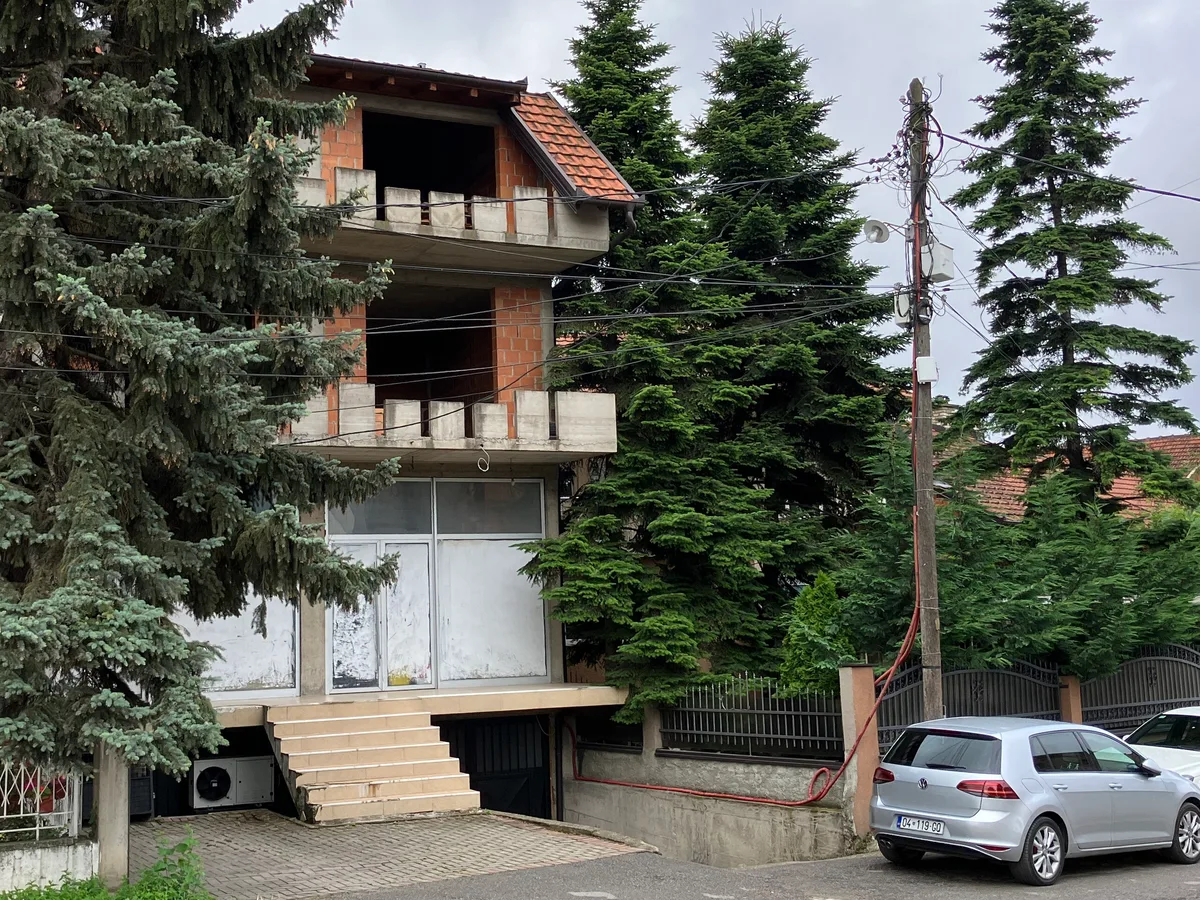
207,165 of Kosovo's 581,095 dwellings were recorded as unoccupied in the 2024 census — more than a third of the housing stock. Some of that is inheritance and some is speculation, and a great deal of it is the house a family in Stuttgart built for August: three floors, finished ground floor, shutters closed for eleven months.
The population that stayed is young, with an average age of 34.84 against a median age of 44.7 across the EU, and it is ageing faster than the raw figure suggests, because the people leaving are the ones who would otherwise be having children here. The statistics agency's estimate for 2024 records a natural increase of 10,888 against a net migration loss of 28,413. It is also, for the first time in a Kosovo census, a majority-urban population: 50.18% against 38.03% in 2011.
And the country you visit in July is not the country the census counted in April.
The same story, on film
Six recordings, all from the publisher's own channel: one life, two agency reels from 1999, the deportation flights of 2015, a Swiss summer in Kosovo, and the afternoon the census was published. We hold no rights in any of them; each card names who made it.
Deported at eighteen months, home before he was two
Elion Kollçaku was a year and a half old in 1999, when his family was deported to Albania in animal trucks, and not quite two when they came back to Peja. He remembers a childhood in which burnt houses were simply ordinary, and his mother carrying the family's documents across the border rather than burning them, so that someone could later prove they had existed.
Oral History Kosovo · full interview recorded in Prishtina in 2025, conducted in English; transcripts in Albanian, English and Serbian on the project's own page.
Blace, the first week of April 1999
Agency footage from the Macedonian border in the opening days of the NATO campaign, filed on 1 April 1999. No narration: shots, natural sound and interviews exactly as the agency sent them out.
AP Archive (Associated Press) · dateline 1 April 1999, 6:21 · AP's original shotlist and script are printed in the video description.
The first organised convoy home
On 28 June 1999 seven buses took about 320 people out of the Stenkovec One camp in Macedonia towards Prishtina, escorted by UNHCR: the first organised return, a fortnight after KFOR moved in.
AP Archive (Associated Press) · dateline 28 June 1999, 3:29 · English and Albanian, natural sound, no narration.
Ingolstadt to Prishtina, on a chartered plane
By March 2015 the planes were going the other way: Germany had begun flying rejected Kosovar asylum seekers back into Prishtina, among them a family that had spent a year and eight months in Ingolstadt. It is also a good illustration of this page's warning about that winter, because the report repeats the 50,000 to 100,000 figure no statistical office publishes.
euronews · «Fleeing Kosovo: over the border and back again», reporter feature of 27 March 2015, 8:18.
A Swiss summer in Kosovo
Swiss public television spends the summer holidays with Kosovars from Switzerland who are visiting family in the country their parents left. It is the July reversal, filmed from the far end of the corridor.
SRF, Swiss public broadcaster · «Mona mittendrin: Schweizer Sommer im Kosovo», a film by Michael Gerber, published 9 October 2025, 49:43 · Swiss German with German subtitles.
The census, presented in full
The Kosovo Agency of Statistics presenting the final results of the 2024 census on 19 December 2024: the afternoon the enumerated figure of 1,585,566 and the official total of 1,602,515 were published. Sixty-five minutes, and the origin of nearly every number on this page.
Kosovo Agency of Statistics (Agjencia e Statistikave të Kosovës) · live stream of the final-results presentation, 19 December 2024, 1:05:09 · Albanian audio.
Two ends of one corridor
On dua.com, Kosovo is not a diaspora. It is the busiest place on the platform. 223,085 people in Kosovo are members, and in the twelve months to 27 July 2026 Germany and Kosovo exchanged 102,272 matches — 280 a day, the largest single route in our data. Switzerland and Kosovo exchanged 43,107, Italy 14,836, the United Kingdom 14,535 and the United States 10,774.
Those figures measure something the census cannot: how connected Kosovo and its diaspora are right now. The waves in this article did not produce two separate populations. They produced one population with two ends, and the heaviest traffic between them runs toward home.
The drive that started it
dua.com exists because of that corridor. Valon Asani was born in Switzerland and had the idea for the app on a drive to Kosovo with his father — the drive every diaspora family knows: a night and a day of motorway to arrive somewhere that is home without ever having been an address. He told the story at Startup Grind Prishtina in 2020.
Three readers, one route
Coming home this summer
Set Fly to Prishtina, Prizren or Ferizaj a few weeks before you land, so August does not start with introductions.
Fly is where most of this corridor's traffic starts. A few flights are free; Premium removes the cap.
Get dua.comLooking seriously
The fifteen-minute "where are you from" conversation is already done: someone who knows what your mother will ask first, and why you disappear every August.
Mandatory photo verification on every profile.
Get dua.comIn Kosovo, open to the diaspora
Fly runs both ways. From Gjilan or Prishtina you can set your location to Stuttgart, Zurich or Vienna and see who is there before your family suggests someone.
The route home is also a route out. A few Fly flights are free, unlimited with Premium.
Get dua.com
Reading in Albanian and looking for the local pages rather than this one? They are here:
FAQ
Are people in Kosovo ethnically Albanian?
Overwhelmingly, yes. In the 2024 census 1,454,999 of 1,602,515 residents declared Albanian ethnicity: 90.79%, or 91.76% on the census-only figures (1,454,963 of 1,585,566). The rest of the country is Serb (3.31%, and that is a floor rather than a count: the four Serb-majority municipalities in the north boycotted the census and had to be estimated), Bosniak (1.69%), Turkish (1.21%), Ashkali (1.01%), Egyptian (0.66%), Gorani (0.57%) and Roma (0.54%).
Why are there so many Albanians in Kosovo?
Because they were already there when the borders were drawn. Albanians were an established population of the region under Ottoman rule, and the London Conference of 1913 placed an Albanian-majority area outside the new Albanian state. The first postwar Yugoslav census, in 1948, already found 68.5% Albanians; by 1981 it was 77.4%, a rise driven by a high birth rate and by Serb and Montenegrin out-migration rather than by immigration.
Is Kosovo Serbia or Albania?
Kosovo has been an independent republic since 17 February 2008, recognised by more than 100 UN member states but not by Serbia, which continues to claim it. Its population is about 91% ethnic Albanian and at least 3% Serb, the Serb figure being a floor because the northern municipalities boycotted the census and had to be estimated. So: Albanian by population, independent by its own constitution, Serbian by Belgrade's position, and disputed in international law — all four at once, which is why the question keeps getting asked.
Why is Kosovo not part of Albania?
Because 2008 was a declaration of independence, not of union: Kosovo became a sovereign state within its existing borders, and its constitution commits it to seeking "no union with any State or part of any State". The two countries have since built open borders, joint customs and police arrangements, shared textbooks and joint diplomatic missions instead of a merger. Union has vocal supporters in both parliaments and a majority in neither.
Do Albanians and Kosovo get along?
Yes, and undramatically. Albania and Kosovo run a joint market, joint embassies in some countries and a shared schoolbook programme; the friction is the ordinary kind: accents, which dialect counts as proper Albanian, jokes about money in both directions. Ask someone in Prishtina what they are and you will often hear "Albanian" and "Kosovar" in the same sentence.
Are Kosovo Albanians Muslim?
Most declare Islam: 92.50% of the population in the 2024 census, almost all Sunni, alongside 3.35% Orthodox (mainly the Serb community) and 1.74% Catholic Albanians around Gjakova, Klina, Prizren and Peja. Practice is another matter. Kosovo is one of Europe's most secular Muslim-majority societies, the state is constitutionally secular, and religious festivals function largely as family occasions.
What does a Kosovan look like?
There is no Kosovan look, and the question hides two. A Kosovan is a citizen of Kosovo, which includes the Serb, Bosniak, Turkish, Ashkali, Egyptian, Gorani and Roma communities as well as the Albanian majority. Physically, Kosovo is a south-east European population and varies as much inside one family as anywhere else: dark hair and eyes are commonest and fair hair and light eyes are unremarkable. What the question usually means is «would I be able to tell», and the answer is no.
What language do Kosovo Albanians speak?
Albanian, in the northern Gheg dialect group, with standard Albanian (based mainly on southern Tosk) used in school, print and broadcasting. In the census 1,485,170 people gave Albanian as their mother tongue — 92.68%, slightly more than declared Albanian ethnicity. Albanian and Serbian are both official nationally, with equal status; Turkish, Bosnian and Romani have official status in municipalities where the numbers require it.
Kosovar, Kosovo Albanian or shqiptar — which is right?
All three, for different things. Shqiptar is the ethnicity and what Albanians call themselves. Kosovar means anyone from Kosovo, including its Serb, Bosniak and Turkish citizens, and is how most Kosovo Albanians describe their citizenship. Kosovo Albanian, or Kosovo-Albaner in German, is the outside world's compound for both at once.
How many Kosovo Albanians live abroad?
The World Bank puts the Kosovar diaspora at 700,000 to 900,000 people, and nearly 950,000 counting the second generation, against a resident population of 1.6 million. The largest community is in Germany, which the German Federal Foreign Office describes as just under 600,000 people of Kosovan citizenship or origin; Switzerland's permanent resident population included 116,425 Kosovan nationals at the end of 2024, with further communities in Austria, Italy, Sweden and the United States, and 30,515 Kosovo-born residents counted in England and Wales in 2021. One layer sits outside all of those counts: the people who left for Türkiye in the 1950s, who entered as Turks and have never been counted as Albanians since.
What happened in 1998–99, and how did it create the diaspora?
Within nine weeks of the start of the NATO air campaign in March 1999, nearly 860,000 Kosovo Albanians had fled or been expelled to Albania, Macedonia and Montenegro, and 81,705 were flown to third countries under a UNHCR and IOM evacuation programme. Most returned within weeks: 566,900 had left the neighbouring countries by 23 June 1999. But the families evacuated to Germany, Switzerland and the Nordic countries largely stayed, which is why those communities have a distinct war generation.
Why do so many Kosovo Albanians play football for Switzerland or Germany?
Because their parents arrived as guest workers in the 1960s and 1970s or as refugees in the 1990s, and they were born and trained in the country that took the family in. Kosovo's own federation was only admitted to UEFA and FIFA in 2016, long after that generation had come through Swiss and German youth systems. It is a migration history showing up on a team sheet, not a political statement.
What are Kosovo Albanian women and men like?
Like anyone else — 1.45 million people do not share a personality. What is fair to say is that family sits close to the centre of most people's decisions, that hospitality is taken seriously enough to be inconvenient, and that a relationship is generally understood to involve two families rather than two people. If you want the long version, we have a whole page on dating a man from Kosovo.
Can I meet people from Kosovo on dua.com — and does that count toward the population?
Yes to the first, and no to the second. 223,085 members are in Kosovo, and Germany and Kosovo alone exchanged 102,272 matches in the twelve months to 27 July 2026. Those are first-party platform figures with a snapshot date, published here because they describe the corridor between Kosovo and its diaspora. They are not a demographic input, and no population figure on this page comes from them.
Want to go deeper? The primary documents
Everything above comes from documents anyone can open. Here is what each one proves, and what it does not.