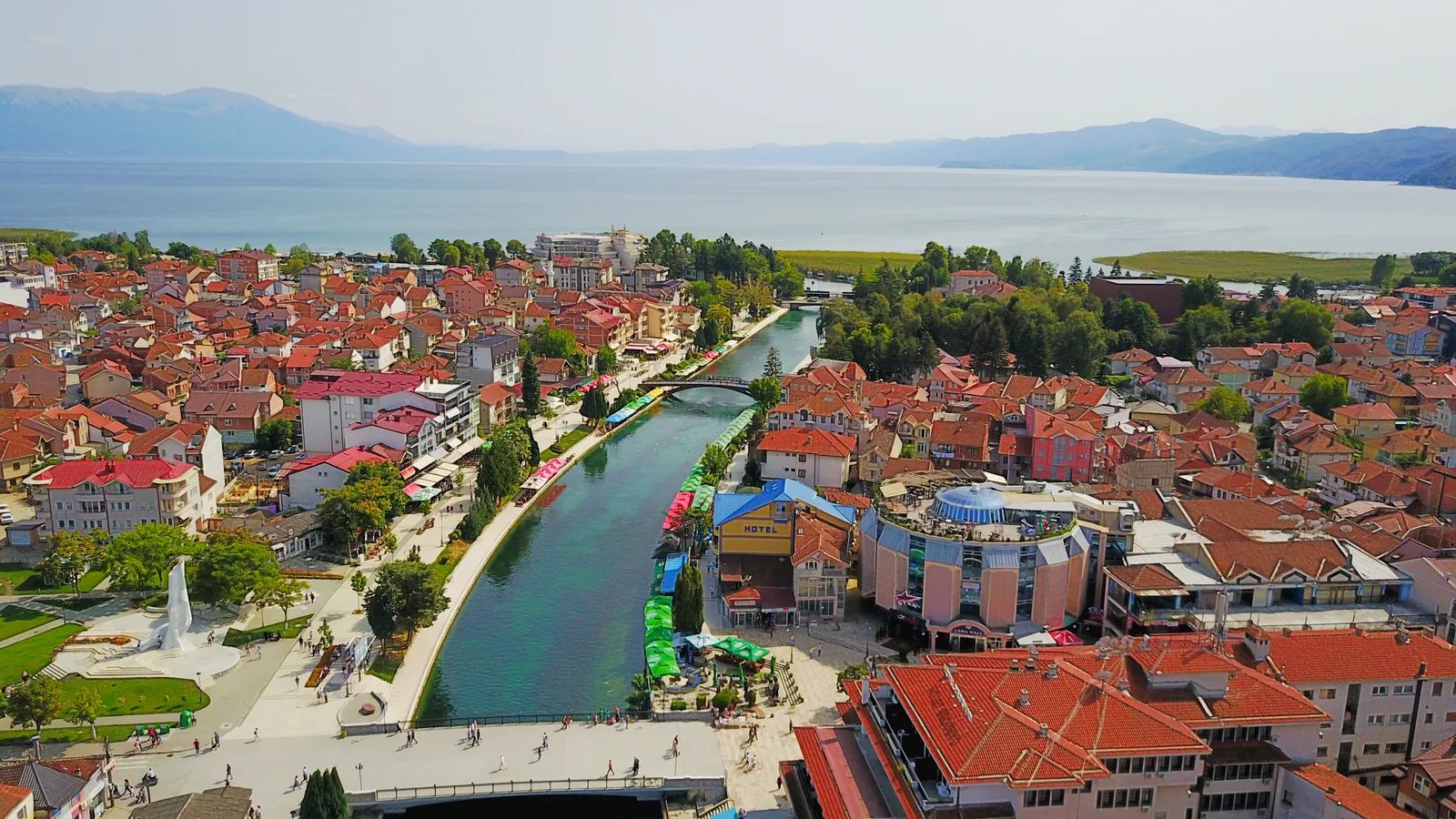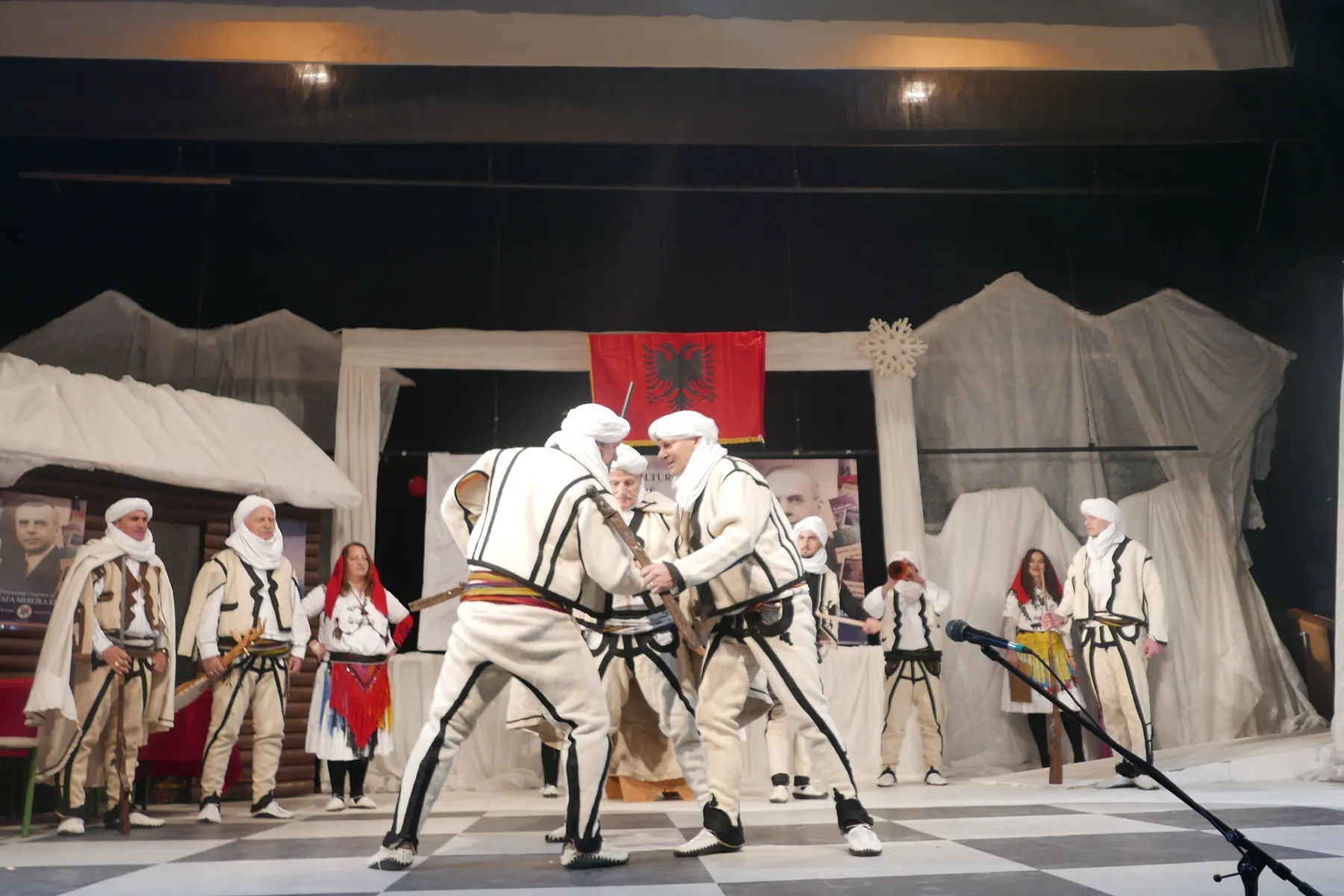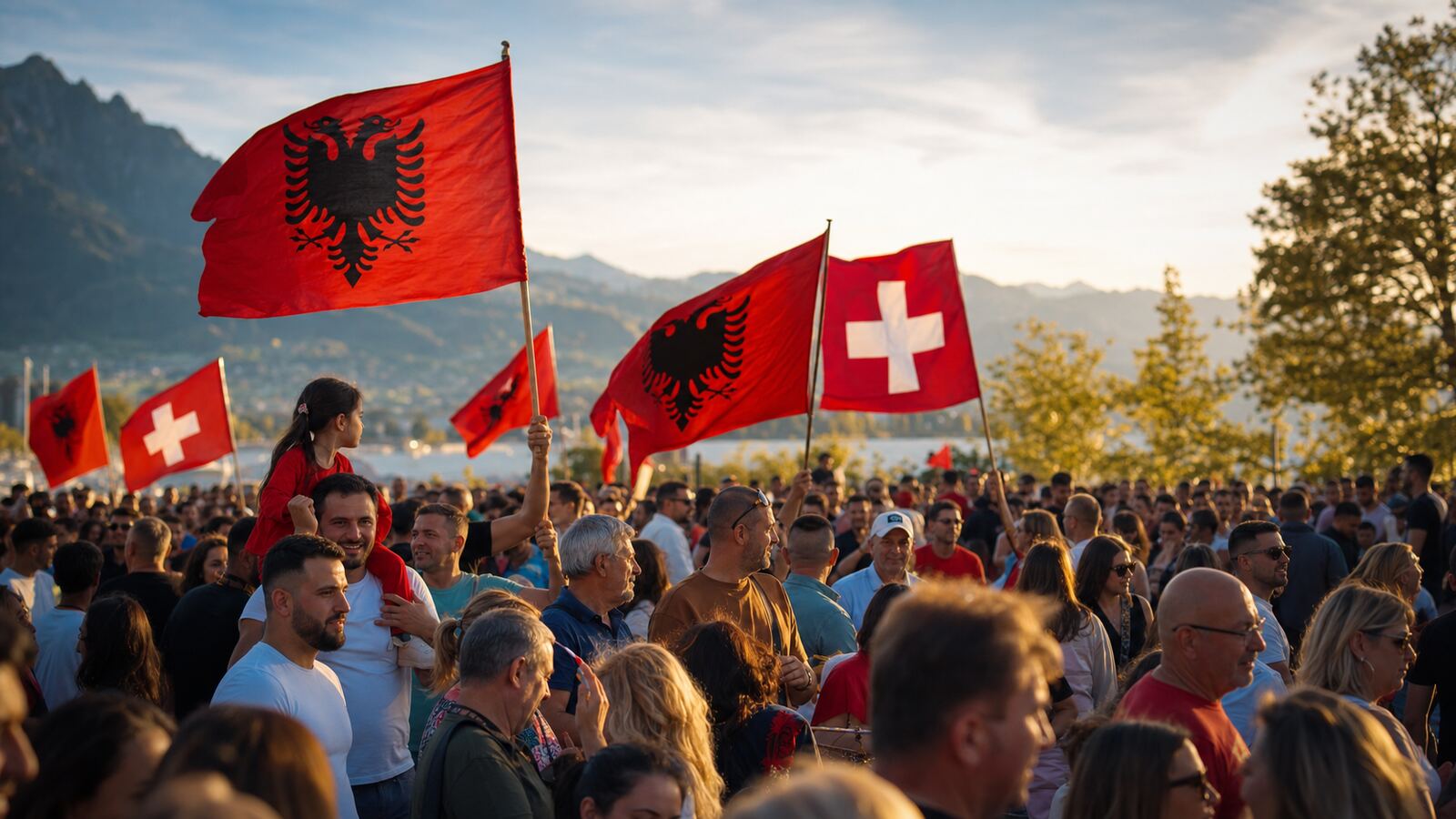
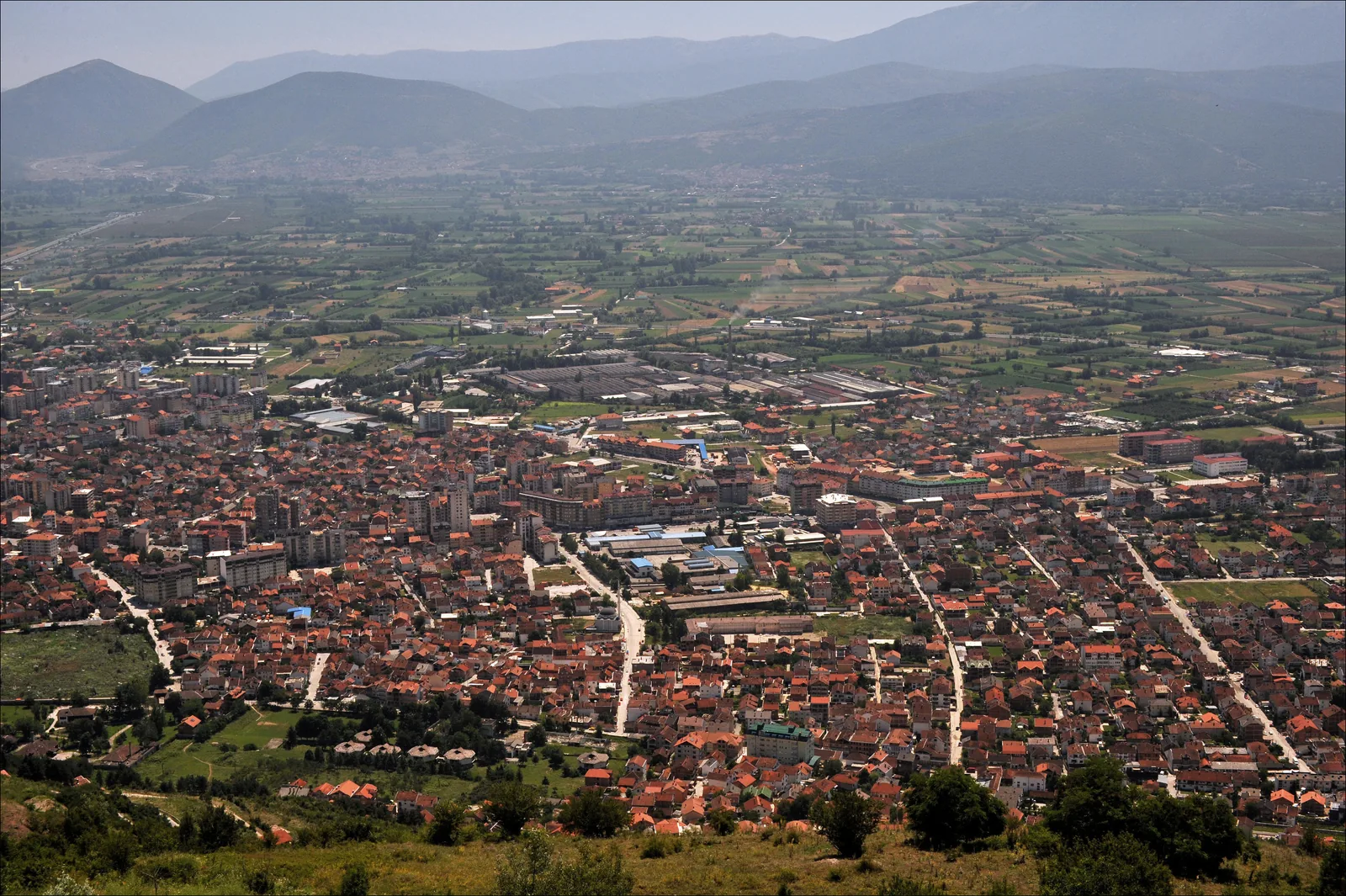
The 2021 census recorded 446,245 residents who declared Albanian ethnicity in North Macedonia. Their story runs through Tetova, Gostivar, Dibra, Struga, Skopje and beyond: a long-established community whose family connections also reach far into the diaspora.
Albanian life here is both local and connected across borders. This guide begins with the census, keeps residents separate from people counted abroad, and follows the places, language and institutions behind the figures. dua.com is another meeting point within that wider Albanian world; app activity is never a population measure.
How many Albanians live in North Macedonia?
Here is what the 2021 census reports, in its own categories:
For more on this topic, read Albanians in Switzerland and Albanians in Montenegro.
446,245 residents declared Albanian ethnicity — 24.30% of everyone living in the country
619,187 Albanians in total, once citizens registered from abroad are added — 29.52% of everyone counted
172,942 of those Albanians were registered as living abroad, not in the country

Both numbers are official. Neither is a correction of the other. The resident figure follows the usual-residence rule every European census uses: you are counted where you actually live. The second adds the category the office calls non-resident — citizens who had been abroad for more than twelve months, registered through a household still in the country or in person while they were back. (The same category technically also holds foreigners briefly in the country, but there were only 1,674 of those, so “abroad” describes it accurately.)
So the honest one-line answer has two halves. Albanians are just under a quarter of the people who live in North Macedonia, and 29.52% of everyone the census covered anywhere in the world. Not a third: the gap between 29.52% and a third is about eighty thousand people, which is why this page writes the percentage out rather than rounding it into a fraction.
That gap is not a rounding artefact. It is the single most important fact on this page, and everything from Gostivar to Zurich comes out of it.
Six ways to count, and what each one is evidence of
| Measure | People | Evidence status | What it means |
|---|---|---|---|
| Albanian residents | 446,245 | Official | Usual residence, the standard census rule — this is the figure to use for any share of the country's population. |
| Albanian residents, as a share of those who declared an ethnicity | 26.18% | Calculated | The same count measured against the 1,704,453 people who gave the census an ethnicity, instead of against everyone. |
| Albanians registered abroad | 172,942 | Official, and a floor | Registering from abroad was voluntary, so nobody who declined appears here. The real number is higher. |
| Albanians enumerated in total | 619,187 | Official | Residents plus the citizens abroad who registered. The base is 2,097,319, not the resident population. |
| Residents counted from administrative records, no ethnicity | 132,260 | Official | People the enumerators could not reach, added from state registers. They have no ethnicity, no religion and no language in the results. |
| A single worldwide count of everyone of Albanian descent from the country | — | Not countable | Children and grandchildren born abroad with another citizenship are in nobody's Albanian count, here or in the countries they live in. |
Why are there so many Albanians in North Macedonia?
For many Albanian families in Tetova, Gostivar, Dibra or Struga, the story is not one of recent arrival. Minority Rights Group traces the Albanian presence in what is now North Macedonia to Ottoman times. Changes in state borders and later migration are different chapters of that history.
What changed in the twentieth century was not where the people were but where the lines were. The Balkan Wars of 1912–13 ended with treaties that recognised an Albanian state and left a large Albanian-speaking area outside it — the Polog valley around Tetovo and Gostivar, the upper Drin around Debar and Struga, the villages north of Kumanovo. Those places became part of Serbia, then of two Yugoslavias, then of an independent Macedonia in 1991, without anyone in them moving house.
That is a statement about a border, not a claim on one. It matters here only because it answers the question people are actually asking: this is not a diaspora that settled in someone else's country. It is a community that has been in the western third of this one for as long as there are records, and that today makes up a quarter of its residents.
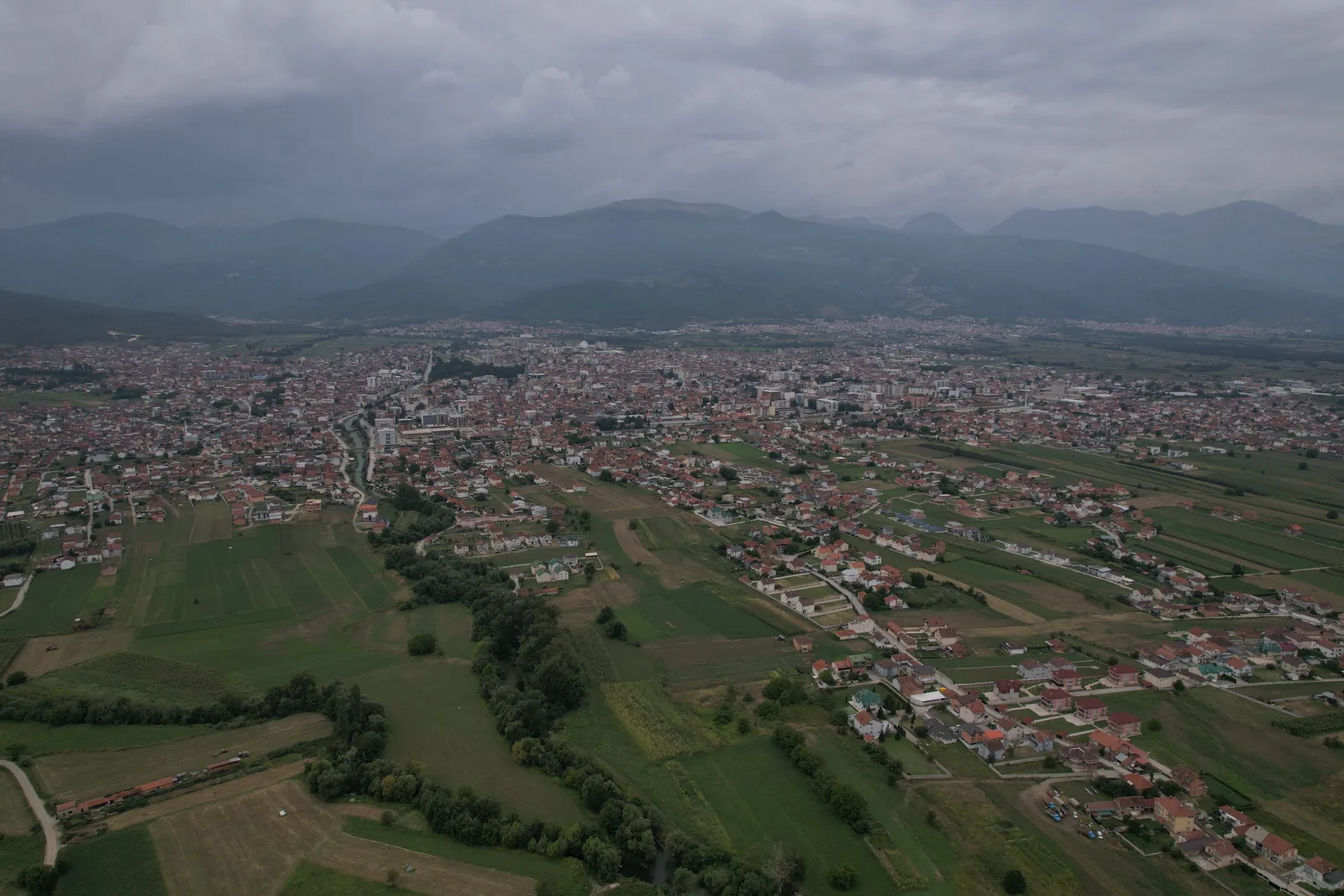
It is also why the map below looks the way it does. Albanian North Macedonia is not scattered across the country. It runs in a nearly continuous band down the western border — and then jumps, once, into the capital.
What the 2021 census actually counted
The 2021 census was taken in September 2021 and published on 30 March 2022. It was the first count in nineteen years: the 2011 attempt was abandoned mid-operation and annulled, after the census commission resigned over exactly the question this page keeps returning to — whether to count citizens who had been abroad for more than a year. Albanian members of the commission wanted them in; the others cited Eurostat's rule that they stay out. In 2021 the office did both, and published two totals.
It also did something that is easy to miss and impossible to ignore once you have seen it. 132,260 people — 7.20% of the resident population — were never interviewed. They were added from state registers, and they carry no ethnicity, no religion and no mother tongue in any published table. Every ethnic percentage from 2021, including the 24.30% on this page, is measured against a base that includes them.
The politics around the count were loud in both directions. The opposition party Levica called on ethnic Macedonians to boycott it, citing suspicions of rigging; VMRO-DPMNE had previously objected to the methodology, saying it was designed to inflate the Albanian result. On the day the numbers came out, the party had not commented.
The claim that does not survive the data: “the Albanian share shrank”

It is true that there are fewer Albanians in North Macedonia than in 2002 — 509,083 then, 446,245 resident now, a fall of 12.3%. It is not true that Albanians became a smaller part of the country.
The Macedonian count fell faster: 1,297,981 to 1,073,299, down 17.3%. Measured among the people who actually answered the ethnicity question, the Albanian share therefore went up — from 25.17% in 2002 to 26.18% in 2021.
The published 2021 share is lower than that, 24.30%, and the reason is mechanical rather than demographic: it is measured against a base that includes the 132,260 residents with no ethnicity recorded, a category the 2002 census had no equivalent for. On either reading the Albanian share held roughly steady across nineteen years, while the country as a whole lost 9.2% of its people. What shrank was not the Albanian community's place in North Macedonia. It was North Macedonia.
On the bases: the 2002 total and the 2021 resident population are the same kind of count. The 2002 methodology (book XIII) excluded people who had been working abroad for more than twelve months, exactly as the 2021 resident measure does — which is why this page never compares 2002 with the 2,097,319 enumerated figure. Doing that would show the country growing by pulling in the people who left.
Both published totals are floors, and the gap is not small
Neither 446,245 nor 619,187 is the size of the Albanian community of North Macedonia. Both are the size of what one census operation managed to record, and three separate mechanisms push the recorded figure below the real one — all of them visible in the census's own tables rather than alleged from outside it.
The people with no ethnicity at all. 132,260 residents, 7.20% of the country, were never interviewed; the census took them from administrative registers and recorded no ethnicity for any of them. They are inside the denominator of every published share and inside no numerator. If they resemble the 1,704,453 people who did answer, the Albanian resident total is nearer 481,000 than 446,245 — around thirty-five thousand people who exist, live in the country and are in nobody's ethnic column.
Registering from abroad was optional. 172,942 Albanians abroad chose to register, largely through a web form, in the most politically contested part of the whole count. Switzerland, Germany and Italy between them hold 278,929 North Macedonian passports — more than the census recorded abroad in total, before Austria, Slovenia, Sweden, the United States, Canada and Australia. These later passport counts include every ethnicity and cannot quantify Albanian non-participation in 2021. Voluntary registration leaves room for an undercount, but these figures do not establish its size.
The generation born abroad is in nobody's count. Children and grandchildren of the guest-worker families hold Swiss, German or Austrian citizenship. They are not in the North Macedonian census, and they are not in Swiss or German statistics as North Macedonians either, because those count passports.
So the honest reading of this page is that 446,245 is the floor for residents, 619,187 is the floor for citizens anywhere, and the community that would answer to the description is larger than both — probably substantially. What no source supports is a specific higher number, which is why this page gives the mechanisms and the arithmetic instead of inventing a total.
- None of this is a count of everyone with Albanian ancestry from the country, and it should not be turned into one.
- Registering from abroad in 2021 was voluntary. Every diaspora figure below is a floor.
- Children born abroad who hold only another citizenship are not in the census at all — and are not in the Swiss or German statistics as North Macedonians either.
Where Albanian life is strongest
Fifteen of the country's eighty municipalities have an Albanian majority among residents. Twenty-four reach the twenty per cent that the Ohrid Framework Agreement made the threshold for official use of a language. Almost all of them are in the west, in a band that runs from the Kosovo border down to Lake Ohrid.
And then there is Skopje, which does not fit the pattern and holds more Albanians than anywhere else in the country.

Every municipality is shaded by the Albanian share of its resident population in the 2021 census. The pale grey east is not empty — it is Macedonian, Turkish, Roma, Serb and Vlach.
Tetovo / Tetova
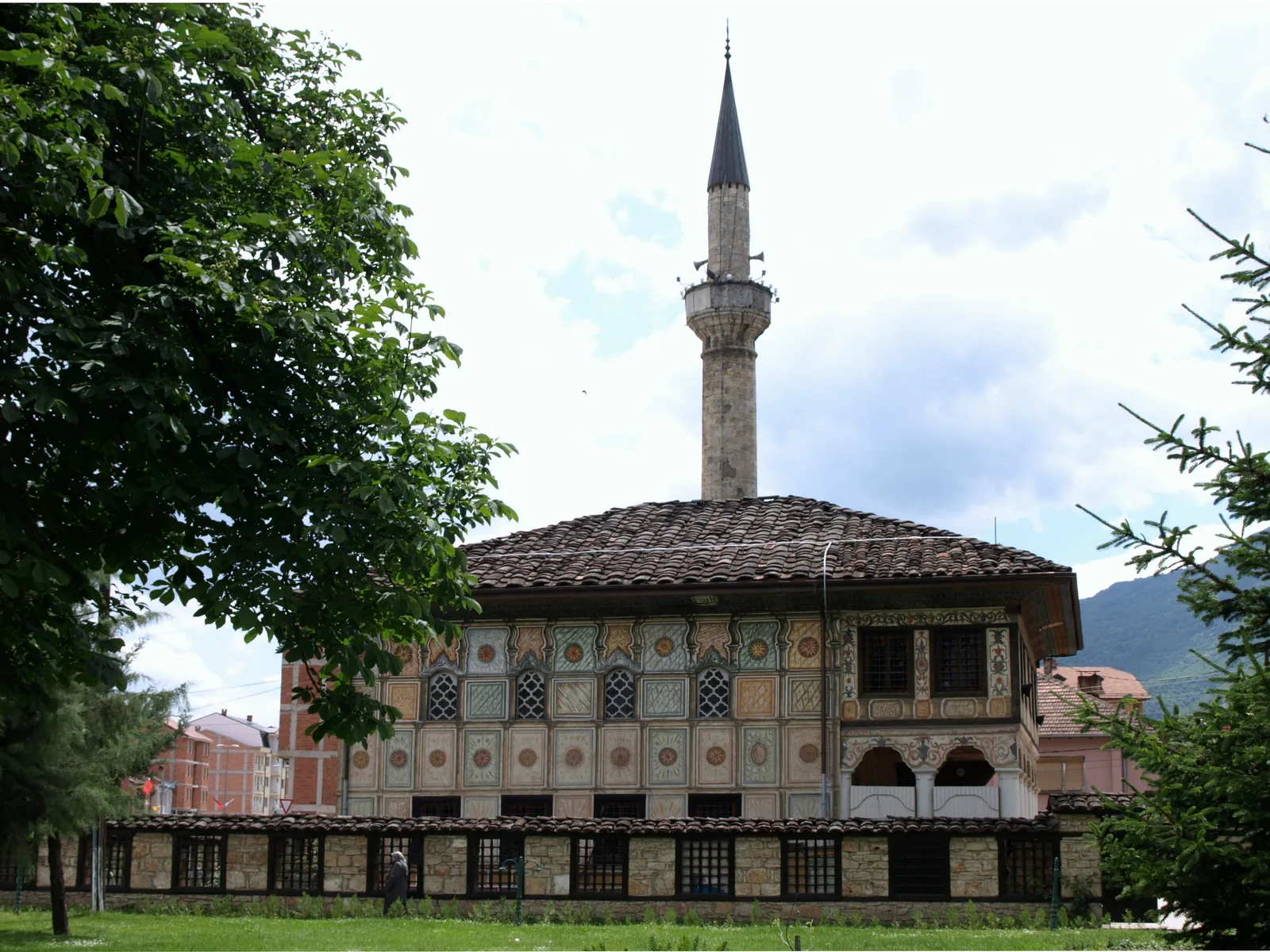
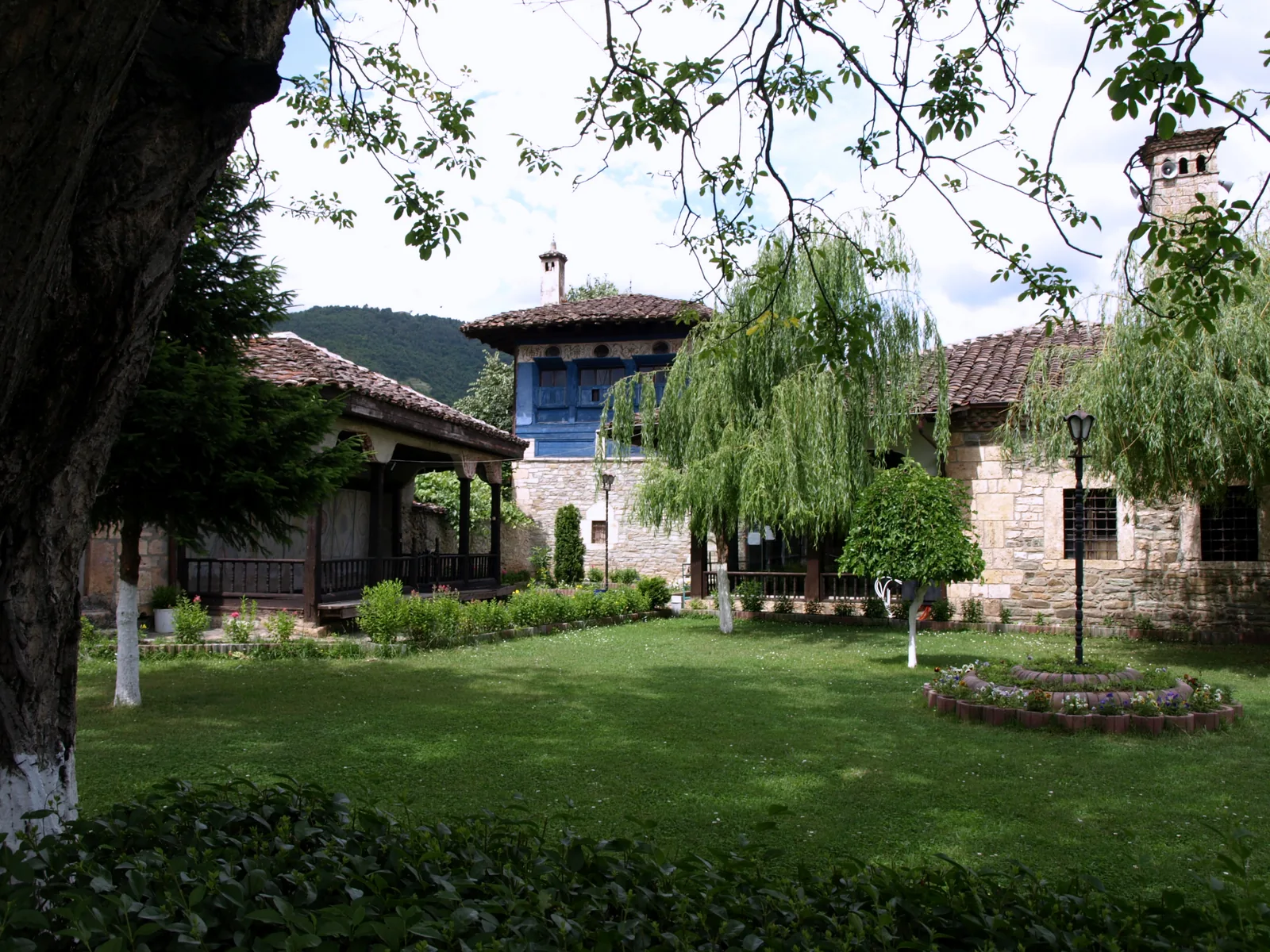
The largest single Albanian municipality in the country: 60,460 Albanian residents, 71.3% of the municipality. It is the seat of both Albanian-language universities, and the Šarena Xhamia — the Painted Mosque, rebuilt in 1833 and covered inside and out in painted panels — is the building most people picture when they picture the city.
Čair / Çair, Skopje
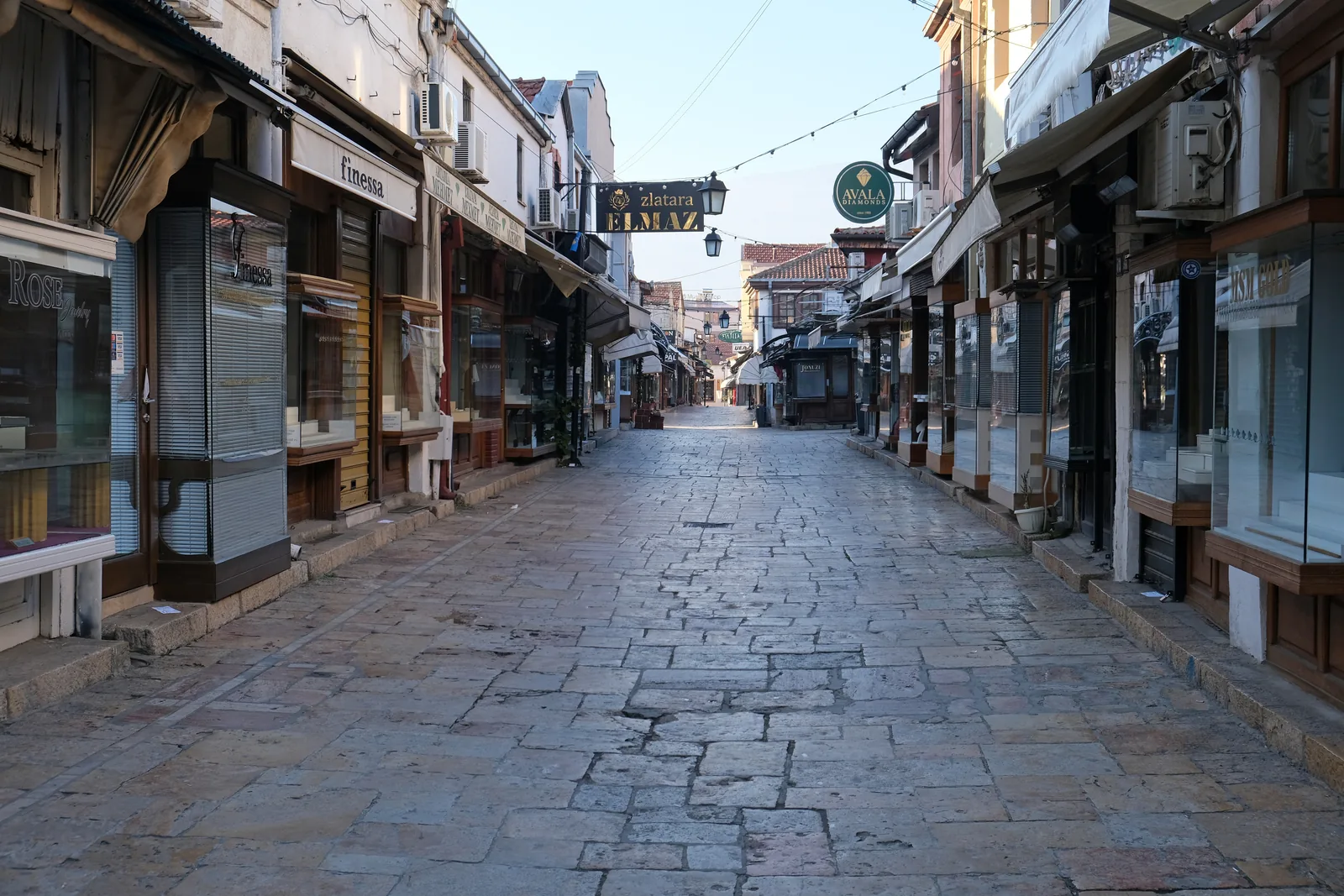
42,180 Albanian residents, 67.4% of the municipality — the Albanian heart of the capital, wrapped around the Old Bazaar. On its own it holds more Albanians than any municipality in the country except Tetovo.
Saraj / Sarajë, Skopje
90.1% Albanian, 34,586 residents: the most Albanian municipality of the capital and the fourth most Albanian in the country. Čair and Saraj together come to more people than the whole of Tetovo municipality.
Gostivar
33,076 Albanian residents, 55.3% — and the clearest emigration story in the census. Count the citizens registered abroad and the Albanian population of Gostivar is 64,703, nearly twice the number who live there.
Struga / Strugë
25,785 Albanian residents, 50.6%, on the shore where the Black Drin leaves Lake Ohrid and starts its run to the Adriatic. Struga's Albanian community is split across the town and the villages of the Drimkol and Malësia e Strugës.
Lipkovo / Likovë and Kumanovo
The north-east corner. Lipkovo is 96.6% Albanian with 21,560 residents; neighbouring Kumanovo, a mixed industrial city, has 25,493 — the sixth-largest Albanian population in the country, at 26.0% of the municipality.
Fifteen municipalities with an Albanian majority
Ranked by share rather than size, the list is dominated by the villages of the Polog and the hills above Skopje: Aračinovo at 97.5%, Lipkovo at 96.6%, Želino at 95.8%, Saraj at 90.1%, Bogovinje at 89.4%, Tearce at 83.1%.
One municipality is regularly mis-described, and it deserves more care than a label. Kičevo is often listed as Albanian-majority; among residents it is not. 16,373 people there declared Albanian and 16,020 Macedonian — 41.3% against 40.4%, a lead of 353 people. Another 2,405 residents were entered from administrative records with no ethnicity at all, nearly seven times that margin, so which community is larger in Kičevo is genuinely open on the resident measure. Count the citizens registered abroad, and Albanians are a clear majority: almost a third of everyone the census enumerated there lives outside the country.
The largest Albanian population in the country is in Skopje
The City of Skopje is ten municipalities, and taken together they hold 120,293 Albanian residents, 22.8% of the city — more than Tetovo, more than Gostivar, more than anywhere else in North Macedonia. In 2002 the figure was 103,891.
Čair and Saraj alone come to 76,766, against Tetovo municipality's 60,460. Any list of Albanian places in the country that starts with Tetovo and Gostivar and treats Skopje as an afterthought has the order wrong: Tetovo is the largest single municipality, Skopje the largest city.

| Municipality | Albanian residents | Share of residents | Registered abroad | Enumerated in total |
|---|---|---|---|---|
| Tetovo | 60,460 | 71.3% | 18,400 | 78,860 |
| Čair | 42,180 | 67.4% | 5,280 | 47,460 |
| Saraj | 34,586 | 90.1% | 5,350 | 39,936 |
| Gostivar | 33,076 | 55.3% | 31,627 | 64,703 |
| Struga | 25,785 | 50.6% | 16,078 | 41,863 |
| Kumanovo | 25,493 | 26.0% | 11,491 | 36,984 |
| Lipkovo | 21,560 | 96.6% | 9,312 | 30,872 |
| Bogovinje | 20,475 | 89.4% | 8,403 | 28,878 |
| Želino | 18,191 | 95.8% | 9,248 | 27,439 |
| Kičevo | 16,373 | 41.3% | 15,237 | 31,610 |
| Vrapčište | 15,109 | 76.1% | 10,199 | 25,308 |
| Studeničani | 14,982 | 68.2% | 1,210 | 16,192 |
Resident population declaring Albanian ethnicity, 2021 census. Čair and Saraj are municipalities of the City of Skopje; the city's other eight are further down the list.
The west is the part that empties out
The census counted 260,606 citizens living abroad who registered. 172,942 of them — 66.4% — are Albanian, in a country where Albanians are 24.30% of the resident population.
Put the other way round: 27.9% of every Albanian the 2021 census counted anywhere lives outside North Macedonia, against 5.6% of Macedonians. That is the difference the two headline numbers on this page are made of, and it is not spread evenly across the country. It is concentrated in the west, municipality by municipality.
Gostivar: half the Albanians the census found there live abroad
Gostivar is the exhibit. In 2002 the municipality had 54,038 Albanians. In 2021 it had 33,076 living there — a fall of 38.8%. But the census also registered 31,627 Gostivar Albanians living abroad, which puts the total it counted at 64,703, higher than 2002.
Nearly half of the Albanians the census counted in Gostivar do not live in Gostivar. Counting everyone of every ethnicity, 36.4% of the people enumerated in the municipality were registered abroad. That is not the highest rate in the country — Mavrovo and Rostuša and Centar Župa, both far smaller, are higher, and Vrapčište is within a tenth of a point — but no municipality has more emigrants in absolute terms: 34,186 people.
The pattern holds down the whole western band: Vrapčište, Želino, Tearce, Kičevo, Lipkovo, Struga and Bogovinje all sit above a quarter. Skopje's municipalities run between four and nine per cent. Bitola, the second city, is 5.4%.

| Municipality | Share abroad | Registered abroad | Enumerated in total |
|---|---|---|---|
| Gostivar | 36.4% | 34,186 | 93,956 |
| Vrapčište | 36.3% | 11,287 | 31,129 |
| Želino | 33.1% | 9,394 | 28,382 |
| Tearce | 31.0% | 7,944 | 25,638 |
| Kičevo | 30.1% | 17,056 | 56,725 |
| Lipkovo | 29.6% | 9,396 | 31,704 |
| Struga | 27.3% | 19,123 | 70,103 |
| Bogovinje | 27.3% | 8,586 | 31,492 |
| Brvenica | 25.5% | 4,674 | 18,319 |
| Debar | 22.1% | 4,372 | 19,784 |
| Tetovo | 18.9% | 19,734 | 104,504 |
| Vinica | 13.6% | 2,278 | 16,753 |
Share of everyone enumerated in the municipality who was registered as living abroad, all ethnicities, 2021 census. Registration was voluntary, so every figure is a floor.
There is no official register of where they went. The census recorded that they were abroad, not which country. What exists on the other end is a set of national statistics that count citizenship — and those are the next section's problem, because a North Macedonian passport does not say Albanian on it.
Is Albanian spoken in North Macedonia?
Yes — in the street for centuries, and in the state since 2001.
The legal answer runs through two documents, and both of them are worth getting right, because the loose version (“Albanian became the second official language in 2019”) is wrong in both directions.
The first is the Ohrid Framework Agreement, concluded at Ohrid and signed at Skopje on 13 August 2001, which ended that year's insurgency. Its language clauses work off a threshold rather than a name: any language spoken by at least twenty per cent of the population of the country is also an official language, and in any municipality where a community is at least twenty per cent, its language is official there too. State funding was promised for university education in any language spoken by at least twenty per cent, and public administration was to reflect the composition of the population.
The Agreement is deliberately asymmetric, and the page would be lying if it flattened that: Macedonian remains the official language of the whole country and of its international relations. Albanian is official alongside it, on the terms above. The constitutional amendments implementing the agreement were published in the Official Gazette on 16 November 2001.
The second is the Law on the Use of Languages, and its passage says as much as its content. Parliament adopted it on 11 January 2018; the President refused to sign the promulgation decree. Parliament adopted it again on 14 March 2018; the President refused again. On 14 January 2019 it was published in the Official Gazette carrying only the signature of the Speaker of the Assembly, with a footnote explaining why the President's was missing.
What it does: it makes the language spoken by at least twenty per cent of citizens — Albanian — official in dealings with public institutions across the whole country, in the work of parliament and government, in the publication of laws and decisions, on institutional websites, stamps and signage, and it requires banknotes, coins and postal stamps to carry symbols of both communities' cultural heritage.
The Venice Commission, reviewing it in December 2019, found parts of it unclear and imprecise, noted that the country's Constitutional Court was examining its compatibility with the constitution, and pointed out that the twenty per cent threshold rests on census results the law itself never mentions — a link it recommended North Macedonia spell out. None of that has been settled by a page like this one; it is where the question stands.
Two universities that exist because of this question
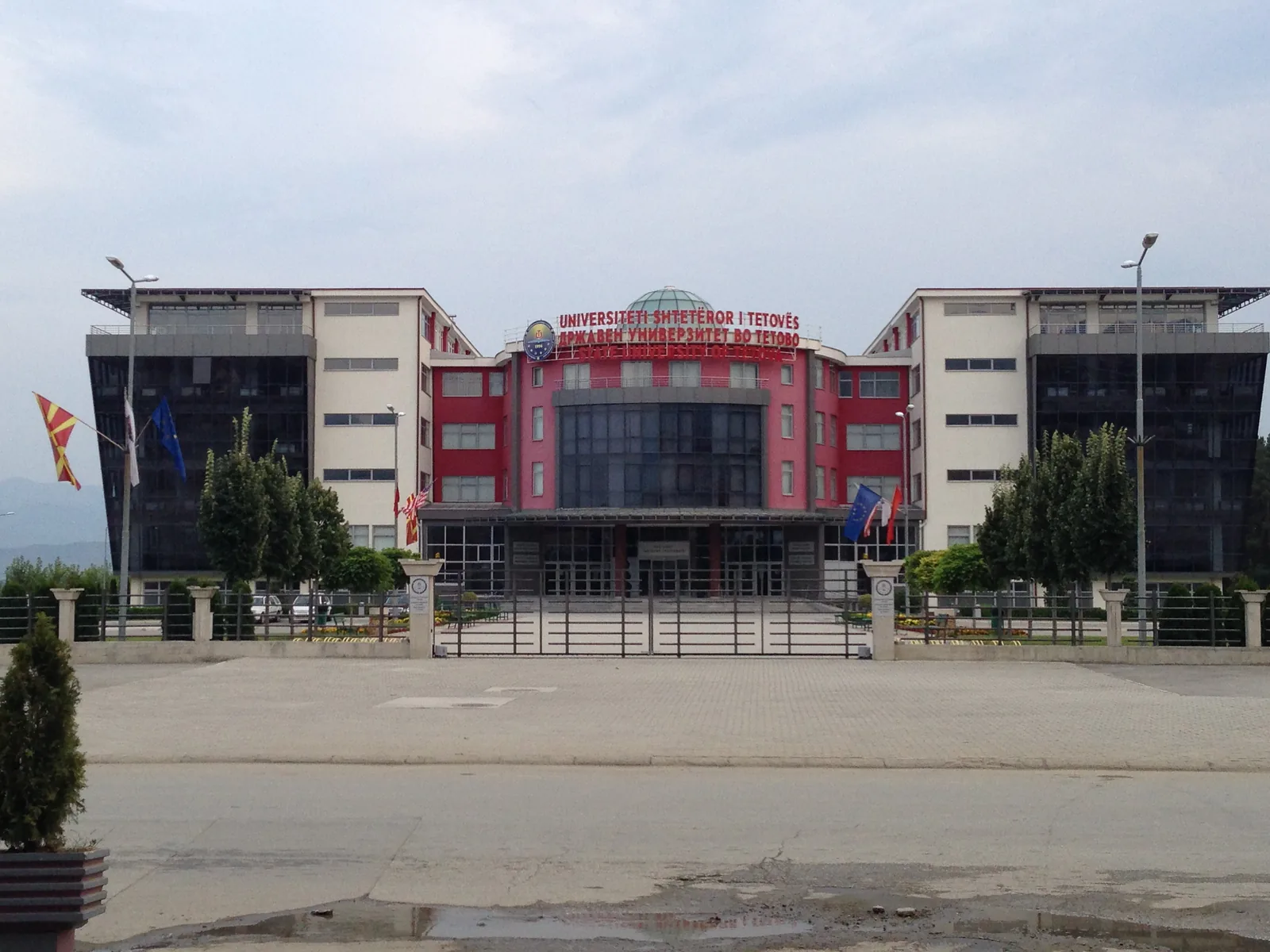
Albanian-language higher education in the country exists because of a long argument about exactly this. The University of Tetova was founded on 17 December 1994 as a private initiative of Albanian intellectuals, and operated for years without recognition; it was legalised by law in 2004 and is a state university today.
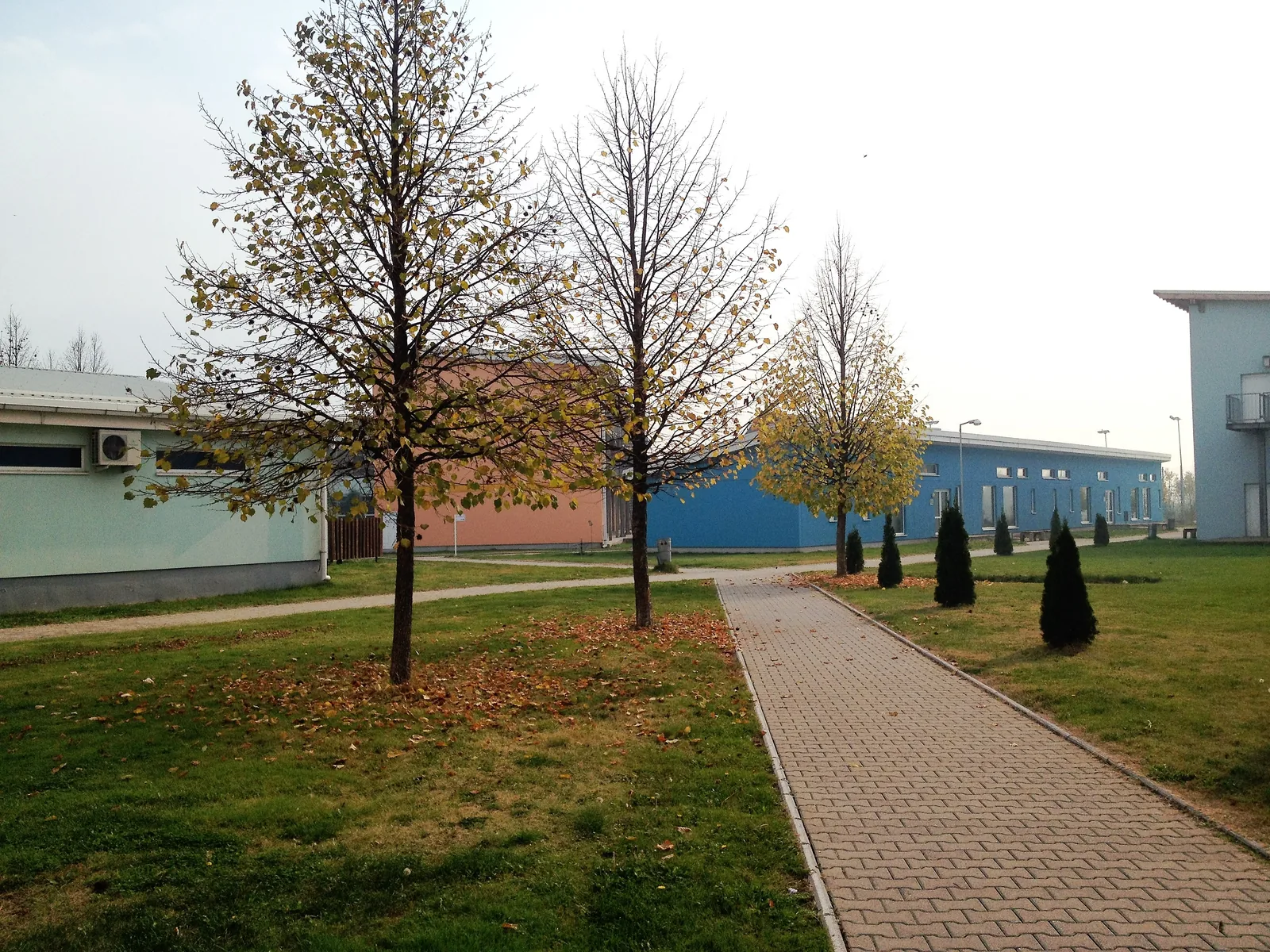
The South East European University, also in Tetovo, came out of the 2001 settlement: the OSCE High Commissioner on National Minorities, Max van der Stoel, started the discussions in spring 2000, construction began in March 2001, the campus opened that October and it was formally inaugurated on 20 November 2001. It teaches in Albanian, Macedonian and English.
Television, radio and one daily newspaper
Alsat-M has been on air since 2006 and was the country's first bilingual television station — a single newsroom of mixed ethnicity producing the same newscast in Albanian and Macedonian. TV 21 launched in 2015. Since 2020 the public broadcaster's second channel, MRT2, has carried a twenty-four-hour service entirely in Albanian, with programming for the other communities moved to MRT4. Koha is the daily newspaper; TV Shenja broadcasts in Albanian, Turkish and Macedonian.
The part that is still being settled
Albanian is an official language of institutions, and nobody is proposing to change that. How far that reaches into individual professional procedures is a different question, and in 2026 it was still being worked out.
The live example is the state judicial examination — the qualification a law graduate needs in order to practise as a judge, prosecutor or advocate. Graduates of the country's three Albanian-language law faculties study in Albanian and may sit that examination only in Macedonian, and in spring 2026 they petitioned the Ministry of Justice to change it. The Ministry's answer was a legal one rather than a political one: a separate law governs the judicial examination and requires Macedonian, and until parliament amends that law the Ministry says it has no basis to set the paper in another language. In February 2026 the Prime Minister had said that if such a request existed it ought to be allowed. A draft compromise in June would have put the theoretical part in Albanian and left the practical part in Macedonian; it was not accepted, and as this page is published the law has not been amended.
Parts of the 2019 language law have also been before the Constitutional Court since 2024, and the Court had not ruled by September 2026. In March 2025 the Venice Commission answered a question from the Court and pointedly declined to judge the Macedonian law itself: it found that international standards leave states a wide margin, that broader language rights in court proceedings are permitted so long as they do not hamper the proper administration of justice, and that a state which grants them has to resource them.
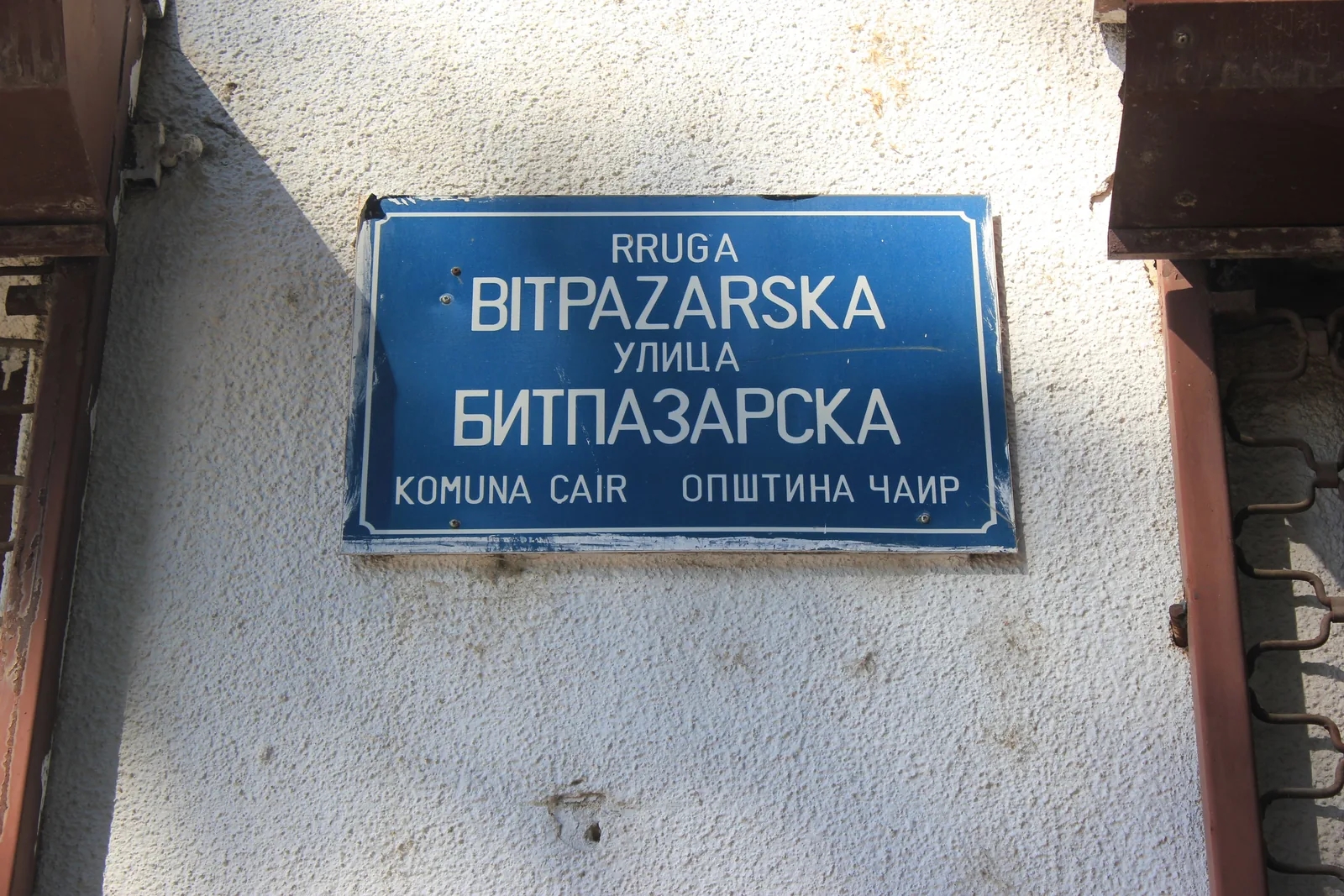
Bilingual street signs in Čair and a law in the Official Gazette are not the same thing as a settled arrangement, and nobody in the country talks about it as if they were. But the direction of the last twenty-five years is not in dispute, and the European Commission's 2025 report on North Macedonia found that inter-ethnic relations remained stable and that the Ohrid Framework Agreement continued to be implemented.
Agnesa & Arti
Agnesa lived in North Macedonia; Arti in Kosovo. They met on dua.com, and Arti travelled by bus to Skopje for their first date. They married in 2023.
From the 1913 border to the 2021 census
Seven moments that explain the map, the law and the two numbers.
The Balkan Wars end with an Albanian state recognised and a large Albanian-speaking area left outside it. The Polog valley, the upper Drin and the villages north of Kumanovo pass to Serbia. Nobody moves; the line does.
In socialist Yugoslavia, Albanians are the largest nationality without the status of a nation. From the late 1960s, labour recruitment takes men from western Macedonia to Switzerland, Germany and Austria; families follow in the 1980s and 1990s. This is where the Zurich and Stuttgart ends of the route begin.
Macedonia becomes independent in 1991. Albanian-language higher education is the immediate fight; the University of Tetova is founded on 17 December 1994 without state recognition, and works that way for a decade.
Fighting between the ethnic-Albanian National Liberation Army and Macedonian security forces runs from early 2001 — first in border villages such as Tanuševci, then around Tetovo from March — until the Framework Agreement of 13 August. The NLA is disarmed under NATO auspices on 26 September. More than 170,000 people flee their homes, 70,000 of them to Kosovo, and around 250 are killed; by March 2002 roughly 140,000 have returned.
On 27 April 2017 the Assembly elects its first ethnic-Albanian Speaker, Talat Xhaferi. A crowd let into the building by some MPs attacks politicians and journalists inside; the European Commission later calls it the critical point of the country's worst political crisis since 2001, and 28 people are indicted.
The Law on the Use of Languages is published on 14 January 2019. On 12 February 2019 the Prespa Agreement enters into force and the country becomes the Republic of North Macedonia. In January 2024 Talat Xhaferi becomes its first ethnic-Albanian prime minister, leading the caretaker government the law requires before an election, from 28 January to 23 June 2024.
Law graduates who studied in Albanian ask to sit the state judicial examination in the language they were taught in. The Ministry of Justice says a separate law requires Macedonian until parliament amends it; a compromise splitting the paper between the two languages is drafted in June and not accepted. Parts of the 2019 language law have been before the Constitutional Court since 2024 and were still undecided in September 2026.
Sources for every date in this section are listed at the foot of the page.
Where the diaspora is — counted by passport, not by ethnicity
Three countries hold most of the answer to “where did they go”, and not one of them can tell you how many of the people it counts are Albanian.
At the end of 2025 Switzerland counted 70,437 North Macedonian nationals in its permanent resident population — very slightly fewer than the 70,469 of a year before. Germany's central register of foreign nationals held 161,120 on the same date, more than twice the Swiss figure, although its growth has almost stopped: the last two years added about two thousand each, against twenty-four thousand in 2022. Italy is going the other way, down from 53,443 in 2022 to 47,372 at the start of 2025.
All three are passport counts. They include ethnic Macedonians, Turks, Roma and everyone else the country's citizenship covers; they exclude anyone who has naturalised; and no statistical office in any of the three publishes an ethnic split, because none of them collects one.
So this page does not turn them into Albanian numbers, and you should be sceptical of any page that does. The only primary evidence of the ethnic composition of North Macedonia's population abroad is the census itself: of the 260,606 citizens who registered from abroad in 2021, 66.4% were Albanian.
What the census can prove about the diaspora, and what Australia proves it cannot
That figure comes with three caveats and they all point the same way. The census non-resident universe is 260,606 people; Switzerland, Germany and Italy alone register 278,929 North Macedonian nationals, before Austria, Slovenia, Sweden, the United States, Canada and Australia. These registers refer to different dates and populations; their sum cannot establish how much of the diaspora the 2021 census reached. Registering from abroad was voluntary and largely done through a web form, in the most politically contested part of the whole census. And it is a share of a census category, not of a passport stock — it cannot be multiplied into a Swiss or German register total.
There is one destination country that publishes the cross-tabulation nobody else does, and it settles the argument in an unexpected way. Australia's 2021 census counted 41,786 people born in North Macedonia and asked them their ancestry: 89.6% answered Macedonian and 4.9% — 2,061 people — answered Albanian.
Both numbers are right. The Australian and North American waves left North Macedonia in a different era and from different places than the guest-worker and post-1990s waves that went to Switzerland, Germany and Austria, and the western municipalities in the emigration table above are overwhelmingly the source of the second group. There is no single Albanian share of the North Macedonian diaspora, and any page that applies one is wrong about at least one continent.
For the record, the United States figure is a birthplace count too: 28,458 people born in North Macedonia, from the American Community Survey. dua.com's own guides to those countries are the place to read this story from the other end.
What comes back
Personal remittances into North Macedonia were USD 467.8m in 2025 — 2.45% of GDP, against 2.70% in 2024 — on the World Bank's narrow measure. The dollar figure keeps rising and the series peaked at USD 489.6m in 2021, but the share of the economy has fallen every year since 2020, from 3.80%: the country's GDP is growing faster than the money coming home.
That is the balance-of-payments remittance line, and it is not the same as the National Bank's much larger “private transfers” aggregate, which is why two very different figures circulate. Nobody publishes a split of either by the ethnicity of the sender, and this page does not estimate one.
Religion: what the census can and cannot tell you
There is no official answer to “what religion are Albanians in North Macedonia”, and the reason is worth knowing: the 2021 census asked about ethnicity and asked about religion, and never published a table that crosses the two. Every 2021 figure you will see for the religion of Albanians specifically is an inference from somewhere else.
What the census does publish, for the resident population: 847,390 Orthodox (46.1%), 590,878 Muslims (32.2%), 242,579 people who wrote simply “Christian”, 6,746 Catholics, 8,764 atheists — and the same 132,260 people from administrative registers, who have no religion recorded either.
The closest honest reading is geographic. In the municipalities where Albanians are the majority, the religious profile follows: Tetovo is 76.1% Muslim, Gostivar 72.7%, Čair 81.1%, Debar 88.3%, Struga 63.2%. That is an ecological comparison — two tables on the same municipality axis — not a statement about any individual, and not a cross-tabulation.
Albanian communities in the country are predominantly Muslim, and the census cannot tell you by how much. It can tell you that the country's 6,746 Catholics are heavily concentrated in Skopje, which holds 2,044 of them.
Five years on: what has changed since the census
The census is five years old, and the country has kept getting smaller. The State Statistical Office's own estimates put the resident population at 1,819,074 at the end of 2025 — 15,011 fewer than the end-2021 estimate of 1,834,085, a fall of 0.8% in four years.
There is no newer ethnic figure to put beside it. No breakdown of North Macedonia's population by ethnicity has been published for any date after the 2021 census: the annual estimates carry age, sex and municipality and nothing else, and the official projections to 2070 carry no ethnicity either. Multiplying 24.30% by the 2025 estimate would not produce one, and this page does not do it.
What the estimates do give is geography, and the geography does not follow the national trend. While the country lost people, most of the Albanian-majority municipalities held steady or grew: Saraj is up 3.6% since the end of 2021, Čair 2.5%, Lipkovo 2.1%, Tetovo 0.6%, Debar 0.5%. Gostivar is down 0.2% and Kumanovo 0.7%.
Those are figures for places, not for ethnic groups. They are the closest thing to a post-census reading that exists, and they are not a substitute for one.
The leaving has not stopped
EU countries issued 26,728 first residence permits to citizens of North Macedonia in 2024, down from a peak of 31,876 in 2023; Germany alone accounted for 12,606. That counts people taking up residence in the European Union rather than everyone who leaves — many hold a second passport and need no permit at all — so it is another floor, like every emigration number on this page.
And every summer part of it comes back, visibly enough to show up in airport statistics. Skopje handled a record 3,211,419 passengers in 2025, up 8.7% on the year. Ohrid — a small airport whose traffic in July and August is overwhelmingly people coming home — had the busiest day in its history on 26 July 2026: 3,036 passengers across 20 flights.
The Tetova–Zurich line
A home in Tetova and relatives in Zürich can belong to the same family story. Local gatherings and visits keep those ties alive; dua.com offers another way to meet someone with a shared Albanian background. A new connection may start nearby or on the other side of a border.
The connection is the route this whole page has been describing. North Macedonia is not a destination for the Albanian internet — it is one end of a line that runs to Switzerland and Germany and comes home every July.
54,787 members in North Macedonia
14,030 matches between Germany and North Macedonia in twelve months
dua.com first-party figures, twelve months to 27 July 2026.
That second number works out at around forty a day, on a route that the census describes from the other side: the emigration table above is the same families, one generation on.
What it is not is a population statistic. dua.com members are people who chose to install an app; they are not a sample of anything, they are not counted the way a census counts, and no figure in the demographic half of this page comes from them.
No dua.com number is used anywhere above this section. The census does the demography; the app describes only itself.
- Albanian chat in North Macedonia
- Albanians in Kosovo
- Albanians in Montenegro
- Albanians around the world
Whether you live in Tetova, drive down from Zurich every July, or grew up in Stuttgart with Gostivar in your surname, dua.com is where both ends of that line are in the same place.
Questions people actually ask
How many Albanians live in North Macedonia?
446,245 people declared Albanian ethnicity in the 2021 census as residents of the country — 24.30% of the resident population. Counting citizens who registered from abroad, the census enumerated 619,187 Albanians in total, 29.52% of everyone it counted. Both figures are published by the State Statistical Office; they count different populations, and both are floors. 132,260 residents were entered from administrative registers with no ethnicity recorded at all, registration from abroad was voluntary, and the generation born abroad on another passport appears in no count anywhere — so the community is larger than either published number.
Are Albanians in North Macedonia immigrants?
No. Minority Rights Group's country entry records that Albanians have lived in what is now North Macedonia since the time of Ottoman rule. The border between them and Albania was drawn in 1913, after the Balkan Wars, across an area where Albanian was already spoken — the community did not cross the line, the line arrived.
Which municipalities are Albanian-majority?
Fifteen of the eighty, and twenty-four reach the twenty per cent threshold that makes Albanian official locally. By share the most Albanian are Aračinovo, Lipkovo, Želino, Saraj and Bogovinje; by size, Tetovo, Čair, Saraj, Gostivar and Struga. Kičevo is often listed as majority Albanian but among residents it is a plurality: 41.3% against 40.4% Macedonian.
Is Albanian an official language in North Macedonia?
Yes, with a qualification worth keeping. The 2001 Ohrid Framework Agreement made any language spoken by at least twenty per cent of the population an official language, and the Law on the Use of Languages — adopted in 2018, published on 14 January 2019 — extended Albanian's use across state institutions nationwide. Macedonian remains the official language of the whole country and of its international relations; Albanian is official alongside it.
Can Albanian be used in courts and state examinations?
In institutions generally, yes: the 2019 Law on the Use of Languages made Albanian official in dealings with public bodies across the country. How far that reaches into individual professional procedures was still being settled in 2026. The live case is the state judicial examination, which law graduates who studied in Albanian may sit only in Macedonian: the Ministry of Justice says a separate law requires it until parliament amends that law, a compromise splitting the paper between the two languages was drafted in June 2026 and not accepted, and parts of the 2019 law have been before the Constitutional Court since 2024 without a ruling.
Are Albanians in North Macedonia citizens of the country?
Yes. They are citizens with a constitutionally recognised community status, they sit in parliament and in government, and in January 2024 Talat Xhaferi became the country's first ethnic-Albanian prime minister, leading the caretaker cabinet that organised that year's elections. “Macedonian” in the census sense is an ethnicity, not the citizenship — which is why a page can say someone is an Albanian citizen of North Macedonia without contradiction.
Is the Albanian share of North Macedonia's population growing?
Barely, and the honest answer is that everyone's numbers are falling. Between 2002 and 2021 the resident population dropped 9.2%; Albanians fell 12.3% and Macedonians 17.3%, and the Albanian share of residents moved less than a point, from 25.17% to 24.30%. Albanians are 24.30% of residents against 58.44% for Macedonians — a gap of more than six hundred thousand people. Albanian emigration is also the heavier of the two: 27.9% of Albanians counted anywhere live abroad, against 5.6% of Macedonians. The State Statistical Office projects the country down to about 1.19 million by 2070, and it publishes no projection of ethnic composition at all. Nor is there a newer count: no breakdown of the population by ethnicity has been published for any date after the 2021 census. Any forecast of a crossover you read anywhere, including here, would be somebody's extrapolation rather than a published figure.
What religion are Albanians in North Macedonia?
Predominantly Muslim, and the census cannot tell you by how much: the 2021 results publish ethnicity and religion in separate tables and never cross them. Nationally the resident population is 847,390 Orthodox and 590,878 Muslim, with 6,746 Catholics. In municipalities with substantial Albanian communities, including Kičevo's resident plurality, the Muslim share runs from about half in Kičevo to 88.3% in Debar.
Why is the country called North Macedonia?
The Prespa Agreement with Greece, signed on 17 June 2018, entered into force on 12 February 2019, and the Republic of Macedonia became the Republic of North Macedonia. The language is still called Macedonian and the citizenship is still Macedonian; only the country's name changed. Search engines and older sources still carry “Macedonia”, which is why the same community appears under both names.
How many Albanians from North Macedonia live abroad?
At least 172,942 — the number who registered with the 2021 census from abroad. Registration was voluntary, so that is a floor rather than a total. Switzerland counted 70,437 North Macedonian nationals at the end of 2025 and Germany 161,120, but those are passport counts that include every ethnicity in the country, exclude everyone who has naturalised, and no official Albanian share of them exists.
Can I meet Albanians from North Macedonia on dua.com?
Yes — 54,787 people in North Macedonia are on dua.com, and in the twelve months to 27 July 2026 there were 14,030 matches on the Germany–North Macedonia route alone. Those are product figures about an app's users and are not used anywhere in the demographic sections of this page.
Want to go deeper?
Every figure above comes from a document you can open. Here is what each one proves, and what it does not.