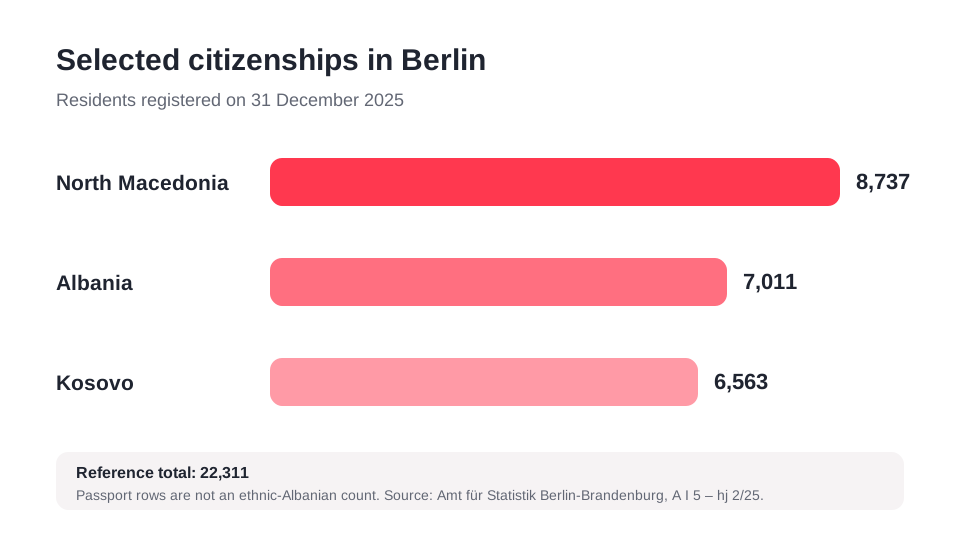
There is no official ethnic count of Albanians in Berlin. The city register provides a floor: on 31 December 2025, Berlin recorded 22,311 residents across the Albanian, Kosovan and North Macedonian citizenship rows. After accounting for naturalised Germans and Albanian families recorded under other passports, our editorial working estimate is about 50,000 people of Albanian origin, with a deliberately wide plausible range of 45,000 to 60,000.
Last data review: 27 July 2026. Official figures come from the Amt für Statistik Berlin-Brandenburg; first-party figures come from an internal dua.com extract and are labelled separately throughout.
How many Albanians live in Berlin?
Germany’s registers answer questions about citizenship, not ethnic or linguistic identity. The Federal Government stated this explicitly in a 1999 parliamentary answer, and the rule still shapes every modern dataset. An Albanian-speaking Berliner may hold a passport from Albania, Kosovo, North Macedonia, Serbia, Montenegro or Germany. Conversely, not every citizen of those states is ethnically Albanian.
Official floor versus our broader estimate
| It includes | It misses or can overcount |
|---|---|
| Everyone registered with an Albanian or Kosovan passport | Naturalised German citizens of Albanian heritage |
| Everyone registered with a North Macedonian passport | The ethnicity of North Macedonian citizens is unknown, so this row includes Albanian and non-Albanian residents |
| A consistent citywide snapshot on 31 December 2025 | Some pre-2008 arrivals from Kosovo who remain registered under Serbian citizenship |
| People of all ages and residence histories | Albanians holding Serbian, Montenegrin, Greek or another passport |
That is why this article does not turn 22,311 into a headline claim that “22,311 Albanians live in Berlin.” The number is a transparent official reference point. It is not a census of identity.
How the available numbers changed over 50 years
| Year | Best available figure | What can honestly be said |
|---|---|---|
| 1975 | No separate Albanian count | Most migrants from Kosovo and western North Macedonia were registered as Yugoslav citizens. Berlin cannot reconstruct an Albanian total from that category. |
| 2000 | ≈25,000 | A community estimate reported alongside a Berlin Senate publication after the Kosovo war; useful historical context, but not comparable with a register count. |
| 2005 | No comparable total | Kosovo was not yet a separate citizenship and many residents remained grouped under Serbia and Montenegro or former Yugoslavia. |
| 2015 | 13,047 | 2,521 Albanian, 5,066 Kosovan and 5,460 Macedonian citizens; passport rows, not ethnicity. |
| 2019 | 14,695 | 2,921 Albanian, 5,009 Kosovan and 6,765 North Macedonian citizens; passport rows, not ethnicity. |
| 2025 | 22,311 | 7,011 Albanian, 6,563 Kosovan and 8,737 North Macedonian citizens; the current official reference. |
| 2026 | ≈50,000 | dua.com editorial midpoint for people of Albanian origin; plausible range 45,000–60,000. |
The table answers the “10, 20 and 50 years ago” question as far as the evidence permits: 2015 is measurable through passport categories, while 2005 and 1975 are not. Giving a precise ethnic total for those earlier years would create false accuracy.
A young community, but not one single demographic
The age profile adds context. Among Albanian citizens, 5,198 of 7,011 residents—74.1 percent—are between 15 and 44. The comparable share is 52.8 percent for Kosovan citizens and 51.5 percent for North Macedonian citizens. Kosovo and North Macedonia have larger 45-to-64 cohorts, consistent with longer-established migration histories.
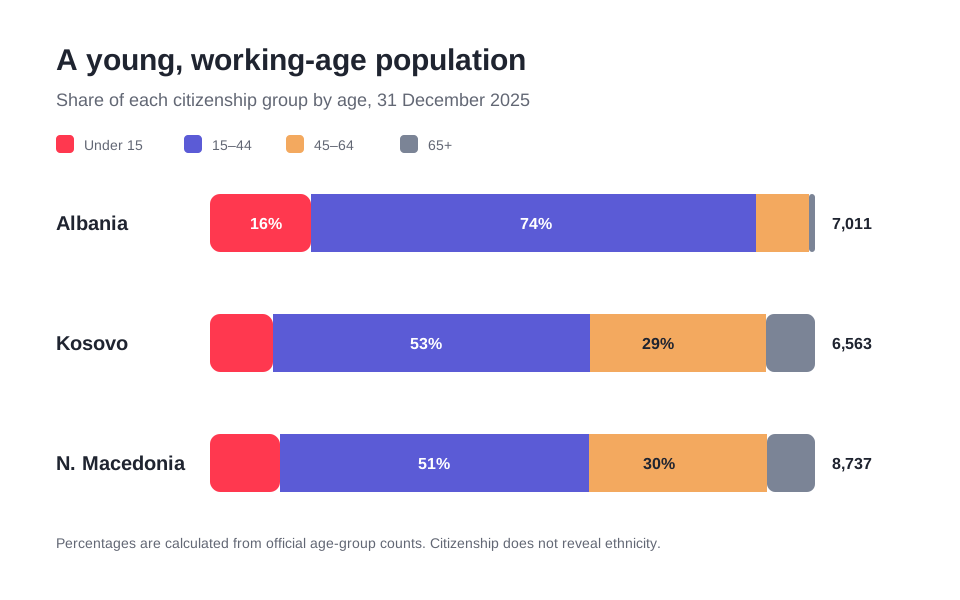
| Citizenship | Under 15 | 15–44 | 45–64 | 65+ | Total |
|---|---|---|---|---|---|
| Albania | 1,126 | 5,198 | 618 | 69 | 7,011 |
| Kosovo | 653 | 3,467 | 1,928 | 515 | 6,563 |
| North Macedonia | 1,016 | 4,497 | 2,590 | 634 | 8,737 |
The fastest change: migration from Albania after 2015
Berlin counted only 633 Albanian citizens at the end of 2014. The figure reached 2,921 in 2019 and 7,011 in 2025—more than eleven times the 2014 level. Kosovan citizenship also grew, from 5,009 in 2019 to 6,563 in 2025, but the steepest recent line belongs to Albania.
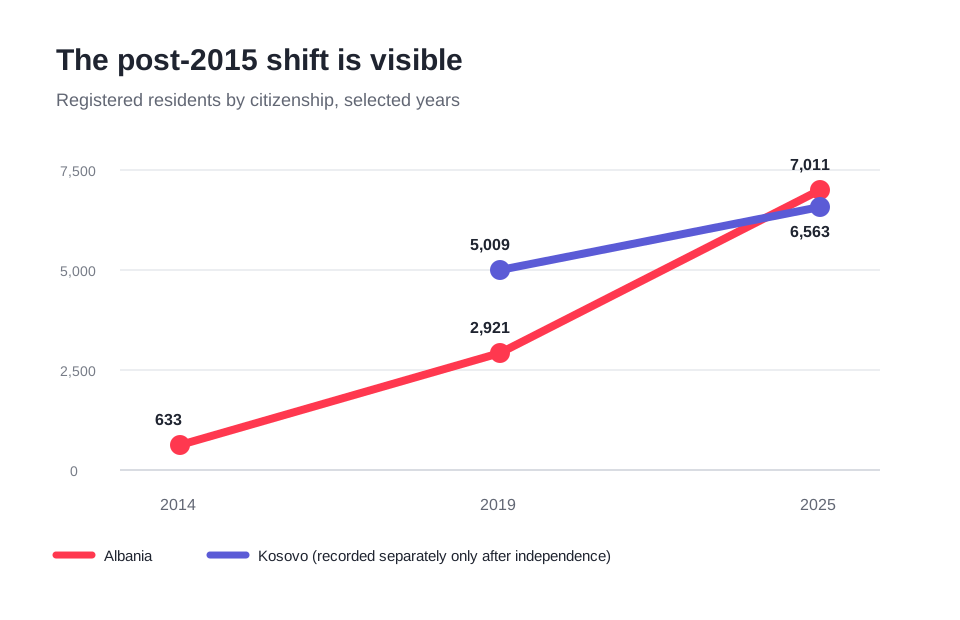
The timing fits the broader German migration record. In 2015, Albania and Kosovo were designated safe countries of origin, while the Westbalkanregelung created a legal labour-migration route for citizens of the Western Balkans. That policy did not produce every move to Berlin, but it helps explain why the city’s post-2015 profile differs from the refugee and family-reunification eras before it.
How Albanian Berlin was built: a four-wave history
Berlin’s Albanian community did not arrive in one migration. Its families carry different passports, dialects and memories because they reached the city through different political moments.
- Late 1960s to the 1980s: Yugoslav labour migrationWest Germany’s 1968 recruitment agreement with Yugoslavia brought workers from across the federation, including Kosovo and western North Macedonia. The records called them Yugoslav, so the Albanian share cannot be reconstructed precisely. Family reunification turned temporary labour into permanent Berlin lives.
- 1990s: Albania opens and people leaveIn July 1990, more than 3,000 people entered the West German embassy compound in Tirana before being allowed to leave Albania. The episode became a symbol of the country’s political rupture. Migration through Italy, asylum routes and family networks followed during the decade.
- 1998–1999: war in KosovoDisplacement from Kosovo brought a different kind of arrival: families fleeing violence, often after earlier political pressure or fragmented journeys. Berlin’s parliament debated the city’s reception of Kosovo refugees in April 1999, while many families lived with temporary status and uncertainty about return.
- Since 2015: work, study and EU-era mobilityThe newest wave is younger and more directly connected to employment, education and skilled migration. It is especially visible in the rapid rise of Albanian citizenship registrations.
Before the mass migrations: Alexander Moissi’s Berlin
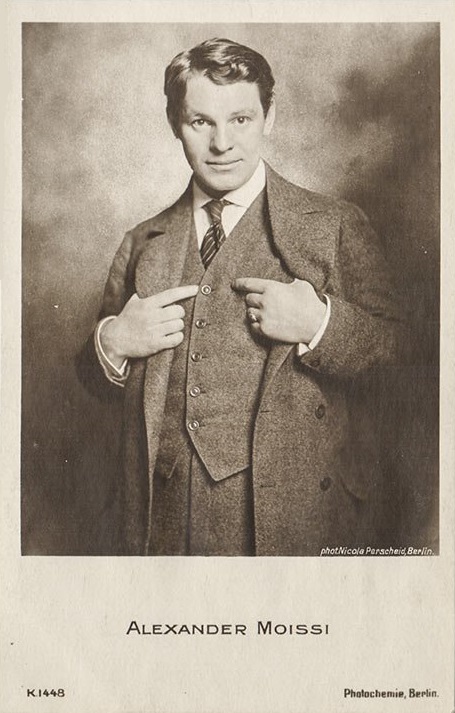
There was an Albanian presence in Berlin’s cultural memory long before the modern diaspora. Alexander Moissi, born in Trieste to an Albanian father, became one of Max Reinhardt’s most celebrated actors at the Deutsches Theater. His career is not evidence of a large early community, but it is a real thread connecting Albanian heritage to Berlin’s stage history.
The lives behind the migration waves
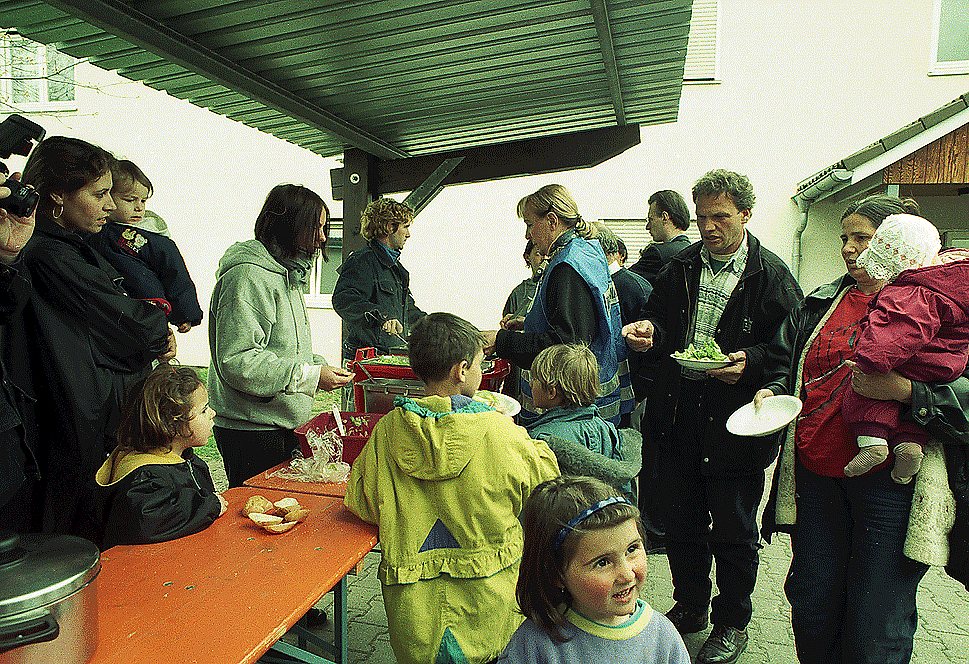
Statistics show scale; oral history shows what arrival felt like. In 2012, the Mirë se erdhëm? Albanerinnen in Berlin project brought together Albanian women with roots in Kosovo, North Macedonia and Albania. Eleven interviews traced guest-worker families, childhood migration, war, work, language and the question contained in the title: “Have we arrived well—are we welcome?”
The project matters because it resists a single heroic migration story. One participant remembered reaching a Berlin school without German in the late 1970s. Another described coming in 1999 with memories of war. Others were born in the city, returned to Kosovo, raised children alone or moved between religious and secular family worlds. Together they show the community as Berlin actually lives it: plural, uneven and built through ordinary family decisions.
Albanian Berlin today: culture, football and public life
Berlin’s Albanian life is more visible than the old stereotype of a scattered, private diaspora suggests. It appears in cinemas, football halls, embassies, art institutions, places of worship and short-lived event spaces rather than in one officially defined “Albanian district.”
- Albanian Film Festival Berlin: the capital’s first festival dedicated to contemporary Albanian cinema. Its 2026 edition presented roughly 20 feature films, documentaries and shorts from Albania, Kosovo, North Macedonia and the diaspora across five days.
- Kosova Kulturwoche: a multi-venue programme connecting diaspora debate, film, photography, music and children’s culture. The 2026 programme included a diaspora panel, a 1999 KFOR photo exhibition and a children’s choir performance at the Philharmonie.
- FC Liria Berlin: founded by Kosovo-Albanian Berliners in 1985. Its futsal team became German runner-up in 2016 and later reached the Futsal Bundesliga, turning a migrant association into one of the community’s most visible sporting institutions.
- Embassies and civic organisations: Albania and Kosovo both maintain embassies in Berlin, while organisations such as Albunivers and smaller religious, youth and professional networks connect families across the city.
- 28 November: Albanian Independence Day remains a recurring focal point for concerts, dinners and community gatherings, even when the organiser and venue change from year to year.
A Berlin love story: Gentiana and Xhemajl
What Berlin does not have is a verified borough-level population table. Neukölln, Wedding and Spandau often appear in community descriptions, but the official district tables do not isolate the relevant citizenship groups at the precision needed to crown one “Albanian district.” We found no defensible number for that claim.
The name Dua in Berlin: a cultural signal in the birth data
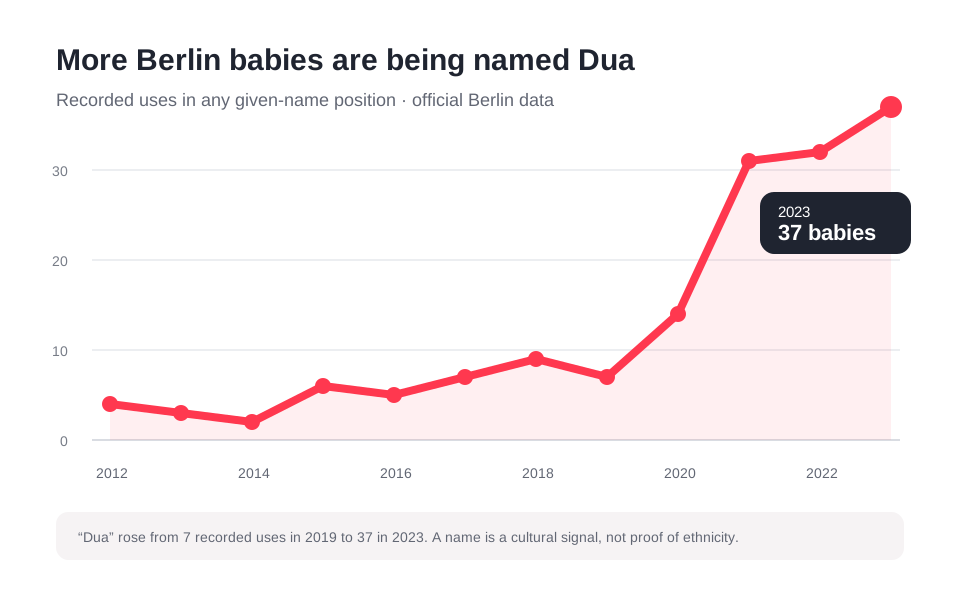
Berlin publishes anonymised baby-name records by district. When the district files are combined, Dua appears four times in 2012, seven times in 2019 and 37 times in 2023. The 2023 figure is more than nine times the 2012 count and more than five times the 2019 count.
| Name | Berlin uses in 2023 | Important caveat |
|---|---|---|
| Dua | 37 | Used in Albanian and other language communities |
| Luan | 32 | Albanian usage exists, but the name is not exclusively Albanian |
| Hana | 24 | Shared across several languages and cultures |
| Aria | 17 | International name with Albanian usage |
| Alba | 13 | International name with Albanian usage |
| Enea | 7 | Used in Albania and elsewhere in Europe |
Names are a cultural trace, not an ethnicity register. A child named Dua cannot automatically be counted as Albanian, and the rise cannot be attributed to one app, celebrity or community. The data is still valuable because it shows how an Albanian word and name has become increasingly visible in everyday Berlin.
What dua.com’s own data shows
Official statistics cannot record Albanian identity. Our platform can ask members how they identify, which gives us a different lens—with different limitations.
Why dua.com began in the DACH diaspora
dua.com was created in 2019, eight years after founder Valon Asani first explored the idea through AlbanianFriends.com. Asani is Swiss Albanian and maintains a strong connection to his homeland. Like many people in the diaspora, he found that meeting someone who shared Albanian humour, language, traditions and values was unexpectedly difficult—even in Zurich.
Germany, Austria and Switzerland—the DACH region—form one of Europe’s largest and most concentrated Albanian diaspora spaces outside the Balkans. Yet that population is scattered across cities, borders and passports. dua.com was built from that lived problem: reconnecting a fragmented community around shared culture. Berlin is exactly the kind of city the original mission was meant for—large enough to hold tens of thousands of people with Albanian roots, but dispersed enough that they may still struggle to find one another.
In July 2026, 5,378 registered dua.com members across Berlin and Brandenburg identified as Albanian. Across Germany the comparable registered-member count was 107,715. These are account registrations, not monthly active users and not a population estimate.
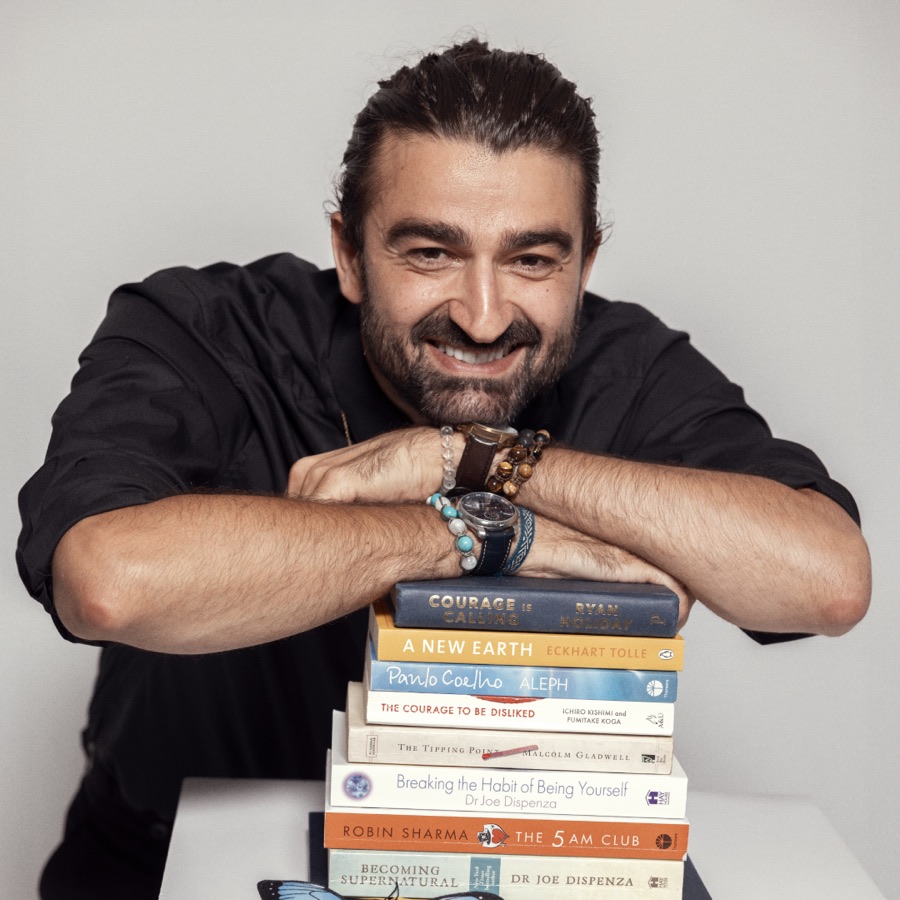
Valon Asani
dua.com founder. The 107,715 Germany figure comes from the company’s July 2026 registered-member extract.
Photo: dua.com press kit.
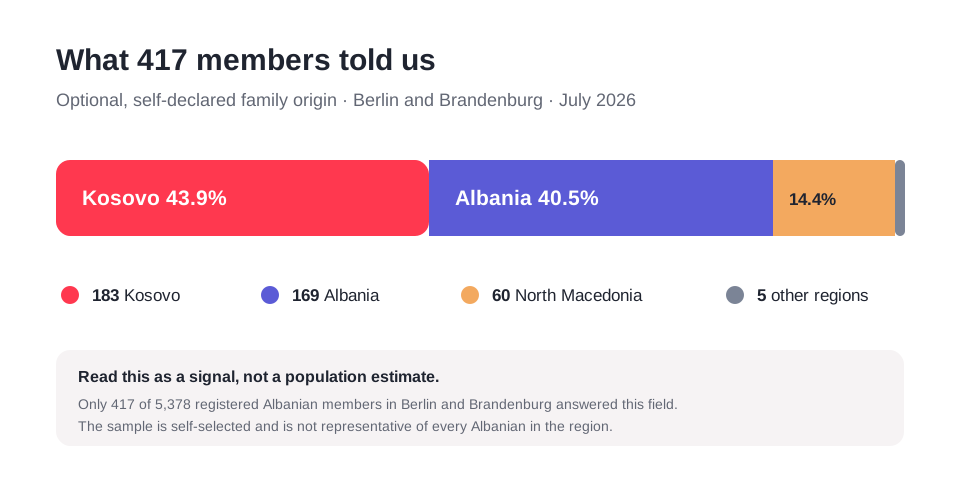
Only 417 of the 5,378 members—7.8 percent—completed the optional origin field. Among those who answered, 183 selected Kosovo, 169 Albania, 60 North Macedonia and five another Albanian-speaking region.
| Self-declared family origin | Members | Share of 417 answers |
|---|---|---|
| Kosovo | 183 | 43.9% |
| Albania | 169 | 40.5% |
| North Macedonia | 60 | 14.4% |
| Greece, Preševo Valley or Montenegro | 5 | 1.2% |
| Total answers | 417 | 100% |
The responsible conclusion is modest: in this small response group, Kosovo- and Albania-origin members are close in size. That direction is consistent with the official Kosovo and Albania passport rows, but the two datasets measure different things and should not be combined.
Albanian Berliners in art, politics, film and sport
The following people are connected to Berlin by birth, work or public office. This is a curated introduction, not a ranking and not a claim that each person represents the community as a whole.
Alexander Moissi
Actor of Albanian heritage and a defining performer in Max Reinhardt’s Berlin theatre.
Nicola Perscheid · public domain
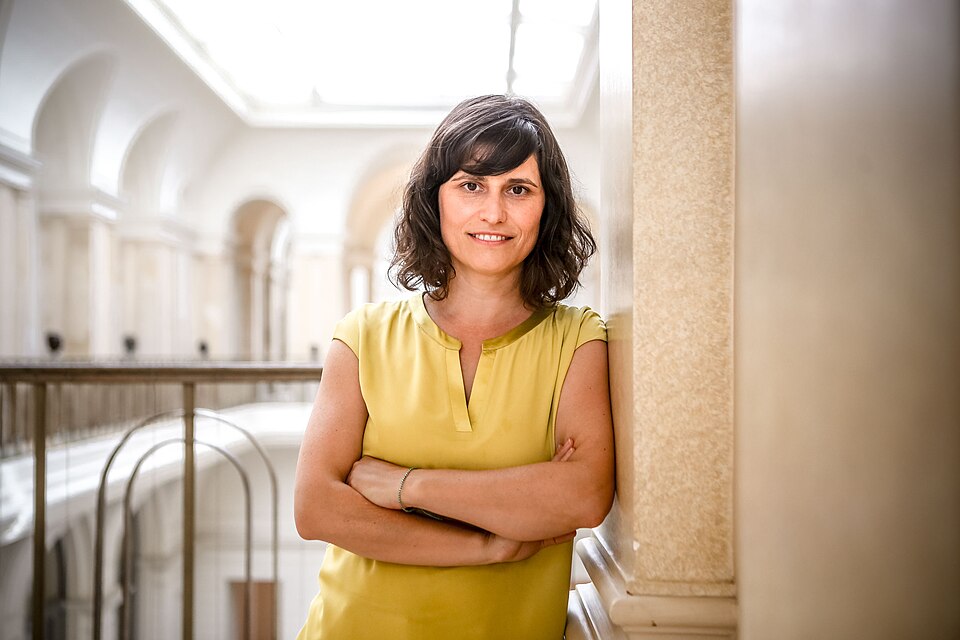
Aferdita Suka
Member of Berlin’s House of Representatives and a public voice on migration and social policy.
Vincent Villwock · CC BY-SA 4.0
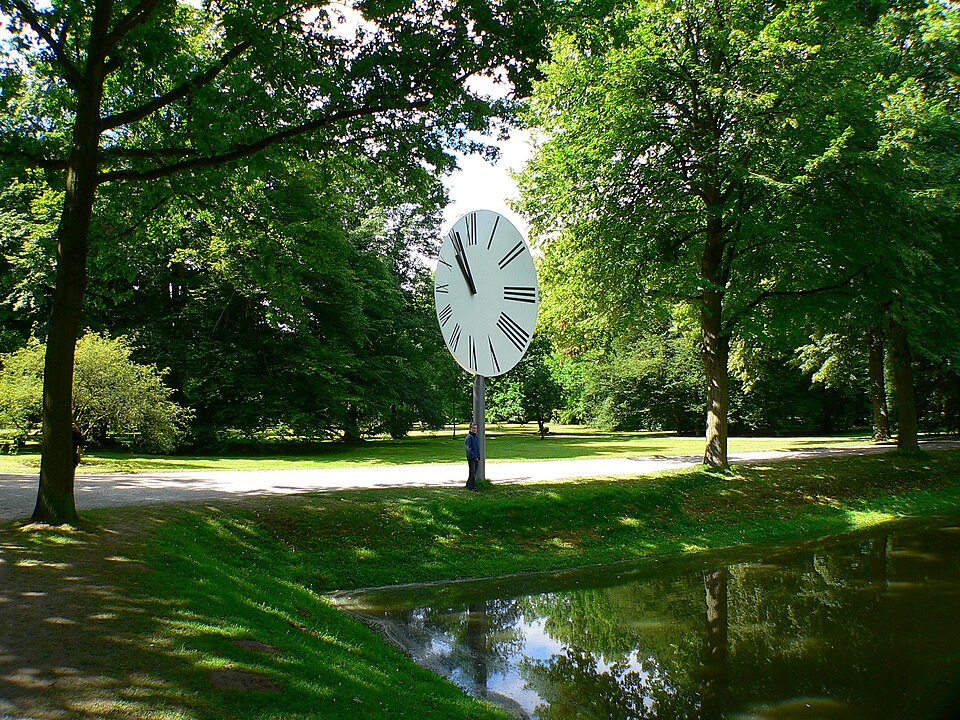
Anri Sala
Tirana-born contemporary artist who lives and works in Berlin.
Presse03 · CC BY-SA 3.0
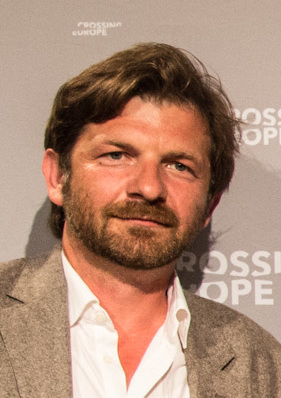
Visar Morina
Kosovo-born director of Exil, with an early professional chapter at Berlin’s Volksbühne.
Crossing Europe · CC BY 2.0

Eroll Zejnullahu
Berlin-born Kosovo international who developed in the city’s football system.
Textilvergehen · CC BY 2.0
Other major Berlin links include Kosovo-born artist Petrit Halilaj, whose work has appeared at Hamburger Bahnhof and whose Berlin gallery is ChertLüdde.
Berlin compared with the wider diaspora
Berlin is politically and culturally important, but it is not the only—or necessarily the largest—Albanian centre in the German-speaking world. Germany’s Kosovan population is more concentrated in North Rhine-Westphalia, Baden-Württemberg and Bavaria, while the Swiss diaspora has an unusually large Kosovar component. Berlin’s recent growth is more visibly tied to arrivals from Albania.
For the country-wide population, migration routes and city distribution, read Albanians in Germany.
For the wider context, compare our evidence-led guides to Albanians in Switzerland and Albanians in Zurich. The definitions are kept explicit so a passport total in one city is not casually compared with an ethnic or self-declared count in another.
Where the evidence stops
We found no official source that can provide an ethnic-Albanian total, a reliable borough ranking or a complete series before Kosovo became a separate citizenship. Historical and current community estimates use different methods and sometimes count refugees, language communities and citizenship groups interchangeably. We therefore label the 25,000 estimate from 2000 and our current midpoint of about 50,000 as estimates—not measurements.
We also checked the tempting football angle. Albania played its UEFA Euro 2024 group matches in Dortmund, Hamburg and Düsseldorf, not Berlin. Community public viewings may have filled Berlin venues, but there is no honest “Albania at the Olympiastadion” image to insert into this history.
Frequently asked questions about Albanians in Berlin
How many Albanians live in Berlin?
No exact official figure exists because Germany records citizenship, not ethnicity. On 31 December 2025, Berlin recorded 8,737 North Macedonian, 7,011 Albanian and 6,563 Kosovan citizens. Their combined 22,311 is the official passport reference. Our broader editorial estimate is about 50,000 people of Albanian origin, with a plausible range of 45,000 to 60,000.
How many Albanians lived in Berlin 10, 20 or 50 years ago?
The three selected citizenship rows totalled 13,047 in 2015, but that is still a passport reference. There is no comparable Albanian total for 2005 or 1975 because Kosovo was not a separate citizenship and earlier migrants were generally recorded as Yugoslav. A Berlin Senate-linked publication reported a community estimate of about 25,000 in 2000.
Why is there no official Albanian population number?
Albanian identity crosses several citizenships, while naturalised Germans disappear from foreign-nationality tables. North Macedonian and Serbian citizenship rows also include people of multiple ethnicities. No official Berlin register resolves those identities.
Which Berlin district has the most Albanians?
No published official table can answer this at the necessary level. Neukölln, Wedding and Spandau are often named in community accounts, but assigning a numeric Albanian population to any borough would be guesswork.
Are there more Kosovars or people from Albania in Berlin?
By current passport, Albania leads narrowly: 7,011 Albanian citizens compared with 6,563 Kosovan citizens at the end of 2025. That does not settle the identity question because many long-established Kosovo-Albanian Berliners now hold German or Serbian passports.
When did Albanians come to Berlin?
The modern community grew through four main periods: Yugoslav labour migration from the late 1960s, migration from Albania during the 1990s, displacement from Kosovo in 1998–99 and work or study migration since 2015.
Where can I experience Albanian culture in Berlin?
Follow the Albanian Film Festival Berlin, Kosova Kulturwoche, FC Liria Berlin and the cultural programmes of the Albanian and Kosovan embassies. Independence Day events around 28 November are another recurring meeting point.
How many Albanian members does dua.com have around Berlin?
In July 2026, 5,378 registered members across Berlin and Brandenburg identified as Albanian. Only 417 completed the optional family-origin field, so that origin split is a self-selected platform sample, not a population survey.
How common is the name Dua in Berlin?
Berlin’s official baby-name files record 37 uses of Dua in 2023, compared with seven in 2019 and four in 2012. The files count every given-name position. The name is used in more than one language community, so it cannot be treated as an ethnic count.
Was there an Albania match in Berlin at Euro 2024?
No. Albania’s three group matches were played in Dortmund, Hamburg and Düsseldorf. Berlin hosted community watch parties, but Albania did not play at the Olympiastadion during the tournament.