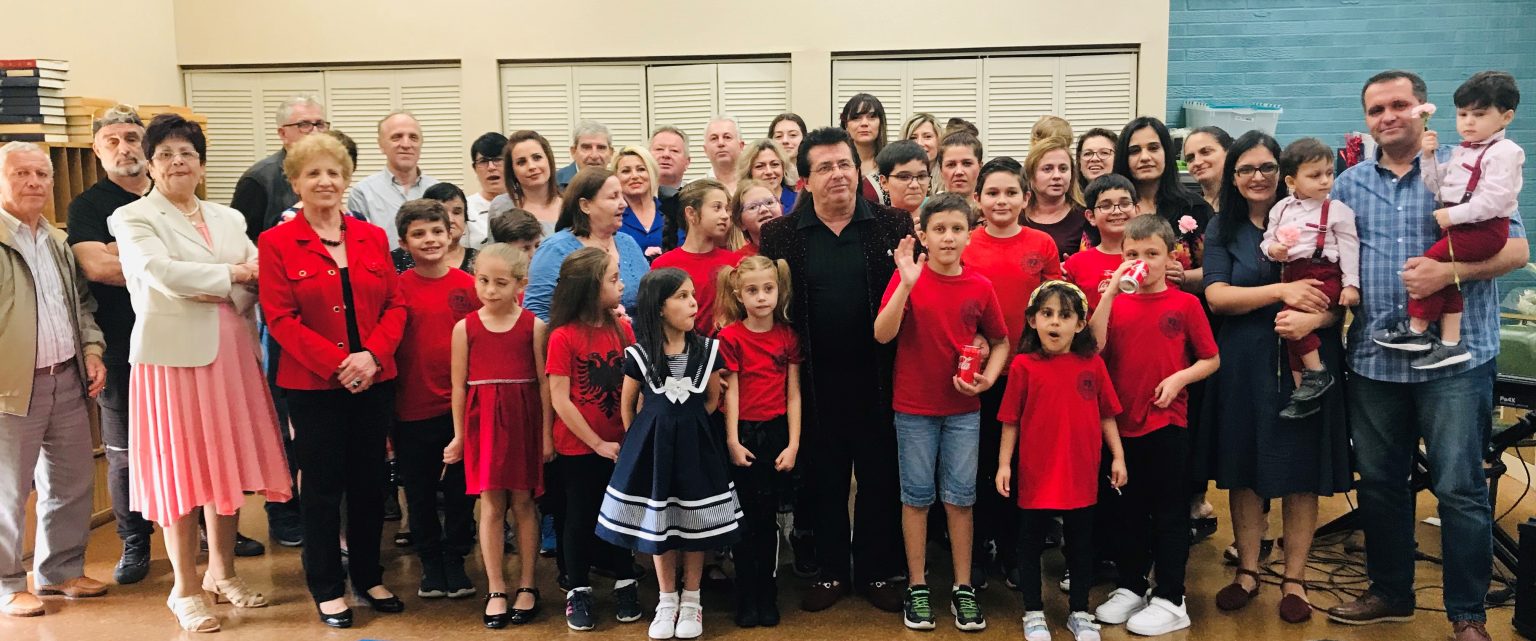
Florida does not have one Albanian neighborhood or one city that defines the community.
Instead, Albanian life stretches across several distinct centers: Tampa Bay and Clearwater, Jacksonville, Miami–Fort Lauderdale, Naples and Southwest Florida, and a smaller community around Orlando and Central Florida.
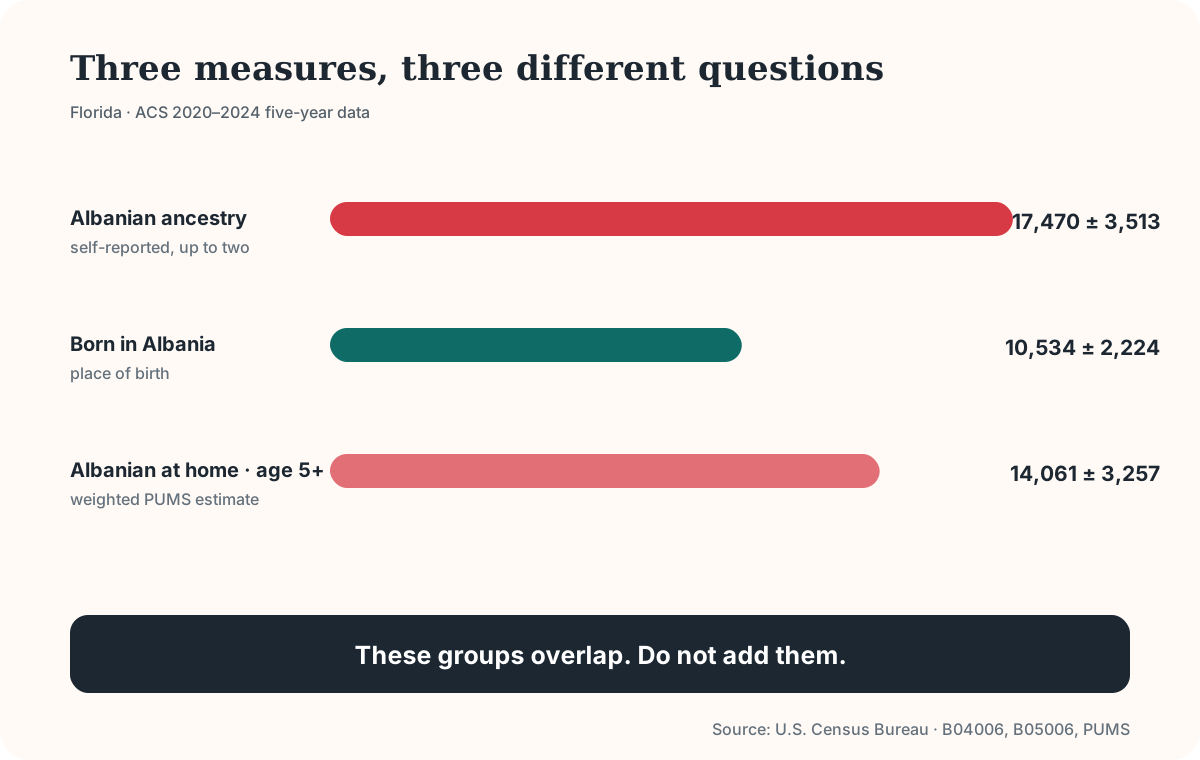
The best available statewide estimate comes from the U.S. Census Bureau's 2020–2024 American Community Survey, which estimates that 17,470 ±3,513 Florida residents reported Albanian ancestry.
For more on this topic, read Albanians in Australia: Numbers, History and Community in 2026 and Albanians in America: A Community Estimated at 750,000 to 1 Million.
That is our starting point — not a claim that exactly 17,470 Albanians live in Florida.
Other Census measures capture different parts of the community. An estimated 10,534 ±2,224 Florida residents were born in Albania, while weighted ACS microdata estimate roughly 14,061 ±3,257 residents aged five or older speak Albanian at home.
Those numbers overlap. We do not add them together.
What they show instead is a community shaped by immigration, American-born generations, family migration and movement within the United States — one that has grown dramatically from the much smaller Albanian presence recorded in Florida a generation ago.
And depending on where you are in Florida, that community can look very different.
Florida's Albanian community at a glance
17,470 ±3,513
Florida residents reporting Albanian ancestry
2020–2024 ACS
10,534 ±2,224
Florida residents born in Albania
2020–2024 ACS
~14,061 ±3,257
People aged 5+ estimated to speak Albanian at home
2020–2024 ACS PUMS
5,283 ±1,150
People reporting Albanian ancestry in Tampa–St. Petersburg–Clearwater
2020–2024 ACS
5,153 ±2,686
People reporting Albanian ancestry in the Jacksonville metro
2020–2024 ACS
1,812
People reporting Albanian ancestry in Florida in the 1990 Census
ACS margins of error shown here are at the 90% confidence level. Ancestry, birthplace and language overlap and must not be added.
One state. Several Albanian Floridas.
The numbers tell us something important immediately. Florida's Albanian population is not concentrated overwhelmingly in Miami, Orlando or any other city outsiders might expect.
The two largest measurable metropolitan communities are Tampa Bay and Jacksonville. South Florida comes next, while Naples has developed an unusually visible community infrastructure relative to its smaller population.
That makes Florida less like New York — where generations of Albanian-American history are concentrated around a handful of famous neighborhoods — and more like a network.
How many Albanians live in Florida?
The most defensible answer is:
The 2020–2024 American Community Survey estimates that 17,470 ±3,513 Florida residents report Albanian ancestry.
The margin of error matters.
The ACS is a survey, not a complete census of every Albanian household. A number such as 17,470 should therefore not be presented as if somebody counted exactly 17,470 people.
And “Albanian” itself can be measured in several different ways.
Albanian ancestry: 17,470 ±3,513
This is our primary benchmark because the Census ancestry question allows people to identify their family origins regardless of where they were born.
It can therefore include immigrants as well as U.S.-born children and later generations who continue to identify as Albanian.
Born in Albania: 10,534 ±2,224
Birthplace answers a different question. It tells us about people who were actually born in Albania and now live in Florida.
It does not count every Albanian. A Florida-born child of Albanian parents is not Albania-born. Neither is an Albanian who migrated from Kosovo, North Macedonia, Montenegro or elsewhere.
Albanian spoken at home: about 14,061 ±3,257
Language gives us another window. It helps show that Albanian remains part of everyday household life for thousands of Floridians. But language is not ethnicity either.
Some Albanian Americans primarily speak English at home, particularly in younger generations. Others may speak Albanian without fitting neatly into a birthplace-based definition.
Why we don't add these numbers
A person can appear in all three measures. Someone born in Tirana who moves to Clearwater may report Albanian ancestry and speak Albanian at home. Adding ancestry + birthplace + language would count that person multiple times.
For the same reason, we do not add organization members, school pupils, church or mosque attendance, Registry registrations or dua.com users to Census figures.
They measure different things.
Our conclusion
For this guide, 17,470 people reporting Albanian ancestry is the clearest statewide benchmark. We do not inflate it into an unsupported 20,000, 25,000 or 30,000 estimate.
The wider Albanian-connected population may not fit perfectly inside any one Census category, particularly where families trace their roots to Kosovo, North Macedonia, Montenegro or elsewhere. But available evidence does not justify inventing a more precise total. The number we can defend is the number we publish.
Where do Albanians live in Florida?
There is no Florida equivalent of one Albanian neighborhood. Instead, Census data and community institutions point toward several regional networks.
Tampa Bay: Florida's most visible Albanian community network
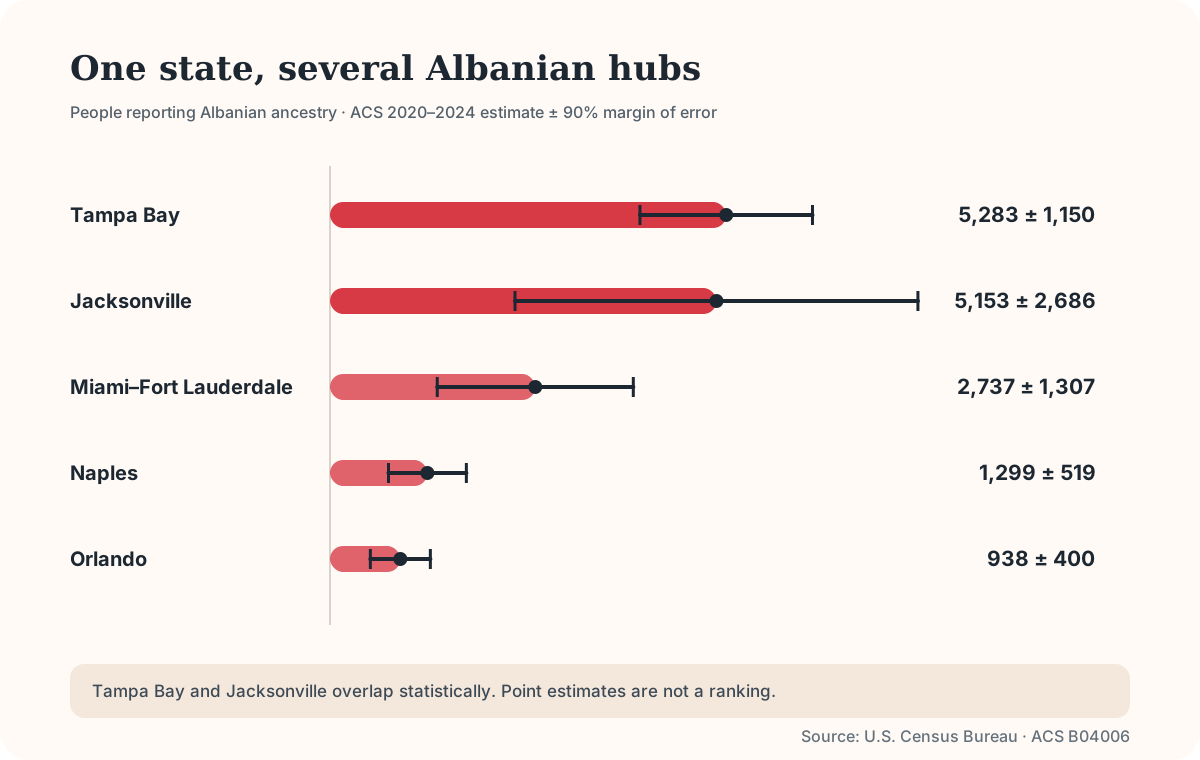
The Tampa–St. Petersburg–Clearwater metropolitan area has an estimated 5,283 ±1,150 residents reporting Albanian ancestry.
But “Tampa” can be misleading shorthand.
A significant part of Albanian community life is found across Clearwater, Largo, Pinellas Park and the wider Pinellas County corridor, rather than exclusively inside Tampa city limits.
This is also where Florida's Albanian institutional landscape becomes particularly visible.
Community life includes BESA Tampa Bay, Vatra Tampa Bay, Albanian-language education, the Albanian Islamic Cultural Center, university students, cultural activity and Albanian professional networks.
That infrastructure has accumulated over decades. Local reporting from 1999 was already describing a rapidly growing Albanian community around Tampa Bay as organizations prepared for the possible arrival of refugees from Kosovo. Today, Tampa Bay is the strongest candidate for Florida's institutional center of Albanian life.
That is different from saying it definitively has Florida's largest Albanian population. The Census data cannot support that stronger claim.
Jacksonville: similar numbers, a different community story
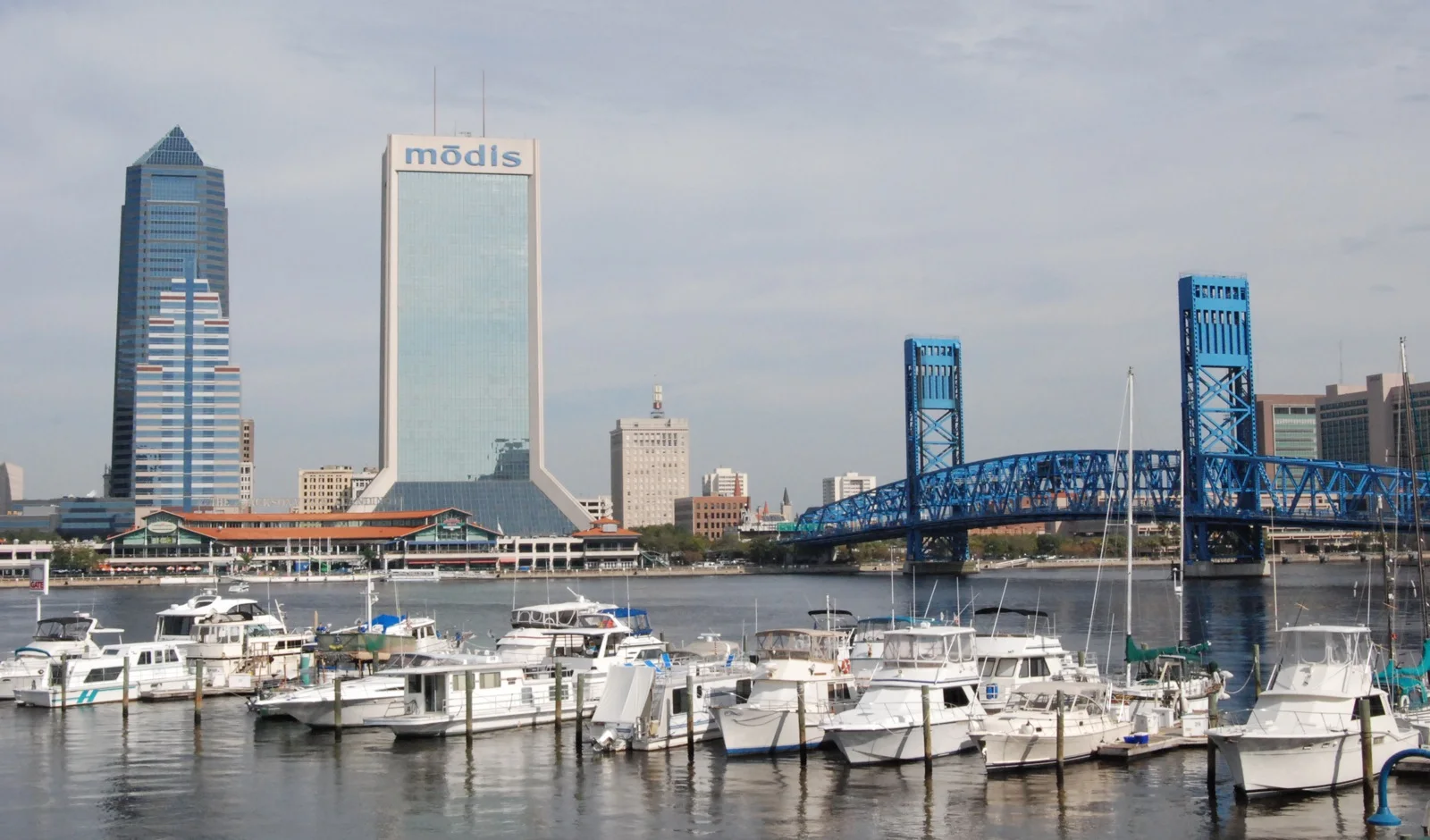
The Jacksonville metropolitan area has an estimated 5,153 ±2,686 people reporting Albanian ancestry. At first glance, that puts Jacksonville almost level with Tampa Bay.
But look at the margins of error. Jacksonville's estimate is much less precise, and the uncertainty ranges of the two metros overlap substantially. We therefore cannot responsibly write:
“Tampa has more Albanians than Jacksonville.”
What we can say is more interesting.
Similar measured populations. Different institutional visibility.
Tampa Bay has a dense public network of organizations, schools, cultural activity and professional groups.
Jacksonville's Albanian presence is less visible online and institutionally.
That does not mean the community is less real.
Historical evidence documents an Albanian Catholic community in Jacksonville, including Albanian-language ministry and community activity. Families and personal networks may play a larger role than highly visible statewide organizations.
This is an important lesson for reading diaspora geography:
The number of organizations Google can find is not the number of Albanians who live somewhere.
Jacksonville deserves its own place in the Florida story precisely because the demographic evidence and institutional evidence tell us slightly different things.
South Florida: Miami, Fort Lauderdale and Palm Beach
The Miami–Fort Lauderdale–West Palm Beach metropolitan area has an estimated 2,737 ±1,307 residents reporting Albanian ancestry.
Compared with Tampa Bay, the community is more dispersed across a vast metropolitan region. Public entry points include Albanian civic and cultural networks such as Vatra Miami and the Florida presence of Albanian women's organizations, alongside professional and diplomatic connections.
South Florida also carries one remarkable link to the earliest chapters of Albanian-American history.
Fan Noli in Florida
Fan S. Noli — writer, statesman, Orthodox bishop and one of the central figures of twentieth-century Albanian history — spent part of his later life in Fort Lauderdale. His presence connects today's relatively young South Florida diaspora with a much older Albanian-American story.
Florida's Albanian history did not begin in the 1990s. But the scale of the community changed dramatically after them.
Naples and Southwest Florida: smaller numbers, strong infrastructure
The Naples–Marco Island metropolitan area has an estimated 1,299 ±519 people reporting Albanian ancestry.
That makes it smaller than Tampa Bay, Jacksonville or South Florida. Institutionally, however, Naples punches above its demographic weight.
The Albanian American Organization of Southwest Florida (AAOSWFL) was established in 2016 and has developed a community model built around culture, education, volunteering, youth, events and business connections.
It also supports Shkolla Shqipe Naples, where children can learn Albanian language, culture and traditional dance.
That makes Southwest Florida one of the clearest examples of how diaspora infrastructure develops.
You do not need tens of thousands of people to build a community. You need people willing to organize one.
Orlando and Central Florida
The Orlando–Kissimmee–Sanford metropolitan area has an estimated 938 ±400 residents reporting Albanian ancestry.
Albanians clearly live in Central Florida. What we have not found is evidence strong enough to describe Orlando as one of Florida's major Albanian institutional centers.
That distinction matters. A Community guide should not manufacture a “Little Albania” simply because a city is famous or heavily searched.
For Orlando, the evidence supports a smaller, dispersed community rather than a major organized hub. As that changes, this page should change with it.
How Florida's Albanian community grew
Florida's Albanian story is largely a story of the last generation — but not exclusively.
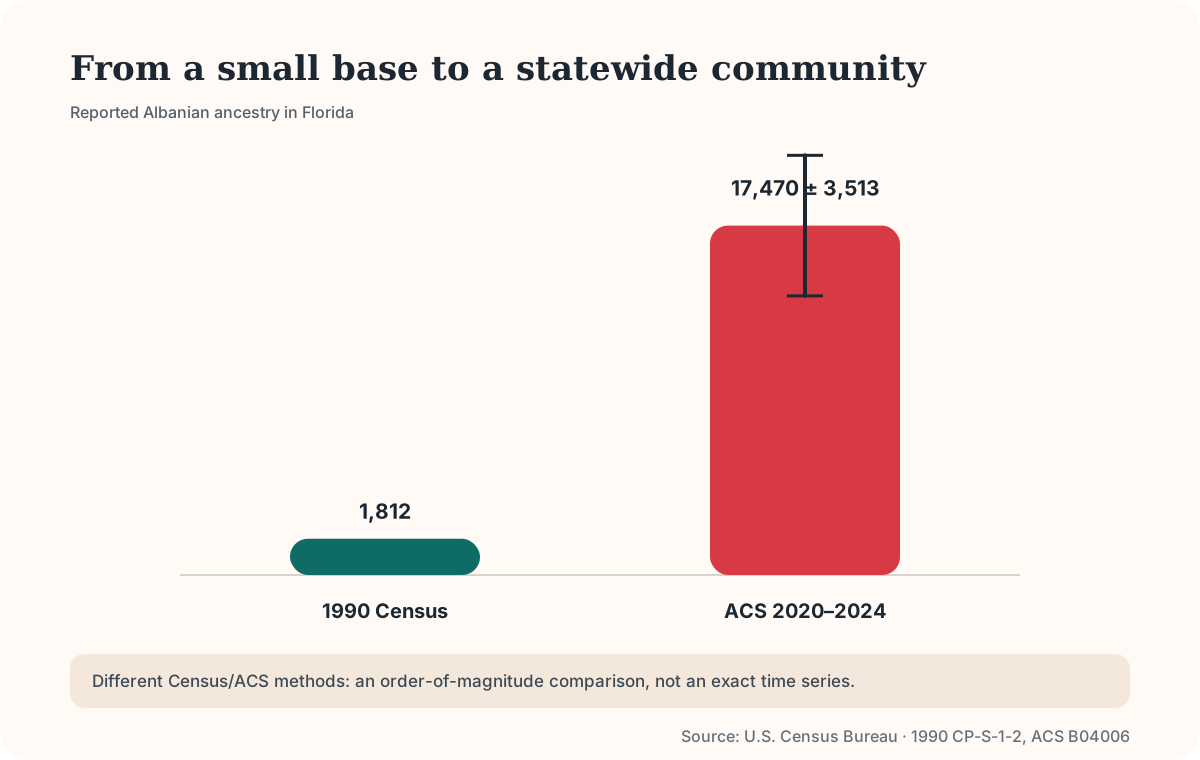
The 1990 Census recorded 1,812 Florida residents reporting Albanian ancestry. The 2020–2024 ACS estimate is 17,470 ±3,513.
Those figures should not be converted mechanically into an exact percentage growth rate because Census methodology and ancestry reporting have changed.
But the direction is unmistakable. Florida's Albanian community is many times larger than the community recorded in 1990. Several overlapping migration stories help explain why.
Before 1990: a small Albanian-American presence
Albanian immigration to the United States began long before Florida became a major destination. The oldest Albanian-American institutions developed primarily in the Northeast, especially around Boston and New York.
Florida remained comparatively peripheral. Individual Albanian Americans nevertheless lived here, and Fan Noli's years in Fort Lauderdale give the state a notable connection to that earlier history. The demographic transformation came later.
After 1990: Albania opens
The collapse of Albania's communist system changed Albanian migration almost overnight.
For decades, leaving the country had been extraordinarily difficult. The 1990s opened a completely different period: political transition, economic uncertainty and mass migration connected Albania with Italy, Greece, Germany, the United States and other destinations on an unprecedented scale.
Florida became part of that new map. Some newcomers arrived directly. Others reached Florida after first building lives elsewhere in America.
The Diversity Visa generation
The United States' Diversity Visa program became an important legal migration route for Albanians after the end of communism.
Its significance can still be seen today: Albania continues to produce substantial numbers of Diversity Visa selectees. But the program should be described carefully.
A Diversity Visa selection is not the same thing as an immigrant arriving in Florida, and national DV statistics cannot tell us how many Albanian Floridians came through the program.
What they establish is that the DV program has been one of the important channels connecting post-communist Albania with the United States. Once someone settles, another migration mechanism becomes increasingly important: family.
Parents join children. Siblings follow siblings. Couples form. Children are born in the United States. A migration route becomes a community.
1999: Kosovo enters Florida's Albanian story
The Kosovo war created another migration chapter. In April 1999, Tampa Bay reporting documented local preparations to receive Kosovo Albanian refugees, with Catholic Charities working alongside an Albanian community that had already grown substantially during the decade.
The episode matters even though it does not give us a permanent population total. It shows that by the end of the 1990s, Tampa Bay already had enough Albanian community infrastructure and family networks to participate in refugee support.
Kosovo also demonstrates why Albania-born statistics cannot define Florida's entire Albanian community.
An Albanian born in Kosovo is not Albania-born. Neither is an Albanian from Tetovo, Ulqin or another Albanian-speaking community outside Albania.
Albania is not the whole Albanian story
“Albanian” can describe nationality, ancestry, ethnicity, language, culture — or several of these at once.
Florida's community includes people and families whose roots may lead to:
- Albania
- Kosovo
- North Macedonia
- Montenegro
- other parts of the Balkans
- older Albanian-American communities elsewhere in the United States
These histories should not be flattened. An Albanian family from Shkodër does not have the same migration story as a Kosovo Albanian family from Prishtina.
A family from Tetovo brings another regional history. People connected to Çamëria carry histories shaped by a particularly contested twentieth-century past. Arbëresh identity has its own centuries-old history in Italy and should not automatically be merged into modern Albanian migration statistics.
The common language and culture create connections. They do not erase differences.
The second migration: moving to Florida from somewhere else in America
Not every Albanian Floridian came directly from the Balkans. This is one of the most important differences between understanding immigration and understanding Florida.
Florida attracts people from other U.S. states too. For Albanian Americans, that can mean families whose American story began in New York, New Jersey, Massachusetts, Michigan or another established diaspora center before a later move south.
The reasons can be familiar to anyone who moves to Florida: family, work, business, climate, housing, retirement or simply a different stage of life.
The available Census ancestry data can show us where people live today. It cannot tell us that every Albanian Floridian arrived there directly from Albania.
That distinction is particularly important in Southwest Florida and other places where later-life and domestic migration may shape the community.
No reliable Florida-specific estimate of Albanian migration from other U.S. states was found. These are possible pathways, not a measured breakdown of arrivals.
Work, business and entrepreneurship
Florida's Albanian community does not fit neatly into one occupational story. Albanians work across hospitality, construction, healthcare, technology, finance, real estate, transportation, professional services and small business.
But business can have a second function in diaspora life. A restaurant is not only a restaurant when people hear Albanian at the next table.
A professional network is not only about referrals when it introduces newcomers to people who understand both American business culture and the diaspora experience.
A family business can become an informal meeting point. That is why organizations such as the Albanian Business & Professional Network in Tampa Bay and business networks connected to AAOSWFL matter.
They turn economic activity into social infrastructure. For practical business discovery, however, directories should be treated as directories — not demographic databases. A list of Albanian-owned businesses can tell you where to find services. It cannot tell you how many Albanians live in Florida.
Faith and Albanian identity in Florida
Florida's Albanians do not belong to one religion. Albanian identity historically crosses Muslim, Catholic, Orthodox and secular traditions, and diaspora life often brings those traditions into the same community space.
Tampa Bay has a long-standing Albanian Islamic institutional presence around Clearwater. Jacksonville has a documented Albanian Catholic history.
Fan Noli's life connects Florida to the Albanian Orthodox tradition. But religious affiliation should never be used as a shortcut for Albanian ethnicity.
For some families, worship is central to community life. For others, Albanian identity is expressed mainly through language, family, food, music, national celebrations or friendships. Often it is a combination.
Teaching Albanian in Florida
For immigrant parents, migration creates a question that becomes more difficult with every generation:
Will our children still speak Albanian? Florida's Albanian schools are one answer.
Albanian School Vatra — Tampa Bay
Vatra Tampa Bay supports Albanian-language and cultural education for children in the region. The purpose goes beyond vocabulary.
Diaspora schools give children somewhere to hear Albanian from people outside their immediate family, meet other Albanian-American children and understand the traditions their parents or grandparents grew up with.
Shkolla Shqipe Naples
In Southwest Florida, Shkolla Shqipe Naples combines Albanian-language instruction with community activities and traditional dance for children.
That mix matters. Language survives more easily when it belongs to friendships and experiences rather than only homework.
Growing up Albanian in Florida
The next generation will experience Albanian identity differently from the generation that arrived. A child born in Florida may grow up switching between English and Albanian, eating byrek at home and tacos with friends, celebrating Thanksgiving and 28 Nëntori, visiting relatives across the Atlantic and explaining repeatedly where Albania or Kosovo is.
Some will speak Albanian fluently.
Some will understand more than they speak. Some will reconnect with the language later. That is not unique to Florida. It is one of the central questions of diaspora life everywhere.
What changes in Florida is the geography. When families are spread across large metropolitan areas rather than concentrated in one neighborhood, schools, student groups, cultural organizations, events — and increasingly digital communities — become important ways of keeping people connected.
Students are building the next version of the community
Florida's Albanian community is not only being inherited. Young people are creating new institutions themselves.
At the University of South Florida, the Albanian Student Union provides a campus point of connection. Albanian student organizing has also appeared elsewhere in the state, including the University of Florida and Florida Gulf Coast University.
At FGCU, Albanian-American students created an organization because they saw a gap and decided to fill it. That is a small story with a larger meaning.
The first generation often builds institutions around immigration, religion and national culture. The next generation may build them around university life, professional identity, friendship and hybrid Albanian-American experiences. Both are community.
Where Albanian culture becomes visible
Florida's Albanian calendar is decentralized. There is no single statewide organizer. Instead, community life appears through local organizations, schools, worship communities, student groups and cultural networks.
November — Albanian Independence and Flag Day
Around 28 November, communities across Florida organize dinners, music, traditional dance and red-and-black celebrations marking Albanian Independence Day.
Check current announcements from BESA, Vatra Tampa Bay, AAOSWFL and South Florida organizers.
February — Kosovo Independence
Kosovo's Independence Day on 17 February is another important date for many Albanian families, particularly those with roots in Kosovo.
Florida has hosted community celebrations in previous years, but historic videos and old event pages should never be treated as confirmation of this year's event.
School celebrations
Albanian schools organize programs around language, dance, national holidays and the end of the school year.
For families with children, these can be some of the easiest ways into the community.
Women's and professional events
AAOSWFL has organized women's events, while professional organizations and student groups periodically organize networking and cultural gatherings.
Before you go
Always verify the date, venue, ticket requirements and schedule directly with the organizer. Florida community events are often volunteer-run. Dates and venues can change, and an old social post can remain online long after an event has passed.
Florida community celebrations on film
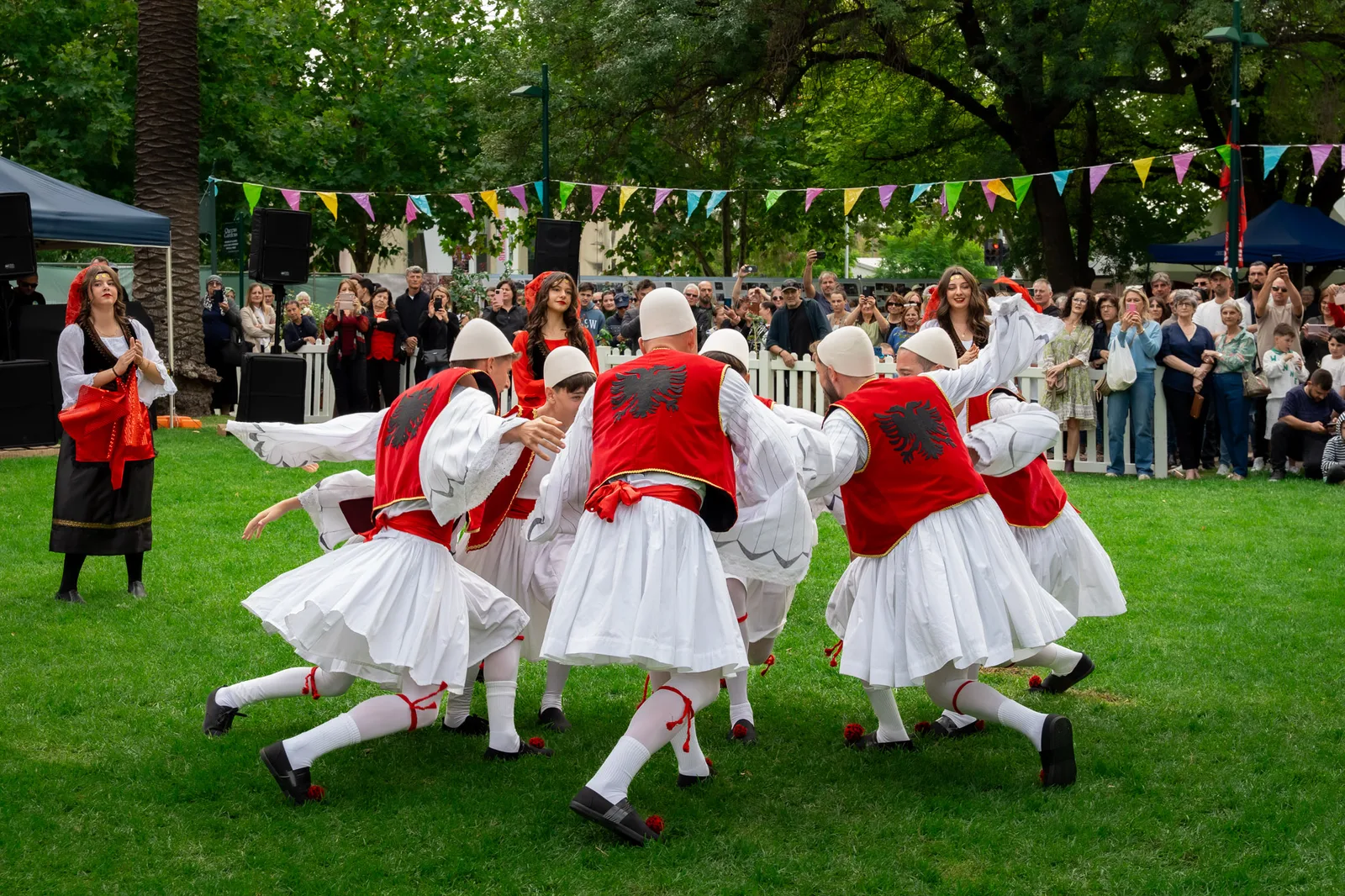
These publisher-hosted films show Florida Albanians gathering for Kosovo Independence, Albanian Independence and a Clearwater folk festival. They are historical windows into the community — not advertisements for current dates.
More recent community photo stories: the Albanian Embassy with the Naples community (2025), Vatra Tampa Bay's Clearwater gathering (2024) and the Naples Albanian school's year-end celebration (2026).
How to connect with Albanians in Florida?
Different people need different doors into the community.
If you just moved to Tampa Bay
Start with BESA Tampa Bay and Vatra Tampa Bay. Ask what is currently active rather than relying on an old event calendar.
If you have children
Look at Albanian School Vatra in Tampa Bay or Shkolla Shqipe Naples in Southwest Florida.
If you're a student
Check your university's official student-organization directory. USF has an Albanian Student Union, while Albanian student organizing has also appeared at UF and FGCU.
If you're in Naples or Southwest Florida
AAOSWFL is the clearest public starting point for events, education, youth activity, volunteering and local community connections.
If you're in South Florida
Follow current announcements from Vatra Miami and other verified Albanian civic and cultural organizers rather than assuming there is one central Miami institution.
If you're in Jacksonville
The community appears to rely more heavily on family, school, religious and personal networks. Check live institutional calendars rather than archived schedules.
If you simply want to meet other Albanians
Community organizations create public gathering places. But community also happens one person at a time. That is where dua.com fits into today's diaspora infrastructure.
Meeting Albanians in Florida on dua.com
Moving somewhere new can create an odd experience. You can know thousands of Albanians live in your state and still not know any of them.
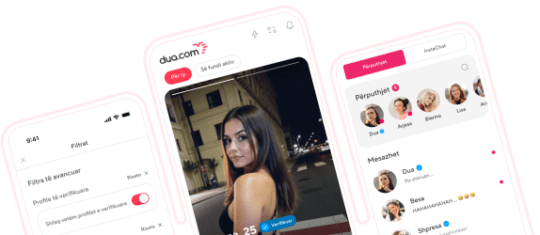
Florida makes that especially easy because the community is spread across hundreds of miles. dua.com gives Albanians another way to find one another — whether you're looking for dating, a serious relationship or simply exploring the Albanian community around you.
You might be in Clearwater and meet someone in Tampa. You might live in Fort Lauderdale and discover someone nearby whose family is from the same region as yours.
Or you might use Fly to explore Albanians somewhere else before your next trip. Aggregated dua.com activity can help us understand how a modern digital diaspora connects.
It cannot tell us how many Albanians live in Florida.
We keep those two things separate.
Census data measures population.
dua.com helps people find each other.
A practical Albanian Florida directory
Tampa Bay
BESA Tampa Bay
Cultural and educational organization serving the Tampa Bay Albanian community.
Vatra Tampa Bay
Local chapter of the Pan-Albanian Federation of America, with civic, cultural and educational activity.
Albanian School Vatra
Albanian-language and cultural education for children.
Albanian Islamic Cultural Center — Clearwater
Long-standing Albanian Islamic community institution.
USF Albanian Student Union
University-based Albanian student community.
Albanian Business & Professional Network
Professional and business networking.
Southwest Florida
Albanian American Organization of Southwest Florida — Naples
Community, cultural, charitable and educational organization established in 2016.
Shkolla Shqipe Naples
Albanian language, culture and traditional-dance education for children.
AAOSWFL Youth
Youth participation and volunteering.
South Florida
Vatra Miami
Community and cultural activity around Miami and Fort Lauderdale.
Motrat Qiriazi — Florida connections
Women's community and cultural network.
Jacksonville
Albanian Catholic community
Historically documented Albanian Catholic ministry. Check current parish schedules directly before attending.
Statewide and national resources
Embassy of the Republic of Albania in the United States
Albanian-American national organizations
National Albanian Registry
Useful for discovering organizations and businesses, but not a population source.
dua.com
Person-to-person Albanian community and dating platform.
Directory evidence reviewed August 2026; key community and school links rechecked 19 September 2026. Organizations, leadership, programs and schedules change. Verify directly before visiting or attending.
Florida, hurricanes, and community preparedness
Community life in Florida comes with one practical reality that deserves space on a Florida page:
hurricane season.
Atlantic hurricane season runs from June through November, and preparedness should come from official sources rather than community rumor.
If a storm threatens your area:
- follow the National Hurricane Center and official local emergency-management guidance;
- know whether you live in an evacuation zone;
- do not assume a friend or relative's evacuation order applies to your address;
- prepare medications, documents, water, food and charging options in advance;
- check county shelter information directly;
- help relatives who may struggle with English access official information.
Diaspora networks can be extremely valuable during emergencies — checking on older relatives, translating information, sharing transport and offering temporary accommodation.
But community support should complement official emergency instructions, not replace them.
Make an evacuation plan and consult official preparedness maps. In Pinellas County, use the county's evacuation-zone lookup. A storm-surge evacuation zone is not the same as a FEMA flood zone.
Albanian Florida is still being built
Florida does not have the long Albanian-American institutional history found in parts of the Northeast.
That is precisely what makes it interesting.
The 1990 Census found only 1,812 people reporting Albanian ancestry in the state.
A generation later, the ACS estimates 17,470 ±3,513.
In between came migration from Albania, the Kosovo-war era, family reunification, Diversity Visa migration, children born in America and Albanian Americans moving south from other states.
Then came institutions.
A mosque.
A church community.
Vatra chapters.
Cultural organizations.
Businesses.
Schools.
Student associations.
Youth groups.
Professional networks.
And digital spaces that allow two Albanians living miles apart to discover that they are not as far from the community as they thought.
There is no single Albanian Florida.
There are families in Clearwater and Jacksonville, students in Tampa and Fort Myers, community organizers in Naples, professionals across South Florida and people building connections in places where no Albanian organization exists yet.
Together, they are the story.
Frequently asked questions
How many Albanians live in Florida?
The 2020–2024 American Community Survey estimates 17,470 ±3,513 Florida residents report Albanian ancestry. Because the ACS is a sample survey, this should be treated as an estimate rather than an exact population count.
Where do most Albanians in Florida live?
The largest measurable metropolitan concentrations are Tampa–St. Petersburg–Clearwater and Jacksonville. Significant communities are also found in South Florida, Southwest Florida and Central Florida.
Does Tampa have the largest Albanian community in Florida?
We cannot establish that confidently. Tampa Bay's ACS estimate is 5,283 ±1,150, compared with 5,153 ±2,686 for Jacksonville. Their margins of error overlap substantially. Tampa Bay does, however, have the state's most publicly visible network of Albanian institutions.
Are there many Albanians in Miami?
The Miami–Fort Lauderdale–West Palm Beach metro has an estimated 2,737 ±1,307 residents reporting Albanian ancestry. The community is spread across the wider South Florida region rather than concentrated in one Albanian neighborhood.
Are there Albanians in Naples?
Yes. The Naples–Marco Island metro has an estimated 1,299 ±519 people reporting Albanian ancestry and an active community infrastructure led by the Albanian American Organization of Southwest Florida.
Are there Albanian schools in Florida?
Yes. Albanian-language and cultural education is available through initiatives including Albanian School Vatra in Tampa Bay and Shkolla Shqipe Naples. Families should confirm current terms and registration directly with the schools.
Is there an Albanian neighborhood in Florida?
We found no evidence of a single neighborhood comparable to an ethnic enclave. Florida's Albanian community is distributed across multiple metropolitan areas and suburbs.
Why are ancestry, birthplace and language numbers different?
They measure different populations. Ancestry captures people who identify Albanian family origins, birthplace counts people born in Albania, and language measures people who speak Albanian at home. These groups overlap and should never be added together.
Does the Florida estimate include Kosovo Albanians?
The Census ancestry measure is based on how people report their ancestry rather than birthplace alone, so some Kosovo Albanians may report Albanian ancestry. However, we do not automatically classify everyone born in Kosovo as Albanian.
Did Kosovo refugees settle in Florida?
Florida was involved in the 1999 refugee response. Contemporary reporting documented preparations in Tampa Bay to receive Kosovo Albanian refugees and showed that an established local Albanian community was already helping with the response. That evidence should not be converted into a present-day population count.
Can I find Albanian events in Florida?
Yes, particularly around Tampa Bay, Naples and South Florida. Independence celebrations, school programs, cultural events, student activities and professional gatherings occur throughout the year. Always verify current dates directly with the organizer.
How can I meet Albanians in Florida?
Depending on where you live, start with Albanian cultural organizations, schools, student groups, religious institutions, professional networks and local events. dua.com provides another way to discover and connect with Albanians nearby and across the wider diaspora.
How we counted
Population statistics on this page primarily use the U.S. Census Bureau's 2020–2024 American Community Survey 5-year estimates.
Our main statewide and metropolitan benchmark is people reporting Albanian ancestry.
We keep the following categories separate:
- Ancestry — people reporting Albanian ancestry.
- Birthplace — people born in Albania.
- Language — people aged five or older speaking Albanian at home.
- Citizenship — a legal status, not an ethnicity measure.
- Country of birth outside Albania — never automatically classified as Albanian.
- Organization membership — evidence of community participation, not population.
- National Albanian Registry data — useful for discovering institutions and businesses, not estimating population.
- dua.com data — aggregated product activity, never used to estimate Florida's Albanian population.
Metropolitan, county, city and ZIP/ZCTA statistics are also kept geographically separate. We never add a city to the county containing it or a county to the metropolitan area containing both.
Margins of error are shown where material because some Florida Albanian estimates are based on relatively small ACS samples.
The ACS margins of error use a 90% confidence level. The language estimate uses person weights and all 80 replicate weights in ACS PUMS; no individual-level data is published.
Evidence review
Demographic evidence review: August 2026. Content revision and key community-link checks: 19 September 2026.
Population data should be reviewed when a new ACS five-year release becomes available.
Organizations, schools, events and practical links should be checked more frequently because schedules, leadership and programs can change during the year.
Corrections and updates
Diaspora communities change faster than Census releases.
A school can open. An organization can close. A festival can move. A new generation can create something that did not exist when this guide was researched.
If you represent an Albanian organization in Florida or find a factual error, outdated listing or stronger primary source, contact dua.com so the evidence can be reviewed.
Corrections should update the source record as well as the visible text.
Explore the Albanian community across America
Florida is one chapter of a much larger Albanian-American story. Explore Albanians in America to see how migration, population and community life developed across the United States.
Or travel north to Albanians in New York, where some of the country's oldest and largest Albanian communities built institutions that continue to influence diaspora life today.
And wherever you are — Florida, New York, Albania, Kosovo or somewhere in between — dua.com helps the Albanian diaspora stay one community, even when the map says otherwise.