Leverkusen's Albanian community is visible in school classrooms, cultural associations, a mosque in Küppersteg and the stories surrounding Bayer 04. It is harder to see in a single population figure. The city counted 351 non-German Albanian citizens and 597 non-German Kosovo citizens at the end of 2022; its newer migration-background estimates include German citizens too. Neither measure counts everyone of Albanian heritage. This guide follows the people and places behind those categories, with official school locations, local history, community contacts and ways to make new connections.
In January 1987, Ismalj Memishi left Nerasht, near Tetovo, to join his father in Leverkusen. In an ALBANIAN.MK interview republished in September 2024, under the spelling Ismail Memishi, he recalled missing the people he had left behind and having to learn German. He later qualified in industrial business and described starting work at Bayer on 1 October 2001. His account also turns to defending Albanian supplementary lessons and organising cultural activities. A child learning how to belong became an adult helping others keep a language and a connection.
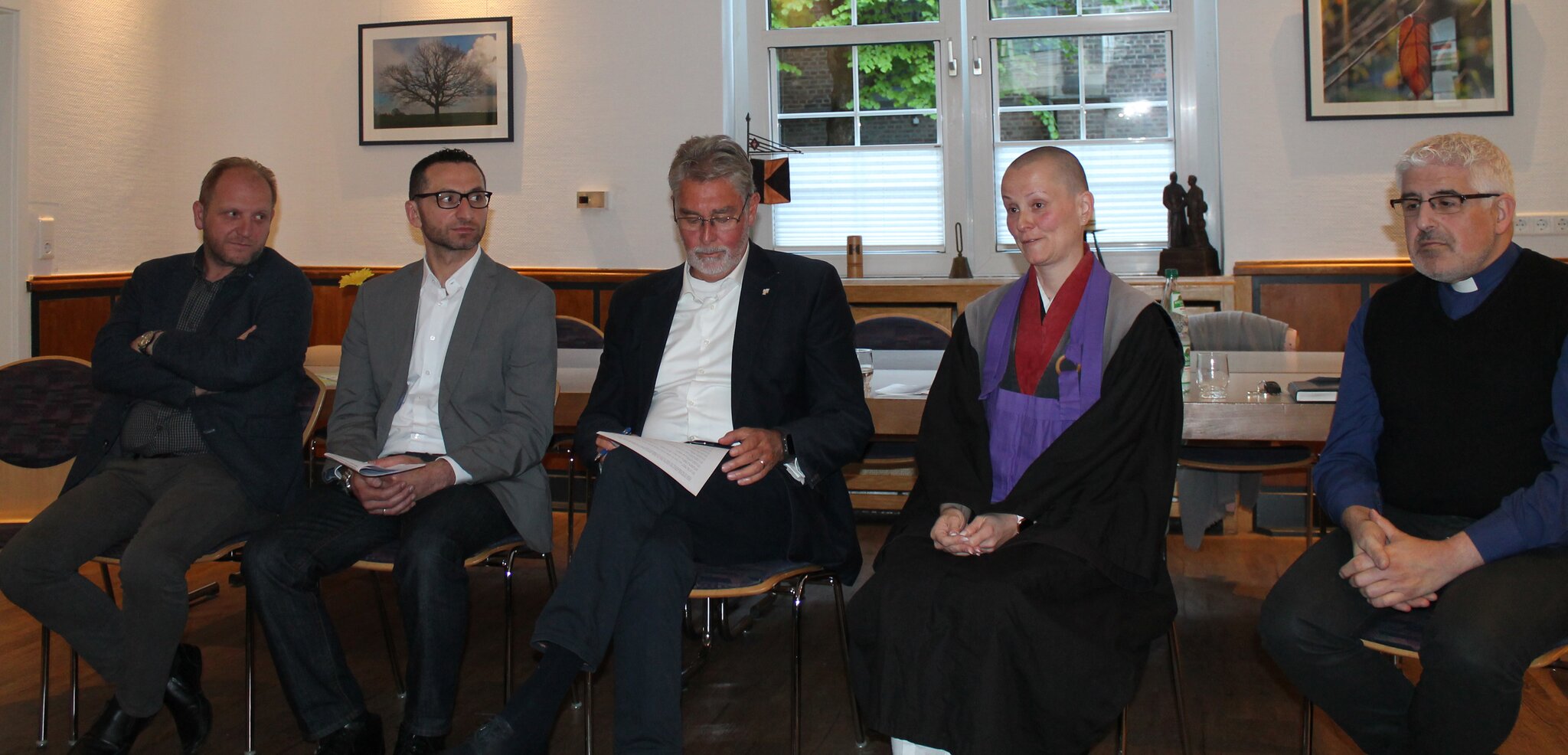
The city's current integration information identifies Memishi, of Unser Leverkusen, as the chair elected after the 2025 municipal election. The body is now the Committee for Equal Opportunities and Integration. His public role gives that personal account a civic continuation: the conversation is about participation in Leverkusen as well as ties to a place of origin.
His experience connects three parts of Albanian Leverkusen: a working family's arrival, the effort to keep a language alive and participation in the city's public life. The schools, associations and stories below trace those connections today.
How many Albanians live in Leverkusen?
No verified city-wide total of ethnic Albanians is available from the sources used here. Leverkusen publishes citizenship statistics and estimates of migration background. They answer different questions. Both are useful, provided the year, the city boundary and the definition remain attached to the number.
The city's 2022 statistical yearbook records 351 residents without German citizenship whose nationality was Albanian, and 597 whose nationality was Kosovan, at 31 December 2022. The same table records 2,544 North Macedonian citizens. That third number cannot be relabelled as Albanian: North Macedonia contains several ethnic communities, and a passport does not identify which one a resident belongs to.
| Recorded citizenship | 31 December 2021 | 31 December 2022 |
|---|---|---|
| Albania | 295 | 351 |
| Kosovo | 539 | 597 |
| North Macedonia | 2,390 | 2,544 |
Sources: Stadt Leverkusen, yearbook 2019–2021, table 1/17, and yearbook 2022, table 1/17. These are non-German residents of Leverkusen, not an ethnic population estimate. The dates are historical; they are not October 2026 counts.

The two-date comparison shows more residents in those legal categories. It cannot by itself explain why: arrivals and departures, births and deaths, and citizenship changes can all alter a stock. It also says nothing about whether someone speaks Albanian at home. An adult who becomes German may leave the foreign-citizenship table while remaining just as involved in Albanian family and cultural life.
What the newer background estimate adds
For 31 December 2025, the city's migration-background report estimates 1,326 residents with Kosovo as their reference country: 523 German citizens and 803 non-Germans. The German share is 39.4 percent. Those 523 people are not a count of naturalisations in a particular year; German citizenship can have different histories.

The same report estimates 4,488 residents with North Macedonia as their reference country, including 1,469 Germans. It does not separately print Albania among its fifteen leading reference countries. These figures come from the Migra-Pro method, using administrative information such as citizenship and birthplace. They are not answers to an ethnicity questionnaire. The city also explains limitations, including the loss of some parent-child register links when children reach adulthood.
The practical rule is simple: do not add the 2022 passport rows to the 2025 background estimates. The latter already include non-Germans, refer to a different date and use a broader method. Nor does the sum of Kosovo and North Macedonia establish the number of Albanians. It would merge legal and geographic categories into an ethnic claim the source never makes.

There is no verified Leverkusen account total published here. Platform accounts measure use of an app, not a city's population.
Where citizenship hides a younger generation
Leverkusen's separate table of German dual nationals shows why a foreign-passport count can miss a substantial part of family life. At the end of 2022, it recorded 216 German citizens with an additional Kosovo citizenship; 121 were under eighteen. Among the 597 non-German Kosovo citizens, 86 were under eighteen.

Those are different denominators: 56.0 percent in the German dual-national category, compared with 14.4 percent in the non-German category. They describe citizenship and age, not language competence or every child of Albanian heritage. Children with only German citizenship are outside those particular country-linked rows. The yearbook also lists eleven German-Albanian dual nationals and 832 German-North Macedonian dual nationals, without establishing their ethnicity.
For a school or community association, these distinctions matter. A German-passported child may still have grandparents in Kosovo, hear Albanian at home or want to learn to write it. A population table cannot determine that child's sense of belonging. The next place to look is the city's actual educational provision.
Where can children learn Albanian?
Leverkusen's municipal HSU information lists seven locations offering Albanian heritage-language instruction. These are host sites in the ordinary school system, not seven independent Albanian schools. The city's school list and enrollment guidance are the starting point for families.

The map places the city’s seven published school coordinates among real streets, rivers and neighbourhoods. Match each number with the directions below. The closely spaced Regenbogenschule and Theodor-Wuppermann-Schule are separate entries. The pins show teaching locations, not where Albanian families live.
| Map / host school | School type | Directions |
|---|---|---|
| 1. GGS Am Friedenspark | Primary school | Open map ↗ |
| 2. GES Käthe-Kollwitz-Schule | Comprehensive school | Open map ↗ |
| 3. Möwenschule / GGS Dönhoffstraße | Primary school location | Open map ↗ |
| 4. GGS Heinrich-Lübke-Straße | Primary school | Open map ↗ |
| 5. GGS Regenbogenschule | Primary school | Open map ↗ |
| 6. GES Gesamtschule Schlebusch | Comprehensive school | Open map ↗ |
| 7. HS Theodor-Wuppermann-Schule | Secondary school | Open map ↗ |
Source: Stadt Leverkusen's HSU page, checked 1 October 2026. A host school's presence in the list does not guarantee a place, a particular group or a current timetable. Families should confirm the relevant arrangements through the child's regular school.
HSU is free supplementary teaching for pupils with an international family history in primary and lower-secondary education. The city describes up to five additional teaching periods a week. Registration goes through the secretariat of the child's regular school; it is binding for the school year and renews automatically. The municipal Schulamt can clarify the process on 0214 406-4094.
Before choosing a group, it helps to ask which level suits the child, where the lesson takes place and how the extra journey fits the school day. A school map is useful precisely because it makes that journey concrete. A family may live beside one school and be directed to a class elsewhere. The current teaching group matters more than the nearest pin.

Keeping Albanian in everyday life
Keeping a family language alive involves more than being able to answer a familiar question. Reading a message, writing to a relative and following a longer story call on different skills. Supplementary classes give those skills a regular place in the week; family conversations provide another.
There is no need to turn that into a test of whether a young person is Albanian enough. Children can feel at home in Leverkusen, use German confidently at school and still want more ways to communicate in Albanian. A class can be part of that process without defining the whole of someone's identity.
The useful distinction for parents is between intention and routine. Wanting a child to speak more Albanian is an intention. Knowing the teacher, checking the timetable and making room for reading or conversation is a routine. Different households will make different choices. The public school offer gives them something specific to investigate, without assuming every Albanian-speaking family has the same needs.
Memishi's account of advocating for supplementary lessons gives this ordinary administrative detail a longer history. Someone once had to argue for the opportunity that a family can now find on a municipal webpage. The published list is evidence of provision; keeping a language useful still happens one conversation at a time.
How did the community take root?
Local accounts connect the community's beginnings to labour migration, followed by family life and the creation of lasting institutions. The Mesxhidi Aksa congregation's 2025 information leaflet dates the first Albanian guest workers in Leverkusen to 1964. That is the congregation's historical account, not a municipal count of first arrivals.

There is a difference between dating the arrival of workers and dating the life of a community. Employment can bring an individual to a place. Family reunification, schools, places of worship and associations create reasons to stay connected to it. Memishi's childhood arrival in 1987 belongs to that second part of the story.
Albanians have roots in several countries, and the paths into Leverkusen are correspondingly varied. The timeline brings together a congregation's recollection, a personal interview and dated institutional records, each identified in the sources.
Associations, faith and a place to return
Two documented entry points are the Albanischer Verein e.V. and Mesxhidi Aksa. They offer different kinds of connection. The first appears in the city's integration council directory under culture; the second is an Albanian congregation with a permanent mosque address.
The Integrationsrat's associations directory lists Albanischer Verein e.V. at Schulstraße 1, 51373 Leverkusen. The directory is a practical way to find its published contact. It should not be read as a promise of public opening hours or a current weekly programme. A newcomer can ask about activities, membership and the next opportunity to participate.
Mesxhidi Aksa is at Mühlenweg 211, Küppersteg. Its leaflet places the congregation's foundation in 1986 and the present mosque in 2006; older accounts differ on the foundation year. The leaflet describes members with roots in North Macedonia, Kosovo, Montenegro, the Presheva area and Albania. It reports about 700 members and about 150 children in mosque instruction. Those are attributed congregation figures, not a census of Albanians or enrollment in public-school HSU.
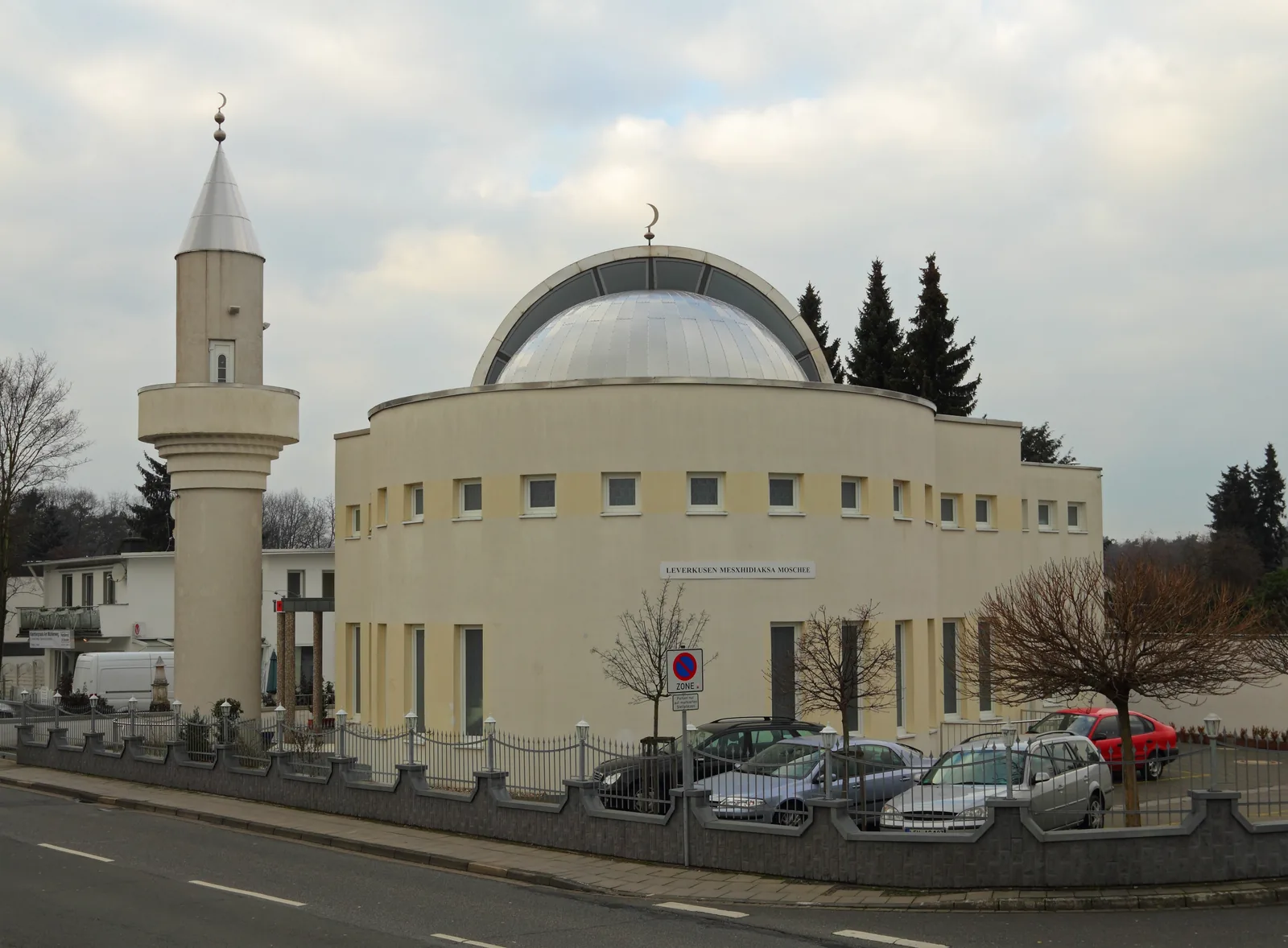
A municipal integration-centre archive records an open-mosque invitation at this address on 3 October 2025. That past invitation is evidence of an outward-facing event. For a visit today, contact the congregation or check its current notice; the archive does not establish the next opening or event time.
Community life in pictures
These two photo reports show the congregation welcoming people from elsewhere in Leverkusen: a school class and a Protestant church group. Each gallery comes from the congregation’s own public post.
Neither institution speaks for every Albanian resident. Faith, family background, age and personal interests shape how people choose to take part. A useful community directory makes several doors visible and lets the reader decide which one to approach.
Albanian culture on the city's public stage
Albanian culture appears in Leverkusen's shared public programme, as well as in community organisations. The official Festival der Kulturen programme for 31 May 2026 listed the Albanian Eagles dance group at 14:10. The festival was scheduled in Neuland-Park's Sparkassen-Arena, on Nobelstraße in Wiesdorf.
The programme confirms the planned appearance, rather than attendance or the completed performance. It places Albanian dance alongside other cultures on a shared city stage, open to a broad public.
For someone new to Leverkusen, a public festival offers a different route into community life from joining an association. It can begin with listening, watching or bringing a friend. An association can offer a more sustained relationship. Neither route guarantees an immediate social circle, but both begin with a place and an organiser that can actually be found.
A second official programme brings the story to a neighbourhood venue. The 2026 Intercultural Weeks brochure scheduled Rund um die Welt for 18 September at Quartierstreff Wiesdorf, Moskauer Straße 3. It described Leverkusen residents with roots in Albania, the Democratic Republic of Congo and Morocco introducing their cultures, organised by InterLev and CityKirche. The programme shows another setting for exchange: a neighbourhood meeting place, with residents themselves at the centre.
The 2026 dates above have passed. For future events, follow the city's cultural calendar and the organisers' current announcements. A past programme is part of the community's story; it should not be mistaken for an upcoming invitation.
From Xhaka's double to Misini's arrival
Bayer 04 gives Leverkusen a football connection that reaches well beyond the city's boundaries. Granit Xhaka's chapter here belongs to 2023–2025; a newer connection is Kosovo international Lumbardha Misini, whose signing the club announced on 9 July 2026.
In Bayer 04's announcement, Misini names Xhaka as an inspiration for wanting to play in Leverkusen. The midfielder arrived from Swiss club Servette with a contract running to 30 June 2029. The club traces her route through football in Kosovo and Albania, then Trabzonspor and Servette, before Bayer 04. The source identifies her as a Kosovo international; nationality and sporting representation are not being used here as a substitute for a personal statement of ethnicity.
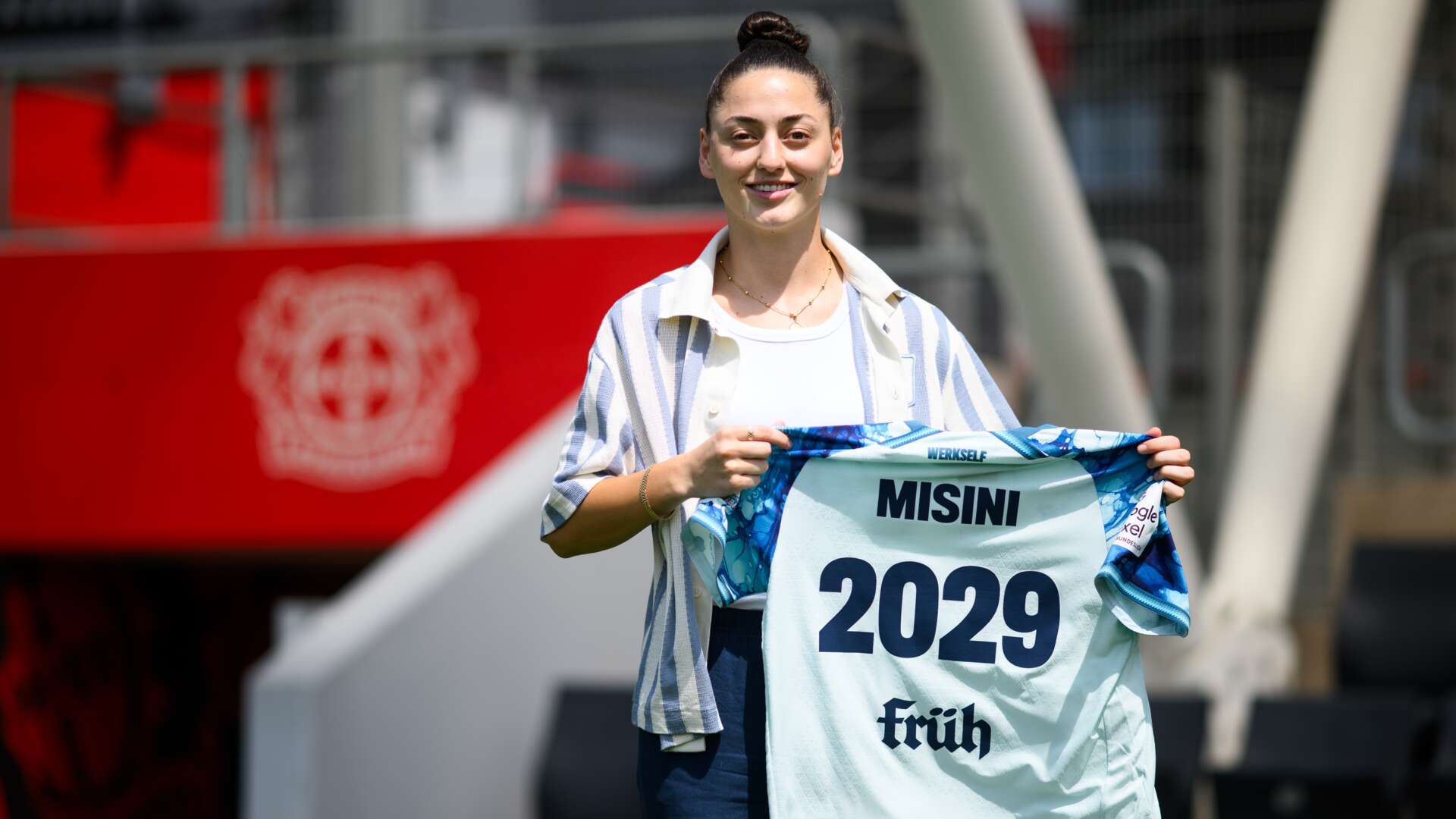
“Granit Xhaka is my idol.”
Lumbardha Misini, Bayer 04 signing announcement, 9 July 2026. Translated from German.
There is something distinctive about that connection. The men's championship story had already become an ambition for a player joining the women's team. It gives the city a continuing football story rather than leaving its Albanian-related sporting connection frozen in one celebrated season.
Xhaka helped Bayer 04 win the Bundesliga and DFB-Pokal double in 2024. But he is not a current Leverkusen player: the club's 30 July 2025 announcement confirms his move to Sunderland.
In a 2023 interview with Bayer 04, Xhaka discussed growing up in Switzerland and his father's football past in Kosovo. That is family history with a connection to Leverkusen through his work at the club. It does not make him a Leverkusen-born representative of every local Albanian family.
For current fixtures and opportunities to watch either team, use Bayer 04's official channels.
Finding a footing in everyday Leverkusen
An archival view of Albanian enterprise
Work also has a face in community media. An Alkopress report visits an Albanian photographic studio in Leverkusen, moving from the storefront to interviews with the people behind it. It offers an older, personal view of enterprise in the city.
Practical advice for arriving today
For a newly arrived resident, community life also includes practical questions about language, qualifications and work. Leverkusen's Service-Point Integration provides an open advice point for newly arrived adults aged eighteen and over, with guidance on these subjects and on authorities, family matters, leisure and volunteering.
The service is located in the Luminaden passage at Wiesdorfer Platz, on the upper floor. It can direct people to the relevant specialist. It serves the wider city, not only Albanian residents. For someone trying to understand an unfamiliar system, that distinction is helpful: a trusted cultural contact and a qualified public service can perform different roles.
The Kommunales Integrationszentrum has its own office at Hauptstraße 105. Its official listing requests an appointment. That address should not be confused with the Service-Point's location in the Luminaden. Checking the right destination before travelling is a small detail that makes a directory useful.
Preparing for an enquiry can be simple: write down the question, bring the relevant correspondence and ask which office is responsible for the next step. Friends and family can help someone find the right door, while questions about a particular qualification or official process belong with the responsible service. A community guide cannot decide an individual's eligibility or replace that advice.
Meeting Albanians and building a relationship
Meeting Albanians in Leverkusen can begin with an association, a cultural event or an introduction through friends. For adults seeking a partner, dua.com adds a way to meet beyond an existing circle, with space to make an interest in a serious relationship clear.
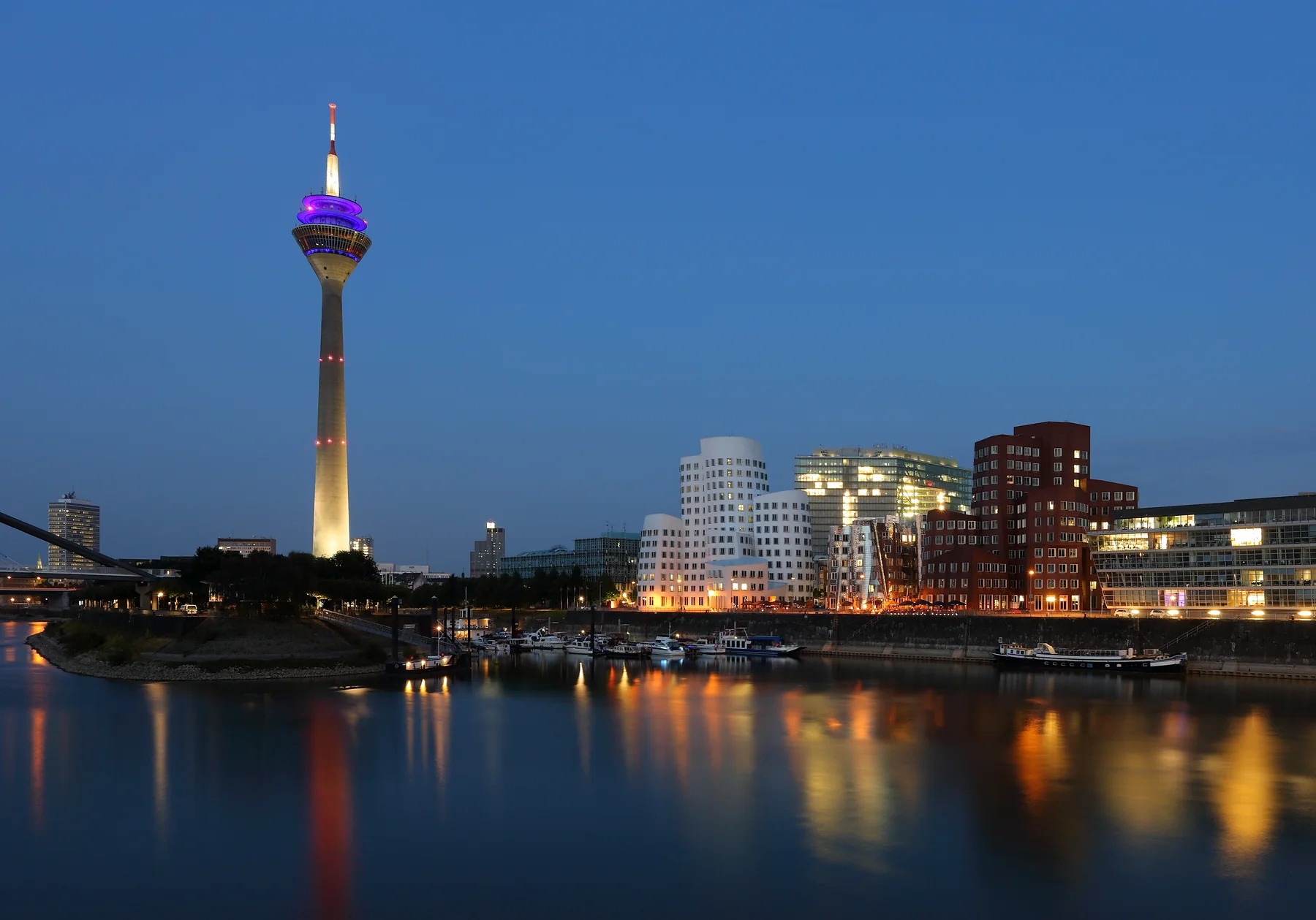
The geography matters. Leverkusen is its own municipality, beside a much wider Rhine urban region. Cologne and Düsseldorf may be part of someone's working or social life, but their population figures and institutions are not Leverkusen's. A relationship search can cross those boundaries without a statistical guide erasing them.
Shared language can make a first conversation easier. So can a familiar family reference, a favourite song or a similar experience of growing up between places. None of those things guarantees compatibility. The conversation still needs to reach the individual: what kind of life they want, how they spend their time and whether their intentions match.
That is the role of dua.com in this guide. It offers another place for new connections, including for someone who hopes to find a soulmate and build a lasting relationship. The starting point can be Albanian language or heritage; the relationship itself is between two particular people.
For a first meeting, a familiar public place can keep the plan straightforward. Neuland-Park, with its entrance at Nobelstraße 91, is one local option for a daytime walk when open. General park admission is free, while individual events can have their own charges. It is a public Leverkusen park, not a documented Albanian meeting spot; check current access and choose a place both people are comfortable with.
Meet Albanians on dua.com and be clear about the connection you want, whether that begins with a conversation or a serious intention to find a partner.
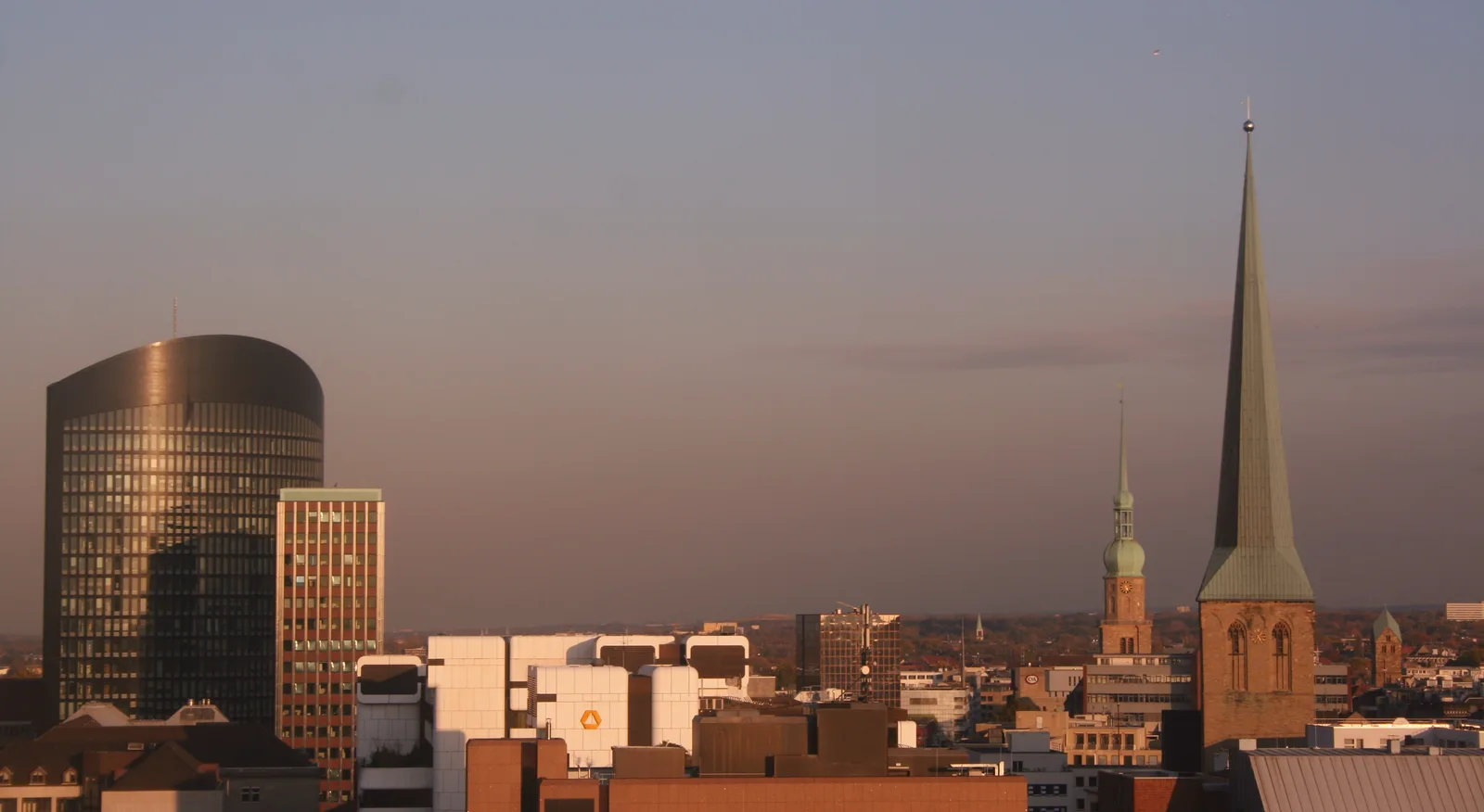
For the wider context, explore Albanians in Germany and the worldwide Albanian community hub. Nearby-city guides include Düsseldorf, while Essen and Dortmund document separate Ruhr communities.
A school registration, a cultural programme and a first conversation may look like small things beside a population estimate. They are also where belonging becomes practical. Leverkusen's Albanian story lives in those repeated connections: between generations, between people who have just arrived and people who can help, and between two strangers who may decide to build a future together.
Directory: useful Leverkusen connections
Sources and published contacts checked on 1 October 2026. Confirm current arrangements directly; a listing does not imply walk-in access. The schools and public services serve wider communities as well as Albanian residents.
- Albanischer Verein e.V. — cultural association listed at Schulstraße 1. Find its published contact in the city integration council directory.
- Mesxhidi Aksa — Mühlenweg 211, Küppersteg. The congregation network directory corroborates the address; telephone 0214 402843. Ask about current visits and activities.
- Albanian HSU — use the municipal school list; enrollment through the child's regular school. Schulamt: 0214 406-4094.
- Service-Point Integration — advice for newly arrived adults at the Luminaden, Wiesdorfer Platz. Check the official service listing.
- Kommunales Integrationszentrum — Hauptstraße 105; appointments through its official contact page, telephone 0214 406-5246.
- City culture programme — the official cultural portal is a starting point for current events; the May 2026 festival discussed above is historical.
- Bayer 04 — follow the club's official website for its men's and women's teams, fixtures and visitor information.
- Neuland-Park — Nobelstraße 91; current access and visitor information.
- dua.com — meet Albanians and explore new connections, including serious relationships.
Frequently asked questions about Albanians in Leverkusen
How many Albanians live in Leverkusen?
No verified city-wide ethnic Albanian total is established here. Leverkusen counted 351 non-German Albanian citizens and 597 non-German Kosovo citizens at 31 December 2022. Its broader 2025 estimate for the Kosovo reference country was 1,326, including 523 German citizens. Those are different measures and dates, and must not be added together or treated as a complete ethnic population count.
Does the North Macedonia figure count Albanians?
No. The city recorded 2,544 non-German North Macedonian citizens in 2022 and estimated 4,488 people with North Macedonia as a migration-background reference country in 2025. Neither measure identifies ethnicity. Some residents have Albanian roots, but the whole category cannot be labelled Albanian or used to calculate a city-wide Albanian total.
Where are Albanian classes offered in Leverkusen?
The city lists seven HSU host locations: Am Friedenspark, Heinrich-Lübke-Straße, Möwenschule/Dönhoffstraße, Regenbogenschule, Theodor-Wuppermann-Schule, Gesamtschule Schlebusch and Käthe-Kollwitz-Schule. They are ordinary schools hosting supplementary Albanian instruction, not seven independent Albanian schools. Confirm the appropriate group and timetable through the child’s regular school.
How do families register for Albanian HSU?
Registration is through the secretariat of the child’s regular school. Leverkusen describes HSU as free supplementary instruction for pupils with an international family history in primary and lower-secondary education. Registration is binding for the school year and renews automatically. The municipal Schulamt can clarify the procedure on 0214 406-4094; a place or timetable should be confirmed directly.
Which Albanian organisations are documented locally?
The integration council directory lists Albanischer Verein e.V. at Schulstraße 1 as a cultural association. Mesxhidi Aksa is at Mühlenweg 211 in Küppersteg. They offer different entry points into community life and do not represent every Albanian resident. Use their published contacts to confirm current activities and visiting arrangements.
Does Granit Xhaka still play for Bayer Leverkusen?
No. Bayer 04 announced Xhaka’s move to Sunderland on 30 July 2025, after his role in the 2024 Bundesliga and DFB-Pokal double. A newer sporting connection is Kosovo international Lumbardha Misini, whose signing Bayer 04 announced on 9 July 2026. Historical success and current team membership should be kept separate.
Is dua.com’s Leverkusen video in English?
The supplied official dua_com video is spoken in Albanian. This English guide provides an English caption and a direct YouTube link. Population and account estimates in the original presentation are not independently validated by its description; the guide’s statistical discussion uses separately cited municipal sources. No verified local dua account count is published here.
How can I meet Albanians in Leverkusen?
Start with cultural associations, current public events or introductions through friends. For adults looking for new connections or a serious relationship, dua.com can extend the search beyond an existing circle, including nearby cities. Shared language or heritage can open a conversation; individual compatibility, clear intentions and time together are what allow a relationship to develop.