
Global Albanian Community
60 community guides
Explore the diaspora
Hover a country for the numbers, click to zoom into its cities.
Largest communities
Three counts, one map: research estimates shade the countries, dua.com first-party data draws the members and love corridors, and the pulsing dots are people who counted themselves in right here.
Albanian community
12–15 million people with Albanian roots.
From Albania, Kosovo and the native communities of the Balkans to multigenerational families across Europe, Türkiye, the Americas and Australia, an estimated 12–15 million people worldwide have Albanian roots. There is no global census, so this is an editorial range built from official statistics and published research — not an official count.
1.1M+ registered members · 4,175,076 matches and counting
People with Albanian roots worldwide12–15
million
Around 13 million is a useful central scenario, not an official count. The model combines four evidence layers, counted by origin rather than passport, and subtracts an allowance for overlap between them.
The firm floor is 4.18 million: the people the latest censuses count as Albanian in Albania (2023), Kosovo (2024), North Macedonia (2021), Montenegro (2023) and Serbia (2022). The homelands row starts higher because it counts Albania’s whole resident population of 2.4 million, including people who did not answer the ethnicity question; the rest of the estimate is the diaspora and its descendants, the historical communities and Türkiye, where no census asks.
Homelands & native Balkan communities
Albania (2.4M) and Kosovo (1.45M Albanians), plus the native communities of North Macedonia, Montenegro and the Preševo Valley — adjusted for missing census responses.
Modern diaspora & descendants
Albania-origin (≈2.5–2.8M), Kosovo-origin (≈0.9–1.1M) and North Macedonia-origin families abroad — including the naturalised generations no passport count can see.
Albanian roots in Türkiye
Türkiye has no contemporary ethnicity census, and published estimates vary widely. The model retains its working range, making Türkiye its largest source of uncertainty — not a direct official count.
Historical & assimilated communities
The Arbëreshë of Italy, the Arvanites of Greece, the Arbanasi of Zadar, the Albanian-speaking villages of southern Ukraine, old Egypt and the early Americas. Identity varies within these communities, so documented ancestry is not treated as present-day identity by default. The overall model handles duplication separately with a ≈0.3M allowance across all four layers.
Central scenario ≈13.3M after the overlap allowance. The dashed segment is the honest uncertainty — mostly Türkiye and the generations the tables no longer see. The pale segment: historical communities (0.4–1M).
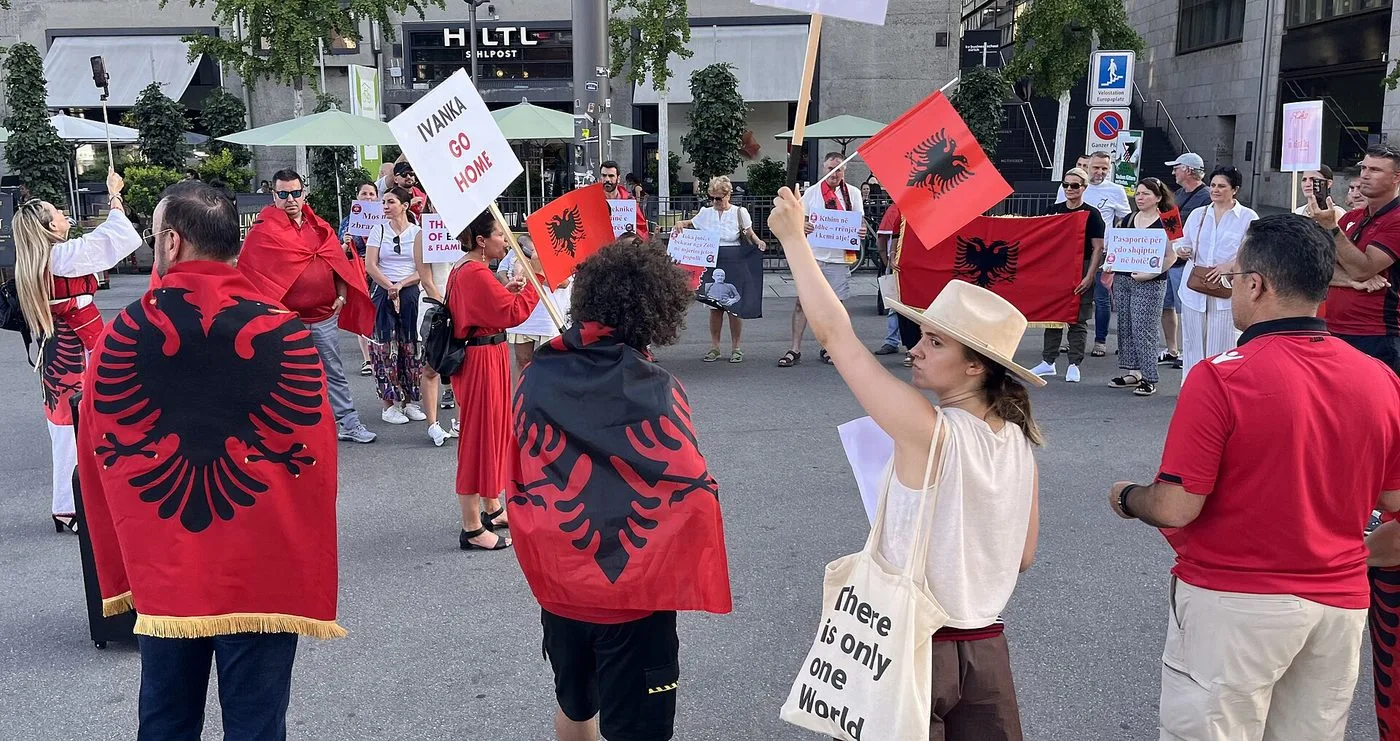
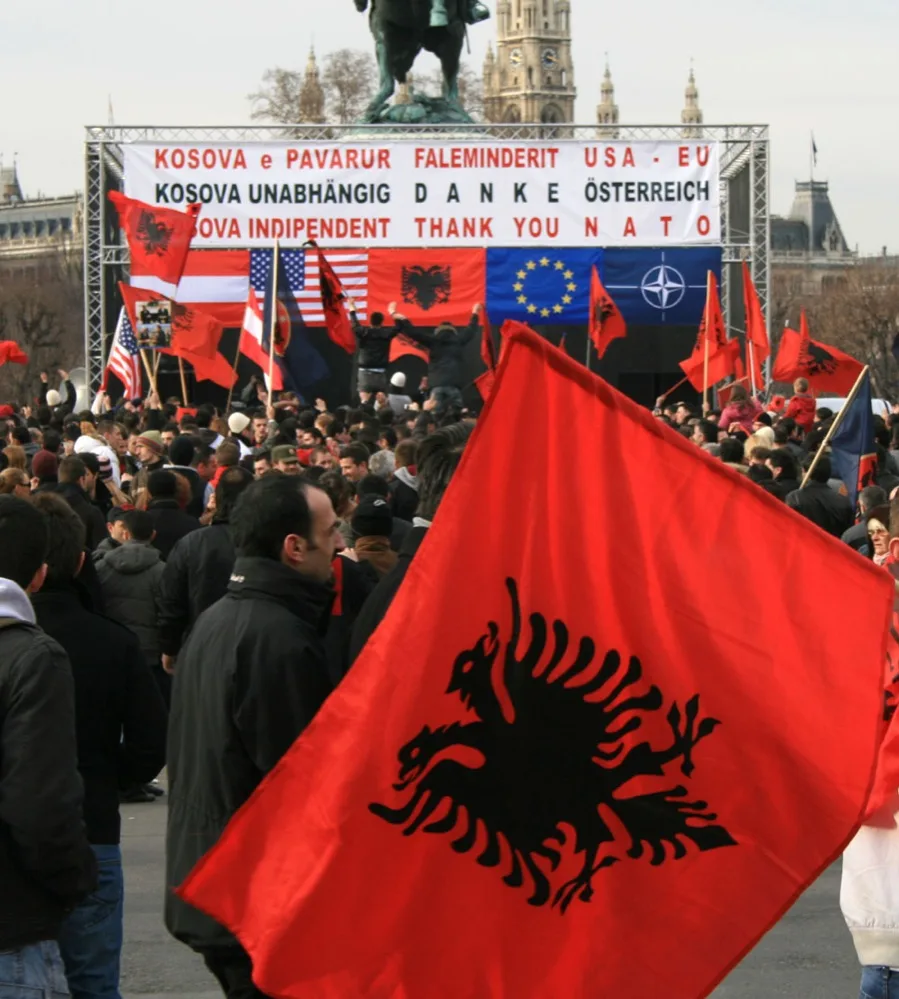
Where we come from
From ancient Balkans to the Albanian story
Albanians have lived in the western Balkans for centuries. Illyrians, Dardanians and, in Albanian national tradition, the still older Pelasgians have all shaped how generations explain where they come from. History supports some parts of that story more confidently than others.
Before Rome
Pelasgians: history and national memory
Ancient Greek sources describe peoples called Pelasgians in parts of the Aegean and surrounding regions, but who they were and what language they spoke remain uncertain. During the Rilindja, Albanian writers adopted Pelasgian ancestry as a powerful story of antiquity. It is culturally important, but not the same as proven ancestry.
Antiquity
Illyria and Dardania
Ancient writers and archaeology document Illyrian peoples across the western Balkans and Dardanians in territory centred largely on present-day Kosovo and surrounding areas. A connection between Albanian and an ancient language of the region, especially Illyrian, remains plausible, but the surviving evidence is too limited to prove a direct line. Even the familiar Dardania–dardhë connection is intriguing rather than proof.
1443–1468
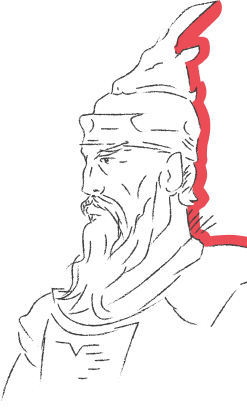
Gjergj Kastrioti Skënderbeu
Skënderbeu broke with the Ottoman Empire and took control of Krujë. In 1444, Albanian nobles formed the League of Lezhë and resisted repeated Ottoman campaigns for more than two decades. After his death, his story became one of the strongest shared symbols of Albanian political unity and resistance.
The people who carried the story forward
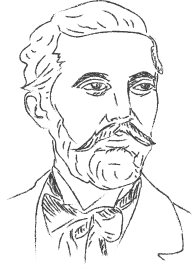 Naim FrashëriGave the Rilindja one of its defining voices
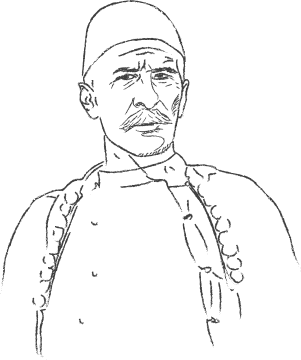 Isa BoletiniA leading figure of the national movement in Kosovo
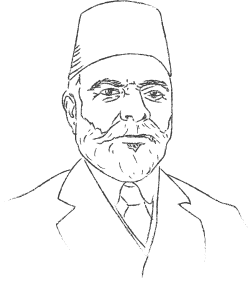 Ismail QemaliLed Albania's declaration of independence in 1912
 Nënë TerezaSkopje-born humanitarian, canonised in 2016
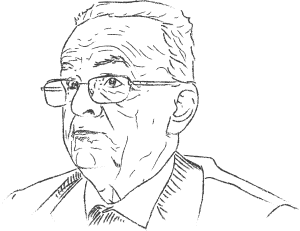 Adem DemaçiAn enduring figure in Kosovo's political history
People
Albanian roots, global stories
Some were born in Albanian lands; others grew up thousands of kilometres away. Across six centuries, people with Albanian roots have left their mark on history, literature, science, humanitarian work, sport and music.
History · 1405–1468
Gjergj Kastrioti Skënderbeu
Raised as a hostage at the Ottoman court, where he was named Iskender Bey, he came home to lead the Albanian revolt. After his death his family crossed to Italy, and his helmet and sword are now in Vienna.
Humanitarian work · Skopje / Kolkata
Mother Teresa
Known to Albanians as Nënë Tereza, she was born Anjezë Gonxhe Bojaxhiu in Skopje to an Albanian family, spent most of her life working among the poorest people of Kolkata and received the Nobel Peace Prize in 1979.
Literature · Gjirokastër / Paris
Ismail Kadare
Born in Gjirokastër, Kadare took Albanian literature to readers around the world. His novels have been translated into more than 40 languages, and he moved to Paris in 1990.
Science · Indiana / Albania
Ferid Murad
Born in Whiting, Indiana, to an Albanian immigrant father, the physician and pharmacologist shared the 1998 Nobel Prize in Physiology or Medicine for discoveries about nitric oxide in the cardiovascular system.
Football · Basel / Kosovo
Granit Xhaka
Born in Basel to a family from Kosovo, Xhaka built an international career with Switzerland while making no secret of his Kosovo Albanian roots.
Music · London / Prishtina
Dua Lipa
Born in London to Kosovo Albanian parents, she grew up between London and Prishtina and became one of the most recognisable pop artists in the world.
Music · Prishtina / London
Rita Ora
She was born in Prishtina to Albanian parents and grew up in London, where she became a chart-topping singer.
Music · New York / Dibër
Bebe Rexha
Born in Brooklyn to Albanian parents, she built a career as a singer and as a songwriter for other artists. Her father is from Dibër and her mother’s family from Gostivar, both in North Macedonia.
All guides
Every community, city by city
Western & Central Europe

Southern Europe & Türkiye

Nordics

Balkans & Eastern Europe


North America & Oceania


City guides
Where the community actually lives
Diasporas are urban. Every guide covers the neighbourhoods, the clubs, the bakeries, the mosques and churches, and how to meet people once you land.
 Greece
 Switzerland
 Germany
 Switzerland
 Belgium
 the US Germany
 Denmark the US Germany Germany Germany the US
 Germany
 Switzerland Germany
 Türkiye Germany
 Slovenia
 the UK
 the UK the US
 Italy
Italy Germany the US
 the US
 Norway
 France
 Italy
Italy
 Sweden
 Germany Greece
 Austria Germany
 Switzerland
Home or diaspora
Not every Albanian outside Albania is “diaspora”
“Diaspora” is useful shorthand, but it does not fit every Albanian community beyond Albania and Kosovo. Sometimes the border moved around the community; sometimes the community is centuries old.
Native communities
In North Macedonia, Montenegro and the Preševo Valley in southern Serbia, Albanians are not immigrants. Their families have lived in these towns and villages for centuries, which is why this page counts them with Albania and Kosovo as homelands.
Historical communities
Some communities come from much older journeys. The Arbëreshë of southern Italy have kept the Albanian language and their traditions since the fifteenth century, and the Arvanites of Greece, the Arbanasi of Zadar, the villages of southern Ukraine and many families in Türkiye carry their own versions of that story.
Modern diaspora
Then there are the communities built by modern migration: Zurich, Berlin, London, New York, Copenhagen. Many now include children and grandchildren born abroad. Someone can grow up in Germany, study in the Netherlands and work in Switzerland, and still answer “Ku je prej?” (“Where are you from?”) with the village their grandparents left.
dua on the road
Meeting our community, city by city
In September 2026, our dua team travelled to European cities to meet Albanians and film conversations with the community. Our visits to Prague and Bratislava brought the stories behind this guide onto the street: chance encounters, familiar language and personal views on Albanian life abroad.
Thirty days across Europe
Our invitation to follow the dua team as we travelled around Europe to meet the community in person.
Published
Meeting Albanians in Prague
How quickly can we find an Albanian in Prague? We took the question to the streets during our visit.
Published
Prague: what people say about Albanians
Conversations filmed during our time in Prague. These are the views of individual interviewees, a glimpse into everyday encounters in the city.
Published
Meeting Albanians in Bratislava
We visited Bratislava and set out to find Albanians in the city, capturing the encounters along the way.
Published
Deep roots
Older than every border on the map
The Albanian world was not made in the 1990s. Whole communities left centuries ago — and are still singing in Albanian. They belong on this page as much as any city guide.
Arbëreshë · Italy · since the 1400s
Fifty villages, six centuries, one language
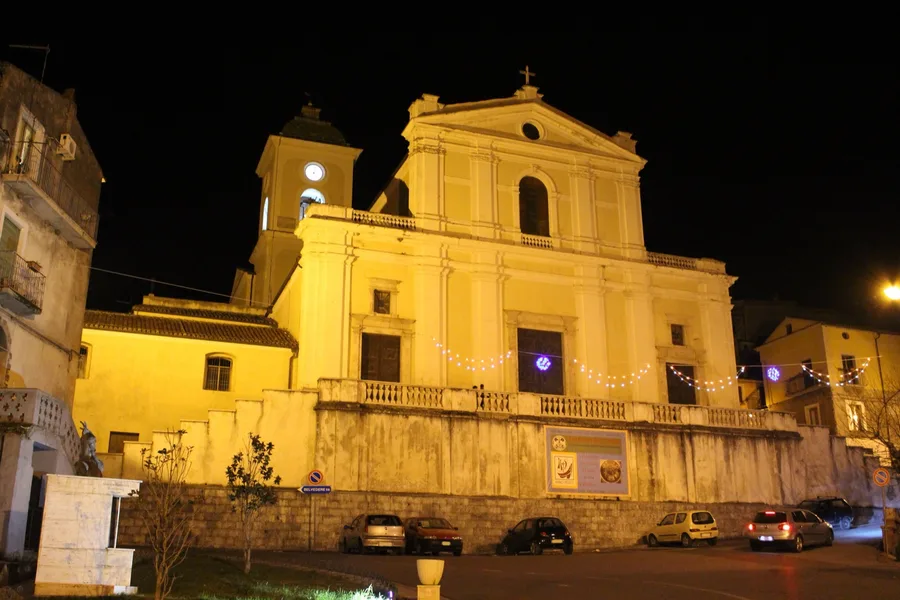
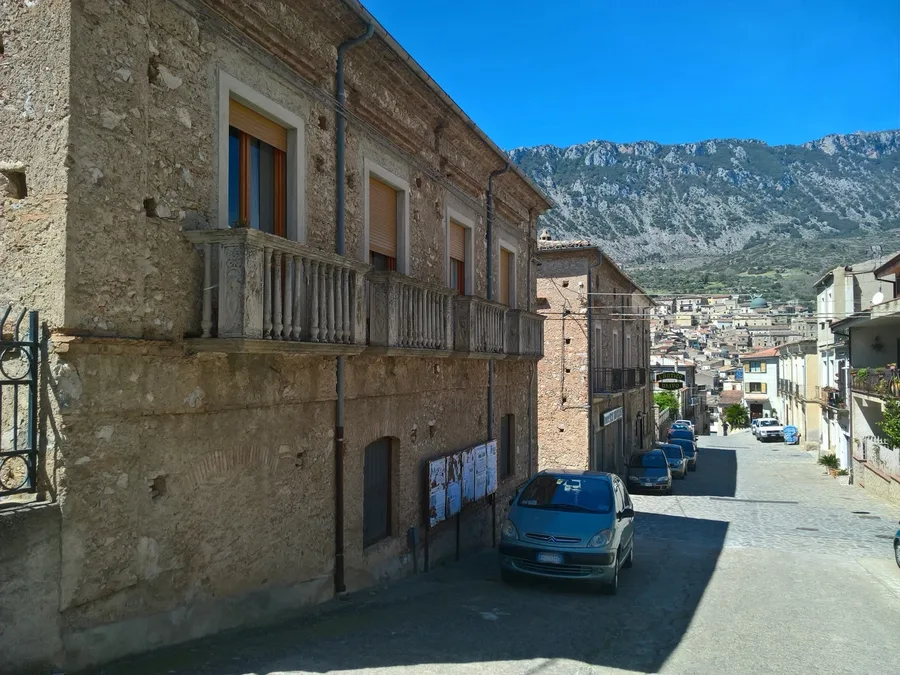
They left the Albanian lands after Skanderbeg's death and never stopped being Albanian. Across Calabria and Sicily, the Arbëreshë still hold the Byzantine rite in Lungro's cathedral, still dance the Vallje at Easter in Civita, and still speak an Albanian older than modern Albania. Italy recognises them as an official historical minority.
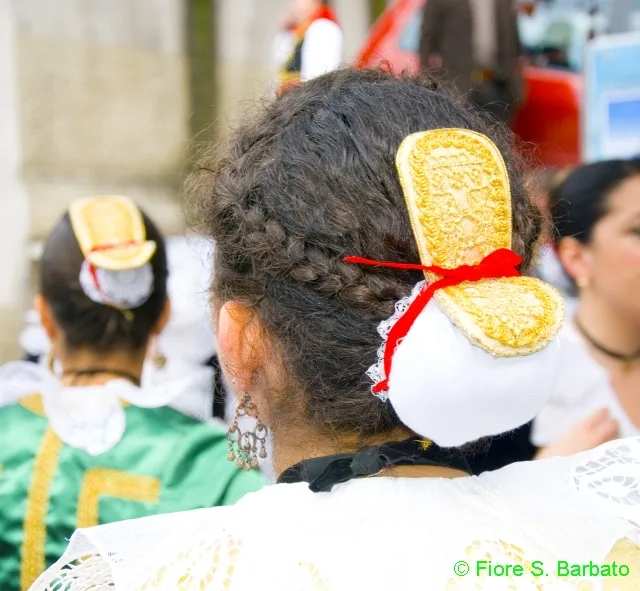
Arvanites · Greece
95–200kRoots acknowledged, identity respected
Communities speaking Arvanitika have lived in Attica, Boeotia and the Peloponnese for centuries. Most identify nationally as Greek today — and we count only what people themselves acknowledge: known, documented Albanian family origin.
Türkiye · Ottoman era → today
3–5MThe model's largest uncertainty
Generations arrived from Kosovo, Macedonia, Çamëria and Albania under Ottoman and Yugoslav categories — often recorded as anything but Albanian. Türkiye has no contemporary ethnicity census, and published descent estimates run from about one million to five million or more. The displayed range is therefore an editorial model, not an official count.
The scattered old world
1726→Zadar, Odesa, Cairo, Boston
The Arbanasi reached Zadar in 1726. Four villages in southern Ukraine still speak Albanian: one in the Bessarabian part of the Odesa region, founded in 1811, and three on the Azov steppe, founded in 1862. Old communities took root in Egypt, Romania, Bulgaria and turn-of-the-century America — threads the modern diaspora statistics never see.
Albanians in America · since the 1900s
Boston printed the newspapers. The Bronx kept the weddings.
The oldest overseas community: the first Albanian newspaper in America appeared in Boston in 1906, and Fan Noli founded the Albanian Orthodox Church there two years later. From 1909 a Boston Albanian society published Dielli; the Library of Congress holds its early issues. A century on, the centre of gravity is New York — the Bronx, Staten Island, wedding halls across three states — and a community now estimated at 750,000 to 1 million once the American-born generations are counted.
Albanians in the US →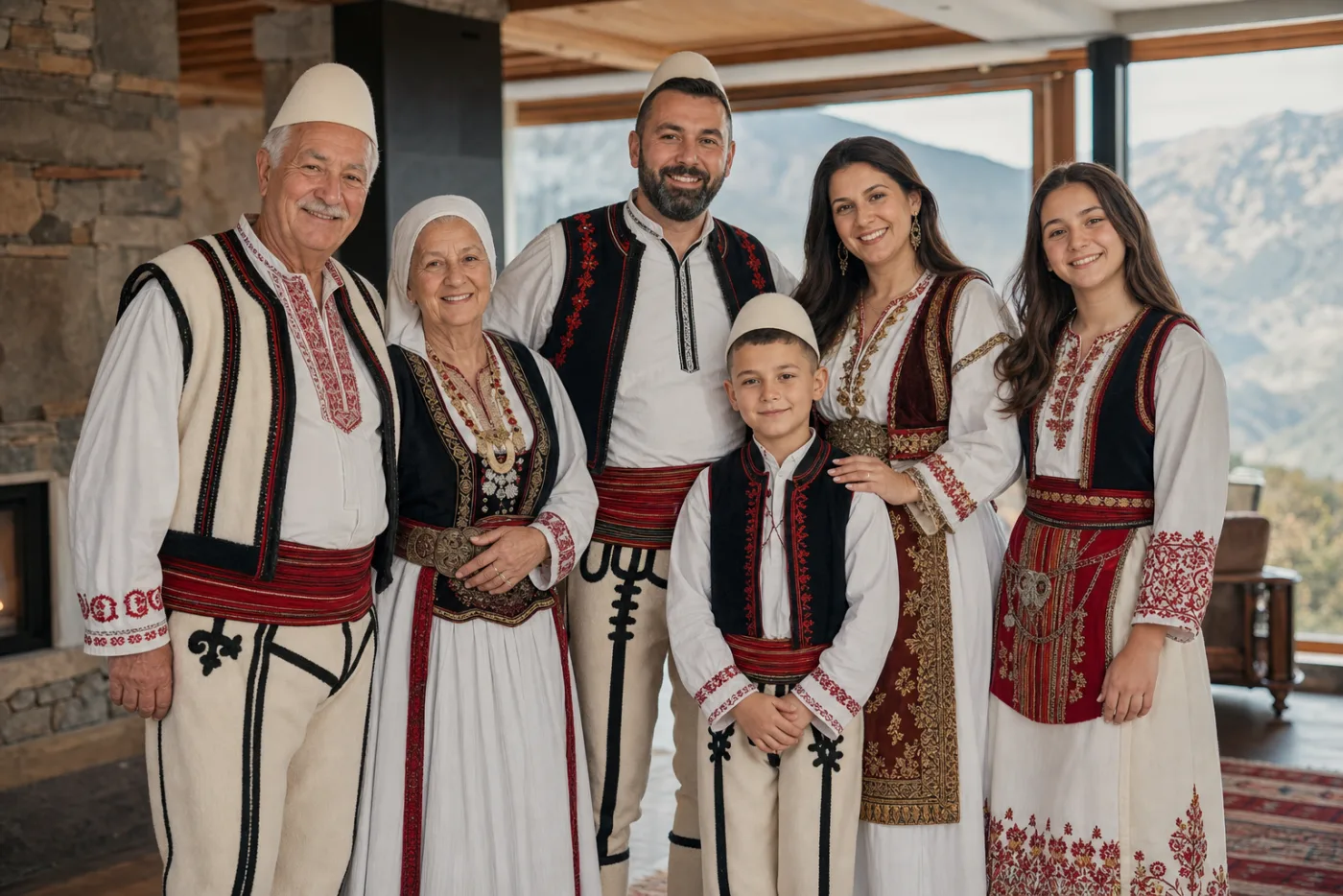
Language & family
The language crosses every border
A diaspora survives when its children keep the language. By that measure the Albanian world is doing something remarkable — at kitchen tables from Stuttgart to Staten Island, families are deciding, deliberately and at scale, to pass Albanian on.
Albanian is a branch of its own
Every language below descends from the same ancestor. Most sit in a family with close cousins — French beside Spanish, German beside Dutch. Albanian sits alone: a full branch of Indo-European with no surviving relative closer than the rest of Europe.
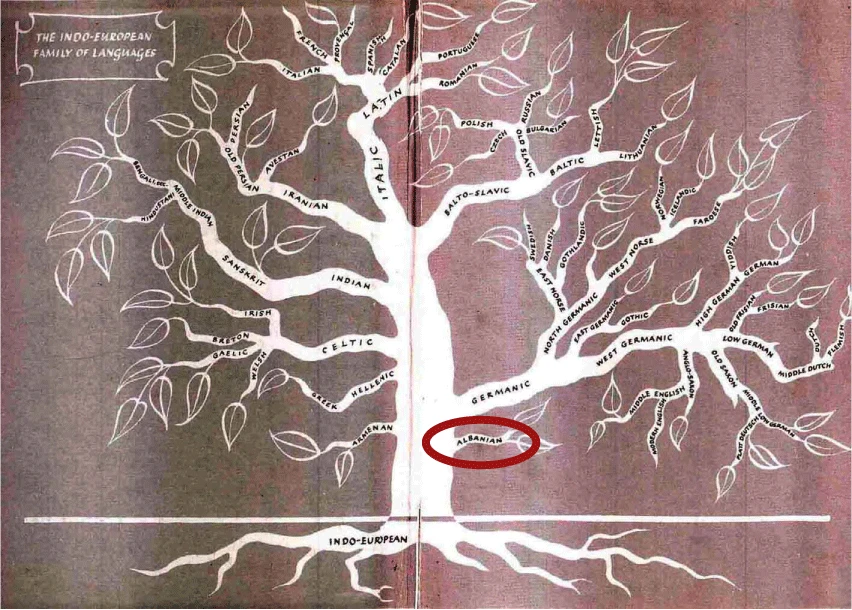
Albanian sits on its own branch — no close living relative.
Migration waves
How the Albanian world was built
Nobody planned a diaspora. It arrived in waves — recruitment, pressure, escape, war and work — and each wave met a different Europe.
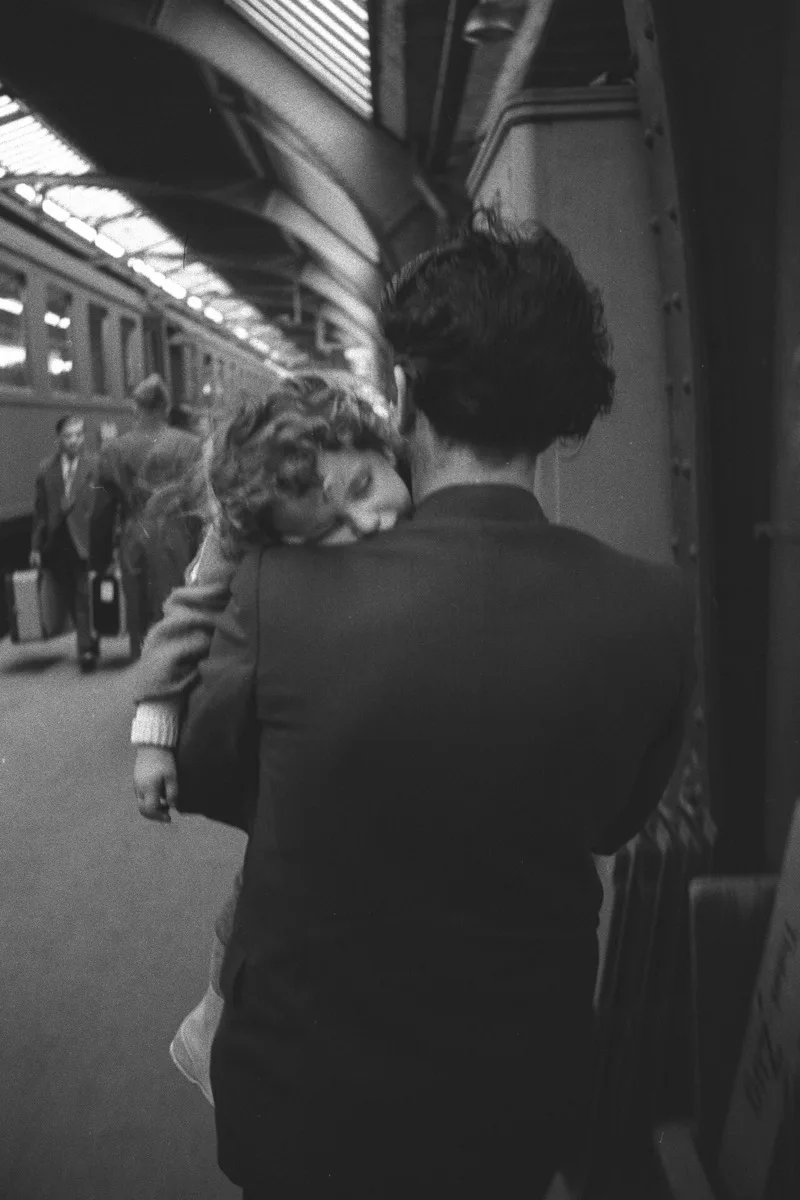
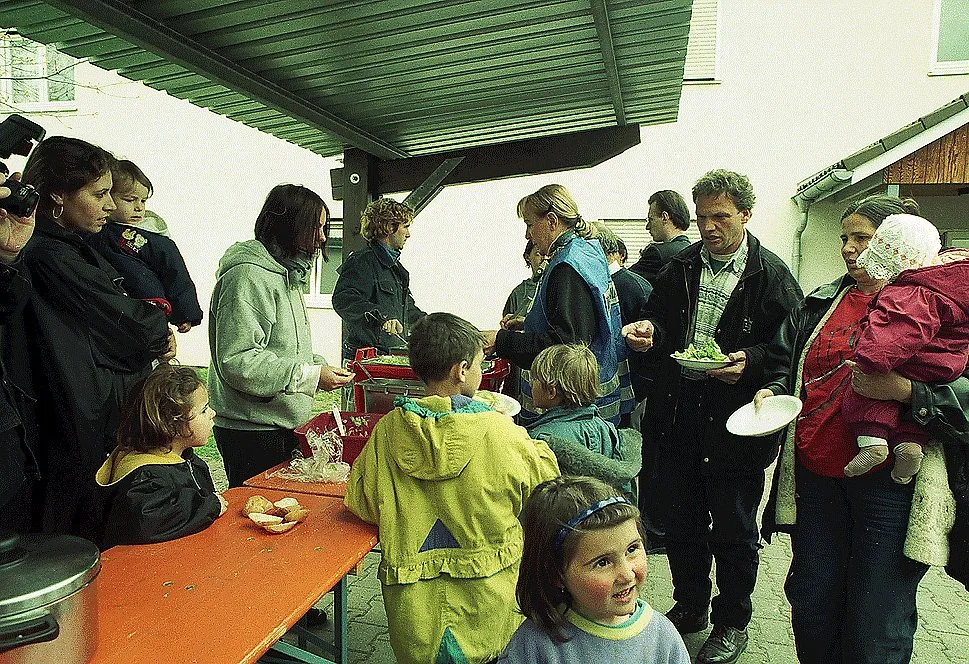
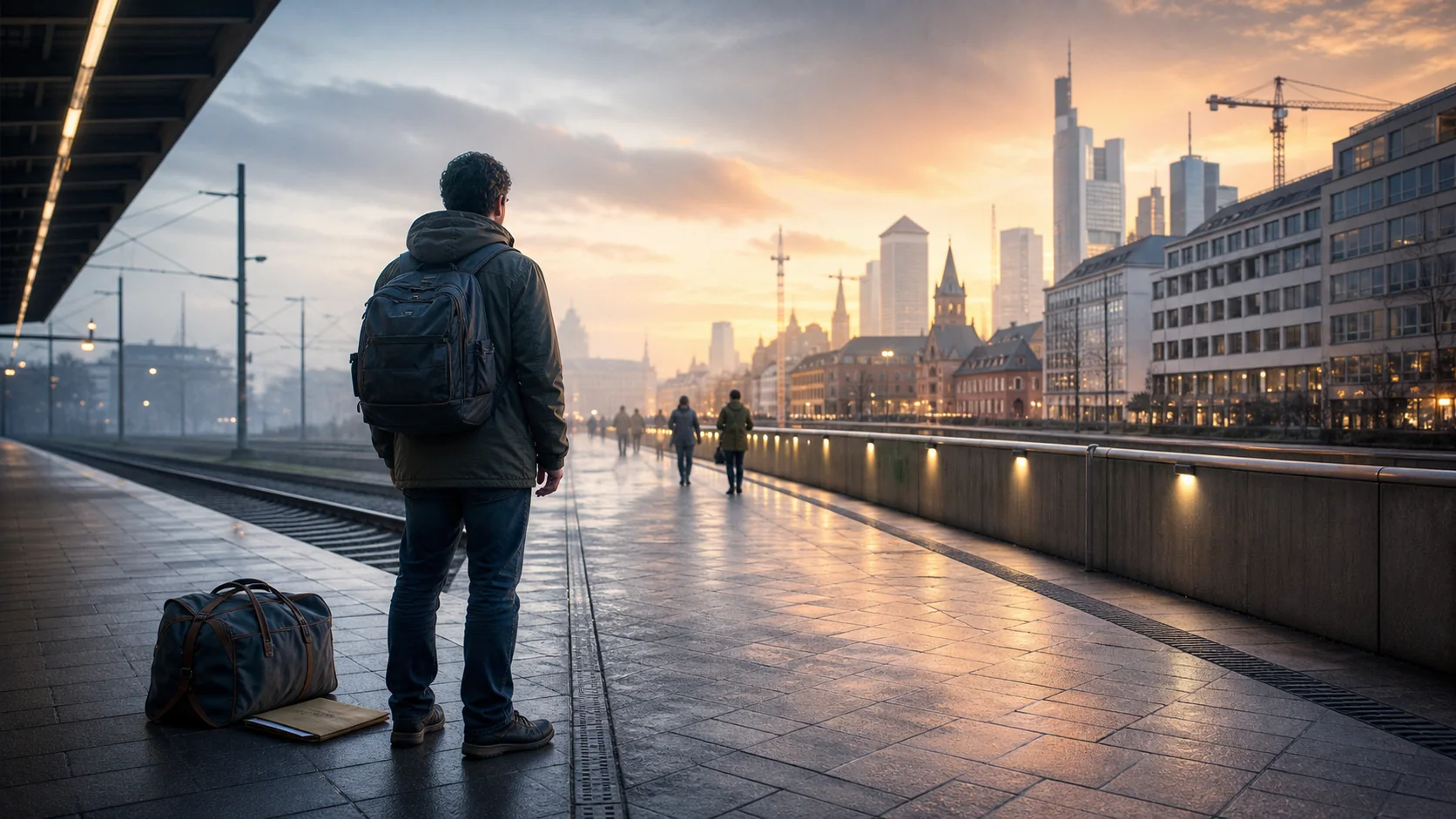
- 1850s–1930s · Individuals
Long before mass migration: engineers, merchants, actors. Alexander Moissi, son of a merchant from Kavaja, joins Berlin's theatre world in 1904 and becomes one of German modernism's most recognisable performers.
- 1965–1973 · Recruitment
Austria signs its recruitment agreement with Yugoslavia in Vienna on 19 November 1965, three years before West Germany. Albanians from Kosovo and western North Macedonia arrive in factories and building sites — recorded only as Yugoslavs. A job became a flat, the flat became a family home, and the return ticket stayed in a drawer.
- 1981–1997 · Pressure
After the 1981 protests in Kosovo and the end of its autonomy in 1989, leaving is no longer only about work. Dismissals from state jobs, the loss of state schooling in Albanian and the call-up to the Yugoslav army push a new generation out of Kosovo, while economic pressure does the same in western North Macedonia. Most follow family already abroad: a brother in Switzerland, an uncle in Germany, a cousin in Sweden.
- 1990–1992 · Escape
The dictatorship ends. Thousands climb into foreign embassies in Tirana in July 1990; ships cross to Italy and thousands walk over the mountains into Greece, and within a decade both have Albanian communities of hundreds of thousands. IOM later estimated that a quarter of Albania’s population left after 1990; in INSTAT and the World Bank’s 2024 migration survey, 37% of Albanian households had a member who was living abroad or had come back.
- 1998–2000 · War
In April 1999 evacuation flights begin leaving North Macedonia with refugees from Kosovo; by June, UNHCR counted more than 89,900 people flown to 29 countries. Germany, Switzerland, the Nordics and North America take in families who expected to return in months and stayed for a generation.
- 2000s · Reunification
Partners and children follow. Temporary labour migration becomes permanent, multigenerational life — and the first children born abroad reach school age speaking two languages.
- 2015–today · Skills and passports
Legal work routes take over: Germany doubles its annual Western Balkans quota to 50,000 pre-approvals and still runs out. Dual citizenship becomes possible in Germany, and naturalisations spike. The fourth generation is already here.
Money & work
A transnational economy, measured at both ends
The diaspora is not only a population — it is one of the region's largest economic forces. Remittances are recorded where they land, which is why these are some of the hardest numbers on this page.
Combined, roughly €3 billion a year flows home across Kosovo, Albania and North Macedonia. Since October 2025 all three homelands are inside SEPA, which is cutting the cost of every transfer. Each figure is cited in full on its country page.
How Albanians connect today
The community is spread out. Finding each other shouldn't be.
Albanians have always stayed close across borders: letters, expensive phone calls, a suitcase of gifts heading home for summer, and now family group chats that somehow never sleep. What a group chat can’t do is introduce you to the Albanians you haven’t met yet.
Fly
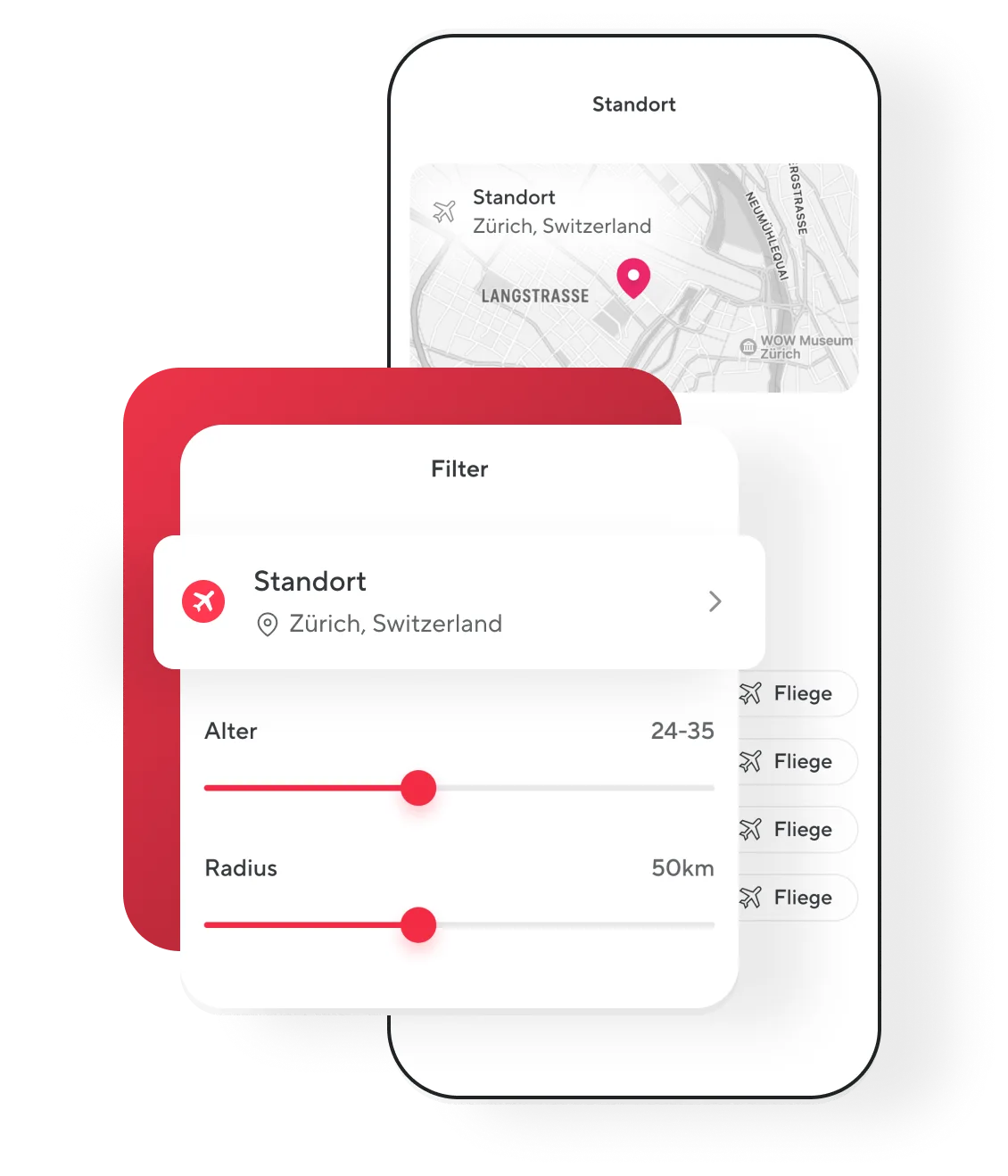
Change your location before you travel and meet Albanians in Zurich, Vienna or New York before you land.
Block Contacts
Keep your profile hidden from the people in your phone’s contacts: the cousin, the colleague, the neighbour from the same village.
InstaChat
Say hi without waiting for a match — for when you already know you have something in common.
Blue Tick
Photo verification is mandatory to join. Every profile you see has been through it.
Fly, in the app: set your location to Zurich before you land.
Why dua.com exists
Valon Asani on building one app for a scattered community
Valon grew up between the Swiss and the Albanian worlds and founded dua.com around a question every diaspora knows: how do you find your people when your community is everywhere?
A 65-minute conversation on Engjëll Rraklli’s podcast Scaling the Unscalable. In English.
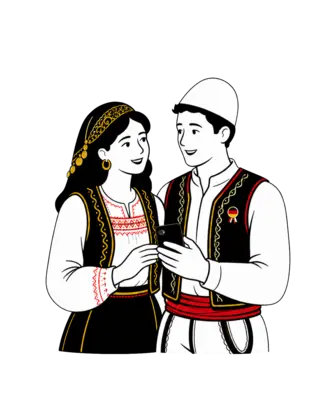
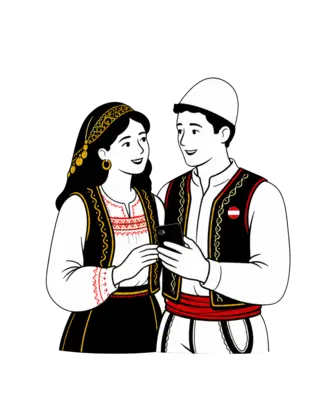
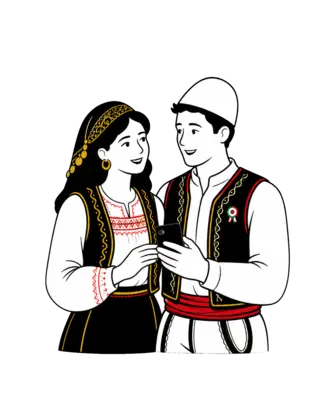
From the dua.com illustration set
One love story, drawn for every community.
Love corridors
One network, measured in matches
Every match between two countries in the 12 months to 27 July 2026, ranked — the red arcs on the map above. The communities talk to each other constantly, with Germany at the centre of almost every route. They talk to the homelands even more: Germany to Kosovo alone runs at 280 matches a day.
Between the communities
Diaspora country ↔ diaspora country.
Back to the homelands
Diaspora country → Albania, Kosovo and North Macedonia.
Methodology
How we estimate the global Albanian community
Last evidence review: September 2026
Counted by origin, not passport
Balkan censuses and source-country diaspora estimates build the total; destination-country statistics validate it. An explicit overlap allowance is subtracted so nobody is counted twice.
Roots, not citizenship
The model covers people in the Albanian homelands, migrants, descendants born abroad and, where clearly labelled, historical communities. Documented ancestry is not treated as proof that every person included identifies as Albanian today.
Ranges where evidence ends
The upper end reflects genuine uncertainty — above all Türkiye, and the generations the registers no longer see. Where the tables end, we say so; nothing is invented for a rounder number.
Three counts, kept separate
Population estimates describe Albanian-rooted communities. dua.com data records 1.1M+ registered members, country and city figures from the 27 July 2026 snapshot, and matches since 2020. Numërohu is a voluntary community self-count. They tell different parts of the story, but they are not the same dataset.
Help us map
You probably know something the statistics don’t
No census counts the Albanian world, so this map keeps a count of its own: the people who add themselves. Count yourself in: it takes a few seconds and stores nothing personal. And if your story started on dua.com, we would love to hear it.
Love stories
Love, across the diaspora

Germany
Gentiana & Xhemajl
He was in Hamburg, she was in Berlin, and both families come from Prishtina — where they married in 2025.
Read their story →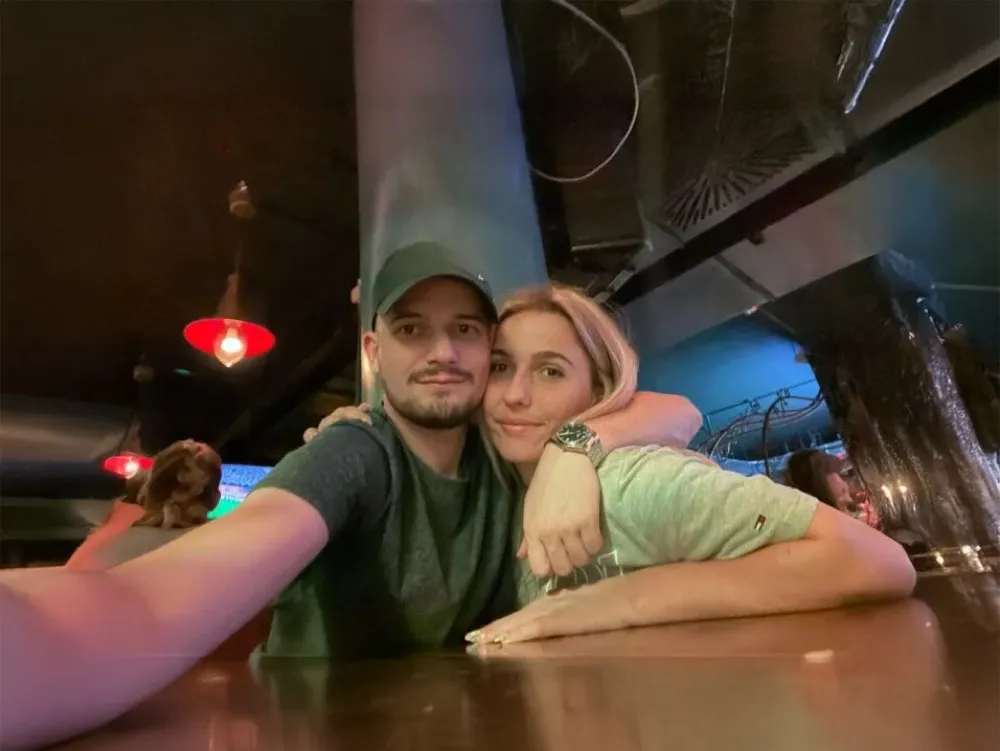
Switzerland
Besarta & Shkëlqim
She was in Lipjan, he had grown up in Switzerland with roots in Kumanovo. They met for the first time at Tirana airport.
Read their story →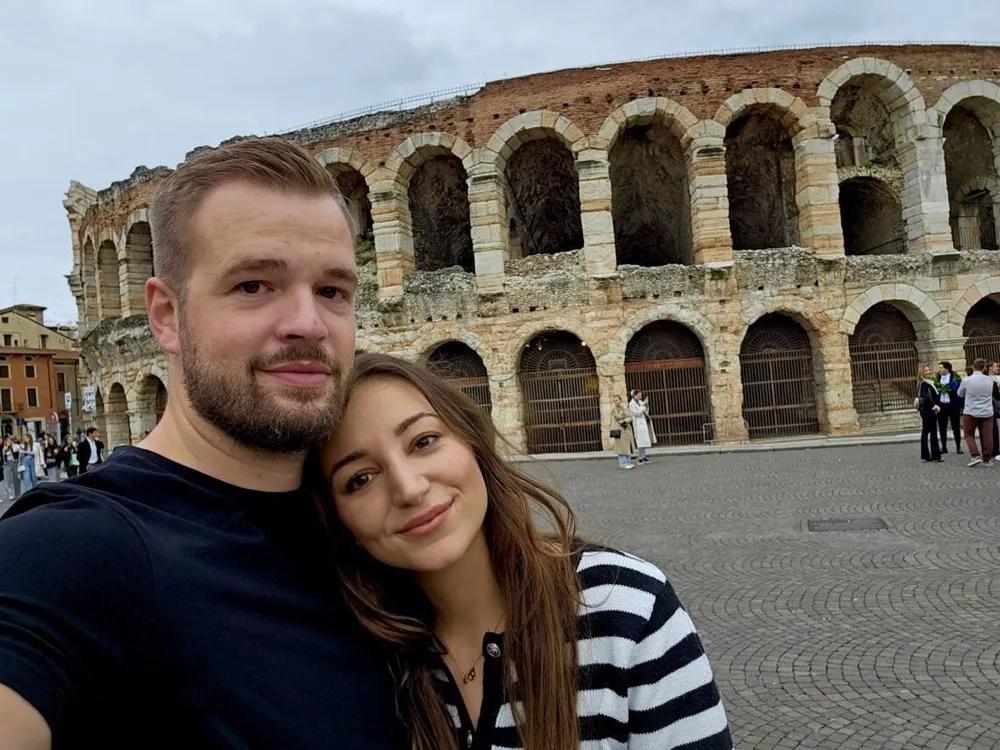
Switzerland
Dodona & Benni
Two weeks after their first message they met in Zurich. They married exactly a year after the match.
Read their story →Frequently asked
Questions about Albanians worldwide
How many Albanians are there in the world?
Where do most Albanians live?
Which country has the biggest Albanian diaspora?
Why are some country numbers shown as ranges, and what does “Albanian roots” mean?
Who are the Arbëreshë and the Arvanites?
Are all Albanians outside Albania part of the diaspora?
Why did Albanians leave in the first place?
How much money does the diaspora send home?
Is Albanian still spoken in the diaspora?
How can I find Albanians in my country or city?
How do Albanians in the diaspora meet each other?
Sources
- INSTAT — 2023 census of Albania; resident diaspora estimate (2,256,346 citizens abroad, 1 Jan 2025) and diaspora definition.
- Kosovo Agency of Statistics — Census 2024 first final results, census plus the estimate for the four northern municipalities (1,454,999 Albanians).
- Destatis — 2025 Microcensus, migration background by country of origin, and census-anchored population statistics (Germany).
- German Federal Foreign Office — country information, Kosovo.
- Statistik Austria — population by citizenship and country of birth; pupils by everyday language 2024/25.
- State Statistical Office of North Macedonia — 2021 census, resident and nonresident population.
- MONSTAT — 2023 census of Montenegro; Statistical Office of the Republic of Serbia — 2022 census, population by ethnicity.
- UCL research report (2026) — published estimates for the Albanian-origin population of Türkiye; Cambridge University Press, The Balkan Languages — limits of the surviving evidence connecting Albanian, Illyrian and Dardania.
- Minority Rights Group / MIRIS — Arvanite population estimates; CORDIS — Arbëreshë heritage research.
- World Bank — Kosovar diaspora estimates (700,000–900,000 abroad; nearly 950,000 including the second generation).
- Central Bank of the Republic of Kosovo — remittance inflows by source country, 2025.
- Bank of Albania — remittance inflows, 2025.
- World Bank — personal remittances received, North Macedonia, 2024.
- Prishtina International Airport — 2025 passenger figures.
- IOM — Migration in Albania: A Country Profile 2008; INSTAT and World Bank — International Migration in Albania: Results from the 2024 Albania Household Migration Survey, December 2025.
- UNHCR — Kosovo Crisis Update, June 1999: Humanitarian Evacuation Programme from North Macedonia.
- Library of Congress — Albanian collections: Dielli, Boston, from 1909.
- Nobel Prize biographies — Mother Teresa (Peace, 1979) and Ferid Murad (Physiology or Medicine, 1998).
- dua.com first-party platform data — registered members, matches and love corridors, snapshot of 27 July 2026.
- City coats of arms and country flags via Wikimedia Commons / flagcdn.

Researched and written with the dua.com community team. Last evidence review: September 2026.

Find Albanian love, wherever you are.